












































































Article Contents:
- Why Decorative Overlays for Interior Doors Are Needed
- Advantages of Using Door Decor
- Types of Decorative Elements for Interior Doors
- Carved Overlays: A Classic Genre
- Full-Coverage Decorative Panels
- Rosettes and Corner Elements
- Molding Elements and Trims
- Materials for Manufacturing Door Decor
- Natural wood: nobility and eco-friendliness
- Polyurethane: the practicality of modern technologies
- MDF: golden middle ground
- Stylistic Solutions in Door Decor Design
- Classical Interiors: The Luxury of Details
- Russian style: national character
- Modern Minimalist Aesthetics
- Provence and country: rustic charm
- How to Properly Choose Decor for Interior Doors
- Assessing the Condition and Type of Door Leaf
- Coordination with Room Interior
- Adhering to Proportions and Scale
- Functional Considerations
- Installation Technology for Decorative Door Overlays
- Preparation stage
- Marking the position of elements
- Mounting methods
- Finishing
- Combining Door Decor with Other Interior Elements
- Coordination with Architraves and Portals
- Echoing Furniture Decor
- Connection with Architectural Details of the Room
- Care for Decorative Elements on Doors
- Regular Cleaning
- Prevention of Damage
- Seasonal Humidity Fluctuations
- 2026 Trends in Interior Door Decor
- Natural Motifs and Eco-Friendliness
- The Return of Handcrafted Work
- Style mixing and eclecticism
- Technological Integration and Smart Features
- Where to Buy Quality Decorative Overlays for Doors
- Advantages of Buying from the Manufacturer
- Warranties and Certificates
- Assortment and Possibility of Custom Solutions
- Delivery and after-sales service
- Frequently asked questions about door decor
- Can wooden overlays be installed on metal doors?
- How does decor affect the door's service life?
- Is carved decor difficult to maintain?
- Can wooden overlays be painted a different color?
- How to determine the required amount of decor for a door?
- Will classic decor suit a modern interior?
- Conclusion: choose quality with STAVROS company
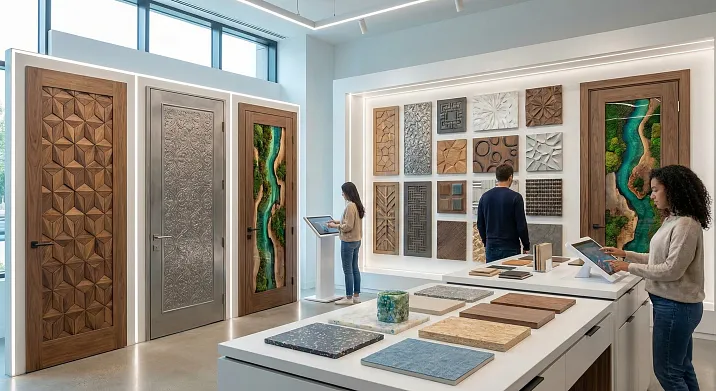
Interior doors have long ceased to be just functional partitions between rooms. Today they are full-fledged elements of interior design, capable of radically changing the atmosphere of a living space. Decor for interior doors allows you to transform the most ordinary door panels, turning them into true works of joinery art that emphasize the owner's individuality and create a unique character for each room. In 2026, the possibilities for door decoration have reached unprecedented diversity - from classic carved elements to modern minimalist solutions.


Why decorative overlays are needed for interior doors
Why are professional interior designers increasingly turning to decorative overlays when working on living spaces? The answer lies in the unique ability of these elements to change the perception of ordinary furnishings. A standard smooth door, no matter how high-quality, looks simply functional. But as soon as you add to itDecorative Inserts, the space acquires a completely different resonance.
These small but significant details can solve a whole range of tasks. They hide minor defects of the door panel that have appeared during use - scratches, scuffs, small dents. At the same time, the owner gets not just a concealment of flaws, but a full-fledged interior update. Overlays create a three-dimensional texture, a play of light and shadow on the door surface, turning a plane into an architectural statement.




Advantages of using decor on doors
The economic feasibility of using door decor is obvious - instead of expensive replacement of all doors in an apartment, it is enough to purchase qualitycarved inlays from solid woodand install them yourself or with the help of a craftsman. The result will exceed expectations, as this approach allows you to create an individual design unattainable when using mass-produced factory doors.
Stylistic flexibility is another undeniable advantage of overlay elements. Want to recreate the atmosphere of a classic mansion with its nobility and solemnity?The Classic style overlay collectionwill offer exquisite solutions with traditional carving. Drawn to authentic Russian motifs, filled with folkloric imagery? Then it's worth paying attention toCarved appliqués in Russian style, where each element carries echoes of national culture.
The possibility of phased interior updating also plays an important role. It is not necessary to transform all doors at once - you can start with the formal rooms, gradually spreading a unified style throughout the house. This approach allows you to wisely distribute the budget while enjoying intermediate results.
Our factory also produces:


Types of decorative elements for interior doors
The variety of door decor can impress even a sophisticated connoisseur of interior solutions. Each type of element has its own characteristics and purpose, understanding which will help create a harmonious composition.
Get Consultation
Carved overlays: a classic genre
Carved wooden overlays are flat or three-dimensional elements with a relief pattern made by hand or on high-precision equipment. Their sizes vary from compact accent details to impressive compositional centers. Small overlays look great in the corners of the door panel, creating a visual frame. Medium elements are traditionally placed in the central part of the door or symmetrically along the vertical. Large compositions can occupy a significant area, becoming the dominant feature of the entire door portal.
The thematic diversity of carved overlays is truly limitless. Floral ornaments with acanthus leaves, grapevines, and oak branches create a sense of connection with nature. Geometric motifs - from simple rhombuses to complex interweavings - suit modern interiors. Zoomorphic elements with images of animals and birds add symbolism. And architectural details imitating columns, arches, and rosettes give doors monumentality.
Decorative full-coverage panels
If overlays are local accents, then decorative panels represent a solution for the complete transformation of the door panel. Such apanel for an interior dooris attached to the entire surface or a significant part of it, creating the impression that the door is made entirely of valuable wood with carving.
Paneled doors mimic traditional door construction with protruding frames and recessed inserts. This classic technique visually enhances even the simplest MDF door. Panels with three-dimensional relief create a play of light and shadow, giving the door sculptural expressiveness. Openwork options with cut-through decor are suitable for spaces where air and light circulation are important, such as between the kitchen and dining room.
Rosettes and corner elements
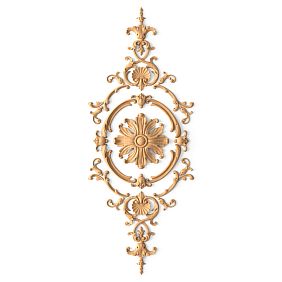
decorative rose outletsare round or oval overlay details with a relief pattern, often resembling a blooming flower. Their placement on doors follows certain compositional principles. A central rosette at eye level attracts attention and establishes an axis of symmetry. Four rosettes in the corners create a balanced frame. A vertical row of rosettes in the center of the door forms a dynamic composition.
Corner elements are used to decorate the joints of various decorative parts or simply to accentuate the corners of the door leaf. They can be made in the form of scrolls, leaves, or geometric shapes. Proper use of corner overlays allows for visual correction of the door's proportions—making it appear taller or, conversely, more squat.
Molding elements and trims
For creating framed compositions on doors, Trimming Items—thin strips with a profiled cross-section—are used. They allow for the creation of rectangular or square frames, inside which other decorative elements can be placed or simply to emphasize the door's structure.
The width of molding varies from delicate 15 millimeters for framing small areas to substantial 80 millimeters for architectural compositions. The profile can be simple rectangular, rounded, with fluting, or with carved ornamentation. By combining molding elements of different widths and profiles, complex multi-level compositions can be created, turning an ordinary door into a portal of a palace interior.
Materials for manufacturing door decor
The choice of material directly affects not only aesthetics but also the durability and practicality of decorative elements. The modern market offers a wide range of solutions, each with its own characteristics.
Natural wood: elegance and eco-friendliness
Solid wood remains the undisputed leader among materials for manufacturing high-quality door decor. Oak wood is renowned for its strength, beautiful texture with pronounced annual rings, and ability to retain its shape for decades. Oak overlays have a noble warm hue that only becomes richer over the years. Resistance to mechanical impact makes oak an ideal choice for frequently used doors.
Beech is not inferior to oak in hardness but has a more uniform, almost monochromatic structure in light tones. This allows for particularly fine, detailed carving on beech, where the clarity of each line is important. Beech decorative elementsoverlays take well to painting and tinting, expanding the possibilities for their integration into various interior color schemes.
Ash is distinguished by high elasticity and flexibility, which is important for overlays of complex shapes. Its texture is expressive and contrasting, with a beautiful transition from light to darker areas. Larch has natural moisture resistance due to its high resin content, making it optimal for rooms with high humidity—bathrooms, kitchens.
Polyurethane: The Practicality of Modern Technologies
Polyurethane decor represents a worthy alternative to natural wood in cases where the budget is limited or special performance characteristics are required. Polyurethane overlays are not afraid of moisture, are not prone to warping, and do not change dimensions with fluctuations in temperature and humidity. Their weight is significantly less than that of wooden counterparts, simplifying installation and reducing the load on the door leaf.
Modern production technologies allow for the creation of polyurethane elements with astonishing detail in relief. Surface texturing imitates wood fibers so convincingly that from a distance, it is practically impossible to distinguish high-quality polyurethane from wood. The ability to paint in any color, including metallics and patination, further expands design possibilities.
MDF: the golden middle
High-density MDF occupies an intermediate position between solid wood and polyurethane. It is a wood-fiber material that combines natural composition with production technology. MDF decor holds its shape well, does not crack, and allows for sufficiently fine carving. At the same time, its cost is lower than that of solid wood products, and installation is easier due to its lighter weight.
Painted MDF elements are especially in demand when colored decor is needed to harmonize with the overall interior palette. High-quality factory painting creates an even, durable coating unattainable with manual finishing of wooden parts.
Stylistic solutions in door decor design
The choice of specific decorative elements is always subordinate to the overall style of the interior. Let's consider how door decor functions within various design directions.
Classical interiors: luxury of details
Classicism in interior design implies a reference to the architectural traditions of past centuries—Empire, Baroque, Rococo, Neoclassicism. Such spaces are characterized by symmetry, proportionality, and an abundance of decorative details. Doors in a classical interior must correspond to this aesthetic.
Decorative overlays of the classical styleabound with plant motifs—acanthus leaves, laurel wreaths, grapevines, rosettes. Architectural elements are often encountered—meanders, egg-and-dart, beads. The composition is built on the principle of a central axis with mirror repetition of elements on the right and left.
The color palette of classical door decor gravitates toward natural shades of valuable wood species or white with gold or silver patination. Such finishing emphasizes the relief, creating an effect of noble antiquity, the museum-like value of the object.
Russian style: national character
Turning to the traditions of Russian wooden architecture in a modern interior creates a special atmosphere of cozy authenticity. Decorative Appliqués in Russian Styleare distinguished by characteristic ornaments—geometric meanders, plant interweavings, solar symbols.
The key feature of Russian decor is its openwork, airy carving. Even with a high density of pattern, a sense of lightness is created, as if the overlay is woven from the finest threads. Through-cut slits are often used, enhancing the play of light and shadow. Nature motifs—birds, flowers, leaves—are interpreted not naturalistically but ornamentally, turning into abstract patterns.
Coloring traditionally preserves the natural color of the wood, emphasized by transparent oils or varnishes. Bright accents are also permissible—red, green, blue—reminiscent of the painted interiors of Russian terems. Modern interpretation of the Russian style often uses contrasting combinations—dark wood and white doors, creating graphic expressiveness.
Modern minimalist aesthetic
It would seem that minimalism, with its inclination towards simplicity and conciseness, poorly combines with decorative overlays. However, well-chosen decor can enrich a minimalist interior without violating its philosophy. The key to success is geometric shapes and restraint in quantity.
For modern interiors, overlays with simple geometric outlines are suitable - rectangular frames, square inserts, linear compositions. The relief is minimal or absent altogether, the emphasis shifts to the play of planes, contrast of materials, and difference in textures. Metal inserts, mirror elements, and glass can complement wooden details, creating interesting visual effects.
The color palette tends towards monochrome - black, white, gray. Natural wood is used in restrained tones - bleached oak, gray ash, tinted wenge. The absence of gilding, patination, artificial aging is a fundamental position of minimalism, which values the honesty of the material and purity of lines.
Provence and Country: Rustic Charm
French Provence and American country, despite all their differences, are united by a penchant for simplicity, coziness, and natural materials. Door decor in these styles is distinguished by deliberately simple execution, imitation of handcraft, and aging effects.
Overlays are chosen that are not particularly complex in pattern, often with deliberately rough carving. Floral motifs are popular - simple flowers, ears of grain, leaves, lavender branches. Geometric elements tend towards folk patterns - stripes, checks, diamonds. The volume of relief is moderate, without Baroque opulence.
Color treatment necessarily includes aging effects - patination, brushing, artificial wear. For Provence, light shades are characteristic - white, cream, lavender, mint - with exposure of a darker underlayer in areas of simulated wear. Country prefers warm wood tones while preserving the natural texture.
How to Choose the Right Decor for Interior Doors
A successful choice of door decor requires consideration of many factors - from the technical characteristics of the doors themselves to the features of the surrounding interior. A step-by-step approach will help avoid mistakes and achieve the desired result.
Assessment of the Condition and Type of Door Leaf
You should start by carefully studying the existing doors. Their material will determine the method of attaching the decor - overlays can be glued and screwed to wooden and MDF doors, while metal doors will require high-strength adhesive. The condition of the surface will show whether preliminary preparation is needed - filling uneven areas, sanding, priming.
The thickness of the door leaf influences the choice of overlay size. On thin, lightweight doors, massive, high-relief decor will look inharmonious and may lead to warping of the leaf. For them, flat overlays of small size or molding elements are preferable. Solid doors made of solid wood, on the contrary, can withstand any decor and even require it to maintain proportions.
Coordination with the Room's Interior
A door does not exist in a vacuum - it is part of a room with a certain style, color scheme, and character. Decorative elements should harmonize with the setting, echo other interior details. If the room has Carved Wooden Elements - for example, pilastersorCrown Molding - the door decor is desirable to be executed in the same carving style.
The color solution should consider the shade of the walls, floor, and furniture. Contrasting decor - for example, dark overlays on a light door - will create an active accent and attract attention. Tonal decor, close in color to the door, will give a calmer, more elegant effect. The golden rule is that the door decor should echo at least two other interior elements in color or style.
Adherence to Proportions and Scale
Errors in the scale of decorative elements can ruin even the highest quality idea. Too small overlays on a tall door will get lost, creating a sense of incompleteness. Excessively large elements on a small door look ridiculous, as if a giant put on a child's hat.
A universal rule - the size of the central decorative element should be approximately 1/5 to 1/7 of the door's height. If several elements are planned, their total area should not exceed 30-40% of the door leaf's area, otherwise visual overload will occur. The distance between individual overlays is chosen to be 1.5-2 times their size, so that each element is perceived independently.
Functional Considerations
In addition to aesthetics, practical aspects must not be forgotten. A door is a utilitarian object; it opens and closes many times a day and is subjected to loads. Decorative elements should not interfere with the door's function, catch on the jamb when opening, or create obstacles for hardware.
The placement of overlays is planned considering the door handle, lock, and hinges. Free zones are left around these elements. If the door opens into a narrow corridor, protruding decor on the outside may create problems when passing through - this should also be anticipated. In homes with small children, avoid sharp corners on overlays, preferring rounded shapes.
Technology for Installing Decorative Overlays on Doors
Installing door decor is a process that requires care and precision, but is quite accessible for DIY with basic skills. Let's consider the sequence of actions and important nuances.
Preparation Stage
Quality preparation is the key to a durable and aesthetically pleasing result. The door leaf must be thoroughly cleaned of dust and grease. If the door is painted with glossy paint or varnished, light sanding with medium-grit abrasive will be needed to create roughness, improving adhesive bonding.
Uneven areas, dents, and chips on the door are filled with a special wood filler, sanded flush with the surface after drying. Primer creates an additional bonding layer between the door and decor and also protects the wood from moisture. If the door is to be painted a new color, this is done before installing the decor.
The decorative elements themselves also require preparation. They should be inspected for defects, and edges sanded if necessary. If the overlays are made of solid wood, they need to acclimate in the room for at least a day so they reach equilibrium moisture content and do not warp after installation.
Marking the position of elements
Precise marking is a critically important stage; mistakes here are difficult to correct. Start by determining the central vertical axis of the door, marked with a pencil using a ruler or spirit level. If a central element is planned, it is positioned on this axis.
For symmetrical compositions, the distances from the center to the side elements must be absolutely equal. It is convenient to use a stencil or template cut from cardboard to the actual size of the overlay - it is placed against the door and traced, obtaining an exact outline. For horizontal rows of elements, a level is used to avoid tilting.
Complex multi-element compositions make sense to pre-model by laying out all the parts on a horizontal surface in the order they will be placed on the door. This allows you to evaluate the overall appearance, adjust distances if necessary, and replace elements. A photograph of the final layout will serve as a visual guide during installation.
Methods of mounting
The choice of fastening method depends on the door material and overlays, their size and weight. Adhesive bonding is the most common option, providing a clean surface without visible fasteners. Specialized polyurethane-based woodworking adhesives or liquid nails are used for heavy elements.
The adhesive is applied evenly to the back of the overlay, then the element is placed on the marked spot and pressed. It is important to immediately remove excess adhesive that has squeezed out along the edges before it sets. For reliable fixation, the overlay must be held under pressure according to the adhesive instructions - usually from 30 minutes to several hours. Clamps can be used, with soft cloth padding to avoid damaging the decor.
Screw fastening is used for large, heavy elements or when special joint strength is required. Screws are driven from the back of the door, passing through the panel and into the overlay, or are screwed from the overlay side into specially drilled countersunk holes, which are then masked with wooden plugs or filled with putty.
Combined fastening - adhesive plus screws or finish nails - provides maximum reliability for particularly critical cases. In this case, after the adhesive dries, the mechanical fasteners can even be removed, leaving only the adhesive bond, if they were only needed for fixation during the adhesive curing time.
Final finishing
After installing all elements, the stage of finishing begins, which will give the work a complete, professional appearance. Joints between overlays and the door, if noticeable, are filled with acrylic sealant matching the wood color; excess is carefully removed with a damp sponge before it sets.
If the decor is installed on an unpainted door or the overlays themselves require a protective coating, varnishing or oiling is applied. For natural wood elements, transparent oils or water-based varnishes are preferred, highlighting the natural grain. Varnishes provide a glossier protection, oils create a matte silky surface and penetrate deeper into the wood structure.
Painting is used when a specific color effect is desired - for example, antiquing patination. First, a base tone is applied, after drying - a top layer of a different shade, which is then partially wiped off on the protruding areas of the relief, revealing the lower layer. The dry brush technique allows creating an effect of noble aging, as if the door has been serving for many decades.
Combining door decor with other interior elements
A harmonious interior is built on echoes and repetitions of decorative motifs in various furnishings. Door decor should not be an isolated spot - it needs to be connected with the surrounding space.
Coordination with casings and portals
The doorway is perceived as a single composition - the panel plus the framing. Stylistic unity betweendecorative overlays on the doorand casings is critically important. If the overlays have a specific type of carving, the casings should either repeat the same motifs or be neutrally simple so as not to compete for attention.
Complex door portals with pilasters on the sides and a cornice on top require a special approach. The door panel in such framing becomes the center of the composition. Its decor should be proportionate to the scale of the portal - modest overlays will get lost in the lush framing, while overly active decor will create visual chaos.
Echo with furniture decor
If the interior contains furniture with carved elements - cabinet fronts, table legs, bed headboards - it is desirable to select door decor in the same vein. It is not necessary to use identical elements; stylistic kinship is sufficient. For example, if the furniture is adorned with plant carving in a classical style,Door Decorplant motifs are also chosen, but possibly with a different subject.
Coordination is especially important in formal rooms - living rooms, dining rooms, studies - where furniture and doors are in close proximity and are perceived simultaneously. In bedrooms and children's rooms, the connection can be less rigid, allowing more freedom in the interpretation of decorative motifs.
Connection with architectural details of the room
If the interior includes fixed architectural elements - columns,pilasters, Ceiling Moldingwall panels - the door decor should consider their style. Classical interiors withCorinthian capitalson columns suggest corresponding classical decor on doors.
Scale also plays a role. In high-ceilinged rooms with monumental architectural details, small door decor will look skimpy. Conversely, in compact rooms with low ceilings, large carved overlays can create a feeling of tightness. The golden rule - the door decor should be proportionate to the scale of the room.
Care for decorative elements on doors
Proper care extends the service life of door decor and preserves its aesthetic qualities. Care requirements depend on the material of manufacture and the type of finish coating.
Regular cleaning
Dust is the main enemy of relief decor, accumulating in the recesses of carving and hindering pattern perception. Regular dry cleaning with a soft brush or a special duster prevents dirt accumulation. For complex carved elements, an old toothbrush with soft bristles is convenient, allowing penetration into small relief details.
Wet cleaning of wooden decor is done with a microfiber cloth wrung out almost dry. Excess moisture can lead to wood swelling and overlay delamination. Polyurethane elements are less sensitive to water; they can be wiped with a damp cloth and mild detergent.
Grease stains, inevitable on kitchen and children's room doors, are removed with special wood cleaning products. Do not use aggressive solvents, abrasive powders - they will damage the protective coating and the decor itself. After removing the stain, the surface is wiped with a clean damp cloth, then a dry one.
Damage Prevention
Mechanical damage - chips, dents - are most likely on protruding parts of the relief. Careful handling is the best prevention, but in a home with children and pets, completely avoiding impacts is difficult. Minor defects are restored with wax pencils matching the wood color or special putties.
Delamination of overlays occurs when using low-quality adhesive or insufficient surface preparation. If you notice that the edge of an element has started to lift, it should be re-glued immediately before the problem spreads further. Fresh adhesive is applied under the delaminated area using a thin spatula or knife, the element is pressed down and fixed for several hours.
Wood color change due to sunlight exposure is a natural process, especially pronounced in light-colored species. Some species darken over time, others fade. If a door is located near a window and exposed to direct sunlight, a protective coating with UV filters will slow down the changes. Periodic renewal of varnish or oil also helps preserve the original tone.
Seasonal humidity fluctuations
Natural wood is a living material that reacts to changes in air humidity. In winter, when heating is on, the air in an apartment becomes dry, wood releases moisture and slightly shrinks. In summer, especially during rainy periods, humidity increases, wood absorbs moisture and expands. These processes can cause minor deformations, gaps appearing between overlays and the door.
Maintaining stable indoor humidity using humidifiers in winter and dehumidifiers in summer is beneficial for all wooden interior elements. The optimal range is 40-60% relative humidity. If deformations have occurred and overlays have separated from the door, they can be re-glued after conditions normalize.
2026 Trends in Interior Door Decor
Fashion for interior solutions, although more conservative than clothing fashion, still evolves. 2026 brings its own accents in the field of door decor, reflecting general trends in residential space design.
Natural Motifs and Eco-Friendliness
Growing awareness of environmental issues influences the choice of materials and design solutions. Consumers prefer products made from natural wood, sourced from sustainably managed forests. Decor featuring images of plants, leaves, and flowers not only adorns but also serves as a reminder of the connection with nature.
Overlays featuring local flora are gaining particular popularity - oak leaves and acorns, birch catkins, spruce cones. This is not only beautiful but also references regional identity, creating a sense of rootedness. For Russian interiors, motifs of the Russian forest, familiar and close images from childhood, are relevant.
The Return of Handcraft
Amid widespread digitalization, there is a growing desire for authenticity, uniqueness, and one-of-a-kind items. Carving done by a master's hand is valued higher than a perfect machine copy. Minor inaccuracies, tool marks are perceived not as defects, but as evidence of a living creative process.
This trend does not mean a rejection of technology - modern production uses it in preparatory stages, but final detailing, refinement of small elements is often entrusted to carvers. The combination of high-precision CNC equipment for rough material selection and manual detailing provides an optimal balance of price, quality, and exclusivity.
Mix of styles and eclecticism
Rigid stylistic frameworks are blurring, giving way to free combination of elements from different eras and cultures. A classic carved rosette can coexist with geometric modernist overlays, creating unexpected yet harmonious combinations. This approach requires a subtle sense of proportion and scale, but the result justifies the effort - the interior becomes lively, individual, free from the museum-like stiffness of pure styles.
Eclectic door decor works well in rooms where a mix of styles is already present in furniture and finishes. It serves as a connecting link, unifying disparate elements through common motifs or color schemes. The main rule of eclecticism - amidst all the diversity, a unifying principle must be discernible, be it color, scale, or material.
Technological Integration and Smart Features
Smart homes with automation are becoming more firmly established in everyday life, and doors are not left behind. Modern door decor considers the possibility of technology integration - hidden presence sensors, automatic locks, lighting. Overlays are designed to mask technological elements without compromising aesthetics.
LED lighting, built into decorative elements or placed behind them, creates a spectacular play of light and shadow in the evening. Such a door becomes not just a passage between rooms, but an expressive light object that changes the atmosphere of the space. Lighting control can be integrated into the smart home system, responding to time of day or human presence.
Where to Buy Quality Decorative Door Overlays
Choosing a reliable supplier of door decor is no less important than choosing specific products. Where and from whom overlays are purchased determines material quality, execution accuracy, result durability, and ultimately, satisfaction with the renovation.
Advantages of buying from the manufacturer
Direct purchases from the manufacturer eliminate intermediary markups, allowing for the optimal price-to-quality ratio. Furthermore, the manufacturer bears full responsibility for its products and is invested in reputation, so quality control is stricter here. The possibility of custom orders is another plus: if the standard range does not fully meet needs, many manufacturers are ready to produce overlays based on custom sketches.
Professional consultations from the manufacturer's specialists help avoid mistakes when choosing decor. They will advise which elements combine best, how to correctly calculate quantities, which mounting method is optimal for a specific situation. This level of service is rarely found in retail stores, where sellers often lack deep product knowledge.
Warranties and certificates
A reliable supplier always provides documents confirming product quality and safety. Certificates of conformity, sanitary-epidemiological conclusions guarantee that the products are made from approved materials and do not emit harmful substances. This is especially important for residential spaces where we spend most of our time.
The manufacturer's warranty on its products is an indicator of confidence in quality. Usually, a warranty of 1 to 3 years is provided for wooden decorative elements, during which the manufacturer undertakes to replace the product if manufacturing defects are identified. It is important to clarify the warranty terms - what exactly it covers and what actions by the buyer may lead to its annulment.
Range and Possibility of Custom Solutions
A wide catalog of ready-made products allows for choosing decor for any interior style, from classic to modern. Variety of decorative overlay collections provides the opportunity to compare options, combine elements, create unique compositions from standard parts.
But sometimes the standard range doesn't fully solve the problem - you need an element of a non-standard size, with a special pattern, made from a specific type of wood. The manufacturer's custom manufacturing service solves this problem. The customer provides a sketch or description of the required product, specialists assess the technical feasibility of its implementation, and after the agreed period, a unique decor is produced, perfectly matching the concept.
Delivery and After-Sales Service
Logistics for large-sized or fragile items requires a professional approach. A reliable supplier offers delivery services with packaging that guarantees the safety of the decor during transit. Large elements are packed in wooden crates or plastic boxes, small ones - in corrugated cardboard with bubble wrap.
Delivery times should be realistic and adhered to. A good sign is the ability to track the order at all stages from shipment to receipt. Courier delivery to the door is more convenient than pickup from the warehouse, especially if decor is purchased in large quantities for renovating an entire apartment.
After-sales support includes consultations on installation, care, and possible repairs. If questions or problems arise after installation, it's good when you can turn to the supplier's specialists for help. Some companies even offer professional installation services for decor, which is especially valuable when working with complex compositions.
Frequently Asked Questions about Door Decor
Can wooden overlays be installed on metal doors?
Yes, installing wooden decor on metal doors is quite possible and widely practiced. Metal entrance and interior doors often have a simple appearance that one wants to enhance. Decorative overlays solve this task. The key point is the correct choice of adhesive composition. Regular woodworking PVA glue is not suitable here; specialized compounds for bonding dissimilar materials - metal and wood - are needed. Two-component epoxy adhesives and polyurethane compounds like liquid nails have proven themselves well. Before gluing, the metal surface is degreased with a solvent, lightly sanded to create roughness, and primed with a special metal primer. These preparatory operations will ensure reliable long-term adhesion of the decor to the base.
How does decor affect the service life of a door?
Properly installed, high-quality decor not only does not shorten but can even extend the service life of a door leaf. Overlays protect the door surface from mechanical damage, scratches, and wear in areas of frequent contact. They prevent the door's paint and varnish coating from wearing away. This is especially relevant for areas near the handle, which are constantly touched. However, there is a nuance - if the decor is made from wood with a moisture content significantly different from the equilibrium moisture content for the given room, it can deform when drying or swelling and, in extreme cases, even damage the door. Therefore, it is important to purchase overlays from a reliable manufacturer who controls the material's moisture content and allows the decor to acclimate before installation. Under these conditions, overlays serve for decades, protecting the door and preserving its appearance.
Is it difficult to care for carved decor?
Caring for door decor is easier than it might seem at first glance. The main task is regular dust removal, which accumulates in the recesses of the relief. A soft brush, feather duster, or vacuum cleaner with a long-pile attachment easily handles this in a few minutes once a week. Wet cleaning is done less frequently - once a month or two with a wrung-out microfiber cloth. The main thing is not to flood the decor with water and not to use aggressive cleaning agents. If grease stains have accumulated on the overlays, which is possible in the kitchen, special wood cleaning products are used. Every few years, it is advisable to renew the protective coating - varnish or oil - which refreshes the appearance and extends the service life. This procedure takes a couple of hours for the entire door. Thus, with minimal regular effort, the decor retains its original beauty for many years.
Can wooden overlays be painted a different color?
Wooden decor is perfectly suitable for painting, allowing it to be adapted to any interior color scheme. If the overlays are supplied untreated or coated with a colorless composition, they can be painted before installation in the desired color. The same materials are used as for painting ordinary wooden furniture - stains for tinting while preserving the wood grain, opaque paints for obtaining a solid color tone, enamels for a glossy finish. Patination technique allows creating an effect of noble antiquity - first a base tone is applied, then a lighter or darker second layer, which is partially wiped off on the protruding areas of the carving. Already installed overlays can also be repainted when changing the interior, after first removing the old coating by sanding or using a remover. The multi-layered nature of some painting techniques is even easier to implement on already installed elements when it is possible to evaluate the result on-site and make adjustments.
How to determine the required amount of decor for a door?
Calculating the number of decorative elements depends on the chosen compositional scheme. For a symmetrical central composition, usually one large element in the center of the door and four corner pieces are sufficient. If framing the perimeter of the door with linear elements is planned, the perimeter of the leaf is measured and 10-15% is added for trimming and possible errors. Complex multi-element compositions are better pre-drawn to scale or modeled using paper templates to accurately count how many overlays of each type will be needed. When purchasing, it is recommended to take one or two spare elements of each type in case of damage during installation or the need for replacement in the future. The manufacturer's consultants will help calculate the required quantity if you provide them with the door dimensions and a description of the desired decor. Many companies offer ready-made decor kits for standard door sizes, which simplifies the choice.
Will classic decor suit a modern interior?
Classic decor in a modern interior is a quite achievable combination with the right approach. The key to success is dosage and context. A small amount of classic elements in a minimalist space creates an interesting contrast, drawing attention to the door as an artistic object. For example, a simple white door with one exquisite carved rosette in the center will look stylish and modern, avoiding museum-like overload. The quality of execution is also important - classic decor must be impeccable, clear, well-sanded, then it is perceived as a conscious designer choice, not a random anachronism. The color scheme also matters - classic overlays painted in modern colors (gray, black, graphite) integrate more easily into a contemporary interior than traditional gilded or dark brown ones. Eclecticism, mixing classic and modern, is one of the main trends in contemporary design, so with a thoughtful approach, such a combination is not only acceptable but welcomed.
Conclusion: Choose Quality with STAVROS Company
Decorative overlays and panels for interior doors are not just a way to update the interior with minimal costs. It is an opportunity to bring a piece of art, individuality, and handmade beauty into the home. Each carved detail installed on a door tells its own story, creates a special atmosphere, turning a functional piece of furniture into a work of carpentry craftsmanship.
In 2026, the possibilities for decorating doors are practically limitless - from strict classic to free eclecticism, from natural motifs to geometric abstraction. The main thing is to make a conscious choice, considering the features of the room, the style of the interior, and practical requirements. High-qualitydecor for interior doorsserves for decades, pleasing the eye and confirming that investments in the beauty of a home are never in vain.
STAVROS Company has specialized in the production of high-quality solid wood products for over twenty years. The experience of craftsmen, modern equipment, and strict quality control at all stages of production guarantee the perfection of each product. A wide range allows selecting decor for any interior style, and the possibility of custom orders opens the way to realizing the boldest design ideas.
ChoosingSTAVROS decorative overlays, you choose the reliability of a proven manufacturer, the eco-friendliness of natural materials, the beauty of traditional craftsmanship combined with innovative technologies. The company's consultants will help you decide on the choice, calculate the amount of material, and suggest optimal installation methods. Delivery to any region and quality guarantee make cooperation with STAVROS maximally comfortable and effective.
Transform your home with elegant door decor - and every day, moving from room to room, you will enjoy contemplating the beauty created by the hands of masters!


