












































































Article Contents:
- Portrait of a modern hobby woodworker
- Motivation and hobbies
- Skill level and needs
- Psychology of the hobby master
- Categories of gifts for a hobby woodworker
- Beginner-level tools: first steps toward mastery
- Measuring Instruments: Precision as the Foundation of Quality
- Consumables: what is always needed
- Innovative solutions for a home workshop
- Modern technologies in the world of hobbyists
- Battery-powered tools: freedom and mobility
- Dust extraction systems: cleanliness and health
- Materials and blanks: the foundation of creativity
- Exotic wood species: expanding horizons
- Ready-made blanks and semi-finished products
- Premium-grade finishing materials
- Educational gifts: knowledge as an investment
- Books and guides: wisdom on the shelf
- Online courses and video lessons: learning in the digital age
- Masterclasses and seminars: live interaction
- Workshop organization: comfort and efficiency
- Storage systems: each tool has its place
- Lighting: seeing every detail
- Work surfaces: the foundation of comfortable work
- Decorative Elements and Hardware
- Carved Elements: Art in Wood
- High-quality hardware
- Inlay materials: luxury in details
- Unusual and creative gifts
- Vintage tools: connection with traditions
- Exotic materials: new horizons of creativity
- Technological Innovations: A Look into the Future
- Customized Solutions
- Personalized Tools: The Master’s Personal Seal
- Custom Items: Uniqueness in Every Detail
- Practical tips for selection
- Researching Preferences and Needs
- Balancing Practicality and Emotional Value
- Considering Limitations and Specifics
- Seasonal and Festive Aspects
- New Year Gifts: Traditions and Innovations
- Birthdays: A Personal Approach
- Professional Holidays: Recognizing Craftsmanship
- Frequently Asked Questions About Gifts for Hobby Woodworkers
- What Budget is Optimal for a Gift for a Hobby Woodworker?
- Should You Gift Power Tools to a Beginner Woodworker?
- Which Materials Are Most Versatile for a Gift?
- How to Choose a Book for a Hobby Woodworker?
- Can You Gift Homemade Tools or Accessories?
- What Gifts Are Suitable for Woodworkers with Limited Space?
- How to Find Out What Tools the Master Already Has?
- Should You Gift Consumables?
- Conclusion: The Art of Giving with Understanding
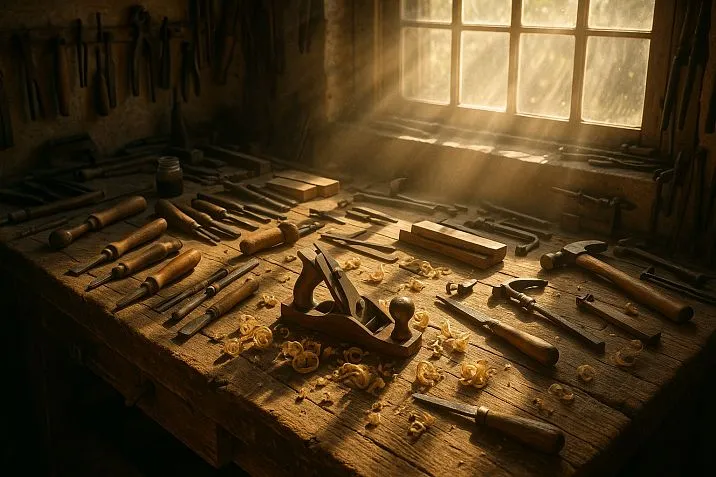
When someone in your circle is passionate about woodworking, choosing a gift can be daunting. Because what to give a hobby woodworker, who spends weekends in their workshop, creating amazing wooden items? This question requires a special approach and understanding of the craftsman-enthusiast’s soul.
A hobby woodworker is a special category of people. This is not a professional earning money from their craft, but someone for whom working with wood has become a true passion. Such people are often more open to experimentation than professionals, willing to learn new techniques and not afraid to make mistakes. It is precisely this characteristic that makes choosing a gift both simpler and more complex.


Portrait of a Modern Hobby Woodworker




Motivation and Interests
Hobby woodworkers come to their hobby through different paths. Some start with a simple desire to repair old furniture, others dream of creating something with their own hands for their home, and some simply find working with wood a way to relax after stressful days. But all of them share one thing — genuine love for the material and the creative process.
Unlike professionals, who are often constrained by commercial considerations, hobbyists are free to choose projects. They may spend months creating a single box, experimenting with different techniques and materials. This freedom of creativity makes them especially receptive to gifts that open new horizons.
Our factory also produces:




Level of Skill and Needs
Hobby woodworkers represent a wide range of skill levels. Beginner enthusiasts are just learning basic skills and need simple, yet quality tools and educational materials. Experienced hobbyists already have a solid arsenal of tools and can appreciate more specialized or unique items.
It is important to understand that hobbyists are often limited by budget and space. Their workshops are usually located in garages, basements, or on balconies, which imposes certain limitations on the size and quantity of tools. Therefore, gifts should be not only useful but also compact and multi-functional.
Get Consultation
The psychology of hobby carpentry
Carpentry as a hobby has deep psychological roots. It is a means of self-expression, a meditative practice, and the opportunity to create something lasting and beautiful with one's own hands. Many enthusiasts say that working with wood helps them cope with stress and find inner balance.
Wooden gifts They are especially valued because enthusiasts understand the effort and time invested in their creation. They are able to appreciate the intricacies of work, the quality of execution, the choice of materials — things that may go unnoticed by ordinary people.
Categories of gifts for a hobby carpenter
Basic tools: first steps toward mastery
Beginner hobby carpenters often need quality basic tools. Unlike professionals who immediately purchase expensive specialized tools, enthusiasts usually start with universal solutions, gradually expanding their arsenal.
A basic set of chisels is an excellent choice for beginners. A set of 4-6 chisels of different widths will cover most tasks for a novice. It is important to choose tools made of quality steel with comfortable handles. Japanese or German chisels will serve for decades with proper care.
Hand saws remain indispensable even in the age of power tools. A good hand saw for wood, a jigsaw for curved cuts, a dovetail saw for precise joints — all these are tools that should be in the arsenal of every hobby carpenter.
Measuring Instruments: Precision as the Foundation of Quality
Accurate measurements are the foundation of quality carpentry work. Enthusiasts often underestimate the importance of good measuring tools, using ordinary construction tape measures and squares. Quality measuring instruments can dramatically improve the results of their work.
A metal ruler 50-100 cm long with clear markings will become an indispensable helper. It is better to choose rulers made of stainless steel with engraved divisions — they do not wear out over time and ensure measurement accuracy.
A carpenter's square is a tool whose accuracy determines the quality of the entire product. Professional squares are calibrated and guarantee a 90-degree angle with precision down to fractions of a degree. For an enthusiast, this may be a revelation after working with approximate construction squares.
Consumables: what is always needed
Hobby carpenters constantly need various consumables. Sandpaper of different grits, adhesives, stains, varnishes — all of these are consumed during work and require regular replenishment.
Quality PVA carpentry glue is the basis for many joints. Professional glues have a longer open time, provide stronger joints, and do not yellow over time. Such glue can be a pleasant surprise for an enthusiast accustomed to ordinary construction compounds.
Premium-grade sandpaper lasts longer and provides better results. Fabric-based paper is more durable, and special coatings prevent clogging. A set of sandpaper of different grits — from coarse P80 to finishing P400 — will always find application.
Innovative solutions for a home workshop
Modern technologies in the world of enthusiasts
Technologies are not standing still, and carpentry is no exception. Modern hobby carpenters are increasingly interested in innovative solutions that can improve the quality of their work or open up new possibilities.
Laser levels and distance meters have revolutionized measurement accuracy. Compact laser devices allow obtaining perfectly straight lines, accurately measuring distances and angles. For an enthusiast working in a limited space, such a tool can be a real lifesaver.
Digital calipers provide measurement accuracy down to hundredths of a millimeter. They are especially useful when making small parts, where every millimeter matters. Modern models have memory functions and can switch between different measurement units.
Battery-powered tools: freedom and mobility
Battery-powered tools are becoming increasingly popular among enthusiasts. They provide mobility and do not require connection to a power outlet, which is especially important in small workshops with limited outlets.
A battery-powered drill-driver is a basic tool that will find application in any workshop. Modern models with brushless motors provide greater power and longer operating time. Features such as torque and speed adjustment make them versatile for various tasks.
A battery-powered jigsaw opens up new possibilities for curved cutting. The absence of a cord allows free maneuvering of the workpiece, creating complex curved elements. Quality models provide clean cuts without chipping.
Dust extraction systems: cleanliness and health
Working with wood inevitably involves the generation of dust and shavings. In home conditions, this is especially relevant, as the workshop is often located in a residential home. Dust extraction systems are not a luxury but a necessity for comfortable and safe work.
Construction vacuum cleaners are specifically designed for working with wood dust and shavings. They have powerful motors, large dust collection bins, and efficient filtration systems. Many models can be connected to power tools for automatic activation.
Portable dust extraction systems are especially convenient for small workshops. They take up minimal space but effectively handle dust removal from hand tools and small machines.
Materials and blanks: the foundation of creativity
Exotic wood species: expanding horizons
Most amateur woodworkers work with locally available species — pine, birch, oak. Exotic wood species can open up entirely new creative possibilities for them and introduce them to the unique properties of various types of wood.
Redwood, with its rich color and noble texture, has traditionally been used to make high-end furniture. A small piece of quality redwood allows an enthusiast to create an elegant box or decorative element.
Walnut, with its contrasting grain and excellent workability, is ideal for making small items. Walnut wood polishes well, acquiring a deep luster. Walnut produces excellent tool handles, decorative inlays, and small souvenirs.
Ready-made blanks and semi-finished products
An amateur woodworker does not always want to start work with rough lumber. Ready-made blanks save time and allow focusing on the creative aspects of the project. Furniture legs Different styles and sizes open up wide possibilities for creating original furniture.
Turned balusters, decorative posts, carved elements — all these are blanks that can be used as-is or further customized for a specific project. Quality blanks are made from select wood and have precise geometry.
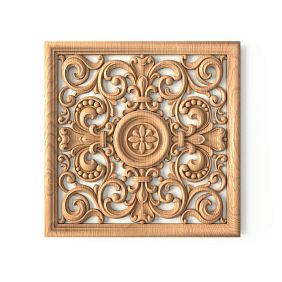
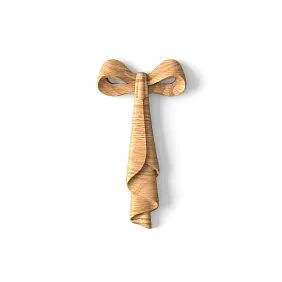
Decorative Inserts They allow ordinary furniture to acquire an elegant appearance. Carved rosettes, ornamental strips, corner elements — all these details make furniture unique and artistically valuable.
Premium-grade finishing materials
The quality of finishing largely determines the perception of the finished product. Enthusiasts often cut corners on finishing materials, using cheap varnishes and stains. Professional materials can dramatically change the outcome of the work.
Nitrocellulose varnishes provide a classic finish with deep gloss. They require certain skills to apply, but the result is worth the effort. Such varnishes are used in restoring antique furniture and creating premium-grade items.
Tung oil is a natural finishing material that highlights the beauty of wood, creating a warm, lively surface. It penetrates deeply into the wood pores, providing protection from within. Tung oil finish is easy to restore and becomes even more beautiful over time.
Educational gifts: knowledge as an investment
Books and guides: wisdom on the shelf
A good book on woodworking is a gift that will be used for years. Unlike tools that may become outdated or break, knowledge remains with the craftsman forever. Carpentry materials And the technologies for processing them are constantly evolving, so current literature will always find its reader.
Classic woodworking guides contain fundamental knowledge that remains relevant for decades. Principles of working with wood, basics of construction, traditional joints — all this is foundational knowledge that every woodworker should know.
Modern publications cover new materials, tools, and technologies. Books on working with laminated materials, composites, modern adhesives and finishes help enthusiasts keep pace with the times.
Online courses and video lessons: learning in the digital age
Modern technologies open up new opportunities for learning. Online courses allow studying woodworking from the best masters around the world without leaving home. Subscribing to a quality educational resource can become a valuable gift.
Video courses on specialized techniques are especially valuable. Japanese joints, French marquetry, American finishing techniques — all of this can be learned through video lessons from recognized masters. Visual learning is often more effective than studying from books.
Access to libraries of drawings and projects expands the possibilities for enthusiasts. Detailed plans for furniture making, dimensioned drawings, material lists — all this saves time on developing original projects and guarantees good results.
Master classes and seminars: live interaction
Despite the development of online learning, live interaction with a master remains indispensable. Master classes not only provide new knowledge but also allow asking questions, receiving individual advice, and connecting with like-minded people.
Paying for participation in a prestigious master class is a gift that will be remembered for a long time. Such events are often conducted by renowned masters, using unique techniques or materials not available under normal circumstances.
Seminars on furniture restoration are especially interesting for enthusiasts. They provide not only technical knowledge but also introduce participants to the history of furniture art, teach how to recognize styles and periods, and how to assess the artistic value of items.
Workshop organization: comfort and efficiency
Storage systems: each tool has its place
A well-organized workshop is a dream of every amateur woodworker. In a limited space of a home workshop, it is especially important to rationally use every square centimeter. Storage systems for tools — a practical gift that any craftsman will appreciate.
Wall organizers allow placing the maximum number of tools on minimal space. Perforated panels with hooks and holders create a flexible storage system that can be adapted to changing needs.
Tool carts provide convenience. All necessary tools are always within reach, and after work, the cart can be tucked away in a corner, freeing up workspace. Quality carts have multiple shelves, pull-out drawers, and durable wheels.
Lighting: see every detail
Quality lighting is critically important for precise woodworking. Many hobbyists work in garages or basements with insufficient natural lighting. Professional lights can dramatically improve working conditions.
LED lights with adjustable brightness and color temperature allow you to tailor lighting to specific tasks. One type of light is needed for marking, another for checking finish quality, and a third for general work.
Portable lights are especially convenient in small workshops. They can be moved depending on the task, directed precisely where needed. Battery-powered models are not dependent on outlets and can be used anywhere in the workshop.
Work surfaces: the foundation of comfortable work
A quality workbench is the heart of any woodworking workshop. However, many hobbyists work on random surfaces — kitchen tables, old boards, homemade structures. A professional workbench or its components can become a valuable gift.
Woodworking vises are an essential part of a quality workbench. They must securely hold the workpiece without leaving marks on the surface. Modern vises have quick-release mechanisms, interchangeable jaws, and can work with non-standard shaped parts.
Jigs and guides transform a regular table into a functional workbench. A parallel guide for a circular saw, an angled guide for dado cutting, a router table — all these are accessories that expand the craftsman’s capabilities.
Decorative elements and hardware
Carved elements: art in wood
Carving is one of the woodworking directions that particularly attracts hobbyists. Ready-made carved elements allow creating complex decorative compositions without years of learning carving techniques.
Carved rosettes and cartouches are classic decorative elements used to embellish furniture, doors, and architectural elements. Each style has its characteristic motifs: classical plant ornaments, geometric patterns of the Empire, curved lines of the Modern style.
Column and pilaster capitals give furniture a majestic, architectural character. They are especially effective in classical interiors, adding monumentality and nobility to the pieces.
High-quality hardware
Quality hardware is not only functional, but also aesthetic. Furniture Handles Made from premium natural wood or metal, can dramatically change the perception of furniture.
Antique or vintage-style hardware gives items a unique charm. Brass handles with patina, forged hinges, locks with keys — all these details make furniture unique and artistically valuable.
Hidden hardware allows creating furniture with clean lines. Invisible hinges, concealed guides, push-to-open mechanisms — all these are elements of modern design that minimalist enthusiasts appreciate.
Inlay materials: luxury in details
Inlay techniques open up opportunities for woodworkers to create true works of art. Mother-of-pearl, metal plates, colored wood species — all these materials are used to create complex decorative compositions.
Ready-made inlay elements allow mastering this technique without complex equipment. Thin plates of various materials, already cut according to specific motifs, remain only to be properly glued into prepared recesses.
Special inlay tools — fine chisels, cutters, templates — help create precise, neat work. These tools require certain skills but allow achieving a professional result.
Unusual and creative gifts
Vintage tools: connection with traditions
Antique woodworking tools have a special aura. They carry the energy of past generations of craftsmen, the history of the craft, traditions passed down from father to son. For many hobbyists, such tools are not just work tools, but a connection to history.
Old-fashioned hand planes, especially wooden ones, have a unique character. Each one is unique, handmade, with its own specific setup and usage. Restoring and using such a tool is a special pleasure for true craftsmanship enthusiasts.
Vintage measuring tools — folding rulers, old-fashioned squares, compasses — often surpass modern equivalents in accuracy and durability. They were made when quality was prioritized over production speed.
Exotic materials: new horizons of creativity
Familiarity with unusual materials can open up completely new creative directions for a hobbyist woodworker. For example, bamboo has unique properties — it is stronger than many traditional wood species, yet flexible and lightweight.
Stabilized wood is a material treated with special compounds to improve its properties. Such wood does not crack, does not warp, and acquires vibrant, saturated colors. It is ideal for making small items — handles, ornaments, souvenirs.
Wood-based composite materials combine the beauty of natural wood with improved performance characteristics. They are stable, resistant to moisture, easy to work with, while retaining the texture and warmth of wood.
Technological Innovations: A Look into the Future
3D printing is beginning to penetrate woodworking. 3D printers allow creating complex templates, fixtures, even ready-made parts from composite materials. Combined with traditional woodworking methods, this opens up boundless possibilities.
Laser engravers allow creating complex ornaments, inscriptions, even photographs on the surface of wood. This technology is especially interesting for enthusiasts of personalization — you can create personalized items, commemorative gifts, unique decorative elements.
Portable CNC machines make high-precision processing accessible for home workshops. Compact milling machines allow creating parts of complex shapes, precise joints, serial items with identical parameters.
Personalized solutions
Personalized Tools: The Master’s Personal Brand
Personalization turns an ordinary tool into something special, a memorable gift. Engraving a name on a plane or chisel not only makes the tool unique, but also emphasizes the recipient’s serious attitude toward their hobby.
Personalized tool cases with nameplates create a sense of professionalism. Quality cases made of natural leather or wood not only protect tools, but also highlight the owner’s status.
Aprons with individual embroidery of a name or workshop logo create a special atmosphere. Quality aprons made of dense fabric with thoughtfully arranged pockets are not only practical but also add a sense of professionalism to the master’s appearance.
Custom-made Items: Uniqueness in Every Detail
Items created specifically for a particular master have special value. This could be a workbench designed for a specific workshop, a tool storage system taking into account individual needs, or a decorative panel with professional symbolism.
Portraits of the master at work, executed in wood carving or pyrography techniques, create a special atmosphere in the workshop. Such items not only decorate the space but also motivate for new achievements.
Memorial boards with the history of a hobby — dates of beginning, first successes, future plans — create an emotional connection with craftsmanship. They remind of the path already traveled and inspire further development.
Practical Tips for Selection
Researching Preferences and Needs
Before choosing a gift, it is important to understand the level at which the hobbyist woodworker is, what projects interest them, what equipment they already have. Thoughtful inquiries, observing their work, studying their workshop will help make the right choice.
Pay attention to the condition of existing tools. If they are in good condition and clearly high-quality, it means the master understands tools and will appreciate a truly good gift. If the tools are cheap or in poor condition, perhaps it’s better to give something basic but quality.
Look at the projects the master is working on. If it’s mostly repair and restoration, suitable tools and materials will be appropriate. If he creates custom furniture or decorative items — completely different ones.
Balance between Practicality and Emotional Value
The best gifts combine practical utility with emotional value. A beautiful but useless souvenir will be quickly forgotten. A practical but impersonal tool won’t evoke special emotions. The ideal gift is useful in work and pleasant as an object of possession.
Unique interior items Handmade items are especially valued by hobbyist woodworkers. They understand the effort invested in creating such items, can appreciate the quality of execution, the complexity of the work.
Gifts with history have special value. A tool belonging to a famous master, material from a historic building, a book with the author’s autograph — all of this creates an emotional connection with craftsmanship.
Considering Limitations and Specifics
Hobbyist workshops often have limitations regarding size, noise, and dust. A large machine may simply not fit in a garage. A noisy tool will cause problems with neighbors. Dusty processes may be unacceptable in a residential home.
Consider storage climate conditions. In an unheated garage, metal tools may rust, wooden tools may dry out or swell. Some materials require special storage conditions.
Safety is an important factor for hobbyist workshops. Professional equipment may require special knowledge and skills. It’s better to choose tools with good safety systems, clear documentation, and opportunities for training.
Seasonal and Festive Aspects
New Year Gifts: Traditions and Innovations
New Year is traditionally a time for gifts. For hobbyist woodworkers, this may be a time to review the year’s accomplishments and plan new projects. New Year gifts often have symbolic meaning — they should bring luck to new endeavors and inspire creativity.
Calendars featuring wooden architecture, furniture masterpieces, and tools create the appropriate atmosphere in the workshop. High-quality calendars with good print quality can serve not only for their intended purpose but also as a source of inspiration.
Material kits for new experiments — an excellent New Year gift. A set of exotic wood species, a kit of finishing materials, a collection of carved elements can become the foundation for projects in the coming year.
Birthday Gifts: Personalized Approach
Birthday is a special occasion for a gift. Here, it's not so much about universality as it is about personal significance for a specific person. The gift should show that you know and value the hobbyist's interests.
Biographies of great masters, albums of their work, films about famous cabinetmakers — all of these are gifts that enrich knowledge and inspire. Especially valuable are rare editions that are hard to find in ordinary stores.
Trips to places associated with carpentry can become an unforgettable gift. Furniture museums, workshops of folk crafts, exhibitions of wooden architecture — all of these are sources of new knowledge and impressions.
Professional holidays: recognition of craftsmanship
Although amateur carpenters are not professionals, many of them gladly celebrate professional holidays associated with craftsmanship. This is an opportunity to feel like part of a large community of craftsmen.
Membership in professional associations or clubs of carpentry enthusiasts can become a valuable gift. This is not only formal recognition of interests, but also access to specialized information, events, and communication with like-minded individuals.
Participation in exhibitions or competitions for hobbyists allows you to showcase your work, receive expert evaluations, and make new acquaintances. Payment for participation in such events is an investment in the craftsman's development.
Frequently asked questions about gifts for amateur carpenters
What budget is optimal for a gift for an amateur carpenter?
The gift budget should correspond to your relationship with the recipient and the significance of the occasion. Symbolic gifts may cost 1000–3000 rubles — these are books, small tools, consumables. Mid-level gifts (3000–15000 rubles) include quality hand tools, material kits, and training courses.
Expensive gifts (over 15000 rubles) — these are power tools, exotic materials, antique tools. It is important to remember that for an amateur, quality and uniqueness of the gift are often more important than its cost.
Is it worth giving power tools to a beginner carpenter?
Power tools for beginners can be useful, but require careful selection. It is better to choose simple, safe tools with good safety systems. Drill-driver, orbital sander, electric jigsaw — good options for starting out.
It is important to ensure that the recipient has a suitable workspace for using power tools and understands basic safety. Include quality literature on safe operation with the gift, or pay for a training course.
What materials are most universal for a gift?
Universal materials are those suitable for a wide range of projects. Quality plywood of various thicknesses, boards of popular species (oak, ash, walnut), sets of small blanks for experiments.
Exotic species are better chosen in small pieces — sufficient for making a box, tool handle, decorative element. Large volumes of exotic wood may turn out to be unused.
How to choose a book for an amateur carpenter?
When choosing a book, consider the level of the craftsman and his interests. Beginners will find basic guides with step-by-step instructions and plenty of illustrations suitable. Experienced hobbyists will find specialized literature on specific techniques more interesting.
Pay attention to print quality and illustrations. In carpentry, visual information is critically important. Books with poor photographs or drawings are of little use, regardless of the quality of the text.
Can you give handmade tools or fixtures as gifts?
Handmade tools can be an excellent gift if they are made to a high standard. Amateur carpenters especially appreciate a creative approach and understand the complexity of making quality tools.
Good options for handmade gifts — workshop fixtures, templates for repetitive operations, tool storage systems. It is important that the quality of execution meets the recipient's expectations.
What gifts are suitable for carpenters with limited space?
For craftsmen with small workshops, compact, multi-functional solutions are ideal. Folding workbenches, mobile storage systems, battery-powered tools that do not require fixed placement.
Space-saving gifts are especially valuable: wall-mounted tool organizers, hanging storage systems, compact machines that can be stored after work.
How to find out what tools the craftsman already has?
Tactful inquiries are the best way to learn about existing tools. You can ask for advice on choosing a tool 'for a friend' or discuss different models and manufacturers. Many hobbyists enjoy talking about their tools.
A visit to the workshop under the pretext of viewing the work will help assess the existing equipment. Pay attention not only to the presence of tools, but also to their condition, quality, and age.
Is it worth giving consumables as gifts?
Consumables — a practical choice that is always useful. High-quality sandpaper, professional adhesives, premium finishing materials — all of these are used during work and require regular replenishment.
Choose materials noticeably better in quality than those the craftsman usually buys for himself. This will allow him to appreciate the difference and may even prompt him to reconsider his quality standards.
Conclusion: the art of gifting with understanding
Choosing a gift for a woodworking hobbyist is an opportunity to support a person’s passion, show understanding and respect for their hobby. what to give a hobby woodworker — a question that requires understanding of the hobby’s specifics, the craftsman’s personal preferences, and the particularities of their workshop.
Woodworking as a hobby has its own characteristics. Enthusiasts are more open to experimentation, eager to learn new techniques, but often limited by funds and space. They value quality but may not always be able to afford professional equipment. A gift can become a bridge between desires and possibilities.
The best gifts for woodworking hobbyists combine practical utility with emotional value. This could be a tool that significantly improves work quality, a material that opens new creative possibilities, or a book that inspires new projects.
It is important to remember that hobbyists especially value attention to detail, craftsmanship quality, and the history of an object. They are able to appreciate subtleties that may go unnoticed by ordinary people. Therefore, the gift should be chosen with an understanding of these characteristics.
Personalization makes any gift special. Taking into account individual preferences, working style, and skill level shows that the gift was chosen with care and attention. This could be engraving on a tool, selecting materials tailored to specific projects, or choosing a book on a topic of interest.
Modern technologies open up new possibilities for gifts. Digital tools, online courses, high-tech materials can become a window into the future of craftsmanship. However, it is also important not to forget about traditions — vintage tools, classic techniques, time-tested materials remain relevant.
A gift for a woodworking hobbyist is an investment in their development, support for creativity, and recognition of the value of their passion. A well-chosen gift can become a catalyst for skill growth, a source of inspiration for new projects, and a symbol of understanding and support.
STAVROS understands the needs of hobbyist craftsmen, creating products that can become ideal gifts. Decades of experience producing items from natural wood, understanding the intricacies of craftsmanship, attention to quality in every detail — all of this makes STAVROS a reliable choice for those seeking quality gifts for woodworking hobbyists. STAVROS products are not just goods — they are tools for creativity, materials for realizing ideas, elements that help enthusiasts create beauty and enjoy the process of working with noble material — wood.


