












































































Article Contents:
- Architectural Principles for Building Material Database Systems
- System Organization of Information Arrays
- Material Property Parameterization
- Technological Aspects of Creating Material Libraries
- Digitization Methodologies for Physical Samples
- Integration of Production Standards
- Specialized Solutions for Different Material Categories
- Sheet materials: foundation of cabinet furniture
- Wood Array: Traditions and Modernity
- Hardware: Functionality and Reliability
- Material Visualization and Texturing
- Technologies for Creating Realistic Textures
- Color Management Systems
- Integration with Production Systems
- Integration with Production Management Systems
- CNC Equipment Programming
- Economic Aspects of Managing Material Resources
- Optimization of Material Stock
- Quality Control of Supplied Materials
- Modern Trends in Material Technology Development
- Innovative Materials and Their Integration
- Ecological Aspects of Materials Science
- Training and development of personnel
- Methodologies for Adopting Material Bases
- Development of Expertise in Materials Science
- Technical Requirements and System Architecture
- Hardware Requirements for Working with Large Databases
- Network Infrastructure and Cloud Solutions
- Practical Recommendations for Implementation
- Stages of Creating a Corporate Material Database
- Strategies for Maintaining Data Currency
- Frequently Asked Questions
- Conclusion

The success of modern furniture production directly depends on the quality of the digital tools used.Material database for furniture maker 11Represents the fundamental basis for effective design, combining material technical characteristics with their visual representation. Every professional cabinetmaker knows: a properly organized material database saves hours of working time and guarantees the accuracy of technological calculations.
The modern version of the Basis Cabinetmaker 11 program imposes higher requirements for organizing material libraries. New parametric modeling capabilities, expanded visualization functions, and integration with manufacturing equipment require a comprehensive approach to structuring material data.


Architectural principles for constructing material databases




Systematic organization of information arrays
Why proper data structuring becomes critically important for modern production?Material database for furniture maker 11Functions as a multi-level system, where each material contains dozens of parameters: from physical properties to economic indicators. Proper organization of this information determines the speed of program operation and the accuracy of calculations.
The hierarchical structure of material databases is built on the principle "from general to specific". Main categories include sheet materials, trim items, hardware, finishing materials, and components. Each category contains subgroups classified by technical characteristics, dimensional parameters, and application areas.
Integrationfurniture decorRequires special attention to parametrization in the overall classification system. Decorative overlays, carved elements, profiled details must contain information about mounting methods, compatibility with various base materials, and technological processing specifics.
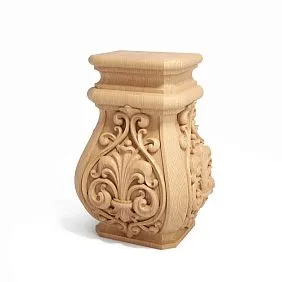
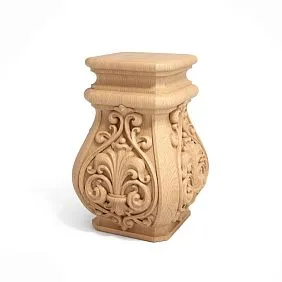
Our factory also produces:


Parametrization of material properties
How to achieve maximum informativeness while maintaining ease of use? ModernMaterial database for furniture maker 11Operates with hundreds of parameters for each type of material. Physical properties include density, modulus of elasticity, coefficient of thermal expansion, moisture resistance, and wear resistance.
Technological parameters describe material processing characteristics: cutting speeds, types of cutting tools, drilling and milling capabilities. Economic characteristics include material cost, utilization coefficients during cutting, transportation costs, and delivery times.
Visual material parameters require special attention to ensure high-quality project visualization. Surface textures, reflection coefficients, color characteristics must accurately convey the appearance of real materials.Moldings for DecorationRequire detailed treatment of shadow effects for correct rendering of textured surfaces.
Get Consultation
Technological aspects of creating material libraries
Methods of digitizing physical samples
What technologies allow the most accurate representation of real material characteristics in digital form? The process of creating a high-quality material database begins with detailed analysis of physical samples. Colorimetric measurements ensure accurate color transmission, while photogrammetry allows creating realistic surface textures.
Spectral analysis of materials determines their optical properties, critically important for high-quality rendering. Understanding thatWhat new-generation furniture is made of — a question customers must receive comprehensive answers to. Eco-friendliness, durability, ease of care — specific advantages speak louder than abstract 'innovation'.helps correctly classify materials by their origin and properties.
Mechanical testing of samples provides data on strength characteristics necessary for engineering calculations. This information is especially important when designing load-bearing structures and calculating product durability.
Integration of production standards
How to ensure digital data corresponds to real production capabilities?Material database for furniture maker 11Must take into account the specifics of a particular production: available equipment, technological processes, personnel qualifications.
Standardization of material size series simplifies design and reduces errors. Information on standard sheet material sizes, trim item cross-sections, hardware dimensions must be current and correspond to the actual supplier assortment.
Technological production limitations are also integrated into the material database. Minimum and maximum part dimensions, allowable cutting angles, edge banding capabilities — all these parameters affect the feasibility of using a specific material in a project.
Specialized solutions for different material categories
Sheet materials: the basis of cabinet furniture
Why sheet materials require the most detailed treatment in the database? They form the basis of most furniture items, and the accuracy of their parametrization critically affects design quality.Furniture hardware for base cabinet makersIs closely related to sheet material characteristics, determining fastening methods and types of connections.
Laminate boards of various thicknesses require specifying not only geometric parameters but also information about the board's structure, coating type, and ecological class. Data on moisture absorption, dimensional stability, and fastener retention influence the choice of structural solutions.
MDF boards are characterized by a more homogeneous structure and better mechanical processing capabilities. The database must contain information on the possibility of milling grooves, cutting dados, and creating decorative elements directly in the base material.
Solid wood: traditions and modernity
How to properly parameterize natural wood considering its natural variability? A wood block requires a special approach to describing properties due to the anisotropy of the material and the dependence of characteristics on humidity.where to buy decorThe issue of natural wood becomes important for manufacturers of high-end furniture.
Different wood species have unique characteristics in terms of workability, dimensional stability, and decorative qualities. Oak, beech, ash, walnut — each species requires an individual approach to processing technology and application in structures.
Wood moisture critically affects its behavior in a finished product. The database should contain information on recommended humidity levels for various operating conditions, shrinkage and swelling coefficients along different fiber directions.
Hardware: functionality and reliability
What characteristics of hardware are most important for design?Material database for furniture maker 11It should contain not only the geometric parameters of the hardware, but also information about its functional capabilities, load characteristics, and compatibility with various materials.
Hinges of different types require precise description of opening angles, load capacity, and attachment dimensions. Information about required gaps between doors, requirements for facade thickness and material is critically important for correct design.
Drawer guides are characterized by stroke length, load capacity, and mounting type. Modern guides with soft-close mechanisms require specification of installation and adjustment features of the smooth-close mechanisms.
Material visualization and texturing
Technologies for creating realistic textures
How to achieve photorealism in material display in 3D environments? The quality of visualization directly affects the client's perception of the project and the ability to make correct design decisions.Unique InteriorsThey are created due to accurate transmission of material textures and shades.
Diffuse maps convey the base color and pattern of the material. High-resolution images ensure detail at close-up views, while accurate color reproduction guarantees correspondence to the material's real appearance.
Normal maps create the illusion of a textured surface without increasing the geometric complexity of the model. This is especially important forWooden wall decorative railswhere the wood texture should appear three-dimensional.
Color management systems
Why is standardization of color profiles in the material database important? Different display devices have different color gamuts, which may lead to distortion in the perception of material colors. Using standardized color profiles ensures consistent display across different devices.
Calibrating monitors for working withmaterial database for Basis Furniture 11Should be performed regularly to maintain color accuracy. Special colorimeters allow creating individual color profiles for each monitor.
Print materials require separate color profiles that account for the characteristics of print reproduction. CMYK profiles ensure accurate color transmission when printing catalogs and presentation materials.
Integration with production systems
Integration with production management systems
How to ensure seamless integration of design data with production processes? ModernLibraries for Basis-Mebelshchikmust contain not only design information, but also production parameters required for automating technological processes.
ERP systems of enterprises receive from the material database information on material consumption norms, component costs, suppliers, and delivery times. Integration of these data allows automatically calculating the cost of products and planning material purchases.
Warehouse management systems use material codes from the database to automatically track the movement of goods and materials. Barcode coding of materials simplifies the processes of receiving, storing, and issuing materials into production.
Programming equipment with CNC
What data from the material database is needed for automatic programming of machines? Cutting modes depend on the type of material, its thickness, and the required surface finish quality.Material database for furniture maker 11Contains technological parameters used by CAM systems for automatic generation of control programs.
Feed rates, spindle speeds, tool types — these parameters are unique to each material and operation. Properly setting them ensures processing quality, extends tool life, and improves equipment performance.
Tool radius compensation also depends on the properties of the material being processed. Hard materials require less compensation than soft, deformable materials under cutting forces.
Economic aspects of material resource management
Material inventory optimization
How a material database helps optimize warehouse stock? Analyzing the frequency of use of different materials in projects allows rational procurement planning and minimizes the stock of slow-moving items.where to buy furniture decorBecomes less critical when analytical data on demand is available.
ABC material analysis identifies the most critical positions requiring continuous stock control. Category A includes materials forming the basis of production and requiring minimal risk of shortage. Categories B and C can be procured with larger intervals.
XYZ analysis determines the stability of material consumption. X-positions are characterized by stable consumption, Y-positions have seasonal fluctuations, Z-positions are consumed irregularly. This information influences the inventory management strategy for each material group.
Incoming material quality control
What quality control parameters should be tracked for each type of material?Material database for furniture maker 11Includes not only nominal material characteristics but also allowable deviations, acceptance criteria, and quality control methods.
Incoming inspection of sheet materials includes checking geometric dimensions, flatness, edge quality, and color match to standard samples. Supplier test protocols are compared with material database data to identify discrepancies.
Material quality certificates must confirm compliance with environmental requirements, especially formaldehyde content in wood-based materials. This information is critically important for manufacturing children's furniture and medical facility products.
Modern trends in material technology development
Innovative materials and their integration
What new materials require inclusion in modern databases? Advances in materials science bring innovative solutions: natural fiber-based composite materials, recycled materials from processed raw materials, bio-materials based on plant components.
Nano-coatings impart new properties to traditional materials: antibacterial, self-cleaning, scratch-resistant. These characteristics must be accurately reflected in the database for correct material application.
Smart materials, whose properties change under external factors, require special parameterization approaches. Thermochromic coatings, shape-memory materials, piezoelectric elements open new possibilities for furniture design.
Environmental aspects of materials science
How to account for material environmental characteristics in the database?Unique Home InteriorToday, it is impossible to imagine without considering environmental factors. The database must contain information on resource renewability, production carbon footprint, and material recyclability.
Life Cycle Assessment (LCA) of materials evaluates their environmental impact at all stages of their life cycle. These data help make environmentally responsible decisions when selecting materials for projects.
FSC certification for wood-based materials confirms their origin from sustainably managed forests. GREENGUARD certification guarantees low emissions of harmful substances. This information should be directly accessible to designers from the material database.
Employee training and development
Methods for adopting a material database
How to effectively train staff to work with an extensive material database? The complexity of modernmaterial database for basic furniture maker 11requires a systematic approach to training. Structured training programs must cover both theoretical foundations of materials science and practical skills in software usage.
Interactive training modules allow studying material properties in a game-like format. Virtual laboratories enable conducting experiments with materials without risking damage to expensive samples.
Knowledge certification system ensures objective assessment of employee competencies. Regular testing maintains knowledge relevance and motivates continuous development.
Development of materials science expertise
Why deep knowledge of materials becomes a competitive advantage?What is better for making furnitureThis question requires a comprehensive understanding of the properties of various materials, their interactions, and long-term behavior in operation.
Expert knowledge allows for the optimal combination of different materials in a single product, taking into account their compatibility, thermal expansion coefficients, and chemical resistance. This is especially important when creating complex structures with a long service life.
Understanding trends in materials development helps anticipate the emergence of new solutions and integrate them into production processes in a timely manner. Early adoption of innovative materials provides significant competitive advantages.
Technical Requirements and System Architecture
Hardware Requirements for Working with Large Databases
What technical specifications of computer equipment are required for effective operation? Modernmaterial databases for Basis Furniture Designer 11contain gigabytes of information, including high-quality textures and detailed 3D models. Processing such volumes of data requires powerful hardware.
The processor must have at least 4-8 cores for parallel data processing. RAM of 16-32 GB ensures comfortable work with large models. SSD drives are critically important for fast access to the material database.
A graphics card with memory of at least 4-8 GB is required for high-quality material visualization. Support for modern graphics APIs ensures correct rendering of complex materials with multiple texture layers.
Network Infrastructure and Cloud Solutions
How to organize efficient access to the material database for all company employees? Centralized storage of the database on a server ensures information freshness and eliminates data duplication. A high-speed local network minimizes delays when loading materials.
Cloud solutions allow access to the material database from anywhere in the world. This is especially important for companies with a distributed structure or those working with remote employees. Backup systems guarantee data preservation.
Version control systems track changes in the material database and allow rolling back to previous versions if necessary. Logging user actions ensures security and enables analysis of database usage patterns.
Practical Recommendations for Implementation
Stages of Creating a Corporate Material Database
Where to start creating a comprehensive material database? The first stage includes auditing existing materials and their classification. Inventory of warehouse stock and analysis of project documentation help identify the most frequently used items.
The second stage involves creating a unified material coding system. The hierarchical coding system should reflect the material category, its main characteristics, and dimensional parameters. Barcode scanning simplifies material identification and accounting.
The third stage includes creating digital material descriptions: photographing samples, creating textures, defining technical characteristics. The quality of this work determines the usefulness of the entire database.
Strategies for Maintaining Data Currency
How to ensure continuous currency of the material database? Regular updates should include both adding new materials and adjusting characteristics of existing items.Decor where to buy in MoscowThis information should be updated when suppliers or supply conditions change.
User feedback helps identify inaccuracies and gaps in the database. The problem notification system should be simple and accessible to all employees. Regular analysis of user requests reveals the need for new features.
Automatic monitoring systems track the availability of external data sources, changes in supplier catalogs, and the appearance of new materials on the market. Integration with supplier systems allows automatic price updates.
Frequently asked questions
What does the material database for Basis Furniture Designer 11 include?
The material database is a comprehensive system containing technical descriptions of all types of materials used in furniture manufacturing. It includes sheet materials (MDF, plywood, laminate), solid wood, hardware, edge banding materials, varnishes, and paints. Each material is described by multiple parameters: physical properties, dimensions, price, supplier, processing technology, and visual characteristics for 3D modeling.
How often should the material base be updated?
It is recommended to update the material database monthly for pricing information and quarterly for technical characteristics. New materials should be added as they appear on the market or are included in the company's assortment. Critical changes affecting product quality or safety require immediate updates.
What file formats does the system support for material textures?
Basis Furniture Designer 11 supports standard raster image formats: JPG, PNG, BMP, TIFF. It is recommended to use PNG for images with transparency and JPG for standard textures. Texture resolution should be at least 1024x1024 pixels for quality visualization, ideally 2048x2048 pixels.
Can materials be imported from supplier databases?
Yes, the system supports importing data from various sources via standard exchange formats: Excel, CSV, XML. Many major suppliers of furniture hardware provide ready-made databases in compatible formats. It is necessary to configure field mapping during import to ensure accurate data transfer.
How to organize collaborative work with the material database?
For collaborative work, it is recommended to place the material database on a network server with configured access rights. Different users may have rights to view only, edit specific categories, or full access. Version control system prevents conflicts during simultaneous editing.
What system requirements are needed to work with large material databases?
Minimum requirements: Intel Core i5 processor or equivalent AMD, 8 GB of RAM, graphics card with 2 GB of memory, 100 GB of free space on SSD. For comfortable operation, it is recommended: Intel Core i7 processor, 16 GB RAM, graphics card with 4 GB of memory, fast internet connection for cloud databases.
How to ensure backup of the material database?
It is critically important to configure automatic database backup. It is recommended to use the 3-2-1 principle: 3 copies of data, on 2 different types of media, 1 copy in remote storage. Daily incremental backups and weekly full backups ensure reliable data protection.
Is integration with the company's ERP systems possible?
Modern versions of Basis Mebelshchik support integration with popular ERP systems via API or standard data exchange protocols. This allows synchronizing information about materials, their costs, inventory levels, and automatically updating specifications when prices change.
Conclusion
The efficiency of modern furniture production to a significant extent is determined by the quality of the information systems used.Material database for furniture maker 11It represents the cornerstone of the industry's digital transformation, combining traditional knowledge about materials with the capabilities of modern information technologies.
A properly organized and maintained material database becomes a strategic asset for the enterprise, providing competitive advantages through increased design accuracy, reduced development time for new products, and optimized resource utilization. Investments in creating and developing material libraries are highly cost-effective, improving efficiency across all processes—from conceptual design to final quality control.


