Article Contents:
- Philosophy of the wooden vertical: railings and balusters as spatial sculpture
- What are balusters and why are they needed?
- Railings: the line that guides
- Constructive triad: posts, balusters, handrails
- Wooden skirting board: the horizontal that unifies levels
- Why is a skirting board needed and why specifically wooden?
- Skirting board profile: from simplicity to complexity
- Skirting board installation: details that matter
- How to create a unified line of wood: principles of element integration
- First principle: unity of wood species
- Second principle: color coordination
- Third principle: rhythm and scale
- Fourth principle: repetition of profiles
- Practical case: two-story house with wooden staircase
- Choice of wood species
- Color solution
- Installation details
- Result
- Stylistic variations: from classic to minimalism
- Classic Interior
- Modern minimalism
- Scandinavian Style
- Loft: industrial aesthetics
- Technical nuances: what to pay attention to when choosing and installing
- Wood moisture content — a critical parameter
- Quality of processing and sanding
- Element compatibility
- Protective Coatings
- Economic Aspects: Investment in Longevity
- Initial costs
- Impact on property value
- Ecological and health benefits
- Mistakes to avoid
- First mistake: mixing wood species without a concept
- Second mistake: scale mismatch
- Third mistake: ignoring joints
- Fourth mistake: varying tones of elements
- Fifth mistake: compromising on quality
- Trends and innovations in wooden finishing
- Composite Materials
- Painted wood
- Wood Thermal Treatment
- Hidden Installation
- FAQ: answers to common questions
- Can wooden balusters be combined with metal ones?
- What Distance Should Be Between Balusters?
- Should wooden balusters and skirting boards be varnished?
- How to care for wooden staircase elements and baseboards?
- Can I install balusters and baseboards myself?
- What type of wood to choose for stairs and baseboards in a country house?
- How long do wooden balusters and baseboards last?
- How to choose the height of skirting boards?
- Can wooden balusters and baseboards be repainted?
- Is it worth using exotic wood species?
- Conclusion: The Art of Integrity by STAVROS

Imagine a house where the staircase is not just a functional structure for moving between levels, but a true symphony of wood, where every note resonates in unison with the others. Where the verticals of balusters echo the horizontals of baseboards, creating a unified visual code of space. Where handrails and balusters become an extension of the flooring, and a wooden baseboard serves as a bridge between floors and the ground. This is not a fantasy—it is the reality of a well-designed interior, where wooden elements work as a single organism.
The modern approach to interior design demands integrity. It is not enough to simply install a beautiful staircase and forget about the rest. It is important to create visual connections that unite different levels of the house into a harmonious space. And it is precisely wooden elements—balusters for stairs, handrails, wooden floor baseboards—that become the tools of this unification.




The Philosophy of the Wooden Vertical: Handrails and Balusters as Spatial Sculpture
The staircase in a house is a vertical dominant. It draws the eye, sets the rhythm of movement, defines the character of the entire room. And the main role in this performance is played byHandrails and balusters.




What are balusters and what are they for?
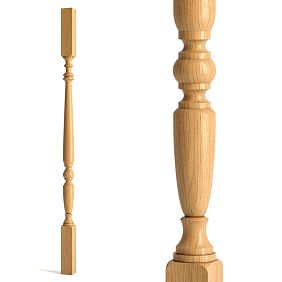
A baluster is not just a post between steps and a handrail. It is an architectural element with a centuries-old history that performs several functions at once. From a structural point of view,Balusters for staircaseprovide rigidity to the railing, support the handrail, and create a safe barrier against falls. This is especially critical in homes where children or elderly people live.
But reducing balusters to mere functionality means ignoring their true value. Wooden balusters are a plastic language with which the architect speaks to space. Turned balusters with smooth radius transitions create a sense of classical elegance. Carved balusters with floral patterns refer to Baroque and Renaissance. Straight geometric balusters of minimalist design emphasize modernity and technological sophistication.
Each baluster is a micro-sculpture. When they are arranged in a row with a certain spacing, a visual rhythm emerges, perceived as a pattern. Close spacing creates a dense vertical structure, visually weighing down the staircase. Wide spacing makes the structure airy and light. Professional designers calculate this rhythm so that it resonates with other interior elements—ceiling height, window opening spacing, the modular grid of the flooring.
Our factory also produces:



Handrails: The Line That Guides
If balusters are the vertical rhythm, then handrails are the horizontal melody.stair railingsperform the primary task—providing support when moving up or down the steps. But no less important is their role as a visual element that guides the eye upward or downward, creating spatial dynamics.
The shape of the handrail matters. A round handrail is comfortable to grip but looks traditional. A rectangular handrail with a bevel is a more modern solution, suitable for minimalist interiors. A shaped handrail with a complex profile can become an accent, especially if made from a contrasting wood species.
The material of the handrail determines the tactile perception of the staircase. Oak gives a sense of monumentality and reliability. Beech is softer and warmer to the touch. Exotic species such as wenge or teak bring a note of luxury and exoticism. It is important that the surface is smoothly sanded and coated with a protective finish—varnish, oil, or wax. This not only protects the wood from wear but also makes touching the handrails pleasant.
Get Consultation
The Structural Triad: Posts, Balusters, Handrails
Any staircase structure with wooden railings consists of three main elements: support posts, balusters, and handrails.Posts for staircaseare the main load-bearing elements installed at the beginning and end of a flight, as well as at turning points. They bear the main load, ensuring the stability of the entire system.
Posts are often more massive and decorative than balusters. They can be adorned with carved capitals, finials, milled elements. The post sets the tone for the entire composition—if it is executed in a classical style with fluting and a capital, then the balusters should correspond. If the post is minimalist, with a square cross-section, then the other elements should be kept in the same vein.
Balusters are installed between the posts—usually with a spacing of 10-15 cm, depending on safety requirements and aesthetic preferences. The handrail is mounted on the balusters, which can be straight or curved, following the contour of the staircase. This entire structure must be securely fastened to withstand lateral loads and ensure safety.
Wooden Baseboard: The Horizontal That Unites Levels
If the staircase is the vertical, then the floor is the horizontal. And they are connected by the wooden baseboard, which runs along the perimeter of each floor, creating a visual frame for the space.
What is a baseboard for and why specifically a wooden one?
Floor wooden skirtingperforms several critically important functions. First, it covers the technological gap between the flooring and the wall. Any floor—parquet, solid wood, engineered wood—requires a 10-15 mm expansion gap to compensate for thermal expansion. Without a baseboard, this gap looks like a flaw, ruining the entire appearance of the finish.
Secondly, the baseboard protects the lower part of the wall from mechanical damage, dirt, and moisture during cleaning. In homes with wooden floors, this is especially relevant — the baseboard absorbs all impacts from the vacuum cleaner, mop, and furniture, keeping the walls intact.
Thirdly, utilities can be hidden behind the baseboard — electrical cables, internet wires, television antennas. Modern models are often equipped with cable channels, making them not just decorative but also functional.
Why specifically wood? Wood creates a visual connection with other wooden interior elements — parquet, doors, staircase. When the baseboard is made from the same wood species as the floor, a sense of integrity arises. When it matches the tone of door casings and stair balusters — a unified stylistic line is formed.
Baseboard profile: from simplicity to complexity
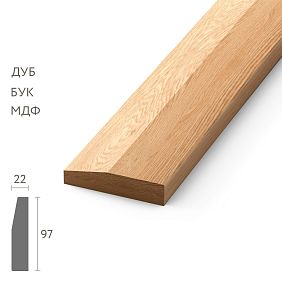
The shape of the baseboard may seem like a secondary detail, but it is precisely what defines the character of the interior. A simple rectangular profile — the choice for modern interiors where conciseness is valued. A baseboard with a chamfer — a classic solution combining strictness and elegance. A shaped baseboard with coves, beads, and roundels — an attribute of classical and neoclassical interiors.
The height of the baseboard also matters. A low baseboard of 60-70 mm is suitable for small rooms with low ceilings — it does not overload the space. A medium baseboard of 80-100 mm — a universal solution for most interiors. A high baseboard of 120-150 mm and more — the choice for spacious rooms with high ceilings, where it emphasizes the scale and creates solemnity.
It is important that the baseboard profile echoes the profile of other wooden elements. If the staircase has balusters with coves, then it is desirable to choose a baseboard with similar elements. If the door casings are simple, rectangular, then the baseboard should be corresponding. This creates visual harmony, as if all elements are speaking the same language.
Baseboard installation: details that matter
Installing a baseboard may seem like a simple task, but the devil is in the details. Corners must be cut precisely at 45 degrees so that the joint is perfect. The slightest inaccuracy will create a gap that will catch the eye. Professionals use miter saws with laser guides to achieve absolute precision.
Baseboard attachment can be done with finishing nails, adhesive, or hidden fasteners. Finishing nails — a traditional method, reliable but leaving visible attachment points. Adhesive creates a seamless connection but requires a perfectly even wall. Hidden fasteners — a modern solution where the baseboard snaps onto special clips mounted on the wall. This allows for the baseboard to be removed if necessary without damage.
After installation, joints and nail holes are filled with wood-colored putty, sanded, and then the entire coating is refreshed with varnish or oil. This ensures a uniform tone and protects the wood from external influences.
How to create a unified wood line: principles for unifying elements
Now the key question: how to connect the staircase with its balusters and handrails to the floor baseboard to create a unified, harmonious composition?
First principle: unity of wood species
The most reliable way to create a visual connection is to use one wood species for all elements. If the balusters and handrails are made of oak, then the baseboard should also be oak. If the stair newel posts are made of beech — choose a beech baseboard. Even if the finish tone differs (for example, balusters are stained dark walnut, and the baseboard is coated with light oil), the wood grain will be subconsciously perceived, creating a connection.
Solid Wood ItemsElements of the same species have a unified fiber structure, density, and pattern. This creates a subtle but tangible harmony. Even a person far from design will feel the difference between an interior where all wooden elements are from one species and one where oak neighbors pine, and beech neighbors ash.
Second principle: color coordination
Wood color is a powerful visual tool. Warm shades (honey, golden, brown) create a cozy, welcoming atmosphere. Cool shades (gray, ashy, whitewashed) give the interior modernity and elegance.
It is important to maintain all wooden elements in the same temperature palette. If stair balusters are stained warm walnut, and the baseboard is coated with cool gray oil — dissonance will arise. It is better to make all elements either warm or cool. Variations in saturation are acceptable (from light to dark within the same temperature), but not a transition from warm to cool.
Exceptions are intentional contrasting solutions, when, for example, dark balusters are combined with a light baseboard, but both elements are from the same wood species and have intermediate connecting details (medium-toned casings, moldings that create a smooth transition).
Third principle: rhythm and scale
Wooden elements in the interior create a visual rhythm. The vertical rhythm of balusters can echo the verticals of door jambs, window frames, wall panels. The horizontal rhythm of the baseboard can find a response in horizontal moldings, cornices, shelves.
It is important to maintain proportions. If the stair newel posts are massive, with a cross-section of 100x100 mm, and the baseboard is thin, 60 mm high — imbalance will arise. It is better to choose a taller baseboard so it does not get lost against the powerful staircase. Conversely: if the staircase is delicate, with thin balusters, a massive 150 mm baseboard will look crude.
Golden rule: all wooden elements should be proportionate to each other and to the space. In a small hallway, a delicate staircase and a neat baseboard. In a spacious foyer with high ceilings — a monumental staircase and a substantial baseboard.
Fourth principle: repetition of profiles
If the balusters have coves (concave profiles), they can be repeated in the baseboard profile. If the handrail has a chamfer, a similar chamfer can be made on the baseboard. These subtle details create a visual rhyme that is perceived on a subconscious level.
It is not necessary to copy the profile exactly — a general logic of form creation is sufficient. For example, if the balusters have smooth, rounded shapes, then it is desirable to choose a baseboard with soft radii. If the balusters are geometric, with clear edges — the baseboard should also be strict, without unnecessary curves.
Practical case: a two-story house with a wooden staircase
Imagine a real situation: a two-story country house with a wooden staircase in the foyer. How to create a unified wood line from the first floor to the second?
Choice of wood species
We decide to use oak — a noble species with expressive grain, durable and long-lasting. For the staircase, we order treads from solid oak,Balusters for staircasecarved from the same wood species,handrailswith a classic profile, posts with carved capitals.
For the flooring on the first and second floors, we choose engineered oak boards, stained medium walnut.Wooden baseboardwe also order oak, 100 mm high, with a shaped profile that echoes the handrail profile.
Interior doors are oak panel doors, casings are oak with a bevel. Everything is made from the same wood species.
Color solution
We stain all elements medium walnut — not too dark, but not light either, a noble warm shade. Stair treads, balusters, handrails, posts, baseboards, casings — all in the same color. This creates a strong visual connection that unifies the space.
For contrast, we make the walls light — cream, light gray. Against this background, the warm wood looks even more expressive. The ceiling is white, adding lightness and height.
Installation details
We install the staircase, carefully align the balusters, mount the handrail with perfect fitting of all joints. We cover everything with a matte varnish that emphasizes the wood grain but does not give a glossy finish.
We lay the flooring, leaving an expansion gap. We install baseboards along the entire perimeter of both floors, including the area around the staircase. We cut joints with maximum precision, fill, sand, and coat with the same varnish as the staircase.
We install door casings, also stained and varnished. The result is a cohesive space where wood runs as a continuous line from the first-floor flooring, ascends the staircase to the second floor, and continues in the baseboards, doors, and casings.
Result
When you enter such a house, you immediately feel harmony. The eye glides easily through the space, encountering no visual obstacles. The warm wood creates coziness, and the unity of material and color gives a sense of thoughtfulness and style. This is not a random collection of elements, but a holistic concept where every detail is in its place.
Stylistic variations: from classic to minimalism
The unified wood line is relevant for any style, but is implemented differently.
Classic interior
Classic loves the luxury of details. Balusters are carved, with floral ornaments, capitals, fluting. Posts are massive, with finials. Handrails are shaped, with beads and drops. Baseboards are tall, 120-150 mm, with a rich profile.
Wood species — oak or beech, stained in dark noble shades: walnut, mahogany, wenge. Finish — glossy or semi-gloss varnish, emphasizing the richness of the material.
Wooden itemsClassical style demands high-quality finishing. Carving must be crisp, without tear-outs. Surfaces — smooth, without defects. Joints — perfect. Classic does not forgive carelessness.
Modern minimalism
Minimalism requires simplicity of form, but not simplicity of execution. Balusters are straight, square or round in cross-section, without decoration. Handrails have a simple profile, possibly rectangular with a bevel. Baseboards are low, 60-80 mm, rectangular or with a minimal bevel.
Wood species — light: whitewashed oak, ash, maple. Finish — matte oil or varnish, preserving the natural wood color. Painted options are also acceptable — white, gray, black, but with the wood grain remaining visible.
In minimalism, precision of execution is especially important. There is no decoration to hide flaws, so every joint, every line must be flawless.
Scandinavian style
Scandinavian style values naturalness and coziness. Balusters are simple, turned or straight, but made of light wood. Handrails are round or oval, pleasant to the touch. Baseboards are medium height, 80-100 mm, with a simple profile.
Wood — light: pine, birch, whitewashed oak. Finish — clear oil or white paint, through which the grain shows. Scandinavian style loves contrasts: light wood against white walls, but with bright color accents in textiles and decor.
Loft: industrial aesthetics
Loft allows more freedom and experimentation. Balusters can be metal, but if wooden — then deliberately rough, with visible grain, knots, even imperfect finishing. Handrails are massive, possibly made from timber. Baseboards can also be simple, wide, made from unedged boards.
Wood in loft style is often used in its natural state, with minimal processing. Stain that emphasizes the grain, or no finish at all. The main thing is to create a sense of authenticity, a certain ruggedness.
At the same time, it is important that all wooden finishes are in the same vein. If balusters are rough, then the baseboard should not be too elegant. If old boards are used — let this aged look be visible in other elements as well.
Technical nuances: what to pay attention to when choosing and installing
Wood moisture content is a critical parameter
Quality wooden elements are made from wood dried to 8-10% moisture content. This guarantees dimensional stability, absence of warping and cracks after installation. If the moisture content is higher, the wood will dry out, leading to gaps in joints, warping of elements.
When purchasing, always clarify the wood moisture content. Reputable manufacturers specify this parameter in certificates and strictly adhere to drying technology.
Quality of processing and sanding
Inspect items before purchase or delivery. The surface should be smooth, without tears, chips, or roughness. The profile should be clear along the entire length. Carved elements should have detailed workmanship, without blurring or smudges.
If purchasing tinted or painted items, check the uniformity of the coating. There should be no drips, unpainted spots, bubbles, or stains.
Compatibility of elements
If purchasing balusters, handrails, and baseboards from different manufacturers, ensure they are compatible in size, profiles, and fastenings. It is best to order all elements from one manufacturer that offers comprehensive solutions—this guarantees compatibility and stylistic unity.
Protective coatings
Wood requires protection from moisture, UV radiation, and mechanical impacts. Modern coatings—varnishes, oils, waxes—not only protect but also highlight the beauty of the material.
Varnish creates a durable film on the surface, protects against scratches and moisture, and can be glossy or matte. Oil penetrates the wood structure, nourishes it, emphasizes the texture, but requires periodic renewal. Wax provides a soft shine and pleasant feel but is less resistant to wear.
The choice of coating depends on the intensity of use. For stair handrails, which are constantly touched by hands, oil or wax is better—they are more pleasant tactilely. For baseboards, which are less exposed to direct contact, varnish is suitable.
Economic aspects: investment in longevity
Initial costs
Wooden balusters, railings, and solid wood baseboards are not cheap. A quality oak baluster can cost from several hundred to several thousand rubles, depending on the complexity of the carving. Handrails, posts, baseboards—also require significant investment.
But it is important to look at the long term. Quality wood lasts for decades, maintaining a presentable appearance. It can be restored: sanded, repainted, or the coating renewed. Plastic or MDF alternatives are cheaper but lose their appearance after 5-7 years and require replacement.
Impact on property value
A professionally executed staircase with wooden balusters and railings, complemented by quality baseboards and door trims made from the same wood species, significantly increases the value of real estate. Potential buyers value quality, design integrity, and the use of natural materials.
A house with a unified wood line, where everything is well thought out and harmonious, sells faster and at a higher price than a similar property with disparate elements made from different materials.
Ecological and Health Benefits
Wood is an environmentally friendly material that does not emit harmful substances. Unlike plastic or composites, it is safe for health and creates a favorable microclimate in the home. This is especially important for families with children, allergy sufferers, and people concerned about health.
First mistake - unstructured mixing. A classic chair, loft table, Scandinavian chest, and minimalist cabinet in one room is not eclecticism, but visual chaos. Each item draws attention to itself, not creating cohesion. A system, logic, unifying idea is needed. Choose one dominant style, add a second as an addition, and possibly a third as an accent. But no more than three, and all should have something in common - color, material, era, or functionality.
First mistake: mixing wood species without a concept
Using different wood species (oak for the staircase, pine for the baseboard, beech for doors) without a well-thought-out concept creates visual chaos. If you are not a professional designer with a clear plan for contrasting combinations, it is better to stick to one species.
Second mistake: mismatch of scales
Thin, elegant balusters and a massive, rough baseboard—imbalance. Or the opposite: a monumental staircase and a thin baseboard that gets lost against it. Pay attention to proportions.
Third mistake: ignoring joints
Poorly fitted baseboard joints in corners, gaps between trim and walls, inaccurate cutting—all of this spoils the impression even of the most expensive materials. Installation requires professionalism.
Fourth mistake: mismatched tones of elements
When balusters are tinted in one shade and the baseboard in another, without intermediate connecting elements—dissonance arises. Either everything in one tone or a well-thought-out gradation with transitions.
Fifth mistake: skimping on quality
Buying cheap balusters made from damp wood, poorly processed baseboards—false economy. In six months to a year, such products will deform, crack, and lose their appearance. It is better to invest in quality once than to redo it later.
Trends and innovations in wooden finishing
Combined materials
A modern trend is combining wood with metal and glass. For example, wooden handrails on metal balusters, glass screens in wooden frames. At the same time, wooden baseboards tie the entire composition to the floor.
Painted wood
White, gray, or colored balusters and baseboards that retain the visible wood texture. This allows adapting natural material to modern color schemes without losing its advantages.
Wood thermal treatment
Thermowood—a material processed at high temperatures, which increases its stability, reduces moisture absorption, and changes its color to a noble dark shade without stains. Thermally treated balusters and baseboards are a choice for those who value innovation and durability.
Hidden mounting
Systems for hidden fastening of baseboards and balusters are becoming increasingly popular. They allow installing elements without visible fasteners, creating perfectly clean surfaces.
FAQ: answers to frequently asked questions
Can wooden balusters be combined with metal ones?
Yes, this is a popular modern solution. It is important that the wooden handrail and baseboard are made from the same species and in the same tone, then metal balusters will fit organically as a contrasting element.
What distance should be between balusters?
According to building codes—no more than 15 cm to ensure safety. Aesthetically, 10-12 cm is optimal—creating a visually dense railing but without excessive heaviness.
Do wooden balusters and baseboards need to be varnished?
Protection is essential, but varnish is not mandatory. You can use oil, wax, or oil-wax. The main thing is to protect the wood from moisture, dirt, mechanical damage, and to make maintenance easier.
How to care for wooden staircase elements and baseboards?
Regular dry cleaning with a soft cloth. Wet cleaning should be moderate, without excess water. Every 1-2 years, renew the oil coating (if oil was used) or polish (if varnish).
Can balusters and baseboards be installed independently?
If you have woodworking skills, the necessary tools, and an understanding of the technology, it is possible. However, staircase structures require precision and knowledge of safety nuances, so it is better to entrust installation to professionals.
What type of wood to choose for a staircase and baseboard in a country house?
Oak is the optimal choice: durable, long-lasting, with an expressive texture. Beech is slightly softer but also reliable. Ash is strong and elastic. Larch is suitable if moisture resistance is important.
How long do wooden balusters and baseboards last?
With proper use and care, 30-50 years or more. Wood is a durable material that can be restored, extending its service life.
How to choose the height of skirting board?
Consider ceiling height and staircase scale. For ceilings 2.5-2.7 m, baseboard 80-100 mm. For ceilings 3 m and above, 100-120 mm or more. The baseboard should be proportionate to the staircase.
Can wooden balusters and baseboards be repainted?
Yes, one of the advantages of wood is the possibility of multiple renewals. Remove the old coating, sand, apply a new one. You can change the color, transition from dark to light and vice versa.
Is it worth using exotic wood species?
If the budget allows and the interior style requires it, yes. Exotic species (teak, wenge, merbau) have unique texture and color but are significantly more expensive. For most projects, oak or ash is sufficient.
Conclusion: The Art of Integrity from STAVROS
Creating a unified wood line in the interior is not just about selecting similar elements. It is the art of understanding space, material, proportions. It is the ability to see the house as a single organism, whereHandrails and balustersfor the staircase are connected withwooden baseboard, and that, in turn, with door trims, window slopes, and furniture.
Wooden finishing turns a house into a home. It creates warmth, coziness, and a sense of reliability. When balusters support your hand on the staircase, when your gaze glides from the handrail to the baseboard without encountering visual breaks, when everything is maintained in a unified logic of form and color, that very harmony arises, for which it is worth investing in quality materials and professional execution.
The company STAVROS has been creatingSolid wood products, understanding the importance of every detail. The STAVROS range includes comprehensive solutions for staircases:balusters of various styles and shapes, classic and modern handrails, carved and turned posts, Wooden Caps.
All elements are designed in a unified style, made from selected wood, and undergo strict quality control. This allows for creating harmonious interiors where every detail complements the other, where the staircase is organically connected to the floor through a unified wood line.
By choosing STAVROS products, you are not just choosing materials, but ready-made solutions where the compatibility of all elements has been thought through. You are investing in longevity—solid wood products last for decades without losing their appeal. You are creating an interior that will delight you, your family, and impress guests.
The unified wood line is a philosophy of integrity that STAVROS adheres to. When balusters for the staircase, handrails, posts, baseboards, and trims are made from the same material, in a unified style, with impeccable processing quality, that very sense of completeness arises, which distinguishes professionally designed space from a random set of elements.
Let your home speak the language of wood—warm, noble, eternal. Let the staircase become not just a way to go up to the second floor, but an architectural dominant that unites the levels. Let the baseboard outline the space with clear lines, creating a frame for each room. And let all this be connected by a single thread of material, color, style—a unified wood line from STAVROS.