












































































Article Contents:
- The Logic of Combining: Why Wood and Metal Work Together
- Types of Metal Balusters: From Rods to Artistic Forging
- Hand-Forged Wrought Iron Balusters
- Stamped and Bent Sheet Metal Balusters
- Turned Stainless Steel Balusters
- Balusters from Square and Round Rods
- Cast Iron Balusters
- Wooden Elements in a Combined Railing
- Handrail: The Key Wooden Element
- Support Posts: The Anchor of the System
- Baluster Rail and Steps
- Styles Where the Combination of Wood and Metal Works
- Loft and Industrial Style
- Modern classicism
- Baroque and Empire
- Provence and shabby chic
- Scandinavian and Modern Minimalism
- Pros and Cons: An Honest Material Comparison
- Advantages of Wooden Balusters
- Limitations of Wooden Balusters
- Advantages of Metal Balusters
- Limitations of Metal Balusters
- Installation of a Combined Railing: Technology and Nuances
- Attaching Metal Balusters to Steps
- Attaching Metal Balusters to a Wooden Handrail
- Aligning Wooden and Metal Elements by Height
- Final Painting
- Maintenance of a Combined Railing
- The Price Question: How Much Does a Combined Railing Cost
- Popular Questions and Answers
- STAVROS: The Wooden Part of Your Combined Staircase

There are interior solutions that immediately define the author's stance. A staircase with wrought iron balusters and a wooden handrail is one of them. It says: here, they are not afraid to mix eras and materials. Here, they think about beauty and strength simultaneously. That is precisely why the combination ofwooden and metal balusters— not a compromise, but a conscious aesthetic position.
The question 'wood or metal?' in the context of stair railings has long ceased to be relevant. The correct question sounds different: how exactly to combine these two materials so that each enhances the other? This is discussed in detail, honestly, and with practical meaning.


The logic of combination: why wood and metal work together
Wood and metal are antagonists by nature. One material is warm, living, breathing, organic. The other is cold, rigid, industrial. It would seem impossible to reconcile them in one product. But it is precisely this contradiction that creates the tension that makes the interior interesting.
The logic of combination is simple: metal takes on the structural load where maximum strength with minimal cross-section is required—while wood provides warmth, tactile comfort, and a stylistic connection with the rest of the interior. Metal balusters made from rod or forged profiles can be significantly thinner than wooden ones with the same load-bearing capacity. The wooden handrail, meanwhile, remains comfortable in the hand, 'alive' to the touch, and visually unites the entire structure into a single whole.
It is important to understand one fundamental point:forged balusters wooden— is a stable search phrase that describes precisely a combined staircase with metal balusters and wooden load-bearing elements (handrail, posts, steps). This is how most real projects work: metal is in the infill, wood is in the supports and horizontals. This is not a coincidence, it is structural logic.




Types of metal balusters: from rod to artistic forging
Metal balusters are not a single category. This concept hides several fundamentally different technologies and aesthetics.
Our factory also produces:


Hand-forged balusters
A classic of the genre. The blacksmith heats the metal and shapes it with a hammer—each piece is unique. Artistic forging produces unrepeatable scrolls, leaves, spirals, flowers—ornamentation that cannot be replicated mechanically. This is precisely why forged balusters are valued in interiors with a claim to authorship: they are not mass-produced, they are created. The price is corresponding.
Hand forging requires time—from several days to several weeks for one set. But the result is worth attention: a staircase with a forged railing becomes a family heirloom. In combination withwooden handrails for stairsmade of dark oak, forged balusters form a duet in which each element enhances the other: metal adds graphic complexity, wood adds warmth and support.
Get Consultation
Stamped and bent balusters from sheet metal
A more accessible category. Metal sheet is cut, formed under a press, and welded—resulting in balusters with a geometric pattern, laconic and repeatable. Often used for interiors in Art Deco and modern classic styles: strict rhythm, clear silhouette, no random details.
Turned balusters from stainless steel
Stainless steel on a lathe produces perfectly precise, polished cylindrical balusters. This is a material for contemporary and high-tech interiors: dazzling chrome shine, mirror surface, flawless geometry. In combination with wood—especially light beech or ash—such a railing looks like a designer statement about the contrast between the natural and the technological.
Balusters from square and round rod
The most common and economical option. Rods with a cross-section of 12–16 mm are bent, welded, sometimes decorated with cast decorative tips or forged inserts. Rod balusters are visually maximally lightweight—they hardly block the space, creating a sense of airiness in the railing. It is precisely such balusters that are most often seen in 'metal + wood' projects in the budget and mid-range segments.
Cast iron balusters
A rare but impressive option. Cast iron casting provides the highest detail of ornamentation—complex reliefs that cannot be achieved by forging or stamping. Cast iron balusters are heavy, durable, with a characteristic dark, almost anthracite shade. In historical interiors—an ideal choice. In combination with dark oak posts and handrails—impeccable.
Wooden elements in a combined railing
When metal takes on the role of balusters, wood is responsible for the handrail, posts, and sub-baluster rail. This is not just a distribution of functions—it is an aesthetic strategy. Here, wood plays the role of a 'binder,' reconciling the rigidity of metal with the warmth of the living space.
Handrail: the key wooden element
The handrail is the most important wooden element of a combined railing. It is literally in a person's hands. A metal handrail is cold, slippery, creates discomfort with prolonged contact—especially in winter. A wooden handrail is warm, pleasant to the touch, non-slip. This is not aesthetics—it's physiology.
For combined staircases, it is optimalStaircase Components and Elementsin a unified design: a handrail made of oak or ash, support posts made of the same solid wood. Metal balusters are attached to the wooden handrail through special rosettes or mortised fittings—this requires precise marking but gives an impeccable result.
Support posts: the anchor of the system
In a combined staircase, wooden posts carry special semantic weight. They are visual 'anchors' of the railing, massive verticals that contrast with thin metal balusters. It is precisely this contrasting mass ratio that creates the drama and dynamism unattainable with a homogeneous material.
Posts for staircaseIn combined systems, more massive posts are chosen than for purely wooden railings — with a cross-section of 120–160 mm and a height from 1100 mm. They must balance the visual 'airiness' of the metal balusters, creating a sense of reliability for the entire structure.
Baluster rail and treads
A wooden baluster rail in a combined staircase is not a mandatory but a desirable element. It creates a horizontal 'base' to which the lower ends of the metal balusters are attached and conceals welding points or bolt fasteners. Treads made from the same wood as the handrail and posts complete the system: the staircase floor 'responds' to the handrail in tone and wood species, creating color unity for the entire structure.
Styles where the combination of wood and metal works
Loft and industrial style
Loft is the native element for the combination of metal and wood. Here, the union of the two materials is not a compromise but a principle. Steel rod balusters with visible weld seams, untreated metal with patina, dark oak treads and a handrail with oil finish. No varnishes, no gloss. Only honest texture and function.
Modern classic
In modern classic style, metal balusters are most often executed as bent rods or stamped panels with simple geometric patterns. Tinted bronze or matte black, they are combined with a dark oak handrail and square wooden posts. The result is a staircase that is simultaneously strict and elegant, with a clearly expressed hierarchy of elements.
Baroque and Empire
Artistic forging + wooden carved posts with acanthus = a breathtaking staircase. It is in Baroque interiors that this union reaches its apogee. Forged scrolls, leaves, vases — against dark oak posts and a heavy 'pear'-profile handrail. Here, the metal speaks through ornament, the wood through mass and warmth. The contrast is complete, the effect is maximal.
Provence and Shabby Chic
An unexpected but effective union. Forged balusters in the 'forge' style — with simple spirals and leaves, painted white or aged gray — and a handrail made of white pine or painted beech. The feeling of a French country house, where everything is old, everything is authentic, everything is a little 'weary' from time — and precisely because of that, beautiful.
Scandinavian and modern minimalism
In Scandinavian interiors, metal balusters are square-section rods 10×10 mm, painted matte black. The handrail is light beech or ash without tinting, with a matte oil finish. No patterns, no ornaments. Geometry and the contrast of light and dark — that's the entire design.
Pros and cons: an honest comparison of materials
Before making a choice, it's worth honestly weighing the advantages and limitations of each material. This will help make a decision not based on a picture from the internet, but on real characteristics.
| Parameter | Wooden balusters | Metal balusters |
|---|---|---|
| Warm to the touch | High | Low |
| Bending strength | Medium | High |
| Cross-section at the same strength | Larger | Smaller |
| Visual 'airiness' | Medium | High |
| Moisture resistance | Requires treatment | High (stainless/painted) |
| Ornament complexity | High (turning, milling) | High (forging, casting) |
| Repairability | High | Medium |
| Mid-range price | Medium | Medium–high |
| Service life | 30–50 years with maintenance | 50–100+ years |
| Ecological | Maximum | Below |
The conclusion from the table is obvious: each material has its areas of superiority, and combining them allows leveraging the best of both. Woodenwooden and forged balustersin a unified system — this is not about finding a compromise, but a strategy of utilizing the strengths of each.
Advantages of wooden balusters
Warmth — the key word. Wood feels warm to the touch in any season. It does not collect condensation, does not rust, and does not create an 'industrial' feel even in the strictest interiors. A wooden baluster is easy to repair: a scratch is sanded, the finish is renewed locally.Staircase Components and Elementsmade from solid wood — is also an ecological stance: a natural material without chemical emissions, safe for children.
The variety of shapes in wooden balusters is also impressive: turning and milling processing offers thousands of possible profiles.Decorative Insertson posts and additional carved elements allow creating a railing that has no equivalent in any catalog.
Limitations of wooden balusters
Wood requires maintenance. Periodic renewal of the finish is a reality one must accept. With constant contact with water (outdoor stairs, open terraces), wood deforms faster than metal. For open outdoor structures without a canopy, metal is the preferred material for balusters, while wood is suitable for handrails and posts with appropriate weather-resistant impregnation.
Advantages of metal balusters
Strength with minimal cross-section — the main advantage. A metal rod with a diameter of 16 mm will withstand lateral loads that a wooden baluster with a diameter of 40 mm would set as a limit. This means a metal railing looks significantly lighter and more airy with the same structural reliability.
Metal is not afraid of moisture with proper coating. Forged balusters with polymer or epoxy coating are an excellent choice for outdoor stairs, verandas, winter gardens. They do not swell, crack, or require annual renewal of the coating.
Limitations of metal balusters
Metal is cold. Literally: in winter, touching a metal handrail or baluster is not a pleasant sensation. This is precisely why metal balusters are never used with a metal handrail in residential interiors — the handrail is always wooden. Additionally, metal balusters are more difficult to repair locally: a scratch on a painted surface requires a complete repaint for an unnoticeable result.
Installation of a combined railing: technology and nuances
Installing a combined railing is more complex than a purely wooden one — because it requires working with two different materials and their interfaces. Here, not only carpentry but also metalworking precision is important.
Attaching metal balusters to steps
Main options: flange mounting (a metal socket is welded or bolted to the base of the baluster, with bolts through the socket into the step) and mounting via a mounting plate (the plate is embedded in the step before pouring or anchored, and the baluster is welded or bolted to it). The second method is more reliable and used in professional projects.
Attaching metal balusters to a wooden handrail
A wooden handrail does not accept welding. Therefore, attaching balusters to it is only mechanical: bolted, via an embedded barrel nut in the handrail body, or via special sockets with a clamping bolt. Important: the hole in the handrail must be drilled strictly vertically, and this requires a jig — otherwise, the balusters will stand at different angles.
Attachment points in the handrail are decorated with overlay sockets — metal or wooden. This hides the bolts and creates a finished look from above. For a solid wood handrailWooden trimwith a high cross-section — from 60×80 mm — is mandatory: only sufficient material thickness ensures reliable holding of bolted connections.
Aligning wooden and metal elements by height
The height of metal balusters must be calculated considering that their lower end is attached to the step (not to a sub-baluster), and the upper end fits into a groove in the handrail or is attached via a socket from below. The total height from the step surface to the top of the handrail is 900 mm. From this height, subtract the thickness of the handrail (50–70 mm) and the height of the fastener below (20–30 mm). The working length of the baluster is 800–830 mm.
Final painting
An important stage often overlooked: after installation, metal balusters are painted with a final coat. If balusters were installed before painting, weld spots and mechanical damage to the coating are touched up. Wooden elements are coated with final varnish or oil. Color coordination: a dark handrail and dark metal balusters — classic; a light handrail and matte black metal balusters — modern contrast.
Care for a Combined Railing
Wooden elements are maintained according to a standard scheme: annual inspection, coating renewal every 3–5 years, protection from direct contact with water.
Metal balusters in the interior, as a rule, do not require special care, apart from regular dusting. For matte or forged finishes, it is recommended to apply a thin layer of furniture wax once a year—it protects against corrosion and preserves the color.
Areas where metal and wood make contact are risk zones. This is where dust accumulates, moisture sometimes penetrates, and over time a dark spot may appear in the wood from metal oxidation. To prevent this, silicone or PVC gaskets are used at the joints, and the wood surface in these areas is additionally coated with a water-repellent compound.
For outdoor combined railings, an annual inspection is necessary: check the condition of the metal's anti-corrosion coating, replace damaged wooden elements (usually the sub-baluster and the lower part of the posts), and renew the hydrophobic impregnation of all wooden parts.
The Cost Question: How Much Does a Combined Railing Cost
A combined railing with forged metal balusters and a wooden handrail—in terms of cost, is generally higher than a purely wooden one. This is explained by the higher cost of artistic forging compared to standard turned balusters, as well as the more complex installation (working with two materials).
| Type of Metal Balusters | Price per piece (reference) | Installation Difficulty |
|---|---|---|
| Standard Rod | from 800 rub. | Low |
| Stamped | from 1,500 rub. | Low |
| Serial Forged | from 2,500 rub. | Medium |
| Artistic Forging | from 6,000 rub. | High |
| Cast Iron | from 4,000 rub. | High |
Wooden handrail for a combined staircase—from 600 rub. per linear meter (pine) to 2,500+ rub. (oak, ash). Posts—from 4,000 to 20,000+ rub. depending on the wood species and complexity. The final cost of a railing set for a three-meter flight including installation—from 70,000 to 350,000 rubles depending on the execution class.
Popular questions and answers
Is it possible to combine wooden and metal balusters in one flight?
Technically—yes. Design-wise—it needs justification. This technique is used to create a visual rhythm: for example, alternating wooden and metal balusters every other one. This requires a clear design concept, otherwise it looks random.
Which metal baluster does not rust?
Stainless steel—absolutely resistant to corrosion without coating. Forged balusters made of structural steel require anti-corrosion coating (primer + paint or polymer coating). Aluminum balusters—lightweight, corrosion-resistant, but less strong in bending.
How are metal balusters attached to wooden steps?
Via a flange or mounting plate. The metal base of the baluster is fastened to the step with bolts after pre-drilling. The bolt attachment points are concealed with decorative rosettes.
Is it necessary to coordinate the color of the metal and wood?
Not color, but tone. Warm wood tones (walnut, oak) pair better with warm metals (bronze, copper, aged gold). Cool tones (light ash, gray oak)—with cool metals (matte black, chrome, anthracite).
How much more complex is the installation of a combined railing compared to a wooden one?
On average, 30–40% more complex. Requires both carpentry and metalworking skills. Installation is best entrusted to a crew specializing specifically in combined staircases.
Can only the wooden balusters be replaced with metal ones without replacing the handrail?
Yes, if the handrail has a standard cross-section and is compatible with the new balusters in terms of mounting method. It is necessary to ensure that the diameter of the holes in the handrail matches the diameter of the studs on the new balusters.
Which metal is better for outdoor stairs — steel or aluminum?
Stainless steel — stronger, more durable, holds its shape better. Aluminum — lighter, does not require coating, but is less rigid. For outdoor main stairs — stainless steel. For lightweight structures on terraces — aluminum.
STAVROS: the wooden part of your combined staircase
A fundamental point that needs to be clarified: STAVROS specializes in solid wood products and does not manufacture metal balusters. This is a conscious choice: the company does what it does best — wooden elements of the highest quality.
This is precisely why for combined staircases, STAVROS is the ideal partner for the wooden part. Handrails made of solid oak and beech, support and startingPosts for staircasewith a rich assortment of profiles, baluster rails, steps, decorative post overlays — all of this is produced in a unified system where every element is compatible with another in terms of wood species, cross-section, and style.
STAVROS works with professional installation crews and design studios, providing ready-made wooden kits for specific projects. You choose metal balusters from an artistic forging manufacturer — and order the entire wooden system (handrail, posts, baluster rail, steps) from STAVROS as a single system supplier. This way, the combined staircase gets what it needs: metal from a blacksmith and wood from a woodworking master. Each does their own job — and the result speaks for itself.
Get Consultation
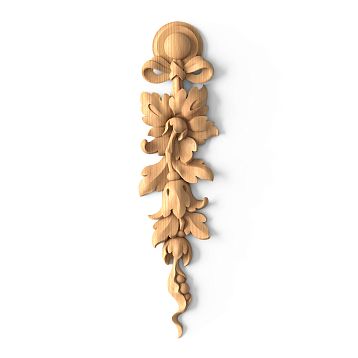
Wooden decoration N-315R
from 20.02 $

Wooden Decor N-491
from 13.19 $

● Universality. The wooden trim K-017 is suitable for any style and room, whether it's a living room, bedroom, office, kitchen, bathroom, or hallway. The wooden trim K-017 can be used for various purposes and tasks, such as framing, cladding, decorating, or zoning. The wooden trim K-017 easily complements other decorative elements, creating a harmonious and cohesive look.
from 21.85 $
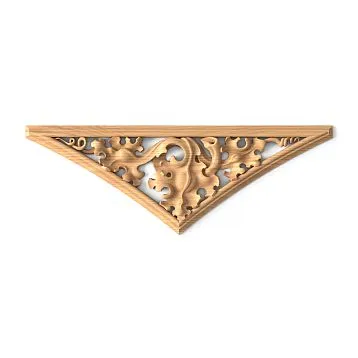
Wooden decoration N-350L
from 95.96 $


