












































































Article Contents:
- Anatomy of picture frame molding profile: form follows function
- Wood species for picture frame molding production
- Technology of manufacturing frames from picture frame molding
- Final processing and decoration
- Gallery wall composition: rhythm, scale, balance
- Interaction of frames with architectural interior elements
- Furniture as a partner in gallery composition
- Horizontal surfaces as a foundation for vertical composition
- Specialized solutions: frames for mirrors and TV zones
- Functional aspects of TV frames
- Practical aspects of working with picture frame molding
- DIY manufacturing versus professional framing
- Stylistic compatibility: from classic to modern
- Color strategies in frame selection
- Frequently asked questions about using picture frame molding
- Conclusion: STAVROS company — the art of framing

The art of space organization lies not only in choosing the right furniture or color palette, but also in the ability to present artistic objects — paintings, photographs, mirrors — so that they become an organic part of the interior composition.Wooden picture frame moldingserves as a connecting element between works of art and the surrounding space, creating visual frames that simultaneously protect, accentuate, and unite disparate elements into a cohesive gallery composition. Properly selected framing transforms an ordinary reproduction into a significant interior accent, and a collection of variously sized images into a thoughtful artistic installation. When the molding profile echoes the decorative elementsclassic furniture, a visual dialogue arises between functional items and decorative objects, forming an atmosphere of sophistication and thoughtfulness.
Creating a gallery wall in a living room or study requires an understanding of composition principles, scale, rhythm, and color balance. Here, it's not enough to simply hang a few framed pictures — it's necessary to build a visual logic where each image occupies its place, and the framing works as an architectural element structuring the wall plane.wooden molding by the meterprovides freedom in creating frames of any size and proportion, allowing precise alignment with the format of artworks and the overall interior concept. Unlike ready-made standard frames, custom framing made from picture frame molding ensures the uniqueness of each element, perfect compatibility with the space's style, and the possibility of creating non-standard formats — from miniature photo frames to monumental portals forTV zone frames.



Anatomy of picture frame molding profile: form follows function
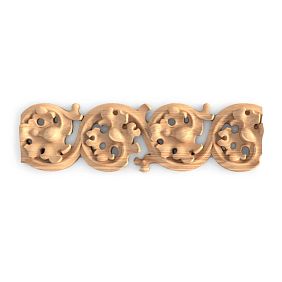
Picture frame molding profile is a linear product with a complex cross-section, where each element performs a specific function. The inner part of the profile — the rabbet or rebate — forms a groove into which the glass, image, and backing are inserted. The depth of the rabbet determines the thickness of the "filling" the frame can accommodate — typically 10-15 millimeters, which is sufficient for 2-4 millimeter thick glass, mat board, and backing. The width of the rabbet must ensure reliable retention of all elements without risk of falling out.
The face surface of the molding — the part visible after frame assembly — determines the visual impact of the framing. The width of the face surface varies from minimalist 15-20 millimeters for thin modern profiles to monumental 80-120 millimeters for classic frames of antique paintings. Narrow framing minimally distracts attention from the image, allowing it to dominate perception. A wide frame creates a significant buffer zone between the artwork and the surrounding space, enhances the status of the image, and makes it a more significant interior object.
Profiling of the face surface creates interplay of light and shadow, adds volume, and determines the stylistic affiliation of the frame. A simple rounded cross-section is characteristic of minimalist modern profiles. Stepped transitions between planes of different depths create a classic structure, where each level reads as a separate architectural element. Complex profiles with multiple transitions, beads, coves, and fillets form baroque opulence, suitable for framing old master paintings or creating luxurious palace-style interiors.




Wood species for picture frame molding production
Selection of wood species forpicture frame moldingis determined by aesthetic characteristics, workability, and geometric stability. Linden (basswood) is a traditional material for carved molding due to its softness, uniform structure, and lack of pronounced wood grain. The light milky-white hue of linden serves as an ideal base for tinting, patinating, and gilding. The material's pliability allows for the creation of the finest carving details, which would be impossible in hardwoods.
Oak brings power, durability, and an expressive texture with large pores and distinct annual rings to picture frame molding. The dark shade of natural oak creates a strict, noble framing suitable for graphics, black-and-white photography, and modern paintings with contrasting color schemes. The high density of oak wood ensures resistance to mechanical damage, which is critical for frames in public spaces—galleries, museums, offices.
Beech combines strength with relative ease of processing, creating an optimal balance between workability and durability. The pinkish hue of beech wood imbues the framing with warmth, making it less formal compared to oak, yet more substantial compared to linden. The uniform, fine-pored structure of beech ensures a smooth surface after sanding, which is especially valuable for lacquered profiles where any irregularity would be noticeable.
Ash introduces a contrasting, graphic texture and light gray-beige tones without yellowness. The elasticity of ash wood prevents cracking in areas of stress concentration—frame corners, sections of complex profiles. Modern interiors with cool color palettes find the perfect framing in ash molding, devoid of the warm orange undertones of oak or the pink nuances of beech.
Our factory also produces:




Technology for manufacturing frames from molding stock
Frame creation begins with precise measurement of the artwork to be framed. The internal frame size—the distance between opposite inner edges of the rabbet—must match the image size, accounting for a small 1-2 millimeter gap for easy installation. Excessive gap creates play, insufficient gap complicates assembly and may lead to image deformation. For works on stretchers, the stretcher thickness—typically 15-20 millimeters—is considered, requiring a corresponding rabbet depth.
Cuttingwooden molding by the meterat a 45-degree angle is a critical operation determining frame corner quality. A miter saw with a rotating table ensures cutting angle precision, crucial for tight corner joints. Even a half-degree deviation leads to a visible gap in the joint or mismatch of the frame's external dimensions. Cut quality—absence of chips, burrs, a smooth cut surface—determines whether additional finishing will be needed before gluing.
Corner joint assembly is performed by gluing using PVA wood glue and mechanical reinforcement with corner braces hammered from the back of the frame. Glue is applied to both cut surfaces, parts are tightly joined, and fixed in corner clamps until the glue fully dries—typically 2-4 hours. Braces—V-shaped metal elements—are hammered into the back edge of the molding, crossing the joint line and creating a mechanical bond between elements. The number of braces depends on frame size and molding width—typically 2-4 per corner.
Get Consultation
Finishing and decoration
After assembly, the frame undergoes finishing, which can range from simple varnishing to complex multi-layer decoration. Sanding joints eliminates the slightest height discrepancies between joined elements, creating a perfectly smooth, continuous profile surface across the corner. Filling microscopic gaps in joints with special wood putty makes the joints invisible after painting.
Stainingof molding stock woodenwith stains alters the natural wood tone, creating color variations from light bleached to deep black ebony. Water-based stains penetrate the porous wood structure, coloring the fibers without creating a surface film. This preserves the visibility of the grain, the tactile feel of the wood, and the natural perception. Alcohol- and oil-based stains create more saturated colors, dry faster, but require even application to prevent blotchiness.
Patination—an artificial aging technique—creates an effect of noble antiquity on a new item. Dark patina is applied into the profile recesses, emphasizing the relief and creating contrast between raised and recessed areas. Wiping the raised parts back to a light base imitates natural wear that occurs on antique frames in areas of frequent contact. Multi-layer patination using various shades creates a complex, deep color palette characteristic of antique works.
Gilding—the pinnacle of decorative craftsmanship in frame design—transforms a wooden item into a luxurious art object. Classic gilding with gold leaf requires multi-stage surface preparation—priming with gesso, polishing, applying mordant (an adhesive composition), laying the thinnest gold leaf sheets, and polishing with an agate burnisher to reveal a mirror-like shine. Modern gilding imitations use metal leaf—alloys of non-precious metals imitating gold—or gold paints based on bronze powder, significantly reducing cost while preserving the visual effect.
Gallery wall composition: rhythm, scale, balance
A gallery wall—an organized multitude of framed images on a vertical plane—requires thoughtful compositional logic. Chaotic placement of even well-framed works creates visual noise, while structured hanging turns the wall into an artistic statement. There are several canonical schemes for organizing a gallery wall, each creating a specific visual effect.
A symmetrical grid—strict alignment of same-size frames into regular rows and columns—creates order, formality, and visual stability. This scheme is optimal for series of images of the same format—photographic portraits, botanical illustrations, graphic works. Equal spacing between frames—usually 5-10 centimeters—forms a regular grid where the eye easily moves from one image to another. Identical framing of all elements enhances compositional unity, making the collection a cohesive object of perception.
A centered composition is built around one large central image, surrounded by smaller elements. The main artwork occupies a dominant position, setting the scale and theme for the entire arrangement. Supporting images are placed symmetrically or asymmetrically around the center, creating a visual orbit. This scheme is suitable for showcasing a particularly significant piece surrounded by complementary works—a family portrait surrounded by children's photos, a landscape framed by its preparatory studies.
Salon-style hanging—densely filling the entire wall plane with variously sized images in different frames—recreates the atmosphere of 18th-19th century art salons, where paintings covered walls from floor to ceiling. This scheme requires careful balancing—large, massive frames are counterbalanced by groups of small ones, dark shades alternate with light ones, vertical formats neighbor horizontal ones. The apparent chaos conceals a thoughtful structure where each element has its place in the overall balance of masses and colors.
Interaction of frames with architectural elements of the interior
A gallery wall does not exist in a vacuum—it interacts with the room's architectural elements, furniture, and decorative details. Wall moldings create an architectural grid within which image hanging is organized. Panels formed by moldings become natural frames for groups of paintings or individual large works.Batten trimof frames echoes the profile of moldings, creating visual resonance between different levels of framing—architectural and object-based.
Baseboards and cornices define the vertical boundaries of the hanging. The lower boundary of a gallery wall is typically positioned 15-30 centimeters above the baseboard or the top edge of furniture placed along the wall. The upper boundary may reach the cornice or leave space to the ceiling, depending on room height and the nature of the arrangement. Consistency between baseboard and molding profiles—repeating architectural elements, similarity in wood tones—enhances the visual unity of the interior.
Door and window openings with solid wood casings set the rhythm of vertical wall divisions. The gallery composition is arranged considering this rhythm—symmetrically relative to the openings, continuing their vertical axis, or asymmetrically, balancing the mass of the opening with a group of images. When the profileof molding stock woodenrepeats or complements the profile of the casings, a dialogue arises between functional and decorative framings.
Furniture as a partner in gallery composition
Classic Furniturewith carved elements, profiled edges, and decorative overlays creates a rich object environment into which a gallery wall with wooden frames organically fits. A buffet with carved pilasters, a sofa with an ornate back, a console with turned legs—these items possess their own decorative complexity, which should harmonize, not compete, with the image arrangement. Consistency of carved motifs on furniture and frames creates stylistic unity, where the furnishing and artistic components of the interior support each other.
Color matching of furniture wood and molding is critical for visual integrity. When all wooden elements—furniture, frames, baseboards, moldings—are made from the same species or toned to a unified shade, the interior acquires the monolithic quality characteristic of historical ensembles. Contrasting combinations—light furniture with dark frames or vice versa—create visual tension and dynamism, relevant for eclectic spaces where mixing styles is part of the concept.
Furniture scale determines framing scale. Massive dark wood furniture requires correspondingly weighty frames—wide profile, deep relief, rich finish. Thin, minimalist frames would be lost against monumental cabinets and tables, unable to hold visual attention. Light, modern furniture with simple lines harmonizes with elegant frames of minimal width, where form is reduced to a functional minimum. The visual weight of the framing must correspond to the weight of surrounding objects.
Horizontal surfaces as a foundation for vertical composition
Consoles, fireplaces, chests of drawers, and sideboards create horizontal planes against the wall, on which decorative objects, lamps, and books are placed. These surfaces serve as a foundation for a gallery wall arrangement above, creating a vertical connection between the horizontal and vertical dimensions of the interior. A symmetrical arrangement of objects on the console is continued by a symmetrical hanging of frames, while an asymmetrical composition below is supported by an asymmetrical placement of images.
The height for placing the center of a composition on the wall is determined by the eye level of a standing person—typically 150-160 centimeters from the floor. For images viewed while sitting—above a sofa, armchairs—the center is lowered to 130-140 centimeters. The main rule is that the center of the main image or the visual center of a group should be at eye level, ensuring comfortable viewing without the need to raise or lower one's head.
Lighting is a critical factor in the perception of a gallery wall. Directional light from ceiling or wall fixtures reveals the relief of frames, creates a play of light and shadow on the profiled surface of the molding, and emphasizes the depth of carved elements. Diffused general lighting ensures even readability of images without glare. Accent lighting for individual works directs the viewer's attention, creating a visual hierarchy within the arrangement.
Specialized solutions: frames for mirrors and TV zones
A mirror in a wooden frame made ofwooden molding by the metertransforms from a utilitarian object into a decorative accent of the interior. A wide, carved frame makes the mirror a focal point of the room, an object that attracts attention not only through its reflective function but also through its own artistic value. A mirror in an interior performs many functions—it visually expands the space by reflecting distant parts of the room, doubles light by reflecting window openings or light fixtures, and creates the illusion of additional windows or passages when placed correctly.
Structurally, a frame for a mirror differs from a picture frame in that it does not require glass and allows for a greater rabbet depth to accommodate thick mirror glass. The mirror is glued into the frame using a special mirror sealant, ensuring secure fixation without the risk of damaging the amalgam—the reflective layer on the back of the glass. Mounting the frame to the wall takes into account the significant weight of the mirror glass—at least two reliable hangers secured to a solid wall or load-bearing structures.
Frame for TV areasolves the complex task of integrating modern technology into a classic interior. A flat-screen TV, for all its functionality, presents a visual problem in a space filled with carved furniture, moldings, and traditional materials. A wooden frame surrounding the screen creates a visual transition between the technical object and the artistic environment, making the TV part of the decorative program rather than a foreign element.
Functional aspects of TV frames
The construction of a frame for a television takes into account the technical requirements for placing electronics. The depth of the frame must accommodate the TV's body, provide ventilation gaps for heat dissipation, and offer access to ports for connecting cables. A wide frame can integrate additional functional elements—shelves for speakers, niches for media players, hidden channels for cable routing. This transforms the TV zone into a comprehensive solution where all technical components are organized and concealed.
The style of the TV frame should correspond to the overall character of the interior and echo the design of other furniture. A classic carved frame with gilding, framing a TV in a living room with antique furniture, creates a portal effect through which the viewer looks into the world of images. A minimalist frame with a simple profile suits modern interiors where the goal is not to conceal the technology but to subtly define its boundaries.
Practical aspects of working with molding stock
Purchasingpicture frame moldingrequires precise calculation of the required amount of material. The perimeter of the frame determines the base length, to which a margin for mitering is added—typically 10-15 centimeters for each corner cut, totaling 40-60 centimeters for a rectangular frame. For frames of complex configurations—polygonal, shaped—the calculation becomes more complicated, requiring a more significant material reserve. It is recommended to add 15-20 percent to the calculated length for possible cutting errors, material damage, or the need to redo unsuccessful joints.
Storage of molding stock before use must ensure the preservation of the profile and prevent deformation. Long items are stored horizontally on a flat surface with supports along their entire length; cantilever placement, which leads to sagging under their own weight, is excluded. The storage area should be dry, with controlled humidity to prevent wood from swelling or drying out. Sudden changes in temperature and humidity can cause the profile to warp, crack, or cause decorative coatings to peel.
Tools for working with molding include a miter saw with a rotating table for precise angled cuts, a miter box with guides for manual sawing, corner clamps for securing parts during gluing, and a stapler for driving corner braces. The quality of the tools critically affects the result—a dull saw leaves ragged edges, an inaccurate miter box yields an incorrect angle, weak clamps do not provide the necessary pressure. Investing in professional tools pays off in work quality and material savings, as material is not ruined by unsuccessful attempts.
DIY vs. professional framing
DIY frame making fromof molding stock woodensaves money, offers creative freedom, and allows for creating framing exactly according to one's vision. The availability of tools and an abundance of instructional materials make molding work accessible to hobbyists. However, complex profiles with fine detailing, carved elements, and special types of finishes may require skills and equipment not available in a home workshop.
Professional framing workshops possess industrial equipment for precise cutting, specialized tools for working with complex profiles, and experience with various materials and types of artwork. Consultation with a specialist helps in selecting a profile that suits the artwork and interior, avoiding common mistakes, and obtaining a quality guarantee. The cost of professional framing includes the workshop's markup but saves time, minimizes the risk of material damage, and guarantees a professional result.
Stylistic correspondence: from classic to modern
Classical interiors withclassic furniturerequire corresponding frames—wide, with deep relief, richly decorated. Gilded frames in the Baroque style frame Old Master paintings, creating continuity with museum tradition. Patinated frames with an effect of noble aging suit antique engravings, historical documents, and family portraits. Dark oak frames with carved elements create a masculine severity suitable for studies and libraries.
Modern minimalist interiors use frames as functional boundaries for images, minimizing the decorativeness of the framing. Narrow profiles of rectangular or simple rounded cross-section, varnished or painted in solid colors, do not distract from the content of the image. Frames made of light ash or bleached oak create a neutral framing, allowing the image itself to determine the visual impact. Black or white frames are universal, suitable for any images and interior color schemes.
Eclectic interiors, mixing elements from various eras and styles, allow for a variety of frames within a single gallery wall arrangement. Classic gilded frames coexist with modern minimalist ones, creating visual tension and dynamism. Crucially, there must be a unifying factor preventing an impression of chaos. Such a factor could be a uniform color tone for all frames despite differing profiles, a repeating decorative element, or a strict geometric organization of the arrangement that compensates for the stylistic diversity of the framing.
Color strategies in frame selection
Neutral colors—white, black, natural wood—are universal, suitable for most images and interiors. A white frame creates a sense of lightness, expands the perception of the image, and visually separates it from a colored wall. A black frame adds graphic quality, emphasizes contours, and concentrates attention on the image. Natural wood fills the framing with warmth, creates an organic connection with nature, and suits landscape painting, botanical illustrations, and nature photography.
Colored frames—painted in bright or pastel tones—are used to create accents, support the color scheme of the image or interior. A blue frame emphasizes the presence of blue in the image, creating a color resonance. A gold frame adds luxury but requires caution—excess gilding can create an impression of kitsch. A silver frame is cooler than gold, suitable for black-and-white photography, graphics, and cool color schemes.
Frequently asked questions about using molding stock
How to match frame width to image size?
A general rule—the larger the image, the wider the frame can be. Miniatures sized 10x15 centimeters are framed with a width of 20-30 millimeters, medium formats 40x60 centimeters—40-60 millimeters, large works over a meter—60-100 millimeters and wider. However, the artistic value of an image may require deviation from this rule—a significant small-format work may be framed with a wide frame to enhance its status.
Is a mat needed between the image and the frame?
A mat (passe-partout) is a cardboard frame with a cutout for the image — it creates a buffer zone between the artwork and the frame, prevents the image from contacting the glass, and adds visual significance. For watercolors, graphics, and photographs, mats are traditional; for oil paintings, they are typically not used. The width of the mat is usually equal to or exceeds the width of the frame, creating a proportional transition.
Can frames of different styles be combined on one wall?
Yes, if there is a unifying factor — a common color, wood species, decorative element, or strict geometric organization of the hanging. Complete heterogeneity without an organizing principle creates visual chaos. Eclectic mixing requires more careful planning than uniform framing.
What is the optimal distance between frames in a gallery-style hanging?
The standard distance is 5-10 centimeters between the edges of adjacent frames. A smaller distance creates a dense salon-style hanging, a larger one — a sparse modern composition. Consistency is important — equal gaps throughout the hanging create visual order, chaotic distances create restlessness.
How to securely mount a heavy frame on the wall?
For frames weighing more than 5 kilograms, use two hangers attached to the frame and two hooks or anchors in the wall. Mounting into a solid wall is more reliable than into a drywall partition. For particularly heavy frames — special mounting systems that distribute the load across multiple points. Professional installation guarantees safety.
Conclusion: STAVROS company — the art of framing
Creating a harmonious interior, where art exists organically in the material environment, requires attention to framing details.Wooden picture frame moldingprovides the material basis for creating frames of any complexity — from minimalist modern to luxurious classic. The quality of the molding profile, the precision of its geometry, and the cleanliness of processing determine the final result no less than the skill of assembly. Saving on material inevitably affects the appearance and durability of the frame — rough surfaces, imprecise profiles, and unstable wood create problems at all stages of work.
The company STAVROS manufacturesBatten trimmade from selected wood species, ensuring geometric stability, surface cleanliness, and a variety of profiles from classic to modern. The use of high-precision milling equipment guarantees profile uniformity along the entire length of the product, which is critical for creating seamless corner joints in frames. Moisture control of the material prevents deformation of finished products during use. The ability to order molding with various finishing options — from unfinished for self-finishing to ready-made with varnishing, patination, or gilding — makes the products accessible to both DIY enthusiasts and professional framing workshops.
A wide range of ready-made products includes carvedTV zone frames, mirrors, paintings, made from solid wood using traditional carving techniques and modern processing methods. Custom production based on customer sketches allows for creating unique frames for special artworks or non-standard interior solutions. Professional consulting support helps select the optimal solution, taking into account the nature of the image, interior style, and project budget.
Choosing STAVROS products for designing a gallery wall or framing individual artworks means investing in quality, tested by time and thousands of completed projects. Create interiors where art receives worthy framing, and the material environment forms a context for artistic experiences. Entrust the framing of your artistic values to professionals, choosewooden molding by the meterSTAVROS — where traditions of carpentry meet modern woodworking technologies.


