












































































Article Contents:
- History of molding craftsmanship: from antiquity to the present
- Anatomy of wooden molding: constructive features
- Wood species: character and individuality
- Technological process: from log to work of art
- Classification of molding profiles: variety of forms and purposes
- Stylistic directions: from strict classicism to bold avant-garde
- Functional application: much more than mere decoration
- Technical characteristics: quality in every detail
- Innovative technologies in modern production
- Design possibilities: creativity without limits
- Professional installation: guarantee of longevity and beauty
- Care and maintenance: preserving beauty for years
- Ecological aspects: responsible choice of modern consumer
- Economic aspects: sensible investment in quality and beauty
- Industry development prospects: looking into the future
- Frequently Asked Questions

Imagine an interior where every line, every curve speaks of impeccable taste and craftsmanship. Where a simple room transforms into a work of art thanks to a single detail.Wooden trimThis is precisely the element that can radically change the perception of space, adding elegance, nobility, and completeness.
In the world of modern design, where every square meter must be used as efficiently as possible, wooden molding becomes the secret weapon of professional designers. It does not merely decorate interiors—it shapes their character, creates atmosphere, and tells the story of the home and its inhabitants.





History of molding craftsmanship: from antiquity to the present
The art of creating decorative profiles dates back thousands of years. Ancient Egyptians used wooden moldings to adorn pharaohs' sarcophagi, Greek masters crafted majestic columns with elegant capitals, and Roman architects elevated the art of decorative finishing to unprecedented heights.
Each era contributed its own characteristics to the development of molding craftsmanship. Gothic style amazed with the complexity and detail of carved elements, Baroque delighted with the opulence and theatricality of forms, while Classicism captivated with its noble restraint and mathematical precision of proportions.
Modern technologies have not only preserved the traditions of the past but also elevated molding production to a fundamentally new level of quality. Computer-aided design, high-precision CNC machines, innovative quality control systems—all serve one purpose: creating an ideal molding capable of adorning interiors for centuries.
Today, we can reproduce historical profiles with documentary accuracy or create entirely new forms that meet the aesthetics of the twenty-first century. This makes modern molding a universal material suitable for both restoring historical buildings and decorating ultra-modern interiors.




Anatomy of wooden molding: constructive features
What makes wooden molding so special among numerous finishing materials? The secret lies in its complex geometry, where every line and curve is calculated with mathematical precision and artistic sensitivity.
A classic molding profile consists of a complex system of interconnected elements. The base ensures secure attachment to the surface and even load distribution. The transition zone creates a smooth visual transition from a flat surface to a three-dimensional element. The decorative part forms the characteristic silhouette of the item, defining its stylistic affiliation and aesthetic impact.
Each element of the profile serves not only a decorative but also a practical function. A properly designed molding creates a unique interplay of light and shadow, which changes throughout the day, giving the interior liveliness and dynamism. It can visually alter the proportions of a room, conceal technological seams and minor surface irregularities.
Modern molding profiles impress with their variety of shapes and sizes. From miniature decorative inserts just a few millimeters wide to monumental cornices over two hundred millimeters high—each size has its own application and creates a specific visual impression.
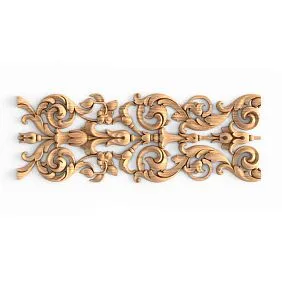
Our factory also produces:




Wood species: character and individuality
Choosing the type of wood for molding products is choosing the character of the future interior. Each type of wood has unique properties that affect not only the appearance of finished products but also their performance characteristics.
Coniferous woods traditionally occupy a significant share of the molding market due to their optimal price-to-quality ratio. Pine is attracted by its warm golden hue and expressive texture with clearly defined growth rings. Its natural resinous nature provides additional protection against biological damage and imparts a distinctive pine aroma, creating a countryside home atmosphere in the room.
Spruce has a more uniform structure and a light, almost white color. It is ideal for creating Scandinavian interiors, where clean lines, natural materials, and connection with nature are valued. Spruce moldings accept various finishes well, allowing for the most daring color solutions.
Hardwood species represent the premium segment of the wooden molding market. Oak rightfully is considered the king among materials for molding products. Its wood has exceptional strength, noble texture, and a wide range of natural shades—from light golden to dark brown. Oak moldings can serve for centuries, acquiring an even more noble and expressive appearance with age.
Beech is valued by craftsmen for its uniform dense structure and beautiful pinkish hue. Beech wood is exceptionally suitable for fine processing, allowing the creation of items with the finest profile detailing. Beech's high hardness ensures exceptional durability of finished products.
Birch is attracted by its light, almost white wood with a fine, uniform porous structure. The absence of a pronounced texture makes birch an ideal base for various types of finishing. Birch moldings can successfully imitate more expensive wood species or create their own unique style.
Get Consultation
Technological process: from log to work of art
Modern production of wooden molding is a high-tech process where advanced technologies serve centuries-old craftsmanship traditions. Each stage of production is critically important for obtaining products of the highest quality, capable of meeting the most demanding requirements.
The process begins with careful selection of raw material. Each board undergoes visual inspection by experienced specialists who evaluate the quality of the wood, absence of defects, and compliance with material requirements for a specific type of product. Only the best material, having passed a strict selection, is directed to the production of molding profiles.
Kiln drying is a critically important stage, determining the stability of finished products during use. Modern drying chambers with automatic control allow precise control of moisture removal. The optimal humidity for molding products is eight plus or minus two percent, ensuring geometric stability under various climatic conditions of use.
Primary processing includes trimming blanks to size, thickness calibration, removal of surface defects, and preparation of material for final operations. Modern equipment allows processing material with precision down to tenths of a millimeter, which is critically important for ensuring quality jointing of elements during installation.
Profiling is the heart of the production process, where blanks are transformed into finished products with their characteristic shapes. Four-sided planer machines with computer control create complex profiles with reproducible accuracy. Each curve and each fillet is formed by special milling cutters, manufactured according to individual drawings, taking into account the specific features of each profile.
Final processing includes careful sanding with special abrasive materials, creating an ideally smooth surface ready for protective coatings. The surface quality must meet the highest standards, as any defects will be clearly visible after installation and final finishing.
Classification of molding profiles: variety of forms and purposes
The world of wooden molding products is astonishing in its incredible diversity. Each type of profile has its specific purpose, unique aesthetic features, and clearly defined area of application in modern interior design.
Ceiling moldings create a smooth visual transition between walls and ceiling, capable of radically changing the perception of room height. Classic profiles with multiple curves and complex geometry are ideal for traditional interiors in the Baroque, Empire, or Classicism styles. Minimalist modern forms beautifully complement minimalist spaces, where clean lines and functional details are important.
Wall moldings are used for decorating walls, creating decorative panels, framing pictures, mirrors, and other interior items. They can be simple geometric profiles that highlight architectural features of the room, or complex carved compositions imitating classical moldings and creating a luxurious atmosphere of palace interiors.
Wooden moldingsoccupy a special place among molding products due to their versatility and wide range of applications. These elegant elements can be used in various situations—from framing door and window openings to creating complex multi-level decorative compositions on walls and ceilings.
Special profiles are developed to solve specific design tasks. Corner elements ensure quality and aesthetically pleasing joints of moldings in room corners. Connecting profiles allow creating complex compositions from elements of different heights and configurations. End caps provide logical completion to molding compositions.
Stylistic directions: from strict classicism to bold avant-garde
The richness of forms and possibilities of wooden molding allows realizing various stylistic concepts—from strict classicism to the boldest avant-garde. Each direction in design finds its unique expression in molding products.
Classic profiles reproduce forms tested over centuries and based on unshakable principles of harmony and beauty. They are based on the proportions of the golden section and create a sense of stability, respectability, and connection with great traditions of the past. Such moldings are ideal for traditional interiors, where it is important to emphasize generational continuity and respect for historical heritage.
Neoclassical forms represent a modern interpretation of traditional profiles, adapted to the requirements of modern life. Simplified geometry retains the recognizability of classical elements, but makes them more concise and suitable for modern architecture and lifestyle.
Modern styles require a fundamentally different approach to form creation. Here, simple, clean lines are important, highlighting the quality of the material and the perfection of processing. Minimalist profiles are especially popular in modern interiors, where every detail must be functionally justified and aesthetically perfect.
Avant-garde solutions allow designers and architects to realize the boldest and most unconventional ideas. Asymmetric profiles, unusual combinations of different materials, innovative surface processing technologies open practically limitless opportunities for creative self-expression and the creation of truly unique interiors.
Functional application: much more than just decoration
Wooden molding performs not only decorative but also numerous important practical functions in modern interiors. Understanding these functions helps designers and homeowners to fully utilize all the possibilities of this remarkable material.
Visual zoning of space is one of the most important functions of molding elements in modern design. With their help, a large room can be visually divided into functional zones, creating expressive accent walls, highlighting individual architectural elements or interior items requiring special attention.
Correction of room proportions is achieved through thoughtful selection of size, shape, and placement of molding profiles. Horizontal elements can visually expand space, vertical elements significantly increase perceived ceiling height, and complex multi-level profiles create a sense of luxury and grandeur even in small rooms.
Masking of technological elements is an important practical function of molding products. They can effectively conceal electrical wires, heating and water supply pipes, joints between different finishing materials, minor surface irregularities on walls and ceilings. A well-designed molding solves serious technical problems without compromising the overall interior aesthetics.
Furniture made of oak complements the interior picture, especially if the furniture is also made of solid oak. Unity of material and finish creates a sense of completeness and stylistic coherence.Play a special role in creating the completeness of furniture compositions. They visually unite individual elements of kitchen sets, bookcases, shelves into a single harmonious whole, giving furniture a sense of monumentality and solidity characteristic of quality products.
Technical specifications: quality in every detail
A quality wooden molding must meet strict technical requirements that ensure its durability, functionality, and ability to retain its original appearance for many years of use.
Geometric accuracy is the foundation of quality molding products. Deviations from nominal dimensions must not exceed established tolerances, which for different types of products amount to fractions of a millimeter. For molding products, especially important is the accuracy of profile reproduction, since even minor geometric distortions will be clearly noticeable after installation and may significantly worsen the overall impression of the interior.
The moisture content of wood must strictly correspond to the conditions of intended use of the product. For internal use, the optimal moisture content for molding is eight plus or minus two percent. This ensures dimensional stability of the product under natural changes in indoor climate conditions and prevents the appearance of cracks, warping, or other deformations.
Surface quality is determined by roughness parameters and complete absence of defects from mechanical processing. The surface must be uniformly processed along the entire length of the product, without visible transitions between individual sections. Fiber scratches, chips, or traces of poor or dull cutting tools are not permitted.
The grade of wood directly affects the appearance of finished products and their market value. Higher grades imply the complete absence of visible wood defects — knots, resin pockets, cracks, or discoloration. More economical grades allow for the presence of healthy, light-colored knots of strictly defined size and quantity.
The strength characteristics of molding products depend on the species of wood used, the quality of its processing, and adherence to production technology regimes. Products must withstand their own weight at maximum span length, as well as possible mechanical impacts during transportation, storage, and installation.
Innovative technologies in modern production
The modern woodworking industry actively implements the most advanced innovative technologies, which allow significantly improving the quality of produced products and greatly expanding the possibilities for designers and architects.
Numerical control technologies have brought about a true revolution in the production of complex molding profiles. Modern machining centers are capable of producing items of incredible complexity with absolutely reproducible accuracy, unattainable using traditional processing methods. Programmable systems allow manufacturing unique moldings according to individual customer projects without the need to create expensive special fixtures.
Laser technologies are finding increasingly wider application in decorative processing of molding products. Laser engraving allows applying delicate ornaments and patterns, creating complex textured surfaces, imitating hand-carved artistic relief. The accuracy of laser processing is fundamentally unattainable using traditional methods and opens up completely new creative possibilities for designers.
Thermal modification of wood is an innovative technology for improving material performance characteristics. Processing blanks at high temperature in a strictly controlled oxygen-free environment allows increasing dimensional stability of wood, significantly reducing its hygroscopicity, and greatly enhancing biological resistance to fungi and insect pests.
Composite technologies allow creating fundamentally new materials with predetermined performance characteristics. Reinforcing wood with various high-strength fibers significantly increases the strength characteristics of finished products. Using special new-generation adhesive compositions ensures exceptional stability even for the most complex and thin profiles.
Automated quality control systems completely eliminate the influence of human factors on product quality. High-precision laser scanners check the geometry of each item in real-time, automatically identifying and rejecting products that do not meet established quality standards.
Design possibilities: creativity without limits
Wooden molding provides designers, architects, and all lovers of beauty with truly boundless opportunities for creative self-expression and realization of the most daring ideas. The variety of available forms, sizes, and wood species allows implementing almost any creative concept.
Combining different types of profiles opens up opportunities for creating unique decorative compositions. Combining moldings of different heights, widths, and geometric shapes allows creating complex multi-level structures capable of imitating classical architecture or forming fundamentally new modern aesthetics.
Color solutions significantly expand the practical application possibilities of wooden molding in various interior styles. The natural color of wood emphasizes the connection of the interior with living nature and creates an atmosphere of ecological and natural authenticity. Toning with special compositions allows adapting products to the overall color scheme of a specific interior. Painting with opaque enamels opens up opportunities for creating bright contrasting solutions and realizing the most unexpected design ideas.
Various textural effects create additional artistic expressiveness of molding products. Brushing highlights the natural structure of wood grain rings, creating an effect of antiquity and authenticity. Patination imitates the noble influence of time on the material. Gilding and silvering give products a majestic and luxurious appearance characteristic of palace interiors.
Wooden profilesSpecial-purpose elements allow solving the most non-standard design tasks. Radius elements are intended for framing arched openings and creating curved compositions. Flexible profiles can adapt to surfaces of complex shapes. Modular systems ensure maximum ease and convenience of installation even for the most complex structures.
Professional installation: guarantee of durability and beauty
The quality of installation largely determines the final result of using wooden molding in interior design. Proper installation allows fully revealing all advantages of quality material, while installation errors can spoil even the most perfect products.
Surface preparation is a critically important stage of quality molding installation. Walls and ceilings must be perfectly flat, absolutely clean, and completely dry. Significant unevenness of the base requires mandatory preliminary leveling, since molding cannot conceal large defects and may replicate all irregularities of the base surface.
Precise marking is performed using modern professional measuring tools. Laser levels of the new generation ensure flawless accuracy of horizontal and vertical marking lines. The quality of marking directly determines the quality of all subsequent installation operations and the final result of the work.
Cutting molding elements to size requires using specialized professional tools. Circular saws with thin blades having a large number of teeth provide absolutely clean cuts without any chips or scratches. Special fixtures are used to create angular joints, guaranteeing mathematical accuracy of angles and perfect fit of mating elements.
Molding can be mounted in various ways depending on the size, weight, and purpose of specific elements. Lightweight decorative moldings of small cross-section are usually mounted exclusively using special adhesive. Heavy elements of large cross-section require additional mechanical fixation using self-tapping screws or special fasteners.
Quality joining of individual elements is the most critical operation in the entire installation process. Ends of mating parts must fit together absolutely tightly without any gaps or height or depth profile discrepancies. Especially important is the quality of angular joints, since they are always visible and any joint defects will be clearly noticeable.
Maintenance and care: preserving beauty for many years
Proper care of wooden molding ensures preservation of its attractive appearance and functional properties for many years of use. Natural wood requires certain attention and care, but with simple rules, it can serve for decades without losing its beauty.
Regular cleaning involves systematic removal of dust and surface contaminants that inevitably accumulate during use. For this purpose, soft dry cloths or special brushes with natural bristles are used, which cannot damage the surface of the products. Excessive moisture use is strictly prohibited, as it may damage the protective coating and penetrate into the wood structure.
Climate control plays an exclusively important role in maintaining wood stability and preventing deformations. The optimal relative humidity in the room should be forty-five to sixty-five percent. Sudden fluctuations in temperature and humidity may cause cracks and deformations even in high-quality, properly dried material.
Restoration of the protective coating is required when noticeable scratches, minor scratches, or loss of the original surface gloss appear. Lacquered surfaces can be refreshed using special polishes designed for natural wood. In cases of severe coating damage, partial restoration may be necessary using materials identical to those originally applied.
Protection against mechanical damage includes careful handling of molding elements during cleaning and rearranging furniture. Sharp objects can cause significant damage to the molding surface, especially when soft protective coatings were used.
Preventive inspections allow for timely detection of potential problems in their early stages, when eliminating defects requires minimal time and resources. Special attention should be paid to the mounting points of molding elements, corner joints, areas with high humidity, or areas subjected to intense mechanical stress.
Ecological aspects: responsible choice of modern consumer
In an era of growing environmental awareness, choosing wooden molding becomes a clear expression of responsible attitude toward the surrounding natural environment and care for the health of future generations. Natural wood possesses a range of significant ecological advantages over synthetic materials.
Renewability of the resource represents the main advantage of natural wood over all types of artificial materials. Adhering to principles of sustainable forestry, forests can serve as a source of high-quality raw material for an almost unlimited period, meeting the needs of many generations of people.
International certification of wood origin guarantees that strict ecological, social, and economic standards of sustainable development were followed during raw material harvesting. Forest certification systems ensure transparency throughout the entire supply chain, from harvesting to the final consumer.
The carbon footprint of wooden products is significantly lower than that of similar plastic or metal products. Growing trees actively absorb carbon dioxide from the atmosphere during photosynthesis, and this carbon remains bound within the wood structure throughout the entire service life of the manufactured items.
Biodegradability allows natural wood to naturally return to the natural cycle of substances after the end of the service life of the product. Wooden moldings can be composted or used as environmentally clean biological fuel, without creating environmental problems.
Complete absence of toxic emissions makes natural wood an absolutely safe material for human health. Unlike many composite materials, natural wood does not contain formaldehyde, phenols, or other potentially harmful chemicals that can negatively affect indoor air quality.
Support for local production helps reduce transportation costs and associated greenhouse gas emissions. Using regional wood species actively supports the local economy and contributes to reducing the overall environmental impact of the production process.
Economic aspects: a reasonable investment in quality and beauty
The cost of quality wooden molding is influenced by multiple objective factors, deep understanding of which will help make an economically justified decision when selecting materials for a specific project.
Wood species is the primary factor determining the cost of finished molding products. Coniferous species offer the most affordable prices with quite decent quality and attractive appearance. Hardwood species cost the buyer noticeably more, but in return provide excellent aesthetic and performance characteristics, fully justifying the additional expenses.
Profile complexity directly affects production labor costs and, consequently, the final product cost. Simple rectangular sections are significantly cheaper than complex multi-profile items with numerous decorative elements. Hand-carved items have the highest cost due to the exceptionally high proportion of skilled manual labor.
Quality of mechanical processing and final finishing directly affects the market price of the products. High-grade moldings with perfectly smooth surfaces and flawless profile geometry cost significantly more than mass-produced standard products. However, cutting corners on quality often results in additional costs for repairs or premature replacement of the items.
The volume of a single order significantly affects the unit cost per linear meter of material. Bulk purchases allow substantial discounts from the base retail price, but require significant upfront financial investment and suitable storage conditions for long-term material storage.
Regional price differences are caused by logistics costs for transporting finished products and competition levels on the local market. Purchasing molding products from regional manufacturers often proves more cost-effective due to significant savings on transportation expenses.
Industry development prospects: looking ahead
The wooden molding industry is in a state of continuous development and improvement, actively adapting to changing market requirements and new technological opportunities. Understanding key development trends will help make a choice that remains relevant in the long term.
Product customization is becoming a key competitive advantage in today's market conditions. Consumers increasingly demand individualized solutions, unique profiles, exclusive sizes, fully matching their personal tastes and specific project requirements. Modern production technologies make such customization economically feasible even for relatively small orders.
Automation of production processes steadily improves product quality and reduces its cost. Robotic technological systems ensure exceptional stability of all product parameters and completely eliminate the influence of human factors on the final product quality.
Stricter ecological standards are becoming an objective reality of the modern world. Producers are forced to actively implement eco-friendly technologies, consistently reduce production waste, switch to renewable energy sources. Mandatory certification of wood origin is becoming a necessary condition for operating in the market.
Digitization of sales processes fundamentally changes the ways manufacturers interact with end consumers. Modern online catalogs with 3D visualization capabilities allow customers to see how specific products will look in their interiors. Digital technologies significantly simplify the ordering process and enable real-time tracking of order execution.
Development of fundamentally new materials based on natural wood continuously expands the possibilities of modern design. Innovative materials successfully combine the unique beauty of natural wood with significantly improved performance characteristics unattainable with traditional materials.
Frequently asked questions
What sizes of wooden molding are most popular?
Molding products with heights ranging from twenty to one hundred millimeters are most in demand. Small profiles measuring twenty to forty millimeters are widely used for creating decorative elements and framing small interior objects. Medium-sized profiles measuring forty to seventy millimeters are most popular for general finishing work in residential spaces. Large profiles measuring seventy to one hundred millimeters are used in grand spaces to create monumental decorative compositions. Modern technologies allow manufacturing products of virtually any size according to individual customer orders.
How to choose the right wood species for a specific project?
Choosing the optimal wood species depends on several key factors: project budget, operating conditions of the products, and interior design requirements. For cost-effective projects, pine or spruce are excellent choices — these species offer attractive texture and reasonable price for decent quality. For premium interiors, consider oak or beech, which offer exceptional strength and elegant appearance. In rooms with high humidity, moisture-resistant species such as larch or specially treated oak are preferable.
How long does it take to manufacture a custom crown molding?
The manufacturing time for custom crown molding depends on the complexity of the profile and current production load. Standard profiles made from popular wood species are usually available in stock. Custom-sized items made from standard profiles are produced within five to ten working days. Complex profiles with decorative carving or those made from exotic wood species may require three to four weeks. Exact delivery times are always agreed upon with the client when placing an order and are fixed in contractual obligations.
Is it possible to restore historical crown molding profiles?
Yes, experienced craftsmen are able to reproduce historical profiles with high accuracy, regardless of their complexity or historical period. This involves detailed measurements of existing elements, development of a detailed technical drawing specifying all dimensions and profile features, and fabrication of special cutting tools. Reproducing historical crown moldings requires the highest level of craftsmanship and costs more than standard production, but the result fully justifies the additional time and expense.
How to ensure high-quality corner joints of crown molding elements in room corners?
Creating high-quality corner joints requires high precision cutting at strictly defined angles using professional equipment. For simple rectangular-section profiles, a standard 45-degree angled cut using a high-precision circular saw is used. Complex decorative profiles require individual fitting of each joint, taking into account the specific geometry of the profile. It is recommended to use factory-made corner elements or to consult professional installers for the most critical tasks.


