Article Contents:
- Philosophy of the wooden frame
- Time as a co-author
- Ecological ethics of the material
- Wood species — character and destiny of the frame
- Oak — the monumentality of centuries
- Beech — elegance and pliability
- Walnut — nobility and warmth
- Linden — softness for fine carving
- Stylistics of wooden moldings
- Baroque — the triumph of ornament
- Classicism — strict harmony
- Art Nouveau — flowing forms of nature
- Modern minimalism — purity of lines
- Technology of creating wooden molding
- Selection and preparation of timber
- Sawing and milling of profiles
- Carving — a handmade miracle
- Frame assembly — the precision of a joiner
- Sanding — the path to smoothness
- Finishing — the final chord
- Application of wooden moldings in interior design
- Mirrors — the magic of reflections
- Paintings — the dialogue between art and framing
- Compositions and galleries
- Restoration of antique frames
- Damage diagnosis
- Cleaning
- Replenishment of losses
- Recreation of finishing
- Choosing wooden molding — criteria and recommendations
- Style Compatibility with Interior
- Proportions and size
- Quality of execution
- Material Ecologicalness
- Price and value
- Frequently Asked Questions
- How to choose a frame for a painting?
- What is the optimal frame width for a mirror?
- Can a wooden frame be used in a bathroom?
- How to care for a carved gilded frame?
- How long does it take to make a custom frame?
- Can a damaged frame be restored?
- What type of wood is best for a frame?
- How to mount a heavy mirror frame on a wall?
- Can a wooden frame be painted?
- What is a mat and is it necessary?
- Conclusion — an investment in eternity

Look at an antique mirror in a museum or art gallery — what first catches your eye? The canvas, the reflection? No. The gaze is drawn to the frame. It is preciselywooden molding for mirrorsthat determines whether ordinary glass or painting becomes a work of art or remains just a functional item. A wooden frame is an architectural setting for artistic intent, a bridge between art and the space it inhabits. When a master takes wood in hand, he does not just create a frame; he gives birth to context, mood, and story.





The philosophy of the wooden frame
Why wood? In an age of technology, when plastic and polymers imitate any texture, when aluminum profiles are assembled in minutes,Wooden moldingremains an unsurpassed benchmark. Wood has a soul — it breathes, changes over time, accumulates the energy of touches and gazes. Each annual ring in oak or beech is a chronicle recorded by nature itself. When a master's chisel passes through the solid wood, it follows the grain, reads the character of the material, and engages in a dialogue with it.
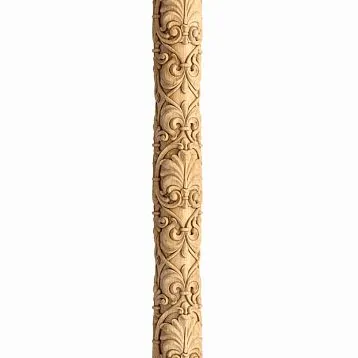
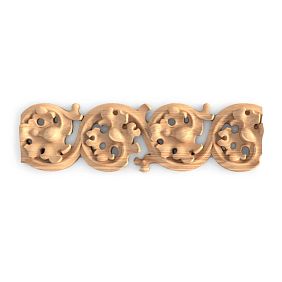
Carved Wooden Moldingis created not on an assembly line, but in a workshop where each element passes through the hands of a person who masters the craft of generations. Here, no two frames are absolutely identical — even when following the same sketch, the wood grain, depth of carving, and patina shade make each piece unique. This is the antithesis of mass production, where stamped frames roll off the assembly line by the thousands, devoid of individuality.




Time as a co-author
A plastic frame fades, cracks, and loses its appearance within five years. Metal oxidizes and becomes covered with a patina of corrosion. A wooden frame only becomes more refined over time. Oak darkens, acquiring the depth of aged wine. Walnut reveals a complex palette of chocolate and honey tones. Beech, under the influence of light and air, develops a warm amber hue. This is not material degradation but its evolution—time's participation in creating beauty.
Antique frames from the 18th–19th centuries are valued today on par with the works of art they frame, and sometimes even higher. A carved gilded Baroque frame can cost more than the painting it contains. Becausebuy wooden moldingmeans investing in eternity, in an object that will only become more valuable a century from now.
Our factory also produces:




The ecological ethics of the material
In the modern world, where the environmental agenda is becoming not a trend but a necessity, natural wood demonstrates impeccable credentials. Wood is a renewable resource; with responsible forestry, its reserves are replenished. Unlike plastic, which decomposes over centuries, poisoning soil and water, wood is biodegradable. It does not emit toxic fumes, nor does it contain formaldehyde or volatile organic compounds.
When you place a mirror in a wooden frame in a bedroom or children's room, you do not expose your loved ones to chemical compounds. Wood, on the contrary, regulates air humidity by absorbing excess moisture and releasing it when the air is dry. It is a living material that creates a healthy microclimate.
Get Consultation
Wood species — the character and fate of the frame
Choosing wood for molding is not just a matter of availability or price. Each species has unique properties that dictate processing technology, the aesthetics of the finished product, and its lifespan.
Oak — the monumentality of centuries
Oak frames are the choice of those who value solidity and prestige. The density of oak reaches 750 kg/m³, making it one of the strongest European species. Oak grain is expressive — large pores, clearly defined annual rings, medullary rays that create a characteristic ripple on a radial cut. This natural decorativeness allows for striking frames even without carved decoration — the texture of the wood itself becomes the ornament.
Oak has a high tannin content — tannic substances that protect the wood from biological damage. An oak frame is not afraid of humidity, temperature fluctuations, or time. Over time, oak darkens nobly — a process known as natural staining. The light golden color of young oak transforms over decades into a deep chocolate or almost black hue, like that of bog oak that has lain in water for centuries.
Processing oak requires carbide tools and skill — its high density makes carving labor-intensive, but each detail comes out crisp, with sharp edges. ForMirrors in decorative interiorAn oak frame becomes a symbol of status and taste.
Beech — elegance and pliability
Beech frames are chosen for their combination of strength and elasticity. Beech's density of 650-680 kg/m³ ensures durability, while its fine-pored structure provides a smooth surface and excellent receptiveness to finishing. Beech's grain is more uniform than oak's, with a delicate pinkish hue. This makes beech an ideal base for staining — it absorbs stains evenly, without blotches, allowing for any color from bleached Scandinavian to rich wenge.
A unique property of beech is its formability. After steaming at 100-110°C, the wood becomes plastic and can be bent without fiber breakage. This allows for the creation of oval, round, and arched frames for mirrors and paintings in non-standard formats. The minimum bending radius is 8-10 times the thickness of the workpiece.
Carving beech is easier than carving oak due to its lower hardness. This allows for the creation of intricate, delicate compositions with fine details that are difficult to achieve in denser wood species.Carved moldingmade of beech can have detailing down to a millimeter.
Walnut — nobility and warmth
Walnut wood is considered elite due to the beauty of its grain and rarity. The color palette of walnut ranges from light brown to dark chocolate with purple and reddish hues. The fiber pattern is complex, with beautiful swirls and iridescence. A walnut frame requires no additional decoration—the texture itself creates visual richness.
Walnut's density of 600-650 kg/m³ provides strength with moderate weight. The wood is easy to work with, holds fine carving details well, and sands and polishes beautifully. A finishing coat of oil or wax reveals the depth of color, creating a silky surface with a noble matte sheen.
Walnutpicture moldingis especially good for framing paintings with a warm color palette — landscapes, portraits, still lifes. The wood's warm tone resonates with ochre, sienna, and umber on the canvas.
Linden — softness for fine carving
Linden is the wood of choice for the most complex carved compositions. Its low density of 450-500 kg/m³ makes the wood soft and pliable to tools. Linden cuts like butter, allowing for the creation of delicate, openwork ornaments with the finest elements — strands of hair in angels' hairstyles, flower petals, curls of rocaille motifs.
Linden's grain is uniform, fine-pored, and light — ranging from almost white to creamy. This neutrality makes linden ideal for gilding, silvering, and painting. Gold on linden carving looks especially bright due to the light base, which does not distort the color of the leaf.
Linden's drawback is its lower strength compared to hardwoods. A linden frame requires careful handling and does not withstand impacts or mechanical damage. However, for intimate interiors where the frame is protected from accidental impacts, linden is unparalleled.
Stylistics of wooden moldings
The shape, profile, and decoration of a frame are dictated by the style of the interior and the nature of the item being framed. A frame for a mirror in an entryway and a frame for an antique still life require different approaches.
Baroque — the triumph of ornament
Baroque frames are the apotheosis of decorativeness. Wide profiles of 100-150 mm are covered with continuous carving — acanthus leaves, cartouches, mascaron, angels, garlands of flowers and fruits. The carving is multi-level, creating deep relief. Gilding is an essential element of Baroque aesthetics. Gold is applied using the leaf method on a polyment (a special ground), polished to a mirror shine, or left matte.
The Baroque color palette is gold on a white or red background (bole), less commonly gold on natural wood. Patination emphasizes the depth of the carving — dark patina accumulates in the recesses, creating a contrast with the shiny raised areas.
A Baroque frame is suitable for framing classical paintings, antique mirrors, and in palace-type interiors. It dominates, attracts attention, and requires space and high ceilings.Interior decor for paintingsin the Baroque style turns a wall into an art gallery.
Classicism — strict harmony
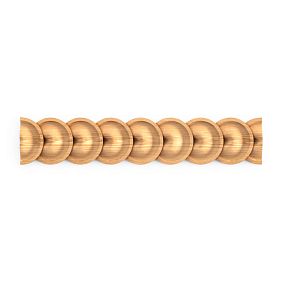
Classicist frames are distinguished by orderliness and symmetry. The profile is more restrained, 60-100 mm wide, with clear zoning. Characteristic elements include straight flutes (vertical grooves), beads, ovolos (egg-shaped elements), and meanders (geometric patterns).
The carving is less deep than in Baroque, more flat and graphic. Gilding is applied more delicately — gold highlights individual elements against a general background of natural wood or paint. Combinations of white with gold, gray with silver are popular.
A Classicist frame is universal — suitable for portraits, landscapes, graphics, mirrors. It frames without competing with the content. Fordecorative mirrorsA classicist frame creates a noble framing without excessive opulence.
Art Nouveau — the flowing forms of nature.
Frames in the Art Nouveau style reject symmetry and geometry in favor of natural organic forms. The profile meanders, following the logic of plant growth. The carved decor features stylized iris flowers, lilies, water lilies, winding stems, and female profiles with flowing hair.
Frame corners are rounded, sometimes asymmetrical. The technique of figured sawing is used, creating a complex frame contour. The finish emphasizes the naturalness of the wood — natural shades, matte oil coatings, patination with greenish tones imitating bronze.
An Art Nouveau frame is ideal for framing graphics, watercolors, early 20th-century photographs, and mirrors in bedrooms and boudoirs. It creates a romantic, slightly nostalgic mood.
Modern Minimalism — Purity of Lines
Modern frames gravitate towards simplicity of form. Rectangular or square profiles 30-50 mm wide without carved decor. All the beauty lies in the quality of the wood, its texture, and shade. Joints are strictly at 45°, without gaps. The surface is perfectly smooth, coated with matte varnish or oil.
The color palette includes natural wood, bleached tones, black, and graphite. Contrasting combinations are acceptable: a light frame on a dark wall or vice versa. MinimalistWooden Picture FrameSuitable for modern paintings, abstracts, photographs, mirrors in lofts and Scandinavian interiors.
The technology of creating wooden molding.
The path from board to finished frame involves dozens of operations, each influencing the final result.
Selection and Preparation of Wood
First-grade wood is used for molding — without knots larger than 5 mm in diameter, resin pockets, cracks, or rot. Selection is done manually, with each board inspected from both sides. Special attention is paid to the grain direction: it must be straight and parallel. Cross-grain (deviation of fibers) leads to warping of the finished product.
The moisture content of the raw material is controlled with a moisture meter. For subsequent kiln drying, a moisture content of 18-20% is acceptable. Wood with higher moisture dries unevenly and cracks. Selected boards go to temporary storage, where they are conditioned for 10-14 days at workshop temperature for acclimatization.
Kiln drying is carried out in special installations using gentle regimes. The temperature is increased stepwise from 40°C to 60°C, and humidity is gradually reduced. The entire cycle takes 14-21 days. The final moisture content of 8-12% corresponds to the equilibrium moisture content in heated rooms. After drying, the wood is stabilized — conditioned under normal conditions for 7-10 days to relieve internal stresses.
Sawing and milling of profiles.
Dried boards are cut into blanks for molding profiles. The width of the blank corresponds to the width of the future frame plus machining allowances. Sawing is done on saws with carbide-tipped teeth, ensuring a clean cut without chips.
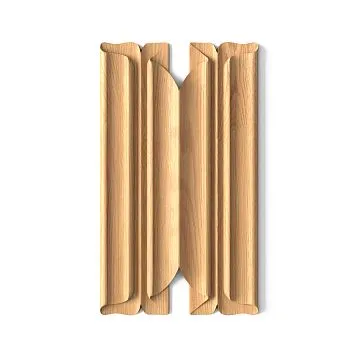
Profile milling is a key operation. On four-sided planers, the blank is given a complex cross-section with decorative elements. Sets of cutters are used, each forming a specific element of the profile — a rabbet for inserting glass, decorative coves, beads, flutes.
Milling accuracy is critical — tolerance no more than ±0.2 mm. Deviations lead to gaps during frame assembly. Modern CNC machines ensure profile repeatability along the entire length of the blank. After milling, profiles are calibrated — they undergo final processing to achieve the specified geometry.
Carving — a handmade marvel.
Carved decor is done by hand by master carvers. First, a full-size sketch of the ornament is created. The drawing is transferred to the blank using carbon paper or by pouncing. The carver works with a set of chisels of various shapes — straight, gouges, V-tools, and bent gouges.
Carving is done in stages: first, the background is removed, general volumes are formed, then details are worked out. Carving depth can reach 30-40 mm in Baroque compositions. The master works not only with tools but also with hands, constantly feeling the carving, checking the smoothness of the surface and the clarity of the edges.
Complex elements — angel heads, mascaron, garlands — can take weeks to carve. This is piecework, requiring not only technical skill but also artistic sense. Each carver adds something of their own, so even when repeating the same pattern, the details differ.
Frame assembly — the precision of a joiner.
The frame is assembled from four pieces of profile, whose ends are cut at a 45° angle. The quality of the cut determines the tightness of the miter joint. The cut is made on miter saws with a laser guide, ensuring accuracy of ±0.1°.
Before assembly, the ends are coated with PVA wood glue or polyurethane adhesive. The parts are joined in clamps, which provide even pressure along the entire seam. Additionally, corners are reinforced with dowels, pegs, or wooden corner brackets. Clamping time is 4-6 hours until the glue fully cures.
After assembly, the frame is checked for squareness — diagonals must be equal with an accuracy of ±1 mm. Deviations are corrected by tightening the clamps. Squeezed-out glue is removed with a damp sponge before it hardens.
Sanding — the path to smoothness.
Sanding the finished frame is a multi-stage process. First, coarse grit P80-P120 removes tool marks and irregularities. Then, successively with grits P150, P180, P240, the surface is brought to perfect smoothness.
Carved elements are sanded by hand with special flexible abrasives that follow the relief form. The work requires patience and care — it's important not to wear down the sharp edges of the carving, preserving the clarity of details.
After sanding, the frame is blown with compressed air to remove wood dust from all recesses and pores. The surface is wiped with a damp cloth to raise the wood grain. After drying, a final sanding with P320 grit removes the raised grain.
Finishing — the final chord.
Final finishing determines the color, gloss, and protective properties of the frame. Staining allows you to change the shade of the wood from lightly highlighting the grain to completely covering it. Water-based stains provide a transparent effect, alcohol-based stains offer quick drying, and oil-based stains ensure deep penetration.
Priming prepares the surface for varnishing or gilding. Water-based primers raise the grain and require intermediate sanding. Alkyd primers create a dense base that isolates the wood.
Varnishing is performed in 3-4 layers with intermediate drying and sanding. Water-based acrylic varnishes (quick drying, odorless), polyurethane varnishes (high strength), and nitrocellulose varnishes (traditional technology) are used. The final layer can be glossy, semi-matte, or matte depending on the task.
Gilding is the pinnacle of a finisher's craft. The classic technique includes applying gesso (chalk ground), bole (colored ground), gilding with gold leaf (sheets 0.0001 mm thick), and polishing with agate burnishers. The process requires weeks of work, but the result is eternal beauty.
Using wooden moldings in interior design
A wooden frame can transform a space, create focal points, and organize visual structure.
Mirrors — the magic of reflections
mirror in wooden frame— a classic of interior design. The frame determines how the mirror will fit into the space. A massive carved frame turns the mirror into an independent art object, a dominant feature of the interior. A thin, minimalist frame emphasizes the reflection, visually expanding the space.
In the hallway, a framed mirror serves both functional and decorative roles. A full-length vertical format requires a frame width of 60-80 mm — expressive enough but not overwhelming the small space. For classic interiors, a carved frame with gilding is suitable; for modern ones, a simple dark wood profile.
In the living room, a mirror above the fireplace or console becomes the centerpiece of the composition. A wide frame of 100-150 mm with rich decoration is appropriate here. A horizontal format visually widens the wall, a vertical one raises the ceiling. An oval or round mirror in a carved frame creates a soft, romantic accent.
In the bedroom, the mirror of a dressing table is framed with an elegant frame that harmonizes with the furniture. Oval shapes are often used, creating a more 'flattering' reflection. The frame color is warm natural wood tones or bleached shades for lightness.
Paintings — the dialogue between art and framing
A picture frame is not just protection for the canvas but an interpretation of the artistic intent. A correctly chosen frame enhances the impact of the painting; an incorrect one destroys it.
Antique canvases in oil painting technique require classic frames with carving and gilding. Wide profiles of 80-120 mm create distance between the painting and the wall, highlighting the artwork. The frame color is chosen based on harmony or contrast with the dominant tones on the canvas.
Contemporary painting pairs well with simple frames. An abstraction in a minimalist natural wood frame achieves completeness without decorative competition. A photograph in a thin black wood frame gains graphic quality.
Watercolors and pastels, which require a mat (cardboard border), are framed with narrower frames of 30-50 mm. Here, the frame serves as a finishing contour without drawing attention away from the delicate technique.
Graphics — engravings, etchings, drawings — look best in frames of restrained tones: black, walnut, dark brown. Carving is minimal or absent, with emphasis on wood quality and manufacturing precision.
Compositions and galleries
Grouping several frames on one wall requires a thoughtful approach. The classic principle is unity of frames: one wood species, one profile, one finish. This creates order and respectability. An eclectic approach allows mixing different frames united by color or style.
Symmetrical hanging — pairs or groups of frames relative to a central axis — suits classic interiors. Asymmetrical — a free composition of frames of different formats — suits modern ones.
interior decorationA gallery of wooden frames turns a wall into a gallery, creates visual rhythm, and structures the space. It is important to maintain distances between frames — 50-100 mm for classic style, 100-200 mm for modern style.
Restoration of antique frames
Antique frames are valuable in themselves. An antique frame from the 18th-19th century can cost tens or hundreds of thousands of rubles. Restoring such items is the highest level of craftsmanship.
Damage diagnosis
The first stage is a thorough inspection of the frame. All defects are recorded: cracks in the wood, losses of carved elements, peeling of gilding or paint, dirt, traces of previous restorations. A detailed description with photographic documentation is compiled.
The strength of corner joints is checked — antique frames were often assembled with animal-based glues, which lose strength over time. Loose corners require regluing.
The composition of the coating is determined — oil painting, gesso, gilding, varnish. Chemical analyses and microscopy are used for this. It is important to understand the original technology so that the restoration is authentic.
Cleaning
Cleaning the frame of dirt is a delicate operation. Soft solvents that do not damage the original coating are used. The surface is cleaned with cotton swabs in circular motions. Stubborn dirt is softened with compresses.
Old darkened varnish is removed with special strippers. The process is monitored under a microscope to avoid affecting the original gilding or paint. After varnish removal, the frame is rinsed with distilled water and dried.
Replenishing losses
Lost fragments of carving are restored by hand. The carver studies the preserved sections, understands the logic of the ornament, and carves the missing elements from similar wood. The new carving must precisely match the style, proportions, and relief depth of the original.
New elements are inserted using reversible adhesives, allowing future replacement of restoration inserts if necessary. The surface is leveled flush with the original and toned.
Cracks and chips in wood are filled with special mastics based on wood flour and binder. After hardening, the mastic is sanded and toned to match the color of the surrounding wood.
Recreation of finishing
Restoration of gilding is the pinnacle of restoration craftsmanship. The same technique used in the era of the frame's creation is employed: gesso, bole, gold leaf. The new gilding is patinated and aged to harmonize with the original areas.
If the frame was painted, a historically accurate paint composition is selected. Analysis of the original reveals pigments and binder. An authentic recipe is recreated, and the paint is applied using traditional methods.
Final varnishing protects the restored areas. Reversible varnishes of natural origin are used—dammar, mastic, shellac. They correspond to historical authenticity and can be removed if necessary without damaging the base.
Choosing a wooden frame—criteria and recommendations
How to choose a frame that will last for decades and highlight the beauty of the item being framed?
Style compatibility with interior design
The frame should harmonize with the overall style of the room. A high-tech frame is inappropriate in a classic interior, and baroque gilding is out of place in a loft. But the rule is not absolute: a contrasting combination can create an interesting effect—for example, an antique carved frame in an ultra-modern minimalist space.
The color of the frame echoes other wooden elements—furniture, floor, doors. This creates color unity. Alternatively, the frame can be chosen as a contrasting element, becoming an accent.
Proportions and size
The width of the frame should correspond to the size of the item being framed. A small 15×20 cm photograph in a 100 mm wide frame will look absurd—the frame will 'swallow' the image. A large 100×150 cm mirror requires a frame at least 70-100 mm wide for visual weight.
General rule: the width of the frame is 5-10% of the smaller side of the item being framed. For a 50×70 cm painting, a 40-60 mm frame is optimal; for a 100×120 cm painting, 70-100 mm.
Quality of execution
Signs of a quality frame: tight corner joints without gaps, smooth surface without burrs or unevenness, clear carving with sharp edges, even coating without drips or stains.
Inspect the frame from different angles under good lighting. Run your fingers over the surface—it should feel silky. Check the corners—the diagonals should be equal, and the frame should not wobble on a flat surface.
Material eco-friendliness
Clarify which coatings are used. Water-based varnishes are safer than nitro and polyester ones. Natural oils and waxes do not emit volatile compounds. Adhesives should have low formaldehyde content (class E1 or E0).
Price and value
A quality handmade wooden frame cannot be cheap. The cost consists of the price of wood, labor, and finishing materials. A carved gilded frame can cost from several tens to hundreds of thousands of rubles, depending on size and complexity.
But it is an investment in an item that will last for generations, increasing in value over time.buy wooden molding—means acquiring not temporary decor, but an item that can become a family heirloom.
Frequently asked questions
How to choose a frame for a painting?
Consider the style of painting, color palette, and execution technique. Classical painting requires classical frames with carving. Contemporary art calls for simple, laconic forms. The color of the frame either harmonizes with the dominant tones on the canvas or contrasts. Warm wood tones enhance warm colors in the painting; cool tones (black, graphite) enhance cool colors.
What frame width is optimal for a mirror?
Depends on the size of the mirror and its purpose. For a 60×90 cm mirror in an entryway, a 50-70 mm frame is suitable. For a large 100×150 cm mirror—80-120 mm. For a small 30×40 cm mirror—30-40 mm. General rule: frame width = 5-10% of the smaller side of the mirror.
Can a wooden frame be used in a bathroom?
Yes, provided it has high-quality moisture-resistant treatment. Use oak or larch—species with natural moisture resistance. Coating—polyurethane varnish or yacht varnish, creating a sealed film. Ensure good ventilation in the bathroom and avoid direct water contact with the frame.
Dry wiping with a soft brush once a week to remove dust from the recesses of the carving. Once a month—lightly with a damp cloth, without pressure. Do not use abrasive agents, alcohol, or solvents—they damage the gilding. Once a year, apply special gilding wax to protect and refresh the shine.
Dry wipe with a soft brush once a week to remove dust from carved recesses. Once a month—use a slightly damp cloth without pressure. Do not use abrasive cleaners, alcohol, or solvents—they damage the gilding. Once a year, you can apply special gilding wax to protect and refresh the shine.
How long does it take to make a custom frame?
Simple frame without carving—7-10 days. Frame with medium-complexity carved decor—3-4 weeks. Complex frame with rich carving and gilding—1.5-2 months. Timelines depend on workshop workload, frame size, and decor complexity.
Can a damaged frame be restored?
Yes, practically any damage can be restored. Cracks are filled with mastic, chips are repaired, and lost carving is recreated. Restoration can take from a week to several months depending on the scope of work. The cost is comparable to making a new frame, but for antique or valuable frames, it is justified.
What type of wood is best for a frame?
For classic gilded frames — linden (easy to carve, holds detail excellently). For strong, durable frames — oak (maximum durability, expressive grain). For frames with tinting — beech (uniform structure, absorbs stains well). For premium frames — walnut (beautiful grain, noble color).
How to mount a heavy frame with a mirror on the wall?
For frames up to 10 kg, use two hangers on the back of the frame and wall hooks with 8×60 mm dowels. For frames 10-20 kg — reinforced hangers and anchor fasteners. For frames over 20 kg — special mounting systems distributing the load across 4-6 points. It is important to mount into a load-bearing wall or embedded elements.
Can a wooden frame be painted?
Yes, a wooden frame can be painted. First, the surface is sanded with P180-P240 grit, primed with acrylic primer. Paint is applied in 2-3 coats with intermediate drying and light sanding. Use water-based acrylic paints or alkyd enamels. Finish with a protective matte or glossy varnish.
What is a mat and is it necessary?
A mat is a cardboard or paper border between the artwork and the frame. It creates a visual buffer, protects the work from contact with the glass, and adds significance. It is necessary for watercolors, pastels, graphics, and photographs. Mat width is usually 50-100 mm, color — neutral (white, cream, gray) or harmonizing with the artwork.
Conclusion — An Investment in Eternity
wooden molding for mirrorsand paintings — is not just functional framing. It is a piece of applied art, created by a master's hands from a living material. Each frame is unique thanks to the unrepeatable wood grain, individuality of carving, and character of the finish.
In a world of mass production, where stamped items roll off assembly lines by the thousands, a handmade wooden frame becomes a symbol of the value of the genuine, made with soul and skill. When you chooseCarved Wooden Molding, you are investing in an object that will last for generations, acquiring a noble patina of age over time and increasing in value.
An oak frame created today will become an antique, a collectible object, in a century.Carved Decor, crafted by hand, carries the energy of the master, the warmth of his hands, a particle of his talent. This is something machines can never reproduce — soul and individuality.
The company STAVROS continues the traditions of the Russian woodworking school, combining classical techniques with modern quality control technologies. Every frame leaving the STAVROS workshops goes through a journey from careful wood selection to final polishing. Selected oak and beech from Russia's northern regions, chamber drying using gentle regimes, milling on precision equipment, hand carving by experienced masters, multi-layer finishing — each stage is controlled to achieve unparalleled quality.
Wooden Picture Framefrom STAVROS is a guarantee of durability, eco-friendliness, and beauty. It is an opportunity to create an atmosphere of nobility and taste in your home, unattainable with synthetic materials. It is a connection to a tradition rooted in centuries, when masters created things not for a year, but for centuries.
Choosingmolding for mirrors and paintingsfrom STAVROS, you receive not just a beautiful frame, but an object that will become part of your home's history, be passed down through generations, and delight children and grandchildren. This is the choice of those who understand the value of the genuine, who appreciate the beauty of natural materials and the skill of human hands.
STAVROS — where wood takes the form of art, where traditions live in every detail, where frames are created worthy of framing masterpieces and your most precious memories.