












































































Article Contents:
- Polyurethane in Architectural Decor: The 21st Century Material
- From Compromise to Optimal Solution
- Scope of Application
- Aesthetic possibilities
- Flexible Molding: A Revolution in Decorating Curvilinear Forms
- A Problem Requiring a Solution
- Flexibility Technology
- Applications of Flexible Moldings
- Installation of Flexible Molding
- Adhesive for Polyurethane Decor: The Foundation of Reliable Installation
- Why Adhesive is Critical
- Types of adhesives for polyurethane
- Criteria for selecting adhesive
- Adhesive Application Technology
- Practical Recommendations and 2026 Trends
- Combining Rigid and Flexible Elements
- Painting and final finishing
- 2026 Architectural Decor Trends
- Custom production
- STAVROS: 23 Years of Decor Mastery

Architecture is the language of space, speaking through forms, lines, and proportions. Flat walls and smooth ceilings are silence. Decorative elements — cornices, moldings, pilasters, rosettes — turn silence into dialogue, filling a space with character, history, and emotion. But the complexity of this language increases when space rejects straight lines and right angles. Arches, domes, radius transitions, curvilinear surfaces — here, traditional rigid elements are powerless.Polyurethane architectural decorationsolved this problem by offering not only the richness of forms of classical stucco but also the flexibility that allows decorating the most complex structures without compromising aesthetics.
In 2026, polyurethane decor has reached maturity as both a material and a design direction. The times when it was perceived as a cheap alternative to plaster or wood are over. Today, it is an independent category with its own advantages, technologies, and aesthetic possibilities. The emergence offlexible polyurethane moldinghas opened new horizons for architects and designers — now curvilinear elements can be decorated as easily as straight ones, and arched openings receive full framing instead of makeshift compromises. Simultaneously, the development of specialized installation compounds has made decor installation reliable and durable — a properly chosenmolded decoration adhesiveguarantees that elements will last for decades without peeling, deformation, or deterioration.


Polyurethane in Architectural Decor: The 21st Century Material




From Compromise to Optimal Solution
Twenty years ago, polyurethane stucco was perceived as a budget replacement for traditional materials. Want gypsum cornices but they're expensive? Take polyurethane ones. Dreaming of wooden carved panels but can't afford them? Here's an imitation. This reputation as a 'second-rate material' hindered development, limited application, and created prejudices.
Today, the situation has changed dramatically. Polyurethane does not imitate other materials — it exists as an independent category with unique properties. Lightness combined with strength, flexibility while maintaining shape, moisture resistance without losing aesthetics, production technology enabling the accessibility of complex forms — this is a set of qualities unattainable for traditional materials.
Architects design with polyurethane decor in mind. Designers choose it not out of necessity but from an understanding of its advantages. Builders appreciate the speed and simplicity of installation. Clients get a result that visually rivals historical examples but lasts longer and requires minimal maintenance.
Our factory also produces:

Scope of Application
Interior decor is the main area of polyurethane application. Ceiling cornices and coving cover the wall-ceiling joint, creating architectural completion of a room. Wall moldings divide walls into panels, frame doors and windows, and create frames for paintings and mirrors. Ceiling rosettes for chandeliers turn the ceiling center into a decorative accent. Baseboards ranging from 8 to 25 centimeters in height complete the lower tier, covering the wall-floor joint.
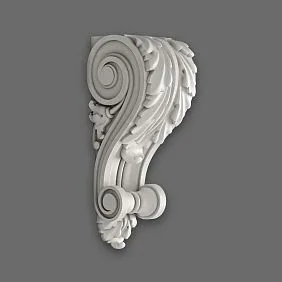
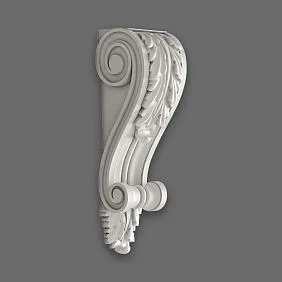
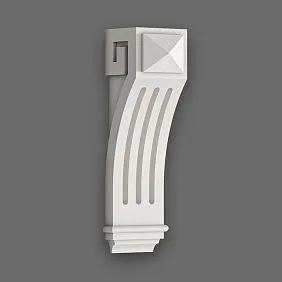
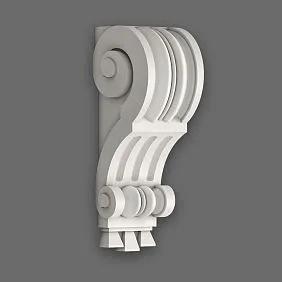
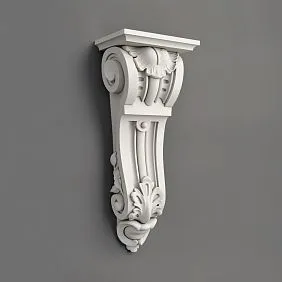
Decorative panels, pilasters, half-columns, brackets, and consoles add volume and detail. In classic interiors, they recreate palatial luxury. In modern ones, they serve as accents that dilute minimalist restraint. In eclectic styles, they unite different styles into a harmonious composition.
Polyurethane facade decor transforms the appearance of buildings. Cornices, window casings, pediments, rustication, pilasters, balustrades — all of this is now available for private home construction, where such decor was once a luxury. Polyurethane allows for architecturally expressive facades at a reasonable cost, without heavy structures requiring wall reinforcement.
Furniture decor is a growing trend. Overlays for cabinet fronts, carved table legs, decorative door panels, fireplace surrounds — polyurethane allows for updating furniture, creating exclusive pieces, and restoring antiques.
Get Consultation
Aesthetic possibilities
The detailing of polyurethane decor is on par with hand carving. Modern casting technologies capture the finest nuances of the master model. Petals of acanthus leaves with the thinnest veins, rococo scrolls with deep undercuts, geometric patterns with sharp edges — all of this is reproduced in polyurethane with a precision unattainable for mass production in other materials.
The variety of styles spans the entire history of architecture. Greek meanders and palmettes, Roman acanthus leaves, Gothic trefoils, Renaissance cartouches, Baroque scrolls, Classical modillions, Empire wreaths and eagles, Art Nouveau floral motifs, Art Deco geometry, contemporary minimalism — every era is represented in manufacturers' catalogs.
Painting polyurethane opens up limitless possibilities. The material is compatible with all types of paints — acrylic, alkyd, oil-based, water-based. You can create the pure white of Classicism, the warm cream of French interiors, contrasting combinations for eclecticism, metallic finishes in gold, silver, bronze, patination for an antique effect, gradient transitions for modern designs.
Flexible Molding: A Revolution in Decorating Curvilinear Forms
A Problem Requiring a Solution
Architecture is full of curvilinear elements. Arches are a classic technique that visually lightens an opening, creates a smooth transition between rooms, and adds elegance. Round and elliptical windows are characteristic features of many styles from Baroque to Art Nouveau. Curved walls, columns, half-columns, domed ceilings, spiral staircases — all of these require decorative finishing.
Traditional rigid moldings do not work on curvilinear surfaces. Attempting to bend a standard polyurethane molding leads to its breakage or deformation. The only option is to assemble a curve from short straight segments, creating a polygon instead of a smooth arc. The result looks crude, joints are visible, and the aesthetics are ruined.
The alternative is custom fabrication of elements with the required radius. This is expensive, time-consuming, and requires precise measurements. The slightest error in measurements — and the element does not fit. For projects with dozens of arches of different radii, this becomes a logistical and financial nightmare.
flexible polyurethane moldingFlexible molding elegantly solves the problem. These are standard-length strips (usually 2-2.4 meters), made from elastic polyurethane that bends to a radius without deformation or breakage. One universal element fits arches of different sizes, curved walls of any configuration, columns of any diameter.
Flexibility Technology
Flexibility is achieved through a special polyurethane formulation. The ratio of components is selected so that the material remains elastic but does not lose strength. The internal structure has a reduced density — about 200-250 kg/m³ — which provides elasticity. The surface layer is denser — up to 400 kg/m³ — ensuring resistance to mechanical impact and preservation of the relief.
The profile of flexible molding is often thinner and lower than standard. This is dictated by physics — the smaller the cross-section, the easier it is to bend. Width is typically from 10 to 80 millimeters, height from 10 to 100 millimeters. For small radii (wrapping round columns 30-40 cm in diameter), narrow profiles are chosen. For large radii (arches 2-3 meters wide), more massive ones are suitable.
The minimum bending radius is specified by the manufacturer for each profile. A narrow molding 20 millimeters wide can have a minimum radius of 20 centimeters — it can be bent almost into a ring. A wide molding 80 millimeters will require a minimum radius of 80-100 centimeters. Violating the minimum radius leads to folds on the inside of the bend and cracking on the outside.
Shape memory is an important property. After bending and fixing to the surface, the molding retains its given shape. It does not try to straighten, creating stress at the attachment points. This is achieved through partial polymerization of the material in a stressed state — a process that occurs naturally after installation.
Application of flexible moldings
Framing arches is a classic application. An arched opening receives molding around its perimeter — the vertical sections on the sides are finished with standard molding, the curved top — with flexible molding. The joint is practically invisible if the profiles are selected from the same collection. The result is a smooth line that emphasizes the beauty of the arch without breaking it into segments.
Round windows are a characteristic feature of classical and eclectic architecture. Flexible molding frames them around the perimeter, creating completeness. One circular element or several concentric rings of different profiles can be used, creating a multi-layered composition.
The decor of columns and half-columns traditionally consists of three parts: the base (the widened lower part), the shaft (the central part, often with vertical flutes), and the capital (the upper decorative part). Flexible molding is used to create horizontal bands on the shaft, frame the base and capital, and create spiral elements.
Curved walls are a trend in contemporary architecture. Instead of rectangular boxes, rooms feature smooth curves that create dynamism, guide movement, and define zones. Flexible molding allows for decorating such walls, creating horizontal bands, panels, and frames.
Ceiling structures of complex form — domes, vaults, multi-level transitions — are decorated with flexible cornices. They follow the curves of the architecture, emphasizing volume, creating play of light and shadow, and adding detail.
Furniture and interior items also use flexible moldings. Round tabletops receive decorative edging along the rim. Curved cabinet fronts, curved bed headboards, radius bar counters — wherever there is a curve, flexible molding creates decorative value.
Installation of Flexible Moldings
Installing flexible moldings requires an understanding of the material's specifics. The element is removed from its packaging and left in the room for 24 hours to acclimate — temperature and humidity should stabilize. This prevents deformation after installation.
The surface onto which the molding is mounted must be even. Curvilinear does not mean uneven. An arch must have a smooth arc without bumps or dips. Irregularities greater than 2-3 millimeters will cause problems — the molding will either not lie flat or will deform in an attempt to follow the defects.
Layout is critical. For an arch, mark the line along which the molding will run. Use a flexible batten or a long strip of cardboard to check symmetry. An asymmetrical arch with molding looks absurd — the defect is emphasized, not hidden.
Adhesive is the foundation of the attachment. The choice of composition is critical, detailed in the next section. Adhesive is applied to the back of the molding in a thin bead or dots at 5-10 centimeter intervals. Too much adhesive will cause squeeze-out, too little — insufficient fixation.
The molding is applied to the surface and gently bent along the marked line. It is important to bend smoothly, without sharp kinks. The element is pressed by hand along its entire length and fixed. For complex radii, temporary fastening is used — painter's tape that holds the molding until the adhesive sets. Thin nails or pins driven in next to the molding also serve as temporary support.
The setting time depends on the type of adhesive — from a few minutes for fast-setting compounds to several hours for slow ones. Until the adhesive has fully set, the position of the molding can be adjusted, aligning the line.
Joints between flexible moldings and standard ones, or between flexible moldings themselves, are treated the same as for rigid elements. Ends are cut at the required angle, joined tightly, the gap is filled with joint adhesive or acrylic sealant, and sanded after drying. A properly executed joint is invisible after painting.
Adhesive for Polyurethane Decor: The Foundation of Reliable Installation
Why Adhesive is Critical
The quality of the decor and the craftsmanship of the installation are devalued if the adhesive is chosen incorrectly. Insufficient bond strength leads to elements peeling off—the cornice falls, the rosette sags, the molding detaches from the wall. Excessive rigidity of the adhesive makes the seam brittle—under thermal deformation, it cracks, breaks down, and creates gaps.
Chemical incompatibility of the adhesive with polyurethane can lead to material degradation. Solvents in some adhesives dissolve the polyurethane surface, creating a sticky mass instead of a strong bond. The element deforms, loses its relief, and in critical cases, is completely destroyed.
The setting time affects work convenience. Too fast setting leaves no time for adjusting the position—a mistake is fixed forever. Too slow setting requires holding the element pressed for a long time or installing temporary supports, which slows down the work.
The elasticity of the adhesive seam ensures durability. A building breathes—expanding in heat, contracting in cold. Polyurethane decor has its own coefficient of thermal expansion. If the adhesive is rigid like stone, it does not allow the element to move synchronously with the substrate. Stresses arise, leading to seam failure or damage to the decor itself.
Polyurethane Adhesives
Polyurethane mounting adhesives are the optimal choice for most cases. These are one-component compositions in tubes or cartridges applied with a mounting gun. The base is polyurethane resins that polymerize under the action of air moisture. Setting time is 5-15 minutes, full polymerization takes 24 hours.
Advantages of polyurethane adhesives: high bond strength, seam elasticity, compatibility with polyurethane, moisture resistance, ability to be painted after drying. Disadvantages: relatively high price, need for a mounting gun, toxicity before polymerization (requires ventilation).
Acrylic mounting adhesives are water-based dispersions of acrylic polymers. Applied with a spatula or from a tube. Setting time is 20-40 minutes, full polymerization takes 72 hours. Less strong than polyurethane, but sufficient for most interior applications.
Advantages of acrylic adhesives: odorless, environmentally friendly, low price, easy application and cleanup (washes off with water before drying). Disadvantages: lower strength, limited moisture resistance (not suitable for wet rooms), longer polymerization time.
Liquid nails is a general term for universal mounting adhesives based on various compounds. They can be based on synthetic rubbers, neoprene, polyurethane. Characteristics vary greatly depending on the specific composition. Check compatibility with polyurethane on the packaging.
Advantages of liquid nails: versatility (adheres to most materials), availability (sold everywhere), variety of formulations for different tasks. Disadvantages: inconsistent quality across brands, possible incompatibility with polyurethane, often contain aggressive solvents.
Specialized adhesives for polyurethane moldings are produced by major decor manufacturers. These are formulations specifically developed for polyurethane installation, with an optimal balance of strength, elasticity, and setting time. Usually more expensive than universal ones, but guarantee results.
Joining adhesives are a separate category for connecting elements to each other (as opposed to mounting adhesives, which adhere decor to the substrate). These are thick paste-like compositions applied in a thin layer to the ends of the elements being joined. They set quickly (30 seconds to 2 minutes), create a strong bond, and are easy to sand after drying.
Criteria for Choosing Adhesive
The type of substrate determines the adhesive requirements. For concrete, brick, plaster, most compositions are suitable—these materials have good adhesion. For drywall, an adhesive with moderate strength is needed—too strong a composition can tear the top layer of cardboard under load. For wood, an elastic adhesive is required to compensate for wood expansion and contraction. For painted surfaces, adhesion to the paint is critical—some adhesives do not hold on paint.
The size and weight of the element influence the choice. Light moldings can be glued with acrylic adhesive. Heavy cornices 15-20 centimeters wide require polyurethane adhesive plus mechanical fastening (screws, dowels). Large rosettes 60-80 centimeters in diameter or more need reinforced fixation—adhesive over the entire area plus central mounting through the ceiling.
Operating conditions are critical. For dry living spaces, any adhesives are suitable. For wet rooms (bathrooms, kitchens), moisture-resistant compositions are needed—polyurethane or specialized acrylic. For facades, frost-resistant adhesives are required, capable of withstanding freeze-thaw cycles, UV radiation, and precipitation.
Working time is an important factor for non-professionals. If experience is limited, choose adhesives with a long open time (15-30 minutes). This allows for adjusting the element's position and correcting mistakes. For professionals, fast-setting compositions are suitable—they speed up work and do not require prolonged pressing of elements.
Environmental friendliness and odor are important when working in living spaces. Polyurethane adhesives have a strong odor before polymerization, require ventilation, and may cause headaches in sensitive individuals. Acrylic adhesives are practically odorless, safe, and suitable for work in the presence of occupants. For facilities with high environmental requirements (children's, medical institutions), choose certified safe compositions.
Adhesive Application Technology
Surface preparation is the first step. The substrate must be clean, dry, dust-free, and strong. Contaminants, dust, and grease degrade adhesion significantly. Clean the surface with a brush, vacuum, degrease with solvent in areas of possible contamination (kitchen, bathroom). Remove peeling plaster or paint, restore the surface, and let it dry.
Priming improves adhesion, especially on absorbent or smooth substrates. For porous surfaces (aerated concrete, gypsum), use an acrylic deep-penetration primer. For smooth surfaces (painted walls, plastic), use an adhesion primer. Allow the primer to dry completely before applying adhesive.
Adhesive application depends on the type of composition and element size. Polyurethane adhesive from a tube is applied in a serpentine or strips along the length of the element. For narrow moldings, one central strip is sufficient. For wide cornices—two or three parallel strips. For rosettes and panels—ring-shaped strips with 5-10 centimeter intervals.
Acrylic adhesive is applied in a continuous layer with a notched trowel or in dots from a tube. Layer thickness is 2-3 millimeters for light elements, up to 5 millimeters for heavy ones. Uniform application ensures even load distribution and eliminates voids.
The waiting time before installation depends on the adhesive type. Most compositions are applied, and the element is pressed immediately. Some polyurethane adhesives require a 3-5 minute wait after application—during this time, polymerization begins, the adhesive becomes tacky, and setting occurs faster.
Pressing the element must be uniform and sufficiently prolonged. Place the element against the markings, press along the entire length. For rigid moldings and cornices, press with your hands along the entire length, allowing the adhesive to spread and fill the space. The pressing time is specified by the adhesive manufacturer—usually from 10 seconds to 3 minutes. Do not release the element earlier—it may detach from the surface.
Fixation until full polymerization is necessary for heavy elements. Use painter's tape stretched across the element onto the wall. Or temporary supports—wooden slats resting on the floor and supporting the cornice. Or thin nails driven next to the element (not through it!) to prevent it from sliding.
Removing excess adhesive should be done immediately. Adhesive that has squeezed out from under the element should be wiped off with a damp sponge (for acrylic) or a cloth with alcohol (for polyurethane). Cured adhesive will have to be cut off with a knife, which will damage the surface and require filling.
Practical Recommendations and Trends 2026
Combining Rigid and Flexible Elements
A professional approach to decoration involves a sensible combination of standard and flexible moldings. Straight sections are finished with standard elements—they are cheaper, offer a wider selection of profiles, and are often more massive and expressive. Flexible moldings are used only where they are indispensable—on arch curves and curved sections.
Joining different types of moldings requires attention to profile matching. Manufacturers offer collections where the flexible molding has a profile identical to one of the standard ones. This ensures a seamless transition. If a perfect match is not available, choose profiles that are close in height and shape, and mask minor differences when puttying the joints.
Painting and final finishing
installation of polyurethane moldingThe process concludes with painting. Before painting, all elements are primed with acrylic primer—it evens out absorbency, improves paint adhesion, and strengthens the surface. Joints, fastener points, and possible defects are filled with acrylic putty, which is sanded after drying.
Painting is done with the same paints as the walls or ceiling. For interiors—acrylic or latex water-based paints. For facades—facade acrylic or silicone paints. Two to three coats with intercoat drying provide a dense, even finish.
Decorative painting techniques allow for creating effects. Patination—applying dark pigment into the recesses of the relief—highlights details and creates depth. Gilding or silvering—partial (only on protruding parts) or full—adds luxury. Gradient painting—a smooth transition from one shade to another—is a modern trend that turns decor into a work of art.
Architectural Decor Trends 2026
Organic forms are displacing strict geometry. Moldings with smooth, wavy profiles, rosettes with asymmetrical biomorphic ornaments, panels inspired by natural forms—this is the new face of polyurethane decor. Flexible moldings are ideal for realizing such forms, allowing for creating continuous, flowing lines.
Large formats are gaining popularity. Wide cornices of 20-30 centimeters, rosettes with a diameter of a meter or more, panels the size of an entire wall—decor becomes an architectural statement, not a modest addition. This requires reliable fastening, careful selection of adhesives, and sometimes a combination of adhesive and mechanical fastening.
Integration of lighting turns decor into a functional element. Cornices with built-in niches for LED strips, rosettes with the possibility of integrating lighting, moldings with channels for wiring—decor ceases to be just an ornament, becoming part of the lighting design.
Sustainability and eco-friendliness are coming to the forefront. Manufacturers are switching to eco-friendly polyurethane formulations without toxic additives. Adhesives are becoming water-based, without solvents and formaldehyde. Packaging is made from recycled materials. Customers increasingly require eco-certificates, which stimulates the industry to improve standards.
Custom production
Custom manufacturing of polyurethane facade moldingCustom production opens up opportunities for realizing unique projects. If standard catalogs do not contain the needed element, it can be manufactured individually. The process includes creating a sketch, approval with the customer, making a master model, creating a mold for casting, and producing a batch.
Custom production is more expensive than standard, but for exclusive projects, it is justified. A private home receives decor that is unique. Restoration of historical buildings reproduces lost elements with millimeter precision. Commercial properties create a brand identity through unique architectural decor.
STAVROS: 23 Years of Mastery in Decor
The company STAVROS is a recognized leader in the Russian market of decorative elements. A 23-year history, starting from a small workshop, has led to the creation of a full-cycle production facility where world-class products are born. Work with cultural heritage sites—the Hermitage, Alexander Palace, Konstantinovsky Palace—has established quality standards that STAVROS maintains across all its products.
The range of polyurethane decor from STAVROS includes thousands of items: cornices, rigid and flexible moldings, rosettes, baseboards, facade elements, furniture decor. Each element undergoes multi-stage quality control. The result is products without complaints, meeting the expectations of the most demanding clients.
A large warehouse program ensures prompt deliveries. Popular items are shipped on the day of order. Delivery is organized across all of Russia—from Kaliningrad to Vladivostok. Custom production allows for creating unique elements for specific projects.
STAVROS clients are thousands of satisfied customers, whose reviews confirm: working with STAVROS means receiving quality, reliability, and professional support at all stages from selection to installation.
Polyurethane architectural decorationPolyurethane architectural decor in 2026 is a mature technology that offers solutions for any task. From straight cornices to complex curved forms, from interior decoration to facade splendor, from standard elements to exclusive compositions—polyurethane handles it all.flexible polyurethane moldingFlexible polyurethane molding has opened new horizons for decorating arches and radius structures. A correctly chosenmolded decoration adhesivepolyurethane adhesive guarantees reliable installation for decades. By choosing quality materials from trusted manufacturers like STAVROS, you create interiors and facades where beauty lasts forever, where details are perfect, where architecture speaks the language of classical forms at a modern technological level.


