












































































Article Contents:
- Historical Heritage and Evolution of Forms
- Ancient Roots of Architectural Perfection
- Medieval Traditions and Gothic Heritage
- Materials science: from traditions to innovations
- The nobility of natural wood
- Stone Splendor and Modern Composites
- Stylistic Directions and Design Solutions
- Classicism: Eternal Canons of Beauty
- Baroque and Rococo: triumph of ornamentation
- Modernism: Revolution of Forms
- Technological Processes and Craftsmanship Execution
- Traditional Processing Methods
- Modern manufacturing technologies
- Functional Aspects and Ergonomics
- Acoustic and thermal properties
- Ergonomic principles
- Installation and Mounting: Professional Secrets
- Preparatory work
- Joining technologies
- Maintenance and care
- Preventive Measures
- Restoration and repair
- Modern Trends and Future Development
- Ecological Aspects
- Digital technologies
- Conclusion
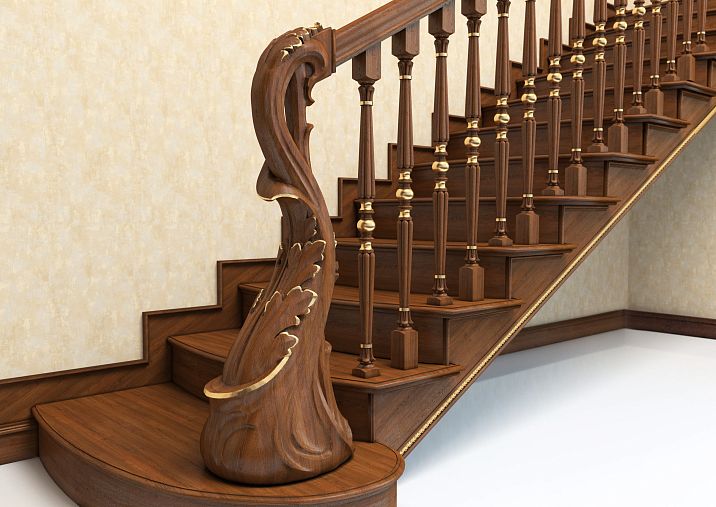
Architecture is frozen music, where every note matters, and each element carries semantic weight. Architectural Balusters are unique vertical elements that transform ordinary stair constructions into works of art. These elegant posts, supporting handrails, embody millennia of craftsmanship traditions and modern wood processing technologies.
What makes architectural balusters so special? Their role extends far beyond simple functionality. They create spatial rhythm, form visual accents, and emphasize the stylistic direction of interiors. Each baluster is a miniature sculpture that tells the story of the house, reflects the tastes of its owner, and demonstrates the skill level of its creator.
In the modern world, where technologies are rapidly evolving, architectural balusters remain a symbol of continuity of traditions. They connect us with great masters of the past, who created masterpieces in stone and wood, while simultaneously opening new horizons for creative self-expression.


Historical Heritage and Evolution of Forms




Ancient Roots of Architectural Perfection
The history of architectural balusters goes back to deep antiquity. The first examples of these elements appeared in Assyria, where architects used them to frame window openings in palaces. However, the true golden age of baluster art came during the Renaissance, when Italian masters transformed functional elements into works of art.
Michelangelo, the great Renaissance master, made a revolutionary contribution to the development of baluster forms. It was he who proposed the classical vase shape, which became an architectural canon and is still used today. This form combines the elegance of lines with functional reliability, creating an ideal balance between beauty and practicality.
Ancient Greek masters laid the foundations of proportionality, which still define the aesthetics of architectural balusters. The golden ratio, mathematical relationships, harmony of parts and the whole — all these principles found their embodiment in baluster forms. Classical orders — Doric, Ionic, Corinthian — each dictated their own characteristics in the design of vertical elements.
The Roman Empire introduced into baluster architecture elements of luxury and ornamentation. Images of mythological creatures, plant ornaments, complex geometric patterns appeared. Roman masters learned to combine different materials, creating multi-colored compositions from marbles of various types.
Our factory also produces:


Medieval Traditions and Gothic Heritage
The Middle Ages brought its own modifications to the development of architectural balusters. The Gothic style, with its aspiration upward, complex interweaving of lines, and rich ornamentation, created new forms of baluster art. Stone masters of that time achieved incredible skill in creating delicate structures.
Romanesque style was characterized by massiveness and monumentality of forms. Balusters of this period were distinguished by simple geometry, yet they conveyed a sense of reliability and solidity. Thick walls, small windows, massive supports — all of this found reflection in the proportions and forms of baluster elements.
Gothic masters revolutionized the approach to architectural balusters. They learned to create structures that seemed weightless despite their functional load. Pointed arches, rosettes, tracery — all these elements of Gothic decoration found their place in baluster design.
Byzantine tradition introduced Eastern motifs into baluster architecture. Complex geometric ornaments, plant patterns, symbolic images created a unique synthesis of Eastern and Western aesthetics.
Get Consultation
Materials science: from traditions to innovations
The nobility of natural wood
Wood remains the most popular material for manufacturing architectural balusters. Its natural beauty, workability, and eco-friendliness make wood an ideal choice for creating interior elements. Each species has unique characteristics that determine its area of application.
Oak is the king among species for manufacturing architectural balusters. Its density reaches 700 kg/m³, ensuring exceptional strength and longevity of products. Tannins contained in oak wood provide it with natural resistance to moisture and biological damage. The oak texture with clearly visible annual rings creates a unique pattern that only improves with age.
Ash attracts craftsmen with its exceptional viscosity and elasticity. With a density of 650-700 kg/m³, this species can withstand significant dynamic loads without cracking. Light shades of ash with contrasting texture harmonize beautifully with modern interior solutions.
Beech is characterized by uniform structure and beautiful pinkish hue. Its density is 680 kg/m³, comparable to oak. Beech wood is easy to process and holds its shape well after drying. A distinctive feature of beech is its ability to be evenly stained, allowing the creation of products in any color scheme.
Walnut is an elite material with a unique texture and noble chocolate tone. The density of walnut wood reaches 650 kg/m³, and its workability allows creating the finest decorative elements.
Stone grandeur and modern composites
Natural stone — material of eternity. Marble, granite, travertine, sandstone — each type of stone possesses unique aesthetic and performance characteristics. Marble balusters embody classical beauty and aristocracy, while granite ones demonstrate strength and reliability.
Carrara marble — a legend among materials for architectural balusters. Its snow-white surface with delicate veins creates a sense of purity and perfection. This material was used by the great masters of the Renaissance and remains a benchmark of quality to this day.
Modern composite materials open new possibilities for creating architectural balusters. Polymer concrete, artificial stone, wood-polymer composites — these materials combine the best qualities of natural materials with the advantages of modern technologies.
Architectural concrete allows creating balusters of the most complex shapes with perfect repeatability. Modern additives and pigments enable achieving any texture and color, imitating natural materials or creating entirely new aesthetic solutions.
Stylistic directions and design solutions
Classicism: eternal canons of beauty
The classical style in architectural balusters is based on principles of ancient architecture. Strict proportions, mathematical precision of ratios, noble restraint of decoration — all this characterizes classical forms. Balusters in the classical style often have the form of miniature columns with a base, shaft, and capital.
The order system defines the main principles of classical balusters. The Doric order dictates simplicity and masculinity of forms, Ionic — elegance and refinement, Corinthian — luxury and ornamentation. Each order has its proportional relationships, which craftsmen strictly adhere to.
Neoclassicism of the 18th-19th centuries introduced a new understanding of classical forms in baluster architecture. While preserving the basic principles of antiquity, masters of this period adapted them to contemporary needs and technological capabilities.
Empire style — created its own interpretation of classical balusters. Military symbolism, laurel wreaths, eagles, fasces — all these elements found their place in the decoration of baluster forms during the Napoleonic era.
Baroque and Rococo: triumph of ornamentation
Baroque Architectural Balusters represent the pinnacle of decorative art. Complex curved forms, rich ornamentation, play of light and shadow — all this characterizes the Baroque style. Balusters from this period often resemble several vases stacked one on top of another, decorated with rich acanthus leaves, volutes, and cartouches.
Rococo pushed decorative art to its extreme. Asymmetric compositions, rocaille motifs, pastoral scenes turned balusters into true works of sculptural art. French masters of the 18th century achieved incredible skill in creating delicate forms.
Spanish Baroque — Churrigueresque — created its own unique style of balusters. Incredible complexity of forms, abundance of decorative elements, expressiveness of lines characterize this style. Churrigueresque balusters more resemble sculptural compositions than architectural elements.
Russian Baroque of the 18th century adapted European forms to local traditions. Elizabethan Baroque, with its bright colors and rich decoration, created unique baluster forms that combined Western influences with a Russian understanding of beauty.
Modernism: revolution of forms
The Modern style at the end of the 19th — beginning of the 20th century revolutionized the approach to architectural balusters. Abandonment of historical styles, turn to natural forms, use of new materials and technologies — all this characterizes modernist balusters.
Plant motifs became the foundation of modernist aesthetics. Stems, leaves, flowers, intertwining branches — nature became the main source of inspiration for modernist masters. Balusters from this period are characterized by smooth lines, organic forms, and natural proportions.
Vienna Secession created its own interpretation of modernist balusters. Geometric stylization of natural forms, strict lines, functionality — these principles found their embodiment in the works of Otto Wagner and his followers.
Catalan Modernism of Antoni Gaudí took organic forms to their extreme. His balusters more resemble natural formations — corals, shells, bones — than man-made objects.
Technological processes and craftsmanship
Traditional finishing methods
Hand-carving of wood remains the pinnacle of craftsmanship in creating architectural balusters. An experienced carver can create a unique work of art, where every detail is meticulously crafted. Traditional tools — chisels, gouges, marking gauges — in the hands of a master become an extension of his creative will.
Turning allows creating balusters with correct cylindrical shapes and various profiles. Modern CNC lathes ensure perfect repeatability of complex forms, but handwork on traditional lathes is still valued for its uniqueness.
Stone carving requires special skill and patience. Working with marble or granite — is a meditative process, where each cut must be precisely executed. An error can ruin days of work, so stone carvers undergo years of training.
Casting in molds — an ancient method of creating balusters from metal or plaster. Modern technologies allow creating molds of any complexity, but the principles remain the same as thousands of years ago.
Modern manufacturing technologies
CNC machines revolutionized the production of architectural balusters. 3D modeling allows creating a virtual model of the future product, calculating all loads, optimizing the shape. Then the program controls the cutting tools, creating the product with micron-level precision.
3D printing opens new possibilities for creating prototypes and small-batch production. Modern 3D printers can work with various materials — plastics, metals, ceramics — creating products of the most complex shapes.
Laser cutting allows creating delicate balusters from sheet material. Computer control ensures perfect cutting accuracy, and high processing speed makes this method economically advantageous.
Hydro-abrasive cutting handles the hardest materials. A water jet with abrasive particles under pressure of several thousand atmospheres can cut stone, metal, composites, creating products with perfectly smooth edges.
Functional aspects and ergonomics
Safety and regulatory requirements
Architectural balusters are not only decorative elements but also important safety components. Building codes establish strict requirements for strength, height, and spacing between elements. The height of railings should be at least 900 mm for residential buildings and 1200 mm for public buildings.
The distance between balusters should not exceed 150 mm for children to prevent slipping. In childcare facilities, this distance is even smaller — 100 mm. These requirements must be strictly followed, regardless of aesthetic preferences.
The strength characteristics of balusters are regulated by special standards. Horizontal load on the handrail should not cause deformation or damage. Balusters must withstand point loads of at least 30 kg without residual deformation.
Materials must comply with fire safety requirements. Wood must be treated with fire retardants, metal elements must be protected against corrosion, composite materials must have appropriate certifications.
Ergonomic principles
Railings should be easy to grasp with the hand. The optimal diameter of a round railing is 40-50 mm, rectangular — 40×60 mm. The surface should be smooth, free of burrs and sharp edges that could injure the hand.
The height of the railing is calculated based on anthropometric data. For an adult of average height, the optimal height is 900-950 mm. For children, additional railings are provided at a height of 500-600 mm.
The slope of the railing should match the angle of the stairs. Sharp bends are not allowed — they create inconvenience during movement and may cause injuries. Transitions between sections should be smooth, with a radius of at least 150 mm.
architectural balusters
Installation and mounting: professional secrets
Preparation Work
Quality installation architectural balusters Preparation begins with careful preparation of the base. The surface must be perfectly level, cleaned of dust and contaminants. The moisture content of wood should not exceed 12% for interior work and 18% for exterior work.
Marking is performed with mathematical precision. The distances between the centers of balusters must be equal, with a tolerance of no more than 2 mm. Laser levels, precise tape measures, and special templates are used to ensure maximum accuracy.
The tool must be professional and properly calibrated. Dull drill bits, inaccurate measuring instruments, and poor-quality fasteners may damage expensive materials and reduce the quality of work.
Climate conditions during installation must be stable. Sudden changes in temperature and humidity may cause material deformation and weakening of connections.
Mounting technologies
The choice of fastening method depends on the material of the balusters, the type of base, and expected loads. Wooden balusters can be fastened with dowels, self-tapping screws, or bolts. Stone balusters — with anchors, chemical compounds, or mechanical connections.
Threaded connections allow adjusting the position of balusters and, if necessary, disassembling them. Stainless steel bolts M8-M10 provide reliable fixation and long-term durability of the connection.
Threaded connections allow adjusting the position of balusters and removing them if necessary. Stainless steel bolts M8-M10 ensure secure fixation and long-term durability of the connection.
Adhesive connections require ideal surface preparation. Modern polyurethane adhesives provide strength, resistance to moisture, and temperature fluctuations.
Care and Maintenance
Preventive measures
Regular maintenance extends the service life of architectural balusters and preserves their original beauty. Wooden items require periodic treatment with protective compounds; stone items — cleaning from contaminants and, if necessary, restoration.
The humidity level in the room should be maintained within 45-65%. Excessively dry air may cause wood to crack; overly humid air — swelling and deformation.
Mechanical damage must be addressed immediately. Minor scratches and chips may become sources of destruction if not treated promptly.
Fasteners must be periodically inspected and tightened as needed. Weakened connections not only reduce safety but may also lead to damage of expensive components.
Restoration and Rehabilitation
Antique balusters require a special approach to restoration. It is necessary to preserve the historical value of the item using traditional materials and techniques. Modern analytical methods allow accurately determining the composition of original coatings and pigments.
Partial replacement of elements may be required in case of serious damage. New parts must exactly match the original in shape, size, and material. Sometimes special tools must be manufactured to reproduce unique profiles.
Modern preservatives and protective compounds significantly extend the service life of historical balusters. Nanotechnology opens new possibilities for creating invisible protective coatings.
Documenting the restoration process is important for future generations. Photographic documentation, descriptions of materials and methods used, and creating drawings — all of this will help in subsequent restoration work.
Modern trends and future development
Ecological aspects
Modern architecture increasingly pays attention to ecological aspects. Use of renewable materials, energy-efficient production technologies, and waste minimization — these principles are becoming decisive when selecting architectural elements.
Certified wood from sustainably managed forests guarantees that the material was obtained without harm to the environment. FSC or PEFC certification confirms compliance with ecological standards.
Material recycling is becoming increasingly relevant. Old balusters can be given new life after restoration or recycling. Composite materials based on recycled raw materials combine ecological properties with high performance characteristics.
Local production reduces carbon footprint by reducing transportation costs. Using local materials and traditional technologies supports regional economies and preserves cultural heritage.
Digital technologies
Virtual and augmented reality open new possibilities for designing and presenting architectural balusters. The client can see how the items will look in their interior even before production begins.
Artificial intelligence helps optimize baluster shapes, calculate loads, and select optimal materials. Machine learning enables analyzing large datasets and uncovering non-obvious patterns.
The Internet of Things transforms balusters into smart interior elements. Built-in sensors can monitor humidity, temperature, and loads, alerting users to the need for maintenance.
Blockchain technologies ensure supply chain transparency, guaranteeing material authenticity and compliance with manufacturing technologies.
Conclusion
Architectural balusters represent a unique phenomenon in the world of architecture — elements where functionality is inseparably linked with beauty, where traditions harmoniously blend with innovations. They are witnesses to history, carriers of cultural codes, embodiments of craftsmanship and creative vision.
In today's world, where technologies are rapidly developing, Architectural Balusters they remain islands of stability and continuity. They connect us with great masters of the past while simultaneously opening new horizons for creative self-expression.
Choosing architectural balusters is not just purchasing building elements — it is an investment in beauty, quality, and longevity. Properly selected and professionally installed balusters serve for decades, delighting the eye and ensuring safety.
The future of architectural balusters lies in the harmonious combination of traditional craftsmanship with modern technologies. New materials, innovative processing methods, digital design technologies — all this opens boundless opportunities for creativity.
Environmental aspects are becoming increasingly important. Responsible attitude toward natural resources, use of renewable materials, energy-efficient production technologies — these principles define the industry's development over the next decades.
The craftsmanship of creating architectural balusters requires not only technical knowledge but also artistic sense, understanding of styles, and sense of proportion. This art is passed down from generation to generation, enriched by new knowledge and technologies.
The company STAVROS, with its rich experience in woodworking, continues the traditions of the highest quality in creating architectural elements. The combination of centuries-old craftsmanship traditions with modern technologies allows STAVROS to create items that become true works of art. Every STAVROS project is a manifestation of perfection in every detail, the result of meticulous work by skilled masters and a commitment to absolute quality.


