Article Contents:
- Philosophy of 3D Design in the Furniture Industry
- Reimagining the Creative Process
- Integration of Technical and Aesthetic Solutions
- Technical Architecture of Modern 3D Libraries
- Parametric Modeling as the Basis of Flexibility
- Multi-Level Model Detailing
- Revolution in Furniture Project Visualization
- Photorealistic Visualization as a Sales Tool
- Interactive Visualization and Virtual Reality
- Technical Excellence in Modern Production
- Integration of Design and Production
- Optimization of Material Usage
- Specialized Solutions for Different Types of Furniture
- Solid Furniture: Systemic Approach to Modularity
- Soft Furniture: Challenges of Forming
- Office Furniture: Functionality Above All
- Materials Science in the Digital Age
- Virtual Materials and Their Properties
- Innovative Materials and Their Integration
- Automation and Artificial Intelligence in Furniture Design
- Generative Design: The Future Is Here
- Predictive Analytics in Furniture Production
- Ecological Aspects of Digital Design
- Virtual Testing as an Alternative to Physical Prototypes
- Logistics Optimization Through Digital Planning
- Training and Development of Personnel in the Age of Digitalization
- New Competencies for a New Era
- Virtual Reality in Training
- Customization and Personalization in Mass Production
- Mass Customization: Contradiction or Reality?
- Interactive Configurators for Customers
- Integration with Smart Home
- Furniture as Part of the Digital Ecosystem
- Adaptive Furniture and Machine Learning
- Global Trends and the Future of the Industry
- Circular Economy and Design for Disassembly
- Biomaterials and Their Digital Representation
- Economic Aspects of Digital Transformation
- Investments in Digitization: Risks and Opportunities
- New Business Models of the Digital Era
- Technical Challenges and Their Solutions
- Format Compatibility and Standardization
- Performance and Optimization
- Frequently Asked Questions
- Conclusion
In the era of furniture industry digitization, every designer strives for maximum precision and efficiency.3D Models for Basis-MebelshchikThey have become the cornerstone of modern furniture creation, offering unprecedented visualization and technical refinement capabilities for every detail. What makes these digital solutions so revolutionary? The answer lies in their ability to transform abstract ideas into tangible reality even before production begins.
ModernLibraries for Basis-MebelshchikThey represent true repositories of knowledge accumulated by generations of furniture makers. Embedded within them is decades of experience in creating functional and aesthetically appealing furniture, adapted for the digital age. Each model in such a library is not merely a geometric form, but a comprehensive solution encompassing technical parameters, material data, and manufacturing specifics.
Why has 3D modeling become so crucial for the furniture industry? Because it allows you to see the future product in full detail before spending a single ruble on materials and production.


Philosophy of 3D Design in the Furniture Industry




Reimagining the Creative Process
How has furniture design changed with the advent of digital technologies? Traditional design, based on 2D drawings and physical mockups, has given way to interactive 3D modeling.3D Models for Basis-MebelshchikThey provide designers with the ability to experiment with shapes, proportions, and materials in a virtual environment, receiving immediate feedback on the feasibility of their ideas.
Moderndecor for furnitureIt can be designed with mathematical precision, taking into account not only aesthetic aspects but also functional requirements. Each decorative inlay and each milled element is modeled considering the technological capabilities of production and durability requirements.
Our factory also produces:


Integration of Technical and Aesthetic Solutions
Why is modern furniture becoming increasingly technically complex? Because consumers demand not only beauty but also maximum functionality.Furniture hardware for base cabinet makersIt includes hundreds of different components, each of which must be precisely positioned and correctly interact with other elements.
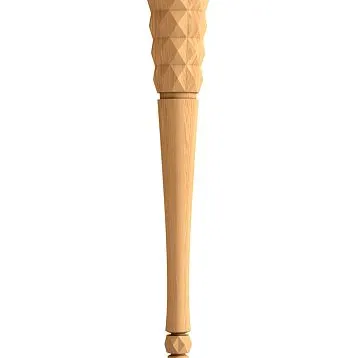
3D models allow checking the compatibility of all components even during the design phase. Drawer guides, hinges, handles, opening systems — all these elements must function as a single mechanism.Legs base furniture makerThey are designed not only according to aesthetic requirements but also considering load distribution, which is critically important for the longevity of the product.
Get Consultation
Technical Architecture of Modern 3D Libraries
Parametric Modeling as the Basis of Flexibility
What is the main advantage of the parametric approach? It enables the creation of adaptive models that automatically adjust to changing project requirements.3D Models for Basis-MebelshchikThey are built on principles of parametric geometry, where each dimension and each shape is linked to controlling parameters.
Imagine a cabinet model whose height automatically adapts to ceiling height, and width to available room space. At the same time, all proportions remain harmonious, mounting elements are correctly positioned, and manufacturing technologies are automatically taken into account. Understanding this,What new-generation furniture is made of — a question customers must receive comprehensive answers to. Eco-friendliness, durability, ease of care — specific advantages speak louder than abstract 'innovation'.becomes the foundation for creating smart parametric models.
Multi-level model detailing
Why can the same model look different depending on the scale of observation? Professional3D Models for Basis-Mebelshchikuse level-of-detail technology, when the model automatically simplifies or becomes more detailed depending on the current design tasks.
At the level of overall room layout, the furniture model may be displayed as a simplified block with basic dimensions. As you zoom in, structural details, hardware, and decorative elements become visible. At the maximum level of detail, material textures, mounting elements, and even surface processing technologies become visible.
Revolution in furniture project visualization
Photorealistic visualization as a sales tool
How has the process of presenting furniture projects to clients changed? Modern rendering systems allow creating images indistinguishable from photographs of real furniture.Unique InteriorsThese are now created not only in reality, but also in virtual space, where the client can 'walk through' the future interior and evaluate every detail.
High-quality textures of wood, metal, glass, and other materials allow not only to convey the appearance, but also the tactile sensations of future furniture.Moldings for DecorationIn 3D visualization, they demonstrate the play of light and shadow, emphasizing the volume and expressiveness of decorative elements.
Interactive visualization and virtual reality
What happens when the client can not only see, but also interact with virtual furniture? Virtual reality technologies open new horizons in presenting furniture projects. The client can open cabinet doors, pull out drawers, change the configuration of modular furniture, and even 'feel' different materials through haptic feedback.
Such an approach is especially important when creatingunique interior designs, where each element must fit perfectly into the overall concept. The ability to interact with the project before its implementation significantly reduces the risk of misunderstanding between the designer and the client.
Technical perfection of modern production
Integration of design and production
How do 3D models affect the production process?3D Models for Basis-MebelshchikThey serve not only as a visualization tool, but also as the basis for automated production. From the 3D model, automatic control programs for CNC machines, cutting layouts, assembly drawings, and material specifications are generated.
Such integration eliminates errors associated with human factors when translating the project into production. Every detail modeled in virtual space is precisely reproduced on production equipment.Wooden wall decorative railsare manufactured with precision down to tenths of a millimeter thanks to accurate 3D models.
Material usage optimization
Why does 3D modeling help save materials? Virtual layout of parts on material sheets allows achieving maximum raw material utilization. Optimization algorithms analyze thousands of part placement variants, selecting the best one in terms of minimizing waste.
Understanding the specifics ofWhat quality furniture is made ofallows creating models optimized not only by shape, but also by rational material usage.
Specialized solutions for various types of furniture
Cabinet furniture: systematic approach to modularity
How do 3D models simplify the creation of modular systems? Cabinet furniture requires a special approach to modeling, as it consists of many standardized elements that must combine with each other in various configurations.3D Models for Basis-MebelshchikFurniture is designed according to the principles of modularity and interchangeability.
Each module contains information about its connecting elements, enabling automatic compatibility checks of various system components. Standard and connection dimensions ensure flexibility in creating individual configurations without compromising manufacturing efficiency.
Soft furniture: challenges of shaping
What are the features of soft furniture modeling? Soft furniture presents a special challenge for 3D modeling due to the need to account for material deformation under load. Modern modeling systems use physics engines to simulate the behavior of fabrics, foam, and spring blocks.
This approach allows not only to visualize the appearance of furniture, but also to predict its behavior during operation. This is especially important for ergonomic calculations and ensuring the longevity of products.
Office furniture: functionality above all
What makes office furniture special from the perspective of 3D modeling? Office furniture must combine ergonomics, functionality, and transformability.3D Models for Basis-MebelshchikOffice furniture includes height adjustment mechanisms, cable management systems, transformable tops, and other functional elements.
Modeling such systems requires consideration of kinematic connections between elements, enabling verification of mechanism functionality even during the design phase.
Materials science in the digital age
Virtual materials and their properties
How do digital technologies change the approach to material selection? Modern3D Models for Basis-Mebelshchikcontain not only geometric information but also a complete database of material properties. Physical characteristics such as density, modulus of elasticity, and coefficient of thermal expansion are embedded into the material model.
This enables engineering strength calculations, simulating product behavior under various temperature conditions, and predicting service life.Wood materials for furnitureare modeled taking into account the anisotropy of wood, which is critically important for accurate calculations.
Innovative materials and their integration
What new possibilities do modern materials offer? Composite materials, smart coatings, nanomaterials require special modeling approaches. Their properties may vary depending on operating conditions, which must be considered in digital models.
Environmental characteristics of materials are also becoming an important part of digital libraries. Carbon footprint, recyclability, formaldehyde and other harmful substances content — all these parameters are integrated into models to support environmentally responsible decisions.
Automation and artificial intelligence in furniture design
Generative design: the future is here
Can a computer design furniture better than a human? Generative design technologies analyze numerous parameters — from functional requirements to aesthetic preferences — and propose optimal solutions.3D Models for Basis-Mebelshchikbecome the basis for machine learning algorithms that study patterns of successful projects.
Artificial intelligence can propose dozens of solutions to a single problem, each optimized according to specific criteria: minimum material, maximum strength, best ergonomics, or aesthetic appeal.
Predictive analytics in furniture manufacturing
How to foresee problems before they arise? Analysis of big data allows identifying patterns in the behavior of different types of furniture during operation. Based on information about materials, construction, and usage conditions, potential problems can be predicted and project adjustments can be made in advance.
Such an approach is especially valuable for creatingunique apartment interiors, where each item is produced as a single unit and must serve for many years without the possibility of replacement.
Environmental aspects of digital design
Virtual testing as an alternative to physical prototypes
How much material can be saved by eliminating physical prototyping? Virtual testing allows checking the strength, durability, and ergonomics of a product without creating physical samples. This not only saves materials but also reduces development time.
Modern simulation systems allow simulating years of furniture use in just a few hours of computation. Cyclic loads, temperature effects, humidity — all aging factors are modeled with high accuracy.
Logistics optimization through digital planning
How do 3D models help reduce transportation costs? Precise packaging planning based on 3D models allows maximum utilization of cargo space. Optimization algorithms calculate the best placement of items in containers, reducing the number of trips and, consequently, the carbon footprint of transportation.
Modular furniture construction, optimized for transport, significantly reduces packaging volume.Decor where to buy in MoscowBecomes more accessible due to efficient logistics based on precise digital planning.
Training and development of personnel in the era of digitalization
New competencies for a new era
What skills are needed for a modern furniture maker? Traditional woodworking skills and understanding of construction are supplemented by digital literacy. The ability to work with3D models is becoming a basic requirement for industry specialists.becomes a basic requirement for industry specialists.
Modern educational programs integrate traditional craftsmanship skills with digital technologies. Students learn not only how to work with their hands, but also how to think in three-dimensional space, how to optimize processes, and how to use data for decision-making.
Virtual reality in training
Can a virtual workshop replace a real one? VR technologies allow creating a safe learning environment where students can master complex operations without risking injury or damage to materials. Virtual tools behave like real ones, but also allow undoing incorrect actions and repeating operations.
Such an approach is especially valuable when studying expensive technologies, where a trainee's mistake can cost thousands of rubles. Virtual training allows acquiring necessary skills without financial risk.
Customization and personalization in mass production
Mass customization: contradiction or reality?
Is it possible to combine an individual approach with the cost-effectiveness of mass production? Modern digital technologies make this a reality.3D Models for Basis-Mebelshchikare created as parametric templates that can adapt to individual customer requirements while maintaining core construction principles.
An automated system takes the customer's order, adapts the base model to their requirements, and generates production documentation. This approach allows offering thousands of variations of the base model without increasing production complexity.
Interactive configurators for customers
How can we give the customer the ability to become a designer? Online configurators based on 3D models allow customers to independently customize furniture to their needs. Dimensions, materials, colors, hardware — all parameters can be changed in real time with instant updates to price and manufacturing lead time.
Such an approach not only increases customer satisfaction but also reduces the burden on designers, allowing them to focus on more complex creative tasks.What to give a cabinetmakeris no longer an issue — an interactive configurator will help create the perfect gift.
Integration with smart home
Furniture as part of a digital ecosystem
What role does furniture play in the concept of a smart home? Modern furniture no longer simply serves as interior decor but becomes part of the home's intelligent system.3D Models for Basis-Mebelshchikinclude not only mechanical components but also spaces for integrating sensors, wiring, and control elements.
Cabinets with automatic lighting, tables with wireless charging, chairs with massage functions — all these solutions require a comprehensive design approach, where electronics are seamlessly integrated into the furniture structure.
Adaptive furniture and machine learning
Can furniture adapt automatically to a user's habits? Integration of sensors and machine learning algorithms allows furniture to "learn" the owner's preferences and automatically adapt to them. A work desk remembers the optimal height for different types of work, and a chair adjusts lumbar support according to the posture of a specific person.
Such solutions require the integration of mechanical, electronic, and software components already at the 3D modeling stage, making the design process significantly more complex but also more interesting.
Global trends and industry future
Circular economy and design for disassembly
How will the approach to furniture design change in the era of circular economy? The "design for disassembly" concept requires designing products so that at the end of their life cycle, they can be easily disassembled into components for reuse.3D Models for Basis-MebelshchikFuture designs will include information on how to disassemble and recycle each element.
Modular construction, detachable joints instead of glue, material labeling for sorting — all these aspects must be considered already at the 3D modeling stage.
Biomaterials and their digital representation
What challenges do new biomaterials pose to designers? Mycelium, algae, recycled waste — these materials have unique properties that are difficult to describe using traditional parameters. Creating accurate digital models of such materials requires new approaches to characterization and modeling.
The variability of natural material properties should be considered as ranges of values rather than fixed parameters, which complicates engineering calculations but makes them more realistic.
Economic aspects of digital transformation
Investments in digitization: risks and opportunities
Is it worth investing in digital technologies for a small furniture company? Initial investments in software, staff training, and creating digital libraries may seem significant. However, the economic effect of implementing3D models — the basis for furniture designersbecomes apparent quickly: reduced design time, fewer errors, optimized material usage.
Companies that first adopt digital technologies gain significant competitive advantages. The ability to quickly respond to market changes, offer customized solutions, and accurately plan production becomes a decisive factor for success.
New business models of the digital era
What opportunities for profit do digital technologies offer? Selling digital furniture models has become a standalone business direction. Designers can create and sell models through online platforms without engaging in physical production.
A subscription-based service model for model library updates ensures a steady income for developers.Where to buy polyurethane moldings— this question transforms into "where to download a mold model," which fundamentally changes the business approach.
Technical challenges and their solutions
Format compatibility and standardization
Why is standardization of 3D model formats important? The diversity of 3D modeling software creates compatibility issues. A model created in one system may display incorrectly in another. Industry-standardization of data exchange formats becomes critically important for effective collaboration.
Open standards such as IFC for the construction industry are beginning to adapt for the furniture industry. This allows exchanging models between different systems without losing information.
Performance and optimization
How to work with large and complex models without losing performance? Modern furniture may consist of thousands of parts, each with complex geometry. Processing such models requires significant computational resources.
Cloud computing technologies allow performing complex calculations on remote servers, while streaming rendering technologies enable working with highly detailed models on standard computers.
Frequently asked questions
What are 3D models for Basis Mebelshchik and why are they needed?
3D models for Basis Mebelshchik are digital three-dimensional copies of furniture elements and hardware, optimized for use in design software. They are necessary for accurate project visualization, automatic creation of drawings and specifications, and for optimizing production processes. Using high-quality models reduces design time by 5-10 times compared to traditional methods.
What advantages do parametric 3D models offer?
Parametric models automatically adapt to changes in dimensions and configurations, enabling rapid creation of multiple variations of the base structure. Changing one parameter automatically recalculates all related elements, eliminating design errors and speeding up the designer's work.
How do 3D models affect the quality of furniture production?
Precise 3D models allow generating CNC machine control programs, eliminating manual programming errors. Automatic creation of cutting layouts optimizes material usage, while detailed assembly drawings simplify installation. This leads to improved quality of finished products and reduced scrap rates.
Can custom 3D models be created for Basis Mebelshchik?
Yes, the program allows creating custom models of hardware and decorative elements. Basic knowledge of 3D modeling and understanding of data format requirements are necessary. It is recommended to study existing models as examples of proper parameter and link organization.
What equipment requirements are there for working with 3D models?
For comfortable work with 3D models, a computer with a processor of at least 4 cores, 16 GB of RAM, and a dedicated graphics card with 4 GB of video memory is recommended. A fast SSD drive speeds up model loading. For complex projects, more powerful equipment or cloud computing resources may be required.
How is compatibility of models from different manufacturers ensured?
Most furniture hardware manufacturers provide models in the standard f3d format, compatible with Basis Mebelshchik. To ensure compatibility, it is important to follow unified naming standards, parameter structures, and coordinate systems. Regular library updates support model relevance and compatibility.
What is the role of artificial intelligence in the development of 3D furniture modeling?
AI is used for automatic generation of design variants, optimization of structures based on specified criteria, prediction of material behavior, and automatic creation of assembly instructions. Machine learning analyzes large datasets on furniture usage to improve future projects.
How do 3D models help in training furniture designers?
Virtual models allow studying furniture construction without physical samples. Students can disassemble models into components, study manufacturing technologies, and experiment with various construction options. VR technologies create an immersive learning environment for practicing practical skills.
Conclusion
The digital revolution in the furniture industry is already at our doorstep — it is happening here and now.3D Models for Basis-MebelshchikThey are no longer just design tools, but the foundation for a radical rethinking of all processes — from concept to disposal of the finished product.
Modern 3D modeling technologies open boundless creative possibilities while ensuring technical precision and production efficiency. Integration of artificial intelligence, materials science innovations, and ecological principles creates the foundation for sustainable industry development.
Furniture designers who master digital technologies today will become market leaders tomorrow. Investments in staff training, updating technological equipment, and creating digital libraries pay off multiple times through improved product quality, reduced development time, and optimized production processes.
The future of the furniture industry belongs to those who can harmoniously combine traditional craftsmanship with advanced digital technologies.Unique interior itemsThey are now created not only by the hands of artisans, but also by the power of algorithms, the precision of robots, and the creative energy of designers who speak the language of 3D modeling.
STAVROS is at the forefront of this digital transformation, offering the professional community not only high-quality furniture hardware and decorative elements, but also advanced digital solutions for design. Our 3D models, optimized for use in the Basis Mebelshchik program, combine decades of traditional furniture manufacturing experience with innovative digital technologies. We believe that the future of the furniture industry is built on the foundation of quality materials, precise technologies, and creative thinking.