Article Contents:
- Thermodynamic processes in the "baseboard-underfloor heating" system
- Mechanisms of heat transfer and their effect on materials
- Coefficients of thermal expansion of various materials
- Humidity-temperature interactions
- Behavior of solid wood under cyclic heating
- Structural changes in wood under temperature influence
- Influence of wood species on thermal resistance
- Technologies for stabilizing solid wood
- Alternative materials for underfloor heating systems
- High-density MDF: characteristics and possibilities
- New Generation Polymer Composites
- Metallic baseboard systems
- Criteria for selecting baseboard for specific heating systems
- Water-based underfloor heating systems
- Electric systems with heating mats
- Infrared film systems
- Technological aspects of installation under underfloor heating
- Calculation of compensatory gaps
- Selection of fastening systems
- Sealing of joints and connections
- Protective coatings and finishing under heating conditions
- Painting materials for underfloor heating
- Laminating films and veneer
- Oils and waxes for natural wood
- Economic Aspects of Material Selection
- Lifecycle Cost Analysis
- Operating and maintenance costs
- Energy efficiency of systems
- Practical Recommendations for Selection
- Decision-making matrix
- Regional application specifics
- Compatibility with Floor Coverings
- Frequently Asked Questions
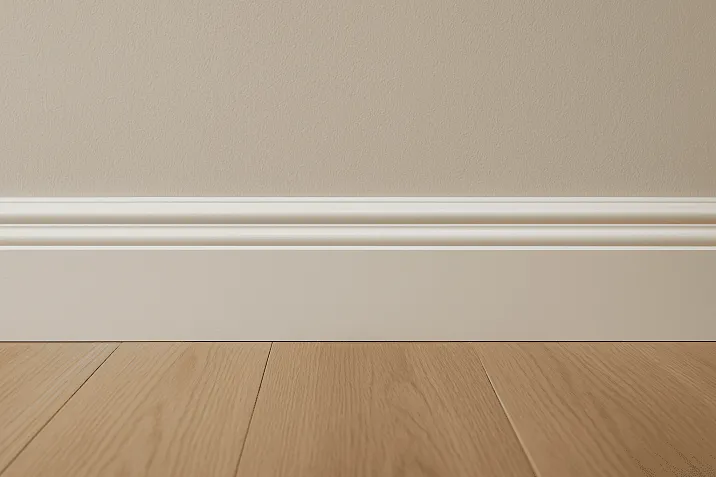
Underfloor heating systems have fundamentally changed requirements for finishing materials, creating new challenges for manufacturers and consumers. A baseboard for underfloor heating must not only fulfill aesthetic functions but also demonstrate exceptional stability under constant thermal exposure, cyclic heating and cooling. What skirting board for wooden floors Choosing under constant heating becomes a critically important issue, determining the longevity and functionality of the entire finishing system.
Modern heating technologies create a unique operating environment where floor surface temperature can vary from 22°C to 35°C depending on the system's operating mode and external climatic conditions. Such temperature regimes require finishing materials to have special characteristics of dimensional stability, chemical inertness, and mechanical strength under thermal deformation.


Thermodynamic processes in the "skirting board - underfloor heating" system




Mechanisms of heat transfer and their influence on materials
Underfloor heating systems create a complex system of heat flows, where convection, conduction, and radiation interact in the enclosed space between the floor and the wall. The skirting board in this system becomes not merely a decorative element, but an active participant in heat exchange, subjected to continuous exposure to temperature gradients.
The lower part of the skirting board is in direct contact with the heated floor surface, while the upper part remains at room temperature. Such a temperature gradient creates internal stresses in the material, which may lead to deformation, cracking, or delamination from the substrate.
Warm skirting board in a wooden house Requires special attention to material selection and installation technology. Wood, as an anisotropic material, demonstrates different reactions to heating depending on the direction of the fibers, which creates additional complexities in designing finishing systems.
Our factory also produces:
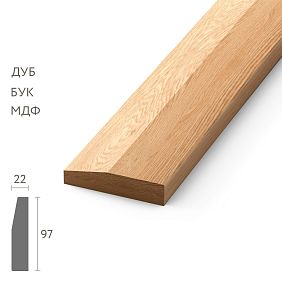
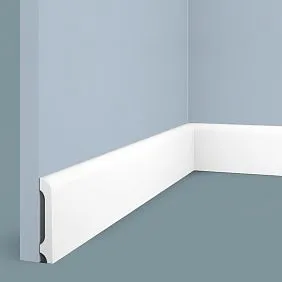
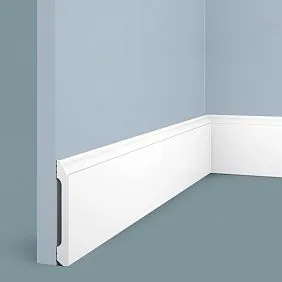
Coefficients of thermal expansion of various materials
Each material has unique thermal expansion characteristics that determine its behavior under varying temperatures. Solid wood exhibits a linear expansion coefficient of 3–5×10⁻⁶ 1/°C along the grain and 25–35×10⁻⁶ 1/°C across the grain, creating significant anisotropy of deformation.
Composite materials based on wood fibers, such as MDF, show more uniform expansion in all directions due to the random arrangement of fibers. The expansion coefficient of MDF is 15–20×10⁻⁶ 1/°C, providing more predictable behavior under temperature changes.
Polymer materials demonstrate a wide range of expansion coefficients depending on composition and structure. PVC composites have a coefficient of 50–80×10⁻⁶ 1/°C, requiring special attention to compensatory gaps during installation.
Get Consultation
Humidity-temperature interactions
Underfloor heating systems create a specific microclimate characterized by reduced relative humidity in the near-ground layer. Warm air has greater moisture-holding capacity, which leads to relative humidity dropping to 30–40% even with normal absolute humidity.
Wood, as a hygroscopic material, actively responds to changes in ambient humidity. As humidity decreases, wood dries out, and in combination with thermal expansion, this creates a complex picture of deformation. with a classic profile creates a sense of solidity, reliability. Under conditions of underfloor heating, it is subjected to simultaneous exposure to elevated temperature and reduced humidity.
Stabilizing the moisture content of wood under operating conditions with underfloor heating requires pre-adapting the material to low-humidity conditions. Drying processes in drying chambers must ensure a final moisture content not exceeding 6–8%, corresponding to equilibrium moisture content under underfloor heating system operation.
Behavior of solid wood under cyclic heating
Structural changes in wood under temperature influence
Prolonged exposure to elevated temperatures leads to gradual structural changes in wood. At temperatures of 30–35°C, typical for underfloor heating surface, slow depolymerization of lignin and partial destruction of cellulose occur. These processes develop very slowly but may manifest after several years of operation as color changes, reduction in mechanical properties, and cracking.
Wood extractives under temperature influence may migrate to the surface, causing color changes and staining. Coniferous species with high resin content are particularly susceptible to this. Spruce baseboard Requires special pre-treatment to remove extractives.
Thermal aging of wood is accompanied by changes in its rheological properties. Elasticity decreases, brittleness increases, which may lead to cracking under mechanical stress. These changes are especially noticeable in stress concentration zones — corners, fastening points, and element joints.
Influence of wood species on thermal resistance
Different wood species demonstrate significant differences in resistance to prolonged exposure to elevated temperatures. Hardwood species such as oak and beech show better thermal stability due to dense structure and low volatile extractives content.
Oak contains a significant amount of tannins, which provide natural protection against biological damage, but upon heating may cause wood darkening. Oak wooden skirting board Requires controlled operating conditions to prevent undesirable color changes.
Coniferous species are characterized by high resin content, which may soften and migrate to the surface upon heating. Pine and spruce require special preparation — de-resining and stabilizing impregnation — for use in underfloor heating systems.
Exotic wood species often contain natural oils and resins, whose behavior under prolonged heating may be unpredictable. Using such species requires preliminary testing and special precautions.
Technologies for stabilizing solid wood
Modern technologies allow significantly improving the thermal stability of solid wood. Thermal treatment at 160–200°C in a controlled atmosphere leads to structural changes that enhance dimensional stability and reduce the material's hygroscopicity.
Impregnating with stabilizing polymer-based compositions creates a composite material combining the natural beauty of wood with improved performance characteristics. Such wood demonstrates significantly reduced sensitivity to temperature and humidity effects.
Laminating thin wood layers with different fiber orientations creates a material with compensated internal stresses. Glued wooden skirting board Glued laminates show better stability under temperature effects compared to solid elements.
Alternative materials for underfloor heating systems
High-density MDF: characteristics and possibilities
Medium-density fiberboard is a composite material specifically designed to overcome the shortcomings of solid wood. The chaotic arrangement of fibers ensures isotropy of properties, eliminating the anisotropy of deformation characteristic of natural wood.
Solid wood MDF skirting board With a density of 750-850 kg/m³, it exhibits a thermal expansion coefficient of 15-18×10⁻⁶ 1/°C, significantly lower than that of solid wood across the grain. Such dimensional stability makes MDF an ideal material for use with underfloor heating systems.
The binding resins of modern MDF panels have high heat resistance and do not emit harmful substances at temperatures typical for underfloor heating systems. Formaldehyde-based resins are replaced by safer polyurethane and MDI resins, ensuring the ecological safety of the material.
The moisture resistance of MDF can be significantly enhanced by special additives and surface coatings. Hydrophobic impregnations and decorative film laminations create a reliable barrier against moisture penetration.
New-generation polymer composites
Modern technologies allow creating polymer composites that precisely mimic the texture and color of natural wood while offering significantly better performance characteristics. PVC composites with wood filler combine the aesthetics of wood with the practicality of plastic.
Extruded polyvinyl chloride profiles demonstrate excellent dimensional stability under temperature effects after an initial adaptation period. The linear expansion coefficient of modern PVC composites is 50-70×10⁻⁶ 1/°C, requiring careful calculation of compensatory gaps.
Polyurethane skirting boards possess unique elasticity properties, allowing them to compensate for thermal deformations without cracking or delamination. The elasticity of polyurethane ensures tight contact with the base even under significant structural deformations.
Wood-polymer composites (WPC) based on polypropylene or polyethylene with wood flour create an optimal combination of naturalness and technological efficiency. A wood content of 60-70% provides a natural appearance and tactile sensation of wood while maintaining the stability of the polymer matrix.
Metallic skirting systems
Aluminum profile systems represent a high-tech solution for use with underfloor heating. Aluminum's linear expansion coefficient of 23×10⁻⁶ 1/°C ensures predictable behavior under temperature changes.
Anodizing and powder coating of aluminum profiles create decorative finishes mimicking various materials, including natural wood. Modern digital printing technologies allow achieving remarkable similarity to natural textures.
Aluminum's thermal conductivity promotes uniform temperature distribution across the entire skirting board surface, eliminating localized overheating and associated deformations. This is especially important in areas of intense heat exchange.
Modular aluminum systems offer wide possibilities for creating complex configurations, including built-in lighting, cable channels, and ventilation elements. Such functionality is especially valuable in modern intelligent microclimate control systems.
Criteria for selecting skirting boards for specific heating systems
Water-based underfloor heating systems
Water-based underfloor heating systems are characterized by relatively slow temperature changes and high thermal inertia of the system. The maximum temperature of the heat carrier is limited to 50-55°C, ensuring a floor surface temperature not exceeding 28-30°C in living areas.
Such operating conditions allow using properly prepared solid skirting boards made from stable wood species. Installation of wooden baseboards In water-based heating systems, it requires maintaining technological gaps and using flexible sealants.
The high thermal inertia of water-based systems ensures smooth temperature transitions, eliminating abrupt material deformations in skirting boards. This creates favorable conditions for long-term use of natural materials.
The ability to precisely regulate the heat carrier temperature allows optimizing the thermal regime according to the characteristics of the used finishing materials. Programmable controllers can maintain temperature regimes most suitable for a specific type of skirting board.
Electric systems with heating mats
Electric heating mats create more aggressive operating conditions due to localized heating and the possibility of achieving higher surface temperatures. The temperature in the area of heating element installation may reach 35-40°C.
Uneven heating creates temperature gradients, leading to differential deformations of various skirting board sections. Solid materials under such conditions are at higher risk of cracking and warping.
Composite materials demonstrate better adaptation to uneven heating conditions due to their more isotropic structure. MDF skirting boards with quality coatings can be successfully used in systems with electric mats provided proper installation techniques are followed.
The rapid response of electrical systems to changes in temperature settings creates cyclic thermal loads on skirting board materials. Such conditions require materials with high fatigue strength and stability under cyclic deformations.
Infrared film systems
Infrared heating films create unique operating conditions characterized by direct radiant heating of the surface layers of the floor. The film temperature can reach 50-60°C, creating an intense heat flow toward the skirting board.
The radiant nature of heat transfer leads to uneven heating of the skirting board material across its thickness. The surface facing the floor heats significantly more than the outer surface, creating thermal stresses in the material.
Polymer materials with low thermal conductivity adapt better to radiant heating conditions, as slow heat transfer smooths out temperature gradients. PVC composites show good performance in systems with infrared films.
Metallic skirting boards, due to their high thermal conductivity, quickly equalize temperature throughout their volume, eliminating internal thermal stresses. Aluminum systems are ideally suited for use with infrared heaters.
Technological aspects of installation in heated floor conditions
Calculation of expansion gaps
Correct calculation of expansion gaps is critically important to prevent skirting board deformation under thermal influences. The gap size is determined by the material's linear expansion coefficient, element length, and maximum temperature differential.
For solid wood, with a skirting board length of 2 meters and a temperature differential of 15°C, the expansion gap should be at least 1.5-2 mm on each side. Wooden Skirting Board Sizes must consider the need for such gaps already during the design phase.
MDF materials require smaller expansion gaps due to their lower expansion coefficient. A gap of 0.8-1.2 mm per linear meter is usually sufficient to prevent thermal deformations.
Polymer materials require the largest expansion gaps due to their high coefficient of thermal expansion. PVC skirting boards may require gaps of up to 2-3 mm per meter of length when used with heated floors.
Selection of fastening systems
Traditional methods of attaching skirting boards to walls or floors may be unacceptable in heated floor systems due to restrictions on mechanical damage to heating elements. How to install wooden skirting boards In such conditions, special approaches are required.
Adhesive joints using heat-resistant adhesives provide secure attachment without risking damage to the heating system. Polyurethane adhesives retain elasticity under thermal deformations, compensating for stresses in the joint area.
Mechanical fasteners must allow for thermal movement. Sliding joints and elastic gaskets enable the skirting board to move during thermal deformations without creating critical stresses.
Combined fastening systems combine the advantages of adhesive and mechanical joints. Point mechanical fastening ensures reliability, while adhesive bonding along the entire length provides sealing and even load distribution.
Sealing of joints and connections
Thermal deformations of skirting board elements may lead to gaps appearing at joints and connections. How to fill gaps in wooden skirting boards When used with heated floors, requires the use of special heat-resistant sealants.
High-temperature silicone sealants retain elasticity up to 150°C, ensuring reliable sealing under any operating mode of heated floors. Neutral silicones do not cause corrosion of metallic elements or painted surfaces.
Acrylic sealants allow for subsequent painting, which is important for achieving a uniform color solution. Heat-resistant acrylic formulations withstand temperatures up to 80°C without loss of properties.
Polyurethane sealants exhibit excellent adhesion to most materials and high elasticity. They are especially effective for sealing connections between dissimilar materials, such as wood with metal or polymers.
Protective coatings and finishing under heating conditions
Paint and coating materials for heated floors
Traditional paint and coating materials may be unacceptable for use on skirting boards in heated floor systems due to thermal degradation at elevated temperatures. What to paint wooden skirting boards In the presence of heating, requires special heat-resistant formulations.
Polyurethane coatings demonstrate excellent heat resistance and retain decorative properties under prolonged exposure to temperatures up to 60°C. Two-component systems provide maximum coating strength and longevity.
Water-based acrylic paints are distinguished by their ecological safety and color stability when heated. Modified acrylic systems with ceramic fillers have enhanced heat resistance.
Alkyd enamels can only be used at moderate heating temperatures, as above 40°C, the coating may soften and lose its decorative properties. Paint for wooden skirting boards Should be selected based on the maximum operating temperature of the heating system.
Laminating films and veneer
Decorative films based on PVC or polypropylene provide high-quality imitation of natural materials with excellent resistance to temperature effects. Modern printing technologies create realistic textures of wood, stone, and metal.
Thermally activated laminating adhesives provide strong bonding of the film to the substrate at operating temperatures. Properly executed lamination prevents coating delamination even under significant temperature deformations of the substrate.
Natural veneer on a fabric base combines the beauty of natural wood with the technological advantages of modern materials. The fabric base compensates for thermal deformations, preventing veneer cracking.
Melamine films have exceptional heat and chemical resistance. They do not emit harmful substances when heated and maintain color and texture throughout their service life.
Oils and waxes for natural wood
Natural coatings based on vegetable oils and waxes create a breathable protection for wood, not hindering the material's natural humidity regulation. Such coatings are especially important in conditions of variable humidity, typical for underfloor heating systems.
Tung oil has excellent heat resistance and does not darken upon heating. Polymerized tung oil creates a durable coating resistant to abrasion and moisture absorption.
Linseed oil, when polymerized, provides deep wood penetration and forms a protective layer. Adding thermal stabilizers increases the coating's resistance to temperature effects.
Carnauba wax, combined with other natural waxes, creates a water-repellent coating with pleasant tactile properties. Wax coatings are easily repairable for localized damage.
Economic aspects of material selection
Life Cycle Cost Analysis
When selecting skirting boards for underfloor heating systems, one must consider not only the initial cost of the material but also the costs over the entire service life. Wooden baseboard price may be justified by longevity when selecting the right wood species and processing technology.
Solid skirting boards made of quality wood, when installed and used according to proper technology, can last 15-20 years without replacement. High repairability allows restoring local damage without replacing the entire system.
Composite materials usually have a lower initial cost but may require more frequent replacement. MDF skirting boards last 8-12 years under underfloor heating conditions with proper coating and correct usage.
Polymer materials demonstrate varying durability depending on quality. Premium PVC composites can last 10-15 years, while budget alternatives require replacement after 5-7 years of use.
Operating and maintenance costs
Underfloor heating systems impose special requirements for skirting board maintenance. Elevated temperatures may accelerate surface contamination and require more frequent cleaning. Choosing materials with good cleanability reduces operating costs.
Natural materials may require periodic restoration of protective coatings. Oil and wax coatings require renewal every 2-3 years, creating additional costs for materials and labor.
Composite and polymer materials usually require no special maintenance, limited to regular wet cleaning. This reduces operating costs, but may be offset by more frequent material replacement.
The cost of dismantling and installing new skirting boards should be considered when evaluating the economic efficiency of different solutions. The complexity of dismantling in the presence of active heating systems may significantly increase total costs.
Energy efficiency of systems
The choice of skirting board may affect the energy efficiency of the underfloor heating system. The thermal insulation properties of the skirting board material determine heat losses through the room's perimeter.
Wood has relatively low thermal conductivity of 0.12-0.18 W/(m·K), which helps reduce heat losses. Wide Wooden Skirting Board creates an additional thermal insulation barrier around the room perimeter.
MDF has thermal conductivity of 0.08-0.12 W/(m·K), making it an effective thermal insulator. Properly installed MDF skirting boards can reduce heat losses by 3-5%.
Polymer materials have low thermal conductivity of 0.15-0.35 W/(m·K) depending on composition. Foam-structured PVC composites demonstrate the best thermal insulation properties.
Decision Matrix
Practical Recommendations for Selection
Decision Matrix
Selecting the optimal type of skirting board for a specific underfloor heating system requires a comprehensive evaluation of multiple factors. Which wooden skirting boards to choose depends on the type of heating system, intensity of use, budget constraints, and aesthetic preferences.
For water-based systems with moderate temperatures (up to 28°C), high-quality solid skirting boards made of thermally treated stable wood species are optimal. Oak, beech, and ash demonstrate good stability when proper preparation and installation techniques are followed.
Electric mat systems require materials with enhanced dimensional stability. High-density MDF skirting boards with quality finishes provide the optimal cost-to-quality ratio under such conditions.
Infrared systems create the most demanding operating conditions, requiring maximally stable materials. Polymer composites or aluminum systems show the best performance in such applications.
Regional application specifics
Climate conditions in the region significantly influence the selection of skirting board materials for underfloor heating systems. In northern regions with long heating seasons, materials are subjected to more intense temperature exposure.
Air humidity levels in different regions also affect material behavior. In dry climates, wood is more stable, whereas in humid regions, composite materials are preferred.
Seasonal fluctuations in temperature and humidity create additional loads on skirting board materials. Regions with sharp climatic changes require materials with enhanced fatigue resistance.
Availability of different materials in the region affects the economic efficiency of solutions. Local wood species can provide an optimal quality-to-cost ratio.
Compatibility with floor coverings
Skirting board selection must consider the type of flooring and its behavior when heated. Different flooring types create varying operating conditions for the skirting board.
Ceramic tiles create stable conditions with uniform temperature distribution. Under such conditions, any type of skirting board can be used provided proper installation techniques are followed.
Laminate and parquet flooring are susceptible to thermal deformation, which can be transferred to the skirting board. Skirting board selection must consider compatibility of materials' expansion coefficients.
Vinyl flooring has a high coefficient of thermal expansion, requiring special attention to expansion gaps between the flooring and skirting board.
Cast flooring creates a monolithic surface without deformation joints. The skirting board in such systems must withstand all thermal loads and must be maximally stable.
Frequently Asked Questions
Can a solid skirting board be installed with underfloor heating?
Installation of a solid wooden skirting board with underfloor heating is possible, but requires careful adherence to technical requirements and proper material selection. Critical factors include wood species, moisture content, quality of pre-treatment, and installation technique. Optimal species for underfloor heating systems are stable woods—oak, beech, ash—pre-dried to 6-8% moisture and treated with stabilizing compounds. Floor surface temperature should not exceed 28-30°C to ensure long-term wood stability. Compensatory gaps of at least 1.5-2 mm per meter of skirting board length must be provided, and elastic sealants should be used to seal joints. When all requirements are met, solid skirting boards can successfully operate with water-based underfloor heating systems for 15-20 years. However, for electric systems with more aggressive temperature regimes, alternative materials are recommended.
Which skirting board withstands heating best?
Specialized composite materials and metal systems demonstrate the best heat resistance. High-density MDF with quality finish ensures dimensional stability up to 40°C due to its isotropic structure and low thermal expansion coefficient of 15-18×10⁻⁶ 1/°C. PVC-based polymer composites with wood filler combine the aesthetics of natural wood with excellent heat resistance, withstanding temperatures up to 60°C without deformation. Aluminum profile systems with decorative finishes demonstrate maximum stability due to high thermal conductivity, ensuring even temperature distribution. Wood-polymer composites (WPC) combine advantages of natural and synthetic materials, showing good heat resistance while maintaining a natural appearance. The choice of specific material depends on the type of heating system, maximum operating temperatures, and aesthetic requirements.
Do gaps need to be left when installing skirting board with underfloor heating?
Compensatory gaps when installing skirting boards in underfloor heating systems are mandatory for all material types, as thermal deformations are inevitable under any operating mode. Gap size is calculated based on the material's linear expansion coefficient, element length, and maximum temperature differential. For solid wood, gaps of 1.5-2 mm per meter of skirting board length are required; for MDF, 0.8-1.2 mm/m; for PVC composites, up to 2-3 mm/m. Gaps must be provided not only at end joints but also at junctions with door frames, built-in furniture, and other fixed elements. Gap sealing is performed using elastic, heat-resistant sealants that retain flexibility during thermal deformations. Absence of compensatory gaps leads to warping, cracking of the skirting board, or detachment from the base within the first months of heating system operation.
Selecting skirting board for underfloor heating requires a comprehensive analysis of operating conditions, material characteristics, and installation-specific technologies, ensuring the long-term durability and reliability of the entire finishing system at optimal economic cost.