Article Contents:
- Historical Journey: Evolution of Portal Framing
- From Antiquity to the Middle Ages
- Renaissance and Baroque
- Classicism and Historicism
- Modernism and Contemporary Design
- Materials for Creating a Portal Frame
- Wood – Classicism and Elegance
- Stone – Eternity and Monumentality
- Polymer and Composite Materials
- Metal and Glass
- Architectural Styles and Types of Portal Framing
- Classic style
- Gothic Style
- Baroque and Rococo
- Modern
- Modern styles
- Technology of Manufacturing and Installing a Portal Frame
- Design and Preliminary Work
- Working with Wood
- Working with Stone
- Portal Installation
- Functional Features and Applications of Portals
- Entrance Portals
- Interior Portal Frames
- Fireplace Portal Frames
- Portal Glazing Systems
- Decorative Elements and Finishing Techniques
- Wood Carving
- Artificial Aging
- Wood Bending
- Stained Glass and Glass Elements
- Modern Trends in Portal Framing
- Minimalism and Functionality
- Integration with "smart home" systems
- Ecological sustainability and development
- Personalization and individual approach
- Practical recommendations for selection and care
- Choosing style and material
- Maintenance of Portals Made from Various Materials
- Restoration and renewal
- Conclusion
In architectural and interior design, there are elements capable of transforming space, giving it a unique character and style. One such element is portal framing – an architectural composition framing a door or window opening, which not only serves a decorative function but also carries deep symbolic meaning. A portal is essentially a gateway, a boundary between spaces, and its design has always held special significance in various cultures and eras.
The Art of Creating the Perfect portal framing requires not only technical skill but also an understanding of historical traditions, architectural styles, and material properties. In this article, we will delve into the fascinating world of portals, uncover the secrets of their creation, and examine how to properly select and install this important architectural element.


Historical Journey: Evolution of Portal Framing
History portal framing It spans millennia and is closely linked to the development of architecture and construction technologies. Even in ancient civilizations, entrances to temples and palaces were specially designed to emphasize their significance and sacred character.




From Antiquity to the Middle Ages
In ancient Greek and Roman architecture, portals were often framed using the order system – columns, pilasters, and entablature. These elements not only adorned the entrance but also created a certain spatial hierarchy, indicating the importance of the building.
The Romanesque period brought a new understanding portal framing. During this period, entrances to temples began to be recessed, with steps of the wall framed by stone slabs, sculptures, and stucco2. This solution not only created an impressive visual effect but also protected the entrance from bad weather.
The Gothic period was marked by the creation of grand portals with pointed arches and rich sculptural decoration. Gothic portals were characterized by enormous sizes, disproportionate to human height, emphasizing the mystical nature of entering a temple as a transition from the secular to the sacred2. Each element portal framing in Gothic was rich in symbolic meaning – from biblical scenes to depictions of saints and fantastical creatures.
Our factory also produces:





Renaissance and Baroque
The Renaissance returned architecture to the classical forms of antiquity, but reinterpreted them in a new context. Renaissance building portals were distinguished by harmonious proportions, symmetry, and more restrained decoration. The Renaissance period balanced the size of facade elements in relation to human height, making them more proportionate2.
Baroque and Rococo once again turned to opulence and theatricality in portal framing. Portals of this period often included complex compositions of columns, pilasters, volutes, cartouches, and sculptural groups. They created a dramatic effect, inviting viewers to enter the building and preparing them for the reception of richly decorated interiors.
Get Consultation
Classicism and Historicism
Classicism returned architecture to the strictness and rationality of classical forms. portal framing In this style, it usually included elements of the order system – columns or pilasters supporting a triangular or semi-circular pediment. Decorative elements were restrained and subordinated to the overall harmony of the composition.
The 19th century, with its fascination for historical styles, produced numerous variations portal framing – from Neo-Gothic to Neo-Baroque. During this period, architects often mixed elements of different styles, creating eclectic but impressive compositions.
Modernism and Contemporary
At the turn of the 19th and 20th centuries, the modern style introduced a new aesthetic into architecture, abandoning direct references to historical styles. Portals in the modern style were characterized by smooth, flowing lines, asymmetry, and the use of natural motifs in decoration2.
Contemporary architecture offers numerous approaches to portal framing – from minimalist solutions to complex compositions using the latest materials and technologies. Today, portals can be made of glass, metal, composite materials, creating amazing visual effects unavailable in the past.
Materials for Creating Portal Framing
Choice of material for portal framing – a crucial stage determining not only aesthetic qualities but also durability, practicality, and cost of the structure. Let us consider the main materials, their advantages, and specific applications.
Wood – Classicism and Elegance
. Its natural beauty, warmth, and eco-friendliness make wooden framing especially attractive for residential interiors. portal framing. Its natural beauty, warmth, and eco-friendliness make wooden portals especially attractive for residential interiors.
Various types of wood are used to manufacture wooden portals:
- Oak – distinguished by high strength, durability, and elegant texture. Oak portals can serve for decades, acquiring an even more expressive appearance over time.
- Spruce – a more affordable option with good performance characteristics and a pleasant light tone.
- Larch – exceptionally resistant to moisture and decay, making it an ideal choice for doorways in humid rooms.
- Beech – a hard wood with a uniform structure, easily processed and painted.
- Ash – features an attractive grain and high strength.
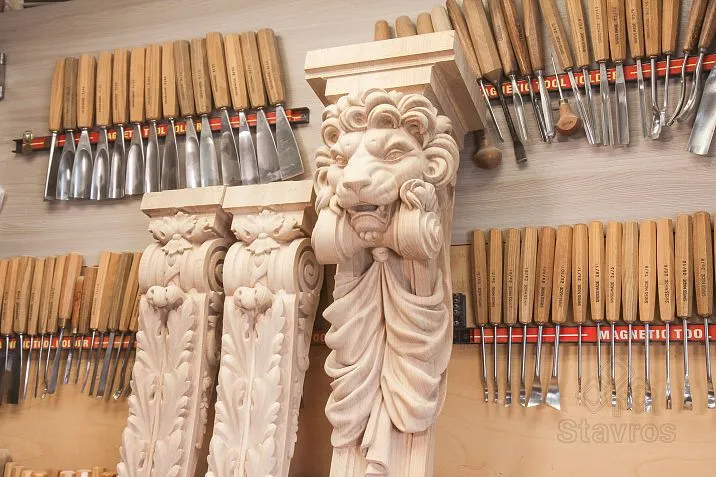
Wooden portal framing Can be executed in various techniques – from simple profiled moldings to complex carved compositions. Wood carving allows creating unique, one-of-a-kind doorways that reflect the owner’s personality and interior style.
However, it should be remembered that wood requires regular maintenance – treatment with protective compounds, painting, or varnishing to preserve its aesthetic and performance qualities.3.
Stone – eternity and monumentality
Natural stone – marble, granite, limestone – has traditionally been used to create monumental doorways in significant public buildings, palaces, and churches. Stone doorways are distinguished by exceptional durability, strength, and majestic appearance.
Each type of stone has its own characteristics:
- Marble – a classic material with a distinctive pattern and noble sheen, allowing the creation of refined, elegant doorways.
- Granite – an exceptionally strong and durable material, resistant to atmospheric effects, ideal for outdoor doorways.
- Limestone – softer and more workable, allowing the creation of complex decorative elements.
- Sandstone – possesses warm natural tones and harmonizes well with brickwork.
Stone portal framing requires professional installation and special tools for processing. However, the result is worth the effort – such doorways look luxurious and can serve for centuries without losing their aesthetic qualities4.
Polymer and composite materials
Modern technologies offer an alternative to traditional materials in the form of polymer and composite products for portal framingThey are characterized by lightness, ease of installation, resistance to moisture and temperature fluctuations.
Polyurethane elements can imitate various materials – from wood to stone, but are not susceptible to rot, insect damage, and require minimal maintenance. Modern construction of houses in historical styles often uses polyurethane doorways, incorporating elements such as polyurethane columns, pilasters, cornices, arches, and rusts.2.
Composite materials, combining properties of various components, are also used in doorway decoration. They can imitate wood, stone, or metal, but offer improved performance characteristics – moisture resistance, strength, and lightness.
Metal and glass
in modern architecture, especially in high-tech and loft styles, popularity is gained portal framing using metal – aluminum, steel, copper, brass. Metallic elements can have various finishes – from polished to aged, with patina.
Glass, especially in combination with metal, allows creating light, airy doorways that visually do not weigh down the space. Modern glass processing technologies – from sandblasting to fusing – open up wide possibilities for creating unique decorative effects.3.
Architectural styles and types of doorway framing
portal framing always reflects a certain architectural style and era. Let us consider the main stylistic directions and their characteristic types of doorways.
Classic Style
Classical portal framing characterized by symmetry, proportionality, and use of elements from the order system. Typical details include:
- Columns or pilasters flanking the opening
- Antabлемент with frieze and cornice
- Triangular or semi-circular pediment
- Lock stones in arched openings
- Modillions and brackets supporting the cornice
Classical doorways are often made of wood, stone, or plaster and can be either restrainedly elegant or richly decorated, depending on the specific period of classicism.
Gothic style
Gothic doorways are characterized by verticality, use of pointed arches, and rich sculptural decoration. Characteristic elements:
- Multi-tiered soffits, creating a sense of depth
- Pointed arch, often with a tympanum
- Tympanum with relief images
- Statues of saints in niches
- Ornamental carving with vegetal and geometric motifs
Gothic portal framing creates a dramatic effect and emphasizes the sacred character of the space.
Baroque and Rococo
Portals in the Baroque and Rococo styles are characterized by opulence, dynamic forms, and an abundance of decorative elements:
- Broken pediments
- Volutes and cartouches
- Sculptural groups and bas-reliefs
- Asymmetric compositions (especially in Rococo)
- Vegetal motifs – garlands, wreaths, floral compositions
Such portal framing creates a theatrical, luxurious, and abundant effect.
Modern
Portals in the Modern style are characterized by flowing, fluid lines, asymmetry, and the use of natural motifs:
- Curvilinear forms
- Vegetal ornament – lilies, irises, seaweed
- Female figures with flowing hair
- Unusual proportions and perspectives
- Combination of various materials – wood, metal, glass
Modern rejects direct citation of historical styles, creating a unique, recognizable aesthetic.
Modern Styles
Modern portal framing can be executed in various styles – from minimalism to eclecticism:
- Minimalism – clean lines, absence of decoration, emphasis on proportions and material quality
- High-tech – use of metal, glass, high-tech materials, functionality
- Loft – rough textures, unprocessed surfaces, industrial aesthetic
- Eco-style – natural materials, natural forms, eco-friendliness
- Fusion – blending of various styles and eras, creating unique, personalized solutions
Technology of manufacturing and installation of portal framing
Creating Quality portal framing – a complex process requiring professional skills, special tools, and understanding of the technological characteristics of the selected material.
Design and preparatory work
First stage of creation portal framing – design. It is necessary to determine the style, dimensions, proportions, materials, and decorative elements of the future structure. At this stage, detailed drawings are created, and sometimes 3D models, allowing to visualize the final result.
Preparatory work includes:
- Precise measurements of the opening – width, height, depth, taking into account possible wall irregularities.
- Surface preparation – cleaning from old finishes, leveling, priming.
- Marking – drawing lines for accurate positioning of portal elements.
- Material preparation – cutting, preliminary processing.
Working with wood
Technology of creating wooden portal framing includes the following stages:
- Selection and preparation of material – the wood must be well-dried (moisture not exceeding 12-15%), without visible defects.
- Cutting – manufacturing blanks of the required size with allowances for processing.
- Creating profile – using milling or hand tools, a decorative profile is formed according to the selected design.
- Carving (if necessary) – creating decorative elements using chisels, gouges, or modern CNC equipment.
- Sanding – careful surface treatment to remove irregularities and create a smooth surface.
- Assembly – joining individual elements using glue, dowels, screws, or other fasteners.
- Final finishing – priming, toning (if necessary), varnishing or painting to protect the wood and achieve the desired appearance.
For creating complex shapes in wooden portals, wood bending techniques may be used. The best materials for bending are white and red oak. Using complex technological processes, wood is treated so that it can take almost any shape.3.
Working with stone
Creating stone portal framing – labor-intensive process requiring special equipment and high skill of craftsmen:
- Selection of stone – considering its strength, decorative qualities, and resistance to external influences.
- Cutting – obtaining blanks of the required size.
- Surface treatment – sanding, polishing, creating texture (burling, thermal treatment, etc.).
- Sculptural processing – creating reliefs, ornaments, sculptural elements.
- Installation – mounting portal elements using special fasteners and mortars.
Natural stone – quartzite, granite, marble – has several indisputable advantages over other materials. Construction and finishing of a facade portal with low-porosity rock is a winning solution: the appearance and elegance of the unique natural pattern can fit any style and enhance the exterior of a country house.4.
Portal installation
Installation portal framing – critical stage, the quality of which affects not only the appearance but also the durability of the structure. The installation process depends on the portal material and the characteristics of the opening:
- Opening preparation – ensure that the opening dimensions match the selected portal. If necessary, make adjustments.6.
- Marking – mark on the walls the locations where the portal will be installed to avoid errors.6.
- Installing the frame – the portal usually includes a frame that can be made from various materials. Install it so that it is level and stable.6.
- Fastening elements – depending on the portal material, different fastening methods are used – nails, screws, anchors, adhesive compounds.
- Decorating details – after installing the frame, you can proceed to decorate the portal using additional elements, such as trim or molding details.6.
- Final finishing – filling joints, painting, varnishing, or other finishes depending on the portal material.
- Finalizing work – check the stability and correct installation. Perform final finishing and painting if necessary.6.
Functional features and applications of portals
portal framing Serves not only a decorative but also an important functional role in architecture and interior design. Let's consider the main types of portals and their applications.
Entrance portals
An entrance door portal, like gates, is a special architectural element whose use is guaranteed to impress guests and create an impression of the property owner even before approaching the building.4Entrance portals can be made in various styles – from classical to modern, and use diverse materials – from wood and stone to metal and glass.
Functional features of entrance portals:
- Protection of the entrance from atmospheric influences
- Creating a transitional zone between external and internal space
- Accentuating the main entrance to the building
- Forming the first impression of the building's style and status
Interior portals
Interior portals are used to decorate openings between different rooms. They allow creating a visual separation of space without using doors, which is especially relevant for modern open-plan layouts.
In classical interiors, door portals were used almost always. They are especially relevant for rooms with limited space. Today, designers offer door openings in various interior styles. Such constructions allow making a room unique and distinctive.8.
Interior portals are used to divide several rooms, save precious space, and elegantly decorate passages from one room to another. Thanks to installing portals, their owners receive as a bonus several extra meters, a feeling that the room has become wider.8.
Fireplace portals
Fireplace portals play an important role in decorating a cozy corner in the house. Fireplace portals often become the main element in the living room, around which the whole family gathers.6They can be made in various styles – from classical to modern, and use diverse materials – from wood and stone to metal and glass.
A fireplace portal performs several functions:
- Protection of surrounding surfaces from high temperatures
- Creating a visual accent in the interior
- Forming a cozy resting area
- Emphasizing the style and status of the room
Portal glazing systems
Modern technologies allow creating impressive portal glazing systems that provide panoramic views and maximum natural light penetration into the room.
Portal systems are a solution for creating panoramic glazing in modern interiors and exteriors. These transparent structures fully cover window or door openings, with panels sliding sideways when opening or closing.7.
Types of portal structures:
- Parallel-sliding (PSK) systems, in which all leaves move parallel to each other along guides
- Folding (FS) or "accordion" – structures in which leaves fold like an accordion
- Lifting-sliding (HS) systems, where leaves are first raised and then slid sideways7
Decorative elements and finishing techniques
portal framing can be supplemented with various decorative elements and finishing techniques that give it individuality and expressiveness.
Wood Carving
Wood carving is one of the most common decorative techniques for wooden portals. In most cases, wooden arches are decorated with CNC (Computer Numerical Control) machine-made carvings; if you wish to decorate the portal with hand-carved relief, it will cost considerably more3.
Several types of carving are distinguished:
- Relief carving – in this carving, there are two types: low relief (figures protrude from the background plane no more than half its depth) and high relief (figures protrude from the background plane no more than half its depth)3.
- "Flat" or "solid" – carving in which elements have a non-cut "solid" background. Most commonly used for processing door portals. This technique is used to create portal capitals, rosettes, pilasters, columns3.
- Openwork or through carving – the background of the carving is chosen, leaving only the pattern. Such constructions in wooden arches are used to add lightness to the interior. These constructions are usually painted in light colors3.
Carving fits well on portals in such interiors as: dark wood – rustic, Indian, colonial, Italian, conservative; whitewashed wood – Provence, shabby chic, country, Scandinavian3.
Artificial aging
Famous designers consider this technique almost the best for portal decoration. Often, this method is used in combination with carving for processing wooden portals3.
To make wood "aged", various methods are used:
- Brushing – soft wood fibers are removed, creating the texture of aged wooden paneling3.
- Multi-layer painting, patination, and wear effects – create the illusion that the portal was painted multiple times, meaning (supposedly) it has considerable age3.
- Crackle – a crackled paint effect appears on the portal surfaces3.
Especially carved aged portals look great in such interior styles as: vintage, Provence, Mediterranean, shabby chic, Biedermeier, country, and others3.
Wood bending
This technique is used not only for making furniture and decor elements, but also for portals, including in design projects for VIP interiors. The best materials for bending are white and red oak. Using complex technological processes, wood is processed to take on almost any shape3.
Sometimes bent wood is subsequently carved. Looks breathtaking! Interiors where such techniques can be applied: avant-garde, biomimetic, Gzhel, rustic, Gothic, colonial, Moroccan, modern, postmodern, retro style, ethnic, ecological3.
Stained glass and glass elements
Stained glass can become an effective addition portal framing, especially in styles such as modern, Gothic, Art Deco. Several techniques for creating stained glass exist:
- Film stained glass – this is an economical technique. Glass is tinted with special film3.
- Photoprinting – the design is printed on film, which is then applied to the surface3.
- Pouring stained glass – on the glass, using special equipment, a polymer outline is created, which is then filled with airbrush paint3.
- Sandblasting – on a matte surface, a smooth pattern is created. It is possible to achieve double sandblasting, colored, or relief effects3.
- Fusing – pieces of glass are fused together in a special kiln. The result is an incredibly impressive sandwich structure.3.
- 3D stained glass – a three-dimensional image visible from both sides of the portal is created using modern technologies3.
Stained glass portals, depending on the technique of applying the pattern on glass, will decorate such interiors as: biometric, ethnic, fusion, postmodern, ontological art, pop art, modern, gothic, Gzhel, baroque, renaissance, art nouveau, avant-garde, boho, eastern, Moroccan3.
Modern trends in portal framing
Modern architecture and interior design offer new approaches to portal framing, combining traditional forms with innovative materials and technologies.
Minimalism and Functionality
One of the main trends in modern design is minimalism, which is also reflected in portal design. Minimalist portals are characterized by:
- Clean, concise lines
- Absence of excessive decoration
- Emphasis on material quality and precision of execution
- Functionality of each element
Such portals fit well into modern interiors without visually overloading the space.
Integration with "smart home" systems
Modern technologies allow integrating portal framing with "smart home" systems, adding new functional capabilities:
- Built-in lighting with adjustable brightness and color temperature
- Motion and presence sensors for automatic control of lighting and other systems
- Touch panels for controlling various home functions
- Integration with security systems – cameras, sensors, access control
Ecological sustainability
The trend toward eco-friendliness and sustainable development is also reflected in portal design:
- Use of certified wood from responsibly managed forests
- Application of natural finishing materials – oils, waxes, water-based paints
- Reuse of historical architectural elements
- Creation of energy-efficient structures minimizing heat loss
Personalization and individual approach
Modern technologies allow creating unique, personalized portal framing, reflecting the owner's individuality:
- Use of 3D modeling and visualization to create unique designs
- Application of digital manufacturing technologies – CNC milling, 3D printing
- Integration of personal symbols, monograms, family crests into portal design
- Creation of portals reflecting the owner's professional interests, hobbies, cultural preferences
Practical recommendations for selection and care
Choosing portal framing – a responsible solution that must take into account multiple factors. Let us consider the main recommendations that will help make the right choice and ensure the longevity of the structure.
Style and material selection
When selecting style and material portal framing the following must be considered:
- Building architectural style – the portal must harmoniously fit into the overall architectural concept.
- Interior style – especially important for room portals, which must match the overall stylistic solution of the room.
- Functional purpose – entrance, room, and fireplace portals each have their own specifics and requirements.
- Climate conditions – for outdoor portals, resistance to atmospheric influences is important.
- Budget – the cost of different materials and technologies may vary significantly.
Each material has its own advantages and limitations:
- Wood – naturalness, eco-friendliness, workability, ease of installation. However, it requires regular maintenance and protection from moisture, insects, and fire.4.
- Stone – durability, strength, prestige. But it has high cost and requires professional installation.
- Polymer materials – accessibility, lightness, ease of installation. However, they may be inferior to natural materials in aesthetic qualities and longevity.
Care for portals made of different materials
Proper care of portal framing will help preserve its aesthetic and functional qualities for many years:
Wooden portals:
- Regular cleaning from dust with a soft brush or vacuum cleaner
- Periodic treatment with special compounds to protect against moisture, insects, and UV radiation
- Updating the paint coating as it wears out
- Avoiding contact with water and aggressive cleaning agents
Stone portals:
- Cleaning with soft cloth using special stone cleaning agents
- Periodic treatment with hydrophobic agents to protect against moisture
- Avoiding contact with acids and abrasive materials
- Timely repair of cracks and chips
Polymer portals:
- Cleaning with soft damp cloth using neutral cleaning agents
- Avoiding contact with solvents and abrasive materials
- Protection from direct sunlight to prevent fading
- Periodic inspection of fasteners and joints
Restoration and Renewal
Over time portal framing may require restoration or renewal. Main stages of restoration:
- Assessment – identifying damage, determining scope of work.
- Cleaning – removing dirt, old finishes, mold.
- Repair – fixing cracks, chips, replacing damaged elements.
- Restoration – recreating lost decorative elements.
- Final finishing – applying protective and decorative coatings.
For historical portals, it is important to preserve authenticity by using traditional materials and techniques. In some cases, consultation with restoration specialists may be required.
Conclusion
portal framing is not merely a decorative element, but an important architectural detail that shapes the character of the space, creating a specific mood and atmosphere. From majestic Gothic cathedral portals to minimalist modern interior constructions – each portal framing reflects the aesthetic ideals of its era and the functional needs of its users.
The choice of style, material, and manufacturing technology for a portal must consider numerous factors – from architectural context to practical aspects of operation. Modern technologies expand possibilities for creating unique, personalized solutions that combine aesthetic appeal with functionality and longevity.
Correctly selected and quality-executed portal framing will not only be a decoration of the house, but also a durable architectural element that will delight its owners for many years.
Company 'Stavros' offers a wide range of solid wood products for creating magnificent portals – moldings, cornices, baseboards, and other decorative elements. High-quality materials, precision manufacturing, and attention to detail guarantee an outstanding result that will exceed your expectations and become a source of pride for many years.