Article Contents:
- Evolution of staircase design: from utility to art
- Wood Science: Choosing Wood for Eternal Beauty
- Luxurious Hardwood Species
- Coniferous species: accessibility and practicality
- Exotic species: exclusivity and challenges
- Tooling Equipment: The Arsenal of a Modern Craftsman
- Measuring Instruments: Precision as the Foundation of Quality
- Cutting Tools: Cleanliness and Precision
- Drilling Equipment: The Foundation of Reliable Fastening
- Technological solutions: from traditions to innovations
- Spindle connections: benchmark of reliability
- Shank connections: eco-friendliness and traditions
- Oblique screws: simplicity and speed
- Joinery 'Swallow's Tail': The Peak of Craftsmanship
- Step-by-step installation technology: from marking to finishing
- Preparation stage: foundation of quality
- Precision Marking: Mathematical Accuracy
- High-Precision Drilling: Foundation of Strong Connections
- Connection Assembly: Jewel-like Precision
- Features of mounting to various bases
- Mounting to Treads: Classical Approach
- Installation on stringers: space-saving
- Installation on Stringers: Maximum Strength
- Installing handrails: final touch
- Preparing handrail support blocks
- Installing Handrails: Final Touch
- Quality control: criteria of professional installation
- Geometric parameters
- Strength characteristics
- Final finishing: protection and beauty
- Surface Preparation
- Protective Treatment
- Decorative finishes
- Economic Aspects of the Project
- Budget Planning
- Long-Term Savings
- Conclusion

A wooden staircase without elegant balusters is like a symphony without its final chord — unfinished, lacking the refinement that transforms an ordinary structure into a work of architectural art. Installing balusters on a wooden staircase — a process requiring not only technical skills but also artistic sensitivity, understanding of harmony and proportions, and flawless mastery of carpentry.
Each baluster is not merely a support element but a carrier of style and character of the entire interior. The quality of their installation affects not only the safety of household members but also the aesthetic perception of the staircase space. Modern installation technologies allow creating railings that serve for decades, preserving their original beauty and reliability.



Evolution of staircase design: from utility to art
The history of staircase railings spans millennia. From primitive wooden stakes to intricate carved compositions — a path reflecting the evolution of human civilization. Modern baluster installation combines centuries-old craftsmanship traditions with innovative technologies, creating a symbiosis of beauty and functionality.
Classic styles dictate strict canons of proportions and decoration. Baroque balusters impress with their ornate carving, neoclassical — with their solemn forms, and modern — with their flowing lines and natural motifs.
Modern trends lean toward minimalism and purity of form. Scandinavian style prefers sleek silhouettes, high-tech — geometric rigidity, and eco-style — natural textures.
Custom solutions allow creating unique compositions reflecting the owner's individuality. Each baluster becomes an element of a personal story told through the language of wood and craftsmanship.




Wood Science: Choosing Wood for Eternal Beauty
The success of the project is determined by 70% by the correct choice of material. Different wood species differ significantly in their properties, which directly affects the installation technology and the durability of the structure.
Our factory also produces:


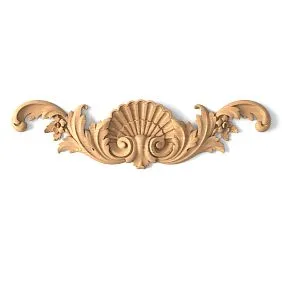


Fine Hardwoods
Oak is the king among materials for staircase structures. Its density reaches 700 kg/m³, ensuring exceptional strength and longevity. Oak balusters can withstand significant loads without deformation. Installation requires pre-drilling all holes — hardwood does not forgive carelessness.
Ash combines the strength of oak with a more expressive texture. Contrasting annual rings create an eye-catching visual pattern. Fibrous structure ensures excellent fastener retention, but requires careful handling during processing.
Beech stands out among coniferous species for its exceptional resistance to rot. High wood density requires the use of quality fasteners and mandatory pre-drilling.
Get Consultation
Coniferous species: accessibility and practicality
Spruce remains the most popular choice due to its optimal price-to-quality ratio. Its soft structure simplifies processing and installation, but requires quality protective treatment against moisture and insects.
Larch stands out among coniferous species for its exceptional resistance to rot. High wood density requires the use of quality fasteners and mandatory pre-drilling.
Cedar possesses unique antiseptic properties and a pleasant aroma. Soft wood is easy to process, but requires careful handling during installation.
Exotic Species: Exclusivity and Challenges
Teak is attracted by its natural oiliness, making the wood practically impervious to moisture. However, these oils may hinder reliable gluing, requiring special fastening technologies.
Merbau impresses with its rich reddish-brown color and high dimensional stability. Dense structure requires the use of carbide tools and quality stainless steel fasteners.
Tooling Equipment: The Arsenal of a Modern Craftsman
Quality baluster installation is impossible without professional tools. Each element of the craftsman's arsenal plays its role in achieving a flawless result.
Measuring Instruments: Precision as the Foundation of Quality
Laser level has become an indispensable assistant for modern craftsmen. Multi-beam systems create perfectly flat surfaces for marking baluster installation. The accuracy of modern instruments reaches ±0.2 mm per 10 meters.
The digital protractor ensures precise measurement of staircase incline angles. This is critically important for correctly trimming baluster ends and ensuring their vertical alignment.
The caliper is necessary for controlling hole and fastener diameters. Even minor dimensional deviations can lead to weakened connections.
Cutting tool: cleanliness and precision
A quality circular saw provides perfectly smooth cuts at any angle. Carbide-tipped blades produce surfaces requiring no additional finishing.
The router opens up limitless possibilities for creating decorative elements and precise joints. Modern models with electronic speed adjustment are suitable for working with any wood species.
Chisels of various sizes remain indispensable for fine-tuning joints and creating handcrafted decorative elements.
Drilling equipment: the foundation of reliable fastening
A drill with variable speed allows selecting the optimal mode for each material. Low speeds prevent overheating and ensure clean hole walls.
Wood drill bits of various types are designed for different tasks. Spiral bits provide fast drilling, keyhole bits create clean large-diameter holes, and helical bits offer maximum precision.
Drill guides guarantee hole perpendicularity and prevent bit deviation. Professional fixtures allow drilling with precision down to 0.1 mm.
Technological solutions: from traditions to innovations
Modern practice offers numerous ways to fasten balusters, each with its own advantages and applications.
Screw connections: the standard of reliability
Fastening with metal bolts is considered the gold standard of professional installation. The technology is based on creating a rigid connection through a threaded rod, ensuring maximum strength.
The process begins with high-precision drilling of the axial hole in the lower part of the baluster. The diameter must exactly match the bolt size — even a minimal clearance reduces connection strength. Drilling depth should be 60-70% of the baluster base height.
An M6 or M8 bolt is screwed into the prepared hole using thread sealant. The protruding part should be 50-60 mm — this is sufficient for secure fixation in the base.
Points for baluster installation are marked on the steps using a laser level. Acceptance holes of 40-50 mm depth are drilled at these points. The diameter should be 0.5 mm smaller than the bolt diameter for a tight fit.
Dowel connections: eco-friendliness and tradition
Wooden dowels create a strong and eco-friendly connection. This method is especially popular among craftsmen who prefer traditional techniques.
Quality dowels are made from hardwoods with moisture content not exceeding 8%. Standard sizes — diameter 10-12 mm, length 50-60 mm. For critical connections, dowels with increased diameter up to 15 mm are used.
Preparing holes requires special precision. Drilling is performed strictly perpendicular using guiding fixtures. Depth should be 55-60% of the dowel length in each piece.
Assembly is performed using PVA or polyurethane wood glue. Glue is applied to both the dowel and the holes. The joint must be assembled within 5-7 minutes after applying the glue.
Oblique self-tapping screws: simplicity and speed
For quick installation, angled screw fastening is used. Screws of 80-90 mm length are screwed into the side surface of the baluster at an angle of 30-40 degrees so that they protrude through the end and enter the base.
This method is simple and fast, but less reliable than other methods. For one baluster, four screws are required, arranged in a cross pattern. Screw heads are recessed into previously drilled holes and masked with wooden plugs.
"Birdsmouth" joint: the pinnacle of craftsmanship
The "birdsmouth" mortise-and-tenon joint is the pinnacle of joinery art. A trapezoidal mortise is cut into the step end, and a corresponding tenon is formed on the baluster.
Preparing such a joint requires high skill and specialized tools. Manufacturing accuracy must be perfect — even minor deviations will weaken the connection.
The advantages of this method are obvious — the connection is exceptionally strong and durable. Load is evenly distributed across the entire contact area, eliminating stress concentration.
Step-by-step installation technology: from marking to finish
Professional installation of balusters on a wooden staircase requires strict adherence to the technological sequence.
Preparation stage: foundation of quality
Material acclimatization — the first and most important stage. All wooden elements must remain in the installation room for at least 72 hours. This allows the wood to reach equilibrium moisture content and minimizes subsequent deformations.
Moisture content is measured using an electronic moisture meter. Wood moisture should not exceed 12% for interior work. Exceeding this value guarantees future problems.
Sorting elements by quality and size allows optimal material distribution. The best balusters are installed in the most visible locations.
Precision marking: mathematical accuracy
Marking begins with installing the outer support posts. A control string is stretched between them, serving as the baseline for positioning intermediate balusters.
The distance between balusters is calculated based on safety requirements. The gap should not exceed 120 mm to prevent children from falling. The optimal distance is 100-110 mm.
The center of each step is marked for installing the baluster. A template — a plywood square matching the baluster's cross-section — is used. The center is determined by the intersection of the diagonals.
High-precision drilling: the foundation of strong connections
The quality of the holes determines the strength and durability of the joint. All holes must be drilled strictly perpendicular using guiding fixtures.
The hole diameter must exactly match the fastener size. For M6 bolts, drill a 6 mm hole; for dowels with a 10 mm diameter, drill a 9.5 mm hole.
Drilling depth is controlled by the drill's depth stop. Exceeding the calculated depth may weaken the structure.
Holes are cleaned of chips using compressed air. Wood dust residues prevent proper gluing.
Assembly of joints: jewel-like precision
Assembly requires care and strict adherence to technology. When using glued joints, it is important to observe the glue's open time.
Glue is applied in an even layer to all glued surfaces. Excess glue is removed before it dries using a damp cloth.
Baluster installation is performed with smooth rotational movements. Sudden impacts may damage the wood or disrupt the joint geometry.
Verticality of each baluster is checked immediately after installation. Adjustment is possible only before the glue sets.
Features of mounting to different bases
The installation technology of balusters significantly depends on the type of base — steps, stringers, or treads.
Mounting to treads: classic approach
Installing balusters directly on steps — the most common method. Balusters are placed on treads with a 20-30 mm setback from the front edge to ensure comfortable ascent.
When mounting to thin steps, use through-mounting with fixation from below. This hides fasteners and ensures a clean appearance of the structure.
For thick steps, use flush mounting with fasteners embedded 40-50 mm. This method ensures maximum joint strength.
Mounting to stringers: space-saving
Mounting balusters to stringers saves usable step area. This method is especially relevant for narrow staircases.
Before installation, baluster ends are beveled at an angle matching the staircase slope. Precision in beveling is critical for ensuring vertical baluster alignment.
Marking is done using a taut string, accounting for even distribution of balusters along the stringer length. The distance between posts must ensure required safety.
Mounting to stringer: maximum strength
Mounting to stringers provides maximum structural strength, as the load is transferred directly to the staircase's load-bearing element.
Balusters are installed into special sockets cut into the stringer. Socket depth must be at least 30 mm for secure fixation.
Additional fixation is achieved using screws or bolts installed at an angle. This prevents balusters from being pulled out under lateral loads.
Railing Installation: Final Touch
Installing handrails completes the staircase railing and requires special attention to details.
Preparation of handrail brackets
Handrail supports serve as the base for mounting handrails and provide rigidity to the entire structure. Supports are made from the same material as balusters to ensure structural uniformity.
Support sizes must match the handrail groove. Standard width is 20-25 mm, thickness 15-20 mm. Support length equals the distance between the outermost balusters.
Supports are mounted to balusters using 40-50 mm screws. Two screws per baluster ensure secure fixation and prevent post rotation.
Installing handrails: final touch
Handrails are mounted onto prepared supports using carpenter's glue and concealed fasteners. Glue is applied in an even layer along the entire support length.
The handrail is carefully placed onto the support and pressed until full contact is achieved. Additional fixation is provided by screws driven from below the support into the handrail.
Handrail joints at turns are made at a 45-degree angle with careful fitting. The joint is reinforced with wooden dowels and glue.
Final finishing includes sanding all surfaces and applying protective-decorative coating. The quality of finishing determines the longevity and appearance of the structure.
Quality Control: Professional Installation Criteria
Proper baluster installation must meet strict criteria for strength, geometry, and aesthetics.
Geometric Parameters
Baluster verticality is checked using a plumb bob or laser level. Deviation from verticality must not exceed 2 mm per meter of height.
Uniformity of distances between adjacent balusters is checked with a tape measure. Deviations must not exceed ±3 mm from the calculated value.
Baluster height must be uniform along the entire railing length. Height variation exceeding 5 mm creates visual discomfort.
Strength characteristics
No play is the main criterion of joint quality. Each baluster is checked by slight rocking in different directions.
Resistance to pulling out is checked by applying a vertical load of 50-70 kg. A quality joint must withstand such a load without deformation.
Resistance to torque is controlled by attempting to rotate the baluster around its axis. A properly executed joint eliminates any rotation.
Finish Processing: Protection and Beauty
The final stage includes protective treatment of the wood and application of decorative coatings.
Surface preparation
All visible surfaces are sanded with abrasive grit 220-240. Coarser abrasive leaves noticeable scratches.
Dust removal is performed with compressed air or sticky cloth. Wood dust residues prevent even coating application.
Defects are filled with wood putty of the corresponding color. Small cracks and chips are filled flush with the surface.
Protective treatment
Antiseptics prevent wood from fungal and insect damage. Modern formulations provide protection for 10-15 years.
Priming improves adhesion of finish coatings and equalizes the wood’s absorbency.
Intermediate sanding of the primer layer with abrasive grit 320-400 removes raised fibers.
Decorative coatings
Staining highlights the wood’s texture and allows achieving the desired color tone. Water-based stains provide even coloring.
Finishing with varnish creates a durable protective coating with varying gloss levels. Polyurethane varnishes provide maximum wear resistance.
Waxing imparts a silky sheen to the surface and enhances the natural beauty of the wood.
Economic aspects of the project
The cost of installing balusters consists of many factors — from material selection to installation complexity.
Budget planning
Material costs account for 60-70% of the total project cost. Saving on quality fasteners is unacceptable — it’s a safety issue.
Labor costs depend on the complexity of the structure and the skill level of the installers. Simple staircases require 2-3 hours of work per linear meter.
Tool expenses include equipment depreciation and cost of consumables.
Long-term savings
Investments in quality materials and professional installation pay off in the long term. Properly installed balusters on wooden staircases serve for decades without repair.
Using cheap materials leads to premature failure of the structure. The cost of redoing often exceeds the initial cost of quality installation.
Conclusion
The art of installing balusters on wooden staircases combines traditional carpentry craftsmanship with modern technologies. Each project is unique and requires an individual approach, but core principles remain unchanged: precision, neatness, and attention to detail.
A well-executed job transforms the staircase into a work of art that will delight owners for many years. Properly installed balusters not only ensure safety but also create a unique atmosphere of comfort and elegance.
Modern materials and technologies open up boundless creative possibilities. Innovative fastening systems, high-precision tools, and quality protective coatings allow creating structures that serve for decades while retaining their original beauty.
Investments in professional installation pay off many times over. Reliable joints eliminate the need for repairs, and flawless appearance increases the value of the entire property. Every time owners ascend the stairs, they will feel pride in the quality work done.
For many years, STAVROS has been perfecting technologies for manufacturing and installing staircase structures. Our masters are skilled in all modern methods of baluster installation and are ready to realize projects of any complexity. The combination of traditional craftsmanship with innovative solutions allows creating structures that will become a source of pride for the home and serve generations.