Article Contents:
- Why Decorate the Facade: The Philosophy of a Home's Exterior Appearance
- Psychology of Perception: How the Facade Affects Mood
- Economic Aspect: Investment in Value
- Cultural Function: Connection with History
- Technical Function: Not Just Beauty
- Wooden Facade Decor Elements: A Catalog of Possibilities
- Carved Window Casings: Framing Windows
- Pediments: Roof Decoration
- Cornices: Functionality and Beauty
- Corner Elements: Framing the Perimeter
- Balusters for Terraces and Verandas: Railing as Art
- Decorative Panels: Accents on Walls
- Columns and Pillars: Supporting Canopies
- Facade Decoration Styles: From Tradition to Modernity
- Russian Traditional: Returning to Roots
- Scandinavian: Restrained Elegance
- Alpine (Chalet): Harmony with the Mountains
- Modern minimalism: beauty of simplicity
- Modern: natural lines
- Materials for Facade Decor: Choosing Wood
- Larch: The Champion of Moisture Resistance
- Oak: Eternal Classic
- Spruce: Accessibility and Practicality
- Other Species: Spruce, Cedar, Ash
- Manufacturing and Installation Technology: From Sketch to Facade
- Design: Creating a Concept
- Element Manufacturing: A Union of Tradition and Technology
- Processing and Protection: Preparation for Operation
- Installation: Mounting on the Facade
- Caring for Facade Decor: Preserving Beauty
- Annual Inspection: Identifying Issues
- Cleaning: Removing Contaminants
- Coverage Update: Protection Extension
- Damage Repair: Defect Elimination
- Frequently Asked Questions: Dispelling Doubts
- How durable is wooden facade decor?
- Can wooden decor be installed on a brick or block house?
- Which wood species are best for facades?
- Do wooden elements need to be painted?
- How much does decorating a facade with wooden decor cost?
- Can elements be ordered according to a custom project?
- How to choose a decoration style?
- Can Decoration Be Installed by Yourself?
- How does decor affect the value of a house?
- Is a permit required for installing facade decor?
- Conclusion: Create Your Dream Facade with STAVROS

What turns a house into a landmark? What makes passersby stop and examine the facade, admiringly touching every detail with their gaze? Not the size of the building, not the cost of the material, but the art woven into the architecture.Wooden Roof OrnamentationDecorating facades, windows, and doorways with carved elements is the language through which a house speaks to the world, telling about its owners, their tastes, their connection to traditions or their desire for originality.
Recall the old Russian cities: Suzdal, Kostroma, the wooden quarters of Tomsk. There, every house is a story frozen in wood. Carved window frames, lacy pediments, and patterned cornices turn a simple hut into a mansion, creating a fairy-tale atmosphere. This tradition has not died—it is being revived, taking on new forms in the hands of modern craftsmen. Today, decorating wooden facades is accessible not only to owners of log houses but also to those with brick, block, and frame houses. Decorative wooden elements can be attached to any surface, transforming the most ordinary building.


Why Decorate a Facade: The Philosophy of a House's Exterior
Practical people will ask: why spend money on decorations? A house should protect from bad weather, retain heat, and provide comfort. Everything else is excess, isn't it? No, it's not. Humans are not only biological beings but also aesthetic ones. Surviving is not enough for us—we want to live beautifully, surround ourselves with beauty, and create an environment that pleases the eye and nourishes the soul.




Psychology of Perception: How a Facade Affects Mood
Research shows that a beautiful environment improves mood, reduces stress, and increases overall life satisfaction. A house with a beautiful facade creates positive emotions every time you drive up to it, step onto the porch, or look at it from a window.
For children growing up in a house with aesthetically thoughtful architecture, this shapes taste, an understanding of beauty, and respect for craftsmanship. They will grow into people who value quality, traditions, and art.
For neighbors and guests, your house becomes a landmark, an object of admiration, and an example to follow. A beautiful facade enhances the prestige of the entire neighborhood and creates a cultural environment.
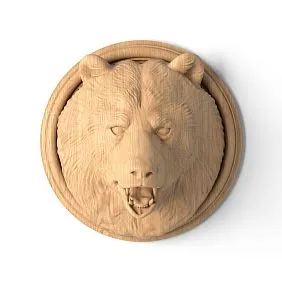
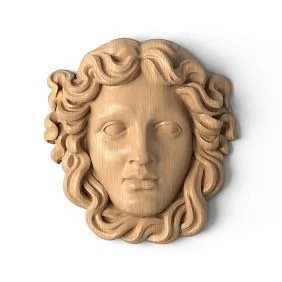
Our factory also produces:


Economic Aspect: An Investment in Value
A house with a unique, beautifully designed facade is worth more than a standard building. When selling, such real estate attracts buyers willing to pay a premium for individuality and aesthetics.
Wooden decorative elements, properly installed and treated, last for decades. This is a long-term investment that pays off not only financially but also emotionally—through the pleasure of living in a beautiful house.
Get Consultation
Cultural Function: Connection to History
Decorating facades with carvings is not an invention of recent years. It is an ancient tradition rooted in pagan times. Carved patterns on houses had protective significance, safeguarding the dwelling from evil forces and attracting prosperity.
By reviving this tradition, we restore the cultural connection between generations and demonstrate respect for our ancestors' heritage. In an era of globalization, when architecture worldwide is becoming uniform, preserving national traditions is especially important.
Technical Function: Not Just Beauty
Decorative facade elements serve not only an aesthetic role. Window frames protect the joints between windows and walls from moisture and drafts. Cornices divert rainwater away from walls, preventing moisture and material degradation. Pediments enclose the space under the roof, ensuring attic ventilation.
Properly designed facade decoration improves the technical characteristics of a house, extends its lifespan, and reduces heating and repair costs.
Wooden Facade Decor Elements: A Catalog of Possibilities
The world of wooden facade decor is vast. There are dozens of types of elements, each solving its own task and creating its own effect. Let's consider the main ones.
Carved window surrounds: framing windows
Window surrounds are the most recognizable element of Russian wooden architecture. They frame windows, turning simple openings into compositional centers of the facade.Facade wooden elementsin the form of window surrounds can be flat and three-dimensional, simple and complex, traditional and modern.
A traditional Russian window surround consists of several parts. The 'ochelie' (lintel) is the upper part, often shaped like a kokoshnik, a semicircle, or a triangular pediment. The side planks are vertical elements framing the window on the left and right. The windowsill board is the lower part, often protruding and protecting the wall from water.
Carving on window surrounds can be openwork (pierced) — where the pattern is cut through, creating an effect of wooden lace. Or relief — where the ornament is carved on the surface, but the background remains intact. Openwork carving is more airy but less durable. Relief carving is more solid and long-lasting.
Ornaments on window surrounds are diverse. Floral motifs — flowers, leaves, grapevines. Geometric patterns — diamonds, circles, meanders. Solar symbols — stylized suns, stars. Zoomorphic elements — birds, horses, lions.
Pediments: roof decoration
Pediment— is the triangular or trapezoidal part of the wall between the roof slopes. A carved wooden pediment turns this technical detail into a work of art. The pediment is visible from afar, it shapes the silhouette of the house, creating its recognizable image.
A pediment can be solid — covering the entire space under the roof with a solid carved board. Or openwork — consisting of separate carved elements that let light and air through. An openwork pediment is especially effective in the evening when light from inside the attic shines through, illuminating the carving.
Carving on pediments is often symmetrical relative to the central axis. The central element — a large rosette, a solar symbol, a coat of arms — becomes the culmination of the composition. On the sides are scrolls, floral garlands, geometric patterns, creating movement from the edges to the center.
The material for pediments is usually pine or larch for exterior use. Larch is preferable due to its high resistance to moisture and rot. Pediments are treated with antiseptics and coated with varnish or paint to protect them from weather effects.
Cornices: functionality and beauty
A cornice is a horizontal protruding element that runs along the line where the wall meets the roof. Its main function is to divert rainwater from the walls. But a carved cornice is not just protection; it is also decoration.
A cornice can be simple profiled — with smooth curves, without ornaments. Or carved — with a repeating pattern along its entire length. A carved cornice creates rhythm, divides the facade, adds a horizontal line that balances the verticals of windows and corners.
Under the cornice, brackets are often placed — supporting elements that hold up the roof overhang.Carved bracketsturn a technical detail into a decorative accent. A bracket can be triangular, with simple lines, or of a complex shape with scrolls, leaves, rosettes.
The number of brackets depends on the length of the wall and the style of the house. In classical architecture, brackets are placed at a certain interval (usually 1-1.5 meters), creating a uniform rhythm. In modern projects, asymmetric placement is possible, creating dynamism.
Corner elements: framing the perimeter
House corners are places that often go unnoticed, although they define the geometry of the building. Decorative finishing of corners with carved pilasters, half-columns, vertical panels with carving creates a sense of architectural completeness.
A pilaster is a flat vertical projection imitating a column. It has a base (foundation), a shaft (main part), and a capital (top part). The shaft can be smooth or decorated with vertical flutes (grooves), carved ornaments. The capital is adorned with carving in one of the classical orders — Ionic, Corinthian, Doric.
Corner pilasters give a house solidity, monumentality, connecting it with the grand architectural tradition. Even a small house with properly finished corners seems more significant, more respectable.
Balusters for terraces and verandas: fencing as art
If a house has an open terrace, veranda, or balcony, then their fencing is another opportunity for decorative finishing.balusters for verandas— vertical posts supporting the handrail — can be simple or carved.
Carved balusters turn fencing into an openwork wall that does not block the view but creates a visual boundary, protects from falling, and decorates the facade. Balusters can be turned (round, with smooth thickenings and constrictions) or flat carved (with openwork patterns).
Flat carved balusters are especially characteristic of the Russian style. They look like vertical boards with openwork ornamentation, creating a lace effect. Such balusters are installed close together or with small gaps, forming a continuous decorative canvas.
The material for balusters is pine, larch, oak. For exterior use, larch is preferable due to its moisture resistance. Balusters are treated with antiseptics, coated with varnish, or painted to match the facade color or in a contrasting color.
Decorative Panels: Wall Accents
If the facade has large, smooth wall planes, they can be adorned with decorative panels—carved boards or shields with ornaments, narrative compositions, coats of arms, or the owners' initials.
Panels are placed at key points on the facade: above the entrance door, between windows, on the pediment, or at the building's corners. They attract attention, create a compositional focal point, and tell a story.
The carving on panels can range from simple geometric patterns to complex multi-figure compositions. Popular motifs include floral designs, depictions of animals and birds, and scenes from Russian fairy tales and epics.
Panels are made from solid wood (oak, beech, pine) or panel material (glued boards). Carving is done by hand or with CNC machines. Hand carving is unique but expensive. Machine carving allows for creating complex elements with precise repeatability at an affordable price.
Columns and Pillars: Supporting Canopies
If a house has a porch with a canopy, a roofed terrace, or a portico, then support posts are another element requiring decorative treatment. Carved columns transform simple supports into architectural elements that lend solemnity to the entrance group.
A column can be smooth with a carved capital and base. Or it can be fully carved, covered with ornaments from base to top. The column shaft is decorated with vertical flutes, twisted grooves, or floral garlands.
The capital—the top part of the column—is especially important. It can be executed in classical orders or represent an author's composition. A carved capital with acanthus leaves, scrolls, and rosettes becomes the culmination of the column, drawing the eye.
Facade Decoration Styles: From Tradition to Modernity
The choice of style for decorative facade treatment depends on the house's architecture, the surrounding landscape, and the owners' personal preferences.
Russian Traditional: Returning to Roots
The Russian style features recognizable carved window surrounds with openwork carving, intricate pediments, and bright colors. Characteristic elements include solar symbols, floral motifs, and geometric patterns passed down through generations.
The color palette of the Russian style is bright and contrasting. White, blue, green, and red elements against a backdrop of natural wood or dark walls. The contrast enhances the expressiveness of the carving, making the decor noticeable from afar.
The Russian style is ideal for wooden houses made of timber or logs, especially those located outside the city, surrounded by nature. It creates a fairy-tale atmosphere, a connection with history, and a sense of home in the truest meaning of the word.
Scandinavian: Restrained Elegance
The Scandinavian style emphasizes simplicity, functionality, and minimal decoration. But even the minimum should be of high quality and expressive. Window surrounds are simple, rectangular, without intricate carving. Cornices are wide, massive, protecting walls from snow and rain.
Colors of the Scandinavian style: white, gray, traditional red (Falu red), natural light wood. Surfaces are matte, without gloss. Decoration is measured: one carved rosette above the entrance, simple brackets under the cornice, minimalist balusters for railings.
The Scandinavian style is universal, suitable for houses of any architecture, creating a sense of cleanliness, order, and calm. It is especially popular in northern regions, where the climate demands sturdy, reliable structures.
Alpine (Chalet): Harmony with the Mountains
The chalet style originated in the Alps, where houses were built massive, from thick timber, with wide roof overhangs protecting from snow. Decoration is minimal but expressive. Wide carved cornices, massive brackets, balconies with carved balusters.
Chalet colors: natural wood, dark brown, gray stone. Carving is simple, geometric, or with depictions of alpine motifs—edelweiss, mountain goats, snowflakes.
The chalet style is ideal for houses in mountainous areas, in forests, by lakes—anywhere harmony with nature is important. It creates a sense of reliability, coziness, and security.
Modern minimalism: beauty of simplicity
The modern approach to facade decoration involves rejecting excess. Decoration is used sparingly, as an accent that attracts attention precisely because of its rarity.
One carved element on a smooth facade—a large rosette above the entrance, a carved panel between windows, a minimalist cornice—creates a strong visual effect. The surrounding simplicity enhances the perception of the decoration, making it significant.
Minimalist colors are neutral: white, gray, black, natural light wood. Lines are clear, geometry is distinct. Carving is simple, without small details—large forms, expressive volumes.
Minimalism suits modern houses with large windows, flat roofs, and simple architecture. It demonstrates that beauty does not require excess—one correct accent is enough.
Modern: natural lines
Art Nouveau (Art Nouveau) is a style that drew inspiration from natural forms. Characteristic features include smooth, flowing lines, floral motifs, and asymmetrical compositions. Carving is organic, resembling the growth of plants, the movement of water, or the curves of the wind.
Popular depictions include lilies, irises, winding stems, dragonflies, and butterflies. Ornaments do not repeat mechanically but evolve like living organisms. Art Nouveau colors: olive, lilac, turquoise, pearl, golden.
Art Nouveau is ideal for creative, unconventional individuals who value individuality, originality, and the beauty of nature. A house in the Art Nouveau style looks like a work of art, not a utilitarian structure.
Materials for facade decoration: wood selection
The quality and durability of decorative elements depend on the material. Which wood to choose for facade decoration?
Larch: the champion of moisture resistance
Larch is a unique species that is not afraid of moisture. Moreover, under the influence of water it becomes harder. Larch contains gum - a natural substance that repels water and prevents rotting.
For facade elements constantly exposed to rain, snow, and temperature fluctuations, larch is the ideal choice. Larch window surrounds, cornices, and pediments last for decades without loss of quality.
Larch has a golden-brown color with a pronounced texture. It is heavier and denser than pine, making it stronger but also more difficult to work with. Carving larch requires powerful tools, but the result is impressive.
Oak: Eternal Classic
Oak is the king among trees. Its dense, hard wood is practically eternal. Oak facade elements can last for centuries, becoming only more beautiful - oak darkens over time, acquiring a noble hue.
Oak is resistant to moisture, insects, and mechanical damage. Its expressive texture with large pores creates an impressive visual effect. Oak carving is clear and holds fine details.
The disadvantage of oak is its high price. But if you are building a house for centuries, if prestige and quality are important, oak is the right choice. Oak decor is an investment that pays off with durability and beauty.
Spruce: Accessibility and Practicality
Pine is the most common species for manufacturing facade decor. It is affordable, easy to work with, and has a beautiful texture. Pine contains resin - a natural antiseptic that protects against rotting.
To eliminate the disadvantages of regular pine (knots, resin pockets), a glued laminated panel is used - a material from which defects are cut out and the remaining parts are glued together. Such pine does not deform, does not crack, and does not release resin.
Pine elements require protective treatment - impregnation with antiseptics, coating with varnish or paint. With proper treatment, pine lasts 30-50 years, which is quite sufficient for most projects.
Other species: spruce, cedar, ash
Spruce is similar to pine but lighter, with a less pronounced texture. It is well-suited for painted elements where texture does not matter. Cedar is aromatic, contains essential oils that repel insects. Ash is strong, with a contrasting texture, ideal for carved legs, brackets, and structural elements.
The choice of species depends on budget, climate, and house style. For elements under load (brackets, columns), choose strong species - oak, ash, larch. For purely decorative elements (panels, overlays), pine or spruce will work.
Manufacturing and installation technology: from sketch to facade
How are wooden decorations for facades created? What path do they take from idea to installation on the house?
Design: creating a concept
Everything starts with a project. An architect or designer studies the facade, creates sketches of decorative design. The placement of window surrounds, cornices, pediments, and brackets is planned. The style, ornaments, and color scheme are determined.
Sketches are agreed upon with the client, and adjustments are made. When the concept is approved, working drawings with exact dimensions of all elements are created. These drawings are the basis for production.
Modern practice uses 3D modeling software. A three-dimensional model of the house with decor is created, which allows seeing the result before work begins, making changes, and assessing the harmony of the composition.
Manufacturing elements: a union of traditions and technologies
Simple elements (straight-line cornices, smooth planks) are manufactured on woodworking machines. Carved elements are created on CNC machines or by hand.
CNC machines carve according to a digital model with micron precision. This ensures repeatability if several identical elements need to be manufactured (for example, a dozen identical brackets). Machine carving is fast, precise, and affordable.
Hand carving is performed by a master carver using traditional tools. Each product is unique, has individual characteristics, and reflects the master's style. Hand carving is more expensive but valued higher due to its authenticity.
A combined approach is often used: rough processing on a machine, final finishing by hand. This optimizes production while maintaining high quality.
Processing and protection: preparation for operation
After manufacturing, elements are sanded, burrs and unevenness are removed. Then a protective coating is applied, mandatory for facade elements exposed to weather.
The first stage is impregnation with an antiseptic that protects against rotting, mold, and insects. The antiseptic penetrates deep into the wood, creating long-term protection.
The second stage is priming, creating a base layer for paint or varnish. Primer improves adhesion and prevents stains.
The third stage is the finishing coat. Varnish preserves the natural color and texture of the wood, protecting it from moisture and ultraviolet rays. Paint creates an opaque colored coating, protects the wood more effectively, but hides the texture.
For facade elements, weather-resistant coatings are used — alkyd, acrylic, special facade paints and varnishes. They withstand temperature fluctuations from -40°C to +40°C, ultraviolet radiation, rain, and snow.
Installation: mounting on the facade
Installation of decorative elements is a crucial stage requiring precision and care. Window trims are attached to window frames or walls. Cornices and pediments are attached to the roof truss system. Brackets are attached to walls using anchors that can support the weight of the roof overhang.
Fastening is done with stainless steel screws (they do not rust or leave streaks). For heavy elements, reinforced fasteners are used — bolts, studs, metal brackets.
It is important to provide a ventilation gap between the decorative element and the wall (5-10 mm) to prevent moisture accumulation. All joints are treated with exterior-grade sealant to prevent water penetration.
After installation, a final inspection is carried out: alignment, touch-up of fastening points, treatment of ends. Properly installed decor lasts for decades without repair.
Care for facade decor: preserving beauty
Wooden facade elements require regular care to preserve their beauty and functionality.
Annual inspection: identifying problems
Once a year, in spring after the snow melts, inspect all decorative elements. Check the condition of the coating — for cracks, peeling, darkening. Inspect the fasteners — whether they are loose or rusted.
Pay special attention to the lower parts of trims, cornices — areas where moisture accumulates. Check for signs of rot, mold, or insect damage.
Cleaning: removing contaminants
Remove dust, cobwebs, and deposits with a soft brush. Wash off heavy soiling with water from a hose at low pressure. Do not use high-pressure washers — they damage the wood and coating.
If necessary, use mild detergents diluted in water. After washing, the elements should dry naturally.
Coating renewal: extending protection
Varnish or paint coating requires renewal every 5-7 years (depending on operating conditions). Signs that renewal is needed: fading, roughness, peeling.
Remove the old coating by sanding or using a remover. Sand the surface, apply a new coating in 2-3 layers. This will restore protection and refresh the appearance.
Repairing damage: eliminating defects
Fill small cracks with wood filler, sand, and paint. Replace or restore broken carving elements by gluing a new fragment.
Serious damage (a rotten section, a broken bracket) require replacement of the element. Order the manufacture of an identical part, remove the old one, install the new one.
Frequently Asked Questions: Addressing Doubts
How durable is wooden facade decor?
With proper manufacturing, quality treatment, and regular care, wooden elements last 50-100 years. Oak and larch ones can last for centuries. The key factor is protection from moisture and timely renewal of the coating.
Can wooden decor be installed on a brick or block house?
Yes, wooden elements can be attached to any surface — wood, brick, concrete, blocks, frame walls. Appropriate fasteners are used — dowels, anchors, screws.
Which wood species are best for the facade?
For exterior use, larch is best (maximum moisture resistance), oak (strength and durability), pine from laminated panels (optimal price-quality ratio).
Is it necessary to paint wooden elements?
Painting is not mandatory but recommended. Paint provides additional protection from ultraviolet rays and moisture. You can use clear varnish that preserves the wood texture.
How much does decorating a facade with wooden decor cost?
Depends on the facade area, number and complexity of elements, wood species. Minimum budget (trims for several windows) — from 50,000 rubles. Full facade decoration of a house — from 300,000 rubles and above.
Can custom elements be ordered?
Yes, most workshops accept custom orders. You provide a sketch, dimensions, preferences — craftsmen create unique elements specifically for your home.
How to choose a decoration style?
The style should match the house's architecture and surroundings. For a wooden house in the forest — Russian or Alpine style. For a modern cottage — minimalism. For a classic mansion — classicism. Consult with a designer.
Can decor be installed by oneself?
Simple elements (trims, planks) can be installed independently with basic skills. Complex ones (cornices, pediments, brackets) require experience and special tools. It's better to hire professionals.
How does decor affect the cost of a house?
A house with a beautifully decorated facade costs 10-20% more than a standard build. Unique carved decor increases appeal to buyers and speeds up sale.
Is a permit required to install facade decor?
For a private house on your own plot, a permit is usually not required. But if the house is an architectural monument or located in a historical zone, coordination with heritage protection authorities is necessary.
Conclusion: create your dream facade with STAVROS
Decorating wooden facades is not just about improving a building's appearance. It's about creating an image that will be associated with your home, your family, your life. A beautiful facade delights you every day, evokes admiration from guests, increases property value, and demonstrates taste and respect for traditions.
By investing in quality wooden decor, you invest in durability, beauty, and generational connection. A house adorned with carved elements does not become outdated, fall out of fashion, or turn faceless. It acquires a soul, character, and history.
STAVROS is a recognized leader in the production of wooden decorative elements for facades and interiors. For over twenty years, STAVROS has been creating highest quality products that adorn thousands of homes across Russia and beyond.
The STAVROS catalog features a huge assortment of facade decor.Carved Mouldingswith traditional and modern ornaments.Wooden Bracketsof various sizes and styles.gablesopenwork and solid, classic and authorial.Balusters for terracesturned and carved, sturdy and elegant.
All STAVROS products are made from select solid oak, beech, pine — species that ensure strength, durability, and beauty. The wood undergoes proper kiln drying to 8-10% moisture content, guaranteeing dimensional stability, absence of deformation and cracks.
Production is carried out on modern CNC equipment of European manufacture (Italy, Germany), ensuring micron-level geometric precision. After machine processing, items are hand-finished by craftsmen with years of experience, giving them perfect finishing.
STAVROS offers elements for any style. Traditional Russian ornaments with solar symbols and plant motifs. Classic compositions with acanthus leaves and meanders. Scandinavian laconic forms. Modern minimalist solutions. Author's collection with unique designs created by company artists.
On the STAVROS website in the sectionFacade Decorationdozens of ready-made projects are presented — examples of facade decoration using various elements. Each project is described in detail, all used products are listed, simplifying design replication or adaptation for a specific house.
STAVROS works with both professionals (architects, construction companies, developers) and private clients who want to decorate their home themselves. Minimum order — from 1 item, allowing you to buy exactly what you need.
You can place an order in the STAVROS online store or by phone 8-800-555-46-75. Company specialists will help select elements for your project, calculate the required quantity, advise on installation, care, and protective treatment.
Delivery is carried out throughout Russia by transport companies. For Moscow and St. Petersburg, self-pickup from STAVROS warehouses is available, where you can personally assess product quality, see carving samples, and choose elements you like.
STAVROS is a guarantee of quality, proven by time and thousands of satisfied clients. Choosing STAVROS means choosing reliability, craftsmanship, traditions combined with modern technologies.
Turn your house into a work of architectural art. Create a facade that will delight you and evoke admiration from others. Breathe soul, character, and history into your dwelling. All this is possible with wooden decor from STAVROS — when the skill of carvers combines with your dreams, true beauty is born, which lasts forever!