Article Contents:
- History of origin and evolution of turned balustrade posts in architecture
- Evolution of forms and styles
- Anatomy of a turned balustrade post: structure and features
- Main elements of a turned balustrade post
- Technical features and characteristics
- Functional purpose of turned balustrade posts in architecture
- Protective and support functions
- Aesthetic and diagnostic functions
- Materials for manufacturing turned balustrade posts
- Natural materials
- Artificial materials
- Manufacturing technologies for turned balustrade posts
- Traditional methods
- Modern Technologies
- Stylistic features of turned balustrade posts in different architectural styles
- Classical styles
- Modern styles
- Application of turned balustrade posts in modern architecture and design
- Exterior Solutions
- Interior solutions
- Innovative approaches
- Normative requirements and standards
- Building codes and regulations
- Requirements for materials and installation
- Maintenance and care of turned balustrade posts
- Care for stone balustrade posts
- Care for wooden balustrade posts
- Care for metal balustrade posts
- Care for balustrade posts made of artificial materials
- Conclusion: the turned balustrade post as a symbol of architectural perfection
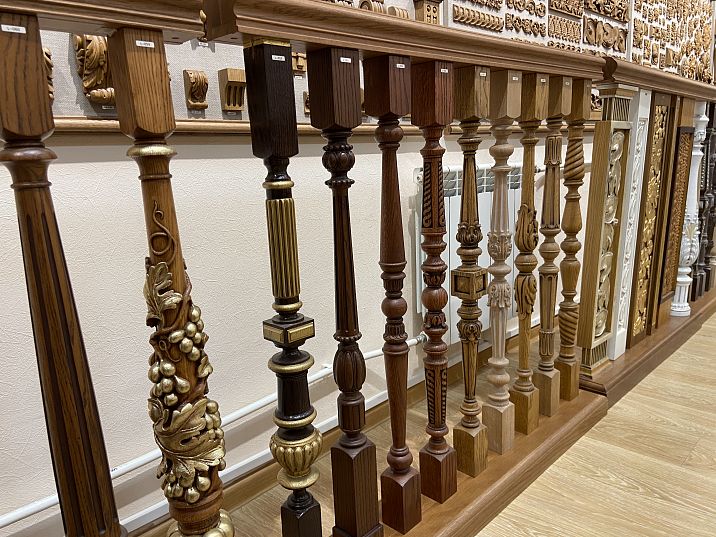
Architectural elements that give buildings a unique charm and elegance have always been a subject of admiration for connoisseurs of beauty. Among such elements, special attention is given to turned balustrade post – a detail that not only performs an important functional role but also becomes a true ornament of any building. This architectural element, with its multi-century history, remains relevant and in demand in modern construction and design.
A balustrade with its turned balustrade posts is not just a fence, but a true work of art capable of transforming both the exterior and interior of any building. Elegant forms, carefully considered proportions, and masterful execution make turned balustrade post an indispensable part of the architectural ensemble, giving it completeness and harmony.


History of the Origin and Evolution of Carved Balusters in Architecture
The history of balustrades and their main element—the carved baluster—goes back to deep antiquity. The earliest references to the use of such architectural elements appear in descriptions of ancient Assyrian palaces, where figurative balusters adorned window openings, giving them a distinctive expressiveness and elegance.
However, the true golden age of balustrade art came during the Renaissance. In the 15th century, during the Early Renaissance, architects, inspired by classical heritage, began actively using miniature columns as balusters, replacing proportional arches. This was a time of seeking new forms through the prism of analyzing forgotten architectural heritage.
decisive contribution to popularizing the classical form carved balusters of balustrades Micheleangelo made a great contribution in the 16th century. It was he who proposed using columns in the form of vases, which became a real breakthrough in architectural art of that time. From this moment on, balustrades with carved balusters became an indispensable part of palace complexes and noble houses, a symbol of luxury and refined taste.




Evolution of Forms and Styles
Over centuries, the form of carved balusters of balustrades underwent changes, reflecting the characteristics of architectural styles of different eras:
- In the Romanesque style of the Middle Ages, balusters were characterized by massiveness and simplicity of form
- The Gothic period introduced upward orientation and elegance of proportions into their appearance
- The Renaissance enriched carved balusters with classical forms inspired by antiquity
- Baroque added opulence and ornamentation, often balusters resembled several vases stacked one on top of another
- Rococo introduced asymmetry and refined ornamentation
- Classicism restored strictness and harmony of proportions
- Modernism enriched forms with natural motifs and flowing lines
Each era left its mark on the evolution of this architectural element, making it not just a functional detail, but also a unique marker of time, by which specialists can determine the period of creation of a particular structure.
Our factory also produces:



Anatomy of the Carved Baluster: Structure and Features
A carved baluster of a balustrade is not just a decorative element, but a complex construction, each part of which has its own purpose and characteristics. Understanding the structure of this architectural element allows one to appreciate the skill of its creators and the functionality of each detail.
Get Consultation
Main Elements of the Carved Baluster
Classic turned balustrade post consists of three main parts:
- Base (pedestal) – the lower part of the baluster, ensuring stability and secure attachment to the supporting surface. The base usually has a wider shape than the central part, providing the structure with additional stability.
- Decorative center – the middle part of the baluster, which may have various forms depending on the architectural style. It is this part that determines the visual appearance of the entire element and bears the main aesthetic load. In the classical variant, the decorative center may resemble a vase, amphora, or have the shape of a barrel with a ring around the middle.
- Support for railings (capital) – the upper part of the baluster, on which the railings rest. This part takes the main load and transfers it downward, ensuring the strength of the entire structure. The capital may also be decoratively finished, harmonizing with the overall style of the balustrade.
Interestingly, the name 'baluster' (carved baluster) comes from the ancient Greek word 'βαλαύστιον' – 'pomegranate flower'. This is related to the visual similarity of the outlines of this architectural element with a partially open pomegranate flower bud, which emphasizes the aesthetic component of this detail.
Technical Features and Characteristics
From a technical standpoint carved balusters of balustrades can be obtained in several ways:
- Turning – in this method, the balusters have a polygonal cross-section
- Turning – the balusters have a circular cross-section, whose dimensions may vary with height
- Carving – allows creating both elegant balusters and massive structures with rich ornamentation
Surface finishing may include grinding, polishing, glossing, and even artificial aging, allowing to achieve various visual effects and textures.
Modern production of turned balusters is regulated by a number of normative documents, in particular GOST 23342-2012 "Architectural-Construction Products from Natural Stone", which defines nominal dimensions and types of these architectural elements.
Functional purpose of turned balusters in architecture
Turned balusters are not just decorative elements; they perform several important functions ensuring both safety and aesthetic appeal of architectural structures.
Protective and supporting functions
Primary task carved balusters of balustrades – ensuring safety. Combined into a rhythmic structure, balustrades create a reliable barrier preventing falls from height. This is especially important for staircases, terraces, balconies, and other elevated platforms.
Balusters serve as supports for handrails, providing additional stability to the entire structure through an indirect connection between the handrail and steps or base. They evenly distribute load, ensuring the strength and longevity of the entire railing.
Interesting historical fact: until the 1920s, escalators did not have moving handrails, but were enclosed by real balustrades made of turned balusters, highlighting their functional significance.
Aesthetic and diagnostic functions
In addition to practical use, turned balusters perform an important aesthetic function. They enhance the appearance of building facades, add elegance to interiors, and create a rhythmic visual sequence that attracts attention and pleases the eye.
Particularly interesting is the diagnostic function of these architectural elements. Based on the shape of a single baluster and the material it is made of, specialists can determine to which period and style the structure belongs. For example, Baroque balusters often resemble several vases stacked one on top of another, while Neoclassical period balusters tend toward strict forms reminiscent of ancient Greek amphorae.
A unique feature of balustrades with turned balusters is that the height of these structures is closely related to the average human height. When scaling the overall size of the structure, the height of the balustrade usually remains unchanged, ensuring ergonomic and functional design.
Materials for manufacturing turned balusters
Choosing the material for manufacturing turned balusters is an important stage determining not only the appearance but also the durability, strength, and operational characteristics of the entire structure. Modern technologies allow using a wide range of materials, each with its own advantages and features.
Natural materials
Stone – one of the oldest and noblest materials for manufacturing carved balusters of balustradesStone balustrades can be made from:
- Marble – a classic material symbolizing luxury and elegance
- Granite – distinguished by exceptional strength and durability
- Limestone – a softer stone allowing creation of complex decorative elements
- Sandstone – a material with rich texture and wide color range
- Travertine – a porous stone with unique texture
Dagestan stone occupies a special place – a general term for several types of rock extracted between the Caspian Sea and the Caucasus Mountains. This material has a rich palette ranging from light beige to pale coffee color and features a warm, sometimes velvety surface.
Wood – a traditional material imparting a special warmth and coziness to balustrades. Various types of wood are used to manufacture turned balusters:
- Oak – symbol of strength and durability
- Beech – distinguished by dense and uniform structure
- Ash – has a beautiful texture and high strength
- Larch – resistant to moisture and temperature fluctuations
- Exotic species – teak, merbau, iroko – for especially luxurious interiors
Wooden carved balusters of balustrades require regular treatment with varnish, special antiseptic or water-repellent paint to protect against external influences.
Metal – a material allowing to create both massive and elegant, ornate structures. For manufacturing metal posts are used:
- Wrought iron – a classic option for historical styles
- Bronze – for especially luxurious interiors
- Brass – has a golden hue and resistance to corrosion
- Stainless steel – a modern material with high performance characteristics
- Aluminum – lightweight and corrosion-resistant metal
Artificial materials
Modern technologies offer alternative materials that successfully imitate natural textures but have improved characteristics:
Architectural concrete – one of the most popular materials for manufacturing turned balustrade posts at present. Its advantages:
- Compared to PVC, it has better hygienic properties and does not emit harmful substances when heated
- Has higher strength than natural marble
- Unlike natural granite, it does not have increased radioactivity
- Resistant to atmospheric precipitation, high and low temperatures
- Allows creating items of complex architectural shapes
- Has an ideally smooth surface resembling polished natural stone, yet costs 10-15 times less
- Service life without painting exceeds 25 years
Polymer materials – a modern alternative to traditional materials:
- Polyurethane – lightweight material allowing to create complex decorative elements
- Fiberglass – strong and resistant to external influences material
- Composite materials – combining advantages of various components
Choice of material for carved balusters of balustrades depends on many factors: installation location (interior or exterior), climatic conditions, building architectural style, project budget and client’s personal preferences.
Manufacturing technologies for turned balustrade posts
The process of creating turned balustrade posts is a complex art requiring both traditional craftsmanship and modern technologies. Different materials require their own processing characteristics and technological methods.
Traditional methods
Hand carving – a classic method of manufacturing wooden posts, requiring high skill and experience. The process includes several stages:
- Preparation of blank – selection of high-quality material without defects
- Initial processing – giving the blank a rough shape
- Turning – creating basic contours and shapes
- Grinding – finishing the surface to a smooth state
- Final processing – coating with protective and decorative materials
Stone carving – an ancient art requiring special skill and patience. The process of creating a stone turned baluster includes:
- Stone selection and preparation – selecting material free of cracks and inclusions
- Marking – drawing the contours of the future item
- Rough processing – removing excess material
- Fine carving – creating details and decorative elements
- Grinding and polishing – finishing the surface to the desired texture
Artistic casting – a method used for creating metal balusters. The process includes:
- Model creation – developing the shape of the future item
- Mold making
- Melting and pouring metal
- Cooling and removing the item
- Mechanical processing – removing gates and cleaning seams
- Final processing – polishing, patination, and coating with protective materials
Modern technologies
CNC processing – a modern method allowing the creation of precise copies of items with high detail. The process includes:
- Creating a 3D model in specialized software
- Preparing the control program for the machine
- Installing the blank on the machine
- Automatic material processing
- Final refinement and finishing
Molding – a method used for creating balusters from concrete, polymer, and composite materials:
- Mold making – usually from silicone or other elastic materials
- Mix preparation – mixing components in the required proportions
- Pouring the mixture into the mold
- Curing – natural or with the use of special technologies
- Removing the finished item
- Final processing – polishing, painting, application of protective coatings
3D printing – an innovative technology allowing to create items of complex shape:
- Creation of a digital 3D model
- Model preparation for printing – slicing into layers
- Printing the item layer by layer
- Post-processing – removal of supports, polishing, coloring
Selection of manufacturing technology carved balusters of balustrades depends on the material, required accuracy, quantity of items, and project budget. Modern methods allow significantly speeding up the production process and ensuring high precision in reproducing complex shapes, although traditional hand techniques are still valued for the uniqueness and individuality of each item.
Stylistic features of turned balusters in different architectural styles
Turned baluster elements are not just functional components, but also important stylistic details that can reveal much about the architectural style of a building. Each era and style brought its own characteristics to the form and decoration of these elements.
Classic styles
Antiquity – origins of balustrade formation. In ancient Greek and Roman architecture carved balusters of balustrades had the form of miniature columns, often with fluting (vertical grooves) and classical capitals.
Renaissance – revival of ancient traditions. Balusters of this period were characterized by harmonious proportions, often taking the form of vases or amphorae. It was precisely during this period, thanks to Michelangelo, that the classical baluster form emerged, becoming a model for subsequent eras.
Baroque – an era of opulence and ornamentation. Turned balusters of this style are characterized by:
- Complex, often asymmetrical forms
- Abundance of decorative elements
- Dynamic, spiral lines
- Contrasts of volumes and textures
Rococo – a style of elegance and refinement. Balusters of this period are characterized by:
- Lightness and elegance of forms
- Asymmetry and smoothness of lines
- Abundance of decorative elements in the form of flowers, leaves, shells
- Light, pastel shades of materials
Classicism – return to ancient ideals. Turned balusters of this style are characterized by:
- Strictness and symmetry of forms
- Clear proportions
- Moderate decoration
- Use of ancient motifs
Modern Styles
Modern – a style inspired by natural forms. Turned balusters in the modern style are characterized by:
- Smooth, flowing lines
- Asymmetry and dynamism
- Plant motifs in decoration
- Unusual, often experimental forms
Art Deco – a style of luxury and glamour. Characteristics of this style include:
- Geometric forms
- Contrasting color combinations
- Use of expensive, exotic materials
- Combination of traditional and innovative elements
Minimalism – a modern direction valuing simplicity and functionality. carved balusters of balustrades in this style are characterized by:
- Lack of decorative elements
- Clean lines and clear proportions
- Use of modern materials
- By using modern materials
High-tech – a style inspired by modern technologies. Characteristics of this direction include:
- Use of metal, glass, composite materials
- Technogenic aesthetics
- Functionality and practicality
- Innovative structural solutions
Style selection carved balusters of balustrades must correspond to the overall architectural solution of the building or interior. Harmonious combination of all elements creates a cohesive image and highlights the status and taste of the owner.
Application of carved balusters in modern architecture and design
Despite its multi-century history, carved balusters have not lost their relevance in the modern world. On the contrary, they continue to be actively used in various architectural and design solutions, acquiring new forms and functions.
Exterior solutions
Facade decoration – one of the classic applications of carved balusters. In modern architecture, they are used for:
- Terraces and galleries of country houses and residences
- Balconies and loggias of multi-story buildings
- Entrance and viewing platforms
- Grand staircases
Country houses adorned with balustrades featuring carved balustersFences acquire a special aesthetic, and their finish class and owner status significantly increase. Such fences harmoniously combine elegance and reliability, rhythm and change of form.
Landscape design is another field where turned balusters are actively used:
- Pavilions and rotundas
- Decorative bridges
- Fences for relaxation zones
- Multi-level terraces and retaining walls
In landscape design, balustrades with turned balusters help zone space, create cozy corners for rest, and emphasize the stylistic unity of the entire complex.
Interior solutions
Staircase railings – the most common application carved balusters of balustrades in interior design. They are used for decorating:
- Grand staircases in halls and vestibules
- Interfloor staircases in private houses and cottages
- Helical and spiral staircases
- Staircase landings and galleries
When selecting balusters for staircases, it is important to consider not only their contour but also the gaps formed between the balusters, as they also form an original ornament and influence the overall perception of the structure.
Decorative elements – turned balusters can also be used as standalone decorative elements:
- Supports for countertops and consoles
- Legs for furniture
- Decorative Columns
- Elements of fireplace portals
In modern interior design turned balusters often become accent elements, drawing attention and highlighting the owner's status and taste.
Innovative approaches
Modern designers and architects do not limit themselves to traditional forms and materials; they experiment with:
- Unusual shapes and proportions of balusters
- Combining different materials (e.g., wood and metal, stone and glass)
- Integrating functional elements (lighting, "smart home" elements)
- Using eco-friendly and innovative materials
Such experiments allow creating unique, memorable interiors and exteriors that combine classical traditions with modern trends.
Normative requirements and standards
Designing and installing balustrades with turned balusters are regulated by a set of normative documents ensuring the safety and functionality of these structures.
Building codes and regulations
Main requirements for balustrades and their elements are contained in the following documents:
SP 70.13330.2012 "Load-bearing and enclosing structures" – regulates the production and acceptance of work during the construction and restoration of buildings and structures in all sectors of the national economy.
According to these standards,
According to these regulations, carved balusters of balustrades must meet certain requirements:
- The height of the balustrade should be at least 900 mm to ensure safety
- The distance between balusters should not exceed 150 mm to prevent children from slipping through
- The structure must withstand a certain load, depending on the installation location
- Materials must comply with fire safety and environmental standards
Requirements for materials and installation
Each material used for making turned balusters has its own characteristics and installation requirements:
Stone:
- Should be free of cracks and inclusions
- Requires secure attachment to the base
- The significant weight of the structure must be considered when designing support elements
Wood:
- Must be well-dried (moisture content not exceeding 12%)
- Requires treatment with protective coatings
- Must account for possible expansion/contraction due to humidity changes
Metal:
- Must be protected against corrosion
- Requires secure attachment using welded or bolted connections
- Must account for possible thermal expansion
Concrete and composite materials:
- Must comply with requirements for strength and frost resistance
- Require proper reinforcement
- Must account for material shrinkage during installation
A classical balustrade is a complex load-bearing structure; improper installation is associated with significant risks. Performing installation and calculating load independently is difficult, so it is more practical and reliable to entrust the work to professionals.
Maintenance and care of turned balusters
Durability and attractive appearance carved balusters of balustrades depend largely on proper maintenance and regular servicing. Maintenance requirements vary depending on the material used and operating conditions.
Maintenance of stone balusters
Stone balusters require minimal maintenance, but to preserve their original appearance, it is recommended:
- Regularly clean the surface of dust and dirt with a soft brush or cloth
- Wash with warm water and neutral detergent (without abrasives and acids)
- Periodically treat with special compounds to protect against moisture and dirt
- Immediately contact specialists for restoration if cracks or chips appear
- In regions with harsh climates, additional protection of stone elements is recommended for the winter period
Care for wooden balusters
Wooden balusters require more careful maintenance:
- Regularly remove dust with a soft cloth or vacuum cleaner with a soft attachment
- Wipe the surface with a slightly damp cloth, avoiding excessive wetting
- Periodically renew protective coating (varnish, oil, wax) according to manufacturer's recommendations
- Avoid direct exposure to sunlight and heat sources that may cause wood cracking
- Maintain optimal humidity levels in the room (40-60%)
Care for metal balusters
Metallic balusters require protection against corrosion:
- Regularly clean the surface of dust and dirt
- Periodically check for signs of corrosion
- Immediately treat with anti-corrosion compounds upon discovering rust
- Renew protective coating (paint, varnish) as needed
- Check the security of fastenings and tighten connections as necessary
Care for balusters made of artificial materials
Balusters made of concrete, polymers, and composite materials usually require minimal maintenance:
- Regularly clean of dust and dirt
- Wash with water and neutral detergents
- Avoid using abrasive materials and aggressive chemicals
- Periodically check for cracks and other damage
- Renew protective coating as needed, following manufacturer's recommendations
Proper care of carved balusters will help preserve their attractive appearance and functional qualities for many years, and timely maintenance will help avoid serious damage and costly repairs.
Conclusion: carved baluster as a symbol of architectural perfection
A carved baluster is not just a functional architectural element, but also a symbol of craftsmanship, taste, and attention to detail. Over centuries, this architectural element has evolved, reflecting changes in aesthetic preferences and technological capabilities of humanity.
From ancient Assyrian palaces to modern suburban residences, from classical palace complexes to innovative design solutions – carved balusters of balustrades have always been and remain an important element, imparting buildings a special charm and elegance.
Modern technologies allow creating balusters of any complexity from various materials, opening new possibilities for architects and designers. At the same time, traditional forms and proportions, developed over centuries, do not lose their relevance, proving that true beauty is timeless.
Choosing turned balusters for railingsIt is important to consider not only their aesthetic qualities, but also functional characteristics, compatibility with the building's architectural style, material properties, and operational requirements. Only a harmonious combination of all these factors will allow creating a truly perfect structure that will delight the eye and reliably serve for many years.
STAVROS Company, specializing in the production of high-quality architectural elements, offers a wide range of turned balusters for railings made from various materials. Years of experience, modern equipment, and attention to every detail enable STAVROS to create products meeting the highest standards of quality and aesthetics. Whether it's classic forms for restoring historical buildings or innovative solutions for modern interiors — STAVROS is always ready to bring the most daring ideas and projects to life, confirming its status as a leader in its field.