Article Contents:
- Anatomy of a slat wall panel: what it consists of and why it matters
- Battens: profile and material
- Base: rigid or flexible
- MDF vs solid oak: not 'better or worse', but 'for what exactly'
- MDF: uncompromising geometry
- Solid oak: living surface with character
- Solid beech: quiet Scandinavian
- Rigid construction or flexible panel: when to choose what
- Rigid panel on MDF backing: for perfectly straight walls
- Flexible slatted wall panel: design freedom
- Modular panel vs. individual slats: time-saving or shape freedom
- Slatted wall panels for painting: full color control
- When a paintable panel is the only right choice
- Slatted wall panels in the living room: scenarios that work
- TV zone: a backdrop that works for the entire interior
- Accent wall behind the sofa: structuring space
- Decorative niche in the living room
- Slatted wall panels in the bedroom: atmosphere as the main goal
- Headboard: Architectural Frame for the Bed
- Color and Material for the Bedroom
- Bedroom Lighting: Hidden Light as an Architectural Technique
- Slatted Wall Panels in the Hallway and Corridor
- Hallway: Practicality Above All
- Corridor: Working with the Psychology of Space
- Slatted Wall Panels for Columns, Arches, and Curved Surfaces
- Why Rigid Panels Don't Work on Curved Surfaces
- Practical Application Examples
- Installation of Slatted Wall Panels: From Preparation to Finish
- Stage one: assessment and base preparation
- Step Two: Marking
- Stage three: installation
- Stage four: module joining
- Stage five: finishing
- Interior styles and wall slat panels: compatibility table
- Acoustics of slat panels: rarely discussed but important
- How to calculate panel quantity: practical guide
- FAQ: Answers to Key Questions
- Conclusion

Imagine a wall. Just a wall — flat, painted, silent. It exists in the space but says nothing. Now add rhythm: vertical slats with equal spacing, light and shadow between them, texture depth. The wall begins to speak. This is exactly howSlatted wall panelswork — they transform a surface from a neutral background into an architectural element with character, volume, and meaning.
But here's the trap most people fall into when encountering this material for the first time: the choice seems simple. Wood or MDF, light or dark — that's it. In reality, behind this simplicity lies a system of decisions, each of which radically affects the final outcome. Material, construction, batten spacing, orientation, base type — these aren't details, they're the essence of the choice. Making a mistake here means getting an interior different from what was envisioned.
This article is a detailed breakdown of how modernSlatted wall panelshow they differ from each other, which type is suitable for straight walls, and which is indispensable on curved surfaces, and how to choose a solution that will truly work in your space.

Anatomy of a slatted wall panel: what it consists of and why it matters
Before comparing materials and constructions, it's worth understanding the structure of the product itself. Because a 'slatted wall panel' is not one thing, but a category that unites several fundamentally different constructions.
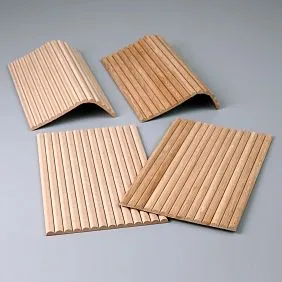
In the most general sense, a slatted panel consists of two elements: the slats (battens) themselves and the base on which they are fixed. It is the combination of the batten material and the type of base that determines everything else: the rigidity of the construction, the ability to work with curved surfaces, the installation method, and the range of finishing options.




Battens: profile and material
A batten is an individual slat that creates the visual pattern of the panel. Its parameters are:
Profile. The most common in modern interior panels is the semi-circular one. It provides soft, 'rounded' chiaroscuro without sharp edges: light glides smoothly over the surface, shadows don't cut into the view. There are also rectangular profiles—they create a more rigid, graphic pattern, suitable for loft or strict minimalism.
Material. Two main options: MDF (with medium and deep milling) and solid wood (oak, beech, ash). Each creates a fundamentally different visual and tactile effect—more on this in detail below.
Width and height of the profile. Narrow battens create a more frequent, 'saturated' rhythm. Wide ones—a more sparse, airy one. The standard width of battens in modern panels is from 10 to 25 mm.
Our factory also produces:


Base: rigid or flexible
This is the second key parameter, and it determines whether the panel can be used on curved surfaces.
Rigid MDF base — battens are fixed to an MDF board. The structure is monolithic, does not bend. Ideal for flat, straight walls. Provides maximum rigidity and geometric stability.
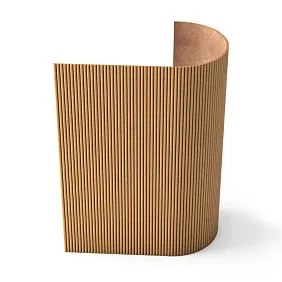
Flexible fabric base — battens are attached to an elastic fabric backing at a constant pitch. The structure rolls up for transport and unrolls on-site. It wraps around curved surfaces, columns, arches, and rounded corners without distorting the batten rhythm. This design solution is not a compromise, but a separate product class addressing tasks inaccessible to rigid modules.
Understanding this basic anatomy is the foundation for making the right choice. Now let's go deeper.
Get Consultation
MDF vs. solid oak: not 'better or worse,' but 'for what exactly'
The most common question when choosing slatted panels is which batten material to prefer. Most people frame it as a dichotomy: 'natural wood or non-natural.' But that's the wrong way to pose the question. The right one is 'which material better solves my specific task.'
MDF: geometry without compromise
MDF is high-density pressed wood fiber. It is made from the same raw material as solid wood, but through a different technological process. The result is a material with completely different properties: uniform, stable, without pronounced grain, and well-suited for precise milling.
What does this provide in the context of a slatted panel?
Profile precision. The router moves through MDF smoothly and predictably. All battens in a batch have an identical cross-section — without the variations inevitable when working with natural wood.
Stable geometry. MDF does not "move" with temperature and humidity fluctuations like natural wood does. This is critical for rooms with unstable microclimates: hallways, corridors, kitchens.
Paint-ready surface. MDF has no pronounced pores or fibers—the surface is smooth, without "raising the nap" when painted (provided proper priming is done).Wall panels made of slats for paintingmade of MDF provide a monochrome result that cannot be achieved with any natural material.
For which interiors is MDF optimal:
-
Minimalism with a monochrome palette—any shade, perfectly smooth surface.
-
Neoclassicism with precise color matching to walls and furniture.
-
Rooms with unstable humidity—hallways, kitchens, corridors.
-
Furniture fronts and built-in structures where geometric precision is important.
Solid oak: a living surface with character
Oak is a different story. Not better or worse than MDF, but fundamentally different. A pronounced wood grain pattern, the tactile warmth of the surface, the depth of tone that changes with the lighting angle—all of this creates an effect unattainable by any artificial material.
Oak in a slatted panel works not as a finishing material, but as a statement. An accent wall made of solid oak slats in a living room is not just a beautifully finished surface; it's a declaration of values: naturalness, durability, attention to quality.
Technical features that are important to consider:
-
Natural wood reacts to humidity—minor dimensional changes with fluctuations are normal.
-
Each slat is unique in its wood grain pattern—this is an advantage, but requires a visual inspection of the batch before installation.
-
The surface requires a finish: tinting, oil, or clear varnish. Without a coating, oak darkens unevenly.
For which interiors solid oak is optimal:
-
Scandinavian style—in combination with light tinting or whitewashed treatment.
-
Eco-style and biophilic design—where the naturalness of the material is conceptually important.
-
Bedrooms and studies—where tactile warmth creates the desired atmosphere.
-
Modern classic with a warm wooden palette.
Solid beech: quiet Scandinavian
Beech is lighter than oak, more uniform in texture, without sharp grain patterns. It is this neutrality that makes it an ideal material for interiors where naturalness is needed without the aggressive presence of wood. Children's rooms, bedrooms in pastel tones, Scandinavian living rooms — beech is more precise here than oak.
Rigid construction or flexible panel: when to choose what
This distinction is more important than the material — because the construction determines the physical possibility of application in specific conditions.
Rigid panel on MDF backing: for perfectly straight walls
A rigid construction is a monolithic module. The battens are glued or pressed onto an MDF board of a specific format. The advantage is absolute flatness: the panel does not sag, does not deform during installation, and does not change geometry over time.
Rigid panels are appropriate where the wall is perfectly flat and joining the modules does not create problems. For long straight walls in the living room, for built-in furniture facades, for straight sections of the ceiling — this is the optimal choice.
Rigid panels have one limitation, but a fundamental one: they do not wrap around curved surfaces. A column, an arch, a rounded corner — for all of these, a rigid construction is either completely unsuitable or requires complex cutting with the loss of a significant portion of the material.
Flexible wall panel made of slats: structural freedom
Flexible wall panels made of slats— this is a separate technological category. The slats are fixed on an elastic fabric base with a precise spacing. The entire structure rolls up for transportation and unrolls during installation, conforming to any curved surfaces without deformation.
Why is this needed? Real architecture is rarely perfectly linear. Especially in modern apartments and houses, where designers actively use rounded corners, arched openings, decorative columns, and non-standard geometric volumes. For all these cases, a rigid panel is not an option. A flexible one is the only correct solution.
Another important scenario is furniture fronts. If you want the slat cladding to transition from the wall to a cabinet or dresser, a rigid panel is inconvenient here.Wall panel made of slats for furnitureon a fabric base allows you to create a unified slatted environment, encompassing both the wall and furniture surfaces, without visible transitions or seams.
Model PAN-001 is exactly such a solution: slats with a semi-circular profile on a flexible fabric base. Available in three variants of slat material: deeply milled MDF for painting, solid oak, solid beech. Width — 1010 mm, roll — 2750 mm. Installed with contact adhesive and additional fixation with micro-pins.
Modular panel vs. individual slats: time savings or freedom of form
This question logically arises for those thinking about material cost. Why buy a ready-made panel if you can purchase individual slats and lay them yourself?
The answer, as always, is in the details.slatted modular wall panelyields:
-
Constant spacing — no manual marking, no cumulative error.
-
Party unity — all battens are of the same tone and cross-section.
-
Installation speed — one 1010 mm module is installed in a few minutes, whereas manual laying requires hours of marking.
-
Structural integrity — especially for flexible panels, where the fabric base holds the battens in the correct position even on curves.
Individual slats are justified in one scenario: a non-standard custom construction with unique spacing, diagonal laying, or three-dimensional relief. In typical residential interiors, this case is rare.
Wall panels made of slats for painting: full color control
Panels for painting deserve a separate and detailed discussion. This is not just 'unfinished MDF' — it is a separate functional class of products with its own application logic.
Why do panels for painting exist as a separate product, and not as a 'do-it-yourself' option? Because you cannot simply take MDF and paint it: without proper preparation, the surface absorbs paint unevenly, the nap rises, and the color lays with streaks. A professional result requires priming in several layers with intermediate sanding — and this is precisely the work the manufacturer takes on.
Primed wall panel made of slatsPAN-002 is MDF battens on a flexible fabric base with an applied two-layer polyurethane-based primer-insulator. The surface is ready for final painting immediately after installation — no additional preparation, no surprises with uneven absorption.
When a panel for painting is the only right choice
Exact match to the palette. If the interior is built on a specific color — powder pink, deep dark blue, warm terracotta — ready-made colors of solid wood or factory-tinted slatted panels will never provide an exact match. MDF for painting + the required tint = perfect match.
Future color change. Interiors change. In a few years, you'll want to update the accent wall. Repainting primed MDF is incomparably easier than replacing the entire slatted cladding.
Monochromatic interior. In minimalist spaces where walls, furniture, and slatted panels are maintained in a single color theme, only MDF for painting provides the necessary uniformity. Natural wood here introduces a 'random' texture element that disrupts the monochrome.
Commercial interior with corporate colors. Offices, showrooms, restaurant spaces where slatted panels must precisely match the corporate palette — a direct application for primed MDF panels.
PAN-002 format: width 1010 mm, height — two options: 950 mm (for accent panels, bed headboards, local zones) and 2700 mm (for continuous vertical cladding from floor to ceiling). Installation on contact adhesive with fixation using micro-pins. After installation, the seam between panels is filled, sanded, and repainted — the joint completely disappears.
Wall panels made of slats in the living room: scenarios that work
The living room is a space with the maximum number of functional zones. Here people relax, receive guests, watch movies, sometimes work. Each zone requires its own solution.
TV zone: a background that works for the entire interior
A television on a bare wall is an architectural problem. A dark screen on a white wall is a failure that draws the eye precisely when it's turned off. Slatted cladding behind the television elegantly solves this problem: it creates a textured background against which the screen becomes part of the composition, not a hole in the wall.
Principles for working with the TV zone:
-
Cladding from floor to ceiling — a partial 'patch' behind the screen looks unfinished.
-
Width — at least the width of the console unit, optimally — from wall to wall.
-
Slat orientation — vertical: creates solemnity and monumentality for the zone.
-
Color — darker than the other walls: creates the necessary visual weight.
For a TV zone on a flat, straight wall, the optimal choice isbuy a paintable slat panelin the 2700 mm format — this provides a continuous rise without seams for a standard ceiling height. If there is a column or an element with a radius in the zone —slat panel for a radius wallon a fabric base wraps around it without losing rhythm.
Accent wall behind the sofa: structuring the space
Slatted cladding behind the sofa creates a 'backrest' — a psychologically complete relaxation zone that stands out from the general space without a physical partition. This is one of the most effective zoning techniques in apartments with an open layout.
For an accent wall in a Scandinavian-style living room — light solid oak slats with a whitewashed tint, horizontal orientation, large spacing. For modern minimalism — vertical MDF slats in a dark tone, fine spacing, complete absence of additional decorative elements. More about visual solutions — in the sectionslatted wall panels.
Decorative niche in the living room
A niche is often a missed opportunity. Slatted cladding on the back wall of a niche creates depth and turns an architectural recess into a full-fledged design element. Especially effective — with lighting: an LED strip behind the lower edge of the slatted panel creates a soft glow effect from behind the battens, with no visible source.
Wall slatted panels in the bedroom: atmosphere as the main task
If slatted panels in the living room work for effect, then in the bedroom — for atmosphere. Fundamentally different tasks, different solutions.
Headboard: an architectural frame for the bed
The headboard area is the focal point of the bedroom. The wall behind the bed defines the overall feeling of the space. This is where a person looks upon waking up.
Slatted headboard cladding works as an architectural frame: it highlights the sleeping area, giving it weight and completeness. Width — from 40–60 cm wider than the bed on each side to the full width of the wall. Height — two options: from floor to ceiling (solemn, monumental) or from the headboard to the ceiling (intimate, cozy).
The PAN-002 format at 950 mm creates a ready-made rectangular accent above the bed — precisely the proportion that reads as a complete, independent composition requiring no additions.
Color and material for the bedroom
For the bedroom, thermal neutrality or warmth is fundamentally important. Cool grays, cool blue shades in the bedroom can create a clinical feel if not balanced with warm textiles. Warm shades — natural oak, beech, terracotta, powder, creamy white — work flawlessly.
Natural solid oak or beech in the bedroom creates a tactile warmth that is felt even without touch — just visually.Buy MDF slatted wall panelsfor painting in a warm shade — an alternative for those who want an exact color, not 'approximately similar'.
Bedroom lighting: hidden light as an architectural technique
Slatted panels in the bedroom are especially effective with lighting. An LED strip hidden behind the lower edge of the headboard panel creates a 'floating' structure effect: the light source is nowhere visible, it simply exists as a soft, diffused glow between the wall and the panel. This serves simultaneously as a nightlight, a decorative element, and reading light.
Slatted wall panels in the hallway and corridor
The hallway is the first thing a guest sees. The corridor is what the owner sees every day. Both spaces are small, often without windows, with an unstable microclimate. This is where the right choice of material and construction is critically important.
Hallway: practicality above all
In the hallway, slatted panels solve several tasks simultaneously:
-
They create character from a space that would otherwise remain 'nondescript'.
-
They hide unevenness and defects in the base surface.
-
With proper orientation (vertical), they visually raise the ceiling — critical for low hallways.
-
Dark slats in the contact area with clothing and bags are practical: marks on them are not noticeable.
Material choice for the hallway: MDF wins over solid wood due to stability during humidity fluctuations. An MDF panel for painting with moisture-resistant enamel is the optimal long-term solution.
Construction choice for the hallway: if the hallway has turns, niches, or rounded corners —Slat panel on fabric baseit works without complex joints. Straight, even sections — rigid or flexible panel, with no fundamental difference.
Corridor: Working with the Psychology of Space
A long corridor feels oppressive. This is not a metaphor—it's a psychological fact: an enclosed narrow space with monotonous walls creates a sense of stress. Slatted cladding neutralizes this effect through rhythm.
Vertical slats on the end wall at the corridor's end create a focal point and 'stop' the gaze. Vertical slats on one long wall establish a rhythm of movement. Both techniques break the monotony without physically altering the space.
Important warning: horizontal slats on the long walls of a corridor are a poor choice. They accentuate the length rather than neutralize it.Slatted wall panelsIn a corridor, they should work for psychological comfort, not against it.
Slatted wall panels for columns, arches, and curved surfaces
This is a topic often overlooked in general materials about slatted panels. Yet, this is where the most interesting and complex challenges lie.
Why rigid panels don't work on curved surfaces
When an architect designs a round column in a living room or an arched opening in a corridor, the designer faces the question: how to clad it with slatted panels? A rigid MDF module requires cutting into sectors with subsequent joining—every joint is visible, the geometry is disrupted, and the rhythm of the battens is lost at the joint points.
Flexible wall panels made of slatssolve this problem fundamentally differently. The fabric backing allows the panel to continuously wrap around the curved surface, maintaining an even spacing of the battens throughout. No joints in awkward places, no loss of rhythm—just a unified slatted surface that follows the object's form.
Practical application examples
Decorative column in the living room. Round cross-section — the flexible panel PAN-001 is mounted continuously from the base to the capital, maintaining the rhythm of the battens. With a column diameter from 300 mm — no problem.
Archway in a corridor or hallway. The vertical side parts of the arch are mounted with rigid panels, the rounded top — with flexible. The transition is invisible with proper installation.
Rounded corner in a walk-in closet. Modern walk-in closets often feature rounded corners instead of sharp ones — the flexible panel wraps around them continuously.
Radius wall in a bay window. A bay window with a smoothly curving wall is a classic candidate for a flexible slatted panel. It is impossible to clad such a wall with rigid modules without visible joints.
Learn more about working with non-standard surfaces — in the articleFlexible wall panel slats.
Installation of wall slatted panels: from preparation to finish
Proper installation is no less important for the result than the correct choice of material. Unfortunately, mistakes at this stage are visible to the naked eye.
Step one: assessment and preparation of the substrate
For rigid panels. The substrate must be as level as possible. Variations exceeding 3–5 mm per linear meter will cause the joint between modules to be visible. Leveling — with putty or drywall cladding.
For flexible panels. Requirements are less strict — the fabric backing partially compensates for minor unevenness. But the base must be clean, dry, free of dust, grease, and flaking coatings.
For both types. Base moisture is a critical parameter. Installing on a damp wall will cause the adhesive to peel. The wall must be dry and, if necessary, treated with a deep-penetration primer.
Stage two: marking
Before installing the first panel, snap a vertical line — all installation proceeds from it. An error on the first panel multiplies across the entire surface and by the middle of the wall results in a noticeable deviation from vertical.
For vertical slatted panels — a vertical marking line. For horizontal — a horizontal one. A laser level is more convenient here than a bubble level.
Step three: installation
Contact adhesive is applied to the back surface of the panel and to the wall — evenly, without gaps, especially along the edges. Curing time — according to the instructions of the adhesive used. After alignment and pressing — additional fixation with micro-pins around the perimeter.
On curved surfaces, the flexible panel is fixed with gradual pressure from the center to the edges, eliminating air pockets under the fabric backing.
Step four: joining modules
The joint between panels is the most vulnerable spot of any slatted cladding. To join correctly: not butt 'slat to slat', but with alignment of the pattern. That is, the slats of the next panel should visually continue the row of slats from the previous one without offset.
For paintable panels, the seam between modules is filled with finishing putty, sanded flush, and repainted — after this, the joint completely disappears. This is exactly how the effect of a 'seamless' slatted wall from several separate modules is achieved.
Stage five: finishing
For solid oak or beech panels — apply tinting or clear varnish after installation. It is recommended to apply the finish after installation (not before) to conceal micro-pin marks.
For primed MDF panels for painting — two coats of finishing acrylic or latex paint with intermediate sanding using 240-grit sandpaper. The first coat will reveal the joint between panels — after sanding and the second coat, it will disappear.
For more details on all installation nuances — in the article Slatted panels for walls and ceiling.
Interior styles and wall slat panels: matching table
| Style | Material | Orientation | Step | Color |
|---|---|---|---|---|
| Minimalism | MDF for painting | Vertical | Medium | Monochrome, dark tones |
| Scandinavian | Solid beech / oak | Vertical or horizontal | Large | Light natural tones |
| Neoclassical | MDF for painting | Vertical | Small | Warm neutrals |
| Loft | MDF for painting / oak with tinting | Vertical | Large | Dark, saturated |
| Eco-style | Oak solid wood | Any | Medium | Natural oak, oiled |
| Japanese minimalism | Solid oak / beech | Horizontal | Medium | Light natural |
| Modern Classic | Oak solid wood | Vertical | Small | Warm walnut, tinted |
Acoustics of slatted panels: rarely discussed but important
The slatted structure has documented acoustic properties: vertical battens scatter sound waves, disrupting their reflection from flat surfaces. The result is reduced reverberation, less echo, and improved speech clarity.
In residential spaces, this manifests as a sense of 'muffledness'—the space sounds softer, without harsh reflections. In living rooms with high ceilings and hard finishes, slatted wall panels can significantly enhance acoustic comfort.
The acoustic effect is amplified if sound-absorbing material—such as mineral wool or acoustic foam—is placed between the wall and the back surface of the panel. This is especially relevant for home theaters, studies, and meeting rooms.
How to calculate the number of panels: a practical guide
This is a question that in practice causes more difficulties than it seems.
Step 1. Determine the cladding area: height × wall (or zone) width. Don't forget to subtract the area of door and window openings if they are in the cladding zone.
Step 2. Divide the area by the area of one panel. The width of PAN-001 and PAN-002 is 1010 mm. Height: 2750 mm (PAN-001) and 950 mm or 2700 mm (PAN-002).
Step 3. Add 10–15% margin for cutting. For curved surfaces — up to 20%.
Step 4. Check the availability of the required quantity from one batch. Slats from different batches may vary in tone — this is critical for solid wood.
Example: a wall 4 × 2.7 m, solid cladding with a format of 2700 mm × 1010 mm.
Number of panels: 4,000 mm ÷ 1,010 mm = 3.96 → 4 panels. With a 10% margin — 5 panels.
FAQ: Answers to Key Questions
Can wall panels made of slats be used in wet areas?
MDF with moisture-resistant paint is acceptable in rooms with normal humidity — kitchens, hallways. For bathrooms with direct exposure to water, slatted panels made of wood and MDF are not suitable.
Wall panels made of MDF or oak slats — which is more durable?
With proper finishing, both materials are durable. MDF with moisture-resistant varnish or enamel will behave more stably under variable humidity conditions. Solid oak with quality oil or varnish coating lasts for decades with normal care.
How to choose the spacing of slats in a wall panel?
Small spacing (up to 15 mm) — rich dense pattern, pronounced chiaroscuro, for spacious rooms. Medium (15–30 mm) — universal, works everywhere. Large (30+ mm) — light airy rhythm, for minimalism and high ceilings.
Can PAN-001 and PAN-002 panels be joined in one area?
Yes, provided that the spacing of the battens matches and the battens run continuously through the joint. If the spacing is the same — the joint will be invisible after finishing.
How to care for slatted wall panels?
Soft dry or slightly damp cloth. Do not use abrasive agents. For solid oak — renew the oil coating every 3–5 years. For painted MDF — if damaged, simply touch up with the same color.
Can panels of non-standard size be ordered?
Yes. The manufacturer works on order, production time is 5–10 business days.Slatted panels made of MDF and oakare manufactured according to the specified parameters.
How to choose the color of slatted wall panels?
For solid wood — the shade is selected via a sample or tinting. For MDF for painting — any color according to standard palettes (RAL, NCS, Caparol, and others). It is recommended to order sample OPAN-001 before the main order.
Where can I see examples of application in real interiors?
Visual overview of solutions and interior photographs — in the section Slatted wall panels on the manufacturer's website.
Is there a difference between panels for residential and commercial premises?
There is no fundamental difference — the same products are used in residential apartments, offices, restaurants, and hotels. In commercial spaces, fire safety is often important: for facilities with increased requirements, special fire-retardant impregnations are recommended.
How much do slatted wall panels cost?
Current prices and the possibility to buy slat wall panelswith delivery across Russia — on the manufacturer's website in the catalog section. The cost depends on the material of the battens (MDF or solid wood), format, and order volume.
Conclusion
Slat wall panels are not a trendy decorative material that will fade from the scene in two seasons. They are an architectural tool that solves specific spatial and aesthetic tasks: creating volume where there is none, highlighting zones without partitions, adding tactile warmth, improving acoustics, and enabling the realization of any color idea.
Primed MDF for painting — for precise color and monochrome interiors. Solid oak — for naturalness and tactile warmth. Flexible fabric base — for curved surfaces and non-standard architecture. Each choice is as precise as the understanding of the task.
The company STAVROS has been manufacturing slat wall panels since 2002. Over this time, STAVROS has evolved from a small workshop for carved wooden products to a manufacturer of a full range of interior slat solutions: flexible PAN-001 panels on a fabric base (MDF, oak, beech), primed PAN-002 panels for painting, interior slats RK-002 for custom constructions. Production is in Russia, delivery is nationwide via SDEK, and the manufacturing time is 5–10 business days. STAVROS stands for precision execution and honest materials that perform exactly as promised.