Article Contents:
- Why Classic Is Making a Comeback
- Tired of Minimalism
- Desire for Individuality
- Value of Craftsmanship and Quality
- Psychology of Comfort
- Neoclassicism as a Compromise
- Influence of Social Media
- Paintable Moldings as an Interior Refresh Tool
- Creating Architectural Structure
- Color solutions
- Space zoning
- Correcting Room Proportions
- Hiding Wall Defects
- Easy Installation and Removal
- Decorative Accents for Walls and Furniture
- Wall Outlets and Medallions
- Corner Decorative Elements
- Decorative Furniture Appliqués
- Mirror and Picture Frames
- Imitating Moldings
- Personalization Through Decor
- Facade Elements as Interior Continuation
- Style Unity
- Motif Repetition
- Color Harmony
- Material consistency
- Transition from Interior to Exterior
- Functional Unity
- Conclusion: Classic in Modern Execution
- FAQ: Popular Questions About Moldings and Decor
- Can Classic Decor Be Used in a Modern Interior?
- How to Calculate the Amount of Moldings for a Room?
- What Width Should Moldings Be?
- How Much Does It Cost to Create Classic Panels from Moldings?
- Can moldings be installed by yourself?
- What paint to use for moldings?
- How to care for moldings and decorative elements?
- Do moldings match styles other than classic?

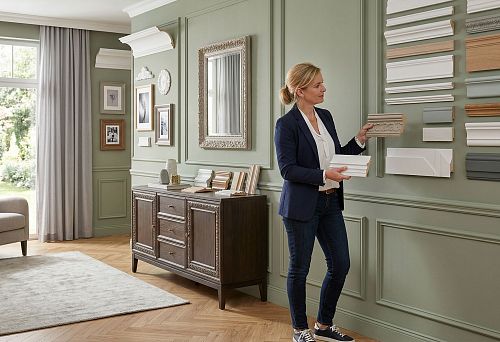
Trend cycles, and this rule applies not only to clothing but also to interior design. In 2025, we are witnessing the triumphant return of classic forms, but in a completely new interpretation.Paintable MoldingBecomes a universal tool for transforming space, allowing to create interiors where historical elegance combines with modern practicality.Wall decorative ornamentsStop being mere tribute to tradition and become expressive accents of modern design. EvenFacade Corner ElementsAcquire a new sound, linking the exterior and interior spaces of the home into a single composition.






Why classic is returning
The past decade was an era of total minimalism — empty white spaces, absence of decoration, strict functionality. However, the human soul requires not only practicality but also beauty, details that delight the eye and create an emotional connection with the space. Classic forms are returning precisely because they fulfill this deep need for beauty and harmony.
Our factory also produces:


Tired of minimalism
Minimalist interiors, which dominated design in recent years, despite their merits, have a significant drawback — they often appear cold, impersonal, uninhabited. Strict white boxes without a single decorative detail create a sense of sterility, which over time begins to oppress. People lack warmth, coziness, individuality, which cannot be created without decorative elements.
Paintable MoldingBecomes a salvation for those tired of soulless minimalism but not ready to plunge into heavy classicism of past centuries. Simple profiles add architectural expressiveness to space without overloading it with excessive decoration. Walls stop being flat and acquire volume, depth, character.
Get Consultation
Desire for individuality
Mass production and globalization led to interiors becoming standardized — identical IKEA furniture, standard solutions, mass-produced images from catalogs. In this situation, people begin to seek ways to stand out, create a unique space reflecting their personality. Classic decorative elements provide such an opportunity.
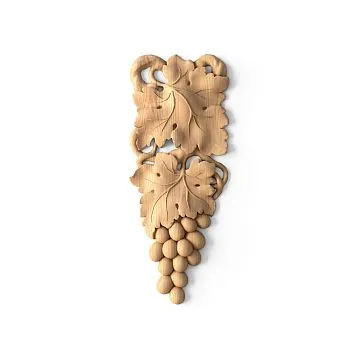
Wall decorative ornamentsAllow creating unique compositions that cannot be replicated. Carved outlets, moldings, appliqués — each element can be chosen, combined, arranged in your own way. The result — an interior that exists in a single unique instance, telling the story of its owner.
Value of craftsmanship and quality
Modern society begins to reevaluate its relationship with things. The philosophy of disposable consumption gives way to the value of longevity, quality, craftsmanship. Classic decorative elements embody these values — they are created with attention to detail, serve for decades, and are passed down to future generations.
Paintable MoldingMade from quality MDF or solid wood — this is an investment in longevity. Unlike cheap plastic panels that yellow and deform within a few years, quality moldings retain their flawless appearance for decades. They can be repainted, refreshing the interior, but the architectural structure remains unchanged.
Psychology of comfort
Research in the field of space psychology shows that classic interiors, with their symmetry, proportionality, decorative details, create a sense of safety, stability, rootedness. In an unstable world, classic forms work as a psychological anchor, reminding us of eternal values and generational continuity.
ClassicWall decorative ornamentsAre not just beautiful — they create a sense of completeness, order, harmony. Symmetrical compositions soothe, rhythmic repetition of elements creates predictability, which is psychologically comfortable. This is especially important in today’s chaotic world, where home should become an island of stability.
Neoclassicism as a compromise
The return of classicism occurs not in the form of literal copying of historical interiors, but through modern interpretation — neoclassicism. This style takes the best from classicism — proportionality, symmetry, quality materials, decorative elements — and adapts them to modern requirements of functionality and comfort.
Paintable MoldingIn neoclassical interiors has a simpler profile than in historical classicism. Ornamentation is restrained, lines are clear, proportions are adapted to modern room scales. The result — an interior that looks elegant and modern at the same time.
Influence of social media
Social networks have changed the perception of interior design. People want to create spaces that look impressive in photos, become backgrounds for Instagram and TikTok. Minimalist white walls, which seemed ideal not long ago, are now perceived as dull. Classic interiors with their decorative details, play of light and shadow, rich textures create much more interesting visual effects.
Wall decorative ornamentsBecome not just decorative elements, but heroes of photo shoots. A carved outlet on the wall, elegant moldings framing a mirror,Facade Corner ElementsAt the entrance — all this creates a visually rich space that you want to capture and show.
Moldings for painting as an interior refresh tool
Moldings are a universal design tool that allows you to radically change the perception of space without major renovation.Paintable MoldingIt provides even more possibilities - it can be painted in any color, creating endless visual effects.
Creating architectural structure
The main function of moldings is to create an architectural structure on flat wall surfaces. An empty wall is perceived as an unfinished plane. Moldings divide it into panels, creating rhythm, proportions, and hierarchy of elements.Paintable MoldingIt allows creating classical wall panels in any style.
The traditional scheme divides the wall into three horizontal levels. The lower level consists of panels 90-120 cm high, the middle level is the main wall surface, and the upper level is a frieze under the ceiling. Each level is separated by a horizontal molding. Vertical divisions are created within the levels - rectangular or square panels. Such a system creates a clear architectural structure.
A modern interpretation can be more flexible. Asymmetric compositions, panels with non-standard proportions, using moldings only on one accent wall - all of this is acceptable in neoclassicism. The key is to maintain a sense of proportion and balance among elements.
Color Solutions
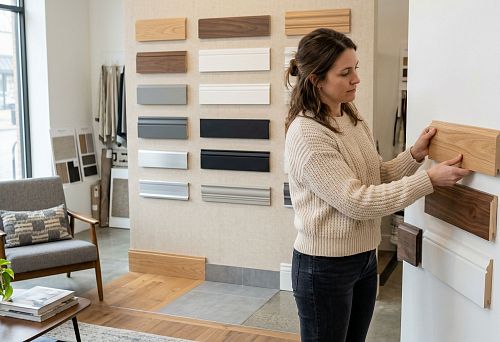
Paintability - the main advantagemolding for paintingA classic solution is white moldings on colored walls or in the wall color. White creates a clear outline, emphasizes the architecture of panels, and visually lightens the walls. Painting moldings in the wall color creates a more restrained effect - panels are perceived through relief, without color contrast.
Contrasting solutions create a dramatic effect. Black moldings on white walls - a graphic, modern solution typical of modern classicism. Dark gray moldings on light gray walls - a softer, yet still expressive option. Gold or silver moldings create a luxurious effect, suitable for glamorous interiors.
Colored moldings - a bold modern solution.Paintable MoldingIn bright colors, they transform classic forms into modern art objects. Blue moldings on white walls, pink on gray backgrounds, emerald on beige - such solutions create individuality and highlight the interior.
Space Zoning
Moldings are an effective tool for zoning open spaces. In studio apartments or large rooms with multiple functional zones, moldings help visually divide space without physical partitions. Different molding treatments on walls in different zones create their visual separation.
The living room zone may have classic wall panels made ofmolding for painting, the dining area - vertical divisions emphasizing ceiling height, the work zone - minimalist design with simple horizontal moldings. Such a division creates the feeling of separate rooms within a single space.
Correction of room proportions
Moldings can visually alter the proportions of a room. In low rooms, vertically oriented panels create an illusion of greater height. In narrow, elongated rooms, horizontal divisions visually expand the space. In square rooms, asymmetrical panel placement can make proportions more interesting.
Paintable MoldingIt allows experimenting with the visual geometry of space. Large panels make a room feel more intimate and cozy. Small panels create a dynamic, rhythmic structure. It is important to calculate the size and number of panels so that they harmonize with the scale of the room.
Hiding wall defects
A practical function of moldings is to mask wall defects. Irregularities, cracks, and traces of old fasteners can be hidden under moldings without resorting to major wall leveling.Paintable MoldingIt hides problematic areas while simultaneously creating a decorative effect.
This is especially relevant in old houses, where perfectly leveling walls is extremely difficult and expensive. Moldings allow you to create the effect of flawless walls without months of plasterer's work. Strategic placement of moldings covers problematic zones, while the overall decorative system distracts attention from minor imperfections.
Ease of installation and removal
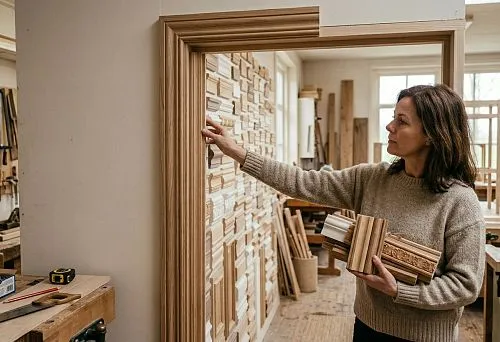
ModernMoldings for paintingMoldings made of MDF are easily mounted using special adhesive or liquid nails. No drilling, grooving, or complex fastening is required. Moldings can be removed if needed without damaging the walls. This makes them ideal for rental properties or for those who like to frequently change their interiors.
The possibility of easy updating is another advantage. An outdated color can be repainted without removing the moldings. New elements can be added, the composition can be changed, and a completely different visual effect can be created with minimal time and money investment.
Decorative wall and furniture accents
Wall decorative ornamentsThese are elements that transform a well-planned interior into a work of art. Rosettes, medallions, corner elements, carved appliqués add elegance, individuality, and artistic value to the space.
Decorative rosettes and medallions
Decorative rosettes - round or oval elements with ornamentation - are used as standalone wall decorations or as central elements of molding compositions.Wall decorative ornamentsas rosettes can be placed in the center of wall panels, above doorways, in the spaces between windows.
Classic rosette motifs include acanthus leaves, roses, palmettes, geometric patterns. Baroque rosettes are characterized by lushness and asymmetry, neoclassical ones by strict symmetry and geometric clarity. Modern rosettes may have a minimalist design - simple concentric circles, stylized flowers, abstract patterns.
Rosette size should match the scale of the panel or wall. On a large wall in an open room, a rosette with a diameter of 40-60 centimeters is appropriate. In more intimate spaces, rosettes of 20-30 centimeters suffice. It is important not to overload the space - one or two striking rosettes create an accent, while numerous small rosettes appear cluttered.
Corner decorative elements
Corner molding compositions - critical points requiring special attention. The traditional way of joining moldings - beveling at 45 degrees - creates an invisible joint, but requires high precision.Wall decorative ornamentsas corner elements transform a utilitarian joint into a decorative accent.
Corner rosettes can have various designs - from simple geometric shapes to complex carved compositions with plant motifs. They are placed at the corners of rectangular panels, creating a rhythmic structure. Four identical corner rosettes at the corners of a panel create a symmetrical, orderly composition.
The size of corner elements should correspond to the width of the molding - usually 1.5 to 2 times larger. Too large elements on narrow moldings look inappropriate, too small ones disappear. Professional designers use special proportional tables to calculate optimal sizes.
Decorative appliqués for furniture
Wall decorative ornamentscan be used not only on walls but also to decorate furniture. Carved appliqués on cabinet, chest, and buffet facades transform simple case furniture into pieces of furniture art. This is especially relevant for inexpensive furniture that one wishes to personalize.
Appliqués can be placed in the center of doors, at corners, or to frame panels. Classic motifs - rosettes, cartouches, volutes - suit traditional interiors. Geometric appliqués are ideal for neoclassicism and art deco. It is important that the style of appliqués matches the overall interior and wall decor style.
Installing appliqués on furniture is simple - they are glued using special adhesive or carpentry PVA. After gluing, appliqués are painted together with furniture or tinted in contrasting colors, creating a striking effect. Gilded or patinated appliqués on dark furniture create a luxurious, antique look.
Frame for mirrors and paintings
Wall decorative ornamentsallow creating unique frames for mirrors and paintings. By combining moldings and decorative elements, one can create a frame of any complexity and style - from simple rectangular to elaborate baroque with volutes and cartouches.
Mirrors in decorative frames become independent art objects, decorating the interior. Especially effective are large mirrors above fireplaces, console tables, and entryways. A frame made from moldings and decorative elements can repeat motifs of wall panels, creating stylistic unity.
Paintings in decorative frames also appear more valuable and significant. A frame matching the style of the painting and interior enhances the impression of the artwork. Gilded frames suit classical paintings, strict black frames suit graphics, white frames suit modern prints.
Imitation of stucco
Modern production technologiesdecorative wall ornamentsmade from MDF allow high-precision imitation of plaster stucco. Carved MDF elements, after painting, visually indistinguishable from plaster, but significantly lighter, easier to install, and cheaper.
This makes classical decor accessible to a wide range of people. Previously, plaster stucco was a privilege of luxurious interiors due to the high cost of master stucco workers' labor. Modern MDF elements democratize classical beauty, allowing the creation of refined interiors within a reasonable budget.
Personalization through decor
Wall decorative ornamentsis an interior personalization tool. Choosing specific elements, their combination, and placement - all reflect the owner's taste and individuality. Two interiors with identical layouts and furniture will look completely different due to different decor.
Thematic compositions can be created - marine motifs in the bathroom, botanical - in the bedroom, geometric - in the office. Decor can be used to tell a family's story - placing monograms, dates, symbols. Decorative elements transform an impersonal space into a personal, meaningful one.
Facade elements as an extension of the interior
A harmonious home requires consistency between exterior and interior design.Facade Corner Elementsand other decorative facade details should correspond with interior decor, creating stylistic unity of the building.
Style Unity
If inside the house usesMoldings for paintingandWall decorative ornamentsin classical style, then the facade logically should be decorated with corresponding elements. Pilasters, cornices, window casings,Facade Corner Elementsshould belong to the same style.
Classicism requires strict proportions, symmetry, and an order system both inside and outside. Baroque implies lavish decoration on the facade and in interiors. Neoclassicism uses simplified classical forms both on the facade and inside. Stylistic unity creates a sense of wholeness and architectural sophistication of the building.
Repetition of Motifs
Decorative motifs used in the interior can repeat on the facade, creating visual connections. If rosettes with a specific ornament are used inside, similar rosettes may decorate the facade above windows or doors.Facade Corner Elementsmay repeat the forms of interior corner ornaments.
Such repetition should not be literal — facade elements are usually larger than interior ones due to greater scale. However, common motifs, proportional relationships, and the character of ornamentation should be recognizable. This creates a sense of thoughtful design and unity of the architect’s concept.
Color Harmony
The facade color palette should correspond to the interior palette. If warm beige and cream tones are used inside, the facade logically should be executed in a similar palette. Cool gray interiors require a corresponding restrained facade.Paintable Moldinginside and outside may be painted in coordinated shades.
White decorative elements are universal — they work equally well both on the facade and in interiors. Contrasting solutions can also be coordinated — dark moldings on light walls inside and light trim on a dark facade create a correspondence through color inversion.
Material Consistency
Facade Corner ElementsInterior and exterior decoration may be executed from different materials — more weather-resistant materials are required on the facade. However, visually they must be coordinated. If carved wooden decoration is used inside, composite elements imitating wood can be applied on the facade.
It is important to maintain surface texture unity. Smooth elements inside require smooth elements outside. Relieved, textured interior elements can correspond to textured plaster or relief facade panels. Such coordination creates a sense that the building was designed by a single hand.
Transition from interior to exterior
Entrance zone — a critically important space where the transition between interior and exterior occurs. Here, especially important is the consistency of decoration. The exterior framing of the entrance door should correspond to the interior door framing.Facade Corner Elementsin the hallway may repeat the forms of facade pilasters.
Hallways or entryways become a connecting link between the facade and interior. Here, elements characteristic of both exterior and interior finishes can be used. For example, rusticated corners on the facade may find continuation in rusticated corner finishes in the hallway. Facade cornices may repeat in the ceiling cornices of the hall.
Functional Unity
In addition to aesthetic consistency, functional unity is important.Moldings for paintinginside and facade elements outside should not only be beautiful but also practical. On the facade, moldings and cornices protect walls from precipitation, create overhangs above openings. Inside, moldings conceal material joints, mask defects, protect corners.
Quality materials ensure longevity of both interior and exterior elements.Facade Corner Elementsmade from weather-resistant materials serve for decades without losing their appearance. Interior elements made from quality MDF or solid wood also do not require replacement throughout the building’s lifespan.
Conclusion: Classicism in modern execution
The return of classical forms to modern design — not a tribute to nostalgia, but a conscious choice of people who value beauty, quality, and individuality.Paintable Moldingbecomes a universal tool, allowing to create interiors where historical elegance combines with modern practicality.Wall decorative ornamentstransform spaces into works of art, adding refinement and individuality.
link external and internal spaces of the house into a unified whole, creating architectural integrity. A house where every detail is thoughtfully designed, where style is consistently carried from the facade to the last corner of the interior, acquires character, individuality, becomes a true home, not just mere housing.
Facade Corner ElementsThey link the exterior and interior spaces of the house into a unified whole, creating architectural integrity. A house where every detail is thought out, where the style is consistently carried from the facade to the last corner of the interior, acquires character, individuality, becomes a true home, rather than just mere housing.
Accessibility of modern materials and technologies democratizes classical beauty, making it accessible to a broad range of people. No longer are the services of expensive stucco artists and months of handwork required.Moldings for paintingand ready-madeand frames create a home atmosphere, making it truly cozy and individual. This is an investment in beauty, which pays off every day through aesthetic pleasure from admiring the beautiful.allow creating refined interiors independently or with minimal professional assistance.
FAQ: Popular Questions about Moldings and Decoration
Can classical decoration be used in a modern interior?
Yes, neoclassical style successfully combines classical decorative elements with modern aesthetics. The key to harmony — choosing minimalist formsmolding for paintingwithout excessive ornamentation, neutral color palette, minimalist furniture.Wall decorative ornamentsused sparingly as accents, not covering all surfaces.
How to calculate the amount of molding for a room?
To calculate, you need to determine the panel layout scheme. The standard scheme is 3-4 vertical panels per wall. Measure the room's perimeter and wall height, calculate the total length of horizontal and vertical moldings with a 10-15% allowance for trimming. Professional consultants will help accurately calculate the quantity.molding for painting.
What width should the moldings be?
The width of the molding depends on ceiling height and room size. For standard 2.7-meter ceilings, a width of 5-8 centimeters is optimal. For ceilings 3 meters and higher, moldings 8-12 centimeters wide can be used. In spacious rooms, wider moldings look more proportionate. In small rooms, narrow moldings do not overwhelm the space.
How much does creating classic moldings panels cost?
The cost depends on wall area, composition complexity, molding type, and labor cost.Moldings for paintingAvailable at affordable prices. Installation and painting work constitute a significant portion of the budget. On average, finishing one 15-square-meter wall costs between 15,000 and 40,000 rubles depending on complexity.
Can moldings be installed by oneself?
Yes, installationmolding for paintingInstallation is relatively simple. Required tools: a miter saw for precise 45-degree cuts, special adhesive, measuring tape, pencil, level. The key is to accurately mark panel positions, carefully trim corners, and firmly press moldings against the wall. Detailed video instructions will help master the installation technique.
What paint to use for moldings?
Moldings for paintingMDF moldings paint excellently with water-based acrylic paints. Before painting, the surface is primed with acrylic primer. Apply 2-3 coats with a roller or brush. Between coats, lightly sand with fine-grit sandpaper for a smooth finish. A matte or semi-gloss varnish as a final coat protects the paint.
How to care for moldings and decorative elements?
PaintedMoldings for paintingandWall decorative ornamentsRequire minimal maintenance. Regular dry cleaning with a soft brush or vacuum cleaner with a soft attachment prevents dust accumulation in relief. Stains are removed with a slightly damp cloth and mild detergent. Avoid abrasive materials and aggressive chemicals.
Do moldings combine with styles other than classic?
Moldings for paintingThey are versatile and can be used in various styles with proper profile and color selection. In Scandinavian interiors, simple white moldings are used; in lofts, black or metallic ones; in Provence, pastel-toned ones. For modern styles, choose minimalist profiles without excessive decoration.
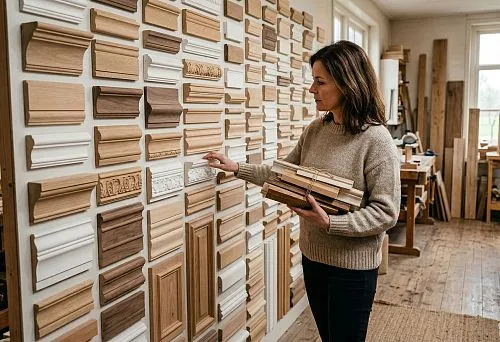
STAVROS offers the widest range ofmolding for paintingmade from high-quality MDF and solid wood. The variety of profiles—from simple flat to complex multi-tiered—allows realizing any designer concept. The collectiondecorative wall ornamentsincludes classic and modern elements of all sizes and styles.
STAVROS's own production guarantees stable product quality, precise dimensions, flawless surface. Modern equipment allows creating elements with fine detailing, reproducing historical samples or creating new original forms. Eco-friendly materials and coatings ensure safety for health.
STAVROS's professional consultants help select optimal solutions for specific projects. Calculating required element quantities, recommending layout schemes, selecting compatible elements, installation and painting consultations—full support at every project implementation stage.
Flexible pricing policy makes quality decor accessible. Bulk discounts for large-scale projects, individual pricing for exclusive orders, regular promotions and special offers—STAVROS ensures beauty is accessible to everyone.
Create interiors that delight the eye and warm the soul, together with STAVROS—your reliable partner in the world of decorative elements and classic beauty!