Article Contents:
- Creative Approach to Personal Design
- Philosophy of Personal Furniture Creation
- Technical Foundations of Home Design
- Material Science for the Home Craftsman
- Tooling for the Home Workshop
- Stages of Developing a Personal Project
- Conceptual Phase of the Creative Process
- Technical Development of the Construction
- Modern Tools of Digital Design
- Accessible CAD Systems for Enthusiasts
- Virtual Reality in Home Design
- Practical Aspects of Home Manufacturing
- Workspace Organization
- Quality control at all stages
- Economic Advantages of DIY Manufacturing
- Analysis of total ownership cost
- Personal Satisfaction from Creativity
- Trends in Modern DIY Movement
- Integration of Traditions and Innovations
- Ecological Responsibility in Creativity
- Specialized Areas of Home Furniture Design
- Children's Furniture: Design Features
- Office Furniture for Home Office
- Specialized Material Processing Techniques
- Turning Decorative Elements
- Modern Decoration Methods
- Technologies for Joining Elements
- Adhesive Joints in Modern Furniture
- Mechanical Fastening Systems
- Finishing Materials and Technologies
- Natural finishing materials
- Modern synthetic coatings
- Quality Control and Testing
- Strength and durability tests
- Functional tests
- Project documentation
- Creating assembly instructions
- Conclusion
By taking on the creation of furniture yourself, you open up a wonderful world of boundless possibilities. How to design furniture yourself This question concerns everyone who wishes to bring their own ideas to life, creating interior items that reflect individual taste and needs. In the era of mass production, handmade furniture acquires special value: it carries the soul of the craftsman, his creative vision, and boundless love for craftsmanship.


Creative approach to personalized design
Self-designed furniture opens inexhaustible horizons for creative self-expression. Unlike factory-made items, created to standard sizes and tastes, custom furniture can perfectly fit any space, take into account the specific needs of the owner, and become a true work of art.
The individual approach begins with a deep analysis of personal needs. What functions should the future piece of furniture perform? Where will it be placed? How often will it be used? Answers to these questions form the technical specification for your own project, defining its structural features and aesthetic solutions.




Philosophy of personal furniture making
Creating furniture by your own hands goes far beyond simply making interior items. It is a process of deep understanding of materials, tools, and your own capabilities. Creative self-realization through working with wood, metal, or modern composite materials develops not only technical skills but also artistic vision.
Each stage of design requires making numerous decisions: from choosing wood species to determining types of connections. These decisions shape the character of the future item, its durability, and aesthetic appeal. Personal style emerges precisely in these moments of choice, when the craftsman intuitively finds optimal solutions.
Our factory also produces:


Technical foundations of home design
Technical proficiency becomes the foundation for successful self-design. Understanding material properties, construction principles, and basic strength calculations allows you to create not only beautiful but also reliable furniture. An engineering approach to creativity eliminates errors that could lead to premature failure of the item.
Get Consultation
Material science for the home craftsman
Material selection determines not only the appearance of the finished product but also its manufacturing technology. Wood materials remain the most popular due to accessibility, beauty of texture, and relative ease of processing. Solid wood ensures maximum durability and the possibility of multiple surface refinishing.
Modern composite materials offer dimensional stability and cost-effectiveness. Panel materials such as MDF, particleboard, and plywood allow creating complex structures with minimal deformation. Their use requires understanding the specifics of edge treatment and methods of joining elements.
Metal components add strength and a modern appearance to the structure. Profiled tubes and strips are easily processed at home, allowing the creation of elegant frame systems. Combining metal with wood opens up unlimited possibilities for design experimentation.
Tooling for a home workshop
Quality tools are an investment in the quality of future products. A basic set should include measuring instruments, cutting tools, drilling and sanding accessories. Modern power tools significantly simplify material processing, increasing accuracy and work efficiency.
Specialized fixtures expand the technological capabilities of a home workshop. Guide systems for saws and routers ensure straight cuts, while clamping devices guarantee secure fixation of parts during processing. Homemade fixtures often prove to be no less effective than factory-made equivalents.
Stages of developing a personal project
A structured approach to design guarantees a high-quality result. The sequence of actions should include needs analysis, concept development, detailed construction, creating working drawings, and planning the technological process.
Conceptual phase of the creative process
The birth of an idea is the most exciting stage of design. Here, it is important not to limit imagination by technical constraints, allowing creative thinking to explore various possibilities. Sketching helps fix initial ideas and develop them into more detailed concepts.
Analyzing analogs allows studying existing solutions and finding your own path. Stylistic analysis of various design directions helps determine aesthetic preferences and form a unified artistic image. It is important not to copy others' solutions, but to create your own interpretations.
Functional analysis determines the structural features of the future item. Ergonomic requirements must consider anthropometric data of users, their behavior patterns, and preferences in furniture use.
Technical refinement of the construction
Detailed construction begins with defining dimensions and proportions. The modular principle allows breaking down a complex structure into simple elements, simplifying both design and manufacturing. Standardizing connection joints accelerates assembly operations.
Load calculations determine the cross-sections of load-bearing elements and their connection methods. Safety factor must account not only for static loads but also for dynamic effects arising during operation. Stress concentration points require special attention.
Technological refinement considers the capabilities of a home workshop and the craftsman's skill level. Process optimization aims to minimize the number of operations and increase manufacturing accuracy. Correct operation sequence eliminates the need for rework.
Modern tools of digital design
Computer technologies have revolutionized furniture design, making professional tools accessible to home craftsmen. Software enables creating 3D models, conducting virtual tests, and automatically generating working documentation.
Accessible CAD systems for enthusiasts
Modern 3D modeling programs offer intuitive interfaces and powerful functionality. SketchUp remains the most popular choice due to its ease of learning and extensive library of ready-made models. The free version provides everything needed for home design.
Specialized furniture programs include built-in libraries of hardware and materials. Fusion 360 offers professional parametric modeling capabilities in its free version for personal use. Cloud computing provides access to powerful simulation tools.
Online services simplify starting work, requiring no software installation. Web applications allow quickly creating simple furniture models and automatically calculating required material quantities.
Virtual reality in home design
Virtual and augmented reality technologies open new possibilities for evaluating design solutions. VR applications allow literally entering a virtual space to assess the scale, proportions, and aesthetics of designed furniture. This is especially important when working with large interior items.
Mobile applications with AR functionality allow placing virtual furniture models in real space. Visualization in context helps make final decisions regarding the size, color, and style of the future product.
Practical aspects of home manufacturing
Translating a project into reality requires careful planning of the manufacturing process. Material logistics must consider delivery timelines, storage conditions, and the sequence of using different components. Proper planning eliminates downtime.
Workshop organization
The efficiency of a home workshop largely depends on workshop organization. Zoning implies allocating separate areas for different operations: marking, cutting, assembly, finishing. Good lighting and ventilation create comfortable working conditions.
Tool and material storage system affects labor productivity. Organized storage allows quickly finding necessary components, saving time and effort. Mobile shelves and containers provide flexibility in space usage.
Work safety requires adherence to basic rules for handling tools and materials. Personal protective equipment must be used continuously, not only during obviously dangerous operations. First aid and fire extinguishing equipment must always be within reach.
Quality control at all stages
Systematic quality control prevents error accumulation and the need for rework. Intermediate control after each operation allows timely detection of deviations and process adjustment. Measuring tools must be accurate and regularly checked.
Documenting the process helps analyze errors and improve technology. A work log records important observations, operation completion times, and encountered problems. This information becomes valuable experience for future projects.
Economic advantages of self-manufacturing
Financial efficiency of self-manufacturing furniture goes beyond simple labor cost savings. Quality control allows creating products that surpass mass-produced items in durability and functionality. Investments in quality materials and tools pay off multiple times.
Analysis of Total Ownership Cost
Long-term economic efficiency considers not only initial costs but also operating and maintenance expenses. Quality furniture lasts for decades, whereas cheap alternatives require frequent replacement. Repairability and upgradability extend the lifespan of homemade items.
Developing a craftsman's skills improves the quality of subsequent projects. Accumulated experience enables tackling more complex tasks, creating unique interior items unavailable in stores. A hobby can evolve into an additional income source.
Personal satisfaction from creativity
The psychological payoff from self-creation cannot be measured in monetary terms. Pride in a handmade creation motivates new achievements. The process of making furniture develops patience, neatness, and systematic thinking.
Family crafting traditions are passed down from generation to generation, creating strong bonds between close people. Joint creativity unites the family, providing an opportunity to spend time together on a useful activity.
Trends in modern DIY movement
The 'do-it-yourself' movement is experiencing a true renaissance, supported by technological advancements and growing environmental awareness. Sustainable development stimulates interest in material recycling and creating durable products. Furniture made from recycled materials is becoming a trendy trend.
Integration of traditions and innovations
Modern masters successfully combine traditional techniques with the latest technologies. 3D printing allows creating complex decorative elements and hardware that are inaccessible using traditional methods. Laser cutting ensures the highest precision in processing sheet materials.
Online communities of craftsmen facilitate the exchange of experience and ideas. Online platforms provide access to educational materials, drawings, and expert advice. Video tutorials make complex techniques accessible to beginners.
Ecological Responsibility in Creativity
Conscious consumption of materials has become an important aspect of modern handicraft. Local materials reduce the carbon footprint of projects, while using FSC-certified wood supports sustainable forestry. Non-toxic finishing materials create a healthy atmosphere in the home.
Repairing and modernizing existing furniture prevents waste from ending up in landfills. Upcycling transforms outdated items into modern functional pieces, combining ecological responsibility with creative self-expression.
Specialized Areas of Home Furniture Making
Delving into specific areas of furniture making allows achieving a professional level of craftsmanship. Restoring antique furniture requires studying historical techniques and materials. Specializing in a particular style or period develops expert knowledge.
Children's Furniture: Design Considerations
Creating furniture for children imposes higher requirements for safety and functionality. Growth-adjustable furniture adapts to changing children's needs, serving for many years. Using natural materials and safe finishes ensures a healthy environment for development.
Ergonomic features of children's furniture consider rapid body growth and proper posture formation. Adjustable elements allow adapting table and chair heights to individual child parameters. Rounded corners and absence of sharp edges prevent injuries during active play.
Office Furniture for Home Offices
Organizing a workspace at home requires a special approach to design. Ergonomic solutions must ensure comfort during prolonged work, preventing fatigue and occupational diseases. Adjustable tables allow working both sitting and standing.
Integrating technology into office furniture includes hidden cable routing, built-in outlets, and wireless charging systems. Smart solutions automatically adjust the work surface height based on the time of day and user preferences.
Acoustic comfort of a workspace is ensured by using sound-absorbing materials in furniture construction. Panel systems create private zones in open spaces, improving concentration and productivity.
Special Techniques for Material Processing
Skill in processing various materials opens new opportunities for implementing creative ideas. Traditional joinery provides maximum strength without using metal fasteners. The "birdsmouth" technique creates not only a secure connection but also a decorative element.
Turning for Decorative Elements
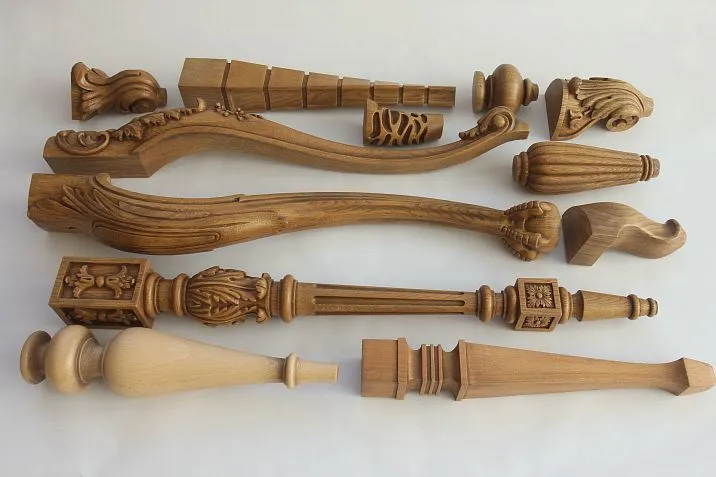
Turning allows creating elegant turned details for furniture. Balusters, table legs, and decorative appliqués give items a classic look. Modern CNC turning machines ensure high precision in reproducing complex profiles.
Wood Carving Opens Boundless Opportunities for Artistic Furniture Decoration. Relief carving creates three-dimensional compositions on cabinet and chest fronts. Mastering various carving techniques requires patience and constant practice.
Modern Decoration Methods
Inlay and marquetry allow creating complex decorative compositions from various wood species. Contrasting combinations of light and dark woods create expressive geometric patterns. Modern laser technologies simplify the creation of precise inlays.
Patination and artificial aging give new furniture a noble vintage look. Special compounds mimic natural wood aging, creating the effect of antique items. The crackle technique creates a characteristic crackle pattern on lacquer finishes.
Technologies for Joining Elements
The choice of joining method determines the strength and durability of the structure. Detachable joints allow disassembling furniture as needed for transport or repair. Conformers and eccentric clamps ensure reliability during repeated assembly and disassembly.
Adhesive Joints in Modern Furniture
Modern adhesive compositions surpass many traditional joining methods in strength. Polyurethane adhesives provide water resistance of joints, which is especially important for kitchen and bathroom furniture. The setting time of the adhesive determines the technological possibilities of assembly.
Laminating and covering require special adhesive compositions. Thermoplastic adhesives activate under heat, ensuring strong bonding of covering materials to the base. Vacuum pressing guarantees even application of adhesive.
Mechanical Fastening Systems
The development of furniture hardware has led to the emergence of high-tech fastening systems. Concealed hinges with dampers ensure smooth door closure, eliminating slams and impacts. Full-extension guides with dampers enhance the comfort of drawer use.
Quick-assembly systems speed up assembly processes. Corner clamps allow creating strong joints without pre-drilling. Cam clamps ensure even distribution of clamping force.
Finishing Materials and Technologies
Finish determines not only the appearance of furniture but also its functional properties. Lacquer coatings protect wood from moisture, mechanical damage, and ultraviolet radiation. The choice of coating type depends on usage conditions and aesthetic requirements.
Natural Finishing Materials
Oils and waxes highlight the natural beauty of wood, preserving its ability to "breathe". Tung oil creates a durable water-repellent coating while maintaining the natural surface appearance. Carnauba wax imparts a noble matte sheen to furniture.
Shellac is a traditional material for finishing high-quality furniture. French polishing creates a mirror-smooth surface with deep gloss. Shellac application technique requires high skill and patience.
Modern Synthetic Coatings
Polyurethane lacquers provide maximum resistance to mechanical and chemical effects. Two-component systems cure chemically, forming an exceptionally strong coating. UV-curable lacquers allow obtaining a coating in seconds.
Powder coatings for metal furniture components ensure uniformity and high-quality finish. Electrostatic application guarantees economical material usage and ecological safety of the process.
Quality control and testing
Systematic quality control at all production stages ensures compliance of the finished product with design specifications. Incoming material inspection identifies defects before processing, preventing defects in the final product. Measuring wood moisture is critically important to prevent deformation.
Strength and durability tests
Static tests determine the load-bearing capacity of the structure. Cyclic loading simulates repeated stresses occurring during use. Fatigue tests reveal structural weaknesses requiring reinforcement.
Climate tests evaluate dimensional stability under temperature and humidity changes. Climate chambers create extreme conditions, accelerating material aging processes. Test results allow predicting the product's service life.
Functional tests
Functional testing of movable elements includes testing hinges, guides, and transformation mechanisms. Durability tests determine the number of cycles until initial signs of wear appear. Automated test stands allow conducting long-term tests without human involvement.
Ergonomic tests involving users assess furniture usability comfort. Anthropometric measurements confirm that the product dimensions match target user group parameters.
Project Documentation
Complete technical documentation ensures reproducibility of results and allows modifications to the design. Working drawings include all necessary dimensions, tolerances, and technical requirements. Material specifications prevent errors in purchasing components.
Creating Assembly Instructions
Step-by-step instructions simplify assembly of complex structures. Isometric projections clearly show operation sequence and part positioning. Photographic support enhances instruction informativeness.
Video instructions have become a standard in modern technical documentation. Interactive elements allow users to access additional information as needed. QR codes link printed documentation to online resources.
Conclusion
Self-designed furniture opens boundless opportunities for creative self-expression and creation of unique interior pieces. Mastering construction principles, mastering modern design tools, and studying material properties allow any enthusiast to design furniture themselves, creating items that perfectly match personal needs and aesthetic preferences.
STAVROS Company supports the creative endeavors of home craftsmen, providing not only high-quality materials and tools but also expert consultations on all aspects of furniture production. Thanks to years of industry experience, STAVROS understands the needs of both professional furniture makers and hobbyists striving to create something unique by hand.
The path from idea to finished product may be long and complex, but the satisfaction from creating furniture by one's own hands more than compensates for all efforts invested. Each project becomes a step toward a new level of craftsmanship, expanding the horizons of possibility and inspiring new creative achievements. In the era of mass production, handmade furniture acquires special value, becoming not just an interior item, but a part of the craftsman's soul embodied in material.