Article Contents:
- Origins of Tradition: From Wooden Architecture to Stone Chronicles
- Symbolism and Semantics of Russian Ornament
- Regional Characteristics: Diversity in Unity
- Technological Revolution: From Craft to Industry
- Stylistic Directions of Modern Russian Stucco
- Neo-Russian Style: Returning to Origins
- Russian Modernism: Synthesis of Traditions and Innovations
- Modern Interpretation: Minimalism and Functionality
- Eclectic Compositions: Dialogue of Eras and Styles
- Functional Aspects of Modern Russian Stucco
- Color Solutions: Palette of the Russian Soul
- Modern Installation and Maintenance Technologies
- Russian Stucco in Various Interior Styles
- Development Prospects: Traditions and Innovations

What could be more beautiful than witnessing ancient traditions finding new life in the modern world? Russian Stucco It is not merely decorative art, but a living link between eras, a bridge between a great past and a dynamic present. In an era of globalization, when cultural boundaries blur and national identity often fades into the stream of standardized solutions, returning to origins becomes not a fashion trend, but a conscious need of the soul.
Can one imagine a Russian terem without carved cornices, boyar palaces without refined ornaments, or a nobleman's estate without delicate decorative elements? Every swirl, every line of Russian ornament carries deep meaning, reflecting the people's worldview, their understanding of beauty and harmony. Today, this beauty is once again gaining popularity, but in a new technological form.
Modern Russian stucco is a remarkable synthesis of traditional forms and innovative materials. Ancient motifs, developed over centuries by folk art, are now embodied in high-tech polyurethane compositions, preserving their spiritual essence while acquiring new practical qualities. This is not mere imitation of the past, but a living continuation of tradition adapted to the realities of the 21st century.
What is the special attraction of Russian ornamental forms? Why, in the era of minimalism and high-tech, are more and more people turning to the richness of national decorative heritage? The answer lies in the deep human need for beauty, which speaks a language understandable to them, in the desire to return to roots, to what makes a home not merely a dwelling, but a familiar space.


Origins of Tradition: From Wooden Architecture to Stone Chronicles
The history of Russian decorative tradition goes back to ancient times, when our ancestors transformed everyday household items into works of art. The wooden architecture of Rus amazed foreign travelers with its refinement and uniqueness. Every element of a wooden house — from the chandeliers to the window frames — was not merely a functional detail, but a bearer of sacred meaning.
Ancient masters infused their understanding of the world into ornaments. Plant motifs symbolized a connection with nature, geometric patterns reflected concepts of cosmic harmony, and images of birds and animals carried protective functions. This symbolic richness made Russian decoration not merely ornamentation, but a kind of prayer in material form.
Peter's reforms brought European architectural trends to Russia, but they did not replace national traditions, but enriched them. Polyurethane moldings Modern production often uses motifs that emerged precisely during this period of cultural synthesis — when Russian masters learned to speak the language of European baroque, without forgetting their native intonations.
The golden age of Russian architecture in the 19th century became a time of flourishing decorative art. It was precisely then that the canons of beauty, which we today perceive as classically Russian, were formed. Neoclassicism brought solemnity and monumentality, romanticism added lyricism, and eclecticism allowed free combination of various stylistic elements.
The Soviet period, despite ideological restrictions, also contributed to the development of Russian decorative tradition. The striving for monumentality, the use of national motifs in public building decoration, the development of industrial production of decorative elements — all this created the prerequisites for the modern revival of interest in Russian stucco.
Today's era is characterized by a conscious return to national roots. Russian stucco in modern execution is not a museum exhibit, but a living, evolving artistic language capable of enriching the most diverse interior solutions.




Understanding the deep meaning of Russian ornamentation opens before us a wonderful world of folk philosophy, where each decorative element carries a specific semantic load. This is not a random set of beautiful lines, but a well-structured system of symbols reflecting our ancestors' views on the cosmos.
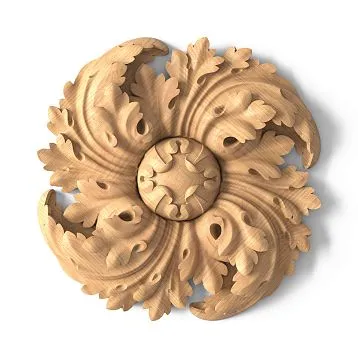
Plant motifs occupy a special place in Russian decorative tradition. Oak leaves symbolize strength and longevity, grapevines — fertility and life energy, birch branches — purity and renewal. Using these motifs in modern
allows not only to decorate interiors, but also to imbue them with deep spiritual content. decorative moldings Allows not only to decorate the interior, but also to fill it with deep spiritual content.
Geometric ornaments reflect ancient cosmogonic concepts. The circle symbolizes the sun, fullness of being, eternity. The square — earth, stability, material world. The triangle — movement, development, striving upward. The rhombus — sown field, feminine principle, fertility. These simple forms, skillfully interwoven, create complex compositions that affect the subconscious, evoking a sense of harmony and protection.
Zoomorphic motifs also carry deep semantic meaning. Birds — symbols of the soul, connections between earthly and heavenly worlds. Horses — embodiments of the sun, movement of time, life force. Bears — protectors of the home, symbols of strength and wisdom. Incorporating stylized animal images into modern Russian stucco creates a link with archetypal images of folk consciousness.
Solar signs occupy a special place in Russian ornamentation — symbols of the sun in its various forms. Rosettes, swastikas, crosses in a circle — all these elements are intended to bring solar energy, warmth, and prosperity into the home. Modern designers often use these ancient symbols, adapting them to contemporary perception.
Color symbolism also plays an important role in Russian decorative tradition. Red — symbol of life, love, beauty. White — purity, light, divine origin. Gold — sun, wealth, spiritual enlightenment. Blue — sky, water, infinity. Green — nature, growth, renewal. Understanding this symbolism helps to correctly choose color solutions for modern Russian stucco.
Our factory also produces:


Regional characteristics: diversity in unity
Russia is a vast country, and each of its regions has developed its own characteristics in applied art. These regional differences are reflected in modern interpretations of Russian stucco, creating a rich palette of stylistic solutions.
The North Russian tradition is distinguished by particular monumentality and expressiveness of forms. The harsh climate and peculiarities of local life have left their mark on the character of ornamentation. Here, large, laconic forms prevail, restrained color palettes, geometric motifs. Polyurethane trim In the North Russian style, it is characterized by strict lines and monumentality of proportions.
The Central Russian school of decorative art is characterized by a wide variety of motifs and softer forms. Here, urban culture has a stronger influence, aristocratic traditions are more noticeable. Plant ornaments are more detailed, often featuring images of flowers, fruits, birds. The color palette is richer and more varied.
The Southern Russian tradition absorbed influences of steppe cultures and reflected the peculiarities of Cossack life. Here, ornaments are more dynamic, expressive, and often use bright, contrasting colors. Motifs related to military life — sabers, shields, helmets, stylized as plant forms — are popular.
The Siberian school of decorative art formed under the influence of Russian settlers and local folk traditions. Here, the influence of Asian cultures is noticeable, manifested in a special fondness for complex interwoven ornaments, rich color palettes, and the use of motifs of local flora and fauna.
The Ural tradition is distinguished by particular care in execution, which is related to the development of local metallurgical industry and metalworking. Local artisans achieved the highest level in creating delicate, filigree compositions. These traditions are reflected in modern polyurethane moldings, distinguished by particular refinement and detail.
The Volga school absorbed influences of many peoples inhabiting this region. Here, the synthesis of various cultural traditions is more pronounced than anywhere else. Ornaments are more eclectic, often combining elements of different styles and epochs.
Get Consultation
Technological revolution: from craft to industry
Modern production of Russian stucco is undergoing a true technological revolution. What once required months of painstaking manual labor can now be accomplished with high-precision technologies in a matter of days. However, it is important that technological progress does not lead to the loss of artistic value and spiritual content.
Polyurethane as a material for creating decorative elements appeared relatively recently but has already revolutionized this field. Its unique properties — lightness, strength, water resistance, ability to precisely reproduce the most complex forms — make it an ideal material for modern interpretations of traditional Russian ornaments.
The process of creating polyurethane stucco begins with careful study of historical samples. Artists and designers analyze museum collections, archival materials, and preserved architectural monuments to accurately convey the spirit and character of traditional forms. This is not blind copying, but creative interpretation, taking into account modern needs and possibilities.
Computer modeling allows creating precise three-dimensional models of future products, calculating all details, optimizing forms for casting technology. Modern CAD systems enable creating complex compositions combining elements of different styles and epochs.
Injection molding technology ensures high precision in reproducing details and stable product quality. Each element undergoes multi-stage quality control, guaranteeing that finished products meet the highest standards.
Modern dyes and coatings allow creating any color effects — from classic white to complex multi-colored compositions with patina, gilding, or silvering effects. This opens boundless opportunities for creative self-expression of designers and clients.
Automated packaging and logistics systems ensure the preservation of products during transportation and delivery. Modern Russian stucco can be delivered to any point in the country and around the world, maintaining its quality and beauty.
Digital technologies also open new opportunities for product customization. Clients can participate in the creation process, making design adjustments, choosing color solutions, and combining different elements.
Stylistic directions of modern Russian stucco
Modern Russian stucco is not limited to reproducing historical samples. It develops, absorbing new influences, adapting to modern needs, creating new stylistic directions that combine fidelity to tradition with an innovative approach.
Neo-Russian style: returning to the roots
Neo-Russian style in modern stucco represents a conscious return to pre-revolutionary traditions of Russian decorative art. This is not mechanical copying, but a creative reinterpretation of classical forms taking into account modern technological capabilities and aesthetic needs.
Characteristic features of the neo-Russian style include rich ornamentation, complex compositions, and the use of traditional Russian motifs. Popular are depictions of double-headed eagles, imperial crowns, oak and laurel wreaths, military armor. The color palette leans toward solemnity — gold, purple, deep blue, emerald green.
The neo-Russian style is especially popular in the design of representative interiors — offices of leaders, meeting rooms, halls for ceremonial events. Here, Russian stucco serves not only a decorative but also a representative function, emphasizing ties to national traditions and historical heritage.
Russian Modernism: synthesis of traditions and innovations
Russian Modernism in modern stucco represents a unique phenomenon — the synthesis of traditional Russian motifs with the aesthetics of the modern style. Here, ancient ornaments acquire new plasticity, fluidity, and organic qualities.
Characteristic features of Russian Modernism include smooth, curved lines, asymmetrical compositions, stylized plant motifs. Traditional Russian flowers — daisies, cornflowers, poppies — transform into refined decorative elements, retaining their recognizability while acquiring new artistic expressiveness.
The color palette of Russian Modernism is more restrained than that of the neo-Russian style. Preference is given to natural tones — gray-green, ochre, terracotta. Effects of patination are popular, creating an impression of noble antiquity.
Modern interpretation: minimalism and functionality
Modern interpretation of Russian ornamental traditions strives for conciseness and functionality. Here, complex historical compositions are simplified, retaining only the most characteristic, recognizable elements.
This approach is especially relevant for modern interiors, where clean lines, simple forms, and functionality of each element are important. Russian stucco in modern interpretation becomes a delicate accent that does not overload space but imparts a national character.
Geometrized versions of traditional ornaments are popular, where complex plant motifs are transformed into simple geometric shapes, while retaining their symbolic load.
Eclectic compositions: dialogue of epochs and styles
Modern Russian stucco often represents eclectic compositions, where elements from different epochs and styles are combined in new, unexpected combinations. This reflects the pluralistic aesthetic outlook characteristic of our time.
Byzantine motifs may coexist with Baroque scrolls, ancient Russian ornaments — with elements of Classicism, folk motifs — with aristocratic symbols. Such an approach allows creating unique, irreplaceable compositions reflecting the complexity and multi-layered nature of Russian culture.
Eclectic compositions are especially popular in private interiors, where owners strive to create a unique space reflecting their individuality and cultural preferences.
Functional aspects of modern Russian stucco
Modern Russian stucco is not only beauty, but also functionality. Decorative elements can perform multiple practical tasks while remaining faithful to the aesthetic principles of national tradition.
Spatial zoning is one of the most important functions of modern stucco. Using decorative elements, one can visually divide large rooms into functional zones, create intimate corners in spacious halls, and emphasize architectural features of the interior.
Russian ornamental motifs are especially effective in creating a cozy, home-like atmosphere. Traditional symbols of home, family, and prosperity, embodied in stucco decoration, subconsciously affect the person, creating a sense of security and comfort.
Correction of architectural shortcomings is another important function of decorative stucco. Using properly placed elements, one can visually alter the proportions of a room, conceal unsatisfactory structural solutions, create an illusion of greater space, or, conversely, make a large room more cozy.
The acoustic function of stucco should not be underestimated. Reliefs contribute to better sound absorption, improving room acoustics. This is especially important in large halls, where sound quality is of fundamental importance.
Integration of technical systems into decorative elements is becoming an increasingly relevant trend. Modern stucco can conceal lighting, ventilation, air conditioning systems, and elements of a "smart home" system. This allows creating high-tech interiors while preserving the aesthetics of traditional Russian style.
The psychological impact of Russian ornamentation on a person is linked to archetypal images of the collective unconscious. Traditional symbols, passed down from generation to generation, affect deep layers of the psyche, creating a sense of connection with cultural roots.
Color solutions: the palette of the Russian soul
The color palette of Russian stucco reflects the characteristics of national perception of the world, climatic conditions, cultural traditions. Understanding the symbolism of color in Russian culture helps create harmonious and psychologically comfortable interiors.
White color in Russian tradition symbolizes purity, sanctity, divine origin. White stucco creates an impression of light, spaciousness, spiritual elevation. It is especially effective when combined with bright color accents, emphasizing their tone and creating a harmonious contrast.
Gold color — symbol of the sun, wealth, spiritual enlightenment — was traditionally used in church art and palace interiors. Modern gilded stucco retains this symbolic load, creating an atmosphere of solemnity and nobility.
Red color in Russian culture — is the color of life, love, beauty. Red stucco is used to create accents, emphasizing the most important elements of a composition. Various shades of red — from delicate pink to deep purple — allow creating diverse emotional effects.
Blue color symbolizes the sky, water, infinity. Blue stucco creates an impression of coolness, tranquility, connection with natural elements. It is especially popular in interiors styled after peasant life or 19th-century urban mansions.
Green color symbolizes nature, growth, renewal — widely used in plant ornaments. Green stucco creates a sense of freshness, naturalness, and connection with nature. Various shades of green allow imitating the natural aging of bronze and copper.
Silver color symbolizes the moon, feminine principle, wisdom. Silver stucco creates a more restrained, elegant atmosphere compared to gold. It is especially popular in modern interpretations of classical styles.
Multicolored compositions allow creating rich, saturated interiors characteristic of Russian tradition. Combining various colors in one composition requires refined artistic sensitivity and deep understanding of coloristic principles.
Patination — a technique of artificial aging — allows creating an effect of noble antiquity, giving new items the appearance of family heirlooms. Different types of patina create various visual effects and emotional moods.
Modern mounting and maintenance technologies
Mounting modern Russian stucco requires professional skills and understanding of material properties. Proper installation is the key to durability and beauty of decorative elements.
Surface preparation is a critically important stage of mounting. The surface must be clean, dry, and even. Any defects in the base may become visible after installing stucco and spoil the overall impression.
The choice of adhesive depends on the base material, operating conditions, size, and weight of decorative elements. Modern polyurethane adhesives provide strong bonding and long-lasting attachment.
Marking must be done with high precision, especially when creating complex compositions. Minor deviations may disrupt the harmony of the entire composition.
Joining elements requires special attention. Joints should be practically invisible, achieved through precise fitting of elements and quality sealing of connections.
Final finishing includes sealing joints, sanding, priming, and painting. The quality of final finishing largely determines the final result.
Maintenance of polyurethane stucco requires no special effort. Regular dry cleaning and periodic wet cleaning with mild cleaning agents are sufficient to maintain decor in ideal condition.
Restoration of damaged elements is possible without dismantling the entire composition. Local damage is repaired with special compounds, after which the surface is sanded and painted.
Modern protective coatings significantly simplify stucco maintenance. Special varnishes and paints create a protective layer that not only protects against dirt but also facilitates cleaning.
Russian stucco in various interior styles
The universality of Russian ornamental tradition allows seamlessly integrating its elements into various interior styles. The key is correctly interpreting traditional motifs in accordance with the overall stylistic concept.
In classical interiors, Russian stucco is used in full accordance with historical canons. Here, complex, richly ornamented compositions, gilding, and multicolored solutions are appropriate. Such interiors create an atmosphere of palace grandeur and pomp.
In modern interiors, Russian motifs are used more delicately. Preference is given to simple, minimalist forms, monochromatic solutions, and functional elements. This approach allows introducing national character without disrupting the overall stylistic integrity.
In ethnic interiors, Russian stucco becomes the basis of the stylistic concept. Here, one can use the most diverse elements of traditional ornamentation, combine different regional traditions, and create rich, multi-layered compositions.
In eclectic interiors, Russian motifs freely combine with elements of other cultures and styles. This approach allows creating unique, irreplaceable spaces reflecting the cosmopolitan nature of modern culture.
In minimalist interiors, Russian stucco is used as a subtle accent, adding individuality and warmth to the space. Here, special delicacy is required in selecting elements and their placement.
Development prospects: traditions and innovations
The future of Russian stucco lies in harmonious combination of fidelity to traditions with innovative approaches to materials and technologies. Development of digital technologies opens new opportunities for creating and reproducing complex ornamental compositions.
3D printing allows creating elements of complexity inaccessible to traditional manufacturing methods. This opens the way to realizing the most daring design ideas while preserving connection with traditional forms.
Interactive technologies can make stucco not only beautiful but also functional. Built-in sensors, lighting systems, even projection systems can transform traditional decor into elements of a modern 'smart home'.
Ecological requirements stimulate development of new, safer materials and production technologies. Biodegradable polymers, waste recycling, use of renewable energy sources — all this becomes part of modern production of decorative elements.
Cultural globalization creates new opportunities for spreading Russian decorative tradition. Russian stucco may find admirers far beyond Russia, enriching world culture with unique artistic forms.
Personalization and individualization are becoming increasingly important trends. Clients want unique, irreplaceable interiors, and Russian stucco, with its rich traditions and modern technological capabilities, can meet these needs.
Educational programs for studying traditional crafts contribute to preserving and developing national artistic traditions. Young masters studying ancient techniques can contribute to the development of modern Russian stucco.
In an era of globalization and cultural homogenization, things that connect us to our national roots, ancestral traditions, and the unique essence of national character become especially valuable. Modern Russian stucco is not nostalgia for the past, but a living tradition capable of enriching contemporary life with beauty and meaning.
Each element of Russian ornament carries a particle of folk soul, reflecting concepts of beauty and harmony developed over centuries. Embodied in modern materials using advanced technologies, these traditional forms acquire new life, becoming part of contemporary culture without losing their spiritual essence.
When choosing Russian stucco to decorate your home, we are not merely adorning the interior — we are creating a space filled with cultural meanings, connecting ourselves to a great tradition that stretches from ancient times into the future. This is the choice of those who understand the value of beauty rooted in national culture, who strive to create a home that is not merely a place of habitation, but a space of culture and spirituality.
For many years, the company STAVROS has been a guardian and carrier of the best traditions of Russian decorative art. By combining a deep understanding of historical heritage with modern technological capabilities, STAVROS creates works that appropriately represent Russian culture in the contemporary world. Each item is the result of meticulous craftsmanship by artisans who see their mission not only in creating beautiful objects, but also in preserving and developing national artistic traditions. Choosing STAVROS products makes you part of this great tradition, participating in preserving cultural heritage for future generations.