












































































Article Contents:
- How the Art of Decoration Evolved from Carving to Moldings
- Oldest Forms of Carving
- The Emergence of Molded Art
- Renaissance - Synthesis of Traditions
- Wood Carving - the Oldest Craft, Meaning, Philosophy
- Philosophy of Material
- Techniques and Methods of Carving
- Symbolism of Carved Decor
- Polyurethane Moldings - a New Embodiment of Traditional Forms
- Technological advantages
- Reproduction of Historical Styles
- Painting and finishing
- Common Features and Differences of Materials
- Similarities in Artistic Techniques
- Differences in Materials
- Application in Interiors Where Balance of Texture and Lightness is Important
- Zoning by Materials
- Stylistic unity
- Color solutions
- Tips for Combining: Wood + Polyurethane
- Defining priorities
- Technical aspects
- Compositional solutions
- Conclusion: Continuity and Aesthetics of Form

Decorative art over millennia served as a means to transform utilitarian objects and architectural forms into aesthetic objects carrying cultural codes, philosophical meanings, artistic ideals of the era. Two great traditions -Wood CarvingandRelief Decoration- followed parallel paths of development, creating unique systems of ornamentation, technologies, artistic techniques. Wood carving embodied the possibilities of wood as a warm, living material, malleable to the craftsman's chisel, preserving texture, aroma, and the energy of nature. Moldings realized the plasticity of plaster, clay, and stucco, allowing the creation of flowing forms, complex transitions, and delicate modeling of volumes.
The history of decorative art demonstrates how different materials and techniques responded to the challenges of time, architectural styles, social demands, and technological possibilities. Wood carving flourished in regions with abundant forest resources - in Rus', Scandinavia, the Alps, where wood was the primary building material. Moldings dominated in the Mediterranean and the Near East, where stone and clay defined the character of architecture. Each technique created a unique artistic language, system of images, technological methods, and aesthetic criteria.
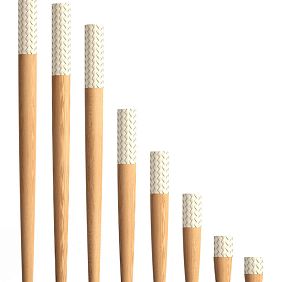
Contemporary times have overcome the traditional opposition between materials and techniques.Artistic Woodworkingpreserves the traditions of centuries-old craftsmanship, embodies a connection with nature, and has handcrafted value.Polyurethane Decoroffers a new embodiment of classical forms - precise reproduction of historical samples, practicality, accessibility. The choice between materials ceased to be an ideological confrontation and became a pragmatic solution, taking into account the conditions of use, budget, and the stylistic context of the project.
The dialogue of eras is manifested in the possibility of harmonious coexistence of traditional and innovative materials within a single space. Carved wooden elements coexist with polyurethane moldings, creating a richness of textures, a play of contrasts, and stylistic complexity. Such a combination optimizes the balance of aesthetics and practicality, tradition and modernity, handcrafted value and technological efficiency. A properly constructed dialogue of materials transforms the interior into a multi-layered composition, where each element occupies its place and fulfills its role.


How the Art of Decoration Evolved from Carving to Moldings
The history of decorative art is an evolution from the simplest geometric patterns of ancient cultures to the most complex multi-figure compositions of advanced civilizations. The need to decorate surrounding objects, dwellings, and religious structures is common to all peoples at all stages of development. Decoration performed magical functions - it protected against evil forces and attracted prosperity. Gradually, the magical content weakened, and the decorative role became paramount.




Oldest Forms of Carving
Wood carving originated with the advent of metal tools, enabling the processing of wood not only by chopping and shaping but also by carving patterns. Neolithic cultures adorned wooden utensils with the simplest geometric ornaments - parallel lines, zigzags, rhombuses, circles. Each element carried symbolic meaning - zigzags represented water, rhombuses fields, circles the sun. The ornament not only decorated the object but imbued it with magical power, linking it to cosmic rhythms.
Ancient civilizations of Egypt, Mesopotamia, and China developed advanced traditions of wood carving. Egyptian furniture was adorned with carved legs shaped like animal paws, armrests with lion heads, and backrests with vegetal ornaments. Chinese carving achieved virtuosity in creating intricate multi-layered compositions - delicate screens, panels, and furniture transformed into incredibly complex wooden lace. The Japanese perfected the technique of low-relief carving, creating images of nature with poetic delicacy.
Medieval Europe developed the art of church carving. Romanesque churches were adorned with carved capitals featuring fantastic animals and vegetal motifs. Gothic architecture created virtuoso wood carving—lacy spires, pointed arches, interlaced tracery covered altars, choirs, and pulpits. Carvers achieved almost jewel-like detail, carving scenes from Scripture with numerous figures, architectural elements, and vegetal ornamentation.
Russian wooden carving created a unique tradition of house carving. Wooden houses were adorned with carved decoration carrying deep symbolism. Solar signs on the roof ridge, plant ornaments on the eaves, complex compositions on window casings transformed the wooden structure into a cosmological model. Carving protected the house, attracted prosperity, demonstrated the owner's skill and wealth.
Our factory also produces:


The emergence of stucco art
Stucco originated in ancient civilizations that used clay, plaster, and lime as building and decorative materials. Egyptian temples and tombs were adorned with plaster stucco — stylized lotus, papyrus, solar discs, and hieroglyphic inscriptions. The stucco technique allowed creating reliefs of any complexity — from flat outline images to high relief, almost sculptural.
Ancient Greece created a system of architectural orders, where stucco played a key role. Column capitals — Doric, Ionic, Corinthian — were carved from plaster or cut from stone, embodying mathematically precise proportions. Friezes were covered with relief images — metopes and triglyphs of the Doric order, continuous reliefs of the Ionic. Cornices were profiled with complex fragments — volutes, gussets, moldings — creating play of light and shadow.
Rome developed stucco techniques to industrial scale. Roman architects created recipes for plaster of different compositions for various purposes — rough base layers, fine finishing coats, decorative stucco. The stucco technique — multi-layer polished plaster with marble chips — created surfaces imitating marble. Stucco ornaments were mass-produced using molds, allowing to decorate vast areas in short time.
Byzantium preserved ancient stucco traditions, enriching them with Christian symbolism. Dome interiors of churches were covered with stucco decoration — interlacing patterns, rosettes, plant motifs. Mosaics were framed with complex-profiled stucco frames. Byzantine masters passed stucco traditions to medieval Europe, where it evolved into Gothic forms — pointed arches with ribs, lace-like roses, crockets.
Get Consultation
Renaissance — synthesis of traditions
The Renaissance combined traditions of wooden carving and stucco into a unified decorative system. Italian palazzi were adorned with stucco on facades — cornices, pilasters, window casings created an order structure. Interiors were decorated with carved wooden panels, coffered ceilings, furniture with inlays. Stucco and carving did not compete, but complemented each other, each in its own application area.
Baroque reached its peak in using both techniques. Ornate stucco covered walls and ceilings — volutes, garlands, putti, cartouches created theatrical decoration. Carved gilded furniture with the same motifs continued the interior decorative system. Unity of style, ornamental motifs, compositional principles created wholeness, where differences in materials and techniques became a source of rich textures.
Neoclassicism returned restraint while preserving execution quality. Strict stucco cornices, rosettes, friezes with meanders and ovals structured interiors. Carved furniture with classical motifs harmonized with architectural decoration. Combination of stucco and carving reached balance, where each technique was used for its purpose — stucco for architectural elements, carving for furniture and panels.
Wood carving — the oldest craft, meaning, philosophy
Wood CarvingEmbodies the oldest traditions of artistic material processing, where the master’s chisel extracts hidden beauty, form, meaning from an unformed blank. The philosophy of carving is based on dialogue between man and nature, where the carver does not force the material, but follows its structure, revealing natural beauty of texture, using natural properties of different woods.
Philosophy of material
Wood is a living material, preserving the memory of the tree from which the element was carved. Annual rings tell the story of life — dry and wet years, damage and healing, slow growth toward the sun. The carver reads this story, takes it into account when creating the image. Knots, grain irregularities, uneven coloring are not defects, but individuality, making each piece unique. Carving reveals this individuality, turning features into artistic accents.
Different woods have different characters, temperaments, require different approaches. Soft, pliable linden allows carving delicate details, forgives mistakes, suits for learning. Hard, stubborn oak requires strength, sharp tools, precision — each blow is final, mistakes cannot be corrected. Capricious walnut with wavy texture sometimes yields to the chisel, sometimes cracks unpredictably — requires intuitive feeling for the material. The carver adapts to the wood’s character, engages in dialogue, finds compromise.
Living wood texture creates tactile value of carved items. Desire to touch, to run a hand over a smooth polished surface, to feel warmth of the solid piece is natural. Tactile sensation complements visual perception, creating multisensory experience. Polished wood carving is pleasant to the touch — smoothness of protrusions contrasts with roughness of recesses, creating richness of tactile sensations. Modern synthetic materials cannot reproduce this living tactility.
Carving techniques and methods
Geometric carving — the oldest technique, creating ornaments from the simplest geometric elements. Triangles, rhombuses, circles, straight and broken lines combine into infinite variety of patterns. Technique is simple — only two chisels, a gouge and a scraper are needed, but possibilities of ornamentation are limitless. Geometric carving adorned household items, furniture, architectural details of Slavic, Scandinavian, Balkan peoples. Each region created unique compositions, passed down from generation to generation.
Contour carving creates images by cutting contour lines of different depths and widths. Technique is close to drawing — the chisel cuts lines forming the image. Contour carving adorned spinning wheels, tableware, furniture, creating graphic images of plants, animals, genre scenes. Masters achieved expressiveness with minimal carving depth — 2-3 millimeters suffice to create readable images.
Flat relief carving forms images on a plane by removing background around ornamental elements. Removal depth of 5-15 millimeters creates relief protruding above the background. Two types are distinguished — relief with rounded contours, where edges of elements are rounded, creating soft transitions, and relief with matched background, where background is removed to the same depth, creating clear silhouette. Flat relief carving adorned furniture, panels, window casings, creating rich decoration with relatively simple execution.
Deep relief carving creates high relief with detailed modeling of volumes. Carving depth of 20-40 millimeters allows modeling forms almost sculpturally. Acanthus leaves with curled tips, veins, serrated edges are carved with botanical precision. Human and animal figures receive anatomical detailing. Deep relief carving creates dramatic play of light and shadow, especially effective under side lighting.
Openwork carving completely removes background, creating a through ornament. This is the most complex and effective technique, requiring virtuoso skill. Elements must be strong despite visual lightness, transoms between openings thin but not fragile. Openwork carving creates wooden lace, especially expressive against contrasting backgrounds. Technique adorned window casings, balustrade railings, screens, chair backs.
Symbolism of carved decoration
Carved decoration traditionally carried deep symbolism, going beyond purely decorative function. Solar signs — circles, rosettes, swastikas — symbolized the sun, source of life and warmth, protected against darkness and cold. Placement of solar signs on roof ridges, above entrances, on window casings created magical protection for the dwelling, attracting prosperity.
Plant ornaments embodied the idea of fertility, life force, connection with nature. Interwoven branches, stylized flowers, leaves created an image of the Tree of Life — the World Tree, connecting the underworld with roots, the earthly realm with trunk, the heavenly realm with crown. Carved plant ornaments on houses, furniture, household items were intended to attract fertility, abundance, growth of prosperity.
Zoomorphic motifs used stylized images of animals — horses, birds, lions, griffins. Horse symbolized the sun, carried across the sky, was a conductor between worlds. Bird meant soul, connection with ancestors, messenger from another world. Lion embodied strength, royal power, protection. Griffin connected earthly and heavenly nature, guarded treasures. Carved beasts on houses performed apotropaic function — repelled evil forces.
Polyurethane stucco decoration — new embodiment of traditional forms
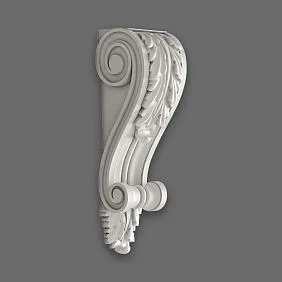
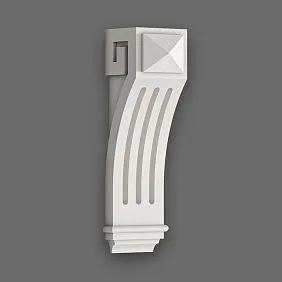
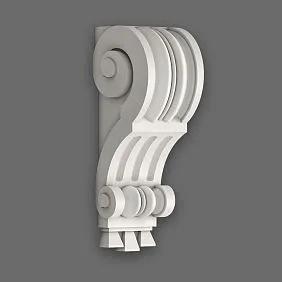
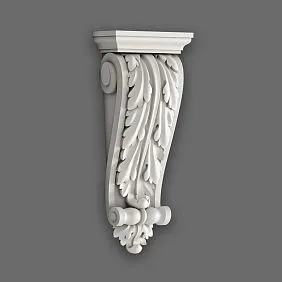
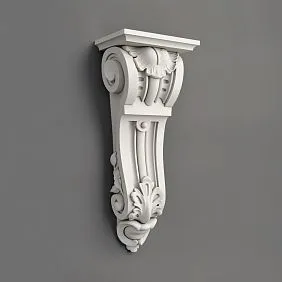
ModernRelief DecorationPolyurethane revolutionized perceptions of possibilities for decorating interiors and facades. Precision casting technology allows reproducing any historical samples with museum accuracy, making accessible forms previously requiring labor of highly skilled stuccoers and carvers. Polyurethane combines aesthetics of classical stucco with practicality of modern material.
Technological Advantages
Ideal repeatability of elements ensures mathematical precision of forms, unattainable by handwork. All cornices, rosettes, capitals in a batch are absolutely identical down to the micron. For symmetrical compositions this is critical — mirror elements have absolute symmetry, radii of circles are ideal, straight lines have no deviations. Such precision corresponds to classical ideals of harmony, based on mathematical proportions.
Phenomenal lightness of polyurethanedecorative moldingRadically simplifies installation. Density of 200-250 kilograms per cubic meter is 4-5 times lower than plaster, 10-12 times lower than plaster stucco with metal frame. A 2-meter cornice weighs 2-3 kilograms versus 20-30 kilograms of plaster. One person installs decoration on the entire object without helpers, lifting equipment, or structural reinforcement.
Absolute moisture resistance enables use in any conditions. Water absorption coefficient less than 1 percent excludes swelling, deformation, mold formation. Polyurethane molding lasts for decades on facades in humid climates, in high-humidity rooms — bathrooms, pools, saunas, kitchens. Gypsum molding deteriorates within years under such conditions, requiring regular repair and replacement.
Impact resistance prevents damage during installation and use. Elastic polyurethane slightly deforms upon impact, absorbing energy, then restores its shape. Accidental impacts leave no chips or cracks. Brittle gypsum flakes off from the slightest impact; wooden carving is also vulnerable to mechanical damage. Polyurethane forgives carelessness and withstands intensive use.
Reproduction of historical styles
Ancient motifs are reproduced with archaeological accuracy. Greek meanders, palmettes, Ionic and Corinthian acanthus leaves are recreated based on museum samples and architectural monument measurements. Each vein of a leaf, each scroll of a volute corresponds to the original. After coloring polyurethane capitals are indistinguishable from stone prototypes when painted in marble, limestone, or terracotta hues.
Baroque opulence requires complex multi-figure compositions — putti, garlands with flowers and fruits, cartouches, mascarons. Casting technology reproduces the finest details — folds of drapery, leaf veins, flower petals, facial features. A relief depth of 40–60 millimeters creates dramatic chiaroscuro, characteristic of Baroque. Gold leafing of polyurethane elements imitates gilded gypsum molding in palace interiors.
Neoclassical rigor is embodied in clear cornice profiles, symmetrical rosettes, friezes with ovals and beads. Mathematical precision of proportions, embedded in 3D models, is reproduced in each cast element. Neoclassical molding requires absolute symmetry — even minor deviations destroy harmony. Polyurethane ensures this symmetry, unattainable with hand-carving.
Modern organic forms with flowing lines, asymmetrical compositions, and plant motifs are also available for casting. Curving iris stems, flowing female profile hair, wavy transitions are reproduced with original accuracy. Modernism valued uniqueness of each element — polyurethane allows mass-producing this uniqueness, making original forms accessible to the masses.
Painting and finishing
Imitation of various materials is achieved through special coloring techniques. Gypsum imitation — matte white paint, light gray patina in relief recesses. Marble imitation — base gray, cream, or pink tones with vein detailing using fine brushes and semi-transparent glazes. Sandstone imitation — ochre tones with textured sponge painting. After quality finishing, polyurethane is visually indistinguishable from the imitated material.
Patina creates an antique effect. Base light colors — cream, light gray, beige — are covered with dark patina — brown, green, black. Patina wears off from raised areas, remaining in recesses. It creates an illusion of centuries-old grime embedded in material pores, oxidation, and natural aging. Patinated molding appears as if preserved from an old building, adding historic character to new constructions.
Imitative gilding is performed using gold paints of various shades — from pale lemon to rich crimson gold. Gold is applied to the entire molding or only to raised elements for contrast against the base color. Patinaing gilded molding with brown patina creates an effect of aged, darkened gold. Gilded polyurethane molding creates palace interior luxury at an affordable price.
Common features and differences of materials
Wood carving and molding, despite differing materials and technologies, share common artistic principles — relief, ornamentation, stylistic definiteness. Both techniques transform flat surfaces into relief compositions, where play of light and shadow creates visual enrichment. Both use similar ornamental motifs — plant, geometric, zoomorphic. Both embody styles of epochs — classicism, baroque, modern.
Similarity of artistic techniques
Relief is a common property of carving and molding, creating volume, materiality, and play of light and shadow. Relief depth varies from several millimeters for low relief to dozens of millimeters for high relief. Principles of volume modeling are identical — smooth transitions of forms, gradual increase of relief from background to raised parts, detailing of elements. Carvers and molders solve similar artistic tasks using different means.
Ornamentation unites both techniques as methods of creating decorative patterns covering surfaces. Plant motifs — acanthus leaves, laurel wreaths, garlands with flowers — are equally used in carving and molding. Geometric ornaments — meanders, braids, rosettes — are universal for both techniques. Material difference does not affect ornament character — identical motifs are reproduced in wood and gypsum.
Stylistic definiteness is characteristic of both techniques. Classicism established clear decorative canons — strict symmetrical compositions with ancient motifs, mathematically precise proportions. These canons are equally observed in wooden carving and gypsum molding of neoclassical interiors. Baroque demands opulence — it is achieved both by carving and molding. Style dictates the character of decoration regardless of the material used.
Differences of materials
Texture is the main difference between wood and polyurethane. Wood has a living texture with growth rings, grain direction, natural coloring of various species. This texture adds additional decorative value even with minimal carving. Polyurethane has a uniform smooth surface without texture. Texture difference is a source of richness when combining materials — contrast of living wood and smooth polymer creates visual interest.
Tactile qualities differ significantly. Wood feels warm to the touch, polyurethane is neutral. Wood has slight fiber roughness, polyurethane is smooth. Wood emits aroma — especially coniferous and exotic species. Polyurethane has no odor. For elements accessible to tactile contact, wood’s advantage is obvious. For inaccessible ones — ceiling cornices, ceiling friezes — tactility is irrelevant.
Manufacturing technology differs fundamentally. Carving is subtractive — excess material is removed, form is extracted from the block. Casting is additive — form is created by filling voids. Carving is unique — each item is individual, bearing the mark of the craftsman’s hand. Casting reproduces — all elements are identical. For mass production, casting’s advantage is obvious. For exclusive projects, carving’s uniqueness is valuable.
Operational properties differ significantly. Wood requires protection from moisture, insects, mold — regular treatment with protective compounds. Polyurethane requires no maintenance, is moisture-resistant, and biologically inert. For facades and humid rooms, polyurethane’s advantage is obvious. For dry heated interiors, wood serves for centuries without problems. Material choice is determined by operating conditions.
Application in interiors where balance of texture and lightness is important
Harmonious combination of carved wood and polyurethane molding creates richness of textures, visual interest, and stylistic complexity of interiors. Balance of warmth of wood and technological efficiency of polymer, handmade uniqueness of carving and perfect geometry of molding, tactile appeal of solid material and practicality of polyurethane — designer’s task in creating a cohesive space.
Zoning by materials
Vertical zoning divides space by height. Lower third of the room — wall panels, baseboards, door casings — decorated with carved wood. This zone is accessible for close inspection and tactile contact, where the value of natural wood is maximized. Middle third — window and door casings, furniture facades — combination of wood and polyurethane depending on budget. Upper third — ceiling cornices, friezes, rosettes — polyurethane molding, where lightness is critical for installation.
Functional zoning considers room purposes. Grand zones — living rooms, halls, offices — receive rich wooden decoration emphasizing status. Private zones — bedrooms, children’s rooms — more restrained decoration with material combinations. Technical zones — kitchens, bathrooms, laundry rooms — exclusively polyurethane, moisture-resistant. Such zoning optimizes budget, ensures longevity, and creates spatial hierarchy.
Accent use of wood against polyurethane creates visual focal points attracting attention. Carved wooden fireplace mantel against walls with polyurethane panels. Wooden door with rich carving framed by polyurethane portal. Carved wooden ceiling against polyurethane cornices. Wood as precious accent, polyurethane as neutral background — strategy for creating expressive interiors within a reasonable budget.
Stylistic unity
Classic interiors require all decorative elements to conform to a single style. If English neoclassicism is chosen, carved wooden wall panels with characteristic profiles, polyurethane cornices must reproduce the same profiles. Furniture with carved appliqués, molded rosettes on ceiling, carved door casings — all elements speak the same stylistic language. Unity of ornamental motifs, proportions, and detail character is critical.
Baroque interiors allow greater freedom in combining materials due to overall opulence of decoration. Carved gilded wooden panels, polyurethane molding with gilding, carved furniture create abundance of decoration, where material differences become a source of textural richness. Main thing — maintaining overall opulence, dynamism, theatricality, characteristic of Baroque.
Modern eclectic interiors consciously play with material and era contrasts. Classic polyurethane molding on ceiling coexists with modern minimalist furniture. Carved wooden panels in modern style combine with geometric polyurethane moldings. Contrasts create visual interest, dynamism, individuality — provided professional sense of proportion.
Color Solutions
Monochromatic palette - all decorative elements are painted in one color, differing only in relief and texture. White on white - a classic solution where wooden carving and polyurethane molding unite in a single color. Material differences are expressed in texture - smooth polyurethane and textured wood create a subtle contrast while maintaining overall unity. Gray on gray, beige on beige - monochromatic palettes for modern interiors.
Contrasting solutions highlight material differences. Dark natural wood panels contrast with white polyurethane molding. Gilded wooden carving stands out against cream-colored polyurethane cornices. Contrasts create visual separation of elements, structure space, and add dynamism. It is important to maintain balance - excessive contrasts create clutter and disrupt cohesion.
Patina unifies different materials through a common aging effect. Both wooden and polyurethane elements are patinated in the same way - light base with dark accents in recesses. Patina creates an illusion of antiquity and historical authenticity of the interior. Material differences are neutralized by the common finish, creating the impression that all elements were created at the same time.
Combination tips: wood + polyurethane
Professional material combination requires understanding of their properties, limitations, and expressive potential. Thoughtful pairing creates an optimal balance of aesthetics, practicality, budget, and durability.
Priority definition
Budget determines the material ratio. With limited funds, wood is used selectively for key accents - entrance door, fireplace mantel, central furniture elements. Polyurethane covers other decorative needs - cornices, moldings, rosettes, furniture appliqués. As budget increases, wood share grows, but polyurethane remains for technically complex, inaccessible, or moisture-prone elements.
Interior style dictates material priorities. Historical styles - Russian classicism, English classicism, French rococo - traditionally require abundant carved wood. Material economy is inappropriate here, otherwise authenticity is lost. Modern styles - minimalism, high-tech, Scandinavian - use wood sparingly as an accent against neutral materials. Here, polyurethane dominates, wood sets accents.
Usage conditions determine material selection imperatively. Moisture-prone zones - kitchens, bathrooms - exclusively polyurethane, even if budget allows wood. Facades in regions with harsh climates and heavy rainfall - polyurethane ensures longevity. Dry, heated interiors - choice depends on budget and aesthetics.
Technical aspects
Mounting dissimilar materials requires different approaches. Wooden elements are mounted with carpentry glue reinforced by additional fastening with screws or pins. Polyurethane elements - with specialized polymer glue or liquid nails; lightness allows avoiding mechanical fastening. When combining, ensure each connection type is secured with appropriate means.
Joints between wood and polyurethane are masked with decorative elements. Transition from wooden wall panels to polyurethane cornice under the ceiling is covered with molding, which can be either wooden or polyurethane. Transition from carved wooden furniture to polyurethane wall panels is visually separated by baseboards and casings. Transition logic must be architecturally justified.
Coordinated painting is critical for visual unity. If the goal is to unify materials with one color, painting is done with the same paints and technique. If the goal is to emphasize differences, wood remains natural with transparent lacquer, while polyurethane is painted contrastingly. Intermediate option - patina both materials with the same technique to create an effect of shared origin time.
Compositional Solutions
Symmetry requires mirrored element correspondence. If one wall has a carved wooden panel, the opposite wall must have an identical one. Polyurethane rosettes on the ceiling are placed symmetrically relative to room axes. Wooden and polyurethane elements can alternate rhythmically - a central wooden rosette flanked by polyurethane garlands. Rhythm, symmetry, balance - foundations of classical composition.
Element hierarchy determines material distribution. Main compositional centers - fireplaces, portals, central panels - are executed in wood as a more valuable material. Secondary elements - frames, fillers, background details - in polyurethane. Such hierarchy creates visual logic, where the eye naturally highlights the main element - carved wood - against secondary - polyurethane decoration.
Element scale corresponds to room dimensions. For high ceilings 3.5-4.5 meters, large wooden rosettes with 800-1000 mm diameter and massive polyurethane cornices 200-300 mm wide. For standard rooms 2.7-3 meters high, more delicate elements - carved appliqués 150-250 mm, cornices 100-150 mm. Decorative proportionality to space is critical for harmony.
Conclusion: continuity and aesthetics of form
Dialogue of epochs in decorative arts demonstrates how ancient traditions find new life through modern technologies.Wood CarvingPreserves continuity of centuries-old craftsmanship, embodies connection with nature, handmade value. Each carved item is unique, carries the energy of material and artisan, creates tactile and visual appeal of living wood.
Artistic WoodworkingContinues traditions passed down from generation to generation for millennia. Modern masters use their ancestors' tools, follow time-tested techniques, create ornaments bearing symbolic content. Wood carving - living art resisting standardization, preserving individuality in the age of mass production.
Polyurethane DecorDemocratizes beauty, makes classical forms accessible to a broad audience. Precise reproduction of historical samples, practicality, moisture resistance, easy installation at affordable price. Polyurethane does not oppose traditions, but continues them in a new material, preserving forms while changing production technology.
Decorative stuccoPolyurethane recreates the aesthetics of classical plaster molding, overcoming its shortcomings - fragility, heaviness, labor-intensive installation. After quality painting, polyurethane visually indistinguishable from plaster, possessing multiple advantages in operational characteristics. This is not imitation, but a new embodiment of eternal forms.
Continuity is manifested in preserving aesthetic principles despite changes in materials and technologies. Antique proportions embedded in the order system are reproduced in carved wood and polyurethane molding. Baroque opulence is achieved by both techniques. Classicist rigor is embodied in any material. Style defines form, material - the method of embodiment.
STAVROS Company offers a full range of decorative elements in natural wood and polyurethane. Hand-carved items based on historical Russian domestic carving and European styles. European-quality polyurethane systems reproducing classical molding. Professional consultations will help create a harmonious composition combining materials, styles, and epochs.
Create interiors where traditions meet innovations, where carved wood and polyurethane molding create a dialogue of textures, where each material occupies its place, plays its role. Transform spaces into artworks, fill them with symbolic content, embody dreams of beauty. Choose materials consciously - wood for tactile value, polyurethane for practicality. Choose STAVROS - choose continuity of traditions, aesthetics of form, quality of embodiment across centuries.


