Article Contents:
- Decorative MDF rails: a revolution in the world of finishing materials
- Philosophy of modern design
- Technological superiority of MDF
- Classification of decorative rails by functional purpose
- Architectural-decorative elements
- Structural-finishing solutions
- Production technologies: from raw materials to masterpiece
- Raw material preparation and processing
- Forming and finishing processing
- Dimensional series and technical characteristics
- Standard profiles
- Special profiles
- Decorative finishes: art in details
- Coating systems
- Veneering and imitations
- Application areas: from residential interiors to commercial projects
- Residential architecture
- Commercial architecture
- Engineering aspects of design
- Static calculations
- Temperature and humidity deformations
- Installation technologies: professional approach
- Preparatory work
- Fastening systems
- Joint and corner processing
- Economic aspects of projects
- Cost analysis
- Hidden Costs
- Quality control and certification
- Production standards
- Testing laboratories
- Innovative solutions and prospects
- Smart technologies
- Functional additives
- Regional market characteristics
- Climate adaptations
- Logistical solutions
- Conclusion
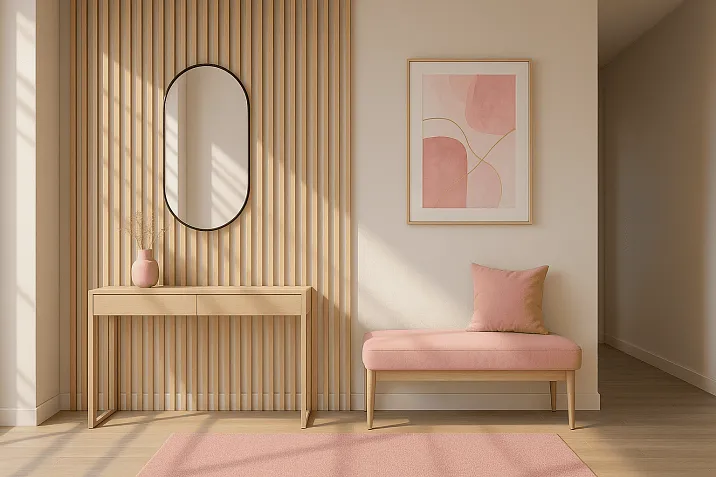
Modern interior design requires a special approach to details. Each element should not only perform its function but also create a unique atmosphere in the space. In this context decorative MDF rail buy which is worth buying from a reliable supplier, becomes a strategically important decision for those who strive for perfection in decorating their home or office.
What makes decorative MDF rail so popular among designers and architects? The secret lies in the unique combination of aesthetic and functional qualities, which open up boundless opportunities for creative implementation of the boldest ideas.


Decorative MDF rails: a revolution in the world of finishing materials




Philosophy of modern design
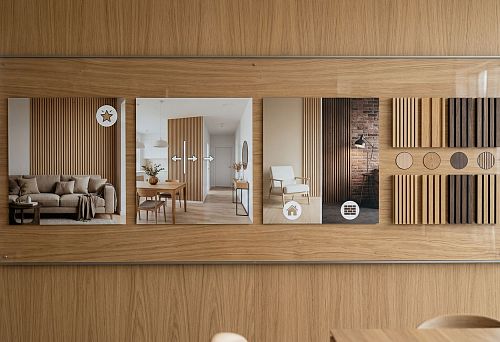
In the era of minimalism and functionality MDF rail has become a symbol of an intelligent approach to space design. It allows creating complex visual compositions using simple geometric forms and natural materials.
Perception psychology of interior is based on rhythm, proportions, and textures. Decorative MDF rails provide an ideal balance between order and dynamics, creating visual anchors that structure space and guide the gaze.
Our factory also produces:


Technological superiority of MDF
MDF (Medium Density Fiberboard) production is a high-tech process in which wood fibers are pressed at a temperature of 200-230°C under a pressure of 25-45 MPa. The result is a material with a density of 600-800 kg/m³, possessing unique characteristics.
The structure of MDF ensures isotropy of properties — equal strength indicators in all directions. The swelling coefficient in thickness does not exceed 8-12% after 24-hour immersion in water, which is 2-3 times better than that of particleboard.
Get Consultation
Classification of decorative rails by functional purpose
Architectural-decorative elements
Decorative MDF rails are divided into several categories depending on their primary purpose. Wall rails are intended for creating accent surfaces, zoning space, and forming visual compositions on vertical planes.
Ceiling rails solve tasks of decorative finishing of the upper part of the room, creating complex multi-level structures, and integrating lighting systems. Their cross-section is usually smaller than wall analogs, which ensures light construction and reduces load on load-bearing elements.
Structural-finishing solutions
Load-bearing decorative rails perform a dual function — they support suspended interior elements and simultaneously serve as decorative accents. Their cross-section is calculated based on operating loads with safety factors.
MDF Interior Strip universal purpose allows solving complex interior design tasks, combining decorative and functional qualities in one element.
Production technologies: from raw material to masterpiece
Raw material preparation and processing
The quality of finished decorative MDF rails is established already at the stage of preparing the raw material. Wood undergoes multi-stage sorting with removal of defective areas, bark, metal inclusions. The moisture content of the raw material is stabilized at a level of 10-12%.
Defibration — a key process in MDF production — occurs in special refiners at a temperature of 170-180°C. Wood fibers obtain a size of 0.1-3.0 mm with an optimal length-to-thickness ratio of 100-150:1, ensuring maximum strength of the finished material.
Forming and finishing processing
The pressing process is carried out in multi-story periodic presses under strictly controlled parameters. The holding time under pressure is 8-12 seconds per millimeter of panel thickness, ensuring complete polymerization of the binder.
Subsequent mechanical processing includes calibration, sanding, and profiling of the profiles. MDF panel rail receive their final geometry on high-precision CNC equipment, providing tolerances of ±0.1 mm.
Dimensional series and technical characteristics
Standard profiles
Rectangular rails are available in a wide range of sizes: from miniature 10×15 mm to massive 60×80 mm. The most popular profiles are 20×40 mm, 25×50 mm, 30×60 mm, which provide an optimal balance between visual impact and cost-effectiveness.
Square sections 15×15, 20×20, 25×25, 30×30, 40×40 mm are used to create rhythmic compositions and geometric patterns. Their symmetry allows varying the laying direction without changing the visual effect.
Special profiles
Half-round, triangular, and complex-profiled rails expand designers' creative possibilities. The radii of curvature of half-round profiles vary from 5 to 30 mm, allowing the creation of both delicate decorative lines and expressive volumetric elements.
MDF rail 2700 Represents the standard length corresponding to the height of most rooms. Planks can be manufactured to any required length up to 6000 mm without joint connections.
Decorative finishes: art in details
Coating systems
Modern painting technologies provide not only aesthetic appeal but also protection of the material from external influences. Polyurethane enamels create a hard coating with excellent adhesion and resistance to abrasion.
Water-dispersible acrylic paints ensure ecological safety and a wide color range. Any shade can be created according to RAL, NCS, or Pantone catalogs specified by the client.
Veneer and imitations
Natural veneer of valuable wood species provides decorative MDF planks an elegant appearance and unique texture. Oak, beech, walnut, and wenge – each species has a characteristic grain and color palette.
Modern printing technologies allow creating photorealistic imitations of any materials – from exotic wood species to stone and metal. The dye penetration depth reaches 2-3 mm, which prevents the base from showing under mechanical stress.
Application areas: from residential interiors to commercial projects
Residential architecture
In private interiors Finishing MDF rails solves numerous tasks. Accent walls in living rooms become compositional centers, attracting attention and structuring the space.
Bedrooms are transformed by creating headboards from vertical or horizontal planks. Different heights of elements create a wave-like effect, adding dynamism to a static interior.
Children's rooms require a special approach to safety. Planks with rounded edges and environmentally friendly coatings of class E0 fully comply with sanitary requirements for children's rooms.
Commercial architecture
Office spaces use decorative planks for zoning open areas, creating meeting zones, and decorating reception areas. The acoustic properties of MDF contribute to noise reduction and improved working atmosphere.
The restaurant industry values planks for their ability to quickly change interiors to suit different concepts. The modularity of the system allows transforming space without major renovations.
Shopping centers apply MDF slat for interior in navigation systems, storefront design, and creating brand styles for tenants.
Engineering aspects of design
Static calculations
Designing structures from decorative MDF planks requires consideration of all existing loads. The self-weight of the material with density 650-750 kg/m³ creates a distributed load that must be accounted for when calculating load-bearing elements.
The modulus of elasticity of MDF is 2500-3500 MPa, allowing deformation and deflection calculations using material resistance methods. The bending strength of 25-35 MPa provides sufficient strength reserve for most applications.
Temperature and humidity deformations
The linear expansion coefficient of MDF is 8-12×10⁻⁶ 1/°C, requiring deformation joints to be installed in structures longer than 10 meters. A 1% change in humidity causes linear deformation of 0.02-0.03%.
Deformation joint calculations are performed using the formula ΔL = L × α × ΔT, where L is the element length, α is the expansion coefficient, and ΔT is the temperature difference. Compensatory gaps are filled with elastic sealants.
Installation technologies: professional approach
Preparatory Work
Quality installation begins with careful preparation of the base. The surface must be flat with deviations no more than 2 mm per linear meter. Base moisture is controlled with electronic moisture meters and must not exceed 4%.
Marking is performed using a laser level and painter's string. When creating complex geometric compositions, a full-scale cardboard template is made to verify calculation accuracy.
Fastening systems
Mechanical fastening with self-tapping screws remains the most reliable method of fixation. The pre-drilled hole diameter is 0.8-0.9 times the screw diameter. Screw depth is regulated by limiting collars.
Adhesive bonding is applied to perfectly prepared surfaces. Polyurethane adhesives provide high adhesion and flexibility of the joint. Setting time is 15-20 minutes, allowing adjustment of element positions.
The combined method combines the advantages of mechanical and adhesive fastening. Screws are installed at intervals of 400-500 mm, and gaps are filled with adhesive. This system withstands increased loads and vibrations.
Joint and corner processing
End joints require the highest precision fitting. The gap must not exceed 0.3 mm. Using end-cutting saws with carbide-tipped discs ensures a clean cut without chips or scratches.
45° corner joints are made using special miter saws or end-cutting machines. Joint quality is checked with a metal ruler — any gap is unacceptable. If necessary, adjustments are made using hand tools.
Economic aspects of projects
Cost analysis
When solving decorative MDF rail buy It is important to consider not only initial costs but also the total cost of ownership. The durability of quality boards is 15-20 years, ensuring low specific costs.
The cost per linear meter varies from 120 to 500 rubles depending on the profile size, finish type, and manufacturer. Exclusive profiles with artistic finishes may cost significantly more.
Hidden costs
Installation work accounts for 40-60% of material cost when hiring professional installers. Preparation work adds another 20-30% to the project’s total estimate.
Transportation costs are optimized when ordering full transport units. Delivery of small batches may cost up to 15% of material cost.
Quality Control and Certification
Production standards
Quality decorative MDF boards must comply with GOST 32289-2013 and European standard EN 622. These documents regulate physical and mechanical properties, dimensional accuracy, and formaldehyde emission.
Incoming raw material inspection includes determining moisture content, density, and presence of defects. Technological control is performed at all production stages with documentation of parameters.
Testing laboratories
Accredited laboratories conduct a full cycle of tests on finished products. Strength under bending, internal adhesion, swelling, formaldehyde emission, and coating durability are determined.
Each product batch must be accompanied by conformity certificates and test reports. These documents confirm compliance with declared characteristics and safety of use.
Innovative solutions and prospects
Smart technologies
Integrating LED modules into decorative boards creates a new class of products — illuminated architectural elements. RGB lighting allows creating dynamic compositions with changing colors.
Built-in motion and light sensors automatically adjust brightness based on human presence and natural lighting. The control system integrates with "smart home" via Wi-Fi or Zigbee protocols.
Functional Additives
Antibacterial coatings with silver ions suppress the growth of pathogenic microflora. The effectiveness lasts 10-15 years without requiring renewal.
Photocatalytic additives based on titanium dioxide help purify air from harmful impurities. Under light, organic pollutants and unpleasant odors decompose.
Regional Market Characteristics
Climate adaptations
In high-humidity regions, special hydrophobic impregnations are used, reducing water absorption to 3-5%. Freeze-resistant compositions maintain properties at temperatures down to -40°C.
Seismic fasteners with dampers are used in seismically active regions. Elastic connections compensate for building deformations during earthquakes up to 9 on the Richter scale.
Logistical solutions
Optimizing transportation routes reduces delivery costs to remote regions. Consolidating shipments and using reverse loading make the product available nationwide.
Regional warehouses ensure fast dispatch of popular items. The pre-order system allows planning production according to specific projects.
Conclusion
The modern interior design world is constantly seeking materials capable of realizing the most daring creative ideas while maintaining practicality and economic feasibility. decorative MDF rail buy which is offered by reputable manufacturers, represents exactly such a solution combining technological sophistication, aesthetic appeal, and functional versatility.
The technical superiority of MDF as a base material ensures geometric stability, durability, and the ability to create complex profiles with high precision. The ecological safety of modern adhesive systems makes decorative planks suitable for any interiors, including children's rooms and medical facilities.
The variety of decorative finishes and processing technologies opens up limitless opportunities for creative self-expression. From classic wood imitations to avant-garde metallic surfaces — every project can achieve a unique visual solution.
The economic efficiency of using decorative MDF planks is evident in the material's accessible cost and low operating expenses. Long service life and minimal maintenance requirements ensure rapid return on investment.
Technological innovations in production and installation continuously expand the application scope of decorative planks. Integration of smart technologies, functional additives, and new fastening systems makes this material increasingly popular among professionals.
A professional approach to design and installation guarantees results meeting the highest quality standards. Correct material selection, accurate structural calculations, and high-quality execution — the key to creating interiors that will delight owners for many years.
The company STAVROS, with years of experience in producing high-quality finishing materials, rightfully occupies leading positions in the market for decorative MDF elements. Commitment to quality principles, continuous technological improvement, and individualized approach to each project make STAVROS a reliable partner for architects, designers, and construction companies striving to create outstanding interior solutions.