Article Contents:
- Philosophy of Ideal Proportions: Anatomy of Size 16×40×2700
- Thickness 16 mm: The Golden Middle of Strength and Elegance
- Width 40 mm: Universality of Application
- Length 2700 mm: Standard of Modern Construction
- Production Technologies: How Perfection is Born
- Precision Processing of MDF Base
- Technology of Accurate Sawing
- Quality control at every stage
- Physical and Mechanical Properties: Science of Strength
- Load-Bearing Capacity and Deformability
- Temperature and humidity deformations
- Design Possibilities: From Concept to Realization
- Architectural Styles and Compositional Solutions
- Functional Zoning of Space
- Integration of Lighting and Technical Systems
- Installation Technology: Professional Secrets of Installation
- Foundation Preparation and Layout
- Systems for Mounting Long Elements
- Features of Jointing and Finishing
- Operational Characteristics and Longevity
- Resistance to Mechanical Impact
- Climate resistance
- Economic Aspects and Pricing
- Lifecycle Cost Analysis
- Comparison with alternative solutions
- Innovative technologies and prospects for development
- Digital design methods
- Smart Materials of the Future
- Ecological innovations
- Conclusion
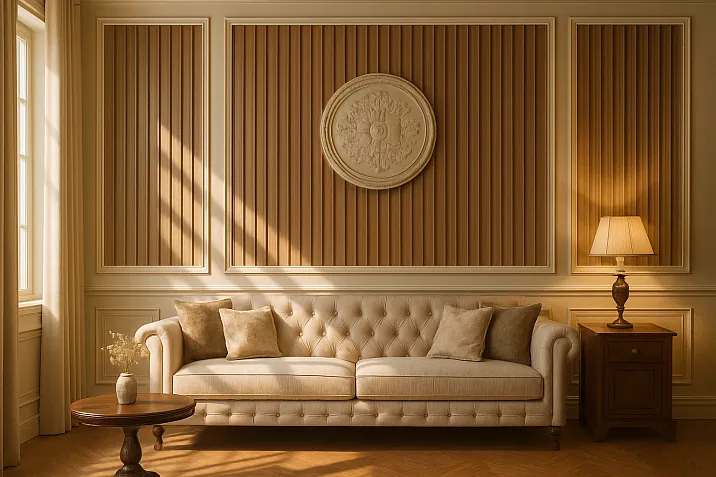
When details define perfection, and millimeters decide the fate of the interior, interior MDF rail 16 40 2700 This specific size — 16 mm thick, 40 mm wide, and 2700 mm long — is not a random combination of numbers, but the result of decades of research in ergonomics, aesthetics, and functionality of modern interiors.
Imagine a material that combines the precision of Swiss watches, the beauty of Italian design, and the reliability of German technology. This very approach is embodied in the creation of this unique product, where every parameter is fine-tuned to the smallest details, and quality is proven by thousands of successfully implemented projects around the world.


Philosophy of Ideal Proportions: Anatomy of Size 16×40×2700




Thickness 16 mm: The Golden Middle of Strength and Elegance
Why exactly 16 millimeters? This size emerged from understanding the physics of materials and the psychology of spatial perception. Thickness less than 12 mm creates a sense of fragility and does not provide sufficient rigidity for long elements. Profiles thicker than 20 mm begin to visually 'press' and create a sense of massiveness where elegance is required.
A thickness of 16 mm provides a moment of resistance of 4267 mm³, guaranteeing deflection of no more than 2.5 mm under a load of 1 kg/m over a length of 2700 mm. This is sufficient for creating self-supporting structures without additional supports. MDF material Such thickness allows milling complex profiles without risk of chipping or structural damage.
The psychological aspect is equally important: 16 mm creates sufficient depth of shadow line (8–12 mm under standard lighting) to form an expressive surface relief. This is the optimal depth for creating play of light and shadow, which brings life to the interior throughout the day.
Our factory also produces:


Width 40 mm: Universality of Application
Forty millimeters in width correspond to anthropometric constants of human perception. Elements of this width are perceived as proportionate and harmonious in most interior compositions. They are sufficiently noticeable to create an architectural accent, yet not so dominant as to overpower other design elements.
The practical advantages of a 40 mm width are manifested in the ability to create various compositional schemes. When closely laid with a 5-10 mm gap, it forms almost a continuous surface with delicate shadow lines. Increasing the gap to 20-40 mm turns each plank into an independent architectural element.
This width is optimal for integrating technical elements—outlets, switches, smart home sensors. Standard electrical fixtures easily fit into the rhythm of the plank structure without disrupting the overall composition.
Get Consultation
Length 2700 mm: standard of modern construction
The length of 2700 millimeters reflects the realities of modern residential construction. It is the standard room height in new builds, accounting for floor coverings and suspended ceiling structures. Using planks of exactly this length allows creating seamless vertical compositions from floor to ceiling without joints.
When applied horizontally, a length of 2700 mm ensures optimal coverage of standard rooms. Most rooms in typical apartments are 3-4 meters wide, allowing coverage with one or two elements with minimal connections.
The logistical advantages of this length are manifested in the ability to transport using standard freight vehicles. Elements fit into truck beds 3-6 meters long without additional restrictions or special permits for transport.
Production technologies: how perfection is born
Precision processing of MDF base
Creation Interior MDF planks 16x40x2700 It begins with preparing high-quality MDF panels with density 750-850 kg/m³. Wood fibers sized 0.1-3 mm are mixed with E0-grade binders in strictly defined proportions. The mixture’s humidity is controlled with precision ±0.3%.
Panel forming occurs under 30-40 MPa pressure at 210-220°C. Holding time is calculated by the formula t = k × s², where t is time in seconds, s is panel thickness in mm, k is material coefficient (usually 8-12). For a 16 mm thick panel, pressing time is 32-48 seconds.
Thickness calibration is performed on multi-spindle CNC grinding machines. Abrasive belts with grit P80-P120 provide a smooth surface with roughness Ra = 6.3-12.5 μm. Calibration accuracy is ±0.05 mm, which is critically important for subsequent high-quality installation.
Technology of precise sawing
Longitudinal sawing to 40 mm width is performed on multi-blade saws with 350-450 mm diameter discs. Material feed speed is 20-30 m/min at saw blade rotation frequency of 4000-6000 rpm. These parameters ensure a clean cut without chips or scratches.
Critical adjustment of the gap between saw blades is required. Deviation exceeding ±0.1 mm results in width defects. An automatic positioning system adjusts blade positions during operation, compensating for wear and thermal deformation.
End-cutting to 2700 mm is performed on cross-cutting machines with ±0.5 mm accuracy. Cut quality is visually inspected and verified with templates. The cut angle must be 90° ±5' to ensure tight fitting at joints.
Quality control at every stage
Incoming raw material inspection includes checking density, humidity, and absence of foreign inclusions. Samples are taken using random sampling—1 sample per 100 m² of panel. Results are recorded in the quality log with date, batch number, and responsible person’s name.
Operational control is performed at each processing stage. Dimensions are checked with a vernier caliper with 0.1 mm scale. Straightness is checked with a 1000 mm inspection ruler—deviation must not exceed 0.5 mm.
Acceptance control of finished products is conducted per GOST 32289-2013. Geometric dimensions, surface quality, humidity, and density are checked. From each batch, 2% of items are selected for destructive bending strength tests.
Physical and mechanical properties: science of strength
Load-bearing capacity and deformability
MDF interior planks Planks with a 16×40 mm cross-section have calculated characteristics allowing their use in various structural schemes. The cross-sectional moment of inertia I = 21333 mm⁴ provides stiffness sufficient for spans up to 3 meters under interior loads.
The elastic modulus of quality MDF ranges 2800-3200 MPa, comparable to coniferous wood species. Bending strength reaches 22-28 MPa depending on material density and binder quality.
Critical load at loss of stability is calculated using Euler’s formula: Pkr = π²EI/μl², where E is the elastic modulus, I is the moment of inertia, μ is the length reduction coefficient, l is the calculated length of the element. For a freely supported plank 2700 mm long, the critical force is 28.5 N.
Temperature and humidity deformations
The linear expansion coefficient of MDF in the direction of fibers is 8-12×10⁻⁶ 1/°C, perpendicular to fibers—12-18×10⁻⁶ 1/°C. For a 2700 mm long plank, a 25°C temperature change results in linear elongation of 0.54-0.81 mm.
Humidity deformations are more significant: 0.2-0.35% per 10% change in relative humidity. When humidity changes from 40% to 70%, a 2700 mm plank may change size by 1.6-2.8 mm. Pre-stabilization of humidity at the factory minimizes these deformations.
Hygroscopicity of MDF ranges 8-15% depending on density and binder type. Water absorption after 24-hour immersion does not exceed 20-25% for quality grades. Special water-resistant formulations reduce this to 8-12%.
Design possibilities: from concept to realization
Architectural styles and compositional solutions
Minimalist interiors use MDF planks size 16×40×2700 to create clean lines and structure the space. Monochromatic solutions in white and gray tones emphasize the geometry of the room. Precise dimensions ensure perfect alignment of elements without gaps or seams.
Scandinavian style values the naturalness of materials and simplicity of forms. Light shades of birch, pine, and beech create the atmosphere of a northern home. Matte surfaces better convey the tactile qualities of natural wood. Horizontal installation is associated with traditional log walls.
Loft uses the contrast between industrial materials and the warmth of wood. Dark planks against brick walls or concrete surfaces create cozy zones in a brutalist space. Intentionally rough surface treatment emphasizes the authenticity of the style.
Functional zoning of space
Size 16×40×2700 is ideal for creating partition screens that divide functional zones without full isolation. In studio apartments, such structures separate the sleeping area from the living room, maintaining visual connection and air circulation.
The density of installation affects the degree of privacy of zones. Planks with a 10-20 mm gap create a semi-transparent curtain, sufficient for psychological separation of spaces. Reducing the gap to 5 mm forms a nearly solid surface with delicate shadow lines.
The height of structures varies from 1500 mm (barrier function) to full room height 2700 mm (zoning function). Partial partitions at 2000-2200 mm height preserve the feeling of a single space while providing clear functional separation.
Integration of lighting and technical systems
Standard length 2700 mm allows placing LED strips along the entire height of the room without joints or connections. Power of 12-18 W/m ensures even surface illumination. Dimming creates various lighting scenarios, from bright working light to intimate backlighting.
Built-in fixtures with diameter 60-90 mm easily integrate into 40 mm wide planks using special recessed boxes. Distance between fixtures is calculated based on installation height and required illumination.
Smart home systems find ideal placement in slat structures for temperature, humidity, motion, and air quality sensors. Miniature devices are practically invisible within the slat structure and provide effective control of microclimate parameters.
Installation technology: professional secrets of mounting
Preparation of base and marking
Installation begins with careful inspection of the base. Deviations from vertical and horizontal are measured with a laser level with accuracy ±1 mm. Irregularities exceeding 5 mm require leveling with plaster or drywall.
Axis marking is performed considering the modularity of the system. With a plank width of 40 mm and a gap of 20 mm, the module is 60 mm. This allows easily fitting the structure into existing room dimensions with minimal trimming.
Base humidity is controlled by an electronic hygrometer. For mineral surfaces, allowable humidity is no more than 4%, for wooden surfaces – no more than 12%. Exceeding these values requires additional drying or waterproofing.
Systems for mounting long elements
Clamp mounting ensures hidden installation without visible fasteners. Clamps are milled into the end of the plank to a depth of 10-15 mm with accuracy ±0.2 mm. Special milling bits create a slot 6-8 mm wide for standard clamps.
Guide profiles are installed at 600-800 mm intervals strictly level. Adjustable brackets allow compensating for base irregularities up to ±15 mm. System rigidity is ensured by transverse connections every 1500-2000 mm.
Self-tapping screws are used with open mounting followed by hole filling. Pre-drilling with a 2.5 mm drill bit prevents cracking of MDF. Screw depth is controlled by a depth limiter on the drill.
Features of joints and finishing
End joints are made at 45° angle to create invisible joints. Cut quality is checked with a square – deviation should not exceed ±1'. Adhesive joint strengthens the joint and prevents element misalignment.
Joints to walls and ceilings are finished with deformation joints 3-5 mm wide. Joints are filled with elastic sealant in the material color. Polymerization time for most sealants is 24-48 hours.
Decorative MDF rails size 16×40×2700 after installation do not require additional treatment when using laminated surfaces. Unfinished planks for painting are primed with alkyd or acrylic primer followed by two coats of finish enamel.
Operational Characteristics and Longevity
Resistance to mechanical impacts
Surface hardness by Brinell is 2.5-4.0 HB depending on MDF density and coating type. This ensures resistance to scratches from household items and furniture. Impact resistance depends on mounting method – clamp systems better distribute loads.
Wear resistance of laminated surfaces corresponds to class 31-32 per EN 13329. This means suitability for use in residential spaces with moderate load. Special wear-resistant coatings raise the class to 33-34.
Resistance to contamination depends on surface type. Laminated surfaces are easily cleaned with a damp cloth without special agents. Lacquered surfaces require use of special furniture care compositions.
Climate resistance
Operating temperature range is from -10°C to +60°C for interior use. At lower temperatures, material embrittlement may occur; at higher temperatures, the binder may soften.
Relative humidity of air should be within 40-70% to prevent deformation. Short-term exceedance up to 80-85% is permissible provided the room has good ventilation.
Resistance to ultraviolet radiation is ensured by special stabilizers in the coating composition. Fading does not exceed 2-3 points on the gray scale after 1000 hours of testing according to ISO 4892.
Economic aspects and pricing
Life Cycle Cost Analysis
Initial costs for interior MDF rail 16 40 2700 Costs range from 350-650 rubles per linear meter depending on the type of coating and manufacturer. Installation work costs 40-60% of the material cost when using professional crews.
Operating expenses are minimal due to material stability and high-quality coatings. Regular maintenance is limited to dry or wet cleaning. Periodic repainting of coatings may be required every 8-12 years.
Residual value of the structure after 15-20 years of operation is 60-70% of the original cost due to the possibility of disassembly and reuse. The modularity of the system allows easy adaptation of the structure to new tasks.
Comparison with alternative solutions
Solid wood of similar cross-section costs 2.5-3.5 times more but has less dimensional stability. The need for regular treatment with protective compounds increases operating expenses by 15-25%.
Plastic profiles are 20-30% cheaper than MDF but lag behind in aesthetic qualities and finishing options. Limited color range and inability to paint narrow design possibilities.
Metal profiles are comparable in cost to quality MDF, but require special surface preparation and anti-corrosion protection. Cold metal surface is unpleasant to touch.
Innovative technologies and development prospects
Digital design methods
Parametric modeling allows automatically generating layout variants of rails depending on room dimensions and aesthetic preferences. Algorithms optimize material consumption and minimize offcuts.
BIM technologies integrate rail structures into the overall building information model. This allows precise calculation of material quantities, simulation of installation work, and forecasting of operational characteristics.
Virtual reality allows "walking" through the future interior even before work begins. Clients can evaluate different layout and color options at 1:1 scale.
Smart materials of the future
Integration of sensors transforms MDF laths for interior into "smart home" elements. Temperature, humidity, and air quality sensors are embedded directly into the material structure.
Adaptive coatings change color and texture depending on operating conditions or user command. Liquid crystals respond to electrical signals by altering optical properties.
Self-healing surfaces contain microcapsules with repair compounds. When scratches occur, the capsules rupture, releasing polymer that hardens and fills the damage.
Ecological Innovations
Bio-based binders using plant proteins replace synthetic formaldehyde resins. Lignin, released from wood waste, serves as a natural binder.
Carbon-neutral production is achieved through biomass use for energy generation. Wood waste is burned in special boilers, providing heat for drying and pressing.
CO₂ capture technologies transform production into a carbon sink. Special additives in MDF bind atmospheric carbon dioxide, retaining it within the material structure for decades.
Conclusion
In the world of modern finishing materials interior MDF rail 16 40 2700 occupies a special place as an embodiment of precision, functionality, and aesthetic perfection. Each parameter of this product is the result of deep analysis of modern design needs and construction industry requirements.
Technical excellence of the material is ensured by advanced manufacturing technologies and multi-stage quality control. Dimensional stability, structural strength, and coating durability guarantee flawless operation for decades.
Design possibilities are virtually limitless due to the universality of dimensions and variety of finishing materials. From minimalist monochromatic compositions to complex multi-colored installations — every project finds its unique solution.
Economic efficiency is demonstrated by optimal balance between initial costs and long-term benefits. Modular construction, partial repair, and disassembly capabilities make investments in quality finishing justified and profitable.
Ecological safety of modern materials meets the strictest international standards. Use of renewable raw materials and eco-friendly technologies aligns with principles of sustainable development.
Innovative development directions open new horizons for application. Smart materials, digital technologies, ecological innovations — all of this is already today changing perceptions of the possibilities of interior finishing.
The professional community of designers and architects highly values the quality and versatility of this material. Predictability of properties, ease of installation, wide creative possibilities make it an indispensable tool of modern design.
The future of interior art is linked to materials that combine beauty, functionality, eco-friendliness, and technological sophistication. The interior MDF rail measuring 16×40×2700 mm already embodies these principles today, creating the foundation for spaces of tomorrow.
Industry development prospects promise even more innovations and opportunities. Integration of digital technologies, development of eco-friendly materials, personalization of design solutions — all of this shapes the future of the interior industry.
STAVROS Company, with its rich experience and relentless pursuit of perfection, continues to set new quality standards in the production of interior materials. Every STAVROS product embodies the finest craftsmanship traditions, enhanced by modern technological solutions, creating materials that serve as the foundation for the most ambitious design projects and become an indispensable part of spaces where technology serves beauty and quality defines longevity.