Article Contents:
- Anatomy of Kitchen Space: Planning Basics
- Ergonomic Triangle: The Science of Movement
- Zoning Functional Areas
- Kitchen Furniture Materials: Choosing for Decades
- Facade Solutions: The Face of Your Kitchen
- Countertops: The Foundation of Kitchen Functionality
- Structural Solutions: Basics of Reliability
- Frame systems
- Fastening systems
- Hardware: Invisible Heroes of Kitchen Comfort
- Hinges: The Foundation of Functionality
- Guides: Smooth Movement
- Ergonomic Principles of Kitchen Planning
- Height Parameters
- Storage System
- Stylistic Directions: The Philosophy of Kitchen Design
- Classic Solutions
- Modern trends
- Color Psychology in Kitchen Space
- Warm Palette
- Cool Palette
- Lighting as an Element of Kitchen Design
- Functional Lighting
- Decorative lighting
- Technological Innovations in Kitchen Furniture
- Electrical Systems
- Smart storage systems
- Appliance integration
- Major Appliances
- Small Appliances
- Specifics of Small Kitchens
- Vertical Space Utilization
- Transformable Elements
- Materials and Ecological Safety
- Environmental Standards
- Antibacterial Properties
- Budget Planning for Kitchen Projects
- Expense Prioritization
- Cost Optimization
- Installation and servicing
- Professional Installation
- Warranty service
- Trends in kitchen design
- Ecological responsibility
- Technological Integration
- Regional Characteristics and Adaptation
- Climate factors
- Cultural specifics
- Conclusion
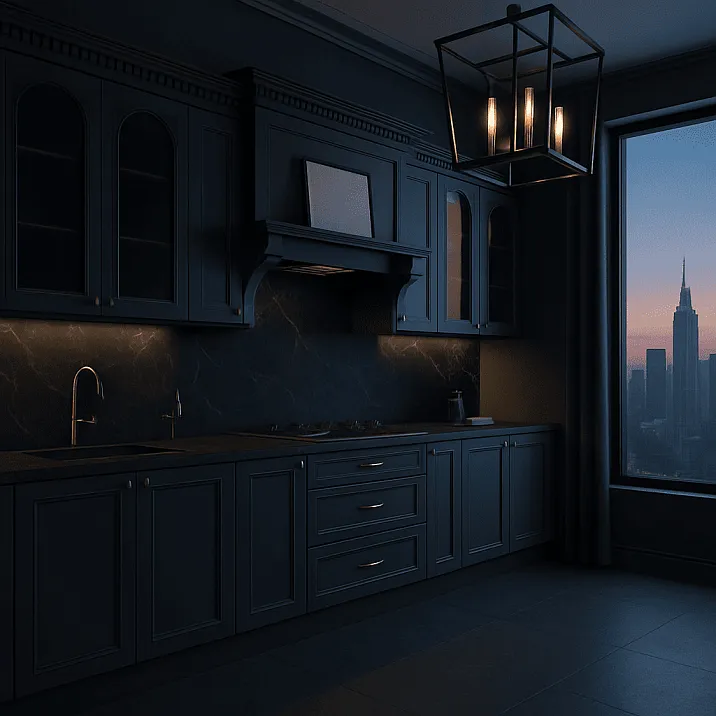
Kitchen — it is the biosphere of the home, the place where aromas are born and families gather, where the morning begins and the day ends. The question of how to choose kitchen furniture, stands before everyone who strives to turn this space into a source of inspiration and enjoyment. In the modern world, the kitchen has long ceased to be merely a place for food preparation — it has become the center of the domestic universe, requiring a special approach to planning and furnishing.
Choosing kitchen furniture is an art of balancing functionality and aesthetics, between everyday practicality and the desire to create a dream space. Every decision affects how your life will unfold over the next decade. After all, quality kitchen furniture serves for no less than 15-20 years, becoming a silent witness to thousands of family breakfasts, festive dinners, and friendly gatherings.
The modern kitchen industry offers a dizzying variety of solutions: from classic wooden sets to ultra-modern modular systems with integrated smart technology. Amid this ocean of possibilities, it is important not to get lost and find the exact solution that perfectly suits your lifestyle, budget, and aesthetic preferences.


Anatomy of kitchen space: basics of planning
Before diving into selecting specific furniture items, it is necessary to conduct a thorough analysis of the available space. Every centimeter of the kitchen must work for your comfort and efficiency.




Ergonomic triangle: the science of movement
The working triangle — a fundamental principle of kitchen planning — unites three key zones: refrigerator, sink, and stove. The optimal distance between the vertices of the triangle is 1.2–2.7 meters for each side. A too small triangle creates a feeling of crampedness, while a too large one forces you to expend unnecessary energy on movement.
When planning the placement of main elements, consider the natural sequence of culinary processes: from the refrigerator (storing products) to the sink (preparation and cleaning) and then to the stove (cooking). This logical chain will save thousands of steps over the course of a year of kitchen use.
Our factory also produces:


Zoning functional areas
Modern kitchens include numerous specialized zones, each requiring a thoughtful approach to furniture selection:
The storage zone must provide quick access to products, dishes, and kitchenware. Upper cabinets are best suited for infrequently used items, the middle level — for everyday dishes, and lower cabinets — for heavy items and loose products.
The working zone requires sufficient surface area for comfortable food preparation. The minimum length of the working surface between the sink and stove should be no less than 40 cm, ideally — 60–90 cm.
The cooking zone includes not only the stove but also the oven, microwave, and other built-in appliances. It is important to provide adequate ventilation and thermal insulation for adjacent surfaces.
Get Consultation
Kitchen furniture materials: choice for decades
The kitchen is an aggressive environment for furniture. Temperature fluctuations, high humidity, steam, grease, and acids — all of this creates serious challenges for materials. The correct choice of materials determines not only the appearance but also the longevity of kitchen furniture.
Facade solutions: the face of your kitchen
Solid wood remains the benchmark of beauty and prestige in kitchen furniture. Oak, ash, walnut create an atmosphere of solidity and natural harmony. However, natural wood requires special care and protection from moisture. Modern protective coatings — varnishes and oils — significantly increase the resistance of wood to kitchen conditions.
MDF with various finishes offers an optimal combination of quality and affordability. PVC film provides water resistance and a wide range of colors and textures. Enamel finishes create a perfectly smooth surface, resistant to stains and easy to maintain. Laminate MDF combines the beauty of natural wood with the practicality of composite material.
Plastic facades are distinguished by exceptional practicality and variety of design solutions. Modern plastics do not fade in sunlight, do not absorb odors, and are easily cleaned even with aggressive cleaning agents.
Countertops: foundation of kitchen functionality
Acrylic or quartz-based artificial stone represents an ideal solution for modern kitchens. Its non-porous structure does not absorb moisture or odors, is resistant to acids and high temperatures. The possibility of seamless joining creates a single working surface of any complexity.
Natural stone — granite, marble — possesses unique beauty and prestige. Each slab has an irreplaceable pattern created by nature. However, it requires professional care and protection from acids.
Solid wood countertops create a warm, cozy atmosphere, but require regular renewal of protective coatings. Hardwood species — oak, ash, beech — are the best options.
Laminated particleboard with postforming remains the most affordable solution. Modern decorative finishes convincingly imitate natural materials, and rounded edges increase practicality of use.
Structural solutions: foundations of reliability
A beautiful facade may hide a weak structure that will quickly fail. Knowing basic construction principles will help choose truly reliable furniture.
Frame Systems
A solid wood frame provides maximum strength and durability, but requires a highly skilled manufacturer and appropriate investment.
MDF frames, when properly executed, do not fall short of wooden frames in strength, but surpass them in dimensional stability under kitchen conditions.
Laminate frame systems are economical, but require quality hardware and precise fitting of parts.
Fastening systems
Conformers are the most common solution for connecting cabinet parts. Quality conformers with anti-corrosion coating provide reliable connections for decades.
Eccentric fasteners allow creating high-strength detachable connections, which is important when transportation or reconfiguration of the kitchen is needed.
Wooden dowels combined with glue create non-detachable connections of maximum strength, used in premium furniture.
Hardware: Invisible heroes of kitchen comfort
The quality of hardware determines the ease of daily kitchen use. Saving money on hinges, guides, and mechanisms is a false economy that will result in constant inconvenience.
Hinges: The foundation of functionality
Hinges with closers provide smooth, silent door closure. Quality hinges are designed for 200,000–300,000 opening-closing cycles, corresponding to 15–20 years of intensive use.
The opening angle affects access to cabinet contents. Standard hinges allow opening to 110 degrees, while special hinges allow up to 170 degrees for corner cabinets.
Three-axis hinge adjustment allows precise positioning of doors, compensating for wall unevenness and installation inaccuracies.
Guides: Smooth movement
Roller guides are an economical solution for infrequent use. They withstand loads up to 15–20 kg, but are inferior in smoothness of operation.
Ball-bearing guides ensure smooth drawer extension even for heavy drawers. Quality guides withstand loads up to 45–50 kg and are designed for tens of thousands of cycles.
Hidden-mount guides create an aesthetic appearance, completely concealed within the drawer structure.
Ergonomic principles of kitchen planning
A properly designed kitchen reduces fatigue and increases enjoyment of the cooking process. Ergonomic principles, developed over decades of research, should form the basis of any kitchen project.
Height parameters
The working surface height should correspond to the height of the main kitchen user. Standard height of 85 cm suits people 160–170 cm tall. For taller individuals, optimal height is 90–95 cm.
A countertop depth of 60 cm ensures comfortable work and placement of standard appliances. Increasing to 65–70 cm allows placement of larger appliances.
Upper cabinet height should ensure convenient access to contents. The bottom edge of upper cabinets is located at 145–150 cm from the floor, corresponding to 55–60 cm from the countertop.
Storage system
The golden triangle principle applies not only to layout but also to storage organization. Frequently used items should be stored in easily accessible zones — between 40 and 140 cm from the floor.
Pull-out systems significantly increase space utilization efficiency. Full drawer extension ensures access to all contents, including far corners.
Rotary mechanisms for corner cabinets transform hard-to-reach spaces into convenient storage systems.
Stylistic directions: Philosophy of kitchen design
Choosing a kitchen style is not a fashion statement, but an expression of family life philosophy and lifestyle. Each direction has its own characteristics that influence material selection, color schemes, and functional elements.
Classic solutions
Classic style implies use of natural materials, traditional forms, and time-tested solutions. Panelled facades made of solid wood, patinated surfaces, elegant hardware create an atmosphere of aristocracy and respectability.
The color palette is built on noble shades — white, cream, and natural wood tones. Gold and bronze accents highlight the interior's sophistication.
Provence — a romantic style celebrating the beauty of rural life. Pastel tones, artificially aged surfaces, and floral motifs create an atmosphere of French countryside.
Modern trends
Minimalism prioritizes functionality over decoration. Clean lines, absence of visible hardware, and monochromatic color schemes create a sense of space and order.
High-tech emphasizes the latest technologies and materials. Glass, metal, glossy surfaces, and built-in appliances—all subordinate to the idea of technological perfection.
Loft adapts industrial aesthetics for home use. Brick walls, metal structures, and exposed utilities create an atmosphere of a creative workshop.
Color Psychology in Kitchen Space
The color of kitchen furniture affects not only aesthetic perception but also appetite, mood, and overall home atmosphere. A well-chosen color palette can visually enlarge space, create a sense of coziness, or, conversely, add energy and dynamism.
Warm Palette
Natural wood tones create a sense of warmth and connection to nature. Psychologically perceived as safe and comfortable, they promote relaxation and family interaction.
Beige and cream tones are universal and practical. They do not become tiresome over time, easily combine with various color accents, and create a neutral background for culinary creativity.
Red accents stimulate appetite and create a festive mood, but require careful dosing to avoid an aggressive impression.
Cool Palette
White color maximally increases the sense of space and creates an impression of cleanliness and freshness. White kitchens always look modern, but require more careful maintenance.
Gray shades from light silver to deep graphite create an atmosphere of modernity and elegance. Gray is practical and stain-resistant, which is especially important for the kitchen.
Blue tones calm and cool, which may be beneficial in hot climates, but may suppress appetite.
Lighting as an Element of Kitchen Design
Proper kitchen lighting is not only a matter of comfort but also safety. Different kitchen zones require different types of lighting, and modern furniture increasingly integrates with lighting systems.
Functional Lighting
Work zone lighting must provide sufficient illumination for safe use of knives and other tools. LED strips under upper cabinets create even lighting without shadows.
Interior cabinet lighting facilitates finding necessary items. Automatic activation upon opening cabinet doors increases usability.
Display lighting highlights beautiful tableware and creates decorative accents in the kitchen interior.
Decorative lighting
Pendant lights over an island or bar counter create localized lighting zones and serve as an important design element.
Built-in spotlights provide even general lighting and can be integrated into suspended ceilings or hanging structures.
Technological Innovations in Kitchen Furniture
Technological advancements fundamentally change the perception of what a modern kitchen should be. Smart solutions are integrated into traditional furniture, creating a new level of comfort and functionality.
Electrical Systems
Electric lift mechanisms for upper cabinets make previously inaccessible areas easily reachable with a single button press. Particularly valuable for people of short stature or with limited physical abilities.
Electrically powered extendable work surfaces allow quickly increasing the kitchen's usable area as needed.
Built-in charging stations for gadgets have become an essential part of modern kitchens, where tablets and smartphones are used to search for recipes and control smart appliances.
Smart Storage Systems
Touch-sensitive opening systems react to light touch, which is especially convenient when working with dirty hands.
Automatic pull-out systems open when approached and close after use.
Humidity control systems in special compartments maintain optimal conditions for storing various products.
Appliance integration
A modern kitchen is unthinkable without numerous appliances, and proper integration of appliances into the cabinetry system determines both functionality and aesthetics of the space.
Large appliances
Built-in appliances create a unified visual line and save space. Hidden behind facades, they do not disrupt the kitchen's stylistic unity.
Freestanding appliances can become an interior accent, especially if chosen in a retro style or unusual color scheme.
Combined solutions allow optimal use of space, placing several functions in one unit.
Small appliances
Built-in niches for coffee machines, microwave ovens, blenders help maintain order on work surfaces.
Pull-out shelves for appliances allow hiding devices after use, but provide convenient access when needed.
Cable management systems prevent cable chaos and create a neat appearance.
Specifics of small kitchens
Small kitchens require a special approach to furniture selection. Every centimeter must be used as efficiently as possible, and visual tricks help create a sense of spaciousness.
Vertical space utilization
Tall cabinets reaching the ceiling maximize the available height of the room. Upper sections are intended for seasonal items and rarely used dishes.
Multi-level storage systems inside cabinets increase usable volume several times over.
Wall-mounted and cabinet-end railings provide additional space for kitchenware placement.
Transformable elements
Foldable work surfaces allow temporarily increasing cooking area and can be folded away after use.
Pull-out tables transform a windowsill or narrow niche into a full-sized work area.
Rotating mechanisms in corner cabinets make the most distant corners accessible.
Materials and ecological safety
In kitchen conditions, questions of material ecological safety become especially important. Elevated temperatures and humidity may intensify the emission of harmful substances from low-quality materials.
Environmental standards
Formaldehyde emission class E1 — the minimum standard for kitchen furniture. The safer class E0 is recommended for families with children and allergy sufferers.
FSC certification for wooden elements guarantees that the wood originates from sustainably managed forests.
Water-based coatings contain no volatile organic compounds and are absolutely safe for health.
Antibacterial properties
Silver-containing coatings on work surfaces inhibit the growth of bacteria and fungi.
Photocatalytic coatings break down organic contaminants under the influence of light.
Nanotech surfaces repel dirt and make cleaning easier.
Kitchen project budget planning
Kitchen furniture is a serious investment requiring proper budget planning. Proper allocation of funds will help achieve maximum results with available resources.
Expense Prioritization
Basic elements — carcasses, countertops, main hardware — must be of maximum quality. Cutting costs here will result in problems during operation.
Facade elements can be replaced during operation, so compromises are possible with regard to future modernization.
Decorative elements — moldings, baseboards, appliqués — can be added gradually as additional funds become available.
Cost Optimization
Standard sizes are significantly cheaper than custom ones, but require proper planning for efficient use.
Combining materials allows using expensive materials for accents, while the main part can be made from more affordable options.
Phased implementation of the project spreads costs over time and allows taking into account the experience of using the first phase.
Installation and Maintenance
The quality of assembly and installation is no less important than the quality of the furniture itself. Even superior materials and hardware can be ruined by unprofessional installation.
Professional installation
Room preparation includes wall and floor leveling, wiring, and preparing locations for appliances.
Measurement accuracy is critically important for built-in appliances and tight fitting of elements.
Hardware adjustment ensures proper operation of all movable elements.
Warranty Service
Warranty obligations of quality manufacturers typically cover 3-5 years for carcass elements and up to 10 years for hardware.
Service support includes mechanism adjustment, replacement of worn elements, and care advice.
The possibility of modernization allows adapting the kitchen to changing needs without full replacement.
Trends in kitchen design development
Understanding current trends will help create a kitchen that remains relevant for many years and can adapt to future lifestyle changes.
Ecological responsibility
Sustainable materials are becoming a priority for conscious consumers. Recycled materials, renewable resources, and waste minimization are key development directions.
Energy efficiency of built-in appliances and lighting reduces operating costs and environmental impact.
Local production supports regional economy and reduces transportation costs.
Technological Integration
The Internet of Things transforms the kitchen into an intelligent system capable of autonomously managing microclimate, lighting, and appliances.
Voice control frees hands for cooking tasks, allowing control of appliances and receiving information via voice commands.
Augmented reality helps in planning renovation and selecting furniture, allowing to see the result before starting work.
Regional characteristics and adaptation
When choosing kitchen furniture, it is necessary to consider regional climate conditions, local traditions, and material availability.
Climate factors
Air humidity is especially critical for kitchen furniture. In high-humidity regions, additional measures to protect against mold and fungi are required.
Temperature fluctuations affect the dimensional stability of wooden elements. Materials adapted to local conditions should be selected.
Water quality affects the choice of materials for work surfaces and sinks. Hard water requires use of materials more resistant to deposits.
Cultural specifics
Culinary traditions determine the requirements for kitchen layout and equipment. Asian cuisine requires powerful ventilation, while European cuisine demands larger work surfaces.
Family habits influence the size of the dining area and storage systems. Large families require increased storage and work surface volumes.
Conclusion
The art of How to choose kitchen furniture correctlyIt lies in the harmonious combination of functionality, aesthetics, and durability. A modern kitchen is a complex system where each element must work in harmony with the others, creating a space that inspires culinary creativity and unites the family.
When choosing kitchen furniture, we create not just a workspace, but the heart of the home — a place where traditions are born and memories are preserved. Every decision, from selecting cabinet materials to positioning outlets, affects the quality of family life for years to come.
Modern technologies offer unprecedented opportunities to create the kitchen of your dreams. Smart control systems, innovative materials, and ergonomic solutions allow you to create a space that not only looks beautiful but also serves the benefit of its users.
However, it is important to remember that behind all technological innovations and design features stand people — artisans who invest their experience and knowledge into creating each piece. Choosing quality kitchen furniture is an investment not only in personal comfort but also in supporting the traditions of artisan craftsmanship.
For many years, the company STAVROS has remained true to the principles of creating quality kitchen furniture, combining the best traditions of furniture craftsmanship with modern technologies and materials. Every STAVROS project is the result of a deep understanding of the needs of modern families and a commitment to creating a space that will delight and serve faithfully for many years.