Article Contents:
- What Are PVC Strip Wall Panels: Construction and Chemistry
- Technical Parameters of PVC Strip Wall Panels: Reading Specifications Consciously
- Panel Width
- Profile thickness
- Length
- Locking Connection
- Decorative Layer
- Where PVC Strip Wall Panels Show Their Best Side
- Bathroom and toilet
- Balconies and Loggias (Glazed but Unheated)
- Utility Rooms
- Temporary and rental finishing
- Where PVC slatted wall panels fall short: without embellishment
- Tactility and acoustics
- Visual persuasiveness of imitations
- Environmental question
- Impossibility of repainting
- Durability
- Varieties of slatted PVC wall panels: what's on the market
- By type of decor
- By slat profile
- By connection system
- Installation of slatted wall PVC panels: from the first to the last slat
- Tools
- Materials
- Step 1: Wall preparation
- Step 2: installation of the lathing
- Step 3: Installation of starter profiles
- Step 4: Installation of the first slat
- Step 5: installation of the paneling
- Step 6: Trimming around openings
- Step 7: Sealing
- Step 8: Installation of skirting boards and moldings
- Slatted wall PVC panels in the bathroom: design solutions with specific examples
- Principle 1: Do not imitate where imitation is obvious
- Principle 2: Combine with natural details
- Principle 3: Horizontal expands, vertical elongates
- Principle 4: Tone contrast
- Care for slatted wall PVC panels: less is more
- Comparison of slatted wall PVC panels with MDF panels and wood
- Slatted wall PVC panels and natural materials side by side: ensemble or dissonance
- Price segments of slatted wall PVC panels: what lies behind the price difference
- FAQ: answers to popular questions about slatted wall PVC panels
- About the Company STAVROS

When it comes to slatted wall PVC panels, most people fall into two camps. Some consider them an ideal solution — cheap, moisture-resistant, quickly installed and forgotten. Others grimace: plastic is plastic, and no wood imitation can hide its synthetic nature. The truth, as always, lies in the middle — and understanding it is important before you spend money on renovation.
This article is not an advertising brochure or a scathing critique. It is an honest, detailed analysis of slatted wall PVC panels: what they are, where they work excellently, where they fall short of alternatives, how to choose and install them correctly. And at the end — the inevitable comparison with MDF and wood, which will put everything in its place.
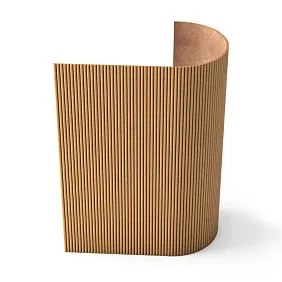
What are slatted wall PVC panels: construction and chemistry
Polyvinyl chloride (PVC) is the second most produced plastic in the world after polyethylene. In construction, it is used everywhere: pipes, window profiles, flooring, roofing membranes. Recessed wall panels are one of the most common applications of PVC in interior finishing.
The production of PVC slats involves extrusion: the granulate is melted and forced through a forming die that shapes the cross-sectional profile of the product. Simultaneously or in the next technological step, a decorative layer is applied to the surface: a thermal transfer or calendered film with a printed pattern. The thinner and more detailed the pattern, the higher the quality of the decoration and the more convincing the imitation of natural material looks.
The structure of a modern recessed PVC panel is cellular: inside the profile, there are longitudinal stiffening ribs that separate empty chambers. This design provides an optimal combination of lightness and load-bearing capacity: the panel does not sag over distances up to 600 mm between battens, while weighing 1.2–1.8 kg per linear meter—nothing compared to MDF or ceramics.
A fundamental chemical feature of PVC: it is absolutely hydrophobic. The molecular structure of polyvinyl chloride does not contain polar groups capable of binding with water molecules. This means zero water absorption—a property that neither MDF nor natural wood possesses without special coatings. This is precisely what makes PVC slats indispensable in conditions of constant high humidity.




Technical parameters of recessed wall PVC panels: reading the specifications consciously
Sellers rarely explain the parameters in detail—more often, they mention three numbers and wait for a purchase decision. Let's examine each parameter with an understanding of what lies behind it.
Our factory also produces:
Panel width
Range: 65–300 mm. This is one of the main parameters determining the visual result.
-
65–100 mm—narrow slat, frequent rhythm, ornamental surface character. More suitable for small spaces and classic interiors
-
100–150 mm—universal width, the most common on the market. A balance between visual richness and ease of installation
-
150–250 mm — wide slat, calm rhythm. Visually expands narrow spaces when installed horizontally.
Get Consultation
Profile Thickness
8, 10, 12, 14 mm. The thicker the profile walls, the higher the resistance to mechanical loads and the less prone to deformation when heated. For living spaces, the minimum acceptable thickness is 10 mm. Panels with a thickness of 8 mm bend when pressed and produce a 'hollow' sound.
Length
Standard: 2700 and 3000 mm. There are 2400 mm formats for rooms with standard ceiling heights. For ceilings over 3000 mm, a horizontal joint or non-standard length will be required — check with your supplier.
Locking joint
Tongue-and-groove systems differ in joint density and tightness. For bathrooms, lock density is critical — a weak lock will create gaps through which moisture can penetrate behind the panels. When choosing, check the connection density by hand: insert two samples — the joint should be gap-free and without play.
Decorative layer
Thermal transfer film — applied under high temperature and pressure, more resistant to mechanical wear and UV. Calendered film — applied using a cold method, less durable but allows for more complex patterns. A protective lacquer layer over the film is an important characteristic: without it, the surface scratches when cleaned.
Where PVC slatted wall panels perform best
An honest look at the market shows: PVC slats are not a universal solution. But under specific operating conditions, they outperform competitors in terms of overall characteristics.
Bathroom and toilet
This is the main domain of slatted PVC wall panels. Temperature swings from +18 to +40°C, constant steam, splashes during showers, daily wet cleaning — PVC withstands all of this without any changes. Zero water absorption means the panel surface does not swell, delaminate, or deform with systematic water contact.
White matte or glossy slatted PVC wall panels in the bathroom create a sense of cleanliness and lightness. Marble-effect PVC—with a high-quality film—is convincing from a distance and decoratively effective. Installation speed in a standard bathroom of 4–6 m² is 4–6 hours for one person.
Balconies and loggias (glazed but unheated)
Перепады температур, конденсат зимой, высокая температура при прямом солнце летом. Натуральное дерево в таких условиях без регулярной обработки живёт 3–5 лет. ПВХ — нечувствителен к перепадам влажности и устойчив к конденсату. Ограничение: на лоджиях с южной ориентацией летом возможен перегрев тонкостенных профилей — для таких условий нужны усиленные панели с толщиной стенки от 12 мм.
Utility rooms
Storage rooms, laundry rooms, walk-in closets—where functionality is more important than aesthetics, and the budget is limited. Slatted PVC strips solve this task quickly, cheaply, and without architectural pretensions.
Temporary and rental finishing
Rental housing requires finishing that is not a pity to replace if necessary. PVC is a material for one or two renovation cycles. It can be installed quickly, will last its lifespan, and its replacement is not burdensome.
Where slatted PVC wall panels fall short: without embellishment
Talking only about advantages means disrespecting the reader. PVC has systemic limitations that cannot be ignored when choosing a material.
Tactility and acoustics
Place a PVC slatted panel next toan MDF slatted panel. Tap both. The difference is immediately obvious: MDF sounds solid and muted—the hollow plastic resonance of a PVC profile is incomparable to this sound. In living rooms where people spend hours—bedrooms, living rooms, studies—this difference is perceived not only by the ear but also subconsciously: synthetic feels synthetic.
Visual persuasiveness of imitations
The printed "wood-like" pattern on PVC, when viewed from a distance of 50–80 cm, is always visible as an imitation. The pattern repeats at a certain interval—a technical limitation of roll film. The gloss is unnatural for wood. Naturalwooden plankwith tinting and oil is a completely different story. Oak, with its unique grain pattern, cannot be faked by printing.
Environmental question
PVC contains plasticizers—phthalates and other organic compounds that provide flexibility to the profile. At room temperature, their emission intensity is minimal. But when heated—for example, in a room with direct sunlight—the process accelerates. For children's rooms, bedrooms, and kindergartens, MDF class E0 or natural wood with water-based coatings is a fundamentally safer choice.
Impossibility of repainting
MDF panels for painting are an absolutely flexible material: they can be repainted in a new color without dismantling. A PVC surface with a laminating film does not accept standard paints without special priming, and the decorative film cannot be "erased" and replaced. If you want to change the color after 5 years—you will have to replace the panels themselves.
Durability
The honest service life of high-quality PVC slat panels with UV stabilizers is 10–15 years. Without stabilizers under insolation conditions — 5–7 years until noticeable yellowing.MDF Plank Panelswith a high-quality coating last 15–25 years; solid oak — 30–50 years with normal maintenance.
Varieties of slatted wall PVC panels: what is available on the market
The PVC slat market is structured according to several key parameters. Understanding this structure will help make an informed choice.
By type of decor
Solid-color panels — white, beige, gray, light blue. The best-selling segment. White matte and white glossy make up over 60% of sales of slatted PVC panels for bathrooms. White gloss maximally reflects light — indispensable for dark bathrooms without windows.
Panels with wood imitation — oak, pine, walnut, wenge, teak. For hallways, corridors, work areas. Warm tones are most popular — 'honey oak', 'Scandinavian pine'. Cool tones (wenge, dark walnut) are used as accent elements.
Panels with stone and marble imitation — white marble, travertine, gray slate, light limestone. For bathrooms in modern and classic styles. With high-quality deep-print film, the result at a distance of 1.5–2 m is convincing.
Panels with embossing — the profile surface has a relief texture: imitation of wood cut, brick, large stone. The relief is shallow (0.2–0.8 mm) but creates additional visual complexity.
By slat profile
Rectangular profile — a classic. Straight edges, clear geometric rhythm. Suitable for minimalist and modern interiors.
Rounded profile — slats with smooth, rounded edges. Create a softer, less brutal surface character.
Ступенчатый профиль — рейки с небольшим горизонтальным «плечом» на стыке, создающим тень и визуальную глубину. Ближе всего к эффекту МДФ-реек с фаской.
By connection system
Tongue-and-groove lock — standard for most PVC slat panels. Slats are inserted into one another; the lock holds the structure without visible fasteners on the front surface.
Adhesive mounting — slats without a lock, mounted butt-to-butt with adhesive. A cheaper, less technological option.
Installation of wall PVC slat panels: from the first to the last slat
Installing PVC slats is one of the most accessible types of finishing work for DIY. However, mistakes here cost visible results. Let's examine the technology without simplifications.
Tools
-
Laser level (mandatory — not a bubble level)
-
Hacksaw for metal or jigsaw with a blade for plastic
-
Screwdriver
-
Utility knife
-
Rubber mallet
-
Nail set for finish nails
-
Silicone sealant and caulking gun
Materials
-
UD/CD metal profile 27×60 or wooden beam 25×40 mm for lathing
-
Wall anchors for mounting (type depends on wall material)
-
PVC starter and finish corner profiles
-
Ceiling and floor skirting board
-
Bathroom silicone sealant
Step 1: Wall preparation
The wall must be dry and clean. In bathrooms, this is critically important. If there are signs of mold or damp areas under the old finish, they must be eliminated before installation begins and treated with an antifungal compound. PVC does not allow moisture to escape: any moisture sealed behind the panels will destroy the wall's load-bearing structure from the inside.
Walls with significant unevenness (more than 10 mm) are corrected with battens. Even walls allow for adhesive installation.
Step 2: installing the battens
Battens are installed perpendicular to the direction of the planks. For vertical planks, use horizontal guides with a spacing of 400–500 mm. For horizontal planks, use vertical studs with the same spacing.
All batten elements are aligned strictly in one plane using a laser level. Any deviation from the plane is visible on the finished surface, especially under side lighting.
For bathrooms: galvanized metal profile is preferable to wooden beams—metal does not absorb moisture and is not susceptible to biological damage. When using wooden beams, antiseptic treatment is mandatory.
Step 3: Installing Starter Profiles
PVC corner starter profiles are installed around the perimeter: at the floor, ceiling, and corners. They secure the initial and final position of the planks and conceal end gaps. The levelness of the starter profile is the foundation for a level final result.
Step 4: Installing the First Plank
The first plank is inserted into the starter profile with its tongue and secured to the batten with a clip or finishing nail. Check the vertical alignment again with a level. This is the point of no return.
Step 5: installing the paneling
Each subsequent plank is inserted with its groove into the tongue of the previous one and secured to the batten. With properly installed battens and good-quality locking mechanisms, the planks go on evenly, without gaps.
Expansion gap is mandatory. PVC expands when heated. A long slat (2700–3000 mm) will lengthen by 4–5 mm with a 20°C temperature change. Without a gap, the ends of the slat will press against the starter profile and cause deformation—a visible wave on the surface. A 5–8 mm gap at the ends is concealed by the starter profile.
Step 6: Trimming around openings
Trimming PVC slats around window openings, niches, pipes—using a hacksaw for metal or a jigsaw. Plastic cuts easily and without dust. Cuts can be cleaned up with a utility knife or fine sandpaper.
Step 7: Sealing
In bathrooms—mandatory sealing of the bottom joint between panels and the floor, and joints with plumbing fixtures using silicone sealant. It is precisely at these points that moisture most actively seeks a path behind the panels. Silicone is applied after installing all panels, excess is removed with a wet finger.
Step 8: Installing skirting boards and moldings
Floor skirting conceals the bottom starter profile and the expansion gap at the floor. Ceiling molding—the top joint.wooden baseboardin white finish organically completes the white PVC panel. For bathrooms where white or light-colored slats are used,buy MDF skirting boardin white, moisture-resistant finish—is the perfect completion of the structure.
Wall-mounted slatted PVC panels in the bathroom: design solutions with specific examples
The limitations of the material are a challenge, not a sentence. Within the framework of PVC battens, a quite decent result can be achieved by following a few principles.
Principle 1: Do not imitate where imitation is obvious
In a 4 m² bathroom with artificial lighting, battens 'under dark walnut' look unconvincing — the darkness of the room and the close viewing distance will expose the artificiality of the pattern. Solid matte white or light gray is more honest and beautiful than a poor imitation.
Principle 2: Combine with natural details
One natural detail changes the perception of the entire space.with a classic profile creates a sense of solidity, reliability.A solid wood plinth at the base of white PVC battens is a living material accent that 'legalizes' the synthetic material next to it.Furniture HandlesNatural wood handles on the vanity under the sink add warmth even to an absolutely white, sterile interior.
Principle 3: Horizontal expands, vertical elongates
In a narrow bathroom (width less than 1.5 m), horizontal battens on the long wall visually expand the space. In a bathroom with low ceilings (less than 2.5 m), vertical battens visually raise the ceiling. This is basic optical geometry — it always works, with any material.
Principle 4: Tone contrast
Light rails on a dark base or dark rails on a light one. This technique, well-known from interior projects with3D MDF slatted panels, also works with PVC — if using a two-color scheme. Gray rails on a white background; white rails on a light gray wall — a delicate rhythmic pattern with depth.
Care for slatted wall PVC panels: less is more
Caring for PVC rails is simple to the point of minimalism — and that's a real advantage.
Daily cleaning: a damp cloth or soft sponge with water. After a shower in the bathroom, it's enough to simply rinse off splashes with water from the shower — the rails don't need special wiping; they don't leave streaks on the surface.
Monthly cleaning: a neutral detergent (pH 6–8) diluted in water. No 'chemicals' with high-concentration chlorine — chlorine, when used systematically, damages the paint layer.
Limescale: a diluted citric acid solution or special limescale removal products at a concentration no higher than recommended. Concentrated acidic products are prohibited.
Mechanical damage: scratches and chips on PVC cannot be repaired. For significant damage — replace the rail. That's why it makes sense to buy 2–3 spare rails and store them.
Yellowing: cheap PVC panels without UV stabilizers yellow after 5–7 years when exposed to direct sunlight. Yellowing cannot be eliminated — only replacement. Panels with UV stabilizers last 12–15 years without noticeable color change.
Comparison of slatted wall PVC panels with MDF panels and wood
Specific numbers are important here, not abstract 'better/worse'.
| Characteristic | PVC | Moisture-resistant MDF | Solid oak |
|---|---|---|---|
| Moisture resistance | Absolute | High (HMR) | Medium (with treatment — high) |
| Tactile quality | Synthetic | Dense, warm | Natural |
| Visual authenticity | Imitation | Coating / for painting | Natural |
| Repairability | Rail replacement | Sanding + repainting | Sanding + oil |
| Repaintability | No | Yes, without dismantling | Yes |
| Acoustics | Resonates | Absorbs | Absorbs |
| Ecological | Plasticizers | E0/E1 (safe) | Natural |
| Service life | 8–15 years | 15–25 years | 30–50 years |
| Price | Low | Medium–high | High |
| Self-installation | Easy | Medium complexity | Medium complexity |
For living spaces with quality requirements — living room, bedroom, study —MDF Plank Panelsor solid oak provide a fundamentally higher long-term result. For bathrooms, balconies, utility rooms — PVC optimally solves the task with minimal investment.
Slatted wall PVC panels and natural materials side by side: harmony or dissonance
A question rarely asked aloud but often thought: can PVC be combined with natural materials — wood, stone, metal — without obvious dissonance?
The answer is yes, provided several rules are followed.
Rule of material hierarchy. PVC should be the background, not the main element. White PVC slats in a bathroom are a neutral backdrop for a wooden cabinet, stone countertop, bronze plumbing. When PVC tries to mimic 'natural wood' — it loses immediately.
The rule of material honesty. A solid neutral PVC does not pretend to imitate — and therefore is perceived as worthy alongside natural materials. Wood imitation on PVC next to real wood is an obvious dissonance.
If in a hallway where slatted wall PVC panels are installed, there are wooden shelves andBalusters of the staircasemade of solid oak — choose a neutral solid color for the PVC slats, not an 'oak' imitation. The natural wood nearby creates a context; a neutral background emphasizes it.
buy wooden skirting boardmade of solid wood to complete the panel construction — this is one of the most effective techniques for 'naturalizing' plastic finishes. A live wooden baseboard at the bottom of white PVC slats makes the entire room warmer — literally with one detail.
Price segments of slatted wall PVC panels: what lies behind the price difference
The price range for slatted wall PVC panels is wide: from 80 to 600 rubles per linear meter. A 7-fold spread is not accidental. Let's break down what specifically determines the price.
Thickness of the profile walls. Budget panels — 1.0–1.2 mm thickness of outer walls. Mid-range — 1.5–1.8 mm. Premium — 2.0–2.5 mm. The difference in feel: a cheap panel dents when pressed; a quality one — resists elastically.
Quality of the decorative layer. Budget segment — pattern with a repeating step of 30–50 cm, without a varnish protective layer. Mid-range — repeat step of 80–120 cm, varnish with UV stabilizers. Premium — digital printing with a repeat step of 200+ cm, multi-layer varnish coating.
Geometric precision. Cheap slats have a width tolerance of ±0.5–1.0 mm — resulting in uneven joints during assembly. Quality ones — ±0.1–0.2 mm. This is exactly what determines whether all joints will be uniform or 'wandering'.
PVC composition. Budget panels contain a significant proportion of fillers (chalk, kaolin), which reduce raw material cost but degrade strength and whiteness. Quality ones — made from primary PVC with minimal filler content.
FAQ: Answers to Common Questions About PVC Wall Panel Strips
How do PVC wall panel strips differ from sheet panels?
Strip panels are individual narrow profiles (strips) 65–300 mm wide with a locking connection. Sheet panels are solid panels 250–1000 mm wide without a lock. Strip panels create a rhythmic pattern of planks; sheet panels provide a more uniform surface with fewer seams. Strip panels are easier to replace partially; sheet panels are more airtight when installed in wet areas.
What is the minimum thickness for a PVC panel in a bathroom?
At least 10 mm. 8 mm panels deform when pressed and hold fasteners worse. For bathrooms with intensive use — 12 mm.
Is a batten frame needed under PVC strip panels?
A batten frame is necessary on uneven walls (deviation over 5 mm) and creates an air gap behind the panels, improving ventilation and preventing condensation. On even walls, adhesive mounting is acceptable — but without the possibility of removal without damage.
Can PVC strip panels be installed over old tiles?
Yes — if the tiles are firmly and evenly attached. Check for rattling (whole tiles do not move when tapped). The deviation from protruding tile edges is leveled by the batten frame.
How to properly cut PVC strips?
With a hacksaw for metal (fine teeth, 18–24 teeth per inch), an electric jigsaw with a blade for plastic, or a circular saw with a carbide-tipped blade. An angle grinder is not recommended: it causes chipping. Cut slowly, without pressure.
Why did the PVC battens deform after installation?
The most common reason is the lack of expansion gaps at the ends for thermal expansion. Also possible: installation at low temperature followed by heating of the room; poor-quality PVC with an unstable composition.
How long will wall-mounted PVC panel battens last?
Quality panels with UV stabilizers — 12–15 years without noticeable change in appearance. Budget ones without stabilizers under direct sunlight — 5–7 years until yellowing.
Can PVC battens be repainted?
Technically — possible with careful priming using a special primer for plastic. Practically — difficult, not durable, not advisable. It's easier to replace the battens. This is precisely one of the advantages of MDF panels: they can be repainted without dismantling.
How to choose between PVC and MDF for a bathroom?
With a limited budget and no requirements for aesthetics above average — PVC. If you want a quality result for 15–20 years, with the possibility of repainting and a tactilely pleasant surface — moisture-resistant MDF. The difference in cost is offset by the difference in service life.
Is sealant needed when installing PVC battens in a bathroom?
Mandatory — at the bottom edge near the floor, at junctions with plumbing fixtures, in the area around the bathtub or shower tray. It is through these areas that moisture penetrates behind the panels if sealant is absent.
About the company STAVROS
STAVROS is a Russian manufacturer of wooden architectural elements for interiors with a full production cycle. If your project requires more than what PVC can offer — in the STAVROS catalog you will findslatted panels made of MDF and solid oakwith precise geometry, a rich selection of finishes, and a quality guarantee on every product. Also here —Wooden planksfor decorative structures of any complexity,wooden baseboardmade from solid wood and MDF to complete any panel structure,buy wooden skirting boardmade of solid oak and ash in a wide range of stains,Furniture Handles— made of natural wood,balusters for staircaseshandcrafted andClassic Furniturehigh-level execution. STAVROS works with private clients, designers, and architects across Russia: finish samples, professional consultation, delivery, and full project support. Choose a material that will remain beautiful in twenty years — choose STAVROS.