Article Contents:
- Slatted panels in the kitchen: why this solution has become popular
- What slatted panels bring to the kitchen interior
- Add volume and depth to walls
- Make the kitchen visually more modern
- Help highlight functional zones
- Soften the feeling of empty walls
- Make the interior appear more expensive
- Where slatted panels can be used in the kitchen
- On the accent wall in the dining area
- Behind the TV or decorative lighting
- In the kitchen-living room for zoning the space
- In niches and built-in areas
- On the ceiling or at the wall-to-ceiling transition
- Can slatted panels be used in the kitchen work area
- When is this acceptable
- Which materials are more suitable
- Why restrictions are needed near the stove and sink
- How to combine panels with the kitchen backsplash
- What types of slatted panels are available for kitchens
- By orientation: vertical and horizontal
- By width and spacing of slats
- By color: white, woodgrain, graphite, paintable
- By surface type
- Which materials are best suited for kitchens
- MDF panels with moisture-resistant coating
- Polyurethane decorative solutions
- Natural wood and limitations
- Composite and modern interior materials
- Slatted panels in kitchens for different interior styles
- Modern style
- Minimalism
- Scandinavian interior
- Neoclassicism
- Loft
- Eclecticism
- How to combine slatted panels in the kitchen with furniture and finishes
- With kitchen set
- With backsplash
- With ceiling
- With floor
- With lighting
- Color solutions: which slatted panels look better in the kitchen
- White slatted panels in the kitchen
- Wooden tones
- Gray and Graphite Solutions
- Contrast Panels
- When to Choose a Calm Color Palette
- Slatted Panels in Small and Large Kitchen Spaces
- How to Work with a Compact Kitchen
- How to Avoid Overloading a Small Space
- What You Can Afford in a Spacious Kitchen
- How to Use Slats in a Kitchen-Living Room
- Kitchen Design Ideas with Slatted Panels
- Accent Wall in the Dining Area
- White kitchen with wooden slats
- Dark kitchen with vertical accents
- Minimalist kitchen with ceiling-height panels
- Practicality: caring for slatted panels in the kitchen
- How often cleaning is needed
- Which stains are most problematic
- Which finishes are easier to maintain
- What not to use for cleaning
- How to maintain a neat appearance longer
- Common mistakes when choosing slatted panels for the kitchen
- Installation in a highly polluted area without protection
- Choosing unsuitable material
- Too active texture in a small kitchen
- Color conflict between panels and kitchen set
- Overloading kitchen with battens on all surfaces
- Ignoring lighting
- Lack of logic in zoning
- Are batten panels suitable for kitchen-living room
- How to choose batten panels for kitchen before purchase
- By application area
- By material
- By color and style
- By relief depth
- Ease of maintenance
- Compatibility with existing furniture
- Frequently Asked Questions
- Can slatted panels be used near a stove?
- Are slatted panels suitable for a small kitchen?
- Which panels are better for the kitchen: white or wood-grain?
- Can slatted panels in the kitchen be washed?
- Are wooden slats suitable for the kitchen?
- Where is the best place to position slatted panels in a kitchen-living room?
- Will slatted panels become outdated in kitchen interiors?
- Conclusion
The kitchen is the most intensively used room in an apartment. People eat, cook, socialize, and work here. There is steam, odors, splashes, and constant changes in lighting. And it is precisely here that the question of wall decor is most pressing: beauty is good, but practicality is essential. Slatted panels in the kitchen have become one of the most discussed solutions in modern interiors—and for good reason. But for this solution to work and not create problems, it is necessary to understand: where, how, and from what materials.
Slatted Panels in the Kitchen: Why This Solution Has Become Popular
Kitchen interiors long existed in flat coordinates: tile, paint, wallpaper, glass backsplash. Walls were either functional (easy to clean) or decorative (beautiful but problematic to maintain). Slatted panels offered a third way: architectural volume without excessive maintenance complexity.
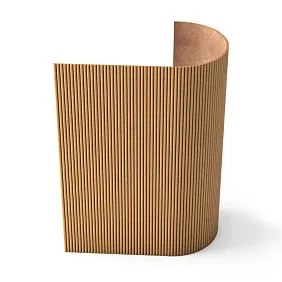
Their main strength is rhythm. The parallel vertical lines of the slats create a structure that any painted or wallpapered wall lacks. It is this rhythm that makes the kitchen look 'put together'—even without expensive furniture and complex architectural solutions. Add to this the modern rangeof solid wood slatted panels—and it becomes clear why demand for this solution grows year after year.




What Slatted Panels Bring to the Kitchen Interior
Our factory also produces:
Add volume and depth to walls
A flat wall is a single plane. A slatted panel is a system of layers: the surface of the slat, the shadow in the gap, the wall surface behind it. Three layers create spatial depth, which works especially noticeably in small kitchens where every visual technique matters.
Get Consultation
Make the kitchen visually more modern
The vertical rhythm of the slats is one of the most relevant architectural languages. In a kitchen interior, it works as a signal: details were considered here. A slatted wall in the kitchen instantly elevates the space from the category of 'standard renovation' to 'designer solution'.
Help define functional zones
A slatted panel behind the dining table creates a visual frame for the dining area. Slats in the lounge area of a kitchen-living room mark the boundary between functions. This is zoning without partitions, without walls, without losing openness.
Soften the feeling of empty walls
An empty wall in the kitchen is not minimalism. It's incompleteness. A slatted panel fills the wall with architectural content—unobtrusively, without overload.
Make the interior appear more expensive
A textured surface is perceived as higher quality and more labor-intensive. A kitchen with a slatted wall looks more expensive—even with the same cost of cabinetry. This is a proven pattern of perception.
Where can slatted panels be used in the kitchen
On an accent wall in the dining area
The wall behind the dining table is the best place for slatted panels in the kitchen. There is no intense soiling, no steam or splashes. Here, the slats work to their full potential: they create a backdrop for the table, giving the dining area character and intimacy.
Behind the TV or decorative lighting
In the kitchen-living room, slatted panels behind the TV screen serve as an architectural backdrop for the multimedia zone. The slats frame the technology without competing with it, creating a decorative 'frame' for the lighting fixtures.
In the kitchen-living room for zoning the space
A slatted panel or slatted partition is one of the best ways to delineate the kitchen and living areas in an open-plan layout. Light and air pass between the slats, the space remains open, but the zones are clearly defined.
In niches and built-in zones
Slatted finishing inside a TV niche, behind built-in shelves, or in an alcove is a detailed refinement that speaks to a high level of design.
On the ceiling or at the transition from wall to ceiling
Wooden slats on the kitchen ceiling create a cozy, enveloping effect. In combination witha polyurethane corniceat the junction of the wall and ceiling, it forms a complete architectural system for the upper space.
Can slatted panels be used in the kitchen work zone?
This question arises for most people. The answer is balanced.
When is this acceptable
In the kitchen work area, away from the stove and sink—provided the panels are covered with moisture-resistant coating and are easy to clean. MDF with high-quality varnish or polyurethane coating withstands kitchen use if minimal conditions are met.
Which materials are more suitable
For the work area—moisture-resistant MDF with PU varnish or polymer coating. The surface must be sealed, without open pores where grease and steam can penetrate.
Why are restrictions needed near the stove and sink
Directly above the cooktop and near the sink—high temperature, water vapor, grease splatters. Any wooden slat in this area without reliable protection will quickly darken, warp, and lose its appearance. A traditional kitchen backsplash made of tile, glass, or metal is more functional and durable here.
How to combine panels with a kitchen backsplash
Optimal scheme: backsplash—in the work area (tile, glass), slatted panels—in decorative and dining areas. The boundary between the backsplash and slatted wall is an architectural transition that can be finished with molding or a horizontal profile. This solution clearly separates functional and decorative zones.
What types of slatted panels are there for the kitchen
By direction: vertical and horizontal
Vertical slats are classic: they stretch the space upward, making the ceiling appear higher. Horizontal slats widen the wall, creating a panoramic effect. For small kitchens with low ceilings, vertical slats are preferable.
By width and spacing of slats
-
Narrow (15–25 mm) — delicate, sophisticated pattern
-
Medium (30–60 mm) — balanced rhythm
-
Wide (70–100 mm) — accent, monumental decor
By color: white, wood tones, graphite, paintable
White — universal, delicate. Wood tones — warmth and naturalness. Graphite — contrast and modernity. Paintable — maximum flexibility for custom color schemes.
By surface type
Smooth — easier to clean, more modern look. Textured (brushed, wood-grain relief) — more expressive texture, but harder to clean from kitchen grime. For kitchens — matte smooth surfaces are preferable from a practical standpoint.
Which materials are better suited for the kitchen
The kitchen is a challenging environment for any material. Temperature fluctuations, humidity, grease, odors. The choice of material for slatted panels determines their service life.
MDF panels with moisture-resistant coating
The most popular and balanced option for the kitchen. MDF with PU varnish or polymer coating is moisture-resistant, easy to clean, and provides good slat geometry. The main condition is that the ends must be thoroughly protected, otherwise the material absorbs moisture precisely through them.
Polyurethane decorative solutions
Polyurethane Items— moldings, cornices, decorative profiles — are absolutely moisture-resistant, do not swell, and do not deform. For the kitchen, they are especially good as framing elements: cornice around the ceiling perimeter, moldings above and below the slatted panel, decorative transitions.
Natural wood and limitations
Natural wood is a living material that reacts to changes in humidity.solid wood slat panelsIn the kitchen, it is used in decorative and dining areas, away from the stove and sink, provided there is a high-quality varnish or oil coating. In the work area — only with reliable moisture-resistant protection.
Composite and modern interior materials
PVC profiles, aluminum slats with wood texture, HPL panels — moisture-resistant, durable, but less 'lively' in terms of tactile feel. For a kitchen with intensive use — a reasonable compromise between practicality and aesthetics.
Slatted panels in the kitchen in different interior styles
Modern style
White or gray slats with a smooth profile on one accent wall. Clean lines, no ornamentation, minimal gap. Maximally modern and functional.
Minimalism
One material, one color, one rhythm. A slatted panel in a minimalist kitchen is the sole decorative solution that carries all the semantic weight. Nothing superfluous.
Scandinavian interior
Light wooden slats, white or light gray background, natural materials. A Scandinavian kitchen with a slatted wooden wall is warmth without heaviness, naturalness without excess.
Neoclassicism
Slatted panels in a neoclassical kitchen are combined withpolyurethane moldings— horizontal profiles above and below the slatted panel create a classic 'frame'. Wooden slats in warm oak or walnut tones against white furniture — elegant and spacious.
Loft
Dark tinted slats, concrete ceiling, metal light fixtures — wooden slats in a loft create a natural counterpoint to industrial materials. The warmth of wood against the cold of metal and concrete — a balance that makes a loft kitchen livable.
Eclecticism
In an eclectic interior, slatted panels work as a 'calming' element: they add structure and rhythm where there are many heterogeneous details.
How to combine slatted panels in the kitchen with furniture and finishes
With kitchen set
Main rule: battens should either be in the same tonal range as the kitchen set or intentionally contrasting. White battens + white kitchen set = monochrome system with rich textures. Wooden battens + white kitchen set = warm natural contrast. Dark battens + dark kitchen set = heavy, not recommended.
With backsplash
Batten panel and kitchen backsplash should be in different zones — decorative and work areas respectively. If they are adjacent: backsplash made of neutral material (white tile, glass, light stone) + battens in wood tone = organic combination of natural and neutral.
With ceiling
A batten wall without ceiling finishing looks incomplete.a polyurethane corniceA cornice around the perimeter of the ceiling creates an upper frame and completes the system. In modern interiors — a thin smooth cornice. In neoclassical — with a moderate profile.
With floor
Vertical slats + vertical floor tiles create a conflict of directions. Vertical slats + horizontal floor pattern (herringbone parquet, horizontal tiles) = correct counterpoint. A unified tone of the floor and slats creates thermal connectivity.
With lighting
Lighting and slatted panels are an inseparable pair. Directional light on a slatted wall enhances the shadow pattern, making the texture three-dimensional. Built-in LED strips within or behind the slatted structure are one of the most effective techniques in kitchen design.
Color solutions: which slatted panels look best in the kitchen
White slatted panels in the kitchen
White slats offer maximum versatility. They are delicate, do not 'overload' the kitchen, and work well with any furniture. In small kitchens, white slats are the best choice: they do not reduce the perceived volume.
Wooden tones
Natural oak, walnut, pine, light ash — warm wooden tones create a natural, cozy feeling. They are especially organic in Scandinavian and biophilic interiors, where the naturalness of the material is part of the concept.
Gray and graphite solutions
Gray slats with a wood-like finish are a relevant, neutral choice. They are neither 'warm' nor 'cold' and work perfectly with white, concrete, and black metal. A modern kitchen in a gray-white palette with gray slatted panels is one of the most sought-after looks.
Contrast panels
Dark slats (wenge, mocha, dark graphite) against a light background are an expressive, accent choice. Suitable only for large kitchens or on a single wall with sufficient lighting.
When to choose a calm color palette
A small kitchen, low ceilings, many functional zones — calm light tones are always preferable here. A calm palette creates a sense of spaciousness and does not compete with other interior elements.
Slatted panels in the kitchen in small and large spaces
How to work with a compact kitchen
In a small kitchen, slatted panels work on one accent wall — typically behind the dining area or opposite the kitchen set. Narrow vertical slats in a light tone visually raise the ceiling. The main thing: do not cover all walls with slats — this will create a 'cage'.
How not to overload a small room
Rule for a compact kitchen: one slatted wall, the rest — neutral. Light tone of slats, minimal relief, small spacing. Ceiling decor — only a thin cornice, without complex molding systems.
What is allowed in a spacious kitchen
In a large kitchen or kitchen-living room, the space allows for more: slatted panels on several planes, dark tone, wide slats, slatted zoning partition. The scale of the room absorbs decorative activity.
How to use slats in a kitchen-living room
Open-plan kitchen-living room is the perfect environment for slatted panels. A slatted wall in the living area (behind the sofa or by the TV) + an open kitchen space without slats = clear zoning without physical partitions. Or a slatted partition between zones — transparent, allowing light and air to pass through.
Kitchen design ideas with slatted panels
Accent wall in the dining area
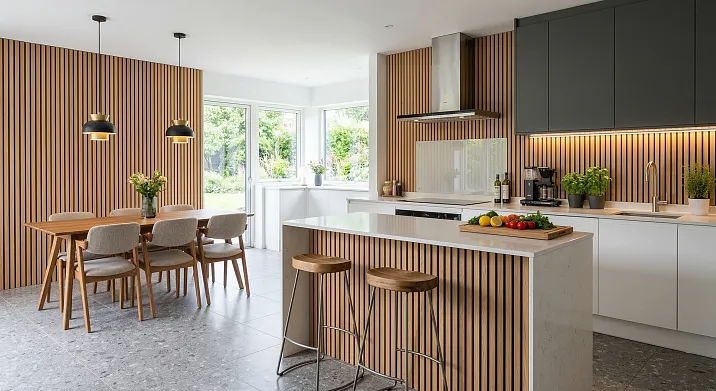
Light oak slatted panels behind the dining table, natural wood table, woven chairs — a biophilic interior with a sense of nature and warmth. Directed spotlights above the table enhance the texture of the slats.
White kitchen with wooden slats
White kitchen set, white backsplash, white ceiling — and one wall with slats in a natural wood tone. Contrast of natural and neutral, warm and cool. One of the best-selling looks for a modern kitchen.
Dark kitchen with vertical accents
Dark green or anthracite kitchen set + vertical slats in light ash or whitewashed oak + brass hardware. This is a bold, expressive solution with high aesthetic results.
Minimalist kitchen with floor-to-ceiling panels
Slatted panels from floor to ceiling on one wall + minimalist furniture without decor + spot lighting. The slats take on all the decorative content of the interior. Nothing extra — just rhythm and structure.
Practicality: Caring for Slatted Panels in the Kitchen
How Often Cleaning Is Needed
In the dining and decorative area—weekly wiping is sufficient. In areas closer to food preparation—as needed based on soiling.
Which Stains Are Most Problematic
Grease condensation is the main issue with kitchen slats. It settles on the horizontal surfaces of the slat ends and in the gaps. That's why smooth slats with minimal gaps are preferable in work areas—less surface area for grease to settle.
Which Finishes Are Easier to Care For
Smooth polymer varnish or PU coating—best. The surface is sealed, without pores. Moisture and grease don't penetrate, easily washed off with a soft cloth. Brushed or matte open-grain wood—more difficult to care for in the kitchen.
What Not to Use for Cleaning
Abrasive powders, stiff brushes, aggressive chemical compounds. They scratch the finish, damage the protective layer, and shorten the lifespan. Neutral detergent + soft cloth—sufficient for regular care.
How to Maintain a Neat Appearance
A range hood over the stove with sufficient capacity is the main 'protection' for slatted panels in the kitchen. It removes grease condensation before it settles on surfaces. Without a good hood, any wall panels in the kitchen quickly lose their appearance.
Common mistakes when choosing slatted panels for the kitchen
Installation in a heavily soiled area without protection
Slats directly next to the stove without moisture-resistant coating and without a good hood are a decorative problem in six months. Grease + steam + exposed wooden surface = darkening, deformation, inability to clean properly.
Choosing unsuitable material
Natural wood with an open surface (oil, wax) in the active kitchen zone is a mistake. For the kitchen, a closed coating is needed. Beautiful does not mean practical.
Too active relief in a small kitchen
Wide slats with deep relief in an 8 sq. m kitchen are a visual overload. The space 'shrinks'. For a small kitchen: narrow slats, light tone, smooth profile.
Color conflict between panels and cabinetry
Warm wooden slats + cold gray cabinetry without a connecting element is a stylistic break. A 'bridge' is needed: a common countertop tone, floor, or textile that links both colors.
Overloading the kitchen with slats on all planes
Slats on all four walls + slats on the ceiling + a slatted partition in a small kitchen — this is not design, it's chaos. One or two planes — maximum.
Ignoring lighting
A slatted wall without thoughtful lighting is lost decorative potential. Without directional light, the texture of the slats is 'muted,' the shadow pattern doesn't work. Lighting is a mandatory part of the system.
Lack of logic in zoning
Slatted panels in a random place in the kitchen, not tied to the dining area, nor the relaxation area, nor the architectural axis — this is a decorative 'shout' without meaning. Slats should answer the question: why exactly here?
Are slatted panels suitable for a kitchen-living room?
It is precisely in a kitchen-living room that slatted panels reveal their maximum strength. Open-plan layout is always a question of zoning: how to divide the space without losing its openness? A slatted wall or slatted partition solves this task elegantly.
Slatted panels in the living area of a kitchen-living room (behind the sofa, behind the TV) create a visual 'belonging' for each zone. The kitchen remains open, the living room — cohesive. Both zones are united by a common decorative language if the slats echo details of the kitchen space — tone, material, style.
How to choose slatted panels for the kitchen before buying
By area of application
First question: where exactly—in the dining area or near the work area? The answer determines the material and finish requirements.
By material
Work area with moderate soiling—MDF with PU lacquer. Decorative and dining area—natural wood with a high-quality finish. Wet environment—polymer or moisture-resistant MDF panels.
Regarding color and style
The color of the slats should coordinate with the cabinetry, floor, and ceiling. The style of the slats (profile, width)—with the style of the entire interior.
By relief depth
For the kitchen—preferably a small or medium relief. Deep relief is harder to clean: grease settles in the recesses and is difficult to remove.
Regarding ease of cleaning
Finish—closed, smooth, or semi-matte. Not open texture, not brushing in work areas. A flat surface—easy cleaning.
Regarding compatibility with existing furniture
Before purchase—take a sample slat and try it against the cabinetry, floor, and ceiling under the actual lighting conditions of your kitchen. The same slats look different in different conditions.
Frequently asked questions
Can slatted panels be used near the stove?
Directly above the stove — not recommended. 30–50 cm from the cooking surface — possible with moisture-resistant coating and good ventilation. Functional backsplash of the work area + decorative slats at a safe distance — the optimal scheme.
Are slatted panels suitable for a small kitchen?
Yes, with the right choice. Narrow vertical slats in a light tone on one accent wall in a small kitchen create a sense of height and depth. The main thing is not to overload all walls and not to use dark tones.
Which panels are better to choose for the kitchen: white or wood-look?
White — if the kitchen is light and neutral in color scheme. Wood-look — if warmth, naturalness, Scandinavian or biophilic style is desired. The ideal option for many kitchens: white cabinetry + wood-look slats = warm neutral contrast.
Can slatted panels in the kitchen be washed?
Yes — provided the coating is sealed. Soft damp cloth, neutral cleaner. Do not immerse in water, do not use abrasives. Smooth polymer coating withstands regular wet cleaning without loss of quality.
Are wooden slats suitable for the kitchen?
In decorative zones — yes. In the dining area and near the TV — excellent. In the work area — only with reliable moisture-resistant coating and with a powerful hood. Open surface (oil, wax) in the kitchen — only in zones without direct contact with steam and grease.
Where is it better to place slatted panels in a kitchen-living room?
In the living area — behind the sofa, near the TV, on the wall of the dining area. Not in the functional kitchen workspace. A slatted zoning partition between the kitchen and living room is one of the best options for open-plan layouts.
Will slatted panels become outdated in kitchen interiors?
No. The vertical rhythm of slats is not a passing trend but an architectural principle that has existed in design for decades. Materials, tones, and slat widths change — but the principle of rhythmic wall decor remains relevant always.
Conclusion
Slatted panels work in the kitchen — provided you understand where to place them, what to make them from, and how to combine them with the rest of the interior. In decorative and dining areas, with the right material and finish, coordinated with the cabinetry and lighting — they transform the kitchen from a functional space into a thoughtful interior with character.
Do not install slats near the stove without protection. Do not choose dark tones in a small kitchen. Do not ignore lighting. And always think of the system: slats are part of an architectural composition, not a random decorative insert.
Full rangeslatted wall panelsfrom solid natural wood, as well asdecorative elements made of polyurethane— cornices, moldings, and profiles for kitchen interiors — is presented in the STAVROS company catalog.
STAVROS means natural materials, precise geometry, and European quality standards. Slatted panels with impeccable finishes that last for years and remain beautiful even under kitchen conditions. Choose what is made for living, not just for photographs.