Article Contents:
- What belongs to the new generation of interior finishing — and why monotony has lost
- Wall evolution: from paint to architecture
- Two tools — one task
- Materials — from solid wood to MDF
- Formats — vertical, horizontal, modular
- Slat spacing — the parameter that determines everything
- Why Polyurethane, Not Plaster
- Types of decorative elements: from trim to applied details
- Scale rule: how to correlate the size of decor with the slatted field
- Living room — the central wall as an architectural statement
- Bedroom — slats at the headboard and a polyurethane frame around
- Study — surface discipline as a metaphor for order
- Hall and entryway — a first impression you can't make twice
- Modernity is not the absence of decor, but its precision
- Trim products: molding, baseboard, cornice
- Overlay elements: sockets, cartouches, ornaments
- First principle: separation of planes
- Second principle: framing as an architectural frame
- Third principle: parallel rhythms
- Fourth principle: contrast of materiality
- Scenario 1: classic hall with modern touches
- Scenario 2: minimalist living room with architectural character
- Scenario 3: a bedroom you'll want to stay in
- Scenario 4: home office with visual discipline
- First mistake: over-saturation with decor
- Second mistake: ignoring scale
- Third mistake: mismatched stylistic codes
- Fourth mistake: poor installation and joining
- Fifth mistake: incorrect work sequence
- Base for slatted panels
- Mounting polyurethane elements to slatted surfaces
- Painting and finishing
- Slatted panels on the ceiling
- Facade Solutions
- Non-standard applications
- Quality of slat panels
- Quality of polyurethane decor

There are interiors that exist. And there are those that resonate. The difference between the first and the second is most often determined not by budget, not by square footage, and not by the designer's name, but by one simple circumstance: whether the person behind the project knows how to work with the architectural logic of surfaces. It is surfaces—walls, ceilings, verticals, and horizontals—that create the framework of perception. It is they that determine whether a space will feel cohesive, alive, distinctive—or remain a collection of furniture against a backdrop of painted planes.
Today we are talking about two tools that, in skilled hands, can transform any room into a space with architectural identity: slatted wall panels for interior finishing and decorative polyurethane elements. Individually, each of these materials has long proven its worth. But the real magic begins when they work together—like rhythm and melody in a musical piece. Like vertical lines and plastic volume. Like discipline and freedom.
This article is not a renovation manual. It is a guide to thinking: how to see a wall not as a plane, but as a score, where every element occupies its place.


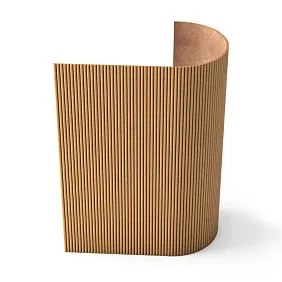
What belongs to next-generation interior finishing—and why monotony has lost




The evolution of the wall: from paint to architecture
For decades, interior finishing boiled down to three operations: level, prime, paint (or wallpaper). The wall was perceived as a backdrop—neutral, impersonal, subordinate to furniture and textiles. This approach worked as long as interior culture remained within simple scenarios. But as soon as space began to be perceived as a holistic architectural environment, the wall ceased to be a backdrop. It became a participant in the dialogue.
Next-generation interior finishing is working with a plane as an architectural object. Here, not only color matters, but also rhythm. Not only texture, but also depth. Not only material, but also scale.
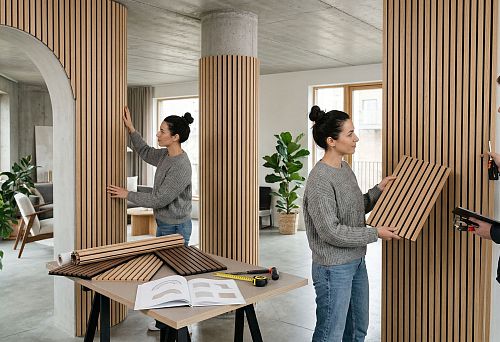
Exactly thereforeslatted wall panels for interior wall finishinghave taken such a significant place in the professional toolkit. They provide what paint never will: regular rhythm, tactile depth, play of light and shadow. Slats are not a decorative whim. They are an architectural tool that establishes verticality, organizes perception, and structures space.
But rhythm is only one side of the equation. The second is volume. And here, decorative polyurethane elementstake the stage: moldings, cornices, casings, rosettes, overlay elements. They create what in architecture is called 'surface plasticity'—the transition from plane to volume, from line to form, from mechanical repetition to a living composition.
Our factory also produces:


Two Tools — One Task
Ask yourself: what makes an interior 'adult'? Not expensive — but adult, thoughtful, composed? The answer is obvious: it's hierarchy. It's the ability to place accents, to determine what is primary and what is secondary, what dominates and what supports.
Slatted panels and polyurethane decor complement each other perfectly precisely because they perform different functions in this hierarchy. The slat creates a field — ordered, rhythmic, self-sufficient. Polyurethane decor creates a frame — a border, an accent. Together they form that very architectural logic that distinguishes a project from mere 'renovation'.
And this is not about classicism in the traditional sense. The combination of slats and volumetric decor is equally appropriate in modern, minimalist, neoclassical, and even industrial interiors. Everything depends on proportions, spacing, profile, and color.
Get Consultation
Slatted Wall Panels: The Anatomy of a Solution That Transforms Space
Materials — from solid wood to MDF
When we talk aboutslatted panels for interior finishing, the first thing to understand is the range of materials. Each material defines its own aesthetic, its own tactility, and its own scale of application.
Solid wood. This is the top tier.Wooden slat panels made of oak, ash, beech — is a living surface with a unique grain pattern. Solid wood reacts to light differently than any artificial material: it does not reflect, but absorbs and shimmers. A wooden slat creates a feeling of warmth, authenticity, and nobility. But solid wood requires the proper microclimate and professional installation.
MDF. The most popular choice for urban apartments and commercial properties.slatted MDF panel— offers dimensional stability, the widest range of finishes (veneer, enamel, film), and predictable behavior under standard humidity conditions. ModernMDF slat panels for walls— are visually almost indistinguishable from solid wood, especially in veneered versions.
WPC and polymer compounds. Composite materials are used for wet areas and facades, but in the context of residential interiors and combinations with polyurethane decor, we will focus on the first two categories—they are the most appropriate.
Formats—vertical, horizontal, modular
The panel format defines the character of a space as much as the material does. Vertical slats visually raise the ceiling, creating a sense of slenderness and lightness. Horizontal slats widen the wall, add dynamism, and emphasize length. Diagonal slats—a risky technique, but in skilled hands, capable of creating a dramatic effect.
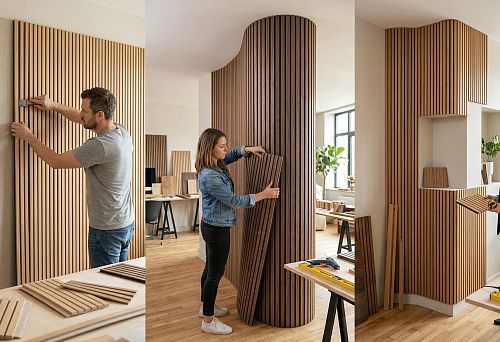
Special attention deservesslatted modular wall panel— a format where slats are combined into ready-made modules of fixed size. The modular approach simplifies installation, ensures precise spacing, and allows working with large areas without the risk of a 'floating' rhythm.
When a slatted panel is combined with polyurethane molding or cornice, the format becomes critical. Vertical slats pair better with horizontal molding—they create a grid that reads as an architectural frame. Horizontal slats paired with a vertical pilaster or trim give the effect of a structured panel.
Slat spacing—the parameter that defines everything
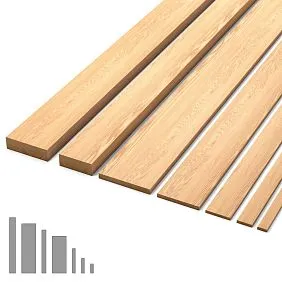
Spacing is the distance between slats, and it defines the character of the surface. Close spacing (12–20 mm) creates an almost fabric-like texture—the surface looks rich, dense, and tactilely luxurious. Medium spacing (25–40 mm) is the gold standard for most living spaces: the rhythm is perceptible but not overwhelming. Wide spacing (50 mm and more) is a solution for large spaces where the slat acts as a sculptural element.
ProfessionalWall finishing with slatted panelsalways begins with determining the spacing. This parameter cannot be changed after installation, and a mistake here is costly—not in money, but in perception.
When working with polyurethane decor, the slat spacing should correlate with the scale of the decorative elements. A large cornice against a background of fine slats will create a sense of heaviness. A thin molding against a background of wide spacing will get lost. Proportion is the key word.
Polyurethane decorative elements: what to choose, why, and how not to overdo it
Why polyurethane, not plaster
Let's start by debunking one persistent myth. Plaster stucco is wonderful. But in the context of a modern interior, especially when combined with wood or MDF panels, polyurethane offers a number of advantages that cannot be ignored.
First—weight. A polyurethane molding is four to five times lighter than its plaster counterpart. This means easier installation, less load on the wall, and the ability to mount on drywall constructions without additional reinforcement.
Second—geometric precision.polyurethane interior itemsare produced by casting in closed molds, which guarantees perfect reproduction of the pattern and absolute repeatability of dimensions. When you install a 2400 mm long molding next to a slatted panel, every millimeter matters.
Third—resistance to moisture and deformation. Polyurethane does not crack with temperature fluctuations, does not absorb moisture, and does not crumble during transportation. It is a practical material for real operating conditions.
Fourth – the possibility of painting. Polyurethanepolyurethane decorative elementsaccepts any type of paint excellently, allowing you to precisely match the color to the slatted panels or create a contrasting solution.
Types of decorative elements: from trim to applied details
Polyurethane decor is not just a ceiling cornice. The assortment is significantly wider, and each type performs its own architectural function.
Moldings. Smooth or ornamented profiles that are used for framing panels, creating paneled compositions on walls, and dividing zones. In the context of combination with slatted panels, molding serves as a boundary – it separates the slatted field from a smooth wall, creating a clear architectural frame.
Cornices. Elements of the junction between wall and ceiling. A cornice is the final chord that completes the vertical composition. If a wall is decorated with slatted panels, the cornice should be sufficiently massive to visually 'close' the upper boundary of the slatted field. A thin cornice against the background of a pronounced rhythm of slats will look unfinished.
Casing and trims. Casing around doorways and windows, made of polyurethane, creates a unified decorative language with cornices and moldings. When a slatted panel ends at a doorway, the casing becomes a natural transitional element.
Applied rosettes and ornaments. Point decorative accents that are used with caution but can give a stunning effect – for example, a ceiling rosette that echoes the rhythm of the slat pattern on the wall.
Pilasters and half-columns. Vertical elements that can flank a slatted field, creating a sense of a portal or niche. This technique is especially good in halls and formal living rooms.
Rule of scale: how to correlate the size of decor with the slatted field
Here lies one of the main secrets of a successful combination. Polyurethane decor and slatted panels must be in the same scale register. What does this mean?
Imagine a wall 2800 mm high, covered with slatted panels with a 25 mm pitch. This creates a fine, rich rhythm. If you frame this field with a 15 mm wide molding, the framing will simply get lost—the eye doesn't perceive it as an independent element. A molding 40–60 mm wide will already create sufficient contrast to function as a frame.
The opposite situation: a wide slat with a 60 mm pitch and a massive 120 mm high cornice. Here everything is on the same scale—large horizontals, large verticals. The space reads as monumental, substantial.
An error occurs when the scales don't match: a fine slat and a giant cornice, or vice versa. This creates a visual conflict that is perceived as 'something is wrong,' even if the viewer cannot articulate the problem in words.
Where to use slatted panels in living spaces: room by room
Living room — the central wall as an architectural statement
The living room is a space where slatted panels reveal their full potential. There is enough area here for the slatted field to 'breathe,' there is an audience—family, guests—and a main focal point is necessary here.
Classic scenario: the central wall (most often the wall with the TV or fireplace) is decorated withwall slatted panels for interior finishing, the other walls remain smooth. Decorative polyurethane molding frames the slatted field, creating the effect of a panel or built-in architectural paneling.
This technique works for several reasons. First, a slat wall on one side doesn't overload the space but sets the character. Second, framing it with molding turns 'just slats' into an architectural gesture — meaningful and complete. Third, the contrast between the rhythmic surface and smooth walls enhances the perception of both: the smooth wall appears calmer, the slatted one more expressive.
What should you consider when decorating a living room?Slatted panels in interior designIn a living room, vertical slat orientation works better — it raises the ceiling and adds a formal feel to the space. Horizontal orientation is suitable for elongated rooms where you need to visually widen the end wall.
Bedroom — slats at the headboard and a polyurethane frame around it
A bedroom is a space of intimate scale, where every detail is perceived at arm's length. Here, slatted panels serve not so much an architectural as a tactile function: the surface you see upon waking should be pleasing to the eye.
The headboard area is the perfect spot for a slatted panel. It sets a vertical rhythm, structures the wall behind the bed, and visually 'anchors' the bed to the room's architecture, rather than leaving it 'floating' in space.
Framing with molding is especially appropriate here: a polyurethane molding around the perimeter of the slatted field creates the effect of a built-in niche, even if the wall physically remains flat. This optical illusion works flawlessly — the brain reads the framing as depth, and the space gains volume.
For a bedroom, it's recommended to use slats made from warm wood species or MDF with a natural-toned veneer. The spacing should be medium (25–30 mm) so the rhythm is pronounced but not aggressive. Polyurethane decor should be minimal: molding around the panel perimeter and, possibly, a ceiling cornice that echoes its profile.
Study — surface discipline as a metaphor for order
A home study is a room where visual order directly affects the ability to concentrate. Here, a slatted panel acts not as a decorative element, but as a tool for organizing space. The regular rhythm of the slats creates a sense of structure that subconsciously tunes you to focus and productivity.
In the study, a slatted panel can occupy the wall behind the desk, the wall with bookshelves, or the wall opposite the entrance — depending on the layout. Polyurethane moldings are used to divide the wall into functional zones: the upper part is smooth (for paintings or shelves), the lower part is slatted (a backdrop for the desk).
This technique comes from classic libraries and studies: wooden panels at the bottom, plaster or fabric at the top, separated by a horizontal molding. Only now, instead of heavy oak panels, there is a lightweight slat, and instead of plaster molding, there is a polyurethane molding that installs in an hour and weighs many times less.
The hall and entryway — the first impression, which cannot be made twice.
The hall is the showcase of the house. Here, a guest forms their first impression, and it must be precise. A slatted panel in the hall solves several tasks simultaneously: it creates a visual accent (instead of a blank wall — an architectural surface), conceals possible wall irregularities, and ensures resistance to mechanical damage.
Polyurethane decor in the hall plays the role of an architectural 'language' that connects the entryway with the other rooms. If a certain cornice profile is used in the living room, the same profile in the hall creates a sense of stylistic unity throughout the apartment.
Decorative slatted panels in the entryway can be placed on the wall opposite the entrance (the first thing a visitor sees) or on the long wall of the corridor, visually 'guiding' the guest deeper into the apartment. In the latter case, a horizontal orientation of the slats may be more effective than a vertical one — it emphasizes length and creates a sense of movement.
Which polyurethane decorative elements are appropriate in a modern interior?
Modernity is not the absence of decor, but its precision.
A common misconception: modern interiors do not tolerate decor. This is not true. Modern interiors do not tolerate meaningless decor. The difference is fundamental. A molding that performs an architectural function — dividing surfaces, framing panels, completing the transition from wall to ceiling — is absolutely appropriate in any stylistic direction. Even in minimalism. Even in loft. The question lies in the profile, scale, and quantity.
For a modern interior, choose polyurethane elements with a simple, clean profile. No acanthus leaves or grape clusters — only clear geometry: quarter round, shelf, cove. Such molding does not attract excessive attention but does its job: it structures the space, defines boundaries, and creates a sense of completeness.
polyurethane interior itemsModern production offers the widest selection of profiles—from ultra-minimal to classic. When choosing decor to combine with slatted panels, follow the principle of 'visual silence': the decor should support the slats, not compete with them.
Trim products: molding, baseboard, cornice
Polyurethane trim products are linear elements sold by the meter. They form the foundation of the decorative arsenal when working with slatted panels.
Ceiling cornice—a mandatory element if the slatted panel reaches the ceiling. The cornice conceals the technological gap between the top edge of the slat and the ceiling while simultaneously creating a visual 'point'—the place where the vertical movement of the slats stops.
Floor baseboard—serves a similar function at the bottom. The baseboard completes the composition at the floor and hides the expansion gap.
Wall molding—a key element for partial wall coverage with slats. If the slatted panel occupies, say, the lower two-thirds of the wall, horizontal molding separates it from the upper, smooth part. This is a classic technique known in architecture as a 'chair rail'.
Corner elements and trims—used for finishing joints of slatted panels on interior and exterior corners. A polyurethane corner piece conceals the joint while simultaneously creating a decorative accent.
Overlay elements: rosettes, cartouches, ornaments
polyurethane decorative elementsOverlay-type elements are used much less frequently in combination with slatted panels, but when used correctly—they deliver a stunning effect.
Imagine the foyer of a private house. The central wall—a slatted panel made of solid oak, vertical slats spaced 30 mm apart, extending from floor to ceiling. On both sides—polyurethane pilasters with fine fluting. Above the slatted field—a horizontal frieze with minimal ornamentation. And on the ceiling, precisely above the center of the slatted wall—a concise rosette that 'closes' the vertical axis.
This is not overkill. It's architecture. Every element in its place, each performing a function, all working towards the overall impression. But such a solution requires impeccable taste and precise calculation of proportions.
How to combine vertical panels and volumetric decor: principles that work
First principle: separation of planes
The most reliable strategy for combining is to divide the wall into zones, each with its own finish. The lower zone is a slatted panel. The upper zone is a smooth wall with paint or wallpaper. The border between them is a polyurethane molding.
This principle works in rooms of any purpose and any size. It is simple to execute, easily scalable, and practically error-proof. The height of the lower (slatted) zone typically ranges from 900 to 1500 mm—depending on the ceiling height and the overall proportions of the room.
In this case, the molding works as a visual 'cornice,' separating two worlds: the world of rhythm (slats) and the world of calm (smooth wall). It should be pronounced enough to be read as an independent element, but not so large as to dominate both fields.
Second principle: framing as an architectural frame
If the slatted panel does not cover the entire wall, but only a fragment of it—say, the TV zone or a niche—framing it with molding around the perimeter turns this fragment into an architectural panel. Slats inside a molding frame are perceived quite differently from slats 'from corner to corner': they become an accent, an event, the center of the composition.
This approach is especially effective when the slatted panel contrasts in color with the surrounding wall. Dark slats in a white polyurethane frame on a light wall—a classic technique that never goes out of style.
Third principle: parallel rhythms
A more complex but incredibly effective approach is the use of parallel rhythms. The vertical rhythm of battens on the wall is supported by the horizontal rhythm of moldings on the ceiling. Or vice versa: horizontal battens on the wall echo with vertical polyurethane pilasters on the adjacent wall.
Parallel rhythms create a sense of architectural integrity that cannot be achieved by any other means. The space begins to 'resonate'—each surface responds to another, creating a dialogue of lines, volumes, and directions.
This technique requires careful planning. The spacing of battens, the spacing of moldings, the distance between pilasters—everything must be calculated at the design stage. But the result is worth the effort.
Principle four: contrast of materiality
One of the most powerful tools is the contrast between the 'living' surface of wood (or veneered MDF) and the 'sculptural' surface of polyurethane. Wood is warm, textured, natural. Polyurethane is smooth, precise, geometric. Together, they create a tactile dialogue that enriches the space on a sensory level, not just visually.
For this contrast to work, it is important that both materials are visible simultaneously—on the same wall or on adjacent walls. If a batten panel is on one wall and polyurethane decor is on another, and there is no visual connection between them, the contrast is not perceived.
Work scenarios for each room: step-by-step solutions
Scenario 1: a classic hallway with modern touches
Task. Create a formal entry space that makes an impression upon entering but does not look 'palatial'.
Solution.
- Central wall (opposite the entrance door) – slatted panel made of solid oak, vertical orientation, 25 mm spacing, height from floor to ceiling
- Frame of the slatted field – polyurethane molding 50 mm wide, painted to match the wall color
- Side walls – smooth paint finish, tone slightly lighter or slightly darker than the slats
- Ceiling cornice – uniform around the entire perimeter of the hall, simple profile, height 80–100 mm
- Door architraves – polyurethane, profile echoes the ceiling cornice
Effect. Upon entering the hall, the guest sees the vertical rhythm of oak, framed by a clean border. The space looks cohesive, noble, but without pretentiousness. The cornice and architraves create a stylistic connection, the molding – an architectural boundary.
Scenario 2: minimalist living room with architectural character
Task. Add character to the living room without disrupting the minimalist aesthetic. The space should remain clean, but not empty.
Solution.
- TV wall – slatted panel made of MDF with ash veneer, 30 mm spacing, painted in a matte gray-beige tone, occupies a wall fragment (width – 2400 mm, height – from floor to cornice)
- Frame – minimal polyurethane shelf-molding, width 25 mm, painted in the wall color (white or light gray)
- Other walls — smooth paint finish
- Ceiling cornice — concealed (shadow joint) or minimal polyurethane profile
- Floor skirting — polyurethane, 80 mm height, concealed type
Effect. The slatted panel is perceived as a built-in art object — a structured surface in a laconic frame. Minimalism is preserved, but the wall is no longer an empty plane. It has become architecture.
Scenario 3: a bedroom you want to stay in
Task. Create a calm, warm space where every surface contributes to the feeling of coziness and security.
Solution.
- Headboard wall — slatted panel made of solid wood or veneered MDF, warm tone (walnut, caramel oak), 20 mm spacing, height — up to 1800 mm level (above — smooth wall)
- Horizontal molding at the level of the panel's upper edge — polyurethane, 40 mm width, painted to match the upper part of the wall
- Ceiling cornice — with a soft rounded profile, polyurethane, 70 mm height
- Side walls — textured paint or wallpaper matching the slat tone, without additional decor
- On either side of the bed, on the smooth part of the wall — symmetrical light fixtures, visually aligned with the axes of the slats
Effect. The slat at the headboard creates a tactile background that reads as a 'cocoon'. The molding at eye level (when lying down) softly finishes the panel. The cornice with a smooth profile supports a sense of calm. The space breathes warmth and composure.
Scenario 4: a home office with visual discipline
Task. Create a work environment that helps with focus, yet doesn't look institutional or sterile.
Solution.
- The wall behind the desk — a slatted panel on the lower 1200 mm, MDF for painting or veneer in a dark tone (anthracite, wet asphalt, dark walnut)
- Horizontal molding — polyurethane, classic profile with one shelf, width 60 mm, painted to match the panel or in a contrasting color (white, brass)
- Upper part of the wall — smooth, light, with built-in shelves for books
- Side walls — smooth, with flexible slatted panels for acoustic comfort (if the office is used for video conferences)
- Ceiling cornice — strict, rectangular in cross-section
Effect. The dark rail at the bottom 'grounds' the space, creating a visual anchor. The molding establishes a horizontal line that disciplines the gaze. The light top adds airiness. The space works—both literally and figuratively.
Mistakes in combining different materials—and how to avoid them
First mistake: over-saturation with decor
This is the most common problem. A person who has discovered the beauty of slatted panels and polyurethane decor wants to use everything at once: slats on three walls, moldings on the fourth, a cornice with an ornament, rosettes on the ceiling, pilasters in the corners.
The result is visual chaos. The eye finds no point of rest, the space feels cramped and overloaded, and expensive materials don't work because they compete with each other.
Rule: in one room—no more than two or three pronounced decorative techniques. A slatted panel on one wall + molding around the perimeter + ceiling cornice—these are three elements, and that's enough. Adding a fourth (rosette, pilasters, frieze) is only possible if the room area exceeds 25–30 square meters and the ceiling height is from 3 meters.
Second mistake: ignoring scale
We've already touched on this topic, but it deserves a separate discussion. Scale is not size. Scale is the ratio of sizes. A large cornice 150 mm high in a room with a 2500 mm ceiling will look overhanging. A thin molding 15 mm wide in a 40-square-meter room simply won't be perceived.
Rule: cornice height—approximately 1/30 of the ceiling height. Molding width—approximately 1/50 of the width of the framed surface. These are approximate proportions, but they work as a starting point.
Third mistake: mismatched stylistic codes
Raw wood (or raw wood imitation) slatted panels and a Baroque polyurethane cornice with garlands and volutes create a stylistic conflict that cannot be resolved. Both elements are beautiful individually, but together they speak different languages.
Rule: if the slat is 'modern' (clean lines, minimal profile), the trim should be 'modern' (simple profile, no ornament). If the slat is 'classical' (shaped profile, warm wood), the trim can be more elaborate (fluting, shelves, rounded edges). The stylistic code must be unified.
Mistake four: poor installation and joining
Even perfectly matched materials can be ruined by poor installation. Gaps between the molding and the slatted panel, uneven cornice joints at corners, and an inconsistent slat spacing all negate any design effort.
Rule:installation of slatted panelsmust be installed on a level base (deviation no more than 2 mm per meter). Polyurethane trim is installed after the panels, with joints filled with acrylic sealant and subsequently painted. All slat ends adjoining the molding must be cut at a right angle with millimeter precision.
Mistake five: incorrect work sequence
What should be installed first—the panels or the trim? The answer depends on the structural scheme.
If the slatted panel fits under the molding (the molding 'sits' on the panel's top end), install the panel first, then the molding. In this case, the molding conceals the top end and creates a clean transition line.
If the molding and panel are in the same plane and join 'end to end', the sequence depends on the geometry: install the element first that is harder to adjust after installation. Usually, this is the molding—it is rigid and sets the line to which the panel is 'fitted'.
Understanding the correct sequence of work is one of the key conditions for a successful result. Detailed recommendations for fastening can be found in the material aboutHow to install slatted panelsto various substrates.
Technical nuances: from substrate selection to final painting
Substrate for slatted panels
Substrate quality is the foundation of any installation. Slatted panels are fastened to a lathing (wooden batten or metal profile) or directly to the wall (with ideal geometry).Wall slat panels in interiorresidential spaces are most often mounted on wooden lathing with a spacing of 400–600 mm.
Important nuance: when combined with polyurethane trim, the lathing must account for the placement of moldings. If a horizontal molding crosses the slatted field, it is necessary to provide an additional horizontal lathing batten at the level of the molding — to ensure a strong abutment.
Fastening polyurethane elements to a slatted surface
Polyurethane trim on a flat wall is fastened with mounting adhesive and/or screws followed by putty. But when mounting on a slatted surface, a specificity arises: the surface is not flat, but ribbed.
The solution is to use an intermediate strip. A smooth horizontal strip (made of MDF, plywood, or solid wood) is mounted onto the slats, and the polyurethane molding is then fastened to it. The strip creates a flat base for gluing and ensures reliable contact along the entire length of the molding.
An alternative option is to install the molding not on the slatted surface, but next to it, on a smooth section of the wall. In this case, the molding adjoins the end of the slatted panel, and the joint is filled with sealant.
Painting and finishing
One of the main questions: should slatted panels and polyurethane decor be painted the same color—or left contrasting?
Both options work, but create different moods.
Uniform color (both the slats and the decor are painted the same tone): the wall is perceived as a monolithic sculptural surface. The rhythm of the slats is revealed through the play of light and shadow, and the molding is read as relief, not as a separate element. This technique is ideal for minimalist interiors.
Contrast (slats—natural wood, decor—white or gray): the materials 'argue' with each other, creating visual tension. The molding becomes obvious, emphasized, and the boundaries—clear. This technique works in classic and transitional styles.
An intermediate option is tonal contrast: the slats are two to three tones darker than the decor. The transition is soft, the boundary is readable but not shouting. Perhaps this is the most universal approach for most residential interiors.
Slatted panels for interior finishingSolid wood panels are usually coated with oil or varnish, which preserves the natural wood texture. MDF panels are painted with enamel or covered with veneer. Polyurethane decor is painted with acrylic or latex paint in any color from the catalog.
Why architects are increasingly choosing the combination of slats and polyurethane
The professional community—architects, interior designers, decorators—is increasingly turning to this combination, and the reasons are clear.
Economics. The combination of slat paneling (cost—mid-range) and polyurethane molding (cost—lower than plaster, higher than plastic) creates a visually rich interior on a reasonable budget. This is not a 'cheap' option—it's a 'smart' option where every ruble works towards the result.
Speed. Installing slat panels and polyurethane molding takes significantly less time than working with natural stone, plaster, or gypsum stucco. For projects with strict deadlines, this is a critical advantage.
Repairability. A damaged slat can be replaced without dismantling the entire panel. A damaged fragment of polyurethane molding can be replaced and repainted. Try doing the same with a handmade plaster cornice.
Predictability of the result. Both materials are factory-produced, with precise geometry and consistent quality. The result does not depend on the plasterer's mood or the workshop temperature. What is designed is what is obtained.
Versatility. The combination works in any stylistic register. Modern slat + minimal molding = modernism. Classic slat + fluted pilaster = neoclassicism. Large slat + rough molding = industrial chic. The same principle—different embodiments.
Additional possibilities: ceiling, facade, and custom solutions
Slat panels on the ceiling
Walls are not the only place for slats.Batten panels for ceilings—this is a solution that expands the architectural dialogue in the vertical plane. When the slat transitions from the wall to the ceiling (or occupies the ceiling separately), the space acquires a completely different resonance.
In the context of a combination with polyurethane decor, the ceiling batten creates an additional layer of rhythm. The cornice at the junction of the wall and ceiling in this case becomes not just a decorative element, but a structural one—it separates two batten fields (wall and ceiling) and allows changing the direction of the battens.
Facade Solutions
Slatted Façade Panels— is a separate topic, but it's worth mentioning. If the batten theme is used on the building facade, its continuation in the interior creates a sense of architectural integrity—a house that is 'the same' outside and inside. Polyurethane decor in this case works as a tool for 'translating' the facade aesthetic into the interior scale.
Non-standard applications
Batten panel in a niche. Batten panel as a partition (transparent or semi-transparent). Batten panel as a base for built-in lighting (LED strips are installed between the battens). Polyurethane decor as a frame for a mirror, fireplace, arched opening.
Each of these solutions is a development of the basic combination. And each requires the same principles: scale, rhythm, materiality, stylistic unity.
How to choose a supplier: what to pay attention to
Quality of batten panels
When choosing batten panels, pay attention to several parameters:
- Batten geometry. Each batten should be perfectly straight, without helical bending. Check this by placing the batten on a flat surface.
- Coating quality. Veneer should be glued without bubbles, enamel should be applied evenly, without drips or orange peel texture.
- Stability of the base. The MDF base should be dense (at least 680–720 kg/m³), without delamination on the ends.
- Completeness. Check for the presence of guides, fasteners, end caps, and installation instructions.
Decorative slatted wall panelsfrom trusted manufacturers are always supplied with the necessary fasteners and documentation. This is not a minor detail—it's an indicator of production culture.
Quality of polyurethane decor
- Density of polyurethane. Too light (polyurethane foam)—brittle and imprecise. Too heavy—difficult to install. Optimal density—300–500 kg/m³.
- Profile accuracy. Place the molding on a flat surface—it should fit without gaps. Check the joining of two elements—the pattern should match.
- Primer. High-quality polyurethane decor comes with factory primer, ready for painting.
decorative polyurethane elementsof high quality are distinguished precisely by accuracy—every millimeter of the profile corresponds to the specified drawing.
Influence of lighting on the perception of combined surfaces
This aspect is often overlooked, yet it is precisely light that transforms a slatted panel from a set of wooden planks into an architectural surface. The slat interacts with light: each plank casts a shadow on the adjacent one, and this shadow changes throughout the day—in the morning it is long and soft, at noon—short and sharp, in the evening—long again, but in the opposite direction.
Polyurethane decor also works with light, but differently: the protruding profile of the molding creates a linear shadow that emphasizes the horizontal or vertical line.
When designing lighting for walls with slatted panels and polyurethane decor, consider the following:
- Grazing light (directed along the wall, from above or below) maximally reveals the rhythm of the slats and the relief of the moldings. This is the most spectacular option.
- Frontal light (directed perpendicular to the wall) 'dampens' shadows and makes the surface flatter. Use it with caution.
- Integrated lighting (LED strip between the slats or behind the molding) creates a dramatic effect — the slats are illuminated from within, and the molding 'floats' on the wall.
Well-thought-out lighting doubles the effect of investments in finishing materials. This is not an additional expense — it is an investment in perception.
Cost: what makes up the budget
Let's be pragmatic. The combination of slatted panels and polyurethane decor is not the cheapest solution. But it's not the most expensive either. The budget consists of several components.
Slatted panels. The cost depends on the material (solid wood is more expensive than MDF), wood species (oak is more expensive than pine), finish (veneer is more expensive than film), and format (modular panels are more expensive than assembled ones). Approximately — from several thousand rubles per square meter for MDF to significantly higher figures for panels made of solid precious wood.
Polyurethane decor. The cost is per linear meter (moldings, cornices, baseboards) or per piece (rosettes, overlays). Polyurethane is cheaper than gypsum with comparable quality and significantly cheaper than natural stone.
Installation. Lathing, panel fastening, decor installation, joint puttying, painting. Work of a qualified installer — from 30 to 50 percent of the material cost.
Base preparation. Wall leveling (if necessary), electrical work (if built-in lighting is planned), removal of old finish.
The total budget for finishing one wall (say, 8–10 square meters) with slatted panels, polyurethane framing, and painting is significantly lower than finishing the same wall with natural stone or carved wooden boiserie. At the same time, the visual effect is comparable.
Trends and prospects: where the market is heading
The interior finishing market is moving towards combined solutions. Mono-material interiors (all wood, all stone, all metal) are giving way to multi-layered compositions where each material plays its role.
Slatted panels are one of the fastest-growing segments. Interest in them is fueled by social media and visual platforms: slats are an incredibly photogenic material, they look great in photos and videos, creating depth and texture even on a two-dimensional screen.
Polyurethane decor is also experiencing a renaissance — but in a modern interpretation. Baroque garlands are moving into the niche of historical reconstructions, while clean, laconic profiles that work as architectural tools, not decorations, come to the fore.
The combination of these two directions — slatted rhythm and polyurethane plasticity — looks like one of the most promising trends of the next decade. It is affordable, technological, scalable, and stylistically universal.
FAQ — answers to popular questions
Can slatted panels be used in wet areas — bathroom, kitchen?
For wet areas, special materials are required — moisture-resistant MDF with protective coating or composite DPC panels. Solid wood without additional treatment is not recommended for use in wet zones. Polyurethane decor, on the contrary, is moisture-resistant by nature and can be used in any rooms.
What is the recommended minimum slat spacing for combination with polyurethane decor?
There are no strict restrictions, but practice shows that spacing less than 12 mm creates too fine a texture, which visually 'clashes' with the larger scale of moldings. The optimal range is 20–40 mm.
Is it necessary to frame a slat panel with molding?
No. A slat panel that runs 'wall to wall' and 'floor to ceiling' does not require framing—it becomes an architectural surface in itself. Molding is necessary when the slat panel occupies a fragment of the wall and needs visual completion.
Can slat panels and polyurethane decor be painted the same color?
Yes, and this is one of the most effective techniques. A uniform color creates a monochromatic sculptural surface, where rhythm is expressed solely through light and shadow. This approach is often used in minimalist interiors.
What adhesive to use for installing polyurethane decor?
For polyurethane products, specialized polymer-based mounting adhesives are used—they provide high adhesion to various surfaces and do not corrode polyurethane. Additional fixation with screws is recommended for large elements (cornices, pilasters).
Slat panel made of MDF or solid wood—what to choose for a living room?
The choice depends on budget, aesthetic preferences, and operating conditions. MDF is more dimensionally stable, cheaper, and offers a wider selection of finishes. Solid wood is more natural, richer in tactile feel, and more durable. For a standard city apartmentMDF Slatted Wall Panel—it is the optimal choice. For a country house with a claim to durability—solid wood.
Can you combine different format slatted panels on one wall?
Theoretically, yes. Practically, it requires very precise design. Different formats (vertical and horizontal slats) on one wall create visual conflict if not separated by a clear architectural element—like polyurethane molding.
What is the average length of polyurethane molding and how to join the elements?
Standard length is 2000 or 2400 mm. Joining is done at a 45-degree angle (for straight sections) or 90 degrees (for corners). Joints are filled with special putty, sanded, and painted—after painting, the joint becomes invisible.
Is polyurethane decor suitable for a children's room?
Absolutely. Polyurethane is an environmentally safe material that does not emit harmful substances at room temperature. It is more impact-resistant than plaster (does not crumble upon accidental impact) and is easy to repaint, which is convenient as the child grows and the interior changes.
Is it necessary to prepare the wall before installing slatted panels?
If the panels are mounted on battens, perfect wall leveling is not required—the battens compensate for minor unevenness. However, major defects (variations over 10 mm) should be corrected so that the battens lie in the same plane. More about preparation—in the article about installation of slatted panels.
Conclusion: architectural logic is accessible to everyone—with STAVROS
Let's summarize. Slatted wall panels for interior finishing and polyurethane decorative elements are not just two finishing materials. They are two tools of architectural thinking that, in skilled hands, can transform any room into a space with character, hierarchy, and internal logic.
The slat creates rhythm. Polyurethane creates form. Together they shape a surface that doesn't just exist — it speaks. It speaks of scale, of taste, of understanding how good space is composed.
STAVROS is one of Russia's leading manufacturers offering a complete range of solutions for creating such interiors. The STAVROS assortment includesslatted wall panels for interior wall finishing made from solid wood and MDF,polyurethane interior items— moldings, cornices, overlay elements — and everything needed for their combination.
STAVROS is not just a materials store. It's a company that understands the architectural logic of an interior and helps its clients implement complex, multi-layered solutions. The product catalog, technical consultations, installation recommendations — everything needed to assemble an interior 'according to mature architectural logic' is available on the STAVROS website.
Because a true interior doesn't start with furniture or paint. It starts with surface architecture. And surface architecture begins with the right materials and the right proportions.