Article Contents:
- What's behind a commercial query: who is looking for these materials and why
- Stage one: visual inspiration without a concrete plan
- Stage two: specific task, searching for execution
- Stage three: comparing suppliers
- What types of slatted panels exist: a complete overview for the buyer
- By base material
- By panel construction
- By slat profile
- By dimensions
- What to know before buying wall slat panels
- First question: what is the actual finishing area
- Second question: what is the interior style
- Third question: what is the humidity level in the room
- Fourth question: vertical or horizontal
- Fifth question: will there be lighting
- Sixth question: what kind of coating is needed
- Seventh question: is acoustic function needed
- What plaster decor is really needed: without excess and without shortage
- Ceiling cornices: a basic element for any interior
- Moldings: Architectural Surface Division
- Rosettes: central ceiling accent
- Decorative Overlays and Medallions
- Trim Elements: Baseboards, Pilasters, Casings
- How to Choose Materials for a Specific Interior
- Four Compatibility Parameters
- Style and Materials Compatibility Table
- What to Look for in Product Descriptions When Buying Online
- For slatted panels
- For stucco decor
- How to Avoid Buying a Pretty Picture Instead of Good Material
- Signs of a Quality Slat Panel Supplier
- Signs of a Quality Plasterwork Decor Supplier
- Red flags that say 'stop'
- Where to buy: online store of polyurethane moldings and slatted panels — selection criteria
- Manufacturer or distributor
- Assortment as an indicator of seriousness
- Delivery terms and conditions
- How to avoid impulsive buying and still make the right choice
- FAQ: answers to the most common customer questions
- About the Company STAVROS

Search bar. Three words. 'Buy slatted panel'. Or: 'buy molding decor'. Short, specific, business-like. Behind this query is a person who has already made a decision, has already seen inspiring photos, and now wants one thing: to get a material that will look just as good in reality as in the picture on the internet. And this is where the most interesting part begins — because between a commercial query and the right purchase lies a whole field of questions that most people don't ask. And that's exactly why they end up redoing things.
This article is not a catalog. It's a thinking guide. About how to think about slatted panels and molding decor not as a product with a price tag, but as design tools with specific tasks. How to read product descriptions so you don't buy a beautiful photo instead of quality material. And how to make a purchase once — and for a long time.


What's behind the commercial query: who is looking for these materials and why
When a person searches for 'buy slatted panels' or 'buy polyurethane molding decor', they may be at completely different stages of decision-making. Understanding which stage you yourself are at is the first step to making the right purchase.




Stage one: visual inspiration without a concrete plan
A person saw a beautiful interior — in a magazine, on Instagram, at a friend's place. Wanted "something similar." The request is born from emotion, not from technical understanding. This is the riskiest stage for a purchase: without a clear understanding of the task, it's easy to buy the wrong thing, too much, or too little.
What to do: first answer the questions — for which room, for which surface, what interior style, what is the budget for the entire project (materials + installation), what are the technical limitations (ceiling height, wall curvature, room humidity). Only after that — choose specific products.
Our factory also produces:


Stage two: specific task, searching for execution
The designer or the owner already knows: a slatted panel is needed for an accent wall in the living room, slat width 60 mm, gap 20 mm, solid oak, walnut stain, wall length 4 meters, height 2.8 m. The request is specific, purchasing is a matter of technique: find a supplier with the right product, correctly calculate the quantity, place the order.
Get Consultation
Stage three: supplier comparison
The material is chosen, suppliers are selected. Comparison is made by price, terms, delivery conditions, stock availability. This is the most rational stage, where the decision is made based on objective parameters.
Understanding your stage is the key to the correct sequence of actions. If you are at the first stage, don't rush to place an order: spend time on planning. This will save money and nerves.
What types of slatted panels are there: a complete overview for the buyer
Beforebuy slatted panelWe need to understand the typology. The market offers several fundamentally different products under the same name—and the difference between them is much more significant than it seems at first glance.
By base material
MDF for painting is a dense wood-fiber material (750–850 kg/m³) with a homogeneous structure. Perfectly smooth surface for any paint. Does not show texture through the coating. The best choice for white, solid-color, and pastel interiors where color purity is important. Resistant to deformation under stable humidity. Not recommended for rooms with constant humidity fluctuations without appropriate treatment.
Solid oak is a natural material with a unique grain pattern. Density 700–750 kg/m³, high wear resistance. Accepts tinting in a wide range of shades—from light natural to dark wenge. Each panel is unique in pattern. Requires acclimatization before installation (5–7 days in the room). The optimal choice for interiors where natural texture is a deliberate design accent.
Other wood species—ash, larch, birch, pine. Each species has its own character: ash—expressive grain pattern, light tone; larch—high natural moisture resistance, good for kitchens and wet areas; birch—homogeneous structure, soft tone; pine—budget option, requires more thorough processing.
By panel construction
Rigid panel on MDF backing—slats are fixed to a flat MDF base with precise spacing. Mounted as a single block. Precise geometry, consistent slat spacing across the entire plane. Optimal for flat walls and ceilings. The joint between panels must align with the slat spacing—important to consider when calculating quantity.
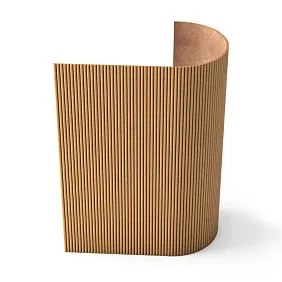
Flexible panel on fabric backing—slats are attached to an elastic fabric backing that allows the panel to bend without breaking. The only option for curved surfaces: columns, arches, rounded corners, non-standard architectural forms. More expensive than rigid panels, but opens up possibilities unattainable by other solutions.
Individual slats without backing—basic format for self-assembly of the structure. Requires mounting on a frame with precise spacing maintenance. Suitable for non-standard projects with unusual slat spacing, mixed widths, variable gaps, or non-linear layouts.
By slat profile
Rectangular profile—versatile, suitable for any style. Clear edges create expressive shadows with side lighting.
Beveled profile — edges cut at an angle soften the slat's silhouette, creating a smooth transition between the slat and the gap. A slightly more delicate look than a rectangular profile.
Semi-circular glazing bead profile — a slat with a rounded front surface. Creates a soft, plastic play of light and shadow — without sharp shadows. Suitable for Scandinavian and minimalist interiors where delicacy is important.
Figurative profile — slats with a pronounced cornice or classic profile. A more complex shape, a richer play of light and shadow. Appropriate in historical, classical, and neoclassical interiors.
By dimensions
Standard slat dimensions: width from 30 to 120 mm, thickness from 14 to 25 mm, length from 2400 to 3000 mm. Non-standard dimensions are possible to order from manufacturers working with solid wood.
Choosing the slat width is a question of the room's proportions:
| Ceiling Height | Recommended slat width |
|---|---|
| up to 2.6 m | 30–50 mm |
| 2.6–2.9 m | 50–70 mm |
| 2.9–3.2 m | 60–80 mm |
| over 3.2 m | 80–120 mm |
What you need to know before buying slatted wall panels
Buying slatted wall panels correctly means answering seven key questions before placing an order.
First question: what is the actual finishing area
Measure the wall (or walls) including door and window openings. Subtract the area of the openings from the total wall area. Add 10–15% for cutting and possible defects. This is the calculated order area.
The 'buying exactly to size' mistake is one of the most common. Buying the same article number from another batch means risking a slight mismatch in shade or pattern. A 10–15% reserve is not wastefulness, but insurance.
Second question: what is the interior style?
Battens are not a neutral material. Narrow battens made of light ash speak the language of Scandinavian minimalism. Wide battens made of dark oak speak the language of brutal loft or English classicism. Thin white MDF battens for painting speak the language of modern neoclassicism. A mismatch between the 'language' of the battens and the overall style of the room is a mistake that is immediately noticeable and can only be corrected by redoing the work.
Third question: what is the humidity level in the room?
For bathrooms, kitchen areas near the stove and sink — only species with high natural moisture resistance (larch, oak) with a moisture-resistant coating. MDF without special treatment in rooms with constant steam will swell and deform.
Fourth question: vertical or horizontal?
The direction of the battens is not just an aesthetic choice. Vertical battens visually increase the height of a room, horizontal ones expand it horizontally. In low rooms (up to 2.6 m), horizontal battens will create pressure. In narrow corridors, horizontal battens are the best choice.
Fifth question: will there be lighting?
If you plan to integrate LED strips into the gaps between the battens — this needs to be decided before installation, because the strip is laid on the supporting plane before the battens are installed. Changing this decision after installation is much more difficult. For lighting, the gap should be at least 15–20 mm.
Question six: what kind of finish is needed
-
Panels without a finish (for painting or tinting) — the most affordable option. The buyer applies the final finish themselves. Important: MDF requires preliminary priming.
-
Panels with applied oil or varnish — ready for installation without additional processing. More expensive, but save time.
-
Panels tinted to a specific color — the possibility to order the desired shade from the manufacturer.
Question seven: is an acoustic function needed
If the room needs improved acoustics, a sound-absorbing material (mineral wool with a density of 40–60 kg/m³, thickness 50 mm) is mounted behind the slatted panels. Without this layer, the slats only provide diffusion, not absorption. If there is no acoustic task — the additional layer is not needed.
Which molded decor is really needed: without excess and without shortage
When a person wants Buy Molded Decoration, they often face a huge choice and don't know where to start. The most useful thing in this situation is a structured typology: what decor is needed for what and in which case it's indispensable.
Ceiling cornices: a basic element for any interior
A cornice is the transition between the wall and the ceiling. It is the only element of stucco decoration that is appropriate in any interior without exception: from minimalism to baroque. The only difference is in the profile.
For minimalist and Scandinavian interiors — a smooth cove 30–50 mm wide without ornament. For modern classic — a moderate profile with a geometric pattern (meander, cyma reversa, ovolo). For neoclassical and Empire — a rich profile with floral or antique ornament.
A cornice without ornament costs significantly less than a profiled one — and yet performs the same architectural function: it creates a horizontal line, shadow, and a sense of completeness at the transition of planes.
Moldings: architectural division of surfaces
Moldings are linear elements for structuring walls and ceilings. They can:
-
Divide the ceiling into rectangular fields (coffered effect without drywall)
-
Frame slatted panels around the perimeter
-
Divide the wall horizontally into functional zones
-
Create a panel effect on the lower part of the wall (classical 'armor field')
Moldings are a universal tool for architectural structuring. When applied correctly, they create the effect of an expensive interior at relatively low cost.
Rosettes: central ceiling accent
A ceiling rosette is needed where there is a central light fixture and a ceiling plane that you want to enliven. The rosette diameter is chosen in proportion to the ceiling area: for a ceiling of 16–20 sq. m — a rosette of 300–400 mm, for 20–30 sq. m — 400–500 mm.
A rosette is not a mandatory element. If the interior lacks a central chandelier, or the style calls for complete minimalism, the rosette can be omitted without compromising the quality of the solution.
Decorative overlays and medallions
Buy Polyurethane Molded Decorationin the form of overlays, medallions, and relief inserts means getting focal accents for walls, furniture fronts, mirror frames, and fireplace portals. These elements work where a relief accent is needed without linear decoration.
Overlays are often used for:
-
Decorating door panels
-
Accentuating a fireplace portal
-
Creating relief panels on an accent wall
-
Decorating columns and pilasters
Molding elements: baseboards, pilasters, trims
Polyurethane skirting boards are a practical alternative to wooden or MDF skirting boards where a rich profile is needed without significant weight. Pilasters are vertical decorative elements that mimic columns, used for decorating wall sections, niches, and transitions between zones. Architraves are frames for door and window openings.
All of this falls into the category ofmolding productsthat form the architectural structure of the interior without major construction costs.
How to choose materials for a specific interior
The most common question when purchasing is: 'Will this suit my interior?' There is no universal answer—but there is a system that works in most cases.
Four compatibility parameters
Style. Each interior style has its own vocabulary of materials and forms. Dark oak battens in a brutal loft—organic. Baroque cornices in the same loft—dissonance. Smooth white molding in a Scandinavian interior—appropriate. An ornate rosette with acanthus leaves in the same place—out of place.
Scale. The size of decorative elements should correspond to the size of the room. Small room—small details. Large hall—you can afford expressive sizes.
Color palette. Natural wood battens work well in a warm palette (beige, ochre, cream tones). In a cold gray-white palette, MDF battens painted white or gray look more organic. Moldings in most cases are white or the color of the ceiling.
Material context. What else is in the space? If there is already a natural wooden floor and wooden furniture—oak battens will create an overload of natural wood. In this case, MDF battens in a different color or painted may work better. If the interior has a lot of metal and concrete—dark oak battens will add warmth without overload.
Compatibility table of style and materials
| Interior style | Slats | Molded decor |
|---|---|---|
| Scandinavian minimalism | MDF/birch, white or light tone | Thin smooth cornice, without ornament |
| Modern Classic | Light oak, ash | Cornice with geometric profile, moldings |
| Neoclassical | Oak, ash with tinting | Rich cornice, rosette, coffered moldings |
| Loft/industrial | Dark oak, thermowood | Minimum or absence of molding |
| Art Deco | Battens with metallic tinting | Geometric moldings, art deco rosette |
| Provence/shabby chic | Wood in white or milky tint | Delicate cornice with floral ornament |
What to look for in the product description when buying online
Online purchase of construction and finishing materials always carries the risk of mismatched expectations and reality. But this risk can be minimized if you know exactly what to read in the product card.
For slatted panels
Wood species or base material. 'MDF' or 'solid wood + species'. If it simply says 'wood' without specifying the species — that's a signal to ask the manager.
Dimensions: batten width, gap, thickness, panel length. All four parameters must be specified. Without them, it is impossible to calculate the amount of material.
Panel type: rigid/flexible. Critical for radius surfaces.
Degree of readiness for installation. 'Primed for painting', 'with oil-based coating', 'with applied tinting' — these are different products with different prices and different readiness for installation.
Wood moisture content. A quality manufacturer specifies this parameter: 8–12% is normal for interior applications. If the parameter is not specified — clarify.
For stucco decor
Material: polyurethane, MDF, polystyrene, plaster. This is a fundamental parameter. Polystyrene and polyurethane are visually similar but fundamentally different in strength, weight, and durability.
Exact dimensions. Width, profile height, projection (for cornices), diameter (for rosettes). Without this data, it is impossible to assess whether the element will fit a specific room.
Material density. The higher the density of polyurethane, the better the surface detail and product strength. Polyurethane products with a density of 280–350 kg/m³ belong to the premium segment.
Readiness for painting. Most polyurethane products are supplied primed or with a ready surface for painting. Clarify whether additional priming is needed before applying paint.
Product length and multiples. Most linear elements are 2 meters. Some manufacturers offer custom non-standard lengths.
How to avoid buying a beautiful photo instead of good material
Online trade in finishing materials is an industry with enormous quality variation. Fundamentally different products hide behind identical names. Here are specific signs that allow distinguishing quality from imitation of quality.
Signs of a quality slatted panel supplier
-
Wood species and origin are specified (Russian species, European oak, etc.)
-
Wood moisture content is specified (8–12%)
-
Photos of a real sample are available, not just renders
-
Sample shipment is possible before ordering a large batch
-
There is information about production and quality control
-
Manager can answer technical questions, not just price and delivery inquiries
Signs of a quality molding decor supplier
-
Specific material is indicated (polyurethane, MDF — not just 'decorative material')
-
There are detailed photos of the relief under side lighting — they show the detailing
-
Exact dimensions are specified (width, overhang, height)
-
Information about coating and readiness for installation is available
-
Availability of physical samples for ordering
Red flags that say 'stop'
-
A price that seems 'too low' — most often hides polystyrene instead of polyurethane, under-dried wood, or low-density MDF
-
Photos only from one angle, without details of joints and ends
-
Lack of technical parameters in the description
-
Inability to obtain a sample
-
A manager who doesn't know the answer to a question about wood moisture or polyurethane density
Where to buy:Online store of polyurethane moldingand slatted panels — selection criteria
Choosing a supplier is not just about price. It's about reliability, assortment, consistent quality from batch to batch, and service.
Manufacturer or distributor
A manufacturer who produces items themselves controls quality at every stage. This means predictability: the second batch will be the same as the first. A distributor depends on the supplier — and when batches change, parameters may vary slightly.
For large projects, it is always preferable to work directly with the manufacturer: this allows for clarifying details, ordering custom sizes, and obtaining guarantees on batch consistency.
Assortment as an indicator of seriousness
A manufacturer with a wide assortment — slatted panels made from several wood species, in several finishes, plus a full range of polyurethane products — is a company with real production and a serious approach to the product. A narrow 'in-stock' assortment without the possibility of ordering custom solutions is a reseller with limited capabilities.
Delivery Terms and Conditions
Finishing materials are bulky cargo that requires proper packaging for transportation. Wooden panels must be packaged to prevent mechanical damage during transit. Polyurethane elements should be protected from compression. Clarify delivery and packaging terms before placing an order.
How to avoid an impulse purchase and still make the right choice
An impulse purchase of finishing materials is one of the most expensive types of impulse. Slats that 'seemed suitable' in a picture may turn out to be too narrow, too dark, or too light for a specific room.
Algorithm for the right purchase:
-
Measure and record parameters — surface area, ceiling height, opening areas
-
Determine the style — one specific style, not 'something modern'
-
Choose material and finish — wood species, rigid/flexible, coated/uncoated
-
Order a sample — most manufacturers provide samples for a small fee or free
-
Evaluate the sample in your space — under daylight and artificial lighting, next to furniture and flooring
-
Calculate quantity with a margin — area + 12–15% for cutting
-
Compile a full list of related materials — frame, fasteners, primer, paint, molding adhesive, putty
-
Place an order from a single batch — all necessary materials at once, not in parts
FAQ: answers to the most common customer questions
Can you buy slatted panels with delivery across Russia?
Yes, most manufacturers and distributors of slatted panels offer delivery throughout Russia. Clarify the packaging conditions for transportation—wooden products require protection from mechanical damage and moisture.
Should you order a surplus of slatted panels?
Absolutely. The minimum surplus is 10%, the optimal is 15%. This safeguards against shortages during cutting and possible defects, as well as situations where additional purchases from another batch may have a slightly different shade or wood grain.
Polyurethane decor or gypsum stucco—which is better to buy?
For most residential interiors—polyurethane. It weighs 8–12 times less than gypsum, is not afraid of moisture or freeze-thaw cycles, cuts easily with a regular handsaw, and adheres without special equipment. Gypsum stucco is appropriate in restoration projects where historical material authenticity is important.
How to buy stucco decor of the right size without making a mistake with the scale?
Before ordering, draw the room facade to a scale of 1:20 and overlay the intended elements on it. This allows you to assess the proportions before purchase. An additional method is to print an image of the element at actual size and attach it to the wall.
Can you buy slatted panels of non-standard length?
Yes, manufacturers working with solid wood typically allow orders for non-standard lengths. This is relevant for rooms with non-standard ceiling heights (above 3 meters) or specific architectural solutions.
Can interior molding decor be used on the facade?
No. Interior polyurethane decor lacks UV and atmospheric moisture protection. For exterior use, special facade polyurethane decor with appropriate characteristics is required.
How to store slatted panels before installation?
In a horizontal position, in a room with normal humidity (40–60%). Avoid contact with moisture. Before installation — acclimate in the room where installation will take place for at least 5 days.
Do I need to order installation from the manufacturer?
It depends on the complexity of the structure. Simple installation of rigid panels on a flat wall is feasible for a careful non-specialist. Complex structures — flexible panels on columns, multi-level ceiling systems, non-standard geometries — are best entrusted to professionals.
About the company STAVROS
Purchasing finishing materials is not just a transaction. It is choosing a partner who takes responsibility for the quality of what you receive, install, and see every day.
The company STAVROS manufacturesRafter panelsmade from solid oak and MDF in rigid and flexible versions — with precise geometry, stable parameters, and readiness for any type of finishing coating.Buy Molded Decorationchoosing STAVROS means getting polyurethane products with detailed relief, stable geometry, and a surface ready for painting without additional processing. The range covers cornices, moldings, rosettes, overlays, and trim elements for interior and facade.
inonline store of polyurethane moldingsat STAVROS, the full range of products is presented with detailed technical descriptions, real photographs, and the ability to order samples.
STAVROS is a manufacturer who knows its product. When you want to buy materials once and get a result that will last for decades — this is exactly the choice.