Article Contents:
- Anatomy of oak wood: the basis of excellence
- Classification of oak wood
- Modern technologies in the production of oak products
- Kiln drying: precision to the degree
- Routing: precision profiling
- Product range: from classics to exclusives
- Oak skirting boards: a reliable base for interiors
- Moldings: architectural graphics
- Crown moldings: completion of composition
- Secrets of professional processing
- Sanding: preparation for perfection
- Finishes: protection and aesthetics
- Technological innovations: looking toward the future
- CNC equipment in production
- Laser engraving
- Quality control: production standards
- Raw Material Incoming Inspection
- Operational Control
- Final acceptance
- Exclusive processing technologies
- Thermo-treatment: structural changes
- Impregnation: deep protection
- Specialized oak products
- Carved elements
- Oak parquet
- Ecological aspects of production
- Sustainable forestry
- Waste recycling
- Industry development trends
- Production digitization
- Product customization
- Market and prospects
- Market segmentation
- Export Potential
- Features of installing oak products
- Preparatory work
- Fastening technology
- Final finishing
- Maintenance and operation
- Regular Maintenance
- Repairing damage
- The future of oak product manufacturing
- Innovative materials
- Production Automation
- Conclusion
In the world of finishing materials, oak occupies a special place. It is not just wood — it is a symbol of reliability, an embodiment of centuries-old traditions, and a guarantee of quality for decades to come. When we talk about production from oakwe are talking about a process where every technological operation is crucial for the final result.
What makes oak products so popular? Why has this species become the standard in the production of elite decor? The answers lie in the unique characteristics of the material itself and the specifics of its processing.





Anatomy of oak wood: the basis of excellence
Oak has an exceptional fiber structure. The density of the wood reaches 690-750 kg/m³, creating unmatched mechanical strength. Large pores form a distinctive pattern, which becomes the hallmark of each product. At the same time, the fibers are arranged in such a way that the material demonstrates high resistance to cracking and deformation.
The tannin content in oak wood reaches 8-20%, providing natural protection against rot and insects. These substances also affect the color and the material's ability to take on various types of staining. The heartwood differs from the sapwood not only in color but also in density — it is precisely this part that is used in premium production.




Oak Wood Classification
Woodworkers distinguish several categories of oak wood:
- Radial sawing — yields the most stable blanks with distinct silver rays
- Tangential sawing — forms a characteristic wavy pattern of annual rings
- Rustic selection — includes healthy knots and color transitions
- Select — the highest grade without visible defects
Each category finds its application depending on the final product's purpose.
Our factory also produces:


Modern technologies in oak product manufacturing
Get Consultation
Kiln drying: precision down to the degree
Proper drying is the cornerstone of quality production. Modern drying chambers allow control not only of temperature but also of humidity and air circulation speed. The process is divided into several stages:
First stage (45-50°C) — gradual removal of free moisture from cell cavities. Duration accounts for 15-20% of total drying time.
Second stage (55-65°C) — extraction of bound moisture from cell walls. Here, it is critically important to avoid internal stresses.
Third stage (60-70°C) — final drying to the required 8-12% moisture content.
Quality oak drying takes 30 to 50 days depending on blank thickness. Attempts to accelerate the process inevitably lead to cracking, warping, and internal stresses.
Routing: precision profiling
Processing oak on routers requires a special approach. Wood hardness reaches 3.7–4.0 Brinell units, imposing high demands on tools. Modern production uses:
- Tungsten carbide blades with diamond coating for final passes
- High-speed spindles (up to 18,000 rpm) to minimize chipping
- Exhaust systems for removing oak dust containing tannins
Properly set equipment allows achieving a surface roughness of Ra 1.25–2.5 μm, practically eliminating the need for additional sanding.
Product range: from classic to exclusive
Oak skirting boards: a reliable interior base
Oak skirting board is not just a functional element concealing the wall’s thermal gap. It is an architectural detail shaping the room’s character. Oak skirting board production includes several main profiles: Skirting boards in oak include several main profiles:
Classic rectangular profile 60–80 mm high suits modern interiors. Simplicity of lines highlights the natural beauty of oak texture.
Decorative "shoe" profile 100–120 mm high is traditionally used in classic interiors. Complex profile with grooves and protrusions creates play of light and shadow.
High skirting board 140–200 mm is used in rooms with ceilings over 3 meters. Profile’s massiveness matches the scale of the space.
Special attention is paid to the mounting system. Modern skirting boards are often equipped with hidden brackets ensuring secure fixation without visible fasteners.
Moldings: architectural graphics
Oak moldings are used to create panel compositions on walls. Production includes a wide range of profiles:
- Simple 20×40 mm boards for minimalist solutions
- Profiled elements with dados and bevels for classic panels
- Complex moldings with multi-level relief for palace interiors
Molding geometry accuracy is critically important — even a 0.5 mm deviation creates visible gaps when joining elements.
Cornices: finishing the composition
Oak ceiling moldings serve a dual function: they conceal the wall-ceiling junction and also serve as a base for hidden lighting. Modern Oak skirting board production includes several main profiles: proposes:
Simple moldings with single-sided bevel — a universal solution for most interiors.
Multi-level profiles with several steps — create deep shadows and suit classic styles.
Moldings with groove for LED strip — a modern solution for hidden lighting.
Professional finishing secrets
Sanding: preparation for perfection
Quality oak sanding is a multi-stage process. Start with P80-P100 grit to remove milling marks. Gradually move to P150, P220, finishing with P320 for lacquered items.
Oak’s characteristic — large pores — must be carefully cleaned of dust before applying finish. Use special brushes or compressed air for this.
Finishes: protection and aesthetics
Modern technologies allow implementing any designer’s vision:
Oil finishes deeply penetrate oak’s structure, highlighting its natural texture. The surface becomes matte and pleasant to the touch.
Lacquering creates a protective film, increasing durability. Modern polyurethane lacquers withstand intensive use.
Staining allows changing the wood’s color while preserving texture visibility. Popular shades: 'white oak', 'dark oak', 'port wine oak'.
Technological innovations: looking toward the future
CNC equipment in production
Modern CNC machines have revolutionized oak product manufacturing. Capabilities include:
- Positioning accuracy up to 0.01 mm
- Processing complex 3D surfaces
- Automatic tool change for multi-operation processing
- Integration with CAD/CAM systems for direct transition from drawing to finished product
Laser engraving
Laser technologies open new possibilities for decorating oak products. Complex ornaments, logos, textures can be applied with micron-level precision. The laser not only creates the design but also slightly chars the surface, providing additional color contrast.
Quality control: production standards
Incoming Raw Material Control
Each wood batch undergoes careful inspection:
- Moisture measurement with hygrometer accuracy ±0.1%
- Quality assessment of drying by absence of internal stresses
- Sorting by color and texture to ensure batch uniformity
- Checking rough stock geometry against technical specifications
Operational Control
Intermediate control is performed at each stage of production:
- Accuracy of dimensions after milling
- Surface quality after sanding
- Uniformity of finish after lacquering
- Strength of joints during assembly of composite elements
Final acceptance
Finished products undergo comprehensive inspection:
- Visual inspection for absence of defects
- Measurement of geometric parameters
- Quality check of finish for adhesion and uniformity
- Packaging with protection against mechanical damage during transport
Exclusive processing technologies
Thermo-treatment: structural changes
Modern technologies allow modifying oak properties at the molecular level. Thermo-treatment at 160-240°C results in:
- Reduced hygroscopicity — material reacts less to humidity changes
- Color change — wood takes on dark brown tones
- Improved dimensional stability — reduced shrinkage and swelling
Impregnation: deep protection
Pressure impregnation with special compounds ensures:
- Antiseptic protection against fungi and insects
- Fire protection — slows burning
- Hydrophobization — reduced water absorption
Specialized oak products
Carved elements
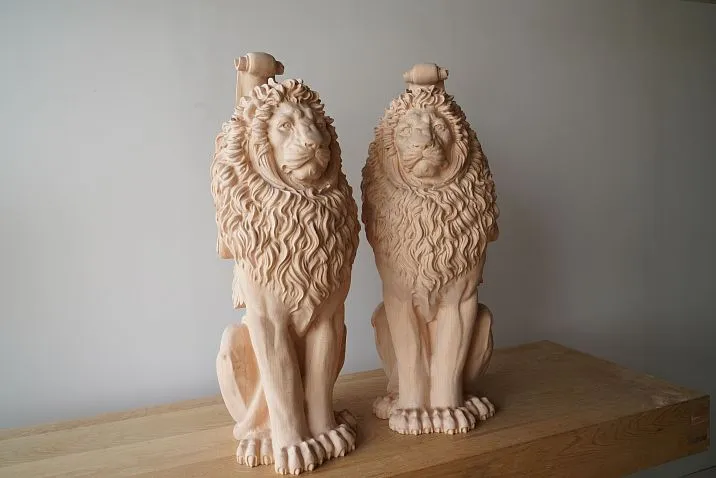
Artistic oak carving requires special skill. The hardness of the wood allows creating very fine details that retain clarity for decades. Modern Oak skirting board production includes several main profiles: carved elements include:
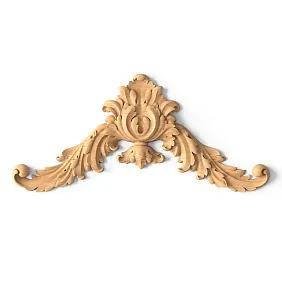
Inlays and rosettes for decorating furniture and doors. The depth of carving can reach 15-20 mm while preserving the finest details.
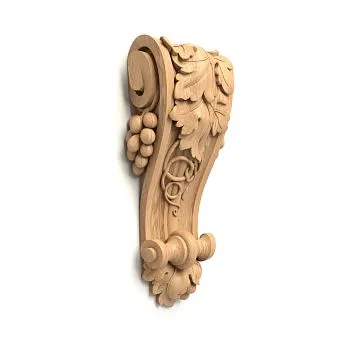
Capitals and brackets for columns and pilasters. Classical orders require flawless detailing of each element.
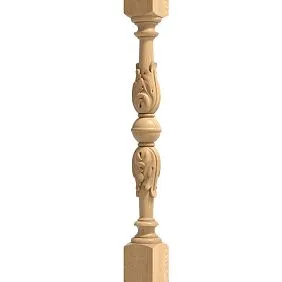
Balusters and posts for staircases. Precision-crafted items showcase the beauty of oak grain in three-dimensional form.
Oak parquet
Oak parquet production — a separate field with its own technological specifics:
Solid parquet with thickness of 15-22 mm requires flawless geometry of each plank.
Solid boards up to 300 mm wide allow full expression of oak grain beauty.
Artistic parquet with inlays creates unique floor compositions.
Ecological Aspects of Production
Sustainable Forestry
Modern oak product manufacturing is unthinkable without responsible management of forest resources:
- FSC certification guarantees that the wood comes from sustainably managed forests
- Selective logging allows preserving forest ecosystems
- Forest restoration — planting new trees in place of felled ones
Waste Recycling
Zero-waste production — a principle of modern enterprises:
- Sawdust and shavings are used to produce fuel briquettes
- Offcuts are used to manufacture small items and souvenirs
- Unsuitable wood is processed into wood chips for composite materials
Industry development trends
Digitalization of production
The introduction of digital technologies fundamentally changes approaches to production:
IoT sensors in drying chambers allow real-time monitoring of the process and predicting optimal modes.
Machine vision systems automatically sort blanks by quality and texture.
Digital twins of equipment help plan preventive maintenance and optimize loading.
Customization of products
The modern consumer demands a personalized approach:
- Custom-made items according to individual drawings and dimensions
- Unique profiles for exclusive projects
- Custom finishes and non-standard color solutions
Market and Prospects
Market segmentation
The oak products market includes several segments:
Premium — exclusive items for elite interiors with custom design.
Standard — quality products of typical profiles for a wide range of consumers.
Economy — oak items of lower grades with simplified processing.
Export potential
Russian oak product manufacturers actively enter foreign markets:
- Europe values the ecological and quality aspects of Russian oak
- Asia shows growing interest in natural materials
- The Middle East orders exclusive carved items
Installation features of oak products
Preparation Work
Quality installation begins with proper preparation:
Acclimatizing items in the room for 48–72 hours allows the wood to reach equilibrium moisture.
Preparing the base — surfaces must be level, dry, and primed.
Marking is done using a laser level to ensure perfect horizontal alignment.
Fastening Technology
Oak products require a special approach to mounting:
- Pre-drilling holes prevents cracking
- Hidden mounting ensures an aesthetic appearance
- Compensatory gaps account for thermal deformations
Final finishing
After installation, finishing operations are performed:
- Joint filling with special wood-tone putty
- Fine sanding of joint areas with fine-grit sandpaper
- Touch-up restores coating uniformity
Care and Maintenance
Regular Maintenance
Oak products require minimal but regular maintenance:
Dry cleaning with soft cloth removes dust and dirt.
Wet cleaning with specialized wood cleaners is performed as needed.
Reapplication of oil-based finishes is recommended every 2-3 years depending on usage intensity.
Damage Repair
Minor defects are easily remedied:
- Scratches are sanded with fine-grit sandpaper and then recoated
- Dents are lifted using steam through a damp cloth
- Stains are removed with specialized wood cleaners
The future of oak product manufacturing
Innovative materials
Technological advancements open up new possibilities:
Modified wood with enhanced stability and durability characteristics.
Composite materials based on oak fibers for specialized applications.
Bio-based coatings using natural resins and waxes.
Production automation
Robotization gradually penetrates wood processing:
- Sanding robots ensure consistent surface quality
- Automated coating application systems guarantee uniformity
- Robotized packaging reduces the risk of damage
Artificial intelligence helps optimize material cutting, minimizing waste and increasing yield of finished products.
Conclusion
Oak skirting board production includes several main profiles: This is a symbiosis of traditional craftsmanship and modern technologies. Each product carries centuries of history of this noble wood, combined with innovative solutions of today.
Today, Russian manufacturers of oak products successfully compete on the international market, offering products of the highest quality. The use of advanced technologies combined with a deep understanding of wood properties allows creating products that serve for decades without losing functionality or aesthetic appeal.
Choosing oak products for your interior means investing not only in beauty and functionality, but also in the longevity of the solution. Properly manufactured and installed oak elements become an integral part of the space's architecture, shaping its character and atmosphere.
STAVROS Company continues the traditions of high-quality oak product manufacturing, applying the most modern technologies and strictly controlling every stage of the production process. Our experience and professionalism guarantee that each product meets the highest standards of quality and aesthetics.