Article Contents:
- Architectural elegance of balusters: vertical poetry of oak
- Carved masterpieces from solid oak
- Turned balusters — classic perfection
- Handrails: ergonomics and beauty in harmony
- Anatomical shapes for comfort
- Specialized handrail elements
- Staircase posts: monumental beauty support elements
- Starting posts — the staircase’s calling card
- Intermediate posts — rhythm of architecture
- Steps and risers: foundation of reliability
- Oak treads — a choice for centuries
- Risers — finishing touches
- Technological mastery: from rough stock to masterpiece
- Premium raw material selection
- Precision mechanical processing
- Artistic finishing and treatment
- Hand carving — the pinnacle of craftsmanship
- New-generation protective coatings
- Stylistic interpretations
- Classic luxury — palace traditions
- Modern eclecticism — bold solutions
- Rustic style — natural warmth
- Installation and Setup: Professional Approach
- Preparatory work
- Mounting systems
- Final adjustment
- Operation and maintenance: secrets of longevity
- Regular Maintenance
- Preventive maintenance and minor repairs
- Economic aspects: investment in the future
- Pricing and cost factors
- Long-Term Economic Efficiency
- Ecological advantages
- Sustainable forestry
- Zero-waste production
- Trends and innovations
- Integration of smart technologies
- Personalization and customization
- Conclusion: STAVROS — traditions of craftsmanship in modern execution

In the world of architectural decoration, there exists a material that has symbolized nobility, strength, and unparalleled aesthetics for centuries. When it comes to creating the dream staircase, the choice buy oak staircase elements becomes a solution that determines not only the functionality of the structure, but also its ability to transform space into a work of architectural art.
Oak wood is a symphony of natural perfection, where each fiber tells the story of multi-year growth. The density of oak reaches 750 kg/m³, guaranteeing phenomenal strength and durability of the structure. Tannins contained in the wood create natural protection against biological influences, while the unique texture turns each element into an irreplaceable work of natural art.


Architectural elegance of balusters: vertical poetry of oak




Carved masterpieces from solid oak
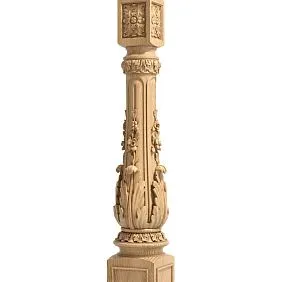
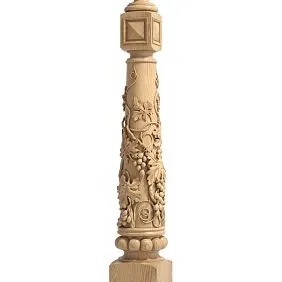
Oak balusters for staircases represent the quintessence of furniture art. Each baluster is created through meticulous work of master carvers, who transform unprocessed oak beams into refined sculptures.
Plant motifs — grapevines, oak leaves, acanthus patterns — are carved with remarkable detail. The depth of relief reaches 20-25 mm, creating a stunning play of light and shadow on the surface. Each element undergoes a multi-stage processing: from rough shaping to final polishing.
Baluster heights vary from 700 to 1100 mm, ensuring compliance with safety construction norms. The base diameter is 80-120 mm for secure mounting, while the central part tapers to 40-60 mm, creating elegant proportions.
Our factory also produces:



Turned balusters — classic perfection
Turned models are created on high-precision lathes, where each millimeter of profile is calculated with mathematical precision. The classic silhouette includes a base, central stem with decorative elements, and a capital.
The surface undergoes multi-stage sanding — from coarse P80 abrasive to final P400. This ensures ideal smoothness and readiness for protective coatings. Oil-based wax compositions highlight the natural beauty of oak texture, creating pleasant tactile sensations.
Get Consultation
Handrails: ergonomics and beauty in harmony
Anatomical shapes for comfort
Oak handrails for staircases are designed according to ergonomic requirements of the human body. The optimal cross-section of 86x67 mm ensures comfortable grip for an adult’s hand of any build.
Rounded edges with a radius of 15-20 mm eliminate discomfort during prolonged contact. The surface is processed with special care — after mechanical processing, manual finishing follows, including sanding with fine-grit abrasive and polishing with felt wheels.
Handrail length can reach 6000 mm without joints thanks to the glued-laminated mass technology. Individual lamellas are glued under 15 atmospheres pressure using water-resistant polyurethane adhesives. This technology ensures strength exceeding solid wood and eliminates deformations.
Specialized handrail elements
Corner transitions require special craftsmanship. Elements with 90, 120, or 180-degree bends are created by bending steamed wood or gluing thin lamellas according to a template. The minimum bending radius is 200 mm to ensure smooth lines.
Finishing elements — rosettes, volutes, decorative rings — transform the handrail into an architectural composition. These details can be turned or carved depending on the overall stylistic solution. Mounting is done using wooden dowels with a diameter of 10-12 mm, with additional fixation using epoxy adhesives.
Posts for staircasesupport elements of monumental beauty
Starting posts — the staircase’s calling card
Starting posts set the tone for the entire staircase composition. Their cross-section increases to 140x140 mm or diameter to 180 mm for round models, ensuring visual massiveness and secure handrail mounting.
Carving is performed with special care, as posts become central interior accents. Classic motifs include Corinthian capitals, Ionic volutes, Doric fluting. Modern interpretations may include geometric ornaments or avant-garde compositions.
The top of the post is crowned with a capital — a decorative element that may depict a sphere, urn, acorn, pyramid, or complex heraldic symbols. Capitals are made separately and mounted using threaded connections or wooden pegs.
Intermediate posts — rhythm of architecture
Intermediate posts are installed at regular intervals to maintain the balustrade’s rhythm. Their design is usually more restrained but harmoniously complements the starting posts.
The distance between posts is calculated based on span length and aesthetic considerations. The optimal spacing is 1500-2000 mm for classic interiors and 2500-3000 mm for modern solutions.
Steps and risers: foundation of reliability
Oak treads — a choice for centuries
Oak steps withstand colossal loads due to high wood density. Standard thickness of 40-50 mm provides necessary rigidity for widths up to 350 mm. For wide grand staircases, steps with thickness of 60-80 mm are used.
Edges are processed with special care. The front face is rounded with a radius of 12-15 mm for comfort and safety. Anti-slip grooves of 4-6 mm depth are milled 25-30 mm from the edge, preventing shoe slippage under any conditions.
Buying oak staircase elements means investing in longevity — quality steps can withstand intensive loads for over 100 years without losing functional or aesthetic qualities.
Risers — finishing touches
Risers of 25-30 mm thickness cover the space between steps, creating visual continuity of the structure. Their height varies from 160 to 200 mm depending on the overall staircase proportions.
Mounting is done discreetly — using screws from the side of the stringers or special metal clips. This ensures an aesthetic appearance without visible fasteners on the front surfaces.
Technological Mastery: From Rough Cut to Masterpiece
Selection of premium raw material
The creation of premium oak elements begins with meticulous selection of timber. Trees aged at least 100–120 years with a density of 680–750 kg/m³ are used. Rough cutting is exclusively performed during winter, when sap movement is minimal.
Each log undergoes visual sorting by experienced specialists. Rough cuts with unacceptable defects — knots over 20 mm in diameter, cracks deeper than 5 mm, or areas of rot or insect damage — are rejected.
Kiln drying is performed according to special regimes at a temperature of 48–62°C, with gradual reduction of humidity to 6–8%. The process takes 6–10 weeks depending on the cross-section of the rough cuts, but this delicacy ensures the absence of internal stresses.
Precision mechanical processing
Modern 5-axis CNC centers provide micron-level precision when creating complex profiles. Programmable trajectories allow processing parts at any angle without repositioning, which is critically important for carved elements.
Turning lathes for manufacturing balusters are equipped with state-of-the-art copying devices. This guarantees absolute identity of all elements in a series, with deviations no more than ±0.1 mm from nominal dimensions.
Quality control includes multi-stage inspection at every stage. Laser measuring devices control geometric parameters, while special feelers check surface quality with micrometer accuracy.
Artistic Finishing and Treatment
Hand Carving — the Peak of Craftsmanship
After mechanical processing, each carved element undergoes manual refinement by master carvers of the highest qualification. Traditional tools — chisels, gouges, and various-profile rasps — are used.
Deep carving is performed in several stages: rough shaping of the form, detailed ornamentation, and final finishing with smoothing of all surfaces. Each element is unique and bears the mark of individual craftsmanship.
Complex compositions may include up to 15–20 different carving elements in a single piece. The time required to manufacture a highly complex carved baluster may reach 40–50 hours of pure working time.
Protective coatings of the new generation
Hard oils based on natural components penetrate into the oak structure up to a depth of 3 mm, creating a powerful internal protection. The finish highlights the natural texture and preserves the tactile feel of natural wood.
Polyurethane varnishes create a durable film 120–180 microns thick, resistant to abrasion, scratches, and chemical exposure. The application technology includes 4–5 layers with intermediate sanding of each.
Nanocoatings of the latest generation provide self-cleaning properties and antibacterial protection. This is especially relevant under the heightened hygiene requirements of modern housing.
Stylistic interpretations
Classic Luxury — Palace Traditions
In classical interiors, oak elements fully reveal their potential. Carved balusters with botanical ornamentation, massive columns with Corinthian capitals, and profiled handrails create an atmosphere of aristocratic homes.
Dark tones of staining — from walnut to wenge — highlight the nobility of the material and give stairs a monumental quality. Gold patination of individual elements adds luxury and creates an antique effect.
Artificial aging includes brushing the surface, emphasizing texture with contrasting tones, and applying patina into carved recesses. Such treatment creates an impression of centuries-old history.
Modern Eclecticism — Bold Solutions
In modern interiors, oak elements successfully combine with metal, glass, and concrete. The contrast between warm wood and cold industrial materials creates a dynamic atmosphere.
Simple geometric forms, minimal decoration, emphasis on the natural beauty of the material — these are the principles of modern design. Matte finishes eliminate glare and highlight architectural graphics.
Integration of LED lighting into staircase elements creates scene lighting and highlights the beauty of oak texture. Concealed lights are embedded into handrails or under steps.
Rustic Style — Natural Warmth
The country style implies maximum emphasis on the natural beauty of oak wood. Brushing reveals the structure of annual rings, creating an expressive tactile relief.
Rough surface treatment, massive proportions of elements, natural oil finishes create an atmosphere of a countryside home with centuries-old traditions. Visible joints and deliberately simple forms emphasize the handmade nature of the items.
Installation and mounting: professional approach
Preparation Work
Quality installation begins with detailed room measurements using laser distance meters. An accurate 3D model of the space is created, taking into account all architectural features — protrusions, niches, wall irregularities.
Surface preparation includes leveling floors and walls, dust removal, and priming with special compounds to improve adhesion. Marking is performed using laser levels to ensure perfect geometry.
All mounting holes are drilled according to templates with precision to tenths of a millimeter. This eliminates on-site fitting and guarantees assembly accuracy.
Mounting Systems
Modern fastening systems provide secure fixation without damaging the facing surfaces. Hidden stainless steel fasteners maintain aesthetics, while adjustable elements allow compensation for uneven bases.
Dowel joints are used for non-disassemblable nodes of maximum strength. Dowels are made from the same oak solid wood, precisely fitted to slots. Waterproof adhesive compounds ensure the monolithic integrity of the joint.
Threaded connections are used for disassemblable joints. Metric thread M8-M12 allows creating strong connections with the possibility of disassembly for repair or replacement of individual elements.
Final adjustment
After final installation, all elements undergo final adjustment. The horizontal alignment of steps, verticality of balusters, and smoothness of handrails are checked using high-precision measuring instruments.
Connection areas are treated with repair compounds, sanded with fine-grit abrasive, and coated with protective compounds. This ensures visual continuity of the structure without visible seams.
Operation and maintenance: secrets of longevity
Regular Maintenance
Daily care consists of removing dust with special microfiber cloths. It is important to avoid abrasive materials and aggressive chemical agents that could damage the protective coating.
Wet cleaning is performed with slightly damp cloth without excessive surface wetting. Special cleaning compounds developed for oak products restore the protective properties of the coating.
Periodic renewal of protective coatings extends the service life of elements for decades. Oil-based coatings are restored by partial reapplication without disassembling elements.
Prevention and minor repairs
Controlling indoor air humidity prevents wood deformation. Optimal values are 45-65% at a temperature of 20-24°C. Using humidifiers in winter and dehumidifiers in summer maintains stable conditions.
Minor scratches are removed with wax pencils of matching shade. More serious damage requires local sanding and application of repair compound, followed by protective coatings.
Economic aspects: investment in the future
Pricing and cost factors
The cost of oak elements is determined by manufacturing complexity, wood quality, and surface treatment type. Simple turned balusters are 4-6 times cheaper than carved counterparts due to differences in labor intensity.
Selectively graded wood with particularly expressive grain costs 60-100% more than standard, but provides exceptional decorative quality. Hand-carved elements increase cost by 8-12 times, but create unique works of art.
Custom manufacturing for exclusive projects increases cost by 70-150%. However, the result justifies the investment — a completely unique item is obtained.
Long-term economic efficiency
The service life of quality oak elements is 80-150 years with proper care. This makes them extremely cost-effective in terms of total operating expenses per year of use.
Oak elements increase property value by 25-40% for luxury housing. This is especially relevant during sales, where finish quality is a key pricing factor.
Restorability allows maintaining the original appearance for decades. Full coating renewal costs 15-20% of new element cost, but restores the original beauty of the item.
Environmental advantages
Sustainable Forestry
All oak wood is sourced from forests certified under international FSC standards. This guarantees forest resource regeneration exceeding harvest volumes.
The carbon footprint of oak elements is significantly lower compared to synthetic materials. Wood continues to sequester carbon throughout the product’s entire service life.
Regional raw material suppliers minimize transportation costs and support local forestry economies. This contributes to sustainable forestry development in Russia.
Waste-free production
Modern technologies allow utilizing up to 98% of harvested wood volume. Main production waste is recycled into fuel briquettes, wood flour, and organic fertilizers.
At the end of their service life, oak elements are fully recyclable. High-quality wood is used for new products, while damaged elements are repurposed for biomass fuel.
Trends in development and innovation
Integration of smart technologies
Modern oak staircases integrate with "smart home" systems. Motion sensors automatically activate step lighting, creating a safe path in darkness.
Built-in LED systems create lighting scenes of varying intensity. Wireless control allows adjusting light color temperature according to time of day.
Hidden sensors monitor structural condition and alert when maintenance is required. This is especially important for elements subjected to heavy loads.
Personalization and Customization
Laser engraving opens new possibilities for personalizing elements. Family crests, monograms, and commemorative dates are applied with micron-level precision without damaging the structure.
Digital modeling allows creating unique profiles tailored to specific architecture. Parametric design ensures perfect integration with existing structures.
Conclusion: STAVROS — traditions of craftsmanship in modern execution
In the era of mass production and synthetic materials, oak stair elements remain a bastion of authentic quality and enduring beauty. Choosing to buy oak stair elements means investing not only in the functionality of the structure, but also in creating a unique atmosphere in your home.
Each element is the result of centuries of experience working with wood, modern technologies, and a deep understanding of the laws of beauty. From the simplest steps to the most intricate carved balusters — all items are united by a pursuit of perfection.
Oak elements become not just parts of the staircase, but integral components of the architectural concept. They create the atmosphere of the home, fill the space with the warmth of natural material, and convey the energy of living nature.
This is an investment in the quality of life, emotional comfort, and a healthy ecological environment. Natural materials contribute to creating a harmonious microclimate and positively affect the well-being of residents.
Technological innovations open new horizons for creativity, but fundamental values remain unchanged: quality of raw materials, craftsmanship, attention to detail. These principles form the basis of the philosophy behind creating premium-grade elements.
Modern production's ecological responsibility ensures the sustainable development of the forestry industry. Certified materials, waste-free technologies, and reforestation programs make choosing oak elements an ethical choice.
For 23 years, STAVROS has perfected the art of working with oak wood, creating stair elements that become ornaments of the most prestigious interiors. Our rich experience in restoring historical landmarks, modern production technologies, and a team of talented craftsmen enable us to realize the most daring architectural concepts.
STAVROS — this is not just a manufacturer of stair elements, but a creative workshop where masterpieces of woodworking are born. Each project for us is an opportunity to surpass achieved results and create something truly unique. Entrusting STAVROS with the manufacture of your stair elements means choosing a partner who shares your values of quality, beauty, and pursuit of perfection. STAVROS — this is a guarantee that each element will become not just a functional detail, but a work of art capable of transforming your home into a space of eternal beauty and harmony.