Article Contents:
- Wood as Philosophy: Returning to Roots
- Stone: Monumentality and Eternity in Every Millimeter
- Clay and Ceramics: Ancient Art in Modern Context
- Metal: Industrial Aesthetics with a Human Face
- Textiles: Tactile Luxury of Natural Fibers
- Living Plants: Green Revolution in Interior Design
- Handcrafted Work: When an Object Becomes Art
- Vintage and Antique: New Life for Old Things
- Colors of the Earth: Returning to Natural Palette
- Imperfection as Aesthetics: Wabi-Sabi in Modern Interior Design
- Personalization: Interior as Self-Portrait
- Ecology as Ethics: Responsible Design
- How to Implement Trends: Practical Path to a Unique Interior
- Questions and Answers: Addressing Complexities

Forget everything you knew about proper interior design. The era of universal recipes, when designers handed out ready-made solutions from catalogs, has ended. We are entering an era where the home becomes a self-portrait, where every detail bears the imprint of the owner’s personality, where mass production yields to handcrafted work, and synthetic materials lose to living wood, stone, clay. The fresh design trends of 2025–2026 scream one message: people are tired of uniformity, of plastic sterility, of clone interiors that are indistinguishable from one another. The value of authenticity, handmade, natural materials is returning. The courage to be different is returning.
What lies behind this shift? The pandemic forced us to reassess our relationship with home — from a temporary stopover, it has become the center of the universe, where we live, work, rest, raise children. It became clear: space must not only function, it must nourish the soul, provide strength, inspire. The ecological crisis sharpened our awareness of our connection to nature — people instinctively gravitate toward natural materials, living plants, natural colors. Digitization of all spheres of life triggered a craving for tactile experiences, a desire to touch real objects with history and texture. Social networks, where everyone became a content creator, gave rise to a culture of uniqueness — no one wants their living room to look like a million others. All these factors converged into a powerful trend that definesnew interior design trends: Back to Nature, Forward to Individuality.




Wood as Philosophy: Returning to Roots
Wood rules the modern interior, but it’s not the polished, gleaming wood of past decades. It’s wood that remembers the forest, that preserves traces of time, that breathes and lives. We’ve grown tired of perfection — it turned out to be dull and dead. We’ve fallen in love with imperfection, with cracks, knots, irregularities of growth rings, because it’s precisely these features that make wood alive, real, unique.
Slabs — whole cross-sections of tree trunks — have become stars of interior design. These are not just countertops, they are pieces of forest brought into the home. The edge of a slab retains the natural shape of wood — wavy, uneven, unpredictable. Bark may remain partially, adding wildness and primal authenticity. Such a table tells the story of the tree: how old it is, under what conditions it grew, what trials it endured. Each slab is absolutely unique — even if you saw adjacent trunks of the same species, you’d get completely different patterns. This is the ultimate luxury of modernity — owning something no one else has.
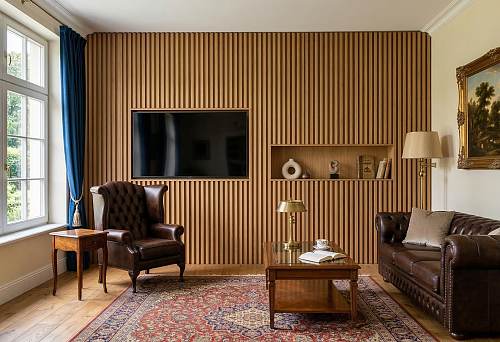
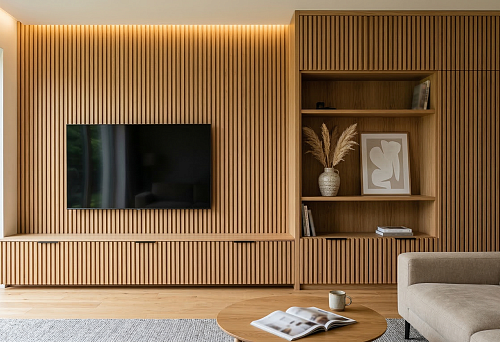
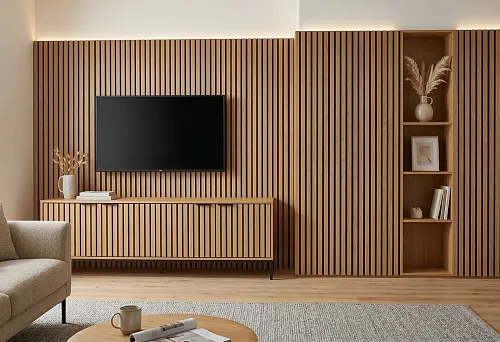
Brushed Wood — a technique where soft wood fibers are removed with a stiff brush, while hard fibers remain, creating a pronounced relief. Touching such a surface is a pleasure: fingers feel every groove, every ridge. This wood cannot be ignored — it demands attention, invites tactile contact. Brushed floorboards, wall panels, furniture facades create interiors with character, where every surface has a story.
Thermally Treated Wood — a relatively new technology where wood undergoes high-temperature treatment without oxygen access. The result is impressive: wood acquires a rich brown, almost chocolate color, becomes exceptionally stable, resistant to moisture and temperature fluctuations. Meanwhile, the wood’s texture is not only preserved but emphasized. Thermally treated beech looks like a valuable exotic species, though it’s our native tree. It’s both ecological and beautiful — no dyes, only nature and physics.
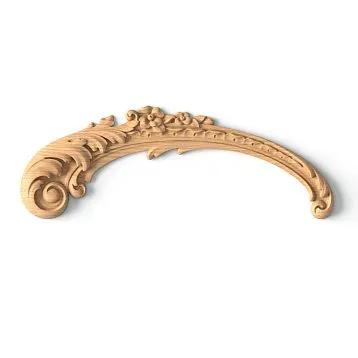
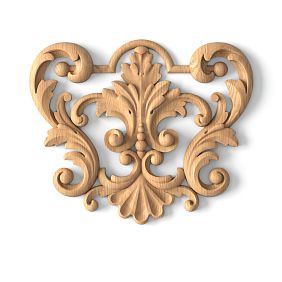
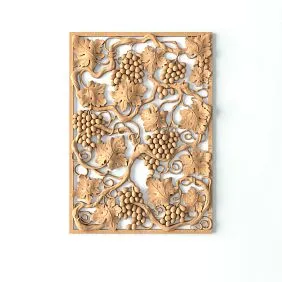
Wood is experiencing a true renaissance. Carved panels, moldings, cornices, pilasters, rosettes — all these elements, once considered relics of classicism, are returning, but in a reinterpreted form. Modern designers simplify classical forms, making them more graphic and minimalist, yet preserve the essence — the feeling of handcrafted work, craftsmanship, uniqueness. A wooden carved panel on a wall transforms an impersonal surface into a work of art, creating a focal point around which the entire interior is built.
Decorations for roomsWood is experiencing a true renaissance. Carved panels, moldings, cornices, pilasters, rosettes — all these elements, once considered relics of classicism, are returning, but in a reinterpreted form. Modern designers simplify classical forms, making them more graphic and minimalist, yet preserve the essence — the feeling of handcrafted work, craftsmanship, uniqueness. A wooden carved panel on a wall transforms an impersonal surface into a work of art, creating a focal point around which the entire interior is built.




Stone: monumentality and eternity in every millimeter
If wood is warmth and life, then stone is power and eternity. In an age of fragility and disposability, stone reminds us of fundamentality — of what can survive centuries. Marble, granite, travertine, onyx, slate — each variety carries its own character, its own energy, its own visual power.
Marble has shed its aura of palace unattainability and entered ordinary apartments. Modern processing technologies have made it more accessible, and designers have learned to use it not only in classical interiors. A marble countertop on a ultra-modern kitchen with minimalist cabinets — this contrast works perfectly. A marble wall in the bathroom transforms a utilitarian space into a spa sanctuary. A marble coffee table in the living room becomes a sculptural object that sets the tone for the entire room.
What makes marble special? Its pattern — veins, streaks, clouds — was created by nature over millions of years. Each slab is unique; it is impossible to find two identical ones. It is a living material that breathes, changes hue depending on lighting, ages beautifully, acquiring a noble patina. Yes, marble requires care; it is porous and can absorb stains. But this gentle capriciousness only adds to its value — things that require care, we love more.
Travertine — a more democratic alternative to marble, but no less expressive. Its porous texture, warm beige-ochre tones create a Mediterranean atmosphere. Travertine walls in the living room transport you to a Tuscan villa. Travertine flooring is warm to the touch, unlike the cold marble or granite. Pores can be left open, emphasizing the natural texture, or filled, creating a smoother surface. Both options are good; the choice depends on the interior style.
Slate — a material with a dramatic character. Its layered structure, dark shades — from gray-green to almost black, matte texture — creates brutal, masculine interiors. A slate wall is not a background; it is a statement. Slate looks especially striking with backlighting, which highlights its relief and layering. In modern interiors, slate is often used for accent walls in living rooms, hallways, and for fireplace cladding.
Onyx — the most luxurious and rare variety. Its semi-transparency opens up incredible possibilities for playing with light. An onyx wall with backlighting glows from within, creating a magical effect. The pattern of onyx — is nature’s abstract painting, where layers of different shades create incredible compositions. It is expensive, yes. But the result produces an impression impossible to achieve with any other material.
A wooden dining table on a stone base. A marble countertop in a wooden kitchen set. A stone wall withwooden decorative elementsThese combinations never look dull.
Our factory also produces:





Clay and ceramic: the oldest art in modern context
Clay — the first material humans learned to transform with fire. Ceramic has accompanied civilization for millennia. And now, in the age of high technology, we return to this oldest material, rediscovering it.
Handmade terracotta tiles — the star of recent seasons. Not perfectly flat, with slight irregularities, with color variations from tile to tile — it is precisely these 'imperfections' that make it precious. A terracotta floor in the kitchen or dining room creates the atmosphere of an old Spanish farmhouse or Italian trattoria. It is a warm color that psychologically warms even on a cold day. Terracotta combines beautifully with wood, creating a fully natural, eco-friendly interior.
Handmade ceramic for interiors — not only tiles, but also sinks, vases, lamps, decorative panels. Modern ceramicists create works of art: sinks with unusual organic shapes, as if molded by waves. Vases with rough, deliberately unpolished surfaces, contrasting with the smoothness of mass production. Ceramic panels with abstract reliefs that become central elements of the interior.
What makes handmade ceramics so attractive? The presence of the human hand. When a craftsman molds clay, the material retains the imprint of his fingers, his energy, his soul. A machine creates perfect geometry, but it is dead. A hand creates imperfection, but it is alive. In an age of robotization and automation, this vitality, this humanity, becomes luxury — for which people are willing to pay.
Glazed tiles with handcrafted effects — a compromise between the desire for uniqueness and budget constraints. Modern manufacturers have learned to imitate hand-glazed effects on industrial lines: tiles differ from each other in shades, drips, glaze irregularities. From afar, they look handmade, but cost significantly less. This is a honest compromise for those who appreciate craft aesthetics but are bound by budgetary constraints.
Unfired clay for wall finishing — a bold solution for those ready to experiment. Clay plaster has a matte, velvety surface, pleasant to the touch. It regulates humidity in the room, creating a healthy microclimate. The color depends on the type of clay — from light beige to rich terracotta. It is 100% eco-friendly — no synthetic additives, only clay, sand, water. And it is beautiful — clay walls have a living, uneven surface that changes with different lighting.
Get Consultation
Metal: industrial aesthetics with a human face
Metal in interiors long associated with the coldness of industrial spaces — factories, warehouses, lofts. But recent trends show: metal can be warm, friendly, even cozy. It all depends on which metal and how it is used.
Brass is experiencing a triumphant return. Its warm golden hue, ability to develop a noble patina over time, soft sheen make brass ideal for hardware, lighting fixtures, decorative elements. Brass handles on wooden furniture create a contrast of textures and temperatures. Brass lamps add vintage charm to interiors. Brass legs on a marble table — this classic works in any style, from neoclassicism to minimalism.
Important note: natural brass darkens over time, developing a patina. This is not a flaw, but a virtue. The patina adds depth, history, making the object unique. If you want to preserve the original shine — choose brass with a protective coating. But if you are ready to accept changes — natural brass will reward you with the beauty of aging.
Black steel — material for brutal, modern interiors. Black steel frames for glass partitions create a graphic structure of space. Black steel shelves — functional and visually light. Black steel combines beautifully with wood, softening its warmth, adding modernity. This is especially relevant for those who love wood but do not want their interiors to look too traditional.
Copper — the warmest metal, both visually and literally. Copper pipes, which were once hidden, are now left exposed, becoming design elements. A copper kitchen sink develops a patina over time, acquiring a noble appearance. Copper lamps create warm, cozy lighting. Copper is especially good in kitchens and bathrooms — it has antibacterial properties, which is not only beautiful but also practical.
Wrought metal — an ancient craft finding new life. Modern blacksmiths create not the ornate swirls of the 19th century, but sleek, graphic forms that fit into modern interiors. Wrought iron stair railings, consoles, table bases, lamps — each piece is unique, bearing the mark of the craftsman’s hand. It is expensive, yes. But it is an investment in an object that will serve for centuries and be passed down through generations.
Perforated metal — a modern material with rich possibilities. Perforated metal panels are used for decorative partitions, furniture facades, radiator screens. Perforation can be geometric or form complex patterns. Such panels play with light, creating beautiful shadows and highlights. It is both functional and beautiful.
Textile: tactile luxury of natural fibers
In the digital age, when we spend most of our day staring at screens, tactile sensations have become luxury. Textiles — this is a way to bring back touch, softness, coziness, which are so lacking in the virtual world.
Linen — the king of natural textiles. Its slightly rough texture, natural wrinkling, ability to soften with each wash make linen ideal for interiors. Linen curtains allow soft, diffused light to pass through, creating a special atmosphere in the room. Linen bedding regulates temperature, cooling in summer and warming in winter. Linen covers on sofa cushions look both relaxed and elegant. Important: linen does not need to be ironed to perfection. Its slight wrinkling — part of its charm.
Cotton — a universal natural material, but not all cotton is the same. Organic cotton, grown without pesticides, is softer and safer for health. Percale and satin — high-quality cotton fabrics with smooth surfaces, ideal for bedding. Muslin — a thin, airy cotton for light curtains. Velvet — a cotton fabric with a ribbed texture, experiencing a renaissance in upholstery.
Wool is returning to interiors not only in the form of rugs. Wool blankets — a necessary element in cozy living rooms or bedrooms. Bouclé — a wool fabric with characteristic knots — has become a hit in upholstery. Wool felt — felted wool — is used for decorative panels, acoustic panels, even wallpaper. Wool has unique properties: regulates humidity, does not accumulate static electricity, is durable.
Silk is the most luxurious natural fabric. Its sheen, smoothness, and ability to shimmer in different hues depending on lighting make silk ideal for special occasions. Silk pillows on the bed are not just beautiful, but also beneficial for skin and hair. Silk curtains create a boudoir-like luxury atmosphere. Silk wallpaper — yes, such things exist — transforms a wall into a precious surface that glows from within.
Handmade textiles — macrame, knitted blankets, patchwork quilts, embroidered cushions — have acquired new value.Decoration IdeasThe possibilities of using handmade textiles are endless. Macrame on the wall as an alternative to paintings. A knitted blanket made by a grandmother or purchased from a craft fair vendor. Cushions with embroidery, where each stitch is hand-sewn. These items carry the warmth of human hands, they are unique, they tell stories.
Living Plants: The Green Revolution in Interior Design
Plants in interiors are not new. But the scale with which modern designers use greenery is truly revolutionary. Plants have ceased to be mere decoration — they have become architectural elements that shape space.
Large indoor trees — from 1.5 to 3 meters tall — create vertical accents, attract attention, and zone space. The fiddle-leaf fig with its enormous violin-shaped leaves. The monsteras with sculpted leaves that instantly turn a room into a jungle. Palms — from compact hovea to giant date palms. These are no longer pots on windowsills — they are full-fledged interior elements requiring space and attention.
Vertical gardens — wall greening systems — transform vertical surfaces into living tapestries. Modern systems include automatic watering, lighting, and feeding — plants thrive without your constant involvement. You can create a monocultural green carpet or mix different species to create compositions of various shades of green and textures. A vertical garden is not only beautiful but also functional: it purifies the air, humidifies it, and reduces noise levels.
Florariums and terrariums — miniature ecosystems in glass vessels — are an art form for those with little space or time. Succulents, mosses, miniature ferns create tiny landscapes that can be viewed as works of art. A florarium requires minimal care but provides maximum aesthetic pleasure.
Edible Greenery — a trend for kitchens. Mini-gardens with herbs, salads, even cherry tomatoes right on the kitchen counter. Hydroponic systems with lighting allow you to grow fresh greens year-round. Imagine: you’re making pasta and pluck fresh basil directly from the plant on the windowsill. It’s not only delicious and healthy, but also creates a connection to the food-growing process, which urban dwellers often lose.
Important: Living plants require care. If you’re not ready for this, better limit yourself to low-maintenance varieties or high-quality artificial plants. Modern artificial plants are so realistic that you can only tell them apart up close. Yes, they don’t offer all the benefits of live plants, but visually, the effect is almost identical.
Handcrafted Work: When an Item Becomes Art
Mass production has given us accessibility and standardized quality. But it has taken away the soul, uniqueness, and history.Current Interior Design SolutionsThe years 2025–2026 are bringing back the value of handmade craftsmanship, artisanal production, and bespoke items.
Handcrafted furniture is not necessarily antique cherrywood commodes. Contemporary master woodworkers create furniture that combines traditional joinery techniques without nails or screws with modern design. Such furniture lasts for generations, can be restored, and becomes a family heirloom. Yes, it’s more expensive than factory-made furniture. But if you calculate ownership costs over 50 years, handmade work proves more cost-effective — factory furniture will need replacing several times, while quality handmade furniture will outlast you.
Wood carving — the oldest craft, experiencing a new renaissance. Contemporary carvers do not replicate baroque scrolls — they create modern geometric patterns, abstract compositions, minimalist reliefs.Carved ElementsThey transform simple furniture into works of art, add volume and texture to walls, and create focal points in interiors. Each carved item is unique — even when repeating the same pattern, the artisan inevitably introduces variations, and that’s wonderful.
Hand-thrown ceramics — not only tableware, but also lamps, vases, sculptural objects, and uniquely organic-shaped bathroom sinks. Contemporary ceramicists experiment with glazes, creating incredible effects: deep matte black surfaces, iridescent glazes mimicking mother-of-pearl or metal, craquelure — a network of cracks creating an aged effect. Each piece passes through the artisan’s hands, carrying their energy and vision.
Handmade textiles — weaving, embroidery, painting, batik — are returning after decades of neglect. Handwoven rugs do not have exact duplicates — even one artisan, creating several rugs from the same design, inevitably introduces variations. Cushions with hand embroidery, where each stitch is made with a needle, not a machine. Curtains with painted designs, transforming windows into paintings. These items are expensive, yes. But they are incomparably more valuable than mass-produced, generic goods.
Blown glass — an art form hundreds of years old, but never outdated. Vases, lamps, glassware made by handblowing always differ slightly from one another — this is their charm. Air bubbles, gentle asymmetry, variations in thickness — all are signs of handcrafting that make the object alive. Murano glass from Venice, Czech crystal, contemporary artist glass — different price levels, but the same principle: uniqueness matters more than perfection.
Vintage and Antique: New Life for Old Items
In a culture of disposability, where items are produced to end up in landfills within a few years, vintage and antique items represent an act of resistance. This is a declaration of the value of longevity, quality, and history.
Antique furniture does not necessarily mean expensive 18th-century cherrywood commodes from noble estates. It could be a Soviet buffet from the 1960s that you restored and integrated into a modern interior. It could be a table from your grandmother’s apartment, given new life after sanding and staining. It could be a find from a flea market — a 1970s chair reupholstered with modern fabric. These items carry history, have survived decades, and witnessed other lives. This makes them valuable not only materially, but also emotionally.
Vintage lighting — a special category. Chandeliers, wall sconces, and floor lamps from the 1950s–1980s often have incredible designs that rival modern designer lighting, sometimes even surpassing it. Meanwhile, the price of vintage lighting may be significantly lower than that of new designer pieces. The key is to find, assess condition, and if necessary, restore. Sometimes, simply updating the wiring and polishing the metal — and you have an exclusive lamp, one-of-a-kind and no longer available anywhere else.
Vintage textiles — rugs, tapestries, quilts — add depth of time and visual warmth to interiors. Persian rugs, a century old, only become more beautiful with age — colors soften, textures enrich. Soviet rugs with geometric patterns, once considered hopelessly outdated, are now valued as design artifacts of their era. Vintage tapestries on walls create a bohemian chic atmosphere.
Important: Vintage should be a conscious choice, not the result of laziness or frugality. Each vintage item must be carefully selected, possibly restored, and integrated into the overall interior concept. Simply dumping a pile of old items into a room — this is not vintage, it’s junk. Vintage is curation, it’s the ability to see value in the old, it’s creating dialogue between eras.
Earthy Colors: Returning to Natural Palettes
Color trends of recent years reflect a general movement toward naturalness. Cool grays and whites are giving way to warm earth tones that evoke a sense of grounding, stability, and connection to the earth.
Terracotta — the color of fired clay — became one of the main colors of the decade. From light peach to deep brick-red, this entire palette works well in interiors. Terracotta walls create warmth and coziness. Terracotta textiles — cushions, blankets, rugs — add colorful accents without aggression. Terracotta tiles on floors or walls create a Mediterranean atmosphere. This is a color psychologically comfortable, not tiring, creating a sense of home.
Ochre — from light yellow to rich mustard — is the color of the sun, harvest, golden autumn. Ochre walls fill a room with light even on a cloudy day. Ochre combines beautifully with natural wood tones, white, and deep green. It is a universal color that works in different styles — from Scandinavian to Mediterranean, from minimalism to maximalism.
Olive and khaki — muted green tones — create calm, relaxing interiors. These colors are associated with nature, foliage, moss. They don’t shout, don’t draw excessive attention, but create a harmonious background for life. An olive sofa, khaki walls in the bedroom, olive drapes — all this contributes to creating an atmosphere of natural harmony.
Chocolate and coffee — deep brown tones — are returning after a long period of neglect. They create a sense of security, warmth, intimacy. Chocolate walls in the bedroom turn it into a cozy nest. A coffee-colored kitchen looks elegant and appetizing. Important: dark colors require sufficient lighting and contrasting light accents; otherwise, the room may appear gloomy.
Combining earth tones with natural materials creates harmonious, cohesive interiors. Terracotta walls with wooden beams on the ceiling. Ochre textiles against stone surfaces. Olive furniture in combination withwooden decorative elements. These combinations create interiors that appear to have grown organically, rather than being assembled from disparate elements.
Imperfection as an aesthetic: wabi-sabi in modern interiors
Japanese philosophy wabi-sabi, which finds beauty in imperfection, aging, simplicity, is increasingly influencing Western design. In a world obsessed with the idealized images of Instagram, wabi-sabi offers another perspective: beauty in cracks, patina, asymmetry, and natural decay.
Kintsugi — Japanese art of repairing ceramics with gold lacquer — has become a metaphor for interior design approach. Instead of discarding a cracked vase, it is repaired, highlighting the repair site with gold. The crack becomes not a flaw, but an ornament, a story, added value. This principle applies more broadly: do not hide traces of time and use, but highlight them, seeing beauty in them.
Weathered surfaces are valued more than new ones. A wooden floor with patina, scratches, and dents tells the story of the house, life within it. Furniture with chipped paint, worn surfaces has character that new items lack. This does not mean that one must artificially damage new items — although techniques of artificial aging exist and are widely used. It means valuing natural aging, not trying to perpetually maintain showroom condition.
As
Asymmetry opposes classical symmetry. It is not necessary to place two identical chairs on either side of a sofa. One can use different ones, but matching in style or color. It is not necessary to hang pictures in a straight line. The composition can be free, intuitive. This creates a more lively, less formal interior.
Minimal material processing — another aspect of wabi-sabi. Wood with minimal sanding, preserving natural texture. Stone without polishing, matte and rough. Fabrics from un-dyed natural fibers. All this creates a connection with nature, a sense of material authenticity.
Muted, dusty colors instead of bright and pure ones. Not snow-white, but milk-colored, with a slight yellow tint. Not bright red, but dusty rose. Not saturated blue, but faded indigo. These shades create a soft, calm atmosphere, they do not shout, do not tire, allow relaxation.
Personalization: interior as a self-portrait
The most resilient trend — rejection of templates and creation of spaces that reflect the owner’s personality. The interior becomes an autobiography, a story about you, your interests, your history, your values.
Collections transform the interior into a personal museum. A collection of vintage cameras on a shelf. A collection of vinyl records, becoming a living room decoration. A collection of handmade ceramics in a display case. Books — many books, not hidden away in closed cabinets, but displayed on open shelves. Each item in the collection — is a story of its acquisition, a memory, an emotional connection. Together, they create a narrative of your life.
Travel is reflected in the interior. A Moroccan rug brought from Fes. Pottery from Portugal. Textiles from India. These items — are not just souvenirs, but a way to preserve and prolong the impressions of travels, to create a connection with other cultures, other places. Maps on the walls, vintage posters from visited cities, photos from trips — all this makes the interior personal, filled with meaning.
Hobbies are reflected in design. If you are a musician — guitars on the wall, not in cases, but as decorative objects. If you are a photographer — your works on the walls. If you are an artist — an easel in the corner of the living room, paints on a shelf. There is no need to hide your hobbies — they are part of you, and the interior should reflect this.
Family heirlooms receive new life. Grandma’s buffet, restored and placed in the dining room. Grandpa’s chair, reupholstered with modern fabric. Old family photos in new frames on the wall. These items connect us with the past, with roots, with family history. They make the home not just a beautiful space, but a place with memory and soul.
DIY projects add uniqueness. A shelf made by hand from old planks and metal brackets. Macrame woven during winter evenings. An abstract painting created by you. These things are not perfect — they show traces of handwork, perhaps small mistakes. But it is precisely this that makes them valuable. They carry your energy, your effort, your story of creation.
Ecology as ethics: responsible design
Ecology is not just a trend — it is an ethical position. Choosing materials and items for interior — is a choice that affects the planet, the future, health — yours and your children’s.
Reusing materials — a principle of circular economy. Furniture made from old planks dismantled from barns or factories. Countertops from recycled marble. Lamps from recycled glass. This is not only eco-friendly, but also unique — each element has its previous history.Decorative materialsWood from recycled sources is especially valuable — it combines ecological responsibility with the beauty of time’s patina.
Certified wood from responsible sources — a necessary choice for those concerned about forests. Certificates FSC and PEFC guarantee that the wood comes from forests where restoration is underway, workers’ rights are respected, biodiversity is preserved. Yes, such wood may be slightly more expensive. But this is a fair price for preserving forests for future generations.
Local production reduces the carbon footprint from transportation and supports the local economy.Creating Cinema DecorationsAnd for residential interiors — this is not only eco-friendly, but also an opportunity for direct contact with artisans, to order something unique, tailored to your needs.
Durability is more important than fashion. It is better to buy quality furniture once, which will last half a century, than to change cheap furniture every five years. It is better to invest in realWooden decor elements, which will last through several generations, rather than buying plastic for every repair, which will end up in a landfill within a few years. Ecology is not only about materials, but also about consumption culture, about rejecting disposability.
Energy efficiency is built into the design. Large windows for maximum use of natural light. Light surfaces that reflect light. LED lighting with adjustable settings. Thermal-insulating windows and doors. Heat recovery systems. All of this reduces energy consumption, which is good for both the planet and your budget.
How to implement trends: a practical path to a unique interior
Inspiration is wonderful, but how to practically create an interior that combines naturalness, uniqueness, and personality? Here's a step-by-step approach for those ready for change.
Start with an assessment of what you already have. What do you currently possess? Perhaps there are items that can be refreshed rather than discarded. An old chest can be restored, repainted, and enhanced withDecorative InsertsOld curtains can be repainted in trendy terracotta. IKEA furniture can be customized to become unique. Don’t rush to discard — perhaps the item doesn’t need replacing, but a new life.
Define your priorities. It’s impossible to change everything at once. Choose what matters most. Maybe it’s creating a cozy bedroom. Or a functional kitchen. Or a living room that reflects your personality. Focus on the main elements; the rest can wait.
Seek the unique. Instead of heading to a chain furniture store, visit flea markets, antique shops, craft fairs. Look for artisans who work on commission. Check outDecor Storeswhere you’ll find unique elements. Yes, this requires time and effort. But the result — an interior unlike any other — is worth it.
Invest in quality where it matters. What you cannot afford to compromise on: a bed (we spend one-third of our lives sleeping), an office chair (if working from home), a kitchen countertop (used daily), high-quality wooden decorative elements (lasting for decades). What you can save on: decorative cushions, vases, photo frames — these items are easy to replace and don’t require large investments.
Give it time. A unique interior is not created in a month. It’s a process, a journey, a search. You find items gradually, in different places, at different times. Each discovery is an event, a story. Don’t rush to fill every corner — emptiness is better than an incorrectly chosen item. Let the interior develop organically, like a living organism.
Don’t fear mistakes. Bought a chair that doesn’t fit? Move it to another room or sell it. Painted a wall terracotta, but it turned out too bright? Repaint it. Mistakes are part of the process. The key is to act, experiment, and adjust. The perfect interior isn’t created on the first try.
Listen to yourself, not trends. Yes, this article is about trends. But trends are a source of inspiration, not dogma. If you don’t like terracotta — don’t use it, even if it’s in fashion. If you love bold colors — use them, even if the trend is muted. Your home should reflect you, not a designer magazine page.
Questions and Answers: Addressing complexities
Natural materials are more expensive — what to do with a limited budget?
Naturalness doesn’t always mean cost. Reclaimed wood is often cheaper than new. Simple cotton or linen is more affordable than synthetic 'premium' fabrics. Start small: replace synthetic curtains with linen, add a few wooden elements, buy cotton bedding. Gradually, with each new purchase, the proportion of natural materials will increase.
How to care for wood, stone, and other natural materials?
Natural materials are less fussy than they seem. Wood needs to be dusted, and once a year it should be treated
Interior is not decoration, it is a living space that affects mood, health, productivity, and happiness.Fresh design trendsThey bring us back to our roots: the value of natural materials, the uniqueness of handmade work, personalization, which turns a home from an impersonal space into a reflection of your soul.
Naturalness is not just wood instead of plastic, stone instead of ceramic tile. It is a philosophy of life in harmony with nature, an awareness that the materials surrounding us affect our well-being on a deep, almost cellular level. Touching real wood soothes the nervous system. Seeing natural stone creates a sense of stability. The scent of linen curtains reminds us of summer and fields. These sensations cannot be faked — either the material is real, or it isn't.
Uniqueness is a rebellion against mass production, against a world where millions of apartments look the same. Your home should be recognizable, should tell a story specifically about you, not be a copy of an interior from a catalog. A vintage chair restored by you. A table made from a slab, where the history of the wood is visible. Pottery hand-molded by a master.Carved Wooden ElementsWhere you can feel the hand of the carver. These things make the interior alive, breathing, with a soul.
Personalization is the courage to be yourself. Don't look to fashion magazines, don't copy other people's interiors from Instagram, but listen to yourself. What do you like? Which colors bring you joy? Which materials feel pleasant to the touch? Which items have meaning for you? Answers to these questions are the foundation for creating an interior where you will be happy, not an interior that merely looks good in photos.
Implementing these principles requires not only inspiration, but also reliable partners who understand the value of quality, craftsmanship, and natural materials. The company STAVROS has been creatingwooden elements for interiorsthat transform ordinary spaces into works of art.
STAVROS's assortment impresses with its diversity:carved inlays from solid wood, which transform furniture and doors;pilasters and columns, adding architectural expressiveness;decorative panels, creating unique wall solutions;church decorof the highest quality;facade elements, which transform the exterior of the house.
STAVROS's special pride is its experience in the entertainment industry.Decoration manufacturing for theaterWork in film and television has taught the company to handle the most complex projects, to realize any, even the most fantastical ideas of set designers. This experience working with set design, where every detail, every texture, every millimeter matters, STAVROS brings into residential interiors, creating spaces of theatrical scale and expressiveness.
The quality of the products is proven not by advertising slogans, but by real projects that serve for decades. STAVROS uses only select wood — oak, beech, ash, redwood. Modern equipment combines with the handwork of master carvers, for whom working with wood is not just a profession, but a calling, an art passed down through generations.
Onthe company's official websiteyou will find not only an extensive catalog of ready-made items, but also the opportunity to order unique elements according to your sketches and dimensions.Furniture and interior itemsfrom solid wood, polyurethane items for more budget-friendly solutions, comprehensive solutions for any style — from classic to modern minimalism.
Company's blog— a source of inspiration and practical advice. Here you will findideas for decorating furniture, articles on trends, guides for choosing and installing decorative elements, examples of completed projects.
It is important to understand: creating a unique interior with natural materials is not a one-time purchase, but a process, a journey. You start small — addingwooden inlays on doors, transforming standard panels. Then you installdecorative moldings, adding architectural complexity. Gradually, the space acquires character, individuality, soul.
STAVROS is ready to accompany you on this path, providing not just materials, but expertise, consultations, an individual approach to each project. Regardless of scale — whether you are updating one room or creating an interior for the entire house — the company will offer solutions that will bring your vision to life.
The latest interior design trends are not fleeting fads that pass through a season. They represent a fundamental shift in understanding what a home should be: natural, unique, personal, ecological, high-quality. It is a return to values that existed before the era of mass production, but using modern technologies and aesthetics.
Your interior is your story, told in the language of space, color, texture, form. Each item is a proposition in this story. Each material is a word. Together, they form a narrative about who you are, what you value, how you live, what you dream of. Let this story be authentic, beautiful, worthy of you. And letSTAVROSbecome your co-author in its creation.
Start today. Openthe STAVROS catalog, find the element that resonates with your heart, take the first step toward your dream interior. Because life is too short to live in a space that does not reflect your essence. Because home is not just a place where you sleep. It is your fortress, your refuge, your reflection. Make it worthy of you.