Article Contents:
- Price: Real Savings or Hidden Costs
- Weight: Material Physics and Its Consequences
- Durability: What Will Last Decades
- Tactility and Material Convincingness: Why Touch Matters
- Moisture Resistance: Where Polyurethane Has No Alternative
- High Ceilings: Where Polyurethane Saves Smartly
- When Wood is Mandatory: No-Compromise Scenarios
- Classic High-End Wooden Furniture
- Spaces with Natural Materials
- Restoration of historical interiors
- Tactile Zones with Intensive Contact
- Combination: Optimal Strategy
- Ceiling - Polyurethane, Tactile Zones - Wood
- Wet Rooms - Polyurethane, Living Areas - Wood
- Complex Decor - Polyurethane, Simple - Wood
- Painting: The Equalizer of Differences
- Frequently Asked Questions: Selection Practice
- Can Polyurethane Decor Be Combined with Expensive Wooden Furniture?
- Does Polyurethane Fade in Sunlight?
- Which material is more eco-friendly?
- Is It Possible to Visually Distinguish Polyurethane from Wood?
- What's Cheaper in the Long Run?
- Can Polyurethane Be Painted to Look Like Wood?
- Conclusion: Honest Choice from STAVROS

Facing a choice: a solid oak ceiling cornice for 4500 rubles per linear meter or an outwardly identical polyurethane one for 800 rubles? Wall moldings made of natural wood that need to be ordered a month in advance, or polyurethane ones from a catalog available tomorrow? Carved furniture overlays made of linden that can be restored in twenty years, or polyurethane ones that look like new in twenty years but cannot be repaired? The question is not rhetorical - the answer affects not only the budget but also the character of the interior, its tactility, convincingness, and durability.
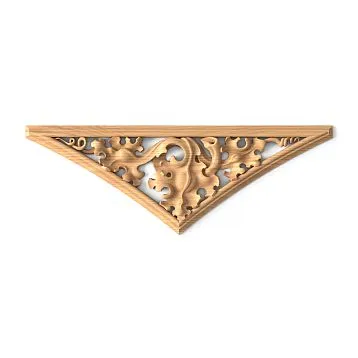
polyurethane decorationOver the past two decades, polyurethane has revolutionized classic interiors, making cornices, rosettes, moldings, and pilasters accessible to the mass consumer. What was once only affordable for palaces and mansions - complex stucco decor, carved ornaments, multi-step profiles - is now available to middle-class apartments. But accessibility has raised a question: if polyurethane is visually indistinguishable from wood or plaster, why overpay for natural materials? Or are the differences deeper than they appear at first glance?
The honest answer: both are true. In some situations, polyurethane is a reasonable choice that saves money without losing quality. In others, it's a compromise that destroys the integrity of the interior. Let's examine in detail, without marketing clichés, where polyurethane is justified and whereWooden furniturerequires a wooden environment for material and stylistic consistency.


Price: Real Savings or Hidden Costs
The most obvious argument in favor of polyurethane is price.Polyurethane ItemsThey cost 3-6 times less than similar ones made of wood. A ceiling cornice 150 millimeters wide made of polyurethane costs 600-1200 rubles per linear meter. Made of oak — 3500-5500 rubles. A fivefold difference.
For a room of 40 square meters with a perimeter of 26 meters, the savings on cornices are: (4500-900)×26 = 93,600 rubles. Mouldings for wall panels — another 60-80 linear meters. Polyurethane 500-800 rubles per meter, wood 2000-3500 rubles. Savings (2750-650)×70 = 147,000 rubles. Baseboards — 26 meters, savings (1500-400)×26 = 28,600 rubles. Total savings for one room — about 270,000 rubles.
For a three-room apartment, savings reach 600,000-800,000 rubles — a substantial amount, allowing you to invest the savings in qualitywooden furniture, appliances, or repairs in other areas.
But there are nuances. The price of polyurethane is fixed — the material is standard, mass-produced, competition is high. The price of wood varies. Pine is a budget species; a cornice made of pine for painting costs 1200-1800 rubles per meter, only 2-3 times more expensive than polyurethane. Oak, beech — 3000-5000 rubles. Walnut, exotic woods — 6000-10000 rubles.
If the interior is painted (white walls, white decor), the difference between painted polyurethane and painted pine is less dramatic. A pine cornice under white enamel is visually identical to a polyurethane one, but tactilely different (wood is warmer, more pleasant to the touch). The overpayment for pine instead of polyurethane is moderate — 30,000-50,000 rubles per room instead of 150,000-200,000 for oak.
Long-term costs also differ. Polyurethane requires no maintenance — painted once, it retains its appearance for decades. Wood under oil requires coating renewal every 2-3 years (for elements that are touched — baseboards, low mouldings). The cost of renewal — oil plus labor or time — is 3000-5000 rubles per room every three years. Over twenty years — an additional 20,000-30,000 rubles.
The repairability of wood is an advantage that can offset the price. A wooden cornice damaged during a move can be restored — scratches are sanded, dents are filled, and the coating is renewed. A polyurethane cornice with serious damage (crack, chip) cannot be repaired — only replacement. If replacement requires dismantling adjacent elements, repainting joints, the cost increases.
Conclusion on price: for budget projects where every thousand is critical, polyurethane is justified. For projects with a medium budget — pine or beech for painting — a compromise between price and quality. For projects without strict constraints — oak, ash, walnut — an investment in durability and tactility.




Weight: the physics of the material and its consequences
Polyurethane with a density of 250-300 kilograms per cubic meter is 2-3 times lighter than wood with a density of 500-700 (pine, spruce) and 650-900 (oak, beech, ash). A ceiling cornice made of polyurethane, 2 meters long, 150 millimeters wide, 100 millimeters thick, weighs about 0.7-1 kilogram. A similar one made of oak — 2.5-3 kilograms.
The lightness of polyurethane simplifies transportation, reduces the load on walls, and allows elements to be glued without additional mechanical fasteners. A polyurethane cornice is glued with polymer adhesive directly onto the wall — the adhesive holds the weight, no dowels are needed. An oak cornice requires mechanical fastening — screws into the wall through the cornice, screw heads are filled and painted.
For ceiling elements, lightness is critical. A ceiling rosette 800 millimeters in diameter made of polyurethane weighs 1.5-2 kilograms and is glued with adhesive. Made of wood — 8-12 kilograms, requires reinforced fastening, possibly metal brackets. The risk of a wooden rosette collapsing with insufficient fastening is higher.
But the lightness of polyurethane is also a drawback. A light material is subconsciously perceived as less valuable, less solid.Polyurethane Decor, when held in the hands, feels toy-like, plastic — even if visually flawless. A wooden cornice, heavy, dense, convinces with its materiality.
Tactility is important for elements that are touched. Baseboards, mouldings at hand height, door trims — contact is inevitable. Polyurethane feels cold, smooth, synthetic. Wood is warm, alive, with texture. For high elements — ceiling cornices, friezes — tactility is unimportant, they are not touched.
Conclusion on weight: the lightness of polyurethane is an advantage for high, ceiling, hard-to-reach elements. For low, tactile elements, the weight of wood is an advantage, creating a sense of solidity and quality.
Our factory also produces:



Durability: what will last decades
High-quality, high-density polyurethane (from 280 kilograms per cubic meter) is durable — service life of 30-50 years without deformation, loss of shape. Does not rot, does not deform from humidity, does not crack from temperature fluctuations.polyurethane decoration, installed in the 2000s, looks like new today — provided quality material and proper painting.
Wood is more durable — oak cornices last 50-100 years, retaining functionality. But require conditions: stable humidity 40-60%, temperature 18-25 degrees, absence of leaks, condensation. Violation of conditions — wood deforms, cracks, rots.
Polyurethane is more resistant to extreme conditions. Bathroom humidity of 70-90% — polyurethane is indifferent, wood swells, warps. Temperature fluctuations on an unheated balcony from -20 in winter to +40 in summer — polyurethane is stable, wood cracks.
Mechanical strength differs. Wood is more resistant to impacts — a dent from a blow in a wooden baseboard is local and can be repaired. A polyurethane baseboard cracks from an impact and cannot be repaired. But polyurethane is more resistant to scratches — the hard surface does not scratch from furniture or shoes as easily as soft pine wood.
Wood restoration is possible after decades. A century-old cornice is sanded, repainted, cracks filled with wax — looks like new. Polyurethane is not restored — surface scratches are painted over, deep damage requires element replacement.
Environmental aging differs. Wood patinates nobly — color darkens, texture emerges, a patina of history appears. Polyurethane does not patinate — looks the same as on the day of installation, which in some interiors is an advantage (modern classic), in others a disadvantage (vintage, where an aged effect is needed).
Conclusion on durability: both materials are durable with proper use. Polyurethane is more resistant to extreme conditions, wood can be restored and patinates nobly.
Get Consultation
Tactility and material persuasiveness: why touch matters
Eyes are easily deceived. High-qualityPolyurethane Decorwith detailed texture, properly painted, is visually indistinguishable from wood from a meter away. Manufacturers have learned to imitate wood texture, carving relief, irregularities of handwork.
But hands cannot be deceived. Touching polyurethane — a cold, smooth surface, uniform, synthetic. Touching wood — a warm, textured surface with pores, irregularities, the liveliness of the material. Even painted wood retains tactile identity — paint follows the texture, pores are felt under the fingers.
For elements outside the touch zone, tactility is not critical. The ceiling cornice at a height of 2.8 meters, the ceiling rosette, the frieze under the ceiling — they are not touched, visual perception is the only one. Here polyurethane works flawlessly.
For elements in the touch zone, tactility is critical. Baseboards — they are hit with a foot, a mop, a vacuum cleaner. Moldings at a height of 900-1200 millimeters — one leans a hand on them when passing by. Door casings — they are pushed with a hand when closing the door. Every touch reminds of the material. Polyurethane reveals its synthetic nature, wood confirms its naturalness.
The material persuasiveness of an interior depends on the consistency of materials. IfWooden furnituremade of solid oak — a chest of drawers, a table, chairs — is surrounded by polyurethane wall decor, a material dissonance arises. The furniture is heavy, dense, tactile, warm. The decor is light, synthetic, cold. The eyes do not notice the difference, but the subconscious registers — something is wrong.
If the furniture is modern, made of MDF, laminated chipboard, plastic — polyurethane decor is consistent. Both are synthetic, both are light, both are functional without claims to authenticity. Material unity is preserved.
If the interior is classical with antique or antique-style furniture made of solid wood — wooden decor is mandatory. A heavy carved 18th-century chest of drawers next to a polyurethane cornice is an anachronism that destroys the illusion of a historical environment.
Conclusion on tactility: for modern interiors with modern furniture, polyurethane is consistent. For classical interiors with wooden furniture — wood in decor is mandatory at least in tactile zones.
Moisture resistance: where polyurethane is irreplaceable
Bathroom, toilet, kitchen (backsplash area), sauna, swimming pool — rooms with high humidity, aggressive for wood. Even moisture-resistant species (teak, larch) deform at constant humidity above 70%.
Polyurethane Itemsare absolutely moisture-resistant. The material density does not change at 100% humidity. Cornices, moldings, baseboards made of polyurethane in the bathroom last for decades without deformation, mold, or rot.
Wood in the bathroom requires special treatment — impregnation with antiseptics, coating with waterproof varnish (yacht varnish, epoxy compounds). Even treated wood in the area of direct water contact (shower cabin) deteriorates in 5-10 years.
Polyurethane baseboards in the bathroom are a practical solution. Water during cleaning, splashes from the sink, condensation on cold walls — polyurethane ignores them. A wooden baseboard under such conditions swells at the base, paint cracks, mold appears.
The kitchen backsplash above the wet area (sink, stove) is traditionally ceramic tile or glass. But if the style requires decor — moldings framing the backsplash — polyurethane is preferable. Grease, steam, water splashes do not harm the polymer. Wooden moldings in the kitchen darken from grease, swell from steam.
Sauna, bathhouse — extreme conditions: temperature 80-120 degrees, humidity 60-100%, fluctuations. Traditionally wood — linden, aspen, cedar — species resistant to heat and moisture. Polyurethane is not used in saunas — at temperatures above 80 degrees it loses rigidity, deforms, and may emit an odor. Here wood is irreplaceable.
Indoor swimming pool with chlorinated water, constant humidity 80%+ — polyurethane is stable, wood rots even with protection. Ceiling cornices, moldings, decorative panels made of polyurethane in swimming pools last for decades.
Conclusion on moisture resistance: for bathrooms, toilets, kitchens, swimming pools, polyurethane is functionally justified. For saunas, bathhouses — wood is mandatory.
High ceilings: where polyurethane saves reasonably
Ceilings with a height of 3.5-5 meters (Stalin-era buildings, pre-revolutionary buildings, modern elite new buildings) require large-scale decor — wide cornices 200-400 millimeters, large rosettes with a diameter of 1000-1500 millimeters, multi-stage moldings.
A wooden cornice 300 millimeters wide made of oak weighs 8-12 kilograms per linear meter. For a room with a perimeter of 20 meters — 160-240 kilograms of decor at the wall-ceiling junction. Mounting such weight requires a powerful frame, through fastenings into load-bearing structures, the risk of collapse in case of errors is high.
A polyurethane cornice of the same width weighs 2-3 kilograms per meter. For a room — 40-60 kilograms. It is glued with polymer adhesive without mechanical fasteners. Safety is higher, labor intensity is lower, speed is higher.
The cost of a wooden cornice 300 millimeters — 6000-10000 rubles per meter. For a room — 120000-200000 rubles for cornices alone. Polyurethane — 1500-2500 rubles, for a room — 30000-50000 rubles. Savings of 90000-150000 rubles on one room.
For rooms with ceilings above 3.5 meters, the decor is visually distant — details are not discernible, tactile contact is impossible. The difference between wood and polyurethane is unnoticeable at such a height. Overpaying for wood is not justified — money goes into an element that does not provide visual or tactile feedback.
Exception — rooms where the decor is viewed up close. Double-height living rooms with a second-level gallery, where the first-floor cornice is at eye level on the second floor. Stairwells with decor that is passed within arm's reach. Here even high decor becomes tactile, visible — wood is justified.
Ceiling rosettes in high spaces are purely visual elements. A wooden carved rosette with a diameter of 1200 millimeters weighs 20-30 kilograms and costs 50,000-100,000 rubles (hand-carved). A polyurethane one weighs 3-5 kilograms and costs 8,000-15,000 rubles. From the floor at a height of 4 meters, the differences are not visually noticeable. This saves 40,000-85,000 rubles on an element whose details are indistinguishable.
Conclusion on high ceilings: for decor above 3 meters, polyurethane is reasonable — savings are substantial, visual feedback is identical.
When wood is mandatory: scenarios without compromise
Despite the advantages of polyurethane, there are situations where wood is irreplaceable.
Classical wooden furniture of high class
If the interior is built aroundwooden furniture— antique or antique-style made of solid oak, walnut, mahogany — wall decor must be wooden.Wood Trimof the same species or coordinated creates material unity.
An 18th-century walnut commode with bronze inlays next to a polyurethane cornice is a stylistic rupture. The furniture is historical, materially convincing, expensive. The decor is modern, synthetic, cheap. Dissonance destroys integrity.
Solution: cornices, moldings, baseboards made of walnut (or oak stained to resemble walnut). The material kinship between furniture and decor is restored. The interior regains conviction.
Spaces with natural materials
Interiors built on natural materials — stone, brick, wood, leather, linen — require wooden decor for consistency. Polyurethane in such a context is a foreign element, a synthetic insertion into an organic environment.
A loft with brick walls, concrete ceiling, wooden beams, leather sofas. If decor is needed (mirror frame, moldings on an accent wall) — wood or metal. Polyurethane is inappropriate — it does not align materially.
Eco-style with wooden wall panels, stone floor, linen textiles. Decor —Wood Trimnatural tones under oil, preserving the texture. Polyurethane would destroy the philosophy of naturalness.
Restoration of historical interiors
Restoration of palace interiors, manor houses, historical buildings requires historical authenticity. Polyurethane is a modern material, inauthentic for the 19th century, unacceptable in scientific restoration.
Recreating a lost cornice in an 1880s mansion — wood of the same species (oak, beech), the same processing technique (hand or machine carving, but not casting), the same finishes (tempera paints, oil varnishes, but not acrylic). Polyurethane is excluded.
Tactile zones with intensive contact
Baseboards in the hallway, where shoes constantly bump. Moldings in the corridor at hand height, where people lean while passing. Door casings that are pushed, leaned against. These elements require wood — pleasant to the touch, repairable, materially convincing.
A polyurethane baseboard in the hallway after a year has scratches, dents from shoes, suitcases. Scratches on polyurethane look cheap — light plastic under dark paint. Scratches on an oak baseboard under oil — natural patina, noble aging.
Conclusion: wood is mandatory with high-class wooden furniture, in interiors with natural materials, during restoration, in tactile zones.
Combination: the optimal strategy
A sensible approach is combining polyurethane and wood, using each material where its advantages are maximized.
Ceiling — polyurethane, tactile zones — wood
Ceiling cornices, rosettes, moldings near the ceiling —polyurethane decorationHigh up, not tactile, visually flawless, substantial savings.
Baseboards, moldings at hand height, door casings —Wood TrimLow, tactile, materially important, conviction is critical.
Savings on ceiling decor are directed toward quality wooden lower elements. Balance of budget and quality.
Wet rooms — polyurethane, living areas — wood
Bathrooms, toilets, kitchens — polyurethane. Moisture resistance, practicality, durability without maintenance.
Living rooms, bedrooms, studies, dining rooms — wood. Tactility, nobility, consistency with furniture.
Separation by room function is logical, does not create a visual rupture — rooms are different, materials align with function.
Complex decor — polyurethane, simple — wood
Carved rosettes, brackets, pilasters with capitals, complex multi-step cornices — polyurethane. The cost of carved wood is exorbitant (50,000-200,000 rubles per element), polyurethane provides the same visual effect for 5,000-15,000 rubles.
Simple profiled moldings, baseboards, casings — wood. The cost is reasonable (1,000-3,000 rubles per meter), tactility and durability are worth it.
The complexity of the decor justifies polyurethane, simplicity makes wood accessible and preferable.
Painting: The Equalizer of Differences
Quality painting neutralizes the visual differences between polyurethane and wood. Multi-layer enamel painting (primer, two coats of enamel, light sanding between coats) creates a smooth, opaque surface that conceals the base material.
A white polyurethane cornice and a white wooden baseboard under identical enamel are visually uniform. The difference is felt to the touch, but not to the eye.
Patination — applying dark paint into the recesses of the relief and then wiping it off the raised parts — works on both materials. Patinated polyurethane and patinated wood are visually similar.
Gilding with imitation gold leaf also equalizes the materials. Gilded polyurethane decor and gilded wood are visually identical from a distance. Up close, wood is warmer, and its texture is visible beneath the gold, but for ceiling elements, the difference is insignificant.
Painting to match the wall color — polyurethane moldings painted the same color as the walls (white on white, gray on gray) create relief decor visible only through light and shadow. The material is not important — the form, volume, and play of light are what work.
However, natural wood under oil or clear varnish cannot be imitated by polyurethane. The texture of oak, ash, walnut is unique, alive, and irreproducible by synthetics. If the goal is to show wood, to emphasize its naturalness — polyurethane is not suitable, only solid wood is.
Conclusion on painting: under opaque paint, material differences are erased. Under transparent coatings, wood is unique.
Frequently Asked Questions: Selection Practice
Can polyurethane decor be combined with expensive wooden furniture?
Yes, but with caveats. If the decor is high up (ceiling cornices, rosettes), visually distant, and painted with quality — polyurethane works and does not create dissonance. If the decor is low, tactile (baseboards, trims) — wood is better, matched to the furniture by species or tone.
Compromise: ceiling decor in polyurethane, baseboards and trims in wood of the same species as the furniture. Savings on the ceiling, quality at the bottom.
Does polyurethane fade in the sun?
High-quality, high-density polyurethane is UV-stabilized, does not yellow, and does not fade in the sun. Cheap, low-density polyurethane (Chinese no-name brands) yellows after 2-3 years on south-facing windows.
Quality check: density not lower than 280 kilograms per cubic meter, manufacturer with certificates (European, Russian mid-to-premium segment brands). Cheap polyurethane is a false economy, requiring replacement after a few years.
Which material is more eco-friendly?
Wood is more eco-friendly — a natural, renewable material that does not emit volatile compounds. Polyurethane is a synthetic polymer based on petroleum. Quality polyurethane is safe (certificates confirm the absence of toxic emissions after polymerization), but it is not natural.
For interiors with eco-friendly requirements (children's rooms, bedrooms, homes of allergy sufferers), wood is preferable. For areas where eco-friendliness is not critical (bathrooms, technical zones), polyurethane is acceptable.
Is it possible to visually distinguish polyurethane from wood?
From a distance of a meter or more — difficult, if the polyurethane is high-quality and properly painted. Up close (20-30 centimeters) — distinguishable: polyurethane is smoother, more uniform, without material texture. To the touch — obvious: polyurethane is cold, smooth; wood is warm, textured.
A professional always distinguishes. An ordinary person — upon touching or very close inspection.
What is cheaper in the long term?
Polyurethane is cheaper to purchase and requires no maintenance — the total cost of ownership is low. Wood is more expensive to purchase, requires periodic renewal of the coating (if under oil) — the total cost is higher. But wood can be restored, while polyurethane is replaced if damaged.
Over 30 years: polyurethane — initial cost, possibly one replacement of damaged elements. Wood — initial cost plus 6-10 coating renewals plus possible restoration. In absolute figures, polyurethane is 30-50% cheaper.
But wood after 30 years develops a patina, acquires nobility, value (antiquity). Polyurethane after 30 years becomes morally outdated, perceived as '2020s renovation'.
Can polyurethane be painted to look like wood?
Toning can be imitated — applying paint in a wood color (brown, walnut). But wood texture cannot be created with paint — for that, a textured base is needed (textured polyurethane exists but is rare and expensive).
An honest approach: paint polyurethane in uniform colors (white, gray, colored), not imitating wood. If a wood look is needed — choose wood.
Conclusion: The Honesty of Choice from STAVROS
The choice between polyurethane and wood is not a question of 'what is better,' but a question of 'what is appropriate where.'polyurethane decorationPolyurethane is not a deficient imitation of wood, but an independent material with unique advantages: lightness, moisture resistance, shape stability, availability of complex forms, low price.Wood Trim— not an anachronism, but a material with unparalleled qualities: tactility, naturalness, restorability, noble aging, material persuasiveness.
The company STAVROS manufactures andPolyurethane Items, and solid wood products, without imposing a choice, but helping clients make decisions based on honest information, not marketing clichés.
Polyurethane DecorSTAVROS — high density of 280-320 kilograms per cubic meter, European raw materials, UV stabilization, safety certificates. Over 400 models of cornices, moldings, rosettes, brackets, pilasters, overlays. Sizes from miniature (moldings 30 millimeters wide) to monumental (cornices 400 millimeters). Surface ready for painting — primed, smooth, pore-free.
Wood TrimSTAVROS — solid oak, ash, beech, walnut kiln-dried to 8-10% moisture content. Over 200 profiles of moldings, cornices, baseboards, architraves. Length up to 3000 millimeters. Factory-applied finishes — oils, varnishes, enamels, tinting, patination. Ready for installation immediately after delivery.
Wooden furnitureSTAVROS solid wood is designed in conjunction with decor — designers coordinate the wood species of furniture and millwork, finish colors, profiles of furniture and wall moldings. Material and stylistic unity is guaranteed.
Consultations with STAVROS specialists help choose the material for each zone. The designer evaluates ceiling height (above 3.5 meters — polyurethane is justified), room humidity (bathrooms — polyurethane is mandatory), presence of wooden furniture (if present — wood in tactile zones is recommended), budget (limited — combining is optimal).
3D visualization shows the result of combining — polyurethane ceiling cornices, wooden baseboards — how it looks, whether it harmonizes. Eliminates selection errors.
Catalogs with material samples — pieces of polyurethane cornices and wooden moldings are sent to clients for tactile evaluation. Touch, compare, make a decision based on feel, not just pictures.
The honesty of STAVROS's approach — not to impose expensive wood where polyurethane suffices, and not to push cheap polyurethane where wood is critical. The goal is client satisfaction with the result, not sales maximization.
Quality guarantee for both materials — 5 years for polyurethane (does not yellow, does not deform), 3 years for wood (does not crack, does not warp if operating conditions are observed). Return and exchange within 30 days if the material is unsuitable.
Delivery across Russia — polyurethane is packaged in film and cardboard, wood in crates with padding. Both materials are delivered undamaged.
Begin creating your interior with analysis. Evaluate ceiling height, room humidity, presence of wooden furniture, budget. Visit the STAVROS website, study the catalogsof polyurethane decorandwooden molding. Order samples, touch, compare. Get a designer consultation — learn where polyurethane is sensible, where wood is essential.
Make an informed decision. Polyurethane is not a compromise if applied correctly. Wood is not extravagance if its values are justified. Combining is not eclecticism, but wisdom, using each material where it is maximally effective.
Create interiors where materials serve function and aesthetics, wherePolyurethane Itemsperforms at height and in humidity, whereWood Trimwarms tactile zones, whereWooden furnitureis surrounded by materially coordinated decor, where honesty of choice creates an honest result, where compromises are conscious, not forced, where budget is optimized without losing quality where it is critical. STAVROS makes this possible — offering both materials, consulting objectively, helping find the balance of price, quality, aesthetics, functionality. Choose wisely, live in interiors created with an understanding of materials.