Article Contents:
- The Anatomy of Perfection: What Lies Behind the External Simplicity
- Hidden Complexity of Simple Forms
- Materials of the Future in Traditional Execution
- Geographical Origin: The Influence of Climate on Wood Quality
- Northern Forests: Source of Exceptional Strength
- European Traditions: The Balance of Beauty and Functionality
- Revolutionary Processing Technologies: From Raw Material to Work of Art
- Digital Era in Woodworking
- Innovative Methods of Joining Parts
- Design directions: from classicism to avant-garde
- Neoclassical Direction: Modern Interpretation of Eternal Principles
- Scandinavian Functionalism: Philosophy of Northern Simplicity
- Loft Aesthetics: Industrial Romanticism
- Dimensional Typology: From Miniature to Monumental
- Compact Solutions for Small Spaces
- Standard Sizes for Universal Application
- Large-Format Constructions for Reception Areas
- Constructive Features: Engineering of Beauty
- Central Supports: Elegance and Practicality
- Multi-Support Systems: Maximum Stability
- Transformable Constructions: Adaptation to Needs
- Surface Treatment: Protection and Decoration
- Ecological Coatings: Safety Above All
- Decorative Effects: Art in Every Detail
- Ergonomic principles: science of comfort
- Anthropometric Standards in Action
- Psychology of space perception
- Specialized Solutions: Table Bases for Specific Tasks
- Table Bases for Children's Furniture
- Medical and Laboratory Tables
- Garden and Terrace Furniture
- Innovations in Fastening: Revolution in Joints
- Magnetic mounting systems
- Bayonet locks
- Pneumatic systems
- Ecological aspects: Responsibility to nature
- Certified wood
- Waste recycling technologies
- Disposal programs
- Testing and quality control: guarantee of reliability
- Laboratory tests
- Automated size control
- Logistics and packaging: preservation during transport
- Innovative packaging materials
- Modular packaging
- Assembly and installation: art of precise assembly
- Professional tools
- Operation sequence
- Service maintenance: care for longevity
- Scheduled maintenance
- Warranty support
- Trends in development: looking into the future
- Smart bases
- Biomimetic solutions
- Additive technologies
- Consumer choice psychology
- Emotional factors
- Social status
- Practicality versus prestige
- Regional market characteristics
- European quality standards
- American innovations
- Asian mass production

In the world of interior design, there is an unwritten rule: the devil is in the details. And when it comes to tables, this critically important detail is precisely the base. Buy table base It means purchasing not just a functional element, but a fundamental base that will define the character of the entire product for many years. In the era of mass production and uniform solutions, choosing a quality base becomes an act of creative self-expression and an investment in true beauty.
Why can a table become the center of attention in a room or, conversely, remain unnoticed? The secret lies in its base — the element that most people take for granted, but which actually determines the entire aesthetics and functionality of the product. Modern table bases represent a symbiosis of engineering thought, artistic craftsmanship, and advanced material processing technologies.


Anatomy of perfection: what lies behind the apparent simplicity




Hidden complexity of simple forms
At first glance, the pedestal may seem to be an extremely simple construction — several wooden elements connected together. However, behind this apparent simplicity lies a complex set of engineering solutions, where each line and curve has its purpose.
Modern production of pedestal bases is based on precise mathematical calculations. Engineers take into account load distribution, vibrational characteristics, thermal deformations, and many other factors. Each leg is designed considering maximum loads, with a safety factor of 3-4.
Our factory also produces:


Materials of the future in traditional form
The revolution in materials science has also affected the production of furniture pedestals. Today, not only traditional wood species are used, but also innovative composite materials, modified wood, and shape-memory alloys.
Thermally treated wood acquires unique properties:
- Dimensional stability increases by 60-80%
- Moisture absorption decreases by 3-5 times
- Biostability increases by an order of magnitude
- Service life increases to 50-70 years
Get Consultation
Geographical origin: climate's influence on wood quality
Northern forests: source of exceptional strength
Wood from northern regions possesses special characteristics determined by harsh climatic conditions. The slow growth of trees under short summers and long winters forms a dense, fine-grained structure with minimal defects.
Siberian larch demonstrates remarkable characteristics:
- Density up to 850 kg/m³
- Natural resistance to rot
- Minimal warping during drying
- Beautiful contrasting texture
- Unique resinous aroma
European traditions: balance of beauty and functionality
European wood species developed under moderate climate conditions, ensuring an optimal combination of decorative and functional properties. French oak, German beech, Scandinavian pine — each species has its unique characteristics.
French oak is renowned for:
- Uniform density throughout the entire trunk volume
- Beautiful radial texture when cut radially
- High tannin content
- Ability to undergo multiple restorations
- Elegant aging with patina formation
Revolutionary processing technologies: from raw material to work of art
Digital era in carpentry
Modern pedestal production is unthinkable without the use of digital technologies. 3D modeling allows creating virtual prototypes, testing them for strength, and optimizing the design even before physical production begins.
CNC machines ensure:
- Processing accuracy ±0.05 mm
- Reproducibility of results
- Ability to create complex three-dimensional forms
- Minimization of production waste
- Elimination of human factor
Innovative methods of joining parts
Traditional joinery has received new development thanks to modern technologies. Laser cutting allows creating perfectly matched "dovetail" joints with micron-level precision.
Ultrasonic wood welding — a revolutionary technology enabling the creation of non-detachable joints without using glue. High-frequency vibrations cause localized lignin melting, which upon cooling forms a strong bond.
Design directions: from classic to avant-garde
Neoclassical direction: modern interpretation of eternal principles
Neoclassical table pedestals combine the strictness of ancient canons with modern materials and technologies. Foundational principles of the golden ratio and classical proportions receive new embodiment in 21st-century products.
Characteristic elements of neoclassical style:
- Grooved surfaces, machined on CNC machines
- Capitals recreated using 3D printing
- Gilding applied by electroplating
- Patina created using chemical aging methods
- Engraved elements created by laser engraving
Scandinavian functionalism: philosophy of northern simplicity
Scandinavian design preaches the principle of maximum functionality with minimal decorative elements. Every detail has a practical purpose, and beauty lies in perfect proportions and material quality.
Principles of Scandinavian design:
- Use of light-colored wood species
- Natural texture without toning
- Simple geometric forms
- Ecologically clean coatings
- Ergonomics of all elements
Loft aesthetics: industrial romance
Loft style introduces elements of industrial aesthetics into home interiors. The combination of roughly processed wood with metallic elements creates a unique atmosphere reminiscent of creative workshops and factory spaces.
Features of loft pedestals:
- Intentionally rough surface treatment
- Visible fastening elements
- Contrasting material combinations
- Imitation of wear marks
- Use of industrial hardware
Size typology: from miniature to monumental
Compact solutions for small spaces
Modern apartments often lack ample free space, requiring a special approach to furniture selection. Compact pedestals for small tables must provide maximum functionality within minimal dimensions.
Typical dimensions of compact pedestals:
- Height: 400-600 mm
- Base diameter: 300-500 mm
- Weight: 2-8 kg
- Load capacity: 50-80 kg
Standard dimensions for universal application
Most pedestals are manufactured in standard sizes, optimized for mass application. These dimensions are based on anthropometric data and ergonomic studies.
Standard size range:
- Coffee tables: height 450-500 mm
- End tables: height 500-600 mm
- Side tables: height 600-750 mm
- Console tables: height 750-850 mm
Large-scale constructions for reception areas
In large spaces, pedestals of corresponding scale are required. Such constructions are designed to account for increased loads and special requirements for stability.
Constructive Features: Engineering of Beauty
Central supports: elegance and practicality
Pedestals with central support provide maximum freedom in arranging furniture around the table. The absence of legs around the perimeter creates a sense of lightness and visually expands the space.
Engineering requirements for central supports:
- Post diameter not less than 80 mm for tabletops up to 800 mm
- Base diameter of at least 500 mm
- Additional stiffening ribs
- Adjustable legs for compensating floor irregularities
Multi-leg systems: maximum stability
Traditional three- or four-leg scheme ensures maximum structural stability. Proper leg placement eliminates table wobbling even on uneven surfaces.
Transformable constructions: adaptation to needs
Modern pedestals are increasingly equipped with transformation mechanisms, allowing height, configuration, or table size adjustment. This is especially relevant for small, multifunctional spaces.
Types of transformation:
- Height adjustment (gas lift, screw mechanisms)
- Folding (hinged joints)
- Modularity (quick-release elements)
- Mobility (hidden casters)
Surface treatment: protection and decoration
Ecological coatings: safety above all
Modern requirements for ecological safety have led to the development of new water-based coatings. These compositions do not contain harmful solvents and provide a healthy microclimate in the room.
Advantages of ecological coatings:
- No toxic emissions
- Fast drying
- Application possible without special ventilation
- Ease of repair and renewal
- Full recyclability of waste
Decorative effects: art in every detail
Modern technologies allow creating amazing decorative effects on wood surfaces. From imitating expensive species to creating fantastic textures — the possibilities are practically limitless.
Popular decorative techniques:
- Brushing (revealing wood texture)
- Patination (artificial aging)
- Crackle (imitation of old cracked paint)
- Metalization (application of metallic coatings)
- Pearl effects (play of light on the surface)
Ergonomic principles: the science of comfort
Anthropometric standards in action
Creating comfortable pedestals is based on a deep understanding of human anatomy and the specifics of his interaction with furniture. Each dimension, each proportion has a scientific basis.
Key anthropometric parameters:
- Average height of an adult: 170 cm
- Height of a standard chair seat: 450 mm
- Optimal distance from knees to tabletop: 150-200 mm
- Foot space width: at least 600 mm
- Foot space depth: at least 400 mm
Psychology of space perception
The shape and proportions of the pedestal influence the subconscious perception of the entire room. Tall, narrow structures visually increase ceiling height, while wide, low ones create a sense of stability and coziness.
Specialized solutions: pedestals for specific tasks
Children's furniture requires special requirements for safety and functionality. All corners must be rounded, surfaces must be absolutely smooth, and the construction must be exceptionally stable.
Children's furniture requires special requirements for safety and functionality. All corners must be rounded, surfaces must be absolutely smooth, and the construction must be exceptionally stable.
Features of children's pedestals:
- Reduced height (400-550 mm)
- Rounded corners with radius of at least 3 mm
- Ecologically clean coatings
- Increased resistance to tipping
- Vivid color solutions
Medical and laboratory tables
Specialized furniture for medical institutions and laboratories requires special pedestals resistant to aggressive substances and easily disinfectable.
Garden and terrace furniture
Pedestals for outdoor use must withstand exposure to atmospheric precipitation, ultraviolet radiation, and temperature fluctuations.
Innovations in fastening: revolution in connections
Magnetic fastening systems
Modern neodymium magnets allow creating detachable connections of colossal strength. The tabletop can be easily removed for transport or replacement, yet remains securely fastened.
Bayonet locks
A borrowed aviation bayonet lock system ensures rapid and reliable connection of elements. A quarter turn — and the tabletop is firmly secured to the pedestal.
Pneumatic systems
Pneumatic cylinders allow easy height adjustment of the table with a single hand movement. Such systems are especially popular in office and medical furniture.
Ecological aspects: responsibility toward nature
Certified Wood
Modern furniture production is unthinkable without using wood from certified sources. The FSC system guarantees that the wood is harvested in accordance with sustainable forestry principles.
Waste recycling technologies
Modern production strives to minimize waste. Sawdust is used to produce wood panels, shavings — for making pellets, even dust finds application as a filler.
Recycling programs
Leading manufacturers develop programs to accept used furniture for recycling. Valuable wood gets a second life, and metal components are fully recycled.
Testing and quality control: guarantee of reliability
Laboratory testing
Each new pedestal undergoes comprehensive tests in specialized laboratories. Testing includes not only strength but also durability and resistance to various influences.
Standard types of tests:
- Static load (to failure)
- Cyclic loads (simulating use)
- Climate tests (humidity, temperature)
- Abrasion resistance tests
- Chemical resistance of coatings
Automated size control
Modern automatic control systems check each item for compliance with specified parameters. Laser measuring devices provide control accuracy down to 0.01 mm.
Logistics and packaging: preservation during transportation
Innovative packaging materials
Protecting finished items during transportation is critically important for maintaining quality. Modern packaging materials provide reliable protection with minimal volume and weight.
Used materials:
- Foamed polyethylene (impact absorption)
- High-strength corrugated cardboard
- Stretch film (protection against moisture and dust)
- Foam corner protectors (protection for corners)
- Silica gel (moisture absorption)
Modular packaging
Disassembled bases are packed into compact modules, significantly reducing transportation costs. Special marking systems ensure correct assembly sequence.
Assembly and installation: the art of precise assembly
Professional tools
Quality installation of bases requires professional tools. Assembly accuracy directly affects the product's durability and functionality.
Required tools:
- Torque wrenches (torque control)
- Laser levels (horizontal alignment control)
- High-precision measuring instruments
- Specialized clamps and vises
- Pneumatic screwdrivers with torque control
Sequence of operations
Correct assembly technology eliminates damage and ensures long-term durability of connections. Each operation is performed in strict sequence with intermediate result checks.
Service maintenance: care for longevity
Scheduled maintenance
Quality bases are designed for decades of use, but require periodic maintenance. Scheduled maintenance extends service life and preserves original appearance.
Types of scheduled maintenance:
- Tightening Threaded Connections
- Lubricating moving parts
- Updating protective coatings
- Adjustment of transformation mechanisms
- Replacing Worn Elements
Warranty support
Leading manufacturers provide extended warranties on their products. Warranty obligations include not only defect repair but also operational support and consultation.
Trends in development: looking toward the future
Smart bases
Integrating electronic systems into furniture opens new possibilities. Bases of the future will be able to automatically adjust height, illuminate work surfaces, and charge mobile devices.
Biomimetic solutions
Studying natural structures inspires furniture designers with new solutions. Bases mimicking bone or plant stem structures combine minimal weight with maximum strength.
Additive technologies
3D printing is gradually penetrating into furniture production. Today, you can already print complex decorative elements, and tomorrow it will be possible to print entire table bases from composite materials.
Consumer Choice Psychology
Emotional factors
Choosing buy table bases is often determined not only by rational, but also by emotional factors. Color, texture, shape affect the subconscious level, evoking certain associations and emotions.
Social status
Furniture has always been an indicator of social status. Expensive wood species, complex processing, exclusive design — all of this signals the owner's belonging to a certain social stratum.
Practicality vs Prestige
The modern consumer stands before a choice between practicality and prestige. A rational approach implies evaluating the price-to-quality ratio, while an emotional approach seeks uniqueness and status.
Regional market specifics
European quality standards
The European market has high requirements for product quality and ecological safety. Strict standards encourage manufacturers to continuously improve their technologies.
American innovations
The USA traditionally is a source of technological innovations in the furniture industry. Here, new materials, production technologies, and design concepts are developed.
Asian mass production
Asian manufacturers specialize in mass production of affordable furniture. High automation and low labor costs ensure competitive prices.
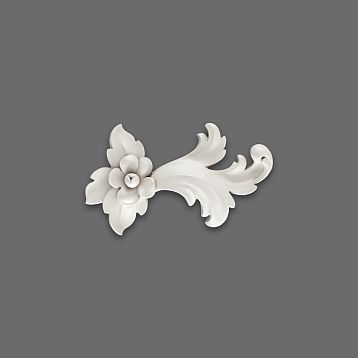
Offers an impressive variety of design solutions. From minimalist, sleek forms to richly decorated baroque ornaments — every style finds its embodiment in polyurethane corner elements. This versatility opens boundless creative opportunities for designers and architects. buy table bases It represents an amazing variety of solutions — from budget mass-produced items to exclusive handmade works. The choice of a specific option depends on many factors: room size, stylistic preferences, budgetary possibilities, functional requirements.
A quality table base is an investment in the long-term future. A properly chosen base will serve for decades, maintaining functionality and aesthetic appeal. In a world of rapidly changing trends, quality furniture remains a constant, providing stability and comfort in your home space.
Technological progress opens new opportunities for creating unique solutions, but the core principles remain unchanged: quality of materials, precision of manufacturing, thoughtful design. It is precisely these principles that determine whether a table base will be merely a functional element or transform into a piece of applied art, pleasing the eye and serving faithfully for many years.
STAVROS Company embodies the highest achievements of modern furniture production, combining traditional craftsmanship with innovative technologies. Decades of experience working with wood, deep understanding of customer needs, and commitment to perfection in every detail make STAVROS products a benchmark of quality in the premium furniture segment. Choosing STAVROS table bases means investing in beauty, reliability, and longevity — qualities that will never go out of style and will delight not just one generation of your family. STAVROS guarantees that every element of your interior will be executed at the highest level, transforming your home into a space of true comfort and elegance.