Article Contents:
- Anatomy of a Classic Interior: Where Sky Meets Earth
- Ceiling Skirting Molding: The Art of Creating Skies
- Why Polyurethane Beat Plaster in the Battle for Ceilings
- Ceiling Molding Profiles: From Laconic to Luxurious
- Color and Finish of Ceiling Molding
- Wooden Floor Skirting: The Foundation of Nobility
- Oak or Beech: What to Choose for Floor Skirting
- Height and Profile of Floor Skirting: Selection Rules
- Color and Toning: How to Harmonize Skirting with Floor and Walls
- How to Create Harmony Between Top and Bottom: Practical Philosophy
- Rule of Color Unity: White with White
- Rule of Contrast: When the Bottom Differs from the Top
- Rule of Proportions: Cornice Height and Skirting Height
- Rule of Profiles: Complexity Must Match
- Rule of Material Truth: Don't Hide, Emphasize
- Stylistic Solutions: How to Apply the Rules in Practice
- Neoclassicism: Strict Symmetry and Nobility of Lines
- American Classic: Comfort and Solidity
- English Classic: Restraint and Depth
- French Classic: Elegance and Lightness
- Scandinavian Classic: Light and Nature
- Installation and Technical Nuances: How to Realize the Concept
- Installation of Ceiling Molding: Ease and Precision
- Installation of Wooden Skirting: Strength and Neatness
- Finishing and surface treatment
- Mistakes that kill harmony
- First Mistake: Too Many Different Materials
- Second Mistake: Mismatched Shades of White
- Third Mistake: Disproportionate Elements
- Fourth Mistake: Mixing Styles
- Mistake five: poor quality materials
- Care and durability: what will happen in 20 years
- Polyurethane molding: timelessness
- Wooden baseboard: the nobility of aging
- Comparison with alternatives
- Frequently Asked Questions: Expert Answers
- Conclusion: create an interior that will stand the test of time

Why do some interiors take your breath away, while others leave you indifferent? The answer lies not in the amount of money spent, but in the ability to create harmony between top and bottom, between artificial and natural, between tradition and modernity. WhenCeiling molding skirting boardfinds its perfect match inwooden floor baseboard, a classic interior is born, one that will remain relevant for decades.
Classicism is not a frozen museum style; it is a living tradition that knows how to adapt to the demands of the time. Today's neoclassicism combines the nobility of natural wood with the practicality of modern materials.Ceiling moldingsmade of polyurethane gives the upper part of the room airiness and elegance, whileFloor wooden skirtingcreates solidity and a connection to the earth. This is not a random choice—it is an architectural philosophy built on the laws of proportion and material logic.





Anatomy of a classic interior: where the sky meets the earth
A classic interior is like a well-tailored suit—every detail is in its place, every element plays its role. The ceiling in classicism is always light, often white—it symbolizes the sky, lightness, and spiritual origin. The floor, on the contrary, is solid, material, weighty—it embodies the earth, support, stability. And the designer's task is to create a smooth, harmonious transition between these poles.
Ceiling molding plays the role of a boundary between the wall and the ceiling; it completes the vertical of the room, creating a sense of completeness. Without it, the ceiling looks orphaned, as if something is missing.Relief Decorationmade of polyurethane allows for the creation of complex profiles with deep relief, which were previously only available in plaster. Ovolos, dentils, egg-and-dart, acanthus—all these classic motifs can now be reproduced with filigree precision while saving on structural weight and installation cost.
The floor baseboard serves a different purpose. It protects the lower part of the wall from mechanical damage, conceals the technical gap between the floor and the wall, and sometimes hides wiring. But most importantly—it creates a visual foundation, the base on which everything else stands.Wooden itemsfor a floor baseboard is the choice of those who value durability, the tactile pleasantness of natural material, and the possibility of multiple restorations.
Why has the combination of polyurethane at the top and wood at the bottom become the gold standard of modern classicism? Because it is rational. Ceiling decor does not experience mechanical loads; it does not need the impact resistance of solid wood. Instead, it needs lightness, moisture resistance, and ease of installation. The floor baseboard, on the contrary, is in a constant risk zone—it gets hit by vacuum cleaners, furniture legs bump into it, water is spilled on it when mopping floors. Here, wood shows its true beauty: a scratch can be sanded, a dent can be filled and repainted, the finish can be renewed.




Ceiling baseboard molding: the art of creating heavens
What isCeiling molding skirting boardfrom the perspective of materials science and aesthetics? It is a molded polyurethane trim product, formed in special matrices that allow for the creation of relief of any complexity. Modern polyurethane for molding is not the soft foam used for sponges. It is a rigid, elastic material with a density of 300-500 kg/m³, which, after curing, becomes a durable structure resistant to impact, moisture, and temperature fluctuations.
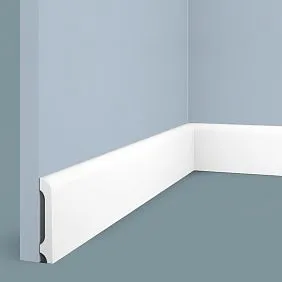
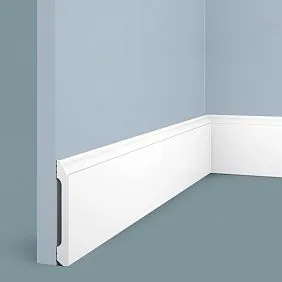
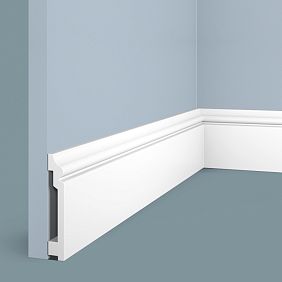
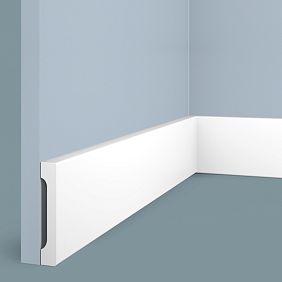
Our factory also produces:
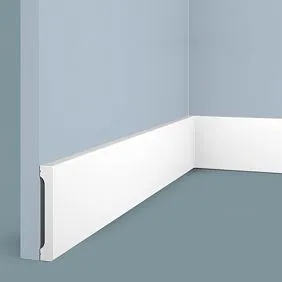
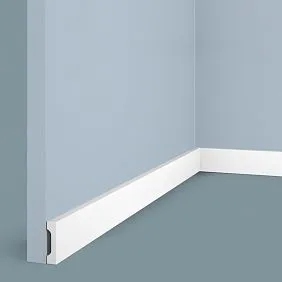
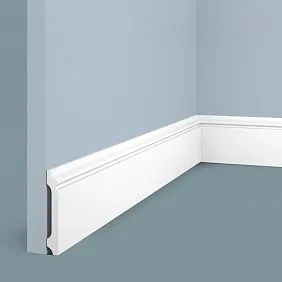

Why polyurethane defeated plaster in the battle for ceilings
Plaster molding is the classic of classics, a tradition spanning centuries. But plaster has significant drawbacks: weight, fragility, fear of moisture, and installation complexity. A linear meter of plaster cornice with a height of 150 mm can weigh 5-8 kg. This means that powerful anchors, preliminary reinforcement of the ceiling slab, and the help of several installers are needed for its attachment. A polyurethane counterpart weighs 300-800 grams—it can be glued with liquid nails by one person in a couple of hours.
Plaster fears moisture. In a bathroom, a kitchen with poor ventilation, or a room with unstable heating, plaster can become damp, develop mold, and begin to crumble. Polyurethane is absolutely moisture-resistant—it is not afraid of 100% humidity or direct contact with water. This opens up the possibility of usingmolding on the ceilingin bathrooms, saunas, swimming pools—places where plaster would capitulate within a year or two.
Plaster is fragile. During transportation, installation, or accidental impact, it can crack or chip. Repair is possible but labor-intensive and noticeable. Polyurethane is elastic—it withstands minor impacts without damage. With a strong impact, a dent forms, not a chip, which is psychologically less critical.
Get Consultation
Ceiling molding profiles: from laconic to luxurious
Simple profiles are cornices with one or two steps, without decorative elements. Height 50-80 mm, width of wall and ceiling abutment 40-60 mm each. Such profiles are suitable for rooms with low ceilings (2.5-2.7 m), for interiors in modern classic, Scandinavian aesthetic, or minimalism with classic notes. A simple profile does not overload the space, creates a neat boundary between the wall and ceiling, and defines an architectural frame.
Medium complexity profiles are cornices with a height of 100-130 mm with several steps, possibly with simple decorative elements (beads, grooves, geometric patterns). Suitable for standard rooms with a height of 2.8-3.0 m, for interiors in neoclassical, American classic, or modern art deco styles. Such a cornice already makes a statement but does not dominate the interior.
Complex profiles — height 150-200 mm and more, multi-level relief, rich decor (acanthus, rosettes, modillions, brackets). These cornices are intended for high ceilings from 3.2 m and above, for palace interiors, classical mansions, representative premises.Relief DecorationSuch complexity creates an atmosphere of solemnity, respectability, historical continuity.
How to choose the correct cornice height? There is a simple rule: the cornice height should be approximately 1/20 of the ceiling height. That is, with ceilings of 2.8 m, a 140 mm cornice is optimal (2800 : 20 = 140). With ceilings of 3.0 m — 150 mm. With 3.5 m — 175 mm. These are approximate guidelines that can be adjusted depending on the complexity of the profile and overall style. A complex, richly decorated cornice can be slightly lower than the calculated value, because the abundance of details visually increases its presence. A simple, laconic profile, on the contrary, can be chosen slightly higher than the calculation so that it does not get lost.
Color and finish of ceiling molding
In 90% of cases, ceiling molding is painted white. Why? Because white is a classic, it is universal, it visually expands the space. A white ceiling with white molding creates a feeling of height, light, airiness. This works in rooms of any size, with any wall color, with any furniture.
But white can be different. Cool white with a bluish undertone suits modern interiors with minimalist aesthetics. Warm white (ivory, antique white, cream) harmonizes with classic interiors where natural materials are present — wood, stone, textiles in natural shades.
Colored molding is a solution for bold projects. A dark blue, emerald, graphite cornice against light walls creates a dramatic effect, contrast, visual depth. This works in Art Deco, in modern interiors with neoclassical elements, in men's studies. But here it is important not to overdo it: only the cornice should be colored, the rest of the molding (if there are wall moldings, rosettes) — white. Otherwise, visual overload occurs.
Patination and artificial aging are techniques that give molding a noble historical feel. Gold or silver patina in the recesses of the relief emphasizes the detailing of the decor, creates the effect of expensive antiques. This is appropriate in classic, palace interiors where an atmosphere of luxury and respectability is important.
Wooden floor skirting: the foundation of nobility
Floor wooden skirting— is not just a strip covering the gap between the floor and the wall. It is an architectural element that sets the tone for the entire interior. A massive high skirting made of oak speaks of respectability, solidity, long-term investments. A thin, laconic skirting made of beech communicates a modern approach, restraint, Scandinavian aesthetics. Choosing a skirting is choosing a philosophy.
Oak or beech: what to choose for a floor skirting
Oak is the king among species for floor skirting. Density 700 kg/m³, hardness, wear resistance, expressive texture with characteristic annual rings. Oak skirting withstands any household loads — it can be accidentally hit by a vacuum cleaner, bumped by a chair leg, have water spilled on it — it will remain unperturbed. The natural tannin content makes oak resistant to rot, mold, and insects. Oak skirting, with proper care, lasts 50-70 years without loss of aesthetic qualities.
Beech is a worthy alternative with different properties. Density 650 kg/m³, homogeneous fine-pored structure, light pinkish hue without a pronounced texture. Beech is ideal when a skirting for painting is needed — its smooth surface accepts enamel in a perfectly even layer. Beech is easier to process than oak, which allows for creating more complex shaped profiles. The service life of beech skirting is 30-40 years with proper care.
Which to choose? If the budget allows, the floor is made of oak or dark walnut, the style is classic or neoclassic, choose oak. If the ability to paint in any color is important, the budget is moderate, the style is modern or Scandinavian, choose beech. Both options are worthy, each just has its own strengths.
Height and profile of floor skirting: selection rules
Narrow skirting boards with a height of 50-70 mm are suitable for small rooms with ceilings of 2.4-2.7 m. They do not steal the visual height of the walls, creating a neat framing of the floor. The profile is usually simple — a rectangular cross-section with a slight rounding of the top edge. The color is often white or matching the floor. This is the choice for modern apartments, Scandinavian interiors, minimalism.
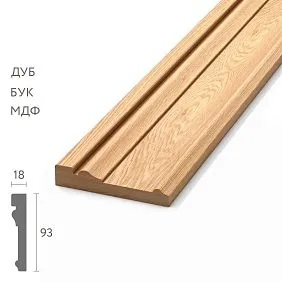
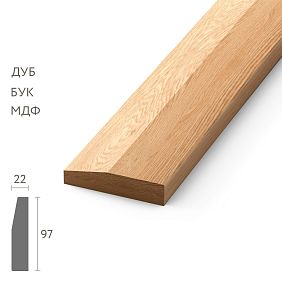
Standard skirting boards 80-100 mm — a universal solution for rooms with a height of 2.6-2.9 m. They are noticeable enough to perform a decorative function but do not overload the space. The profile can be either simple or shaped with one or two grooves.Trimming ItemsSkirting boards of this height are easy to find in any execution — from natural oak to painted beech.
Wide skirting boards 120-150 mm — a choice for spacious rooms with high ceilings from 3.0 m. They create a solid visual foundation, giving the interior monumentality. The profile is usually complex, shaped, with several decorative elements. Such skirting boards are suitable for classic mansions, representative apartments, rooms with palace styling.
Golden rule: the skirting height should be approximately 1/30 of the ceiling height. With ceilings of 2.7 m — that's 90 mm. With 3.0 m — 100 mm. With 3.6 m — 120 mm. Adjust depending on the overall proportion of the interior, but stay close to these values.
Color and tinting: how to make the skirting board harmonize with the floor and walls
Skirting board matching the floor color is the most common solution. If the floor is made of light oak, the skirting is also light oak. If the floor is dark wenge, the skirting is tinted to a similar color. This creates visual unity of the floor area, the skirting becomes a natural extension of the floor, inconspicuous but functional.
Skirting board matching the wall color is a less common but interesting option. If the walls are painted gray, the skirting is also gray. If the walls are beige, the skirting is beige. This visually increases the height of the walls because the skirting does not create a boundary but dissolves into the wall plane. The technique works in modern interiors where the purity of lines and minimalism of details are important.
White skirting board is a universal solution that works with almost any floor and walls. White skirting creates a clear graphic line framing the floor. It is suitable when the ceiling molding is also white, when doors and trims are white, when the overall style is light, airy, Scandinavian.
Contrasting skirting board is a bold solution. Dark wenge skirting against light walls and a light floor creates a dramatic effect, a horizontal line that visually expands the room. Light skirting against a dark floor and dark walls, on the contrary, creates a feeling of lightness, airiness.
How to create harmony between top and bottom: practical philosophy
Now that we have understood what ceiling molding and wooden floor skirting are separately, the main question is: how to combine them correctly? Are there rules, following which one can guaranteed get a harmonious result?
Rule of color unity: white with white
The simplest and most foolproof path is to choose a single color scheme for the top and bottom. White ceiling molding + white floor skirting. This creates a visual frame around the walls: a white stripe of cornice at the top, a white stripe of skirting at the bottom. The walls between them can be any color — gray, beige, blue, green — the white frame will unify and structure everything.
This solution visually expands the space, adds light, creates a feeling of cleanliness and order. It works in rooms of any size, from a tiny bedroom to a huge living room. White top + white bottom is a classic that never goes out of style.
Important nuance: the shade of white must match. If the molding is a cool white with a bluish undertone, the baseboard should also be a cool white. If the molding is a warm creamy shade, the baseboard should also be warm. Different shades of white create a dissonance that the eye catches instantly.
Rule of contrast: when the bottom differs from the top
Contrasting combination is a more complex but effective solution. White ceiling molding + dark oak floor baseboard. Or vice versa: cream molding + light beech baseboard in a natural color. Contrast creates visual dynamics, emphasizes the difference in materials, and makes the interior more voluminous.
Contrast works if the balance of areas is maintained. The rule is: there should be more light, less dark. If the ceiling is white, the molding is white, the walls are light, and the baseboard is dark — this is harmonious. Light dominates, dark creates an accent. If the ceiling is dark, the walls are dark, and the baseboard is light — visual instability arises, a feeling of being upside down.
Contrast works in neoclassicism, where white molding is combined with noble dark wood. Contrast works in Scandinavian interiors, where white dominates, and natural wood creates warm accents. But contrast does not work if there are too many colors. White top, black bottom, gray walls, brown floor, beige furniture — this is chaos.
Rule of proportions: cornice height and baseboard height
Harmony is not only about color but also geometry. If the ceiling cornice has a height of 150 mm, what should the floor baseboard be? Answer: approximately 1.5-2 times lower. That is 75-100 mm. If the cornice is 120 mm, the baseboard is 60-80 mm. If the cornice is 180 mm (high ceilings, luxurious interior), the baseboard is 90-120 mm.
Why should the baseboard be lower than the cornice? Because the ceiling cornice is the crown, the completion of the vertical. It should be the dominant element in the upper zone. The baseboard is the foundation. It should be significant but not compete with the cornice. If the baseboard is higher than or equal to the cornice, a visual conflict arises, an unclear hierarchy.
Exception — rooms with very high ceilings (4 m and more), where both the cornice and baseboard can be very massive. Here, a 1:1 ratio is acceptable. Cornice 200 mm, baseboard 200 mm. But in standard rooms, stick to the 1.5-2:1 rule.
Rule of profiles: complexity must match
If the ceiling cornice has rich decoration (acanthus, rosettes, dentils), the floor baseboard should also be decorative. Not necessarily with the same ornament, but definitely shaped, with several grooves, with relief. A simple rectangular baseboard next to a luxurious cornice looks alien, like a cheap compromise.
If the cornice is minimalist (one or two protrusions, no decoration), the baseboard should also be laconic. A richly decorated baseboard next to a simple cornice creates an imbalance: the bottom turns out to be decoratively more complex than the top, and this contradicts architectural logic.
The complexity of the profiles should correspond to each other. This does not mean copying, it means being in the same stylistic register, in the same degree of detailing.
Rule of material truth: don't hide, emphasize
Polyurethane molding is an artificial material. But this is not a disadvantage, it's a feature. There's no need to imitate plaster, create artificial cracks, or pretend to be antique. Modern polyurethane is beautiful in itself — lightweight, durable, perfectly white, with clear details. Paint it with high-quality matte paint — and it will look noble and modern.
Wooden baseboard is a natural material. Emphasize this. Coat it with oil or clear varnish so the wood grain shows in all its beauty. Or paint it white but leave the texture visible under the paint — this creates a tactile depth that no MDF can provide.
There's no need to try to make polyurethane look like wood, or wood look like polyurethane. Let each material be itself. Polyurethane — lightweight, white, relief. Wood — warm, textured, natural. Their difference is not a problem, but an enrichment of the interior.
Stylistic solutions: how to apply the rules in practice
Theory without practice is dead. Let's see how the combination of ceiling molding and wooden floor baseboard works in specific styles.
Neoclassicism: strict symmetry and nobility of lines
Neoclassical interior is a modern interpretation of classicism without excessive decoration. Here, ceiling molding is present but in a restrained form. Cornice height 120-150 mm, white, with two or three profile steps, without complex ornamentation. Wall moldings creating boiserie panel systems are possible, but again — laconic, without excess.
FloorWooden baseboardBaseboard height 90-100 mm, white or natural light oak. The profile is shaped but restrained — one central groove, rounded edges. If the baseboard is white, it harmonizes with the white cornice, creating a unified frame. If natural oak — it introduces a warm note, contrasts with the cold whiteness of the top.
Neoclassical color palette: walls light gray, beige, soft blue; ceiling white; floor parquet medium brown tone; doors white or light gray;Wooden casings create a frame around the opening, visually highlighting it from the wall plane. A classic casing has a profiled section that corresponds to the profiles of baseboards and moldings.Baseboard in the color of the doors.
Neoclassical formula: minimum colors (2-3), maximum attention to proportions, quality of execution is more important than quantity of decor.
American classic: comfort and solidity
American classic is a more relaxed, comfortable version of the classical style. Here, ceiling molding can be slightly simpler than in the European tradition, but the floor baseboard is higher and more massive. Cornice 100-130 mm, white, with a simple profile. Sometimes instead of a cornice — just a wide cove (rounding of the internal corner between wall and ceiling).
Floor baseboard 100-140 mm, definitely white, with a straight profile. The American tradition loves high white baseboards combined with a wooden floor — this creates contrast and visually increases the height of the walls.
Color palette: walls are often wallpapered with a small pattern or painted in warm beige, cream tones; ceiling white; floor wooden medium or dark shades; doors paneled, painted white.
American classic is coziness, softness, lack of pretentiousness. Here, comfortable proportions, quality materials are important, but without a display of luxury.
English Classic: Restraint and Depth
English classic interior features dark wood, deep colors, and a library-like atmosphere. Ceiling moldings here may be painted not in white, but in cream, ivory, or even dark gray (in modern interpretations). The cornice is 130-160 mm with a medium-complexity profile.
Floor skirting board 100-120 mm, made of dark oak or painted a dark color (wenge, mahogany). A tall, dark skirting board combined with a light upper part creates the characteristic solidity, weightiness, and connection to the ground typical of the English style.
Color palette: walls are often dark green, burgundy, deep blue; ceiling is white or cream; floor is dark wood; doors are massive, made of dark wood; furniture is also dark and massive.
English classic is the nobility of restraint, depth of color, and quality of materials without external pomp.
French Classic: Elegance and Lightness
French classic interior is characterized by airiness, light tones, and elegance of proportions. Ceiling moldings are 140-180 mm high, white or ivory, with rich decoration (floral motifs, scrolls, petals). Ceiling rosettes for chandeliers and wall panels with moldings are possible.
Floor skirting board 80-100 mm, white or light natural wood (light oak, ash, beech). The profile is elegant, with several grooves. The French tradition dislikes massiveness—lightness, airiness, and elegance of lines are important here.
Color palette: walls are light (white, cream, soft blue, lavender); ceiling is white; floor is light parquet or whitewashed oak; doors are tall, painted white or in pastel tones.
French classic is romance, elegance, and lightness of being. There is no heaviness of the English style, no relaxation of the American—here there is airy elegance.
Scandinavian Classic: Light and Nature
The Scandinavian interpretation of classicism is minimalism of forms while preserving classical proportions. Ceiling moldings are simple, cornice 60-90 mm, white, with one or two profile steps, without decoration. Sometimes, instead of a cornice, there is simply a rounded corner.
Floor skirting board 70-90 mm, white or light wood (birch, pine, light beech). The profile is simple, rectangular or with minimal rounding.Wooden plankson an accent wall can complement the composition, creating a connection between the top and bottom.
Color palette: walls are white or light gray; ceiling is white; floor is light wood; doors are white or natural light wood; furniture is light, minimalist.
Scandinavian classic is light, spaciousness, and connection with nature. Here, classical proportions are simplified to the limit, leaving only the most essential.
Installation and Technical Nuances: How to Realize the Concept
A beautiful project on paper is half the job. The second half is quality installation. How to properly install ceiling moldings and floor skirting boards so the result pleases for decades?
Installation of Ceiling Moldings: Ease and Precision
Polyurethane cornice is installed with adhesive—acrylic-based liquid nails or special polyurethane adhesive. Never use solvent-based adhesive—it can dissolve polyurethane. The ceiling and wall surfaces must be clean, dry, and degreased. If walls are painted with oil-based paint or varnished, a primer will be needed to improve adhesion.
Work sequence: measure the room perimeter, calculate the number of strips, account for waste for corner cuts. Start with the most visible wall (the one seen from the entrance). Cut the corner at 45° with a miter saw or miter box. Apply adhesive in a zigzag pattern to the back of the cornice. Press against the surface, hold for 2-3 minutes. Fill joints between strips with acrylic sealant, smooth with a wet finger, sand with fine sandpaper after drying. Paint the entire cornice with two coats of water-based or acrylic paint.
Important point: if walls are uneven (and they almost always are), gaps form between the cornice and the wall. They need to be filled with acrylic sealant, carefully smoothed, allowed to dry, lightly sanded, and painted. Only then does the cornice look like a single whole with the wall.
Installation of Wooden Skirting Board: Strength and Neatness
Wooden skirting board is attached mechanically—with finishing nails or screws. Adhesive (liquid nails) can be used, but mechanical fastening is more reliable and allows for future removal.
Work sequence: measure the room perimeter, calculate the number of strips. Start from a corner, cut the end at 45°. Place the skirting board against the wall, check the geometry. Drill holes in the wall every 50-70 cm (if the wall is concrete or brick—use dowels; if drywall—use butterfly anchors; if wooden—use screws without dowels). Attach the skirting board. Fill nail/screw holes with a wax corrector matching the skirting board color or wood filler.
Corners are the most difficult. Internal corners are cut at 45° on each strip and joined. If the room corner is not exactly 90° (and it almost never is), you'll have to adjust on-site, shaving off or adding a degree or two. External corners require jeweler-like precision—any gap will be noticeable. If the corner is complex (not 90°, but, say, 135°), you'll have to calculate the cutting angles individually.
Important nuance: the skirting board must fit tightly against the wall along its entire length. If the wall is uneven (bulges, depressions), the skirting board doesn't fit, and gaps form. There are two options: either level the wall (time-consuming and expensive), or use flexible skirting (but wood is not flexible), or accept small gaps, filling them with sealant (not ideal, but acceptable).
Finishing and surface treatment
Polyurethane moldings must be primed and painted after installation. Primer—acrylic; paint—water-based or acrylic, matte or semi-matte. Glossy paint on moldings looks cheap, avoid it. Two coats of paint are mandatory—one coat does not provide uniform color.
Wooden skirting board, if already painted or factory-varnished, does not require additional finishing. If you want to change the color, wood primer and two coats of enamel will be needed. If the skirting is natural, without coating, it needs protection: either oil-wax (natural, emphasizes texture, but requires regular renewal), or varnish (durable, long-lasting, but hides the tactile feel of the wood).
Oil is applied with a soft cloth, rubbed into the wood, excess is removed after 15-20 minutes. Dries in 12-24 hours. After a month, a second coat can be applied for enhanced protection. Varnish is applied with a brush or roller, dries in 4-6 hours, between coats—light sanding with fine sandpaper (P320-P400) to remove raised wood fibers. Two to three coats of varnish create a durable finish that will last 10-15 years without renewal.
Mistakes that kill harmony
Knowing the rules is important. But it's equally important to know what breaks them. Here are typical mistakes that turn a beautiful idea into a stylistic dissonance.
Mistake one: too many different materials
Polyurethane molding, wooden baseboard, plastic casings, MDF doors, a plaster ceiling rosette. Five different materials in one room is chaos. Limit yourself to two or three: polyurethane for the top, wood or MDF for the bottom and openings. That's it. The fewer heterogeneous materials, the more cohesive the interior.
Mistake two: mismatching shades of white
Ceiling molding in cool white, baseboard in warm cream, casings in cool grayish-white, doors in bright white. Four different shades of white—and they all conflict with each other. The eye catches the difference, even if it doesn't always realize what the problem is. Solution: choose one shade of white and stick to it. Buy all elements from one manufacturer or paint everything with the same paint.
Mistake three: disproportionate elements
A massive 180 mm ceiling cornice and a tiny 50 mm baseboard. The top is oppressive, the bottom gets lost. Or the opposite: a modest 70 mm cornice and a massive 140 mm baseboard. The bottom dominates, the top is unnoticeable. Disproportion creates a feeling of imbalance, instability. Maintain proportions: the cornice should be 1.5-2 times taller than the baseboard.
Mistake four: mixing styles
Classical molding with acanthus and rosettes + a modern baseboard with a simple rectangular profile + loft-style doors with a rough texture. Classic, minimalism, loft in one room—this is a style conflict that cannot be resolved. Choose one style and follow it in all details.
Mistake five: poor material quality
Cheap polyurethane molding with blurred details where the ornament is hard to read + an expensive oak baseboard of perfect quality. The molding looks like a plastic fake, the baseboard looks serious and noble. Dissonance. If the budget is limited, it's better to choose simple molding profiles (without complex decoration) but of good quality, rather than richly decorated but poorly cast ones.
Care and durability: what will it be like in 20 years
You've invested money, time, effort—you want the result to please you for decades. What will happen to the materials in 10, 20, 30 years?
Polyurethane molding: timelessness
Polyurethane practically doesn't change over time. It doesn't crack, deform, rot, or mold. The only thing that can happen is local soiling (in the kitchen, the cornice may get a greasy film from vapors; in the bathroom, limescale from hard water). Solution: wipe with a damp sponge and soapy water once a year.
Paint may fade over time (especially if the molding is exposed to direct sunlight). After 10-15 years, repainting may be needed. It's not difficult: light sanding with fine sandpaper (to remove the gloss of the old paint and improve adhesion of the new one), priming, two coats of new paint. One day of work—and the molding looks like new.
The service life of quality polyurethane molding with proper care is 50+ years. It will outlive several renovations, several generations of residents, several shifts in interior fashion.
Wooden baseboard: the nobility of aging
Wood ages. But it ages nobly, if cared for. An oak baseboard may darken after 10-15 years, acquire a patina, become even more expressive. This is not a flaw, it's the character of a natural material.
A varnished baseboard may lose its luster after 10-15 years, especially in areas of frequent contact (near doors, in passageways). Solution: light scraping (removing a thin layer of old varnish), sanding, applying new varnish. This can be done many times—each time 0.5-1 mm of wood is removed, and the baseboard thickness is 12-20 mm, so the margin is large.
A painted baseboard requires repainting every 10-15 years. If the coating is in good condition, light sanding and a new coat of paint are enough. If there are chips, scratches—filling, priming, two coats of paint will be needed.
Service life of a wooden baseboard with proper care: beech—30-40 years, oak—50-70 years. This is without considering restoration. With restoration, the lifespan is practically unlimited.
Comparison with alternatives
MDF baseboard lasts 15-25 years, then the lamination or paint starts to peel. Restoration is possible but more difficult than with solid wood. Plastic baseboard lasts 10-15 years, then fades, cracks, looks cheap. Restoration is impossible—only replacement.
Plaster molding with proper care lasts for centuries (proof—palaces from the 18th-19th centuries). But it requires ideal conditions: stable humidity, no leaks, careful handling. Polyurethane is less finicky, more versatile.
The combination of polyurethane molding and wooden baseboard is a balance of durability and practicality. Both materials last for decades, both allow for restoration, both don't require complex care.
Frequently asked questions: expert answers
Can ceiling molding be painted in dark colors?
Yes, polyurethane paints excellently in any color. Dark molding is a bold solution for contrasting interiors: light walls + dark cornice. But keep in mind: a dark ceiling cornice visually lowers the ceiling. Suitable for high rooms from 3 m.
What is stronger—oak or beech baseboard?
Oak is slightly stronger (density 700 vs. 650 kg/m³), more resistant to moisture due to tannins. Beech is easier to work with, paints better. For floor baseboards, both options are worthy; the choice is a matter of budget and aesthetics.
Does polyurethane need to be primed before painting?
Absolutely. Without primer, the paint may apply unevenly, form spots, and adhere poorly. Acrylic primer improves adhesion, coverage, and coating durability.
What width should I choose for a baseboard in an apartment with 2.7 m ceilings?
Optimally 80-90 mm (2700 : 30 = 90 mm). This is a classic proportion that doesn't overload the space and looks good with most floor coverings.
Can wooden baseboards be used in a bathroom?
Yes, provided there is high-quality waterproofing (varnish, oil-wax with moisture protection) and good ventilation. Oak is preferable to beech due to its natural moisture resistance. An alternative is —Polyurethane Baseboardsabsolutely moisture-resistant materials are recommended.
Which wood species to choose — oak or beech?
Oak: maximum strength, expressive texture, durability 50+ years, high price. Beech: good strength, neutral color (ideal for painting), durability 30-40 years, affordable price. The choice depends on budget and style.
How long does polyurethane molding last?
With proper care, 50+ years. The material does not rot, crack, or warp. Repainting may be required after 10-15 years (locally or completely), but the molding itself remains in perfect condition.
Do you manufacture baseboards to custom sizes?
Yes,STAVROS offers custom manufacturingmolding productsbased on individual drawings. Minimum order for non-standard profiles is 50 linear meters.
How much does it cost to decorate a room with molding and a wooden baseboard?
For a 20 m² room with 3 m ceilings: ceiling cornice (perimeter 18 m × 600 rub./m) + oak floor baseboard (18 m × 2000 rub./m) + installation = approximately 50-70 thousand rubles. The exact price depends on the complexity of the profiles and wood species.
Can I combine white molding and a dark baseboard?
Yes, this is a classic solution for neoclassical and English interiors. The white top creates lightness, the dark bottom creates solidity. The main thing is to maintain balance: there should be more light, less dark.
Conclusion: Create an interior that will stand the test of time
A classic interior is not a tribute to fashion, it's an investment in eternity. WhenCeiling molding skirting boardharmonizes withwooden floor baseboard, when every detail is thought out, every proportion is verified, a space is born that will remain relevant in 10, 20, 30 years.
PolyurethaneCeiling moldingsgives the upper part of the room lightness, elegance, architectural completeness. It is not afraid of moisture, does not crack during building settlement, is easy to install, and lasts for decades.Relief Decorationmade of high-quality polyurethane reproduces classic motifs with filigree precision, creating a sense of historical continuity.
Woodenskirting boardmade of oak or beech gives the lower part of the interior solidity, natural warmth, and tactile pleasantness.Wooden itemsSTAVROS undergo strict quality control, are made from selected solid wood, and are processed on European equipment. Each baseboard is not just a plank, it is the result of years of production expertise.
Harmony between top and bottom, between artificial and natural, between lightness and solidity — this is the formula for a classic interior that will never go out of style. It is not a random set of elements, but a structured system where each detail supports the other, where materials complement each other, where proportions are observed down to the millimeter.
For over two decades, the company STAVROS has been creating decorative elements that turn ordinary rooms into spaces with character. The assortment includes —Polyurethane cornicesall profiles and sizes,Wooden Skirting Boardsmade of oak and beech,Moldings, Casings, rails— everything needed to create a complete classic interior.
STAVROS specialists will help you choose the right combination of elements, calculate the required quantity, and offer solutions for installation and finishing. Each product undergoes multi-stage quality control — from wood selection to final packaging. Delivery is available throughout Russia, and warehouse programs in Moscow and St. Petersburg allow for the shortest possible order fulfillment times.
Create an interior where classical harmony meets modern practicality. Where ceiling molding and floor baseboards do not compete, but complement each other. Where every detail is in its place, every material reveals its best qualities. Entrust this to STAVROS professionals — and the result will exceed expectations.