Article Contents:
- 1. Role of baseboard in interior design
- 1.1. Aesthetic Unity
- 1.2. Surface Protection
- 1.3. Concealing Utilities
- 1.4. Proportional Correction
- 2.1. Advantages of MDF as a Material
- 2.2. Aesthetic of Oak in Interior Design
- 3.1. Floor Baseboard
- Main Features:
- 3.2. Ceiling Baseboard
- Advantages:
- 3.3. MDF Baseboard for Painting and Veneered Variant
- Distinctive Features:
- 4.1. Defining Interior Style
- 4.2. Height and Proportions
- 4.3. Quality of Execution
- 4.4. Price and Budget
- 5.1. Surface Preparation
- 5.2. Tools and materials
- 5.3. Step-by-Step Installation Guide
- 6.1. If the "Paintable" Variant is Chosen
- 6.2. If the Product is Used in Veneered Variant
- 7.1. Daily care
- 7.2. Preventing Damage
- Repair and restoration
- 8.1. Floor
- 8.2. Walls and Ceiling
- 8.3. Furniture and decorative elements
- 9.1. Classic Style
- 9.2. Modern Style and Minimalism
- 9.3. Loft and industrial style
- 9.4. Provence and country style
- 10.1. Modern MDF Processing Methods
- 10.2. Impregnations and Finishes
- 10.3. Environmental Standards
- 11.1. Daily Care
- 11.2. Damage Prevention
- 11.3. Repair and Restoration
- 15.1. Customer Interaction
- 15.2. Technical Recommendations
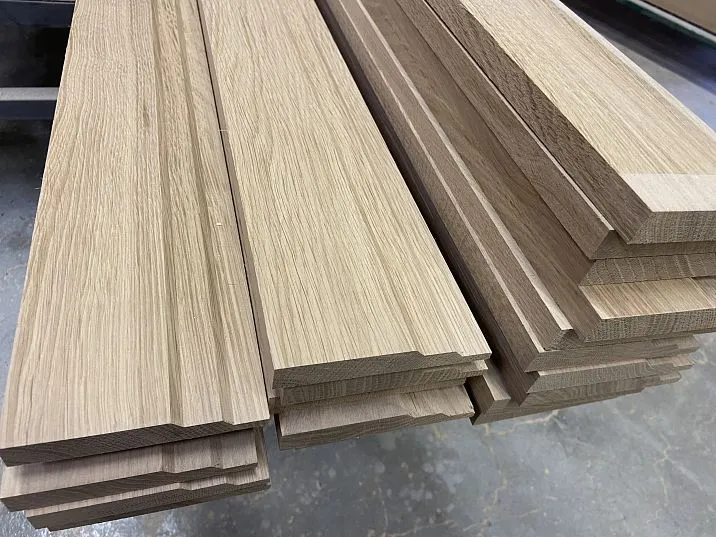
In the world of modern interior design, every element plays an indispensable role. From careful furniture selection to sophisticated lighting – everything must work in harmony to create a cozy, stylish, and functional space. One such detail capable of transforming any room is baseboard. Especially popular now isMDF skirting board oak – an item that combines traditional oak aesthetics with modern MDF manufacturing technologies. In this article, we will thoroughly examine all aspects of using MDF baseboards that imitate oak, learn why they win the hearts of designers and homeowners, and how to properly choose, install, and care for them.


1. Role of Baseboard in Interior Design
Baseboard is not just a decorative strip covering the junction between wall and floor or ceiling. Its significance goes beyond a purely decorative element. Let’s consider the main functions of baseboard:




1.1. Aesthetic Unity
Baseboard helps create a harmonious transition between different surfaces in a room. It 'connects' the floor, walls, and ceiling, making the interior complete. In case of usingMDF skirting board oakthe effect of natural oak adds warmth and elegance to the room, giving it character and individuality.
Our factory also produces:


1.2. Surface Protection
The lower part of walls is most susceptible to damage – during cleaning, moving furniture, or due to careless contact. A quality baseboard protects walls from impacts, scratches, and other mechanical effects, preserving the finish in perfect condition.
Get Consultation
1.3. Concealing Utilities
Many modern baseboard models, including MDF ones, feature built-in channels for wiring. This allows hiding wiring from view and creating a neat, minimalist interior look.
1.4. Proportional Correction
Baseboard can visually alter the perception of room size. Properly selected height and texture of baseboard can visually enlarge space or emphasize ceiling height.
2. Why Choose MDF Oak Baseboard
2.1. Advantages of MDF as a Material
MDF (Medium Density Fiberboard) – is a medium-density fiberboard obtained by pressing wood fibers using special binding agents. Here are the main advantages of MDF:
● Uniform structure: unlike natural wood, MDF does not contain knots or cracks, ensuring dimensional stability and allowing for a perfectly smooth surface.
● Ease of processing: MDF is easy to cut, sand, paint, or veneer. This allows creating items of any complexity, including those imitating natural oak.
● Cost-effectiveness: MDF baseboard is significantly cheaper than natural oak while retaining aesthetic qualities.
● Eco-friendliness: modern manufacturing technologies minimize emission of harmful substances, and the use of recycled wood contributes to responsible use of natural resources.
2.2. Oak Aesthetics in Interior Design
Oak is a symbol of traditional, warm, and solid finishing. In interiors of classic, country, and even modern styles, natural oak gives the room character and depth. However, natural wood has several drawbacks: it is susceptible to humidity changes, requires complex care, and expensive treatment.MDF skirting board oak combines all the beauty of oak with the practicality of MDF. The item imitates the texture and color of oak, allowing to create a sense of luxury and warmth, yet remains affordable and easy to maintain.
3. Types of MDF Oak Baseboards
3.1. Floor Baseboard
skirting board MDF oak skirting is a classic solution for any room. It is installed along the floor, covering the joint between the floor covering and the wall, creating a smooth transition and visually unifying the space.
Main features:
● Height: can vary from 50 mm to 120 mm and more, depending on the room's scale.
● Profile: from simple straight lines to elegant decorative solutions with carved elements imitating natural oak patterns.
● Color: typically, items imitate oak shades—from light to rich brown—allowing you to choose the optimal variant for any interior.
3.2. Ceiling skirting
Ceiling skirting — is an element that completes the upper part of the interior, creating a smooth transition between walls and ceiling. MDF oak ceiling skirting can be made in the same style as floor skirting, allowing you to create a unified design concept.
Advantages:
● Aesthetics: oak texture adds a touch of tradition and formality.
● Compatibility: perfectly harmonizes with ceiling moldings or cornices, emphasizing the overall style of the room.
● Ease of installation: like floor skirting, ceiling skirting made of MDF is easy to install and requires minimal maintenance.
3.3. Paintable MDF skirting and veneered variant
In addition to items imitating oak, the market also offers paintable MDF skirting, allowing the owner to create the desired color and texture themselves, as well as veneered models, where a thin layer of natural oak veneer is glued onto the MDF.
Distinctive features:
● Paintable MDF skirting is ideal for those who want to change the interior’s color scheme without replacing the entire skirting. It comes with a primer coating, ensuring excellent paint adhesion.
● Veneered MDF oak skirting provides the most natural appearance, mimicking the structure and texture of real oak, but at a much more affordable price.
4. How to choose the ideal MDF oak skirting
4.1. Defining the interior style
First and foremost, the choice of skirting should match the overall style of your interior. Let’s consider several popular options:
● Classic and country: Here, skirting with relief or decorative profiles in warm oak tones is preferred. They pair perfectly with solid furniture, parquet flooring, and decorative elements such as moldings and trim.
● Modern style, modern, minimalism: In such interiors, more strict, minimalist models are appropriate. The skirting can be made as a flat strip with minimal decoration, preserving the feeling of spaciousness and clean lines.
● Loft: For this style, skirting imitating aged wood with weathered elements can be used, or alternatively—modern solutions with matte finish. Contrasting combinations (e.g., dark skirting on light walls) will emphasize the industrial character of the interior.
● Provence: Elements of the Provence style often include lightness, pastel shades, and slightly aged texture. MDF oak skirting with patina effect will be a perfect addition to such interiors.
4.2. Height and proportions
The height of the skirting directly affects the perception of the interior. In spacious rooms with high ceilings, you can afford more substantial skirting (80–120 mm and above), which adds solidity and completeness to the space. In smaller rooms, it is recommended to choose models of lesser height (50–70 mm) to avoid overcrowding the space.
4.3. Quality of execution
Absence of cracks and knots. Cracks weaken the pole's structure, and knots may become future breakage points.
● Surface smoothness. The item must be perfectly smooth, without burrs, chips, or cracks.
● Precision of manufacture. The angles and joints of the skirting must be neatly executed to avoid gaps during installation.
● Finish. If referring to the veneered variant, ensure even application of veneer and its natural texture. If choosing paintable skirting, check that the surface does not show signs of uneven primer layer.
4.4. Price and budget
MDF skirting board oak Available in a wide price range. The price depends on:
● Profile complexity (the more decorative the baseboard, the higher the cost).
● Finish type (veneer models usually cost more than paintable ones).
● Manufacturer and brand.
● Additional accessories (corners, clips, plugs).
It is important to remember that paying extra for a brand is often justified by stable quality and warranty. However, among less-known manufacturers, you can also find worthy options if you carefully study reviews and product specifications.
5. Preparing and installing MDF oak baseboard
5.1. Surface preparation
Before installing the baseboard, it is important to prepare the walls and floor:
● Cleaning: remove dust, dirt, remnants of old finishing materials.
● Leveling: if walls have unevenness, it is recommended to apply putty or plaster at the joints.
● Acclimatization: allow the baseboard to acclimate in the room (usually 24 hours) to avoid deformation after installation.
5.2. Tools and materials
For installing the baseboard, you will need:
● Tape measure, level, and pencil for accurate measurements.
● Saw (circular or hacksaw) for cutting the baseboard at the required angle.
● Miter box for precise angled cuts.
● Construction adhesive (or liquid nails) – for attaching the baseboard to the wall.
● Screwdriver and screws (if additional fastening is required).
● Sealant or putty for filling joints and seams.
5.3. Step-by-step installation guide
- Measurements and marking
Measure the room's perimeter, determine the number and length of required elements. Add 5–10% for trimming and corner adjustments. Mark joint locations, taking into account corner shapes (internal and external).
- Cutting the baseboard
Using a circular saw or hacksaw, carefully cut the baseboard at the required angles (usually 45° for standard corners). Use a miter box for precise angular cuts during work.
- Applying adhesive
Apply construction adhesive evenly to the back of the baseboard, paying special attention to corners and edges. If clips are provided, install them in advance according to the instructions.
- Installing the baseboard
Carefully press the baseboard against the wall, using a level to check for horizontal alignment. If using adhesive, leave it to dry for several hours. If using screws, secure the item and then cover the screw heads with putty.
- Final finishing
Check all joints to ensure there are no gaps. Fill small gaps with sealant or putty if necessary, then sand and paint them for a final finish.
6. Preparing MDF oak skirting for painting or leaving in natural state
6.1. If the "paint-ready" option is selected
● Sanding. Light sanding with fine-grit sandpaper (e.g., P180-P240) will remove minor imperfections.
● Degreasing. Wipe the baseboard with a damp cloth using a soapy solution, then allow it to dry completely.
● Primer. Apply an MDF primer to improve paint adhesion.
● Painting. Use quality paint (acrylic or alkyd) and apply two to three coats, ensuring even coverage.
6.2. If the item is used in a veneered variant
MDF oak veneered baseboard already has a decorative finish mimicking natural oak. In this case, it is sufficient to check its quality and touch up minor defects if necessary.
7. Care for MDF oak baseboard in interior
7.1. Daily care
MDF baseboard imitating oak does not require special effort to maintain its aesthetics:
● Wipe the surface with a soft dry or slightly damp cloth.
● When dust or dirt appears, use neutral cleaning agents, avoiding abrasive materials.
7.2. Preventing damage
● Handle with care. Avoid strong impacts and scratches, especially in areas of intensive contact (when moving furniture).
● Humidity control. Although MDF has good stability, prolonged contact with water may cause swelling. Ensure optimal humidity levels in the room.
7.3. Repair and restoration
If chips or scratches appear on the baseboard:
● The affected areas can be touched up with the same paint used for the initial coating.
● If necessary, perform minor sanding and reapply a protective paint layer.
8. Combining MDF oak baseboard with other interior elements
8.1. Floor
Baseboard selection is closely related to the type of flooring:
● Parquet or solid wood. Ideal if the baseboard is in warm oak tones, creating a harmonious continuation of the wood.
● Laminate or engineered wood. An MDF oak baseboard can accentuate the floor color if chosen to match or create a pleasant contrast.
● Ceramic tile. In such rooms, the baseboard helps soften the rigidity of tiles, adding warmth to the interior.
8.2. Walls and ceiling
● Wallpaper and paint. A baseboard in oak style can either blend with wall color or create a striking accent. For example, white or light walls contrast beautifully with oak tones.
● Ceiling baseboard. If the interior usesCeiling skirting, the oak motif can be repeated on all levels of finish, creating a cohesive look.
8.3. Furniture and decorative elements
● Skirting boards and door frames. When decorative elements are repeated in a unified style, the interior appears more thoughtfully designed. Oak tones of the baseboard harmonize well with solid wood furniture or decorative skirting boards.
● Paintings, mirrors, textiles. Warm oak tone can serve as a unifying element, harmoniously connecting different parts of the interior.
9. Interior styles and the role of MDF oak skirting
In classical interiors, every detail is important. Tall, ornate baseboards with oak imitation add luxury and elegance to the room. Such baseboards harmonize beautifully with moldings, heavy door casings, and parquet flooring, creating an atmosphere of a noble, old-fashioned home.
In interiors where clean lines and minimal decorative elements dominate, baseboards can be designed in a more strict, minimalist style.
9.2. Modern style and minimalism
MDF oak in such cases adds warmth and contrast without overwhelming the space.Skirting Lofts are characterized by elements of aging and rough textures. MDF oak baseboards can be finished with an aged effect, creating an atmosphere of 'old' wood that perfectly complements brick or concrete walls. Such a baseboard emphasizes the originality and uniqueness of the interior.
9.3. Loft and Industrial Style
Light pastel shades, gentle aging, and naturalness are the main characteristics of the Provence style. An MDF oak baseboard finished with patina technique helps create a feeling of home comfort and warmth. It harmonizes with floral-patterned wallpaper, white furniture, and natural textiles.
9.4. Provence and Country Style
10. Production technologies and innovative solutions
10.1. Modern MDF processing methods
In the production process of MDF, high-tech methods are used to achieve perfect material uniformity. This ensures a smooth surface necessary for high-quality decorative coating application. Thanks to such technologies,
it looks as if made from natural oak, yet it has more stable performance characteristics.MDF skirting board oak Looks as if made of natural oak, but has more stable performance characteristics.
10.2. Impregnations and coatings
One of the important features is the ability to create various effects:
● Laminating. Allows creating a natural wood effect with high resistance to moisture and mechanical damage.
● Veneering. Gives the item a maximally natural appearance while increasing its strength.
● Painting under paint. Provides freedom of color choice and allows the owner to independently determine the shade, adapting to the overall interior design.
10.3. Ecological standards
MDF manufacturers pay great attention to the ecological safety of products. The use of modern binding resins with low formaldehyde emission levels allows compliance with strict European standards (E1, E0). This is especially important for living spaces, where air quality is of primary importance.
11. Practical tips and recommendations for use
11.1. Daily care
To maintain the baseboard's original appearance, it is important to follow simple care rules:
● Regularly wipe the surface with a soft cloth.
● Avoid aggressive cleaning agents that may damage the paint or laminate coating.
● Immediately remove stains to prevent them from penetrating micro-cracks.
11.2. Damage prevention
● When moving furniture, ensure sharp objects do not catch on the baseboard.
● Use protective pads on furniture to minimize the risk of impacts.
● Monitor the room's humidity level, especially during winter, to avoid excessive shrinkage or swelling of the material.
11.3. Repair and restoration
In case of minor damage (scratches, chips), it is recommended:
● Lightly sand the damaged area.
● Touch up the damaged area with the same compound used for the initial finish.
● If necessary, perform a full re-coating of the entire baseboard without dismantling, saving time and cost.
12. Reviews and user experience
Many homeowners who choseMDF skirting board oak, note:
● High dimensional stability and surface uniformity.
● Excellent compatibility with various interior styles – from classic to loft.
● Easy installation and the possibility of self-painting.
● Cost-effective compared to natural oak, while maintaining nearly identical appearance.
Professional designers' reviews also confirm that MDF products imitating oak have become an essential part of modern interiors due to their aesthetic and functional advantages.
13. Economic aspects and budget planning
When choosing a baseboard, it is important to consider not only its decorative properties but also its economic aspect:
● Material cost depends on profile complexity, finish type (veneered, paintable, laminated), and brand.
● Discounts and promotions. Many stores and online platforms regularly run promotions that significantly reduce expenses.
● Bulk purchases. When renovating a large house or office, bulk buying can provide additional savings.
Considering the costMDF oak baseboard, it is important to compare it with the product's durability and aesthetic appeal. A well-chosen baseboard will serve for decades, remaining an unchanged element of the interior.
14. Future trends in the world of baseboards
With technological advancements and changing consumer tastes, new trends are emerging in decorative materials:
● Innovative coatings. Manufacturers experiment with various types of paint and varnish, creating coatings resistant to mechanical damage, UV radiation, and moisture.
● "Live wood" effect. Newest processing methods allow creating baseboards that are nearly indistinguishable from natural oak in texture and color, while still possessing the stability and longevity of MDF.
● Eco-friendliness. Each year, more attention is paid to environmental aspects of production. Modern MDF baseboards are manufactured with minimal use of harmful substances, making them safe for health.
● Integration with smart homes. Some models already feature built-in LED strips, enabling original decorative lighting synchronized with the overall interior.
15. Tips for designers and builders
15.1. Interaction with clients
For professionals in design and renovation, it is important:
● Conduct detailed consultations with clients to accurately understand their desires and budget.
● Offer several finish options, including different types of baseboards (paintable, veneered, etc.), so the client can choose the most suitable option.
● Consider the specific characteristics of each room – its size, ceiling height, lighting, and functional purpose.
● Precise measurements. Before ordering skirting boards, carefully measure the room to avoid material shortages.
● Professional installation. Even the highest-quality skirting board requires proper installation. Do not hesitate to hire professionals if necessary to achieve a flawless result.
● Planning for painting. If the item is intended to be painted, determine the color scheme in advance and test the paint on a small area to ensure color accuracy.
16. Conclusion
16. Conclusion
MDF skirting board oak This is the perfect blend of tradition and modern technology. It provides the appearance of natural oak with its warmth, elegance, and texture, while also offering the advantages of modern materials: stability, ease of processing, and affordability. Such a skirting board not only completes the interior, giving it a finished look, but also performs important protective functions, preserving walls and floors from damage.
When choosing skirting boards, it is important to consider the interior style, room sizes, material quality, and finishing method. High-quality MDF skirting boards imitating oak are an excellent solution for both classic interiors, where elegance and refinement are valued, and modern, minimalist spaces, where clean lines and functionality are key. Thanks to the option to choose items for painting or veneered finish, everyone can select a variant perfectly matching their requirements.
In the end, skirting boards are not just a finishing element, but part of a cohesive design, capable of bringing harmony, warmth, and completeness to any interior. If you want to create a home where every detail speaks of your taste and attention to quality, pay attention toMDF skirting board oakIt will become a reliable and stylish companion to your interior, offering comfort and natural beauty for many years.
In conclusion, we would like to emphasize that the modern world of renovation and design requires not only aesthetic awareness but also a practical approach to material selection. MDF skirting boards imitating oak meet all current requirements: they are strong, durable, affordable, and at the same time capable of creating an atmosphere of luxury and coziness characteristic of natural wood.
Let your choice be thoughtful and confident, as every decision — from wall color to skirting board finish — affects the overall perception of your home. Careful attention to details, use of quality materials, and proper installation will allow you to enjoy the results for many years. And if you value the opportunity to experiment with design, change interior styles without significant investment —MDF skirting board oak will provide you with all the necessary freedom for creativity.
MDF Skirting Board Oak: The Art of Natural Elegance in Interior | Company Stavros