Article Contents:
- Differences between plastic and polystyrene profiles
- Plastic skirting boards: functionality above all
- Polystyrene skirting boards: decorative versatility
- Comparison of key characteristics
- Ecological Aspects
- Where to use each material: optimal application zones
- Kitchen: plastic practicality
- Bathroom: moisture resistance of both materials
- Bedroom: aesthetics of polystyrene
- Living room: combined approach
- Hallway and entryway: plastic durability
- Children's Room: Safety and Practicality
- Advantages in cost and ease of installation
- Price comparison
- Savings on installation
- Repair speed
- Durability and replacement
- Installation tips and color selection
- Color selection: rules and exceptions
- Measurements and quantity calculation
- Surface Preparation
- Installing plastic skirting boards
- Installing polystyrene skirting boards
- Painting polystyrene
- When to choose duro-polymer or polyurethane
- Long-term perspective
- High loads
- Premium interiors
- Architectural complexity
- Wet areas with high temperatures
- Frequently Asked Questions
- Can plastic skirting boards be painted?
- How long does installation take?
- Are special tools needed?
- How to run cables through skirting boards?
- Can baseboards be installed on uneven walls?
- What height should the skirting board be?
- How much does installation by professionals cost?
- How to care for baseboards?
- Can baseboards be removed and relocated?
- Where to Buy Quality Materials?
- Conclusion: smart savings without compromising quality
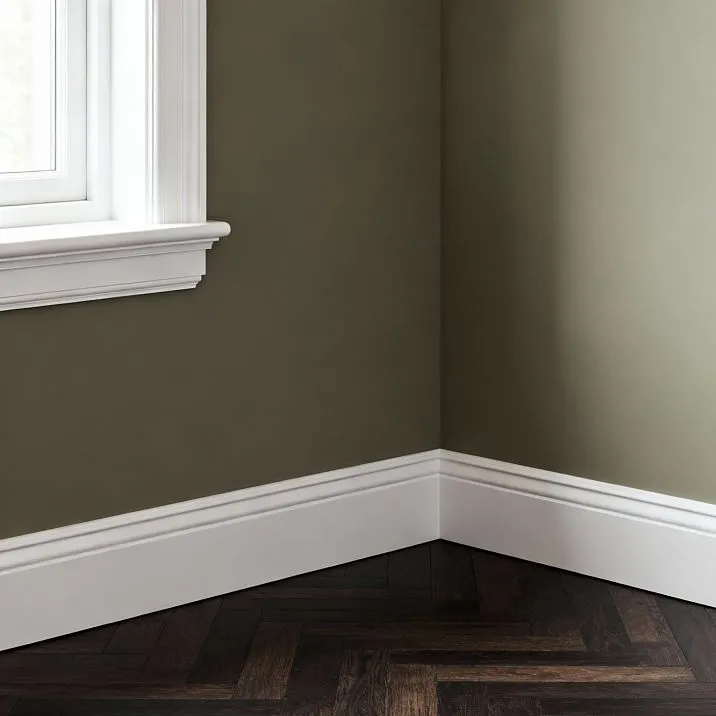
The repair budget is 90% spent. The floor is laid, walls are covered, the ceiling is painted. Only the final touches remain — baseboards. And here it turns out that there are no funds left for expensive duroplastic or polyurethane. A familiar situation? Many encounter this at the final stage of renovation, when major expenses have consumed the majority of the budget.
The absence of baseboards is incomplete interior design. Gaps along the walls, visible edges of flooring, lack of visual framing for the room. The room looks untidy, regardless of how well the main finishing was done. A solution is needed that will cover all these shortcomings without completely breaking the bank.
Plastic baseboards и polystyrene baseboard — options for those who value a reasonable price-to-quality ratio. This is not a compromise of the "cheap and angry" kind. It is a thoughtful selection of functional materials for specific tasks, where their properties are optimally utilized. Let's examine how they differ, where each performs best, and how to get maximum benefit with minimal expenditure.
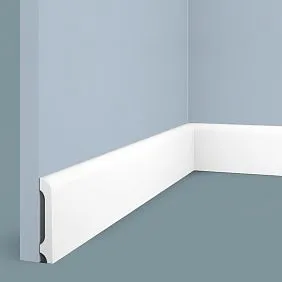
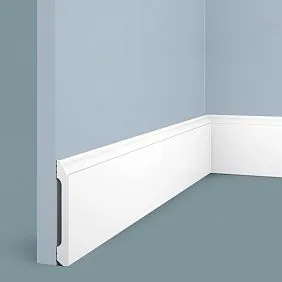
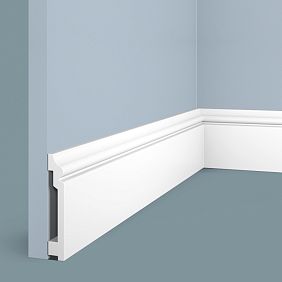
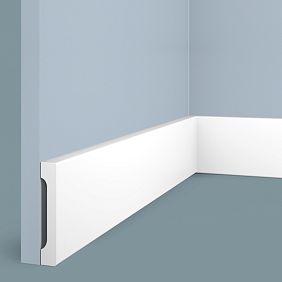
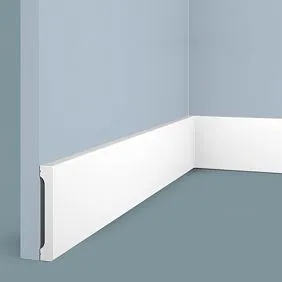
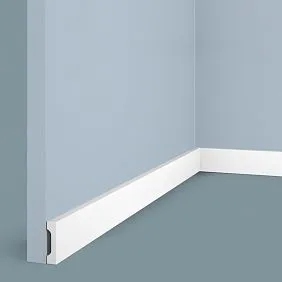
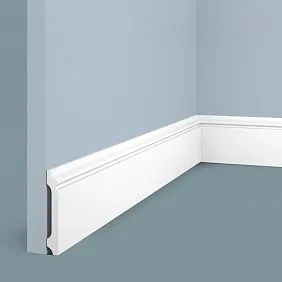

Differences between plastic and polystyrene profiles
At first glance, both materials are similar — lightweight, white, inexpensive. But production technologies, structure, and properties differ fundamentally.




Plastic baseboards: functionality above all
Plastic baseboards Made from polyvinyl chloride by extrusion. PVC granules are heated, plasticized, and forced through a die. This results in a hollow profile with internal ribs for stiffness and a channel for cable installation.
The design is thought out in detail. The internal cable channel conceals wires — internet, phone, antenna. This is critical in modern apartments where there is a lot of equipment, and you don't want to cut grooves in the walls for wiring. Simply lay cables in the baseboard — no dangling wires.
Mounting with clips or screws makes installation and removal reversible. Attach the base to the wall, snap the decorative strip — done. Need to run another cable a year later — remove the strip, lay the cable, snap it back. With glued baseboards, this won't work.
The decorative insert covers fasteners and cables. It is usually a contrasting color — wood, metal, solid tone. You can buy several inserts of different colors and change them according to your mood or when changing the interior. Flexibility in design.
The included hardware simplifies installation. Internal and external angles, end caps, connectors — everything is designed by the manufacturer. No need to cut at 45 degrees or match joints. Simply insert the corner element — and the angle is perfectly finished.
The color range includes dozens of options. White, beige, brown, gray — solid tones. Wood imitations — oak, walnut, wenge, pine. Metallics — chrome, aluminum, gold. There is an option to match any flooring.
Our factory also produces:


Polystyrene baseboards: decorative versatility
Polystyrene baseboard Produced from expanded polystyrene by extrusion. The material is lightweight, porous, with a density of 30-45 kg/m³. A two-meter plank weighs 150-250 grams — less than a glass of water.
The structure is monolithic without cavities. The profile is solid throughout its cross-section, allowing for the creation of any complexity of relief. Smooth minimalist or richly ornamented — the technology allows for everything.
Paintable surface — the key difference from plastic. Polystyrene is white and ready for painting. It can be painted with any water-based paint, creating effects of patina, metalization, or pearl. Plastic baseboards cannot be painted — the color is fixed during production.
Wider application. Polystyrene is used for ceiling cornices, wall moldings, decorative elements. Plastic is only for floor baseboards. If you need a unified decorative line from top to bottom, polystyrene provides this possibility.
More diverse shapes. Manufacturers offer hundreds of profiles — from simple rectangular to complex multi-level designs. Height from 30 mm to 150 mm. Plastic baseboards are limited to standard shapes — usually 50-70 mm high.
Get Consultation
Comparison of key characteristics
Weight: plastic baseboard 80-120 g/m at 60 mm height, polystyrene 50-80 g/m at the same height. Both are lightweight, but polystyrene is 30-40% lighter.
Strength: plastic is stronger due to the monolithic structure of PVC. Polystyrene is brittle, easily breaks when bent, crumbles under impact. On the floor, plastic lasts longer.
Water resistance: both materials are completely waterproof, do not absorb moisture, do not swell. Can be used in bathrooms and kitchens without restrictions.
Cable channel: only available in plastic baseboards. Polystyrene profiles are monolithic, cable installation is impossible. If you need to hide wires, the only option is plastic.
Paintability: polystyrene can be painted with any water-based paint. Plastic cannot be painted, the color is fixed during production. For color harmony with the interior, polystyrene is more flexible.
Price: plastic baseboard 40-120 rubles/m depending on height and configuration. Polystyrene 30-100 rubles/m. The difference is small, both are affordable even with a minimal budget.
Ecological aspects
PVC and polystyrene are synthetic polymers. Both are inert under normal conditions, do not emit harmful substances, and have safety certifications for residential use. Panic about plastic toxicity is unwarranted.
Both release corrosive smoke when burned. PVC forms dioxins at temperatures above 300°C. Polystyrene melts, drips, and smokes. However, baseboards constitute a minimal share of the total mass of combustible materials in an apartment — furniture, textiles, and doors burn more actively.
Recycling is possible for both materials. PVC can be recycled into new products, as can polystyrene. However, in Russia, plastic waste collection systems are underdeveloped, and most baseboards after removal end up in landfills.
Where to use each material: optimal application zones
Choosing the right material for a specific room is half the success. Use each material where its properties are best expressed.
Kitchen: plastic practicality
In the kitchen buy plastic baseboard It is worth it for several reasons. Splashes of water, grease, steam, frequent wet cleaning — plastic withstands all this without problems. The smooth, non-porous surface does not absorb dirt and can be easily cleaned with any cleaning agent using a sponge.
A baseboard with a rubber edge creates a tight seal against the floor. Water during cleaning does not seep under the baseboard, does not accumulate, and does not create conditions for mold growth. This is critical in the kitchen, where floors are cleaned more frequently and more thoroughly than in other rooms.
The cable channel conceals household appliance wires. Refrigerators, dishwashers, microwaves, kettles — all of these require power. Wires can be run along the baseboards around the perimeter, connecting to each appliance without dangling extension cords.
Matching the floor covering color creates visual unity. Oak laminate under the floor — baseboard under oak. Gray tile — gray baseboard. Plastic baseboards offer dozens of decorative options, making it easy to match the tone exactly.
Plastic's durability in the kitchen exceeds that of polystyrene. Frequent contact with furniture during cleaning, impacts from pots and pans falling, and aggressive cleaning agents — plastic endures stoically. Polystyrene quickly develops dents and scratches.
Bathroom: water resistance of both materials
In the bathroom, both plastic and polystyrene can be used — both are not afraid of water. However, there are nuances that determine the choice.
buy plastic baseboard For the floor, it makes logical sense — it creates a tight seal, preventing water from seeping underneath. The rubber edge fits tightly against tiles, preventing water from seeping during cleaning. Durability under constant humidity is maximum.
Polystyrene is suitable for a bathroom ceiling cornice. Here, there is no direct contact with water, and humidity is not critical. Lightweight construction simplifies mounting on the ceiling, and adhesive is sufficient without additional fasteners. After painting with a water-resistant paint, it serves for decades.
If the bathroom has a suspended ceiling, a polystyrene cornice is the ideal solution. It is lightweight, does not create load, and after installation and painting, it is indistinguishable from expensive materials. A plastic baseboard on the ceiling would look out of place.
Color choice is important. Plastic baseboards often do not match tile color. Polystyrene can be painted to match wall tones or contrast, creating harmony. For aesthetics, polystyrene is more flexible.
Bedroom: polystyrene aesthetics
The bedroom is a room where aesthetics matter more than practical loads. Minimal mechanical stress, normal humidity, and stable temperature.
polystyrene baseboard Here, it belongs in its place.
Painting to match wall color creates visual unity. Pastel beige walls — baseboards also beige. Gray walls — gray baseboards. The interior appears cohesive and thoughtfully designed. Plastic baseboards, with their limited color palette, do not offer such flexibility.
High-profile 100–120 mm profiles create an European style. Such heights are available in polystyrene; plastic profiles are usually limited to 60–70 mm. A high baseboard visually elongates the room, adding a sense of solidity.
Relief profiles add decorative appeal. Polystyrene allows for complex ornamentation, creating visual interest. Plastic baseboards are smooth or minimally textured, appearing utilitarian.
A unified decorative line with the ceiling cornice — a possibility only offered by polystyrene. The top and bottom of the room are framed with profiles from the same collection, creating spatial framing. With plastic, this is not possible.
Living room: combined approach
In the living room, materials can be combined. A plastic baseboard with a cable channel conceals TV, router, and audio system wires. A polystyrene ceiling cornice creates decorative framing.
Wiring through baseboards is critical for modern living rooms. There is a lot of equipment, and thus a lot of wires. Cutting grooves in walls for each cable is expensive and dusty. Plastic baseboards with a spacious cable channel elegantly solve this problem.
Baseboard height of 60-70 mm is optimal for living rooms with standard ceilings of 2.5-2.7 m. Plastic profiles of this height are available in a wide variety and easily match any floor covering.
Ceiling cornices made of polystyrene complete the interior from above. Wide profiles of 100-150 mm match the scale of the living room — the main room in the apartment. After painting, they create a sense of completion and professional finish.
Hallway and entryway: plastic durability
Hallway — zone of maximum mechanical loads. People walk here in outdoor shoes, place bags, and bump into baseboards while changing clothes.
Plastic baseboard Will withstand this better than fragile polystyrene.
Plastic is not afraid of shoe, bag, or umbrella impacts. Polystyrene would chip, but plastic at most gets scratched — scratches on dark finishes are hardly noticeable. For hallways, choose plastic in dark shades or wood-like tones — more practical than white.
Moisture resistance is important in the entryway. Dirt brought in by shoes, floor cleaning — water reaches the baseboards. Plastic withstands this without consequences, polystyrene does too, but plastic is stronger and won’t break from accidental mop strikes.
Ease of replacing damaged sections — an advantage of plastic baseboards with clips. Damage a section — unclip, remove, install a new one. With glued polystyrene, this won’t work — dismantling will damage wall finishes.
Children's Room: Safety and Practicality
In the children’s room, two things matter — safety and resistance to damage. Active play leads to accidental wall impacts. Both materials are safe and certified for children, but plastic is stronger.
Plastic baseboards’ rounded edges are safer than sharp corners. The risk of injury from a child’s fall is lower. Polystyrene profiles may have sharp angles — this should be considered when choosing a specific model.
Polystyrene’s paintability allows creating a color accent. You can paint baseboards in bright colors matching the children’s room theme. Plastic options are limited to standard finishes and less flexible for creative solutions.
Cost advantages and ease of installation
Economy — an important factor with limited budgets. Let’s consider actual costs for materials and installation.
Price comparison
plastic baseboard At 60 mm height, costs 50-80 rubles/meter.
polystyrene baseboard Of the same height — 40-70 rubles/meter. For a standard room with 18-20 meters of perimeter, you will need:
Plastic baseboards: 900-1600 rubles
Polystyrene baseboards: 720-1400 rubles
Hardware for plastic adds 200-400 rubles (corners, caps, connectors). For polystyrene, hardware is not needed — corners are formed by a 45-degree cut. But adhesive glue will be required — 200-300 rubles.
Total material cost for the room:
Plastic: 1100-2000 rubles
Polystyrene: 920-1700 rubles
The difference is small — both options are accessible. For comparison: duro-polymer baseboards would cost 10800-24000 rubles for the same room — 10-15 times more expensive.
Savings on Installation
Both materials allow DIY installation. No special skills required, minimal tools needed. Savings on installers’ labor: 300-500 rubles/meter, for the room this equals 5400-10000 rubles.
Plastic baseboards are easier to install due to hardware. No need to cut corners at 45 degrees or adjust joints — everything is handled by ready-made elements. A beginner can complete installation in 2-3 hours for a room.
Polystyrene requires careful corner cutting. You need a miter saw for precise 45-degree cuts, a sharp utility knife or hacksaw. Skills come quickly, but the first corner may not be perfect. Installation time: 3-4 hours.
Tools for plastic: drill or impact driver for mounting the base, metal hacksaw for cutting, level. All of this is available in most homes or costs little.
Tools for polystyrene: miter saw (300-500 rubles), utility knife or hacksaw, brush for applying adhesive, level. Minimal investment in tools.
Repair speed
Quick installation reduces overall repair time. Plastic skirting boards on clips can be installed in one day even throughout an entire apartment. Polystyrene requires time for the adhesive to cure — usually one day until full load capacity.
The reversibility of plastic installation is useful during phased repairs. Install the skirting boards, live there, and after a month decide to change something — remove, reposition, nothing is damaged. With glued polystyrene, this won't work.
Durability and replacement
Plastic skirting boards last 15-20 years under normal conditions. Polystyrene on ceilings lasts the same, on floors — 5-7 years. Replacement costs are minimal when needed — the material is inexpensive, and installation is simple.
Local replacement of damaged sections is easier with plastic on clips. Remove the strip, replace it, and snap it back. With polystyrene, you’ll have to detach the glued piece, which may damage wallpaper or wall paint.
Installation tips and color selection
Success depends on details. Follow proven recommendations for an ideal result.
Color selection: rules and exceptions
Classic rule: skirting in floor color or one shade lighter. This visually extends the flooring up the wall, making the room appear taller. Oak laminate — skirting in oak. Grey linoleum — grey skirting.
Contrasting approach: skirting in wall color. This visually increases wall area, making the room appear more spacious. Beige walls — beige skirting. Blue walls — blue skirting. Polystyrene can be painted to achieve this effect.
White is universal. White skirting suits any interior, creating a clear boundary between floor and wall. Especially good with dark floors — contrast highlights the room’s geometry.
Dark skirting is practical. Dirt, scratches, and scuffs are less visible on dark surfaces. For hallways and entryways, choose brown, wenge, or black — they retain a neat appearance longer.
Measurements and quantity calculation
Measure the room’s perimeter, subtract door frame widths. This is the basic skirting length. Add 10% for trimming and errors. Skirting is sold in 2.5 m boards — divide total length by 2.5 and round up to get the number of boards.
Hardware for plastic skirting is counted individually. Internal corners equal the number of room corners. External corners — if there are protrusions. End caps — 2 per door frame. Connectors — one per every 5 meters of wall.
Surface preparation
Walls must be flat. Place a long straightedge — gaps over 5 mm will create gaps between skirting and wall. Level local irregularities with spackle. Major unevenness requires plastering, but that’s a separate renovation task.
Clean dust and dirt. Wipe installation areas with a damp cloth, let dry. Adhesive or screws only hold on clean, dry surfaces. Base moisture should not exceed 10%.
Prime porous surfaces — plaster, drywall, aerated concrete. Deep-penetration primer strengthens the surface, improves adhesion, prevents fastener delamination. Concrete walls do not require priming.
Installation of plastic skirting
Start with the longest section, from an internal corner. Attach an end cap to the first profile, press against the wall, check the accuracy of the end cap fitting into the corner. Remove the decorative strip, leaving only the base with the cable channel.
Mark mounting points. First hole 5-10 cm from the corner, subsequent holes every 40-50 cm on straight sections. In corners and bends, reduce spacing to 20-30 cm for tight fit against irregularities.
Drill holes in the wall through the skirting base or through a separate mounting strip. Drill bit diameter 6 mm for standard anchors. Hole depth 40-50 mm. Insert plastic anchors.
Secure the base to the wall with 4×40 mm screws. Fully embed screw heads — they will be hidden by the decorative strip. Do not overtighten — plastic may crack.
Run cables through the channel after installing all bases around the perimeter. Lay wires carefully, avoiding sharp bends. Channel filling should not interfere with decorative strip snapping.
Snap the decorative strip onto the base with light pressure. A characteristic click should be heard along the entire length. Check the tightness — the strip should not detach with light pulling.
Install hardware — internal and external corners, connectors, end caps on door frames. Hardware simply snaps onto profile ends — no adhesive required.
Installation of polystyrene skirting
Start from the same place — from the internal corner of a long wall. Apply adhesive to the back of the first profile in a zigzag or dot pattern with 10-15 cm spacing. Use polymer adhesive or water-based acrylic sealant.
Place the profile against the wall according to the markings, press firmly along the entire length. Hold for 30-60 seconds until the adhesive sets. Immediately wipe away any excess adhesive squeezed out from under the profile with a damp cloth.
Join the second profile end-to-end with the first. The joint must be tight, with no gap. If a micro-gap still forms, fill it with acrylic sealant and smooth it with a damp finger.
Internal angles are formed by joining two profiles cut at 45 degrees. Use a miter saw for precise cuts. Position both profiles against the angle and check the fit. If there is a gap, trim one profile until you achieve a perfect fit.
External angles are formed similarly. Here, precision is even more critical — the external angle is visible, and gaps are very noticeable. Practice on scrap pieces before cutting final profiles.
Allow the adhesive to fully dry before painting. Usually, 24 hours are required. Do not load the baseboards prematurely — shifting will ruin the entire work.
Painting polystyrene
Fill joints and mounting areas with acrylic putty. Smooth with a damp putty knife, let dry for 2-4 hours. Sand with fine-grit sandpaper until smooth. Remove dust with a dry cloth or vacuum cleaner.
Prime with water-based acrylic primer. This seals the pores of polystyrene, ensures even paint absorption, and improves the final result. Primer dries in 1-2 hours.
Paint with water-emulsion or acrylic paint. Use a roller for smooth profiles, a brush for textured ones. First coat — thin, priming. After 2-4 hours, apply the second coat; a third coat may be needed after another 2-4 hours.
For decorative effects, use special paints after the base coat. Patina is created with dark paint in recesses of the relief, then blended. Metallic is applied with a dry brush to raised areas.
When to choose duro-polymer or polyurethane
Plastic and polystyrene are a sensible choice on a limited budget. But there are situations when it’s worth investing in more expensive materials.
Long-term perspective
If the repair lasts for decades, investing in duro-polymer or polyurethane pays off. These materials last 25-30 years versus 5-15 years for plastic and polystyrene. When calculated per year of use, the price difference is negligible.
The economic calculation is simple. A plastic baseboard on the floor will require 2-3 replacements over 25 years. Each replacement costs material plus labor. Duro-polymer is installed once and forgotten.
High loads
In commercial spaces with heavy use, plastic and polystyrene won’t hold up. Office corridors, stores, hotels, and restaurants require wear-resistant materials. Duro-polymer or polyurethane is the only sensible choice.
Traffic determines wear rate. In a living room, a plastic baseboard lasts 15-20 years. In an office corridor, the same baseboard will show scuffs and chips within 2-3 years. Duro-polymer withstands decades.
Premium interiors
When finishes are made with expensive materials, cheap baseboards look out of place. Premium parquet, designer wallpaper, and high-end suspended ceilings require matching trim. Duro-polymer or polyurethane matches the level.
The aesthetics of expensive materials are superior. Perfect geometry, sharp relief, smooth surface after painting. Profiles look substantial, emphasizing interior quality. Plastic and polystyrene in premium finishes cheapen the overall impression.
Architectural complexity
Curved walls, arches, columns, and bay windows require flexible materials. Polyurethane bends without breaking, allowing decoration of curved surfaces. Plastic and polystyrene are rigid and unsuitable for curves.
Flexible polyurethane profiles can be bent into arcs with a radius of 50 cm or more. This opens possibilities for non-standard architectural solutions. There are no alternatives — either polyurethane or no decoration on curved sections.
Wet areas with high temperatures
Saunas, hammams, and industrial kitchens with temperatures of 80-100°C require heat-resistant materials. Polystyrene will soften and sag. Plastic will deform. Polyurethane withstands up to 110-130°C without problems.
For regular bathrooms and kitchens, plastic and polystyrene are sufficient. But in extreme conditions, materials with a safety margin for heat resistance are needed. Polyurethane provides such a margin.
Frequently asked questions
Can plastic baseboards be painted?
No, PVC does not accept paint — it won’t adhere to a smooth, non-porous surface. The color of plastic baseboards is fixed during manufacturing. If the color doesn’t suit, you’ll need to buy another decorative option or choose polystyrene for painting.
How long does installation take?
Plastic baseboards on clips are installed in 2-3 hours for a room with an 18-20 meter perimeter. Polystyrene baseboards on adhesive require 3-4 hours plus one day for adhesive to cure before painting. Total for polystyrene with painting — 2-3 days.
Are special tools needed?
For plastic: hammer drill or impact drill, metal hacksaw, screwdriver or drill, tape measure, level. For polystyrene: miter saw, office knife or hacksaw, brush, putty knife. All of this is inexpensive or already available in your household.
How to lay cables in baseboards?
After installing the bases along the perimeter, lay the wires into the cable channels. Do not bend the cables at sharp angles. At corners, bring the wires outward and pass them through corner elements. The channel filling should not interfere with the snap-fit of the decorative strip.
Can baseboards be installed on uneven walls?
Plastic baseboards forgive unevenness up to 5-7 mm due to their flexibility and rubber edge. Polystyrene baseboards are rigid and require flat walls — gaps over 3 mm will be noticeable. For severe unevenness, either level the walls or choose plastic.
What height should the skirting board be?
For standard ceilings of 2.5–2.7 m, baseboards 60–80 mm are optimal. For high ceilings 3 m and above, 100–120 mm are suitable. Too low baseboards in high rooms disappear visually, while too high ones in low rooms visually lower the ceiling.
How much does installation by professionals cost?
Installers charge 200–400 rubles/m for plastic baseboards and 250–500 rubles/m for polystyrene with painting. For a room of 18–20 meters, this amounts to 3600–10000 rubles. DIY installation saves these costs.
How to care for baseboards?
Wipe plastic with a damp cloth and any cleaning agent. Abrasives can be used for stubborn stains. Wipe polystyrene with a soft, damp cloth without pressure, avoiding aggressive chemicals. Regular dry dusting preserves appearance.
Can baseboards be removed and relocated?
Plastic baseboards on clips can be removed and relocated multiple times without damage. Simply unclip the decorative strip, unscrew the base, and move it to another location. Polystyrene baseboards are permanently glued — removal will damage wall finish.
Where to buy quality materials?
A wide variety is available in hardware stores and online platforms. Check profiles for defects, warping, or scratches. Purchase everything needed with a 10% reserve for trimming and possible errors.
Conclusion: smart savings without compromising quality
Plastic baseboards и polystyrene baseboard — this is not a compromise, but a smart choice for specific tasks and budgets. Both materials are functional, durable under proper usage conditions, and easy to install.
Plastic baseboard Optimal for floors in high-humidity and mechanically stressed areas. Kitchens, bathrooms, hallways, entryways — anywhere practicality, moisture resistance, and cable routing matter. Price 40–120 rubles/m makes it accessible even with a minimal budget.
Polystyrene baseboard Ideal for ceiling moldings and low-load areas. Bedrooms, living rooms, offices gain decorative framing that, after painting, is indistinguishable from expensive materials. Cost 30–100 rubles/m allows decorating the entire interior affordably.
Ease of installation makes both materials accessible for DIY installation. No special skills, expensive tools, or years of experience are needed. Following instructions, a beginner can install baseboards in a day, saving 5000–10000 rubles on professional labor.
Combining materials yields the optimal result.
buy plastic baseboard Use plastic for kitchen and bathroom floors, polystyrene for ceiling moldings and bedroom baseboards. Each material has its place.
Knowing when to switch to premium materials saves unnecessary expenses. For temporary housing, rental apartments, and dacha cottages, plastic and polystyrene are the only sensible choice. For permanent housing over many years, commercial spaces, and premium interiors, consider duro-polymer or polyurethane.
STAVROS company offers a wide range of
plastic и polystyrene baseboards. Profiles of different heights, colors, and shapes. Full hardware kit for plastic systems. Professional consultations on selection and installation.
Experienced specialists will help calculate required materials, select optimal profiles for your interior, recommend adhesive and fittings. Quality guarantee, competitive prices, delivery across Russia.
Save wisely. Choose materials matching tasks and usage conditions. Don’t overpay for unnecessary features, but don’t cut corners where it matters.
buy plastic baseboard Plastic or polystyrene — decide based on your specific situation, and the result will meet expectations.