Article Contents:
- Anatomy of a perfect railing
- Principles of constructive interaction
- Material science in staircase design
- Metallic solutions for modern architecture
- Stylistic directions in railing design
- Ethnic and regional characteristics
- Technological aspects of production
- Innovative Processing Methods
- Installation and mounting: critical moments
- Features of fastening different materials
- Acoustic and thermal properties
- Special requirements for different objects
- Aesthetic Aspects and Design Solutions
- Lighting as a design element
- Maintenance and care of staircase railings
- Preventive maintenance
- Economic aspects of choosing railings
- Long-Term Economic Efficiency
- Trends and innovations
- Materials of the Future
- Conclusion

Imagine a staircase without a railing — bare steps leading nowhere, devoid of protection and elegance. Exactly handrails, posts, balusters transform a simple structure into a work of architectural art, where each element plays its role in creating harmony between safety and aesthetics. These three components form a unified system that not only protects against falls but also becomes a central interior element capable of radically changing the perception of space.
In the world of modern architecture, where functionality must combine with beauty, staircase railings occupy a special place. They serve as a connecting link between floors not only physically but also aesthetically, creating visual continuity and rhythm throughout the interior. Each element — from massive support posts to elegant balusters — carries not only functional load but also artistic value.
Modern technologies allow creating railings of any complexity, but the fundamental principles of their construction remain unchanged. A properly designed and well-made railing system should provide maximum safety with minimal visual impact on the space, or, conversely, become the main decorative accent of the room.


Anatomy of a perfect railing
Every staircase railing consists of three main components that work in close interaction with each other. Understanding the role of each element is critically important for creating not only an aesthetically pleasing but also a safe structure.
Handrails serve as the main functional element, providing support for the hand during ascent or descent. Their shape, height, and material directly affect the comfort of using the staircase. Modern building codes require handrails to be at least 900 millimeters high for residential buildings and 1100 millimeters for public buildings.
Posts serve as the primary load-bearing elements of the entire railing system. They bear the main loads and transfer them to the staircase or floor structure. Support posts are typically installed at the beginning and end of the staircase run, as well as at turns and landings. Their cross-section and material must provide sufficient strength to withstand all possible loads.
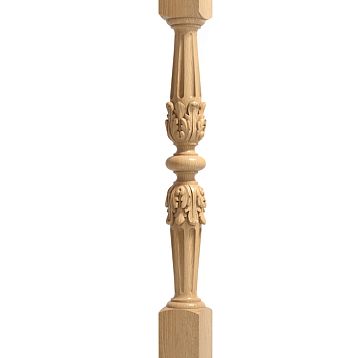
Balusters are vertical elements filling the space between posts and supporting the handrails. They serve a dual function: ensuring safety by preventing falls through the railing, and creating a rhythmic composition that defines the aesthetic character of the entire staircase.




Principles of constructive interaction
The effectiveness of a staircase railing depends on the proper interaction of all its components. Loads arising from support on the handrails must be evenly distributed throughout the system and safely transferred to the load-bearing structures of the building.
The distance between balusters is regulated by building codes and should not exceed 150 millimeters for residential buildings and 100 millimeters for childcare facilities. This requirement ensures children's safety and prevents the possibility of getting stuck between railing elements.
Connections between elements must be made using quality fasteners capable of withstanding both static and dynamic loads. Special attention is paid to the joints where posts are attached to the staircase base — here, maximum stresses are concentrated.
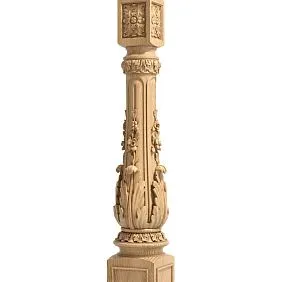
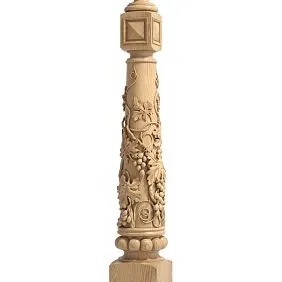
Our factory also produces:



Material science in staircase design
The choice of material for manufacturing staircase railings determines not only their appearance but also their performance characteristics, durability, and maintenance cost. Each material has unique properties that must be considered during design.
Natural wood remains the most popular material for manufacturing staircase railings in residential interiors. Its warmth, natural beauty, and ability to create complex forms make wood indispensable for creating a cozy atmosphere. Different wood species offer a wide range of colors, textures, and strength characteristics.
Oak is considered the standard of quality among hardwoods. Its high density (700-800 kg/m³) and tannin content provide exceptional durability and resistance to external influences. Oak railings can serve for centuries, gradually acquiring a noble patina of time.
Ash offers an excellent combination of strength and elasticity. Its light-colored wood with distinctive texture is ideal for modern interiors where the natural beauty of the material is valued. Ash elements are characterized by high impact resistance, which is important for structures subjected to dynamic loads.
Get Consultation
Metal Solutions for Modern Architecture
Stainless steel is an ideal material for creating modern stair railings. Its corrosion resistance, strength, and ability to form complex geometric shapes make it indispensable in modern architecture.
Wrought elements bring a special atmosphere of craftsmanship and individuality to the interior. Artistic forging allows creating unique compositions that become true works of art. Modern forging technologies combine traditional methods with innovative equipment.
Stylistic Directions in Railing Design
Stylistic directions in railing design
The choice of stair railing style should harmoniously match the overall interior concept. Each stylistic direction has its distinctive features, reflected in form, proportions, and decorative elements. Railings balusters.
A characteristic feature of classical railings is their monumentality and grandeur. Each element is carefully crafted and has its place in the overall composition. The color palette is usually restrained — natural wood tones or noble metal shades.
Modern minimalism strives for maximum simplification of forms while preserving functionality. Railings in the minimalist style are characterized by clean lines, absence of unnecessary decoration, and emphasis on material quality and precision of execution.
Modern minimalism strives for maximum simplification of forms while maintaining functionality. Minimalist railings are characterized by clean lines, absence of unnecessary decoration, and emphasis on material quality and precision of execution.
Ethnic and Regional Features
The Russian style in stair railings is characterized by the use of traditional motifs of wooden architecture. Carved elements, stylized plant ornaments, and use of natural materials create an atmosphere of connection with national traditions.
In the Russian style, intricately carved balusters of complex shapes, resembling traditional spindles or distaffs, occupy a special place. Such elements require high craftsmanship and become true works of folk art.
The Scandinavian style is characterized by functionality, simplicity, and use of light wood species. Railings in the Scandinavian style usually have simple geometric forms, natural colors, and minimal decorative elements.
Technological aspects of production
Modern production of stair railings is a complex technological process where traditional processing methods are combined with innovative equipment. The quality of finished products depends on adherence to technological requirements at each stage of production.
Material preparation begins with careful selection of raw materials. Wood must be properly dried to a moisture content of 8-12% and conditioned under conditions close to operational ones. This prevents deformation of finished products and ensures dimensional stability.
Metal blanks undergo preliminary processing, including surface cleaning, straightening, and preparation for further processing. The quality of blank preparation directly affects the quality of finished products.
Mechanical processing is performed on high-precision equipment with computer control. Modern machining centers allow creating complex three-dimensional forms with high accuracy and repeatability. This is especially important when manufacturing serial elements that must be absolutely identical.
Innovative Processing Methods
Laser cutting opens new possibilities for creating complex decorative elements. Laser technologies allow cutting the finest ornaments in metal with perfect accuracy and without thermal impact on the material.
CNC woodworking allows creating complex three-dimensional forms that could only be made by hand previously. Modern milling centers are capable of processing parts of any complexity with accuracy down to fractions of a millimeter.
3D printing is beginning to find application in producing prototypes and small-batch decorative elements. This technology allows quickly creating complex shapes for testing design solutions.
Installation and mounting: critical moments
The quality of stair railing installation is no less important than the quality of their manufacture. Incorrect installation may negate all advantages of high-quality materials and precise manufacturing. The installation process requires professional skills and specialized tools.
Preparatory work includes precise marking of installation locations for railing elements. All dimensions must be carefully checked, and deviations from design values must be corrected. Special attention is paid to checking the horizontal alignment of steps and vertical alignment of walls.
The quality of the foundation is critically important for secure mounting. Concrete and stone foundations must have sufficient strength to withstand the loads from the railing. Wooden structures require checking for absence of rot and mechanical damage.
Features of mounting different materials
Features of fastening different materials
Mounting wooden elements can be performed in various ways depending on the staircase construction and aesthetic requirements. Traditional mortise-and-tenon joints provide maximum strength and aesthetics but require high precision in manufacturing.
Modern fastening systems allow creating disassemblable connections, simplifying maintenance and repair of railings. Hidden fasteners ensure a clean exterior appearance while maintaining reliable connections.
Mounting metal railings requires the use of welding equipment and specialized skills. The quality of welds directly affects the strength and durability of the structure. After welding, all welds must be carefully processed and protected against corrosion.
Safety and regulatory requirements
Stair railings are safety elements, therefore their design and manufacture must strictly comply with current construction codes and regulations. Violation of safety requirements may result in serious injuries to users of the stairs.
The height of railings is regulated by construction codes and depends on the building's purpose. For residential buildings, the minimum height is 900 mm, for public buildings — 1100 mm. Childcare facilities may have additional height requirements for railings.
The structure's strength must ensure safe operation under maximum calculated loads. Railings must withstand horizontal loads of no less than 300 N/m (30 kgf/m) for residential buildings and 1000 N/m (100 kgf/m) for public buildings.
Geometric parameters of railing elements are also regulated by safety standards. The distance between balusters, handrail shape, absence of sharp angles and protruding elements — all these parameters affect the safety of stair usage.
Special requirements for different objects
Childcare facilities impose higher safety requirements on stair railings. The distance between balusters must not exceed 100 mm, and the construction must exclude the possibility of injuring children.
Public buildings require the use of non-combustible materials or materials with appropriate fire-retardant treatment. Railings must ensure unobstructed evacuation of people in case of emergencies.
Medical facilities impose special requirements for the hygiene of materials and their disinfectability. Surfaces must be smooth, without pores or cracks where contaminants can accumulate.
Evenly
Modern handrails, posts, balusters They are not just functional elements, but also important components of interior design. A properly designed railing can become a central element of the interior, defining the character of the entire space.
Proportions and scale play a key role in the perception of stair railings. Elements must be proportionate to the overall dimensions of the stairs and room. Too bulky railings may visually overload the space, while overly thin elements may appear inappropriate in large interiors.
Rhythm and repetition of elements create visual harmony of the entire composition. Even spacing of balusters, repetition of decorative motifs, proportional consistency — all this contributes to creating a cohesive image.
Color solutions must harmoniously match the overall interior palette. Natural wood tones create a warm and cozy atmosphere, while metallic surfaces add modernity and technological feel.
Lighting as a design element
Integrated lighting is becoming an increasingly popular solution in modern staircase design. LED strips embedded in handrails or steps not only ensure safety at night but also create an atmospheric effect.
Directional lighting can highlight material textures and create an interesting interplay of light and shadow. Especially striking are illuminated carved elements and textured surfaces.
Decorative lighting can become a standalone design element. Lamps integrated into railing posts or pendant lights above the stairs create a unique atmosphere and emphasize architectural features of the space.
Maintenance and care of stair railings
Proper care of stair railings ensures their longevity and preservation of the original appearance. Different materials require specific approaches to maintenance and protection against external influences.
Wooden railings require regular care to maintain protective coatings. Periodic renewal of varnish and oils protects wood from moisture, ultraviolet radiation, and mechanical damage. The frequency of coating renewal depends on the intensity of use and environmental conditions.
Cleaning wooden surfaces should be done with gentle means that do not damage protective coatings. Using abrasive materials may result in scratches and loss of gloss.
Metal railings require regular cleaning from dust and contaminants. Stainless steel can be cleaned with special agents that not only remove contaminants but also form a protective film on the surface.
Preventive Maintenance
Regular inspections allow timely detection of potential problems and prevent their development. Special attention should be paid to connection points of elements, where weakening of fasteners or corrosion damage may occur.
Fastener tightening should be performed periodically to compensate for natural material deformations. This is especially relevant for wooden structures, which may change dimensions depending on humidity and temperature.
Replacement of worn elements should be performed promptly to maintain safety and aesthetics of the railing. Modern constructions usually provide the possibility of replacing individual elements without dismantling the entire system.
Economic aspects of choosing railings
The cost of stair railings depends on many factors: materials used, design complexity, volume of work, qualifications of contractors. Proper budget planning will help achieve optimal price-to-quality ratio.
Materials constitute a significant part of the overall project cost. Natural hardwoods may cost several times more than coniferous species, but provide significantly greater durability and aesthetic value.
Stainless steel railings require substantial initial investment, but practically require no maintenance and have unlimited service life.
Manufacturing complexity directly affects the cost of work. Simple geometric shapes are significantly cheaper than carved or forged elements. However, investments in quality design pay off through increased property value.
Long-term economic efficiency
Quality materials and professional manufacturing ensure minimal operating costs. Cutting corners on quality often leads to additional expenses for repairs and element replacements.
Energy efficiency can be an additional factor of savings. Wooden railings have low thermal conductivity and do not create thermal bridges, which helps reduce heating costs.
The increase in property value due to high-quality stair railings may significantly exceed the cost of their manufacture. This is especially relevant for luxury real estate, where interior details play an important role in determining value.
Trends in development and innovation
The staircase railing industry constantly evolves under the influence of new technologies, changing aesthetic preferences, and increased safety requirements. Understanding current trends will help make a choice that remains relevant for many years.
Consumer environmental awareness stimulates the use of renewable materials and eco-friendly production technologies. Certification of wood according to sustainable forestry standards is becoming an important competitive advantage.
Personalization and individualized approaches to each project are becoming key trends. Clients increasingly demand unique solutions that reflect their personality and lifestyle.
Integration of technologies opens new possibilities for the functionality of railings. Built-in lighting systems, heated handrails, motion sensors — all of this is becoming part of modern staircase systems.
Materials of the future
Composite materials based on natural fibers combine eco-friendliness with improved performance characteristics. Such materials are resistant to rot, require no special maintenance, and can imitate any natural textures.
Smart materials with changing properties open fantastic possibilities for future design. Materials that change color depending on temperature or lighting, self-cleaning surfaces, shape-memory materials — all of this can find application in future staircase railings.
Conclusion
The world of staircase railings represents a wonderful combination of functionality, safety, and aesthetics. Modern handrails, posts, balusters — are not just safety elements, but full-fledged architectural works capable of transforming any space.
The right choice of materials, professional manufacturing, and quality installation ensure the creation of railings that will serve for decades, delighting owners with their beauty and reliability. Investing in quality staircase railings is investing in safety, comfort, and aesthetic pleasure.
Modern technologies open boundless opportunities for creativity, but the foundation remains a deep understanding of materials, respect for craftsmanship traditions, and a pursuit of perfection. It is precisely this combination that ensures the creation of railings that become an inseparable part of architectural space.
In a world where individuality and quality are increasingly valued, staircase railings become a way to express one's personality and create a unique atmosphere at home. They transform simple movement between floors into an aesthetic experience, creating a sense of solemnity and significance for every step.
STAVROS, recognized as a leading company in the production of wooden architectural elements, embodies the finest craftsmanship traditions and the most modern technologies in its products. Years of experience, use of premium raw materials, and strict quality control at every stage of production allow STAVROS to create handrails, posts, and balusters that become true works of art. Choosing STAVROS products means investing in beauty, quality, and longevity, receiving items that will serve your family for many years, creating an atmosphere of comfort, safety, and aesthetic perfection in your home.