Article Contents:
- Terminology: What Are "Handrails" and Why Are They "Round"?
- Why Round Cross-Section Is the Standard
- Standard Diameter: 50 mm as the Golden Middle
- Why Exactly 50 mm?
- Other Diameters: When They Are Appropriate
- Wood Species: From Classic Oak to Exotic
- Oak: The Eternal Leader
- Ash: light strength
- Beech: Silky Uniformity
- Larch: coniferous durability
- Exotic species
- Combining Round Handrails with Different Types of Balusters
- Round Handrails + Polished Balusters: Classic Harmony
- Round Handrails + Flat Balusters: Geometric Contrast
- Round Handrails + Round Balusters: Monolithic Unity
- Round Handrails + Metal Balusters: Industrial Boldness
- Round Wooden Handrails in 2026 Styles
- Scandinavian minimalism
- Biophilic design
- Neoclassicism
- Loft and Industrial Style
- Eclecticism and maximalism
- Finishing and Coating: From Oil to Lacquer
- Sanding: Creating Smoothness
- Oil Finish: Biophilic Classic
- Wax Finish: Silky Smoothness
- Lacquer Finish: Maximum Protection
- Where to Buy Quality Round Wooden Handrails
- Company STAVROS: Comprehensive Solutions
- How to order
- Inspection Upon Receipt
- FAQ: Round Wooden Handrails
- Why Are Round Handrails Better Than Square or Rectangular?
- Solid or Joined Handrail — Which to Choose?
- Which Wood Species Is Best for Round Handrails?
- Is It Necessary to Renew the Finish and How Often?
- Can Round Wooden Handrails Be Painted in Another Color?
- How to Combine Round Handrails with Minimalist Interior Style?
- Where to buy quality round wooden handrails in Moscow / St. Petersburg?
- Conclusion: the circle as a symbol of perfection

In staircase architecture, there are elements whose form has not changed for centuries not out of conservatism, but because they have achieved perfection. A round cross-section handrail — precisely such a form. From medieval European castles, where knights ascended spiral stone staircases with oak handrails, to the minimalist interiors of 2026 —round handrailsremains the benchmark for ergonomics, safety, and aesthetics. The circle is a shape that the human hand grips naturally, without strain, creating maximum contact area, even force distribution during grip, and reliable support while moving along the staircase.
In 2026, when interior design balances between the desire for innovation and a return to time-tested solutions,round wooden handrailsare experiencing a renaissance. This is not nostalgic restoration of the past, but a reinterpretation of classical forms using modern wood processing technologies, innovative coatings, and integration into current stylistic directions — from Scandinavian minimalism to neoclassicism, from biophilic design to industrial loft. Round wooden handrails are universal — they work in any style, because their form is basic, archetypal, programmed into our perception as 'correct'.
When you decideround wooden handrailsfor your staircase, you are choosing durability (cylindrical section evenly distributes loads, minimizing deformations), safety (a round handrail provides secure grip in critical situations, preventing falls), tactile comfort (wood is warm to the touch, pleasant for daily contact), visual harmony (round section creates a soft line, structuring space without aggressive angles). This is an investment not in a trend, but in timeless classicism, which will not become outdated in five to ten years, but will only become more valuable with the patina of time.
This article is a complete guide to round wooden handrails in the context of 2026 design: what the term "handrails" includes (handrail + balusters + other elements), why a round handrail section is optimal, what standard diameter, from which wood species they are made, how to combine round handrails with different types of balusters, which interior styles support round wooden handrails, how to choose and where to buy quality materials. From the history of form to modern technologies — everything for creating a staircase that will serve generations.


Terminology: What are "handrails" and why are they "round"?
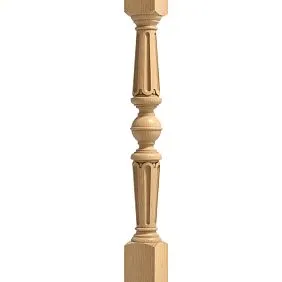
In everyday speech, the term "handrails" often refers only to the handrail — the horizontal element, which the hand grips. But technically, handrails are the entire staircase railing system, including:
Handrail — the upper horizontal or inclined (matching the staircase angle) element with a round cross-section, which a person grips while ascending or descending.
Balusters — vertical support elements standing on treads or on the stringer of the staircase, supporting the handrail and creating a barrier preventing falls from the edge of the staircase.
Support posts (newels, tumb) — more massive vertical elements installed at the beginning and end of the flight, at staircase turns. They carry the main structural load.
Handrail support rail (optional element) — a horizontal rail between the upper ends of balusters and the handrail, creating additional rigidity to the system.
When people say "round handrails," they mean handrails with a round handrail. Balusters in this case can be any shape: round (turned cylindrical), square, flat, carved, or combined. It is precisely the shape of the handrail that determines the characteristic "round."




Why round section — the benchmark
Alternatives to round handrail: square, rectangular, oval, shaped (with complex profile). But none of them surpasses the round section in ergonomics:
Round handrail: The hand grips evenly around the entire circumference. Fingers naturally close. There are no points of concentrated pressure. The grip is secure, comfortable, and does not tire during prolonged contact.
Square handrail: Edges press into the palm, creating four lines of pressure. Discomfort during prolonged holding. The grip is less secure — during sudden movements, the hand slips more easily.
Rectangular handrail: If the flat side faces up — the hand lies flat, but does not grip (there is support, but the grip is weak). If the narrow side faces up — even worse than square.
Oval handrail: A compromise between round and rectangular. Slightly less ergonomic than round, but better than rectangular. Used rarely, mainly when orientation is needed (oval provides tactile information about direction for visually impaired individuals).
Round section won evolutionarily — for millions of years, humans gripped round tree branches, sticks, cylindrical stones. The hand is optimized precisely for this.
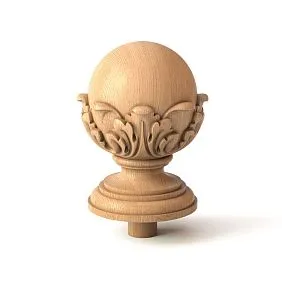
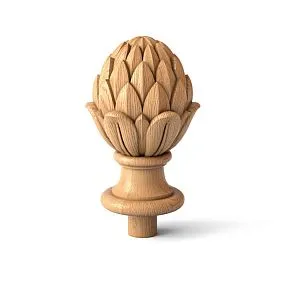
Our factory also produces:


Standard diameter: 50 mm as the golden middle
Round wooden handrails are produced in a diameter range from thirty to seventy millimeters, but the absolute standard isround wooden handrails 50millimeters.
Get Consultation
Why exactly 50 mm
This diameter is the result of ergonomic research conducted in Europe and North America in the mid-20th century. Thousands of hands of different ages, genders, and ethnic groups were measured. The gripping force at various diameters, comfort, and secure hold during simulated loss of balance were recorded.
Conclusion: for an adult with average hand size (palm circumference 200–220 mm for men, 180–200 mm for women), the optimal diameter of a round handrail is 45–55 mm, with peak comfort at 50 mm.
At this diameter:
-
The thumb and index finger almost (but not fully) close when gripping — ideal grip geometry
-
The palm contact area with the handrail is maximal
-
No joint strain (as with overly thick handrails) or excessive compression (as with overly thin ones)
-
Visually, the handrail appears harmonious — neither bulky nor fragile
Round wooden handrails 50 mmThese became international standards, codified in building codes in most countries (GOST R 51261-2022 in Russia, DIN 18065 in Germany, Building Codes in the USA). Manufacturers have standardized mass production of this diameter, and hardware (brackets, connectors, end caps) is standardized for 50 mm.
Other diameters: when appropriate
38–45 mm: For children’s staircases (smaller children’s hands), additional handrails (when there are two rows — upper for adults, lower for children), lightweight decorative railings (balconies, terraces, where barrier function is more important than support).
55–60 mm: For grand, wide staircases in large homes and public buildings, where monumentality is required. For people with very large hands. Visually, such a handrail appears heavier and more substantial.
But if you’re unsure — choose 50 mm. It’s a universal size that never errs.
Wood species: from classic oak to exotic
Round wooden handrails are made from various species, each with its own characteristics.
Oak: eternal leader
Oak is the king of staircase elements. Its Brinell hardness of 3.7–3.9 makes oak handrails practically indestructible. Even with daily intensive contact from thousands of hands (hotels, offices, shopping centers), an oak handrail retains its smoothness for decades.
Oak’s texture is expressive — large pores, contrasting growth rings. On a round cross-section of 50 mm diameter, this texture reads beautifully, creating visual depth. Color ranges from light honey to dark brown. Over time, oak darkens, acquiring a noble patina — after 20–30 years, the handrail becomes two to three tones darker, looking antique.
Round oak handrails are optimal for classical, neoclassical, English, and colonial interiors — anywhere where tradition, solidity, and prestige are valued.
Ash: light strength
Ash: hardness equal to oak (4.0 vs. 3.7–3.9), but lighter — cream, light gray tones. Ideal for Scandinavian, minimalist, modern interiors where a light palette is needed.
Ash’s texture is expressive but more delicate than oak. Growth rings are contrasting but finer, pores smaller. Ash can be bleached (using whitening agents), yielding almost white wood with preserved texture — a unique aesthetic for light interiors.
Beech: silky uniformity
Beech has a uniform fine-grained structure without large pores. This creates a perfectly smooth surface after sanding — silky, maximally comfortable to the touch. Color is warm rose-beige.
Beech is 20–30% cheaper than oak at high hardness (3.8). It’s a rational choice for residential homes where durability is needed without paying a premium for premium oak. Beech stains beautifully — it can mimic walnut, redwood, or stained oak, while retaining beech’s smoothness.
Larch: coniferous durability
Larch: a coniferous species with hardness comparable to oak, due to high resin content. Color is amber-honey, texture expressive. Main advantage — moisture resistance. Larch handrails are suitable for staircases on open verandas, terraces, and saunas — anywhere other species quickly deteriorate.
Resin scent — a biophilic stimulus, pleasant pine aroma reminiscent of the forest.
Exotic species
Exotic species are used for elite projects: merbau (reddish-brown, very hard, moisture-resistant), teak (golden-brown, oily, ideal for yachts and humid spaces), wenge (dark chocolate, almost black, exceptionally hard). These species are expensive (3–5 times more than oak), but create a unique aesthetic.
Combining round handrails with different types of balusters
Round handrails are universal — they pair with any balusters, creating different aesthetic effects.
Round handrails + turned balusters: classical harmony
Turned balusters (with profiles obtained on a lathe — vases, handholds, spheres, cones) + round handrail = classical staircase in Baroque, Rococo, Classicism, or English manor style. This is visual complexity, abundance of forms, rhythms, and shadows.
Important: the diameter of the central part of the baluster should match the diameter of the handrail (if the handrail is fifty millimeters, the central part of the baluster should be forty-five to sixty millimeters). This creates visual balance and proportionality.
Round handrails + flat balusters: geometric contrast
Flat balusters (vertical boards thirty to sixty millimeters thick, eighty to one hundred fifty millimeters wide) + round handrail = modern minimalism with a subtle nod to Slavic tradition (flat balusters are traditional for Russian teremov). The contrast between rectangular verticals and the roundness of the handrail creates a subtle play of forms, visually interesting.
This option is popular in 2026 in biophilic, Scandinavian, and eco-interiors.
Round handrails + round balusters: monolithic unity
Round cylindrical balusters of constant diameter (thirty to fifty millimeters) without profile + round handrail = minimalist graphics, visual purity, rhythm of verticals. This is Scandinavian minimalism, Japanese aesthetics, modern industrial style.
All elements with round cross-section — material unity, simplicity of forms, focus on wood texture rather than profile complexity.
Round handrails + metal balusters: industrial boldness
Metal balusters (steel rods, pipes, forged elements) + wooden round handrail = loft, industrial style, modern eclecticism. Cold metal + warm wood — material contrast creating dynamism, visual energy.
Often uses black metal (black steel, powder coating) + natural light wood (oak, walnut) = graphic quality, contrast, modernity.
Round wooden handrails in styles of 2026
Scandinavian minimalism
Light woods (oak, bleached oak, birch), natural oil finish (texture preserved, matte finish), simple round balusters without decoration or flat minimalist balusters. Handrail diameter fifty millimeters, natural or whitewashed color. Minimum details, maximum light, focus on purity of form and material texture.
Biophilic Design
Maximum naturalness: oak, beech, larch with preserved expressive texture, oil finish (wood breathes, smells), round or slightly carved balusters emphasizing craftsmanship. Integration with live plants along the staircase, natural lighting. Goal — to create the feeling that the staircase grew from nature, not industrially produced.
Neoclassicism
Oak or beech handrails, tinted in noble dark shades (walnut, stained oak), lacquered to a light sheen (not glossy, but satin-matte). Balusters with classic profile, with capitals, vases. Support posts massive, carved. Gold or brass hardware (brackets, decorative elements). Presentability, symmetry, proportionality — key values.
Loft and industrial style
Round wooden handrail (often from roughly processed wood with preserved traces of time — cracks, knots, color unevenness) on metal balusters (black steel, unprocessed rusted steel). Contrast of warm wood and cold metal. Visible fasteners (bolts, welded seams as decorative elements). Brutality, honesty of materials, absence of decoration for decoration’s sake.
Eclecticism and maximalism
Mixing: oak handrail + balusters of different profiles (alternating simple and carved), + brass brackets, + lighting, + live plants in planters on support posts. Visual complexity, abundance of details, colors, textures. Each element is a work of art, but together they create a harmonious (though complex) ensemble.
Finishing and coating: from oil to lacquer
The quality of round wooden handrails is determined not only by the species, but also by the processing.
Sanding: creating smoothness
After turning on a lathe (if it is a turned handrail) or milling (if the cylinder is cut from a log), the surface has micro-grooves, roughness. Requires multi-stage sanding:
-
Coarse (grit 80-100) — removes tool marks
-
Medium (150-180) — levels
-
Fine (220-240) — creates smoothness
-
Final (300-320) — silkiness
Well-sanded round handrails are absolutely smooth — the hand glides without catching, splinters, roughness. But it is important not to over-sand (to grit 400-600) — such a surface becomes slippery, and the hand does not feel grip.
Oil finish: biophilic classic
Oil (linseed, tung, specialized for wood) penetrates into the structure, does not create a surface film. The wood remains breathable, texture is visible and tactile, scent is preserved. Surface is matte, velvety.
Oil requires renewal once a year or two (reapplication of a thin layer), but provides maximum biophilic contact — the hand feels live wood, not synthetic film.
Wax Coating: Silkiness
After oiling, the surface is rubbed with wax (beeswax, carnauba). Wax creates a thin protective film, silky to the touch, with a slight sheen. It protects better against moisture and dirt than pure oil. Requires renewal every six months to a year (rubbing and polishing).
Varnish coating: maximum protection
Polyurethane or alkyd varnish creates a hard surface film. Maximum wear resistance — varnished handrails do not fear moisture, do not absorb dirt, and retain their appearance for decades without renewal.
But tactically, varnish feels colder and more slippery. If varnish is required (public buildings, intensive use) — choose matte or semi-matte in thin layers (two to three layers) so the texture remains visible. Glossy varnish makes wood look like plastic — the material’s nobility is lost.
Where to buy quality round wooden handrails
The market offers many options, but quality varies. What to pay attention to:
STAVROS: comprehensive solutions
STAVROS — one of the leading Russian manufacturers of wooden elements for staircases with over twenty years of experience.
Catalog of round handrails:
-
Species: oak, beech, ash, larch
-
Diameter: fifty millimeters (standard), others available to order
-
Construction: solid block (up to four meters) or jointed (up to six meters)
-
Finishing: sanding to 320 grit, coating with oil/wax/varnish or without coating
Balusters:
-
More than a hundred models: turned, flat, round, carved, square
-
All species, all sizes
-
Possibility of manufacturing according to custom sketches
Components:
-
Support posts (newels)
-
Mounting brackets for wall-mounted handrails
-
Connecting elements
-
End caps, decorative rose joints
Services:
-
Calculation of required materials based on drawings
-
Manufacture of curved (radius) handrails for staircases with turns
-
Individual tinting
-
Installation consultations
Advantages of STAVROS:
-
Careful wood selection: only high-quality timber without rot, large knots, or cracks
-
Proper drying: kiln-dried to moisture content of 8–12 percent
-
Exact geometry: diameter is maintained with precision ±0.5 mm
-
Honest categorization: Category A is truly flawless
-
In-house production: control over all stages from wood procurement to packaging
How to order
-
Visit the website:buy round wooden handrails
-
Select wood species (oak for durability and prestige, ash for light interiors, beech for smoothness and cost-efficiency)
-
Determine the construction type (solid for aesthetics, joined for long runs and stability)
-
Specify diameter (standard 50 mm or custom)
-
Select length and quantity (measure the staircase, account for turns and allowance)
-
Choose finish (oil for biophilic appeal, varnish for durability) or order without finish for your own final treatment
-
Place order online or call for consultation
STAVROS managers will calculate materials, suggest optimal solutions for your project, and arrange delivery across Russia.
Inspection Upon Receipt
-
Geometry: Roll the handrail along a flat surface — it should roll smoothly (ideal cylinder)
-
Diameter: Measure with a caliper at five points — should be 50±1 mm
-
Surface: Run your hand over it — absolute smoothness, no roughness
-
Moisture: If you have a moisture meter — 8–12% (optimum for interior elements)
-
Defects: Inspect through the light — no knots (especially dead ones), cracks, blue stain, or signs of pests
Any defects — immediately notify the supplier and request replacement.
FAQ: Round wooden handrails
Why are round handrails better than square or rectangular ones?
Ergonomics of grip. Round cross-section allows even hand wrap without pressure points. Square handrails press against the palm with edges, causing discomfort and weakening grip. Round handrails are safer — if balance is lost, the hand securely holds onto the round handrail.
Solid or joined handrail — which to choose?
For straight staircases up to 3 meters — solid (more aesthetic, no visible joints). For long staircases (over 3 meters) or staircases with turns — joined (can be made any length, more stable, lower risk of cracking). Both options are equally strong when properly manufactured.
Which wood species is best for round handrails?
Oak — if maximum durability and prestige are needed, and you’re willing to pay premium prices. Ash — if a light color palette and oak-like strength are important. Beech — if ideal smoothness and cost-efficiency at high quality are desired. Larch — if handrails are for outdoor use or humid environments. For residential homes, all species will last a century.
Is it necessary to renew the finish and how often?
Oil — every 1–2 years (light sanding, fresh coat). Wax — every 6 months to a year (polishing, buffing). Varnish — every 5–10 years (sanding old varnish, applying new). Without renewal, the finish gradually wears in areas of hand contact, wood may darken from dirt and lose smoothness.
Can round wooden handrails be painted in another color?
Yes. Use stains (water- or alcohol-based) that penetrate the structure, change color while preserving texture, or covering paints that fully mask texture and create a uniform color. After painting, a protective finish (varnish) is mandatory. However, the natural texture of noble wood is more beautiful than any paint.
How to combine round handrails with minimalist interior design?
Light wood species (oak, bleached oak), natural oil finish, simple round or flat balusters without ornamentation, minimalist brackets, color matching wall or contrasting black. Minimal details, focus on clean lines and material quality.
Where to buy quality round wooden handrails in Moscow/Saint Petersburg?
Company STAVROS: production in Saint Petersburg, representative office in Moscow, delivery across Russia. Order online or by phone. Pickup from warehouses in Saint Petersburg and Moscow after agreement.
Conclusion: the circle as a symbol of perfection
The circle is one of the basic forms that humanity associates with perfection, completion, harmony. From wheels to clock faces, from rings to planetary orbits — the circle is everywhere where nature or humanity reaches its optimum.Round wooden handrails 50 mmThis is the application of the principle of the circle to the function of support, grip, and safety. A form optimized by millions of years of human hand evolution, materialized in noble wood — oak, ash, beech.
Every day, ascending the stairs and gripping the round wooden handrail, you experience this perfection — your hand rests naturally, fingers close effortlessly, the warm wood texture is pleasant, the grip is secure. This is not just a functional element, but a tactile meditation, a daily touch of a form that never becomes outdated, because it is fundamental, archetypal, correct at the level of biomechanics and aesthetics.
Investing in quality round wooden handrails from a reliable manufacturer creates a staircase that will serve not only you, but also your children, grandchildren, great-grandchildren. Wood does not age — it develops a patina, darkens, becomes more noble with time. In fifty years, your oak handrail will look like an antique, whose value is measured not only by material, but also by time, by thousands of touches, by the history of your family that has walked down this staircase. Round wooden handrails are not a purchase — they are an investment in eternal classicism, which will never go out of fashion, because it is beyond fashion — it is in the nature of form and material.