Article Contents:
- Reading Drawings and Preparing Technical Specifications
- Main Elements of a Baluster Drawing
- Reading the Profile of a Turned Baluster
- Preparing Technical Specifications
- Approval and Confirmation
- Manufacturing Technologies: Machines and Profiles
- Turning: The Genre’s Classic
- Milling Processing: For Flat Forms
- Combined technologies
- Pricing and Manufacturing Lead Times
- Factors Affecting Cost
- Estimated Prices
- Production timelines
- Baluster Installation: Precision and Reliability
- Preparation for Installation
- Ways to mount balusters
- Installation process
- Mounting Quality Control
- Warranties and Service: Protecting Your Investment
- Manufacturer's Warranty
- Installation Warranty
- Post-warranty service
- Claims and Disputes
- Conclusion

Ordering balusters for a staircase is not just buying a product. It is a technical project where the accuracy of the drawing determines the strength of the structure, the correct choice of material — durability, the quality of manufacturing — aesthetics, the professionalism of installation — safety. An error at any stage results in a result far from expected: balusters do not fit the size, the profile does not match the interior style, the mounting is unreliable.
Professionalwood baluster manufacturingrequires coordinated work of several specialists: a designer creating the shape, a constructor calculating strength, a technologist determining the manufacturing method, a turner or miller embodying the concept in material, an installer mounting elements with millimeter precision. A hobbyist attempting to save money and do everything themselves risks spending twice as much time and money correcting mistakes.
Wooden Baluster Drawingis not just a beautiful drawing. It is a technical document with precise dimensions, tolerances, material and processing specifications. The ability to read such a drawing, prepare a proper technical specification, control quality at all production and installation stages — these are skills acquired through experience.
In this article, we will go through the entire path of ordering balusters from the first sketch to the final installation and handover. You will learn how to properly prepare a technical specification, which machines are used for different types of balusters, what affects cost and manufacturing lead times, how to monitor installation quality, and what warranty obligations you can expect. These knowledge will help you communicate effectively with contractors, avoid typical mistakes, and achieve exactly the result you envisioned.




Reading Drawings and Preparing Technical Specifications
A quality order begins with a proper technical specification. The more detailed and precise you describe your requirements, the fewer misunderstandings and rework there will be. The drawing is the foundation of the technical specification, the language on which the client and executor understand each other without distortion.




Main Elements of a Baluster Drawing
TypicalWooden Baluster Drawingcontains several projections: front view (frontal), side view (profile), top view. For turned balusters, a frontal projection with the rotation axis and main diameters is usually sufficient. For flat milled balusters, all three projections are necessary for accurate understanding of the shape.
Main dimensions that are always indicated: overall baluster height, diameter or thickness at different cross-sections, dimensions of tenons for mounting (length, diameter or cross-section), location of center holes for fasteners. These dimensions are called nominal — they define the geometry of the item.
Tolerances — critically important information often omitted in amateur drawings. Tolerance indicates the range within which the actual size may differ from the nominal. For example, a baluster height of 900 mm with a tolerance of ±2 mm means the actual height may be from 898 to 902 mm, which is normal. For diameters of turned elements, the typical tolerance is ±0.5 mm, for overall dimensions ±2 mm.
Material specifications are indicated in the specification or directly on the drawing. Typical notation: "Oak, grade A, moisture 8-10%". This means the baluster must be made from high-grade oak wood (without knots or defects), dried to a residual moisture content of 8-10 percent.Balusters and posts for wooden staircasesrequire special attention to material quality.
Notes on the drawing contain additional information not included in the graphical part: requirements for grain direction (for balusters, grain should run along the axis for maximum strength), surface treatment instructions (sand up to 220 grit, two layers of oil coating), technological limitations (all radii must be at least 3 mm to allow manufacturing on a milling machine).
Our factory also produces:




Reading the profile of turned baluster
The profile of a turned baluster is its silhouette, formed by alternating various turning elements. A classic baluster consists of a base (lower part, usually cylindrical or conical), body (central part with decorative elements), and neck (upper part, often cylindrical).
Main turning elements of the profile: swell (convex element, semicircle in cross-section), cove (concave element, opposite to swell), bulb (wide swell with smooth transitions), disc (flat protruding element, like a washer), teardrop (teardrop-shaped element), baluster (element with smooth diameter variation).
Transitions between elements are critical for appearance and manufacturability. Smooth transitions (fillets) are indicated by arcs with radius specified. Sharp transitions (edges, shoulders) are indicated by straight lines. Too sharp transitions (radius less than 2 mm) are difficult to manufacture and unsafe — sharp edges can cause injury.
Transitions between elements are critical for the appearance and manufacturability. Smooth transitions (fillets) are indicated by arcs with the radius specified. Sharp transitions (edges, flanges) are indicated by straight lines. Too sharp transitions (radius less than 2 mm) are difficult to manufacture and unsafe — sharp edges can cause injury.
Get Consultation
Preparation of the technical assignment
General requirements: purpose of balusters (for interior or exterior staircase), interior style (classical, country, modern, etc.), quantity, desired manufacturing timeframe, project budget. This information helps the contractor propose an optimal solution.
Technical requirements: dimensions (overall height, diameters at different cross-sections), profile shape (can be described verbally or an sketch/photo of an analog can be attached), material (wood species, grade requirements), mounting method (round or square tenon, diameter/edge length, insertion depth), surface treatment (sanding, oil or lacquer finish, or no finish).
Additional requirements: packaging (standard or reinforced for long-distance transport), delivery (self-pickup or delivery to address, delivery timeframe requirements), installation (by customer or contractor), warranty (desired warranty period, warranty service conditions).
Attachments to the technical assignment: drawings or sketches, photos of analogs (if ordering "as shown in this photo"), samples of finish (if specific color and texture requirements exist). The more visual information, the more accurately the executor will understand your expectations.
After preparing the technical assignment, it begins to be coordinated with the contractor. An experienced contractor will inevitably ask clarifying questions, point out contradictions or unfeasible requirements. For example, if you specify first-grade oak and very tight deadlines — the contractor will warn that obtaining knot-free oak requires time for material selection.
Approval and confirmation
After preparing the technical specification, coordination begins with the contractor. An experienced contractor will inevitably ask clarifying questions, point out contradictions or unfeasible requirements. For example, if you specify first-grade oak with very tight deadlines, the contractor will warn that obtaining knot-free oak requires time for material selection.
The contractor must provide a detailed drawing based on your technical assignment. This drawing must be carefully checked: do the dimensions match your requirements, is the profile clearly understood, are mounting specifics considered? At this stage, changes can still be made without additional costs.
Manufacturing technologies: machines and profiles
The method of manufacturing balusters determines their cost, production time, geometric accuracy, and possibility of creating complex shapes. Different technologies are suitable for different types of balusters and production scales.
Turning lathe — traditional tool for manufacturing round turned balusters. The blank (square-section block) is clamped between the lathe centers and rotates, while the cutting tool removes material, forming the desired profile.
Turning: the classic of the genre
Turning method allows creating elements of any complexity.wood baluster manufacturingManual turning on a conventional lathe — the most labor-intensive but also the most flexible method. An experienced turner, using a set of cutters (roughing gouge, finishing gouge, parting tool for forming grooves), can create almost any profile. Advantage — ability to manufacture a unique baluster according to an individual sketch. Disadvantage — low productivity (an experienced craftsman turns 8–12 balusters per working day) and high cost.
Copying turning lathes significantly speed up the process. Such a lathe has a copy (profile template) and a copying device that guides the cutter, replicating the copy’s shape. The turner only monitors the process and adjusts the cutter. Productivity increases 2–3 times, quality is more stable — all balusters are identical. Disadvantage — for each new profile, a new copy is needed, which requires time and money.
CNC turning lathes — modern technology combining the flexibility of manual turning with the productivity of copying lathes. The profile is defined by a computer program, and the lathe automatically turns the baluster with accuracy to tenths of a millimeter. Advantages: highest accuracy, perfect repeatability, ability to create very complex profiles, high productivity (machine operates almost without operator involvement). Disadvantage — high equipment cost, reflected in product prices for small batches.
CNC turning machines — modern technology combining the flexibility of manual turning with the productivity of copying machines. The profile is defined by a computer program, and the machine automatically turns the baluster with precision down to tenths of a millimeter. Advantages: highest accuracy, perfect repeatability, ability to create very complex profiles, high productivity (machine operates almost without operator involvement). Disadvantage: high equipment cost, which affects the price of items in small batches.
Milling processing: for flat profiles
Flat wooden balustersManufactured on milling machines. The blank — a board of required thickness (usually 25–40 mm). The baluster contour is milled out, decorative elements are formed, edges are rounded.
Stationary milling machines with upper spindle accelerate the process and improve accuracy. The blank is fed under a rotating cutter, which forms the profile in one pass. For complex contours, multiple passes with different cutters are made. Productivity is 3–5 times higher than manual milling.
CNC milling machines revolutionized the production of flat balusters. They can cut any contour, create through threads, form relief patterns. The blank is secured to the worktable, and the cutter, following the programmed path, cuts the item. It is possible to simultaneously manufacture several balusters from one sheet of plywood or MDF, drastically reducing cost. Accuracy — up to 0.1 mm, ability to create any complex shape.
The most sophisticated balusters are created using a combination of several technologies. For example, the base is turned on a lathe, and then decorative elements — grooves (vertical channels), carved inserts, ornaments — are added by milling or manually. Such balusters are unique, combining a classic turned body shape with exclusive decoration.
Combined technologies
CNC turning-milling machines combine both technologies. The blank rotates (as on a lathe), and simultaneously the cutter moves along the axis, creating spiral grooves, twisted columns, complex 3D ornaments. This is the pinnacle of technological capabilities, allowing to create balusters of any conceivable shape.
Manual finishing and threading remain the domain of custom production. After mechanical processing, the master cutter manually refines details, adds unique elements, and perfects the surface. Such balusters are works of art, their cost is one order of magnitude higher than mass-produced ones, but their value is incomparable.
Pricing and manufacturing timelines
Pricing and manufacturing timelines
Balusters pricewhich vary by tens of times depending on numerous factors. Understanding the price structure will help assess the fairness of a commercial offer and find the optimal balance between quality and cost.
Factors Affecting Cost
Material is the main component of the price. Pine baluster is 3-4 times cheaper than oak, oak is 1.5-2 times cheaper than walnut or beech. Exotic species (mahogany, teak, wenge) can be 5-10 times more expensive than oak. Wood grade is also critical — a top-grade oak baluster (without knots) is 50-70 percent more expensive than a second-grade oak baluster (with knots and uneven color).
Profile complexity directly affects labor intensity and, consequently, price. A simple cylindrical baluster with minimal decoration (1-2 grooves) is the base price. A complex multi-element profile with alternating grooves, disks, reeded patterns, and ovals increases the price by 30-100 percent. Hand-carved details, spiral elements, and 3D ornaments increase the price by 2-5 times.
Dimensions obviously affect the price — the larger the baluster, the more material and time required to produce it. However, the relationship is not linear. A 120 cm tall baluster is not 1.5 times more expensive than an 80 cm one, but approximately twice as much — for longer blanks, there is higher rejection (greater likelihood of wood defects), more complex processing (more vibration, need for lathe supports).
Surface processing adds to the cost. The base price usually includes sanding to 180-220 grit. Final sanding to 320-400 grit (required for optimal smoothness before oil or stain) increases the price by 10-15 percent. Staining with stain adds 15-20 percent. Multi-layer oiling with intermediate sanding adds 30-40 percent. Lacquer coating (primer, several lacquer layers, intermediate sanding) adds 50-70 percent.
Urgency of production may add 20-50 percent to the price. Standard production time for turned balusters is 2-3 weeks, for flat milled balusters — 1-2 weeks. If faster delivery is needed, the work is prioritized, possibly including overtime, which is paid additionally.
Urgency of manufacturing may add 20–50 percent to the price. Standard manufacturing time for turned balusters is 2–3 weeks, for flat milled ones — 1–2 weeks. If faster delivery is needed, the work is prioritized, possibly including overtime, which is paid additionally.
Estimated prices
Estimated prices for balusters when ordering a batch of 50 units in the Moscow region (prices are valid for 2025):
Simple turned balusters (height 900 mm, diameter 40-50 mm, medium complexity profile, 3-4 elements):
-
Pine, grade B (with knots) – 350-500 rubles
-
Birch, grade A – 600-800 rubles
-
Oak, grade A – 1200-1800 rubles
-
Beech, grade A – 1500-2200 rubles
Complex turned balusters (height 900 mm, diameter 50-60 mm, complex multi-element profile, 7-10 elements):
-
Beech, grade A – 2500-3500 rubles
-
Walnut – 4000-6000 rubles
-
Flat milled balusters (height 900 mm, thickness 25 mm, width 100 mm, decorative contour without through-carving):
Pine – 400-600 rubles
-
Oak – 1000-1500 rubles
-
Flat milled balusters with through-carving (complex ornament):
Oak – 2000-3000 rubles
-
Beech – 2500-3500 rubles
-
Prices are indicated without finish (raw sanded balusters). Add 20-30 percent for oiling, 40-60 percent for lacquering.
Prices are indicated without finish (raw sanded balusters). Add 20–30 percent for oil finish, 40–60 percent for lacquer finish.
Production timelines
Standard production times for balusters at medium-scale production:
Simple turned balusters (copy lathe or CNC): batch of 20-50 units – 7-10 working days, batch of 100-200 units – 15-20 working days. Time includes preparation (material selection, copy or program manufacturing), actual turning, sanding, and packaging.
Complex turned balusters (hand turning or high-class CNC): batch of 20-50 units – 15-20 working days, batch of 100+ units – 25-30 working days. Complex profile requires more time to process each part.
Flat milled balusters: batch of 20-50 units – 5-7 working days, batch of 100+ units – 10-15 working days. Milling is usually faster than turning, especially on CNC machines.
Balusters with hand-carved and finished details: timelines are individual and depend on carving complexity and craftsman workload. Minimum 3-4 weeks, for especially complex items — up to 2-3 months.
Add delivery time (1-7 days depending on distance) and finishing time, if ordered (3-7 days for oil, 10-14 days for varnish including intermediate drying).
Baluster Installation: Precision and Reliability
Even perfectly manufactured balusters will become a source of problems if installed incorrectly. Crooked baluster rows, loose railings, creaking steps — these are results of unprofessional installation. Proper installation ensures not only aesthetics but also safety — railings must withstand a lateral load of at least 100 kg according to building codes.
Preparation for Installation
Checking the staircase geometry — the first critical stage. Steps must be strictly horizontal (checked with a level), landings — also horizontal, handrail (if already installed) — at the same height along the entire length. Deviations exceeding 2-3 mm per meter require leveling, otherwise balusters will be installed crookedly.
Baluster placement is marked according to safety and aesthetic requirements. According to SNiP, the distance between baluster axes (spacing) should not exceed 150 mm for private homes (to prevent a child from fitting their head between balusters). For public buildings, the requirement is stricter — 120 mm. The optimal spacing from an aesthetic standpoint — 100-120 mm, balusters form a visually dense, continuous row.
Baluster placement on steps: classic option — one baluster per step (for wide staircases, two balusters per step). Forceiling skirting boardand other decorative elements, accurate marking is also important.
Preparation of fastening elements: depending on the staircase construction, bolts (metal rods with threads), dowels (wooden cylinders), self-tapping screws, or glue may be used. For secure fastening, a combination of mechanical fasteners and glue is typically used.
Ways to Mount Balusters
Fastening with a tenon — traditional carpentry method. A tenon (projection) of round or square cross-section is formed at the bottom of the baluster. A corresponding mortise is drilled into the step. The tenon is coated with carpentry glue and inserted into the mortise. For reinforcement, it can be additionally secured with a self-tapping screw from the side at an angle (then the screw head is spackled).
Advantages: reliability, aesthetics (fasteners are hidden), possibility of disassembly if needed. Disadvantages: requires precise preparation (holes must be strictly vertical, depth exact), labor-intensive.
Fastening with a metal bolt — a more modern method. Metal bolts (threaded rods) are glued into the bottom and top ends of the baluster to a depth of 30-50 mm. Holes for bolts are drilled into the step and handrail. The baluster is installed: the bottom bolt enters the step hole, the baluster is aligned vertically, the handrail is placed on top, its hole is fitted over the top bolt. Everything is secured with glue.
Advantages: high strength (metal is stronger than wood), precise installation (bolt acts as a guide), speed of installation. Disadvantages: inability to disassemble without damaging the structure, requires precise calculation of bolt length.
Fastening with self-tapping screws — the fastest but least aesthetic method. The baluster is screwed into the step from below (at an angle so the screw enters both the baluster and the step) and into the handrail from above. Screw heads are spackled, painted over, or covered with decorative caps.
Advantages: speed, simplicity, no need for high precision in preparation. Disadvantages: less reliable (screws may loosen over time), fastener locations are visible (even spackled ones are noticeable up close).
Installation process
Installation begins with support posts (if present) — at the start and end of the staircase, at turns. Posts are the foundation of the structure, bearing the main load. They are secured especially securely — with strong bolts of 10-12 mm diameter, glued with epoxy resin, additionally secured with self-tapping screws.
After installing the posts, a temporary handrail is mounted at the required height (usually 90 cm from the step line) to control baluster verticality. The first baluster is installed at the bottom post, aligned strictly vertically (checked with a level in two planes), and secured. The last baluster is installed at the top post, also aligned and secured.
Between the outermost balusters, a string is stretched at the level of the top edges — this is the line by which all intermediate balusters will be aligned. Each subsequent baluster is installed, its top edge aligned precisely with the string (not higher or lower by 1 mm), verticality checked with a level, and the baluster secured.
After installing all balusters, the string is removed, and a permanent handrail is installed. It is attached to the posts and rests on the top edges of the balusters. Handrail fastening to balusters — with glue and thin finishing nails or self-tapping screws, screwed in from above at an angle (then spackled).
Mounting Quality Control
After completing the installation, quality control is performed:
Baluster verticality: each baluster is checked with a level in two perpendicular planes. Deviation from verticality should not exceed 2 mm per meter of height (for a 90 cm tall baluster, the allowable deviation is no more than 1.8 mm).
Uniform height: all balusters must be at the same height (taking into account that steps may have a slight incline). Visually checked along the row and measured — the distance from the handrail to the step should be identical for all balusters with precision ±2 mm.
Uniform spacing: distances between baluster axes must be identical along the entire length of the staircase. Visually checked by looking along the row — balusters should align in a straight line without “wiggling.” Measured intervals — deviation no more than ±3 mm.
Strength: the railing must not wobble. Grip the handrail and try to rock it — there should be no play, creaking, or sensation of movement. Apply 30-40 kg of force sideways — the railing must withstand it without bending more than 10 mm.
Aesthetics: check for visible defects — scratches, dents, poorly spackled fastener areas. The handrail must fit tightly against the balusters, without gaps. Finish (if applied) should be uniform, without streaks or missed areas.
Warranties and service: protection of investments
Quality balusters are an investment for decades. Manufacturer and installation contractor warranties protect you from financial losses in case of defects.
Manufacturer's Warranty
A responsible manufacturer provides a warranty on products for a minimum of 1 year, often 2-3 years. The warranty covers manufacturing defects: deviations from the drawing (outside tolerances), wood defects (cracks, delamination), processing defects (poor sanding, uneven finish).
The warranty does not cover: mechanical damage during transport and installation (scratches, chips from falling), deformations from improper storage (storage in humidity — wood swells and cracks), color changes due to UV exposure (wood darkens in sunlight — this is a natural process), damage from improper use.
If a defect is detected during the warranty period, photograph the defect and contact the manufacturer. The manufacturer evaluates whether this is a warranty case. If yes, the defective item is replaced free of charge. The cost of replacement delivery is usually also borne by the manufacturer.
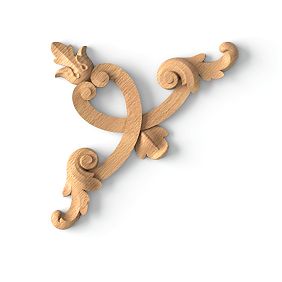
STAVROS company provides a 2-year warranty on all solid wood products, which demonstrates the high quality of the products and confidence in their durability.relief decoration installationwhich is also performed with warranty obligations.
Warranty on Installation
The contractor performing the installation provides a separate warranty on the work. The standard term is 1 year, reliable companies offer 2-3 years. The installation warranty covers: loosening of the structure (if balusters start to wobble), detachment of elements, destruction of fasteners, appearance of squeaks.
The warranty does not cover: damage from mechanical impacts (someone hit the railing with a heavy object), damage from overloading (someone hung from the handrail weighing 150 kg, while the railing is designed for 100 kg), consequences of renovations and interventions by third parties.
In the case of warranty, the installer visits the site, assesses the problem, and resolves it free of charge. Usually, this involves tightening fasteners, adding glue to loosened joints, replacing individual failed elements.
Post-warranty service
After the warranty period expires, you can contact the manufacturer or contractor for paid maintenance. Services include: tightening loose joints (5-10 thousand rubles depending on the scope of work), replacing damaged balusters (cost of new balusters plus replacement work), updating the finish (removal of old finish, application of new finish — 300-500 rubles per linear meter of handrail, 200-300 rubles per baluster).
Regular maintenance extends the life of the staircase. It is recommended to inspect and tighten fasteners, and renew the finish on worn areas (handrails, which are pressed by hands, wear faster) every 2-3 years. This costs little (10-20 thousand rubles every few years), but keeps the staircase in perfect condition for decades.
Claims and Disputes
If a problem arises and the manufacturer or contractor refuses to recognize it as warranty-related, follow this procedure: submit a written complaint describing the problem, including photos and references to contract clauses. Send it by registered mail with acknowledgment. By law, the contractor has 10 days to respond.
If the response is negative or does not arrive — independent expert evaluation. The expert determines whether the defect is manufacturing-related or caused by the client. The cost of the evaluation is 15-30 thousand rubles. If the evaluation proves your case, the contractor is obligated to reimburse the evaluation cost and rectify the defect.
If the contractor refuses even after the expert evaluation — go to court. With a positive expert conclusion, your chances of winning are high. The court will compel the contractor to rectify defects, reimburse evaluation and court costs, and pay penalties for delays. However, the legal process is lengthy (6-12 months), so it is better to resolve disputes amicably.
Conclusion
Ordering balusters is a complex project requiring attention to detail at every stage. The accuracy of the drawings determines whether the items will fit the dimensions and match the interior style. The choice of manufacturing technology affects cost and delivery time. The professionalism of installation affects the reliability and longevity of the structure. The warranty terms ensure protection of your investment.
Balusters priceThe cost of which may vary by dozens of times, this is not just a product, but the result of master craftsmanship using quality materials and modern technologies. Saving on materials, manufacturing, or installation leads to problems — loose railings, cracked balusters, and the need for rework.
STAVROS company offers a full cycle of services — from consultation on profile selection and technical assignment preparation to custom-made baluster fabrication and professional installation with warranty. The catalog features dozens of ready-made profiles for various interior styles, with the option to manufacture based on custom sketches.
Advantages of working with STAVROS: experienced consultants will help you understand the drawings and prepare a proper technical assignment, in-house production with modern CNC machines ensures high manufacturing precision, strict quality control at every stage, use of premium-grade wood with controlled moisture levels, professional installers with over 10 years of experience, 2-year warranty on products and installation, post-warranty maintenance and support.
From sketch to installation — you get not just beautiful balusters, but a reliable, safe structure that will serve for decades, delighting the eye with its refined forms and craftsmanship. Every stage is under control, every detail is thought out, every item is crafted with care and skill.