Article Contents:
- History of Framing in Furniture Design
- From functionality to aesthetics
- Evolution of Framing Styles
- Modern trends
- Materials for Cabinet Framing
- Natural Wood — Eternal Classic
- MDF — An Affordable Alternative
- Polyurethane — A Modern Solution
- Metal — A Touch of Modernity
- Framing Styles and Their Characteristics
- Classic Framing
- Modern Minimalist Framing
- Rustic Framing
- Eclectic Framing
- Practical Aspects of Cabinet Framing
- Choosing the Right Framing for Different Types of Cabinets
- Technical Aspects of Framing Installation
- Care for Different Types of Framing
- Creating a Unique Design Using Framing
- Combining Various Framing Elements
- Color Solutions in Cabinet Framing
- Using Framing for Space Zoning
- Cabinet Framing in Different Interior Styles
- Classic Interior
- Modern style
- Scandinavian Style
- Provence and Country Style
- Framing as a Way to Refresh Old Furniture
- Restoring Vintage Cabinets Using Framing
- Refreshing Modern Cabinets with Decorative Elements
- DIY Projects for Creating Framing Yourself
- Conclusion
In the world of interior design, there are many details capable of transforming an ordinary space into something special. One such element is cabinet framing — a technique that not only highlights the aesthetics of furniture but also gives the entire room a sense of completion and style. Today, we will dive into the wonderful world of decorative elements that can turn an ordinary cabinet into a work of art.


can serve not only as a decorative element but also as a means of space zoning. For example, built-in cabinets with expressive framing can visually separate the bedroom area from the wardrobe or the work area from the relaxation zone.




From functionality to aesthetics
The history of decorative furniture trim dates back more than a century. Even in the Renaissance, craftsmen paid special attention not only to the functionality of cabinets and chests but also to their appearance. Initially cabinet framing it served primarily a practical function — protecting the edges of furniture from damage, concealing joints and technological gaps. However, over time, the decorative component began to play an increasingly significant role.
Our factory also produces:



Evolution of trim styles
Over time, trim styles changed along with architectural and design trends. Baroque brought opulence and ornamentation to furniture design, Rococo — elegance and asymmetry, Classicism — strictness and order. Each era left its mark on the art of furniture decoration, and today we can draw inspiration from the rich heritage of the past, creating modern interpretations of historical styles.
Get Consultation
Modern trends
Today cabinet framing is experiencing a true renaissance. Designers are once again turning to decorative elements to give furniture individuality and character. At the same time, modern technologies allow creating trims that are not only aesthetically appealing but also meet practical and durability requirements.
Materials for cabinet trim
Natural wood — eternal classic
Wood remains the unrivaled material for creating elegant trim. Oak, beech, ash, walnut — each species has its characteristic grain pattern and tone, allowing to choose the ideal solution for any interior. Wooden trim gives cabinets warmth and nobility, as well as ensures ecological safety and longevity.
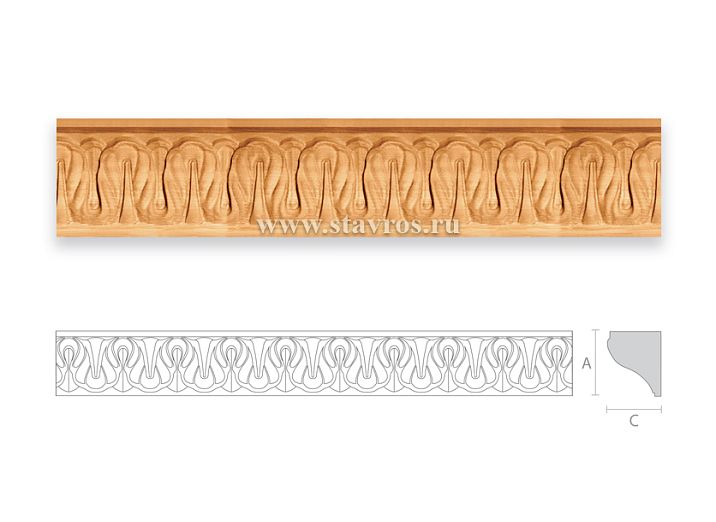
Solid wood is especially valued for the possibility of creating complex profiles and carved elements. Masters can carve elegant cornices, moldings, and baseboards from a single piece of wood, which will become a true ornament of the cabinet. At the same time, natural wood is excellent for restoration, making such trim practically eternal.
MDF — affordable alternative
For those seeking a more economical solution, an excellent choice is MDF (medium-density fiberboard). This material is easily machined, allowing to create various profiles and patterns. MDF can be painted in any color or covered with veneer imitating natural wood.
MDF trim has good resistance to moisture and temperature fluctuations, does not deform over time and does not crack. This makes it an ideal choice for rooms with unstable microclimate, for example, bathrooms or kitchens.
Polyurethane — modern solution
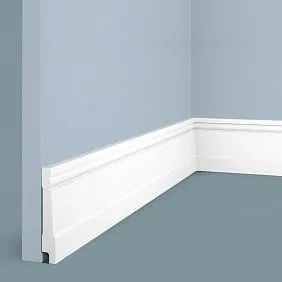
Polyurethane moldings and cornices — this is an innovative material gaining increasing popularity. Lightweight, flexible, resistant to moisture and mechanical damage, they allow creating complex decorative elements without special tools.
Polyurethane trim can be painted in any color, does not yellow over time and requires no special care. Moreover, this material is ideal for decorating curved surfaces, expanding design possibilities.
Metal — accent of modernity
Metallic trim elements are increasingly common in modern interiors. Aluminum, brass, bronze, stainless steel — each metal has its characteristic sheen and texture, allowing to create interesting design solutions.
Metallic trim can be minimalist or richly decorated. It combines beautifully with other materials, creating striking contrasts. Metallic elements look especially striking in loft, industrial, or high-tech style interiors.
Trim styles and their features
Classic trim
Classic trim style is characterized by symmetry, proportionality, and restrained elegance. It typically features cornices with smooth lines, moldings with shallow relief, pilasters with capitals. The color palette usually includes natural wood tones or neutral shades — white, beige, gray.
Classic cabinet trim creates an atmosphere of respectability and refinement. It is ideally suited for spacious rooms with high ceilings, where one can fully appreciate the beauty and harmony of proportions.
Modern minimalist trim
In modern interiors, minimalist trim — simple profiles with clear lines, without excessive decoration — is often used. Such treatment emphasizes the cabinet's geometry, creating an effect of strict elegance.
Minimalist trim can be executed in a contrasting shade to the main cabinet color, creating a graphic effect and becoming a striking accent in the interior. This style is ideal for small rooms, where it is important to preserve a sense of space.
Rustic trim
Rustic trim style evokes the aesthetics of the countryside, with its simplicity and naturalness. It features rough textures, deliberately uneven edges, and signs of handwork. The material is usually aged wood with a pronounced texture.
Rustic trim gives cabinets warmth and coziness, creating a sense of connection with nature. It fits perfectly into interiors in country, Provence, or chalet styles.
Eclectic trim
Eclecticism allows boldly combining elements of different styles, creating unique and memorable images. In eclectic trim, classical moldings may coexist with modern metallic accents, traditional carving and geometric patterns.
Such an approach requires good taste and a sense of proportion, but when executed properly, the result can exceed all expectations. Eclectic framing becomes a true work of art, reflecting the owner's individuality.
Practical aspects of cabinet framing
Choosing the right framing for different types of cabinets
The choice of framing depends not only on interior style but also on cabinet type. Traditional framing with cornices and moldings suits classic door cabinets. Sliding cabinets can be styled more simply, emphasizing horizontal lines. Corner cabinets require a special approach — here it is important to maintain proportion harmony and avoid overloading the structure with decoration.
Cabinet size also matters. Large cabinets can accommodate more complex and ornate framing, while compact models are better suited for restrained styling to avoid a bulky appearance.
Technical aspects of framing installation
Framing installation is a process requiring precision and care. Elements are attached to the cabinet body using glue, nails, or screws, depending on the material. It is important to correctly calculate dimensions and angles so that all parts fit together perfectly.
Before installing framing, the cabinet surface must be prepared — cleaned of dust and dirt, sanded and primed if necessary. This ensures secure attachment and long-term durability of the structure.
Care for different types of framing
Framing care depends on the material it is made of. Wooden elements require periodic treatment with protective compounds that prevent drying and cracking. MDF and polyurethane are more forgiving — regular dust removal and occasional wiping with a damp cloth suffice.
Metallic framing may require special cleaning and polishing agents to maintain its shine and prevent oxidation. In any case, proper care will extend the lifespan of the framing and preserve its original beauty.
Creating a unique design using framing
Combining different framing elements
The art of creating expressive framing lies in skillfully combining various elements. Cornices, moldings, pilasters, rosettes — each detail plays its role in the overall composition. It is important to maintain proportions and stylistic unity so that the framing appears harmonious.
An interesting effect is created by combining elements of different widths and depths, which gives the framing volume and expressiveness. However, it is not advisable to overload the structure — sometimes a minimalist solution appears more elegant than excessive decoration.
Color solutions in cabinet framing
Framing color can either match the main cabinet color, creating a monochromatic look, or contrast with it, becoming a bright accent. A classic option is white framing on a dark background or vice versa, creating an effect of refined graphic contrast.
Framing painted in unexpected colors — deep blue, emerald, terracotta — looks interesting and adds individuality, becoming a focal point in the interior.
Framing can serve not only as a decorative element but also as a means of zoning space. For example, built-in cabinets with expressive framing can visually separate a bedroom area from a wardrobe or a work area from a relaxation zone.
cabinet framing can serve not only as a decorative element but also as a means of space zoning. For example, built-in cabinets with expressive framing can visually separate the bedroom area from the wardrobe or the work area from the relaxation zone.
In large rooms, framing helps structure the space, making it more organized and comfortable to perceive. At the same time, it is important to maintain stylistic unity so that the interior does not appear disjointed.
Cabinet framing in different interior styles
Classic interior
In a classic interior, cabinet framing plays a key role, emphasizing the elegance and sophistication of the setting. Here, rich cornices with stucco, pilasters with capitals, moldings with floral ornamentation are appropriate. Materials are typically high-quality natural woods — oak, walnut, mahogany.
The color palette of framing in a classic interior usually includes natural wood tones, white, gold, beige. It is important to maintain symmetry and proportionality, which are fundamental principles of classic style.
Modern Style
In a modern interior, cabinet framing becomes more minimalist and functional. Here, clear lines, minimal decoration, emphasis on texture and color prevail. Materials may include natural wood, MDF, plastic, and metal.
The color palette of framing in a modern style is diverse — from neutral tones to bright accent colors. Contrasting combinations are often used, for example, black framing on a white background or metallic elements on a wooden surface.
Scandinavian Style
Scandinavian style is characterized by simplicity, functionality, and a light color palette. Framing for cabinets in this style is usually minimalist, emphasizing the naturalness of materials. Light woods — pine, birch, beech — are often used.
The color palette of framing in Scandinavian style includes white, light gray, beige, pastel shades. It is important to maintain a sense of lightness and airiness, which is a hallmark of Scandinavian design.
Provence and country
In Provence and country styles, cabinet frames reflect rustic aesthetics with their simplicity and coziness. Here, elements with a light patina, signs of aging, and rustic texture are appropriate. Wood with an expressive texture is usually used.
The color palette of frames in the Provence style includes lavender, olive, blue, beige. In the country style, natural wood tones, terracotta, and green dominate. It is important to create a sense of warmth and homey comfort.
Cabinet framing as a way to refresh old furniture
Restoration of vintage cabinets using framing
Old cabinets with rich decorative framing are a true treasure for antique enthusiasts. However, over time, decorative elements may become damaged or lost. Restoring the framing allows furniture to regain its original beauty and historical value.
The restoration process includes cleaning off old lacquer coatings, repairing or replacing damaged elements, sanding, staining, and final finishing. It is important to preserve the authenticity and character of vintage furniture without compromising its historical integrity.
Updating modern cabinets using decorative elements
Even the simplest and most unremarkable cabinet can be transformed using decorative framing. Adding moldings, cornices, and pilasters can create the effect of expensive designer furniture without significant expenses.
To update modern cabinets, you can use ready-made decorative elements made of MDF, polyurethane, or wood, which are attached to the surface using glue or small nails. After installation, the framing is painted in the chosen color, allowing you to create a cohesive and harmonious look.
DIY projects for creating framing by hand
Creating framing by hand is an engaging creative process that allows you to realize the boldest design ideas. Beginners will find simple projects using ready-made moldings and cornices, which only need to be cut to the required angle and attached to the cabinet surface.
More experienced craftsmen can try creating framing from scratch, using wooden blanks and a router. This allows you to develop a unique design that will perfectly match the interior style and personal preferences.
Conclusion
cabinet framing It is not just a decorative element, but an important detail that can completely transform the appearance of furniture and the entire interior. From classic moldings to modern minimalist profiles — the variety of styles and materials allows you to find the perfect solution for any space.
Whether it's a luxurious classic interior or a minimalist modern design, the right framing will highlight the strengths of the furniture, conceal flaws, and create a harmonious atmosphere. The possibility to refresh old furniture using decorative elements makes this approach accessible and economically beneficial for interior transformation.
Inspire yourself, experiment, create unique design solutions — and your home will become a reflection of your individuality and good taste!