Article Contents:
- Purpose of Wooden Miters
- Why wood?
- Where Wooden Miters Are Used
- Constructive and Decorative Types
- Sizes, Shapes, Profiles
- Installation and mounting
- Mistakes in selection and installation
- Examples of application in interior design
- STAVROS Advantages
- Conclusion
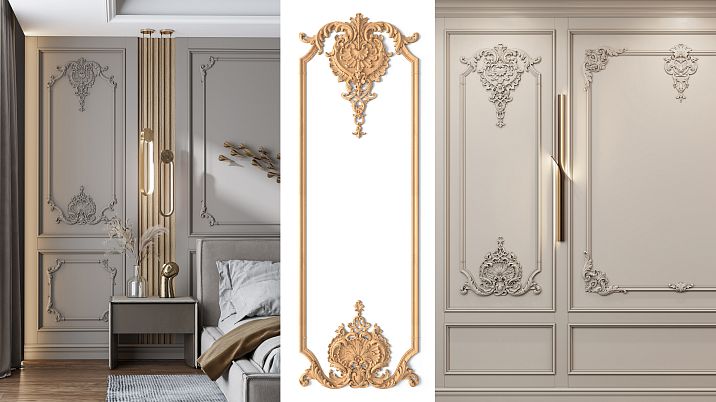
In the world of architectural details, there are elements that, despite their apparent simplicity, can radically transform a space, giving it completeness and stylistic unity. Wooden Miter Framing – it is precisely such an element that serves as the final touch in interior design, much like the last brushstroke of an artist on a canvas. This simple in form, yet rich in possibilities architectural element can simultaneously solve functional and aesthetic tasks, protecting corners from damage and creating visual harmony in the space.
A wooden miter is not just a construction material, but a designer’s tool, with which one can emphasize architectural features of a room, create clear geometric lines, or, conversely, soften sharp angles. In modern interiors, where every detail matters, the quality of such elements becomes critically important. That is why STAVROS, a company specializing in the production of premium wooden elements, pays special attention to geometric accuracy, surface finish purity, and aesthetic perfection of each item.


Purpose of Wooden Miters
Wooden miters perform several important functions in interiors, each contributing to the overall perception of space. Primarily, this is a protective function. Corners of walls, door and window openings are most susceptible to mechanical damage – scratches, scuffs, abrasion. Wooden Miter for Finishing They absorb these impacts, protecting the main structure and preserving its integrity over a long period. This is especially relevant in high-traffic areas – corridors, halls, public spaces.
The aesthetic function of miters is equally important. They complete architectural transitions, create visual accents, emphasize the structure of space. A properly selected miter can visually correct the geometry of a room, making it more harmonious and proportionate. In classical interiors, miters often become part of a complex architectural composition, including moldings, cornices, pilasters. In modern minimalist spaces, they may be the only decorative element creating the necessary visual rhythm.
The third important function – creating geometric clarity and visual order. Solid Wood Miter Forms clear, distinct lines at surface junctions, making the space more structured and logical. This is especially important in interiors where different finishing materials are used – for example, at the junction of wooden panels and painted walls, or when transitioning from one color to another. In this case, the miter becomes not just a decorative element, but also an important compositional tool organizing the space.




Why wood?
In the era of synthetic materials and advanced technologies, wood retains its enduring value as a material for interior architectural elements. This is explained by a range of its unique properties that cannot be fully replicated artificially.
First and foremost, it is eco-friendliness. Wood is a completely natural material, emitting no harmful substances, creating a favorable microclimate in the room. It 'breathes', regulates humidity, possesses natural bactericidal properties. In a world where ecological safety of housing is increasingly valued, this aspect assumes particular importance.
The tactile qualities of wood are also impossible to overestimate. Touching a wooden surface evokes a sense of warmth and comfort lacking in plastic or metal. This feature makes wooden interior elements not only functional, but also emotionally appealing.
The warm, living texture of wood, with its unique pattern of growth rings, knots, and fibers, creates in the interior a special atmosphere of coziness and naturalness. Each solid wood item is unique, as each tree in nature is unique. This quality is especially valued in the era of mass production and standardized solutions.
STAVROS company uses only high-quality solid wood of premium species for the production of its products – beech, oak, ash. Each of these species has its own characteristics and areas of application.
Beech is characterized by uniform structure and pleasant light-pink hue. It is easy to process, allowing to create complex-shaped items with fine detailing. Decorative Wooden Miter Made of beech, it is ideally suited for modern interiors in light tones.
Oak is a classic material for architectural elements. Its strength, durability, and noble texture with pronounced grain make it an ideal choice for traditional and classical interiors. Oak miters acquire an even deeper, richer hue over time, further enhancing their aesthetic value.
Ash combines strength and elasticity, making it an excellent material for items requiring high precision. Its light tone with beautiful wood grain pattern harmonizes well with most interior solutions.
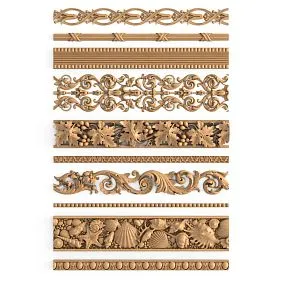
Depending on the purpose and style of the interior, Wooden moldings miters may have different surface treatments. Planed items retain the natural wood texture, milled items have a more complex profile, and carved items are adorned with ornament or relief patterns. Each type of treatment creates its own visual effect and suits a particular interior style.
Our factory also produces:


Where wooden corner profiles are used
The applications of wooden corner profiles in interior design are extremely diverse. One of the most common applications is trimming openings with corner profilesDoor and window openings, being transitional zones between different spaces, require special attention to finishing. A wooden corner profile not only protects the edges of the opening from damage but also creates a clear architectural frame, emphasizing the transition. In the case of arched openings, corner profiles help create a smooth, elegant line that accentuates the arch's shape.
Wall corners are another area where wooden corner profiles find wide application. They protect the most vulnerable spots from mechanical damage and simultaneously create clear, expressive lines that structure the space. In interiors with wooden finishes, corner profiles ensure neat panel connections, hiding joints and creating an impression of monolithic unity.
Ceiling structures such as coffered ceilings, beams, and cornices are also often complemented with wooden corner profiles. They emphasize the ceiling’s geometry, create play of light and shadow, add depth and expressiveness to the space. In classical interiors, ceiling corner profiles can be part of a complex decorative composition including rosettes, cornices, and moldings.
Columns and pilasters, as vertical architectural elements, also require clear corner finishing. Wooden corner profiles emphasize their shape, create clear edges, and enhance the visual impact of these important structural elements.
In furniture manufacturing, wooden corner profiles are used to finish countertops, cabinets, chests, and mirrors. They protect the edges of furniture from damage and simultaneously create a finished, professional appearance of the product. Corner profiles look especially striking in contrast with the main furniture material—for example, dark wooden profiles on a light surface or vice versa.
Trim for framing are often used in combination with corner profiles, creating a unified architectural composition. Moldings, cornices, baseboards, and door casings—all these elements, in combination with corner profiles, form a single visual language of the interior, emphasizing its stylistic affiliation, creating a sense of thoughtfulness and completeness.
Get Consultation
Constructive and decorative types
Wooden corner profiles can be divided into two main categories: constructive and decorative. Constructive corner profiles primarily serve a protective function, safeguarding corners from mechanical damage. They usually have a simple shape and minimal decorative elements. Such profiles are often used in high-traffic areas where practicality and durability are paramount.
Decorative Wooden Miter, on the contrary, are primarily intended to decorate the interior, creating a certain visual effect. They can be smooth with a simple profile, or carved, adorned with ornamentation or relief patterns. The choice of a specific type of corner profile depends on the overall interior style and desired visual effect.
In classical interiors, corner profiles with rich decoration—carvings, reeding, capitals—are often used. They can be part of a complex architectural composition including cornices, moldings, and rosettes. The color palette of classical corner profiles usually includes natural wood tones, gilding, and patination.
Scandinavian style implies the use of simpler, more minimalist corner profiles made from light-colored woods—birch, pine, beech. They highlight the natural beauty of the material, its texture, and color. Minimal decoration, clear lines, natural tones—are the main characteristics of Scandinavian corner profiles.
Neoclassicism combines elements of classical style with modern trends. Corner profiles in a neoclassical interior may have traditional shapes but more restrained decoration. They are often made from noble woods—oak, walnut, mahogany—and have an elegant, refined appearance.
Minimalism as a style implies the use of the simplest, most minimalist forms. Corner profiles in a minimalist interior have clear geometry, minimal decorative elements, and are often painted white or other neutral colors. Their role is not to draw attention to themselves, but to create a clear spatial structure.
Wooden moldings are often used in combination with corner profiles, creating a unified architectural composition. They can frame wall panels, emphasize architectural features of the room, create visual accents. It is important that all decorative elements—corner profiles, moldings, cornices—are executed in a unified style and material, creating a sense of wholeness and harmony.
Sizes, shapes, profiles
Choosing the right corner profile for a specific interior requires consideration of multiple factors, including room size, its stylistic approach, and functional purpose. The dimensions of the corner profile—its height, width, radius—must correspond to the scale of the room and other architectural elements.
For small rooms, corner profiles with small cross-sections—20x20, 30x30 mm—are suitable. They do not overwhelm the space, creating clear but unobtrusive lines. In spacious rooms with high ceilings, more substantial corner profiles—40x40, 50x50 mm and larger—are appropriate. They create expressive architectural accents, emphasizing the scale of the space.
The shape of the corner profile’s profile also matters greatly. Simple rectangular profiles are universal and suitable for most interiors. Rounded profiles create a softer, smoother impression and look well in interiors in the modern or art deco styles. Ornamental profiles with protrusions, recesses, reeding add expressiveness and are suitable for classical and neoclassical interiors.
The radius of the external corner’s rounding also affects the perception of the product. Sharp angles create clear, graphic lines but are more susceptible to damage. Rounded angles appear softer, safer in use, especially in rooms where children are present.
Calculating the required quantity of corner profiles for a room requires precise measurement of all angles intended for finishing. It is recommended to add 10–15% to the total for trimming and possible defects. It is also important to consider that different types of corner profiles may be required for internal and external angles.
When selecting corner profiles, it is also important to consider their compatibility with other interior architectural elements. Corner profile made of solid wood must harmonize with moldings, cornices, baseboards, creating a unified stylistic line. STAVROS Company offers a wide range of products executed in a unified style, enabling the creation of a cohesive, harmonious interior.
Installation and Mounting
Quality installation of wooden corner brackets is the key to their longevity and aesthetic appeal. The process begins with careful surface preparation: it must be clean, dry, and smooth. All irregularities, protrusions, and defects must be removed before mounting.
There are several methods of fixing corner brackets: adhesive, mechanical (using nails, screws, or clips), and combined. The choice of a specific method depends on the material of the base, the weight of the bracket, its dimensions, and its functional purpose.
The adhesive method is the most aesthetically pleasing, as it leaves no visible signs of fastening. For wooden corner brackets, special woodworking adhesives, liquid nails, or silicone sealants are typically used. It is important to choose an adhesive suitable for the specific surface type and free of substances that could damage the wood.
The mechanical method of fastening is more reliable, especially for heavy corners or in areas with high load. Finishing nails, concealed-head screws, and brads are used. After installation, the fasteners are covered with wood-colored putty or decorative plugs.
The combined method involves using both adhesive and mechanical fasteners, ensuring maximum fixation reliability. This method is especially recommended for heavy decorative corners subjected to significant loads.
Working with angles of different configurations requires special attention and skill. 90-degree angles, most common in interiors, are processed using a miter gauge — a special tool for precise 45-degree cuts. For 135-degree angles (typical for bay windows or polygonal rooms), a 22.5-degree cut is required.
Connecting corners with other architectural elements — moldings, cornices, baseboards — requires special precision. It is important that all joints are neat, without gaps or misalignments. For this, special corner connectors are used or precise cutting at the required angle is performed.
After installing corners, it is recommended to sand all joints and connections with fine-grit sandpaper to achieve a perfectly smooth surface. Then, the item is coated with a protective finish — varnish, oil, or wax — which protects the wood from moisture, dirt, and imparts the desired shade and gloss level.
Errors in Selection and Installation
Even the highest-quality wooden corners may not achieve the desired effect if errors were made during their selection and installation. Let us consider the most common ones.
Mismatch of profile and room scale — one of the most common errors. Too bulky corners in a small room will look bulky and inappropriate, visually reducing the space. Too thin and unremarkable corners in a large room with high ceilings will simply disappear, failing to create the desired architectural accent.
Poor element alignment — another common problem. Chips, gaps, inaccurate cuts immediately catch the eye and spoil the impression even of the highest-quality materials. To avoid this issue, professional cutting tools must be used, angles must be measured precisely, and details must be carefully fitted together.
Choosing an inappropriate finish may lead to a conflict of textures and shades. It is important that the finish on the corners harmonizes with other wooden elements in the interior — floor, doors, furniture. A too glossy finish in an interior dominated by matte surfaces will look out of place, as will a too dark or light shade that stands out from the overall color scheme.
Ignoring the characteristics of wood as a material may also lead to problems. Wood is a living material that reacts to changes in temperature and humidity. If these characteristics are not considered during installation, gaps, cracks, and deformations may appear over time. It is important to leave small compensatory gaps, use elastic adhesives, and properly treat ends.
Incorrect care for wooden elements shortens their service life and deteriorates their appearance. Using aggressive cleaning agents, abrasive materials, excessive moisture — all of this may damage wooden corners. Proper care involves regular dry cleaning, periodic renewal of protective coatings, and maintaining optimal humidity levels in the room.
Examples of interior applications
Let us consider several specific examples of how wooden corners can transform various rooms, giving them completeness and stylistic unity.
In residential interiors, wooden corners are often used for zoning niches, highlighting architectural features, and creating visual accents. For example, a TV or fireplace niche framed with wooden corners becomes the compositional center of the living room. Corners emphasize the geometry of the niche, creating a clear frame that focuses attention on the main element. Combined with moldings and cornices, they can create complex architectural compositions reminiscent of classical portals or frames.
Classic interior design with the use of corner trim involves creating a cohesive architectural system where each element is in its proper place and performs a specific function. Corners in such interiors often have complex profiles, are complemented by carving, gilding, or patination. They are used to frame door and window openings, wall-to-ceiling junctions, panels, niches, and columns. Combined with other decorative elements — moldings, cornices, rosettes — they create a rich, detailed look characteristic of classical architecture.
In kitchen spaces, wooden corners solve not only aesthetic but also practical problems. They protect corners from damage, facilitate cleaning, and prevent dirt accumulation in hard-to-reach areas. Wooden corners look especially effective when combined with stone or ceramic surfaces — countertops, backsplashes, floors. The contrast of textures and materials creates an interesting visual effect, adding depth and expressiveness to the interior.
An office is a space where wooden elements traditionally play an important role. Corners here can be used to frame bookshelves, work desks, niches, panels. They create an atmosphere of solidity, respectability, and attention to detail. In a classic office, corners made of dark wood species — oak, walnut, mahogany — with rich texture and deep color are appropriate. In a modern office, more minimalist corners made of light wood species with clean lines and minimal decoration are suitable.
The hallway is the first space seen by those entering the house and the last seen before leaving. Properly framing corners here not only creates a pleasant first impression but also protects the most vulnerable areas from damage. Wooden corners can be used to frame mirrors, cabinets, niches, creating a unified stylistic language and setting the tone for the entire interior.
Advantages of STAVROS
Choosing a manufacturer of wooden architectural elements is a decision that affects not only the aesthetics of the interior but also its durability, ecological safety, and comfort of living. The company STAVROS stands out on the market due to several key advantages that make it a choice for professionals and demanding clients.
Geometric accuracy is one of the key qualities of STAVROS products. Each item has perfectly precise dimensions, angles, and rounded radii. This is especially important for architectural elements that must fit together precisely, creating a unified composition without gaps or misalignments.
Surface finish cleanliness is also at the highest level. All items undergo multi-stage sanding, which ensures a perfectly smooth surface without burrs, chips, or roughness. This not only improves the appearance of the items but also makes them more pleasant to touch and safer to use.
Use of only natural materials is a fundamental position of the company. Architectural wooden profiles STAVROS are made from solid premium wood species — beech, oak, ash — without the use of particleboard, MDF, or plastic inserts. This guarantees ecological safety, durability, and the possibility of restoring the items.
The wide range of products allows selecting the ideal solution for any interior — from classic to ultra-modern. The company's assortment includes corners of various sizes, shapes, profiles, and decorative levels — from simple smooth to intricately carved. All items are made in a unified style and can be combined with each other to create cohesive architectural compositions.
Availability in regions and custom manufacturing make STAVROS products accessible to clients throughout the country. The company delivers to any region, offers professional consultations on selection and installation, and can manufacture non-standard elements according to individual projects. This is especially important for unique interiors requiring specific solutions not available in the standard assortment.
Conclusion
The corner in architecture and design is not just a place where two planes meet, but an important line that defines the character of the space, its stylistic affiliation, and emotional perception. A correctly chosen and installed wooden corner becomes the final touch that transforms a merely good interior into an outstanding one, where every detail is in its place and contributes to the overall concept.
Like how a period ends a sentence, giving it completeness and definiteness, a wooden corner piece completes an architectural composition, making it cohesive and harmonious. It can be a striking accent that draws attention, or a subtle background element that creates an overall sense of order and structure. In any case, its role in shaping the interior image is hard to overestimate.
In a world where natural materials, eco-friendliness, and individuality are increasingly valued, wooden architectural elements are experiencing a new renaissance. They bring warmth and coziness into modern interiors, connect them with the traditions of classical architecture, and create a sense of solidity and thoughtful design.
Choosing Wooden Miter FramingBy choosing this, you are investing not only in the beauty and style of your home, but also in its durability, ecological safety, and comfort of living. This solution will delight you for many years without losing its relevance or appeal.