Article Contents:
- Introduction
- Role of the landing post in the staircase structure
- Support function and safety
- Aesthetic role and visual impact
- Influence on the overall composition of the staircase
- Materials and their properties
- Natural Wood
- Metal
- Composite materials
- Technical parameters and dimensions
- Quality of processing and finishing
- Structural significance
- Interaction with other elements
- Foundation Preparation
- Joining technologies
- Mounting with anchors
- Mounting using welding
- Combined mounting systems
- Recommendations for proper mounting
- Installation stages
- Maintenance of the structure
- Integration with other staircase elements
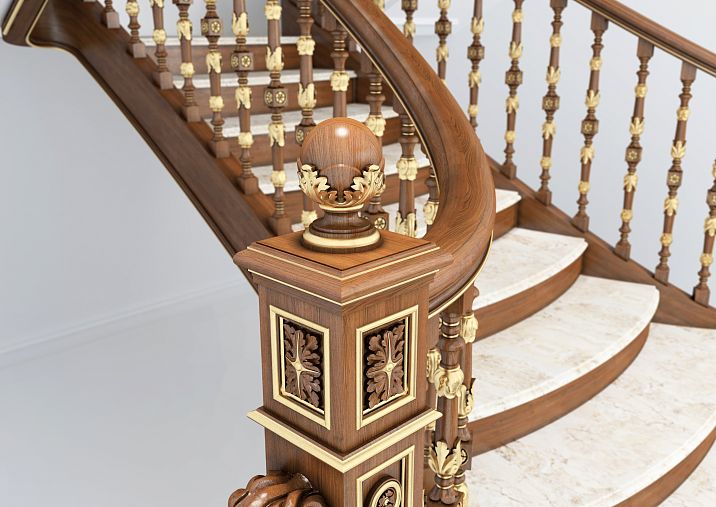
The landing post for stairs is a key component that sets the foundation of the entire staircase structure. It performs not only a support function but also serves as a starting point for creating a unique interior. In this article, we will thoroughly examine the role of the first (support) post, its importance for safety and aesthetics, as well as provide practical advice on selection and mounting. We will discuss the criteria to consider when purchasing, the mounting technologies used, and how to properly integrate the landing post into the overall composition of the staircase. All of this is presented in an article of over 2000 words, so you can make a well-informed choice and confidently proceed with your project.
To explore a wide range of products, we recommend visiting the websitePosts for staircase.


Introduction
A staircase is not just a means of moving between floors; it is a central element of interior design that can set the tone for the entire space. Special attention is given to the landing post—the first support element, whose stability and durability depend on the entire structure. A properly selected and correctly installed landing post for stairs ensures not only safe movement but also creates a visual accent capable of highlighting the interior style.
Many consider the selection of the landing post to be secondary. However, experience shows that the correct choice of this element affects not only the functionality of the staircase but also its aesthetic value. In this article, we will examine the types of landing posts available, their features, and what to pay attention to when selecting. We will also provide detailed recommendations for installation to ensure secure mounting and long-term durability.




Role of the initial newel post in staircase construction
Our factory also produces:



Support function and safety
The initial newel post is the foundation of the entire staircase structure. It bears the main load and distributes it to other elements such as steps, handrails, and decorative details. The safety of the entire flight depends on the quality and strength of this post. If the post is poorly made or incorrectly installed, it may lead to structural deformations and even hazardous situations.
When selecting an initial newel post, attention should be paid to the material it is made of, as well as the processing technology. Modern technologies allow creating posts capable of withstanding heavy loads while maintaining high aesthetic appeal. For example, wooden items can be treated with special compounds protecting them from moisture and external factors, while metal structures offer high strength and durability.
Get Consultation
Aesthetic role and visual impact
The starting post is not only a functional but also a decorative element. It can serve as a starting point for creating a unique staircase design. Thanks to various finishing styles, carving, painting, and decorative elements, the post can add a special charm to the interior and highlight the owner's individuality.
and newel posts. This approach allows creating a harmonious ensemble in which each element performs its role, complementing and emphasizing the overall interior style.balusters for staircases, staircase handrails and balustrades. This approach allows creating a harmonious ensemble in which each element fulfills its role, complementing and emphasizing the overall interior style.
Influence on the overall composition of the staircase
The starting post of the staircase sets the direction and style of the entire staircase. Its dimensions, shape, and material affect the visual perception of the space. For example, a massive wooden post can add warmth and elegance to the interior, while a metal post can create a sense of modernity and strictness. That is why the choice of the starting post should be coordinated with the overall design concept.
When properly selected, the starting post creates a striking visual accent that directs the gaze and adds additional expressiveness to the staircase. This is especially important in interiors with high ceilings and spacious halls, where every detail matters.
Choosing the starting post: criteria and features
Materials and their properties
One of the key criteria when choosing a starting post is the material. It not only affects the appearance of the item but also its operational characteristics. Let's consider the main materials from which starting posts are made:
Baluster made of natural wood possesses special warmth and natural beauty. Such items are usually made from species such as oak, beech, or larch. The price of balusters made of natural wood depends on the quality of the raw material, its density, and the degree of processing. Items handcrafted with decorative carving elements cost more, but they are unique and long-lasting. However, natural wood requires additional treatment — varnishing, oiling, and antiseptics — which also affects the final cost.
Natural wood has always been valued for its warmth, eco-friendliness, and unique texture. A wooden starting post can create a cozy and pleasant atmosphere in the interior. At the same time, it is important to choose species with high strength, such as oak, beech, or larch. Such items can be additionally treated with varnish or oil, which will protect them from moisture and change the color palette depending on the desired style.
Metal
Metal posts are popular due to their strength and durability. They are ideal for modern interiors where minimalism and industrial style are appreciated. Metal easily combines with other materials and can be painted in various colors, allowing for unique design solutions.
Composite materials
New technologies allow using composite materials that combine the best properties of wood and metal. Such posts are highly resistant to mechanical damage, corrosion, and temperature fluctuations. They can imitate the appearance of natural wood while maintaining increased strength and durability.
Technical parameters and dimensions
When choosing a starting post, it is important not only the materials but also its dimensions. The starting post must be proportional to the overall staircase structure and correspond to the loads that will be applied to it. Key points include:
● Height of the post. The height of the starting post depends on the overall height of the staircase and can vary within wide limits. The optimal option is a post that harmoniously fits the scale of the room.
● Thickness and diameter. To ensure structural stability, the post must have sufficient thickness. Too thin posts may deform, while overly massive ones may overload the interior design.
● Shape and design. The shape of the post should correspond to the overall interior style. Classic cylindrical posts suit traditional interiors, while square or rectangular ones suit modern solutions. Additionally, the possibility of applying decorative elements such as carving or inlay adds uniqueness to the item.
Quality of processing and finishing
Quality processing and finishing of the starting post are the guarantee of its durability and aesthetic appeal. It is important that the surface of the item is smooth, without rough seams or defects. This is achieved by:
● Careful sanding and surface treatment.
● Application of protective coatings (varnish, oil, antiseptics) that not only preserve the natural beauty of the material but also protect it from external influences.
● Application of decorative elements such as carving, inlay, or painting, which allows integrating the post into the overall interior design.
Role of the starting post in the staircase mounting system
Structural significance
The starting post is the foundation on which the entire staircase structure rests. It distributes loads, ensuring the stability and strength of the staircase. That is why choosing a high-quality and properly installed starting post is the top priority when designing a staircase.
When installing the starting post, it is important to consider that it bears not only the weight of the staircase but also dynamic loads during operation. Therefore, the material, dimensions, and quality of installation play a decisive role. Poorly installed post may lead to distortion of the staircase geometry, deformations, and even hazardous situations.
Interaction with other elements
The starting post is a connecting link between various elements of the staircase. It must harmoniously combine with other supporting structures, such asPosts for staircase. In addition, it is important that it harmonizes with decorative elements, for example, withbalusters for staircases and handrails for staircases. Only a comprehensive approach to design and installation allows creating not only a sturdy, but also visually appealing structure.
Special attention is also paid to finials, which complete the column's composition and give it a finished look. All these elements together form an integrated system, where each component performs an important role.
Mounting the initial column: technologies and recommendations
Preparation of the Base
Before installing the initial column, it is necessary to ensure a reliable and level base. This is one of the most important stages of installation, as it determines the longevity of the entire structure. Key preparation points include:
● Surface levelness check. The base must be absolutely horizontal, without dips or irregularities. Any deviations may lead to uneven load distribution.
● Foundation reinforcement. If the staircase structure is expected to operate under increased loads, it is recommended to additionally strengthen the base using special anchors and support plates.
● Alignment with project documentation. Before installing the column, it is important to verify dimensions and position against the project to avoid errors during installation.
Mounting technologies
Modern installation technologies allow ensuring secure mounting of the initial column to the base. Several fixation methods exist, which can be applied depending on the column material and structural features:
Mounting using anchors
Anchor bolts and dowels provide a secure connection between the column and the base. This mounting method is especially effective when using heavy materials and under increased loads. It is important to use only tested fasteners that comply with safety standards.
Mounting using welding
Welding is often used for metal columns. This method ensures the strongest connection, but requires highly skilled installers and special conditions for work. Welded joints must be treated and protected against corrosion.
Combined mounting systems
Modern mounting systems may include a combination of anchors and welded joints, allowing achieving the best structural stability. This approach is often used in complex projects where every detail is important and maximum reliability is required.
Recommendations for proper mounting
To ensure the initial column for the staircase lasts for many years and is not subjected to deformation, the following key recommendations should be followed:
● Use only high-quality fasteners. This applies to both anchors and welding materials. Saving money on fasteners may lead to serious consequences in the future.
● Ensure correct installation. Each component must be installed strictly according to project documentation, without arbitrary changes. It is important that all elements are aligned and properly secured.
● Conduct regular inspections of the structure. After installation, periodically check the condition of fasteners, especially in the first years of operation. Any signs of fastener loosening must be addressed immediately.
● Hire professionals. Mounting the initial column is a responsible task requiring experience and specialized knowledge. If you lack sufficient experience, it is better to consult qualified specialists.
Practical tips for installation and maintenance
Mounting stages
Mounting the initial column for the staircase can be divided into several stages:
- Preparation stage. Conduct a thorough assessment of the base condition, ensure its levelness and strength, prepare all necessary tools and fasteners.
- Marking. Verify dimensions against project documentation, mark the installation location of the column, determine its exact position.
- Installation of support elements. If required, install additional supports or anchors for even load distribution.
- Mounting the column. Carefully place the column on the prepared base and secure it using the chosen method — with anchors, welding, or a combined system.
- Final inspection. After installation, check the verticality and stability of the structure, and eliminate all defects.
- Finishing work. If necessary, perform decorative finishing of the column, which may include painting, varnishing, or applying decorative elements.
Maintenance of the structure
To maintain the operational characteristics of the initial post, regular maintenance is required:
● Periodic inspection of fasteners. Examine connection elements for loosening or damage. Tighten fasteners as necessary.
● Treatment with protective compounds. For wooden posts, it is important to regularly renew the protective coating (varnish, oil, antiseptic) to prevent rotting and deformation.
● Monitoring the condition of finishes. Keep track of the post's appearance; promptly repair decorative materials upon detecting minor damage.
● Consulting specialists. If technical issues arise, do not delay repairs—engage professionals to assess the structure's condition and resolve malfunctions.
Integration with other elements of the staircase run
To ensure the staircase looks harmonious and complete, the initial post must be part of a unified composition. It is important that it coordinates with other elements, such asbalusters for staircases,
Staircase handrails
and decorative finials. A comprehensive approach to design allows creating a stylish and functional ensemble, where each element highlights the beauty and reliability of the structure.
Conclusion
The initial post for the staircase is the foundation upon which the entire staircase structure rests. Its selection and quality installation play a decisive role in ensuring safety, longevity, and aesthetic appeal of the staircase. A properly chosen post, made from quality materials and correctly installed according to all technical requirements, can become not only a functional element but also a striking decorative accent that sets the tone for the entire interior.
In this article, we considered the following aspects:
● Role of the initial post in the staircase structure: its supporting function, impact on safety and interior aesthetics.
● Selection criteria: materials, dimensions, quality of processing and finishing, as well as integration features with other elements.
● Mounting methods and technologies: preparation of the base, use of anchors, welding, and combined systems, installation recommendations.
● Practical care tips: regular inspection of fasteners, renewal of protective coatings, monitoring of finish condition, and engaging specialists for timely repairs.
● Integration into the overall staircase composition: harmonious coordination of the initial post with staircase posts, balusters, handrails, and finials.
A proper approach to selecting and installing the initial post not only ensures the safety and longevity of the staircase but also creates an interior reflecting high taste and the owner's individuality. This is an investment in quality, style, and comfort, which pays off every day of use.
We urge you not to compromise on quality, pay special attention to every detail, and consult professionals when necessary. The staircase is the face of your home, and the initial post is its foundation. Make a thoughtful choice, and let your home be filled with beauty, reliability, and harmony!