












































































Article Contents:
- Architectural logic of interiors: why details matter
- Material as the foundation of dialogue
- Skirting height and furniture hardware proportions
- Golden mean: 80-100 mm skirting
- Tall 120-140 mm skirting: a statement of luxury
- Profile and shape: geometry as the connecting element
- Symmetry and Rhythm
- Color and tone: fine-tuning visual harmony
- Contrast as a technique
- Interior styles and their hardware requirements
- Classic and neoclassical: rules of symmetry
- Scandinavian style: function and coziness
- Loft and Industrial Style: Brutality and Contrasts
- Home Zoning: Where and How to Apply Carved Decor
- Trim products as a coordinate system
- Moldings and wall panels
- Cornices and vertical completion
- Architraves and door/window framing
- Materiality of wood: physics and aesthetics
- Surface treatment
- Coatings and finishes
- Technical aspects: how hardware interacts with skirting
- Furniture-to-wall junctions
- Drawers and handles
- Supports and load distribution
- Color and light: how lighting affects perception
- Directional lighting and shadows
- Ergonomics and Anthropometry
- Handle placement height
- Gaps and clearance
- Durability and Repairability
- Replacement and updating
- Culture of detail: why it matters
- Material honesty
- How to choose: a practical algorithm
- Step 1: Determine material and wood species
- Step 2: Match color and tone
- Step 3: Select shape and profile
- Step 4: Calculate dimensions
- Step 5: Check processing and coating
- Step 6: Evaluate ergonomics
- Step 7: Consider budget and durability
- Customization and individual approach
- Advantages of custom hardware
- How to order
- Ecological and health benefits
- Psychology of interior perception
- Tactile sensations
- Common mistakes when choosing hardware
- Mistake 1: Ignoring the baseboard
- Mistake 2: Scale mismatch
- Mistake 3: Different materials without a concept
- Mistake 4: Ignoring color
- Mistake 5: Forgetting about ergonomics
- Trends and timeless solutions
- Current trends 2025
- Regional Characteristics and Traditions
- Urban and country interior
- Seasonality and microclimate
- Protection from external factors
- Combining materials: wood plus metal, glass, stone
- Lighting as an integration tool
- Baseboard lighting
- Accent furniture lighting
- Care and maintenance of wooden hardware
- Restoration and renewal
- Acoustics and tactility: subtle but important aspects
- Psychology of color and shape in hardware
- The economics of durability
- How visual rhyme works: practical examples
- Contrast approach
- Certification and quality standards
- Individuality through details
- Education and visual literacy
- Frequently Asked Questions
- Is an exact match of wood species necessary for handles, supports, and baseboards?
- What support height is optimal for different baseboard heights?
- Can wooden and metal handles be mixed in one interior?
- How to care for wooden handles in the kitchen where there is a lot of grease and moisture?
- What to do if the baseboard is already installed, but the furniture doesn't match the style?
- Does the shape of the handle affect durability?
- Can the same handles be used on different furniture?
- How to tell if supports are not strong enough?
- Is it worth ordering hardware and baseboards from the same manufacturer?
- Does the approach to selecting hardware change for rental and owned properties?
- Conclusion: The Symphony of Details in STAVROS Execution

When you enter a truly well-thought-out interior, the first thing you feel is harmony. But what creates it? Not just the wall color or furniture arrangement. The secret lies in the details that most people don't notice: furniture handles echo the profile of the cornice, furniture supports continue the line of the baseboard, and wooden hardware seems to be carved from the same solid wood as the moldings. It is these invisible connections that turn a collection of objects into a living, breathing space.
Why do some interiors look expensive even on a modest budget, while others—despite the investment—seem disjointed? It all comes down to understanding architectural logic, where every element—from the floor baseboard to the furniture handle—plays its part in the overall orchestra. Today, we'll break down how to competently build this system of coordinates so that hardware doesn't just perform a function but becomes part of the artistic concept.




Architectural Logic of the Interior: Why There Are No Trivialities
Imagine a house as a living organism. It has a skeleton—load-bearing structures, skin—wall finishes, and these very capillaries—details through which the stylistic lifeblood of the space flows. A wooden baseboard is not just a plank at the floor covering a gap. It is a horizontal line that sets the rhythm for the entire room, defining scale and character. And furniture handles? These are the points of contact between a person and an object, the physical connection with the space.
When a furniture support is coordinated with the baseboard in height, material, and shape, a visual rhyme arises. The eye reads these repetitions like poetic lines—unconsciously, but with pleasure. The furniture seems to grow out of the floor, rather than standing on it as a foreign object. The furniture support becomes an extension of the architectural language, not a technical necessity.




Material as the Basis of Dialogue
Wood speaks to wood in a special dialect. An oak baseboard 100 millimeters high with a pronounced texture and noble patina demands an appropriate response from the furniture. And if you put plastic handles or chrome-plated supports on such furniture—the dialogue will be interrupted. A stylistic dissonance will arise that will spoil the whole picture, even if everything else is executed flawlessly.
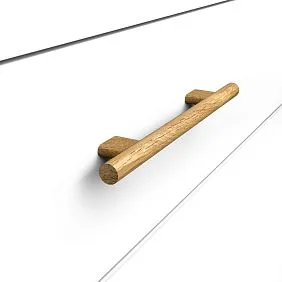
wooden handles from solid wood— is an opportunity to continue the material theme of the interior. Oak to oak, beech to beech, walnut to walnut. But even here, nuances are important: wood density, surface treatment method, texture character. Planed solid wood with open pores creates a sense of naturalness and warmth. A sanded surface with a finish coat—respectability and neatness. Brushed wood with emphasized relief—modernity with respect for traditions.
When choosing furniture supports, think not only about height and load-bearing capacity. Look at the shape, the profile, how they will be read in conjunction with the flooring and baseboard. A wooden furniture support with a turned profile works wonderfully in classic interiors where moldings and cornices also have complex geometry. A concise cylindrical or square support is a natural choice for minimalism, where the baseboard is narrow and strict.
Our factory also produces:


Baseboard Height and Proportions of Furniture Hardware
This is where the mathematics of beauty begins. Wooden baseboards are produced in several standard heights—from 60 to 140 millimeters, and each size dictates its own rules of the game. A low baseboard of 60-70 millimeters creates a feeling of lightness, airiness, and modernity. It doesn't draw attention to itself, works as a thin graphic line separating the vertical of the wall from the horizontal of the floor.
With such a baseboard, furniture handles should be proportionally delicate. Massive brackets or large knobs will look somewhat crude. It's better to choose elegant options: thin rails, small shell-shaped handles, recessed profiles. The furniture support in this case can be low, graceful, and ideally—hidden or minimally noticeable. Modern furniture on hidden supports seems to float above the floor, and a low baseboard only enhances this effect.
Get Consultation
The Golden Mean: Baseboard 80-100 mm
This is a universal size suitable for most interiors with ceiling heights of 2.7-3 meters. Such a baseboard is noticeable enough to create an architectural frame for the space but doesn't dominate. Here, a wide field opens up for experimenting with furniture hardware.
wooden furniture handles— of medium sizes—from 120 to 200 millimeters in length—perfectly coordinate with such a baseboard. They are noticeable enough to create accents but don't overload the composition. The shape can vary depending on the style: classic curved brackets for neoclassicism, straight rails for contemporary, carved options for traditional interiors.
A furniture support with an 80-100 millimeter baseboard should be substantial enough to create a sense of stability. But not massive to the point of grotesqueness. The optimal height is 100-150 millimeters for case furniture, 250-350 millimeters for sofas and armchairs. The material and finish should echo the baseboard: if the baseboard is stained oak, the supports should also be oak in the same tone. If the baseboard is painted white, the supports can be painted the same color or contrastingly—in the color of the furniture.
High Baseboard 120-140 mm: A Statement of Luxury
When you see such a baseboard, you immediately understand: they didn't skimp on details here. A high wooden baseboard is a statement of representativeness, of classicism, of interiors with ambition. It demands a corresponding scale in everything else: high doors, wide casings, cornices with rich profiles. And, of course, furniture hardware that won't get lost against this background.
Furniture handles in such interiors should be noticeable, expressive. Long brackets 250-400 millimeters, large knobs 40-60 millimeters in diameter, carved elements with decoration.Solid wood handleshandcrafted with patination, brushing, and complex profiles — here they are appropriate. Furniture supports should also correspond: turned legs for classic chests of drawers and consoles, massive aprons for tables, carved brackets for wall-mounted cabinets.
Profile and shape: geometry as the connecting link
Trim products — baseboards, moldings, cornices, casings — have a specific profile. This is not just a flat strip, but a complex geometry with chamfers, fillets, protrusions, and grooves. Each element of the profile carries stylistic information. Sharp edges speak to modernity and strictness. Smooth curves speak to classicism and softness. Stepped transitions speak to Art Deco and graphic quality.
Furniture handles should read this geometry and respond to it. IfSkirting made of solid woodhas clear straight chamfers at 45 degrees, handles can replicate this sharpness of angles. Square-section rails, rectangular overlays, geometric knobs — all of this will create visual resonance. If the baseboard is shaped, with rounded fillets and teardrop elements, handles can also be of soft, streamlined forms.
Symmetry and Rhythm
Trim creates a rhythmic structure in the interior. The horizontals of baseboards, the verticals of casings, the diagonals of sloped ceilings with cornices — all of this forms a coordinate grid. Furniture and its hardware should fit into this grid, not argue with it. When a furniture support has vertical fluting (longitudinal grooves), it visually rhymes with the vertical elements of door casings. When a handle has a horizontal wood grain, it continues the horizontal line of the baseboard.
A furniture support can be an accent or an inconspicuous functional element — it depends on the concept. In minimalist interiors, where the baseboard is hidden or maximally narrow, supports also strive for invisibility. Adjustable metal supports are recessed into the plinth, and furniture visually 'sits' on the floor without visible support. In classic interiors, supports, on the contrary, are points of articulation, decorative elements that, like pilasters in architecture, divide the plane and create a vertical rhythm.
Color and tone: fine-tuning visual harmony
Even if the material, height, and shape are chosen correctly, a mismatch in color can ruin everything. Wood is a living material, with a huge variety of shades. Oak can be light northern, warm golden, deep stained, almost black. Beech — from pinkish to reddish-brown. Walnut — from light brown to chocolate. And each shade creates its own mood.
When choosing furniture handles and furniture supports, be sure to match the wood tone. Ideally, they are made from the same species and with the same treatment as the wooden baseboard. But even different species can be coordinated through staining. Beech handles can be stained to match oak, and oak ones to match walnut. The main thing is to match not only the color but also the level of saturation, the degree of sheen, and the character of the grain.
Contrast as a technique
Sometimes a complete match yields a boring result. Then contrast works. Dark baseboard — light handles. Light baseboard — dark supports. But the contrast must be deliberate, supported by other interior elements. If handles contrast with the baseboard, let them match the tone of the casings or the cornice. This creates a complex, multi-level system of connections that makes the interior interesting without destroying its integrity.
Painted furniture is a separate story. White, gray, pastel, bright shades — all of this requires a special approach to choosing hardware.Wooden furniture handlescan be painted any color, coordinating them with the overall palette. But they can also be left natural — and then they become a warm accent on a neutral background. The furniture support in this case can also be natural wood or painted to match the furniture. The choice depends on whether you want to emphasize the materiality of the wood or create a monolithic color plane.
Interior styles and their requirements for hardware
Each style is its own system of coordinates, its own set of rules. What is appropriate in Provence is absurd in high-tech. What is organic in classicism is alien in loft. Therefore, the choice of furniture handles and furniture supports always begins with defining the stylistic vector.
Classic and neoclassical: the rules of symmetry
Here order, hierarchy, and clear geometry reign.Wood skirting boardis high — 100-140 millimeters, with a rich profile: fillets, 'heels,' coves. Cornices are multi-component, with brackets and modillions. Moldings form wall panels, dividing the space into tiers.
Furniture handles in classicism are pulls. Symmetrical, with two mounting points, most often oval or rectangular in shape. Material — noble wood species: oak, walnut, mahogany. Treatment — with patination, gilding, inlay. Length — from 150 to 400 millimeters, depending on the size of the furniture. Proportion is important: the handle should not be too small (it will get lost) nor too large (it will be vulgar).
Furniture support in classicism is a separate work of art. Turned legs for chests of drawers, consoles, tables with fluting, collars, capitals and bases, like architectural columns. Carved brackets for wall-mounted shelves. Shaped aprons for sofas and armchairs. All of this must coordinate with the architectural decor: ifWooden cornicehas an egg-and-dart motif, furniture legs can repeat this motif on a smaller scale.
Scandinavian style: function and coziness
Here the philosophy is different — minimal details, maximum light, the warmth of natural wood, functionality without excess. Wooden baseboard narrow — 60-80 millimeters, most often rectangular in cross-section, without a complex profile. Color — light: whitewashed oak, ash, birch. Or painted white, light gray.
Furniture handles — simple, ergonomic. Rounded shapes, pleasant to the touch. Wooden knobs 30-40 millimeters in diameter, short pulls 100-150 millimeters, recessed profiles. No extravagance, no decoration for decoration's sake. But at the same time, the handle must be tactilely pleasant, because Scandinavian style is about contact, about the sensuality of simple forms.
Furniture supports in Scandic style — often low, conical or cylindrical. Sofas and armchairs on thin wooden legs, tables on three or four elegant supports. The furniture support here does not hide, but also does not shout about itself. It is honest, functional, with correct proportions. Height — exactly as much as needed for cleaning convenience and visual lightness.
Loft and industrial style: brutality and contrasts
Loft — it's a play of textures and materials. Brick, concrete, metal, rough wood. The baseboard here can be simple and massive — a 100x40 millimeter beam, without any profiling. Or absent altogether, if the floor and walls are designed monolithically. Trim products are minimal, the accent is on the materials themselves.
Furniture handles — a contrast to elegant classicism. Rough, massive, with emphasized materiality.Solid wood handleswith an aged effect, preserving tool marks, with brushing. Or combinations of wood with metal: wooden base, metal rivets or overlays. Length can be any, shape — deliberately simple, even somewhat rough.
Furniture support in loft style — often metal pipes, channels, angles. But wood also appears: thick blocks, beams, slabs. Furniture support made of stained oak or larch with a coarse grain, without varnish, sometimes even with bark — this is quite in the spirit of industrial style. It is important that the wood looks powerful, brutal, honest.
Provence and country: rustic romance
Warm, cozy styles where wood is the main material. Wooden baseboard of medium height — 80-100 millimeters, often painted in pastel tones: milky, lavender, mint, olive. Or patinated, with a peeling paint effect, to create a sense of antiquity.
Furniture handles — rounded, with soft lines. Wooden mushroom-shaped knobs, shell-shaped handles, short curved brackets. Often with painting or decoupage. Tone — antiqued, with patina, with wear. Furniture supports — turned, but not ornate. Baluster-like legs for tables and dressers, simple conical supports for chairs and armchairs. Everything should look as if made by a local carpenter, not in a factory.
Molding products as a coordinate system
To understand exactly how furniture hardware should interact with the interior, you need to see the entire molding system. It's not just the baseboard at the floor. It'smoldings on walls, cornices under the ceiling, door casings, window glazing beads. All of this creates a three-dimensional grid, an architectural framework in which the furniture lives.
Moldings and wall panels
When a wall is divided by moldings into panels — it's not just decoration. It's the division of space, creating rhythm and scale. Horizontal moldings at a height of 80-100 centimeters from the floor create a visual support, an additional horizontal line. And the furniture must take this line into account. The height of a dresser, console, cabinet — it's desirable for it to align with the height of the panel. Either matching it or consciously contrasting with it.
Furniture handles in such an interior become an extension of the wall decor. If the molding has a complex profile with twists, the handles can have similar curves. If the panels are strictly geometric, rectangular, the handles are also laconic.wooden moldingand a wooden handle made from the same wood species, in the same tone — this enhances the feeling of integrity, as if the entire space is carved from a single solid piece.
Cornices and the completion of the vertical
A wooden cornice under the ceiling — this is the final chord of the vertical composition. It closes the space from above, just as the baseboard closes it from below. Between them — the vertical of the wall, on which furniture, paintings, lighting fixtures, and decor live. And all of this should be connected by visual threads.
If the cornice is massive, multi-component, with a rich profile, the furniture can also be substantial, with noticeable hardware. Large furniture handles, massive furniture supports — all of this supports the feeling of solidity. If the cornice is simple, narrow, or completely hidden, the furniture hardware also tends towards laconicism. This is how stylistic coherence is born — not through direct copying, but through unity of scale and character.
Casings and framing of openings
Wooden casings create a frame around the opening, visually highlighting it from the wall plane. A classic casing has a profiled section that corresponds to the profiles of baseboards and moldings.— these are frames for doors and windows, vertical elements that connect the floor and ceiling. Their width, profile, color — all of this affects the overall picture. Wide casings of 100-120 millimeters create a sense of representativeness, narrow ones of 60-70 millimeters — modernity and lightness.
A furniture support can visually echo the casing in terms of proportions. If the casing is wide and massive, the support can also be large. If the casing is narrow and elegant, the support — thin, elegant. This creates rhythmic unity of verticals. Furniture supports become like an extension of architectural columns, pilasters, vertical divisions set by the casing.
The materiality of wood: physics and aesthetics
Wood — a living material, with character. Oak — hard, dense, with a large expressive grain. Beech — dense, but more uniform, with a fine pattern. Ash — resilient, with contrasting annual rings. Walnut — medium hardness, with a beautiful dark tone and silky texture. Each species speaks its own language.
When you make a wooden baseboard from oak, and furniture handles from beech, even if the color is matched exactly, a discerning eye will catch the difference in texture, in the character of the surface. Oak is rougher, more brutal. Beech — more delicate, even. This doesn't mean you can't combine them. You can, but consciously. And preferably, the difference in species should be supported by some idea: for example, all vertical elements — oak, all horizontal — beech. Or vice versa.
Surface treatment
Even one wood species can look completely different depending on the treatment. Planed surface — smooth, with closed pores, with a satin sheen after oil or varnish coating. Sanded — even smoother, almost mirror-like, if brought to a high grit. Brushed
— with emphasized relief, where soft fibers are removed with a brush, and hard ones remain, creating a tactile surface.
A solid wood baseboard and furniture handles should have the same or compatible treatment. If the baseboard is planed, the handles — too. If the baseboard is brushed, aged, the handles can be the same. A furniture support, if it's wooden, should also undergo the same treatment. This creates tactile unity — an important, though not obvious, aspect of interior perception.
Coatings and finishes
The finish coating — this is the final touch that either unites everything into a whole or destroys harmony. Oil emphasizes the grain, makes it deeper, warmer, leaves the wood 'breathing'. Varnish creates a protective film, adds shine — from matte to glossy. Wax gives silkiness, soft sheen, pleasant tactility.
When choosing a coating for furniture handles and furniture supports, be guided by what the wooden baseboard and other molding products are coated with. If the baseboard is oiled with a matte finish, it's better to coat the handles with oil too. If the baseboard is varnished with a satin sheen, the handles — too. Even a slight difference in the degree of shine can create visual discomfort, a feeling of 'not right'.
Technical aspects: how hardware works with the baseboard
Beauty is beauty, but furniture — is function. And here technical questions begin. How does the furniture carcass meet the wall, where is the baseboard? How does a drawer relate to the handle? How do supports distribute the load and what is the gap between the furniture and the floor?
Furniture meeting the wall
A wooden baseboard has a certain height and thickness. If you place furniture flush against the wall, it will hit the baseboard and either not stand straight or damage it. Therefore, a gap is needed. Usually 5-10 millimeters — this is enough for the carcass to go behind the baseboard, and the baseboard itself to remain intact.
But this creates a visual gap between the furniture and the wall. Sometimes this is not a problem. Sometimes — it's jarring. Then different techniques are used. You can make the back wall of the furniture flush, and the sides — with a cutout for the baseboard. You can use decorative strips that cover the gap from above. You can think through the furniture supports so that the carcass stands slightly further from the wall, and the gap seems intentional.
Drawers and handles
When you pull on a furniture handle, the drawer slides out. And here ergonomics are important. The handle should be at such a height and in such a place that the movement is natural, without strain. For the top drawers of a dresser — closer to the top edge of the front. For the lower ones — closer to the middle or upper third. For wide drawers — two handles symmetrically, for narrow ones — one in the center.
But that's not all. The handle must match the weight of the drawer. A heavy, deep drawer requires a sturdy bracket that can be confidently grasped with both hands. A light, shallow one only needs a small button.wooden furniture handlesmust be not only beautiful but also functional. A smooth, pleasant-to-touch surface, a comfortable shape, reliable fastening—all of this matters.
Supports and load distribution
A furniture support is not just a leg. It is a structural element that receives and distributes load. A sofa weighs quite a bit, especially when people are sitting on it. A cabinet with books or dishes does too. Furniture supports must withstand this load without deforming or breaking.
Wooden supports are good for medium and small loads. For large loads, a combination of wood and metal is better: a wooden support body with a metal rod inside. Or metal supports with wooden overlays. The height of the support affects weight distribution: supports that are too high can create point loads and dent the floor covering. The optimal range is 80-150 millimeters for case furniture, with a support area of at least 20-30 square centimeters.
Color and light: how lighting affects perception
The same wood color looks different under different lighting. Warm incandescent light enhances yellow and orange tones, making oak golden, walnut caramel-like. Cold LED light emphasizes gray and blue undertones, can make wood look dull, unexpressive. Daylight is the most honest, showing the color as it is.
When selecting furniture handles and furniture supports by color to match the baseboard, be sure to look under the lighting that will be in the room. Samples in the store under fluorescent lamps look different than at home under LED lighting. Take samples, bring them home, place them against the baseboard and furniture with the lighting on. And look in the morning under daylight too. Only this way can you be sure the color will match.
Directional light and shadows
Light fixtures create not only the general level of illumination but also shadows, highlights, accents. Directional light can emphasize the relief of a brushed surface, the beauty of wood grain. Or, conversely, highlight all irregularities and defects. Furniture handles, if they are three-dimensional, also cast shadows. On a light-colored front, this can create an interesting graphic effect. On a dark one, the handle may visually disappear.
Furniture supports also interact with light. Thin, elegant legs cast light shadows, creating a sense of airiness. Massive supports cast deep shadows, a sense of solidity. With under-cabinet lighting (LED strip under furniture), legs create a silhouette, a floating effect. This must be considered when designing lighting.
Ergonomics and anthropometry
Furniture is created for people. And the dimensions, proportions of hardware should relate to the dimensions and capabilities of the human body. A handle at a height of 120 centimeters is convenient for a person 170-180 centimeters tall. For a child or a shorter person, it's already a bit high. For a very tall person, conversely, it's a bit low.
Handle placement height
On a dresser 90 centimeters high, the top handles are at a level of 80-85 centimeters from the floor—convenient to open without bending or reaching. On kitchen wall cabinets at a height of 160-180 centimeters, handles should be on the lower part of the door, so reaching is comfortable. On tall wardrobe cabinets—two handles, top and bottom, so they can be opened from any position.
Furniture handles must be not only beautiful but also ergonomic. A comfortable grip, sufficient length for a palm to grasp, absence of sharp edges. Wooden handles are more pleasant to the touch than metal ones, especially in winter—wood is warm, doesn't chill the hand. But wood is softer than metal, so in areas of intensive use it can wear down, become scuffed. This must be considered.
Gaps and clearance
A furniture support creates a gap between the body and the floor. This gap is important not only for visual lightness but also for practicality. It should be convenient to clean under furniture—vacuum, wash the floor. The minimum comfortable clearance is 100 millimeters. Less—cleaning is difficult. More—dust accumulates under the furniture, and it's visible.
In children's rooms, where there are many toys, the clearance can be higher—150-200 millimeters, so boxes, baskets can be stored under the bed or sofa. Furniture supports in this case are taller, more massive. In living rooms, where elegance is important, the clearance is smaller, supports are more delicate. Everything depends on function and aesthetics.
Durability and repairability
Furniture is bought for years. And the hardware should be just as durable. A furniture handle made of solid wood, with proper treatment, lasts for decades. Wood patinates over time, darkens, but does not break down. Unlike plastic or cheap metal handles, which fade, crack, break.
But even a quality wooden handle may require updating. The coating wears, scratches, chips appear. Wood is a repairable material. The handle can be sanded, re-coated with oil or varnish, restored to its original appearance.solid wood furniture handlescan even be re-turned, its shape changed, if you want to update the furniture style.
Replacement and updating
Sometimes you want to refresh the interior without big expenses. One of the simplest ways is to replace the furniture hardware. New handles on an old dresser—and the item looks different. You can change the style: replace classic brackets with modern railings. Or, conversely, add decorativeness: instead of simple buttons, install carved ones. The main thing is that the new handles coordinate with the baseboard and trim, maintain the stylistic unity of the interior.
Furniture supports can also be changed. If you're tired of a sofa on low legs, you can install higher supports—and now there's a different proportion, a different sense of lightness. Or the opposite—remove legs, place on hidden supports, create a 'grounded' effect. The main thing is to consider how the new supports will interact with the baseboard and floor.
Culture of detail: why it's important
In mass furniture production, hardware is standard, typical, soulless. Identical metal handles on a million cabinets. Plastic supports that will crack in a couple of years. It works, but doesn't inspire. The culture of detail is when every element, even as small as a handle, is chosen consciously, with an understanding of its role in the overall composition.
Handmade furniture handles, turned supports from solid wood, individual selection by color and shape—this is not a perfectionist's whim. It's an investment in durability, in the beauty of everyday life, in those little things that create atmosphere. When every morning you grasp a wooden handle, smooth, warm, pleasant to the touch—it's a small pleasure. When you see how the leg of a dresser echoes the profile of the baseboard—it's aesthetic satisfaction, even if unconscious.
Honesty of material
Wood is an honest material. Its texture, color, even defects—that's the truth. A knot, a swirl, a difference in shades—that's the life of the wood, its biography. When making furniture handles and furniture supports from solid wood, it's important to preserve this honesty, not mask it with veneer or plastic, not fake it as another species.
Wooden baseboard, moldings, the entire trim system—they set the tone for honesty. If they are made of natural wood, the furniture hardware should also be genuine. This creates an interior that doesn't lie, doesn't pretend, but simply lives its life, aging nobly and with dignity.
How to Choose: A Practical Algorithm
So, you're doing renovations or updating your interior. You already have wooden baseboards, perhaps moldings, cornices. The style is defined. Now you need to choose furniture handles and furniture supports. Where to start?
Step 1: Determine the Material and Wood Species
Look at the baseboard. What wood is it made from? If it's oak — look for handles made of oak. If it's beech — from beech. You can choose a different species, but then you'll need tinting or a deliberate contrast. Remember the character of the grain: large, small, contrasting, uniform. The handles should have a similar grain.
Step 2: Match the Color and Tone
Take a sample of the baseboard or photograph it in daylight. When choosing handles, compare using the photo or sample. The color should match as closely as possible if you're not planning a contrast. Keep in mind that wood darkens over time, especially oak. New handles can be slightly lighter than the baseboard — in a year or two they will even out.
Step 3: Select the Shape and Profile
Look at the profile of the baseboard, moldings. Are there any roundings? Chamfers? Carved elements? The handles should respond to this language of forms. For baseboards with straight chamfers — geometric handles. For baseboards with coves — rounded shapes.
Step 4: Calculate the Dimensions
Measure the height of the baseboard. If it's 60-80 millimeters — handles should be small, 100-150 millimeters. If the baseboard is 100-120 millimeters — handles can be larger, 150-250 millimeters. Furniture supports — the height is approximately equal to the baseboard height plus 20-50 millimeters, so the furniture doesn't press against the baseboard.
Step 5: Check the Finish and Coating
If the baseboard is oiled — handles are also better oiled. If it's varnished — varnished handles. The degree of gloss should match. Take handle samples home, place them against the baseboard under your lighting. Only this way can you be sure the finish harmonizes.
Step 6: Assess Ergonomics
Hold the handle in your hand. Is it comfortable? Pleasant to the touch? Doesn't slip? Doesn't pinch? For frequently used furniture (kitchen, hallway) ergonomics are critical. For decorative furniture (display cabinets, buffets) — less important, you can sacrifice for aesthetics.
Step 7: Consider Budget and Durability
wooden furniture handlesWooden handles are more expensive than plastic or simple metal. But they last longer, look more noble, and increase the value of the furniture. If the budget is limited, it's better to install wooden handles on main items (bedroom dresser, living room cabinet), and save on secondary ones. But not the other way around.
Customization and Individual Approach
Standard handles don't always fit. Sometimes a unique size, shape, or color is needed. Then it's worth considering custom manufacturing. Solid wood furniture handles can be made to order: the required length, with a specific profile, from a particular wood species, with special treatment.
Advantages of Custom
Exact match to the style and proportions of your interior. The ability to repeat the profile of the baseboard or molding in the handle — creating a direct visual rhyme. Using wood from the same batch as the millwork — perfect color and grain match. Realization of complex, non-standard forms not available in mass production.
How to order
A drawing or sketch is needed. You can draw it by hand, you can photograph the desired profile and describe it in words. Specify dimensions, wood species, type of treatment, coating. The craftsman will make a sample, you'll evaluate it, make adjustments. Then manufacturing the batch — the required number of handles and supports for all your furniture. This is more expensive and takes longer than buying ready-made, but the result is uniqueness and full alignment with the concept.
Ecological and Health Benefits
Wood is an eco-friendly material. It doesn't emit toxins, doesn't cause allergies, and is pleasant to the touch. Unlike plastic or particleboard, which can contain formaldehyde and other volatile substances. When there's a lot of wood in the house — baseboards, furniture, handles, supports — the air is cleaner, the atmosphere is healthier.
For families with children, allergy sufferers, people sensitive to chemicals — wooden hardware is not a luxury, but a necessity. Solid wood furniture handles, natural wood furniture supports — this is an investment in the health and comfort of the home environment. And it's another argument in favor of coordinating hardware with wooden millwork — creating a cohesive, eco-friendly living environment.
Psychology of interior perception
Why does one house feel calm and cozy, while another feels uncomfortable, even if it's expensive and beautiful? It's about harmony. The brain reads thousands of visual signals: proportions, colors, textures, rhythms. When everything is coordinated — the wooden baseboard echoes the handles, the supports with the casings, the moldings with the cornices — a sense of order, logic, and completeness arises.
When elements are disjointed — different materials, styles, colors without a system — the brain spends energy trying to find connections, explain the chaos. This is tiring, creates subconscious discomfort. Therefore, interiors with a well-thought-out system of coordinates, where furniture handles and furniture supports are part of a single concept, not a random assortment, — you want to be in them, you rest in them.
Tactile sensations
Touching the material is an important part of perception. A wooden handle under your hand — warm, alive, with texture. It's pleasant. Cold metal or slippery plastic — less pleasant, especially in winter. Every time you open a cabinet, you make tactile contact with the interior. And these micro-sensations add up to the overall impression of the home.
A furniture support, even though it's rarely touched, also creates a visual-tactile sensation. A solid wooden leg — solidity, reliability. A thin metal one — lightness, modernity. A hidden support — weightlessness, technological sophistication. The choice depends on the atmosphere you want to create.
Common Mistakes When Choosing Hardware
Mistake 1: Ignoring the Baseboard
The most common one. Bought beautiful handles without thinking about how they relate to the baseboard. The result — stylistic mismatch. Modern metal handles in an interior with classic tall wooden baseboards. Or, conversely, ornate carved handles in a minimalist space with a narrow baseboard.
Error 2: Scale Mismatch
Small handles on large furniture get lost and look stubby. Large handles on small furniture look grotesque. Proportion is needed. Furniture handles must correspond to the size of the facades and the height of the baseboard. Furniture supports must correspond to the size and weight of the item.
Error 3: Different Materials Without a Concept
Wooden baseboard, plastic handles, metal supports — everything is mismatched. If you want to mix materials, you need an idea. For example, all vertical elements are wood, all horizontal ones are metal. Or wood with metal in one style — industrial loft. But not haphazardly.
Error 4: Ignoring Color
"Roughly similar" doesn't work. The eye catches the slightest difference in shade. If you can't find an exact match, it's better to create a deliberate contrast. Dark handles on light furniture and a light baseboard. Or vice versa. But not "almost the same color, but slightly different."
Error 5: Forgetting About Ergonomics
You bought beautiful handles, but they're uncomfortable. Too small, slippery, with sharp edges. As a result, every time you open a cabinet is a minor irritation. Aesthetics are important, but function comes first.
Trends and Timeless Solutions
Fashion changes. Today, minimalism and hidden handles are in trend; tomorrow, a return to classic and decorative styles. But there are timeless things that are always good. Quality wood, honest craftsmanship, thoughtful proportions, harmony with the interior architecture — this is not fashion, it's the foundation.
When choosing furniture handles and supports, think not about what's fashionable now, but about what will look good in ten years. Simple shapes, natural materials, classic proportions — this is a safe choice. And if you want to be on-trend — add accents that are easy to replace: textiles, decor, lighting. But the base — baseboard, hardware — is better made neutral, high-quality, and durable.
Current Trends for 2025
Natural textures, brushed wood, matte finishes are currently popular. Colors are natural: whitewashed oak, gray ash, dark walnut. Shapes are laconic but not cold: rounded edges, soft lines, ergonomics. This is a good foundation on which to build an interior without fear of it becoming outdated in a couple of years.
Furniture handles are becoming increasingly minimalist: recessed profiles, hidden opening systems. But classic pulls aren't disappearing — they are evolving, becoming more elegant, with thoughtful ergonomics. Furniture supports — a trend towards visual lightness: thin, elegant, sometimes hidden. Wooden baseboards remain, but there is growing interest in hidden baseboards that create a floating wall effect.
Regional characteristics and traditions
Different regions have different woodworking traditions, different wood species, different styles. In the north, light species are favored: pine, spruce, birch. In the south — dark ones: oak, walnut, ash. In some places, carving and inlay are common; in others — strict, undecorated forms.
When choosing furniture handles and supports, you can rely on local traditions. This creates a sense of rootedness, a connection to the place. But you can also ignore them, creating a cosmopolitan interior where influences from different cultures mix. The main thing is that the choice is conscious, not accidental.
Continuation of the article
ignore them, creating a cosmopolitan interior where influences from different cultures mix. The main thing is that the choice is conscious, not accidental.
If your home is in a region with a rich woodworking tradition — why not use local wood species and characteristic forms? Oak furniture handles with carving in the spirit of Russian wooden architecture. Or laconic Scandinavian forms made of light beech for northern latitudes. This is not only beautiful but also rational — local wood is usually cheaper than imported, and craftsmen know how to work with it.
Urban and Country Interior
Urban apartments and country houses have different requirements for hardware. An apartment is often a compact space where functionality, ergonomics, and modernity are important. Here, laconic furniture handles, hidden furniture supports, narrow or even hidden wooden baseboards are appropriate. Everything is aimed at visually expanding the space, creating a sense of airiness.
A country house is spacious, allowing for solidity and decorativeness. Here, you can afford a high baseboard, massive supports, carved handles. Wood in a country house is not just a finish — it's a philosophy, a return to nature, to natural materials.Solid wood productsare especially appropriate here — they create an atmosphere of warmth, coziness, and connection with the natural surroundings.
Seasonality and Microclimate
Wood lives, breathes, reacts to humidity and temperature. In winter, when heating is on, the air is dry — wood releases moisture and dries out slightly. In summer, especially in a humid climate — on the contrary, it absorbs moisture and swells slightly. This is normal; it's a property of natural material.
A solid wood furniture support can change dimensions slightly throughout the year. If supports are installed with minimal clearance, a squeak may appear in winter — the wood has dried out, the fastening has loosened. Therefore, during installation, it's necessary to provide technological gaps and use adjustable fastening systems.
Furniture handles are less critical to humidity fluctuations — they are small, and the mass has time to stabilize. But the finish can suffer: in dry air, oil is absorbed faster, and additional treatment may be required. In humid conditions, varnish may become cloudy. The optimal air humidity for wooden hardware is 40-60%. This is comfortable for both the wood and people.
Protection from external factors
In the kitchen, bathroom, hallway — there are increased requirements for moisture resistance. A wooden baseboard in these areas must be treated with special compounds — oils with wax, varnishes with increased water resistance. Furniture handles on kitchen facades are subjected to frequent contact with wet hands, grease, and temperature changes. They must have a dense, durable finish.
Furniture supports in the bathroom are a special topic. Constant humidity, contact with water. Here, it's better to use moisture-resistant species: larch, teak, merbau. Or combined constructions: a metal base, wooden cladding with hydrophobic treatment. But even under these conditions, wood can last a long time if properly prepared and regularly maintained.
Combining Materials: Wood Plus Metal, Glass, Stone
Pure wood is a classic. But sometimes combinations are interesting. A wooden furniture handle with a metal insert is practical and stylish. Metal reinforces the structure, wood provides warmth and aesthetics. A furniture support with a metal rod and wooden body offers reliability and beauty.
Glass and wood are an elegant combination. Glass shelves on wooden brackets, glass doors with wooden handles. The transparency of glass emphasizes the materiality of wood, creates a play of planes, and lightness of construction. Stone and wood are a contrast of textures. A stone countertop on a wooden base, marble floor and wooden baseboard — natural materials enhance each other.
The main thing in combining is maintaining balance. If the foundation of the interior is wood (wooden baseboard,Trimming Items, furniture), metal and glass should be accents, additions, not compete for attention. And vice versa: if the interior is modern, with a dominance of metal and glass, wood can be that warm accent that makes the space livable.
Lighting as an integration tool
Proper lighting can enhance the connection between the baseboard, trim, and furniture hardware. Or, conversely, break it. General diffused lighting is safe but uninteresting. Accent lighting creates drama, reveals textures, and emphasizes details.
Baseboard lighting
Hidden LED strip behind the baseboard creates a floating wall effect, visually lightens the space. Light gliding along the floor reveals the texture of the flooring, creates coziness. With such lighting, furniture support casts a shadow, creating a graphic effect. Furniture visually separates from the wall, gains volume, depth.
If furniture supports are wooden, with a beautiful profile, their silhouette in backlight becomes an expressive decorative element. You can specially design the shape of the supports considering they will be lit from below — create an interesting, recognizable silhouette.
Accent furniture lighting
Spotlights directed at furniture reveal the material, texture of wood, play of light onhandle. If handles are carved, with relief, light creates shadows emphasizing volume. If handles are smooth, lacquered — highlights, reflections, lively play of light appear.
When designing lighting, consider that light can both unite interior elements and separate them. If the baseboard and furniture are in the same lighting zone, with the same color temperature of light — they are perceived as a single whole. If the baseboard is in cool light, and furniture in warm light — a rupture, dissonance arises.
Care and maintenance of wooden hardware
Wood requires attention. Not complicated, but regular. Solid wood furniture handles need periodic wiping with a damp cloth, removing dust and grease. If the finish is oil-based — refresh every year or two by applying a fresh layer of oil. This will take half an hour but extend the hardware's life for decades.
Furniture support also needs care. Check fastenings — whether they've loosened, if squeaking has appeared. If supports are wooden, inspect for cracks, chips. Minor defects can be fixed by sanding and touch-up. Major ones — by replacing the element.
Wooden baseboard is the most vulnerable element because it's at the bottom, where it's easy to bump, scratch. Regular damp cleaning, caution when moving furniture, timely repair of minor damage — and the baseboard will last as long as the house.
Restoration and renewal
Over time, even quality wood may require restoration. Darkened, scratched, coating peeled in places. This is no reason to throw away. Wood restores beautifully. Baseboard can be sanded, refinished. Furniture handles — resanded, repainted, refreshed. Supports — trimmed, touched up, reinforced.
Moreover, light patina, traces of time on wood are beautiful. It's history, character, soul. In classic interiors, they deliberately create an aged effect: patinate, brush, make wear marks. And natural aging is even more authentic. The main thing is to ensure aging is noble, not neglected.
Acoustics and tactility: subtle but important aspects
Sound is part of interior perception. How does a closing door sound? How do heels click on the floor? How does a chair creak? Wood is a material with pleasant acoustics. A wooden furniture handle in contact with a wooden front makes a soft, muted sound. Pleasant, natural. A metal handle — a sharp click, cold, mechanical.
Furniture supports also affect acoustics. Wooden supports dampen vibrations, furniture stands quietly, without resonance. Metal supports can transmit sound — a chair scrapes louder when moved. Of course, felt pads can be used, but wood itself is a good damper.
Tactility we've already mentioned, but worth repeating: touching wood is a pleasure. Smooth, warm, living surface.Wooden handles is pleasant to hold in hand. It's a small thing, but such small things make up the quality of everyday life.
Psychology of color and form in hardware
Color affects the psyche. Light wood — calms, creates a sense of purity, freshness, spaciousness. Dark wood — adds solidity, seriousness, depth. Reddish tones (cherry, mahogany) — warmth, coziness, tradition. Gray tones (ash, whitewashed oak) — modernity, neutrality, elegance.
Form also speaks the language of the subconscious. Rounded, streamlined shapes — softness, friendliness, safety. Angular, geometric — strictness, order, rationality. Asymmetrical, unusual — creativity, individuality, boldness. Choosing furniture handles and furniture supports, you're not just selecting a detail — you're shaping the emotional message of your home.
The Economics of Durability
Quality wooden hardware costs more than mass-produced. That's a fact. But if you count not initial costs, but cost of ownership — the picture changes. Cheap plastic handles will last 3-5 years, then break, lose appearance. Will need replacing. Solid wood furniture handles will last 20-30-50 years, and the further, the more beautiful — noble patina, history.
Furniture support from quality wood is an investment. It won't break, sag, lose appearance. And if something happens — it can be restored, not thrown away. High-quality wooden baseboard will survive several renovations — it can be resanded, repainted, adapted to a new style.
So don't just look at the initial price tag. Think long-term. Quality is not an expense, it's an investment in durability, in beauty, in the value of your home.
How Visual Rhyme Works: Practical Examples
Imagine a living room in a neoclassical style. A tall 120-millimeter white baseboard with a classic profile—cove, torus, fillet. White door casings, wide, with the same profile. A white cornice under the ceiling, multi-component, with modillions.
In this interior stands a light oak chest of drawers. And here's the hardware choice: you can install chrome handles—it will create contrast, modernity. But then the classical harmony will be disrupted. You can install wooden furniture handles made from the same oak, painted white. And now the chest of drawers fits into the coordinate system—it continues the line of white trim, while preserving the materiality of the wood.
The supports of the chest of drawers are turned, white, with collars and fluting. They visually rhyme with the verticals of the casings, with the pilasters of the fireplace (if present). A network of visual connections emerges: baseboard-casing-handle-support-cornice. Everything is connected, everything echoes. The eye reads this like a poem with rhymes and rhythm.
Contrasting Approach
Now imagine a loft. A rough brick wall, concrete floor, minimal wooden baseboard made from an untreated board 100x40 millimeters, simply screwed to the wall. No profile, no gloss—honest industrialism.
In this space stands a shelving unit made of stained oak, almost black, with a large brushed texture. Furniture handles—simple blocks from the same oak, without any processing, preserving saw marks. Supports—thick square blocks 100x100 millimeters, rough, massive.
Here, too, there is visual rhyme, but of a different kind. The honesty of the material, the absence of decorativeness, the brutality of forms—this is the common language of both the baseboard and the hardware. Contrast is created not between elements, but between industrial brutalism and other, more elegant items in the interior (for example, a vintage armchair or a modern lamp).
Certification and quality standards
When buying wooden hardware, pay attention to the documents. Quality certificates confirming the wood species, moisture content, absence of defects. Environmental certificates guaranteeing the safety of coatings. If the manufacturer can provide a complete set of documents—this is a sign of responsibility and quality.
Solid wood productsWooden hardware from reliable manufacturers undergoes control at all stages: from timber harvesting to finishing. Moisture is measured with a moisture meter, geometry—with templates and laser systems, coating—for adhesion and wear resistance. This is not a formality, it is a guarantee that you will receive a product that will last a long time and not disappoint.
Individuality Through Details
In the era of mass production, individuality is a luxury. But an accessible one. You don't have to order furniture from scratch from a renowned designer. You can take simple, high-quality cabinet furniture and personalize it with hardware. Unique handmade furniture handles, carved furniture supports, wooden baseboard with an individual profile—and now your interior is unlike any other.
Details are the author's signature. Through the choice of handle, through the shape of the support, through the profile of the baseboard, you tell about yourself. About your tastes, values, attitude to quality and beauty. This is not snobbery, not showiness. It is honesty with oneself, creating a space that is truly yours, not copied from a catalog.
Education and Visual Literacy
Good taste does not appear out of nowhere. It is the result of education, visual literacy, experience. Visit museums, study historical interiors—how they worked with wood there, what forms they used, how they coordinated details. Look at modern design projects—how the same tasks are solved today.
Pay attention to details. In a beautiful interior from a magazine—what kind of baseboard is there? What handles are on the furniture? How do they relate to each other? Analyze, remember, form your own visual library. Over time, your eye will be trained, and you will intuitively feel what works and what doesn't.
Consult with professionals—designers, carpenters, wood specialists. They have extensive experience, they have seen hundreds of projects, they know the pitfalls. Don't hesitate to ask questions, request samples, seek advice. A professional will not impose, they will help you find your solution that matches your tasks, budget, and taste.
Frequently asked questions
Is exact matching of wood species necessary for handles, supports, and baseboard?
Exact matching is not necessary, but similarity in the character of the wood is desirable. You can combine oak and ash—they have a similar texture. Or beech and maple—both are light and uniform. The main thing is to coordinate the tone through tinting and coating. If the species differ significantly (for example, oak and pine), it is better to either make the contrast deliberate or choose one.
What support height is optimal for different baseboard heights?
General rule: the support should be 20-50 millimeters higher than the baseboard so that the furniture carcass does not rest against the baseboard when pushed against the wall. For a 60 mm baseboard—supports 80-110 mm. For a 100 mm baseboard—supports 120-150 mm. For a baseboard of 120 mm and above—supports from 140 mm. But this is a guideline; the final decision depends on the type of furniture and style.
Can wooden and metal handles be mixed in one interior?
Yes, if there is a concept. For example, on main furniture—wooden, on accent pieces—metal. Or on cabinet furniture—wood, on chairs and tables—metal. It is important that the metal and wood share one stylistic direction (industrial, classical, modern) and coordinate with the baseboard and trim.
How to care for wooden handles in the kitchen, where there is a lot of grease and moisture?
Regular wiping with a damp cloth after cooking. Once a month—cleaning with a mild soapy solution followed by drying thoroughly. Once a year—renewing the protective coating (oil-wax or hard wax). Avoid aggressive detergents, abrasives, prolonged contact with water. With such care, wooden furniture handles in the kitchen will last for decades.
What to do if the baseboard is already installed, but the furniture does not match the style?
There are two paths. The first—replace the hardware on the furniture (handles, supports), bringing it closer to the style of the baseboard. The second—add intermediate elements that will link the furniture and the baseboard:Moldings on the walldecorative strips, baseboard niches. Sometimes it is enough to paint the furniture to match the baseboard or, conversely, create a contrast supported by other elements.
Does the shape of the handle affect durability?
Yes. Simple shapes (straight bars, cylindrical knobs) are more durable—fewer places where chipping or cracking can occur. Complex carved shapes are beautiful but more fragile, especially with intensive use. For the kitchen, hallway, it is better to choose simpler and more durable handles. For the living room, bedroom, you can allow for decorativeness.
Can the same handles be used on different furniture?
Yes, and it's even advisable if the furniture is in the same room. This creates unity. However, the handle size should correspond to the size of the facade. A large handle for a big wardrobe, a smaller one for a nightstand, but of the same shape and style. If the furniture is in different rooms, you can vary them, but preferably within the same stylistic and material framework.
How to tell if supports are not strong enough?
Signs: furniture wobbles, supports sag under load, squeaking appears, signs of deformation on the supports, dents on the floor under the supports. If these signs are noticeable under load (sitting on a sofa, placing heavy books in a wardrobe), the supports are not strong enough. You need to either reinforce them (add supports, replace with stronger ones) or redistribute the load.
Is it worth ordering hardware and skirting board from the same manufacturer?
This is the ideal option if the manufacturer offers a complete line. Then matching wood species, tone, and finish are guaranteed. All elements will be from the same batch of wood, with the same treatment. Visual unity is maximized. But if this is not possible, you can select from different manufacturers; the main thing is to carefully compare samples before purchase.
Does the approach to choosing hardware change for rental and owned housing?
In rental housing, people usually don't invest in expensive hardware—it's a pity to leave it behind. You can use more budget-friendly but quality options. In your own home—invest in the best you can afford. Quality wooden hardware will last for decades and bring joy every day. It's not an expense, but an investment in quality of life.
Conclusion: The Symphony of Details by STAVROS
An interior is not a collection of items, but a holistic composition where every detail plays its part. Furniture handles, furniture supports, wooden skirting board, millwork—all are notes in the single melody of your home. And the better they are coordinated, the more beautiful the sound.
We talked about materials, proportions, styles, colors, shapes. About technical aspects and aesthetic nuances. About how wood lives in an interior, how it ages, how to care for it. But the main idea is simple: beauty lies in the details, in their harmony, in respect for the material and the space.
For over two decades, STAVROS has been creating products from solid wood—fromtrimtofurniture handles. Each product is the result of craftsmanship, technology, and love for wood. Here, they understand that a skirting board is not just a strip, but an architectural element. That a handle is not just hardware, but a point of contact between a person and an object. That a support is not just a leg, but an element of construction and aesthetics.
In the STAVROS range—Oak and beech baseboards, cornices with rich profiles, moldings for panels, Wooden casings, slats and barsfor battens,corner guards for protecting corners. And, of course,Furniture Handles—classic and modern, carved and minimalist, made of oak, beech, ash.
All products are made from selected solid wood with controlled moisture content, undergoing multi-stage processing. Planing, sanding, profiling on high-precision equipment. Coating with eco-friendly compositions—oils, waxes, water-based varnishes. Every detail is checked, every element meets quality standards.
Working with STAVROS, you get not just products, but a comprehensive interior solution. Where skirting board, moldings, handles, supports are executed in a unified style, from the same wood species, with the same treatment. This guarantees visual unity, harmony, and spatial integrity. It saves you from the agonizing task of selecting elements from different manufacturers, from the risk of mismatched tones and textures.
Moreover, STAVROS offers custom manufacturing services. If you need a non-standard skirting board profile, a unique handle shape, a special support size—all this is possible. Experienced craftsmen will develop the project, create a sample, and produce the batch in the required quantity. Your interior will gain that uniqueness which cannot be bought in a regular store.
Choosing STAVROS means choosing quality tested by time. Reliability confirmed by thousands of completed projects. The eco-friendliness of certified materials. Beauty created by the hands of masters and the precision of technology. This is not just a purchase of hardware and millwork—it's an investment in the beauty and durability of your home.
Create interiors where every detail is in its place. Where furniture handles continue the line of the skirting board, furniture supports echo the verticals of architraves, and the wooden skirting board sets the tone for the entire space. Where wood lives, breathes, ages nobly. Where quality is felt in every touch, in every glance.
May your home sound like a symphony—coherent, harmonious, beautiful. And may STAVROS be your partner in creating this symphony of details.


