Article Contents:
- History frozen in forms
- Roots in antiquity: the foundation of foundations
- Baroque: explosion of ornamentation
- Neoclassicism: return to reason
- Empire Style: Imperial Grandeur
- Materials: the soul of classic furniture
- Oak: eternity in wood
- Beech: warm elegance
- Walnut: aristocratic beauty
- Exotic Woods: Touches of Luxury
- Manufacturing technologies: from sketch to masterpiece
- Design: where form is born
- Wood roughing: the beginning of the journey
- Carving: the soul of classicism
- Assembly: precision of joints
- Finishing: the final chord
- Items of classic interior
- Tables: The Center of Attention
- Cabinets and chests: repositories of memories
- Chairs and sofas: the art of sitting
- Beds: the kingdom of sleep
- Classic style in different rooms of the house
- Living room: the formal hall
- Dining room: the ritual of dining
- Study: space for thought
- Bedroom: private kingdom
- Color solutions of classicism
- White and cream: light and space
- Dark wood: solidity and depth
- Gilding: accents of luxury
- Modern classicism: traditions today
- Lightening of forms
- New materials and technologies
- Ergonomics and Comfort
- How to choose classic furniture
- Defining needs
- Quality Check
- Combining elements
- Care for classic furniture
- Regular Cleaning
- Protection against damage
- Restoration
- Conclusion: investment in eternal values

There are items that do not submit to time. They do not age, do not go out of fashion, do not become outdated. On the contrary — their value increases with the years, turning an ordinary item into a family heirloom, preserving the memory of generations. Classic furniture is exactly such — an embodiment of eternal values, where every line has been perfected over centuries, every detail is imbued with meaning, and each element speaks of the owner's taste and status.
buy classic style furnitureToday it means not simply purchasing a set for home furnishings. It is a conscious choice in favor of authenticity, when synthetic materials are preferred over natural wood, stamped forms over hand-carved details, mass production over individual craftsmanship. In an era of disposable items and fleeting trends, classic furniture is a manifesto of constancy, a declaration that beauty does not require renewal every season.
Entering a home where true classicism lives, you feel a special atmosphere. Here, time flows differently — not rushing, steadily, allowing you to savor every moment. A massive dining table gathers the family, passing down the tradition of shared meals. A carved armchair by the fireplace invites contemplation with a book in hand. A commode with inlays does not merely store things, but holds stories, memories, a connection to the past. Classic furniture transforms a home into a space filled with meaning.


History frozen in forms
The classic style did not emerge in one moment — it was formed over centuries, absorbing achievements of different eras and cultures. From ancient symmetry and proportions, through the Renaissance revival of classical ideals to Baroque opulence and Classicism — each period added its own characteristics, enriching the visual language.




Roots in antiquity: the foundation of foundations
Ancient Greece and Rome laid the foundation for what we call classicism. Principles of symmetry, the golden ratio, the order system — all of this originated there, in the marble colonnades of temples and forums. Furniture of that era was distinguished by strict lines, thoughtful proportions, functionality of each element.
Legs of tables and chairs replicated the forms of columns — straight or slightly thickened, fluted or smooth. Backs of chairs curved to the shape of the spine, ensuring comfort without excessive softness. Decoration was restrained but expressive — meanders, acanthus leaves, palmettes were carved with jewel-like precision.
These principles did not disappear with the fall of empires. They seemed to go into hibernation, to awaken a thousand years later in the Renaissance. Italy in the 15th-16th centuries rediscovered antiquity, and furniture art received a powerful impetus. Massive carved cabinets, tables on whimsical supports, chairs with high backs — Renaissance furniture combined ancient rigor with a new understanding of luxury.
Our factory also produces:


Baroque: explosion of ornamentation
The 17th century brought Baroque — a style that knew no bounds in its desire to astonish, surprise, delight. Baroque furniture is a theater, where each item plays a role, where forms curve and twist, where gilding competes with inlays, and carving covers every free square centimeter of surface.
Furniture legsIn Baroque, furniture became sculptures — curved, adorned with carved shells, volutes, mascarons. Tops were inlaid with marble, mother-of-pearl, precious woods. Commodes and cabinets swelled, their facades became convex, as if inhaling air, striving to occupy more space.
The color palette of Baroque — gold, lots of gold. Gilding covered carvings, creating a sense of preciousness. Upholstery in velvets, silks, tapestries in rich tones — ruby, emerald, sapphire — intensified the impression of luxury. Such furniture was intended for palaces, where each room was meant to demonstrate the owner's power and wealth.
Get Consultation
Classicism: return to reason
After the Baroque excesses came sobering. The end of the 18th century — the Enlightenment — returned to classical ideals, but with a new understanding. Classicism rejected the chaos of Baroque, preferring symmetry, clarity of form, restrained decoration.
Classical furniture is strict and elegant. Straight lines, clear proportions, minimal ornamentation — only where functionally justified or carrying symbolic meaning. Legs became straight or slightly tapered at the bottom. Facades of cabinets and commodes — flat, with strictly shaped panels. Decoration focused on accent elements — cornices, capitals, rosettes.
Favorite motifs of Classicism — laurel wreaths, torches, quivers with arrows, lyres — everything associated with ancient mythology and art. But these elements were used sparingly, not overwhelming the form. Colors became lighter — white, cream, light gray, often with gilded accents. Such furniture created an atmosphere of noble restraint.
Empire: Imperial Grandeur
The beginning of the 19th century brought Empire — the last great historical style, associated with the Napoleonic era. This is Classicism taken to monumentality, filled with symbols of power and military glory. Empire furniture is massive, majestic, conveying an impression of unbreakable strength.
Forms remain symmetrical and clear, but scale increases. Tables become heavier, chairs more monumental, cabinets taller and wider. Decoration acquires a militaristic character — eagles, swords, shields, fasces, laurel wreaths of victors. Furniture legs are often made in the form of winged lions, sphinxes, caryatids — everything symbolizing strength and grandeur.
Materials of Empire — dark red wood, walnut, sometimes Karelian birch with its mother-of-pearl sheen. Bronze inlays, gilding, marble tops — all speak of luxury and status. Such furniture was intended for palaces and residences of the highest nobility, where every detail was meant to underscore the empire's grandeur.
Materials: the soul of classic furniture
Classicism is impossible without noble materials. No imitation can replace natural wood, its texture, scent, energy. Solid wood is the foundation upon which everything else is built.
Oak: eternity in wood
Oak — king among species. Its density, hardness, resistance to deformation make it the ideal material for furniture meant to serve generations. Oak commodes, tables, chairs outlive their owners, are passed down as heirlooms, becoming family treasures.
Oak's texture is expressive — clear annual rings are visible, radial cuts reveal silver medullary rays, creating a characteristic pattern. Color varies from light beige in young oak to dark brown in seasoned wood. Oak that has soaked for decades in water acquires a noble dark gray, almost black hue.
Oak is excellent for carving. Although hard, its grain allows for clear, detailed forms. Carving on oak retains the sharpness of edges for centuries, does not wear off or flake. That is why antique oak furniture with carved decoration has reached us in excellent condition.
Oak furniture is stable. It reacts less to humidity changes than other woods, does not warp or crack with proper drying. In a home where temperature and humidity fluctuate throughout the year, oak furniture will retain its geometry, whereas items made from less stable species may deform.
Oak: warm elegance
Beech is often chosen for furniture where a uniform light texture without strong contrasts is needed. Its wood is dense, like oak, but more evenly structured. There are no sharp transitions between early and late wood, creating a calm, even surface.
Beech's color is rose-beige, warm and cozy. It is ideal for interiors requiring a light palette without cold tones. Beech stains beautifully, takes any dye, allowing shades from whitewashed wood to dark walnut. Meanwhile, the texture remains visible, and the wood does not become a featureless painted surface.
Beech furniture is more flexible than oak, which is important for curved elements — chair backs, armrests, bent legs. Beech bends under steam, taking the desired shape without risk of cracking. This property was actively used by past furniture makers to create Viennese chairs and other bent furniture.
Beech's antibacterial properties are confirmed — the wood contains substances that inhibit microbial growth. For furniture located in living spaces and in contact with people, this is an important quality that creates a healthy atmosphere.
Walnut: aristocratic beauty
Walnut — wood for the chosen few. Its deep chocolate color with veins, silky texture, noble play of tones makes walnut furniture especially refined. It is the choice of those who appreciate restrained luxury without ostentatious opulence.
Walnut is lighter than oak and beech, but no less strong due to the elasticity of its fibers. It holds its shape well, does not warp, and is resistant to mechanical damage. Walnut furniture weighs less than oak furniture at comparable strength, which is important for large items — wardrobes, chests, which sometimes need to be moved.
Carving into walnut produces exceptionally expressive results. The wood cuts cleanly, without chips, allowing the creation of minute details. Meanwhile, the surface after carving does not require prolonged sanding — walnut is naturally smooth and silky. Polished walnut furniture acquires a noble matte sheen.
Walnut's color palette is rich — from light brown with grayish tones to deep chocolate, almost black. Contrasting veins often appear, creating a decorative effect. Walnut furniture does not require active staining — its natural color is beautiful on its own.
Exotic species: touches of luxury
For creating especially valuable items, exotic species are used. Redwood with its rich red-brown color, padauk with purple hues, ebony of black color — all these are materials for high-class furniture, where every detail is unique.
Inlaying with exotic species allows creating complex decorative compositions. Against a light oak or maple background, dark padauk inlays create contrasting patterns — geometric patterns, floral ornaments, even entire pictures. Marquetry technique, where an image is assembled from pieces of multicolored veneer, turns furniture into a work of art.
Kaps — growths on tree trunks — provide wood with an incredibly complex texture. The kap pattern is chaotic, but it is precisely this chaos that creates a captivating effect. Inlays of kap on cabinet doors, tabletops, chest facades become visual accents that attract attention.
Technologies of creation: from sketch to masterpiece
Classic furniture is not mass-produced on an assembly line. Each item undergoes a long journey from concept to realization, and at every stage, the master’s hands and mind are involved.
Designing: where form is born
Everything begins with a sketch. The designer, relying on the canons of classic style, creates an image of the future item. Here, everything matters — proportions, detail of carving, placement of decorative elements. Classicism does not tolerate randomness; every line must be justified, every swirl meaningful.
Computer modeling helps view the object from different angles, check proportions, calculate the structure. But the final decision always rests with the human — machines do not feel balance, do not understand subtleties of visual perception. An experienced designer sees where to thicken a leg by a millimeter, where to deepen the carving, where to add a decorative element.
After approving the sketch, a technical drawing with precise dimensions is created. Material consumption is calculated, the sequence of operations is determined, hardware is selected. Classic furniture is structurally complex — dovetail joints, hidden fasteners, a thoughtfully designed reinforcement system. All this requires an engineering approach while preserving artistic integrity.
Wood preparation: the beginning of the journey
Wood for classic furniture is carefully selected. Knots, cracks, rot, insect damage are unacceptable. Boards must be cut so that the texture is most favorably revealed — radial cuts for parquet and facades, tangential for less critical elements.
Drying is a critically important stage. Freshly cut wood contains up to 50-60% moisture. It must be reduced to 8-10%, corresponding to conditions in heated rooms. Natural drying takes years, while kiln drying takes weeks. But haste is unacceptable here — rapid drying leads to cracks, warping, internal stresses.
After drying, the wood 'rests' — it lies in the workshop, adjusting to its moisture and temperature. Only after this does processing begin. Boards are cut into blanks of the required size, accounting for processing allowances. The texture is selected so that adjacent elements have similar patterns — this creates visual harmony.
Carving: the soul of classicism
Carving is what distinguishes genuine classic furniture from imitation. A machine can replicate simple profiles, but complex compositions, especially sculptural elements, require the hand of a master carver.
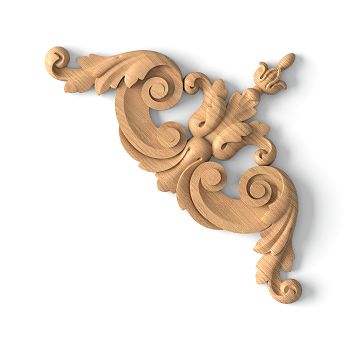
The carver works according to the pattern drawn on the blank. First, excess wood is removed, forming general volumes. Then details are worked on — each acanthus leaf, each volute, each swirl is executed separately using chisels of different shapes. The depth of carving varies — from barely noticeable relief to high relief, where elements are almost completely separated from the background.
Sculptural elements are especially complex — masks, figures, lion heads. Here, the carver works as a sculptor, creating volume from a flat blank. Not only technical skill, but also artistic sense, understanding of proportions, and the ability to see an image in a piece of wood are required.
After carving, the element is sanded. This is a delicate process — smoothing tool marks without losing the sharpness of edges. Sanding proceeds from coarse to fine grit, finishing with the finest sandpaper or even felt. The result — a smooth surface, pleasant to the touch, ready for finishing.
Assembly: precision of connections
Classic furniture is assembled not with self-tapping screws and connectors, but with traditional joinery — dovetails, mortise-and-tenon joints, butterfly joints. These connections have been tested over centuries, providing strength and durability without visible fasteners.
The tenons are cut with precision to the nearest tenth of a millimeter. They must fit snugly into the mortises without gaps, but also without excessive force that could split the wood. The joint is glued, which enhances strength. As the glue dries, it bonds the two elements into a monolith.
Cabinets and chests are assembled from frames and panels. The panel is inserted into the frame's mortise with a slight gap, allowing it to expand and contract with changes in humidity. This prevents cracking — the wood moves within the gap, avoiding stress.
Special attention is paid to geometry. All angles must be strictly right (or as specified in the design), diagonals equal, surfaces in one plane. Warping is unacceptable — it is visible to the eye, disrupts harmony, and indicates poor workmanship. An experienced cabinetmaker checks geometry at every stage of assembly.
Finishing: the final touch
Finishing determines how the finished item will look. Here, creativity is given free rein — from natural wood to complex multi-colored compositions.
Transparent finishing begins with toning, if color change is needed. Stains based on water, alcohol, or oil provide the wood with tone while preserving its texture. After toning, a primer is applied to fill the pores. Then, layers of varnish are applied, each followed by intermediate sanding. The final layer is polished to smoothness, creating a deep, transparent sheen.
Wax finishing gives a matte, velvety surface. Wax is rubbed into the wood, filling the pores, then polished with soft cloth. The surface acquires a noble appearance and is pleasant to the touch. Wax finishing requires regular renewal, but it is precisely this that creates a special bond with the object — by caring for it, the owner becomes part of its life.
Finishing with opaque enamels hides the texture, creating a uniform colored surface. But even here there are nuances — number of layers, intermediate sanding, polishing. Quality finishing appears smooth, without streaks, runs, or stippling. Classic furniture is often painted white, cream, or light gray — colors that convey a sense of noble restraint.
Gilding is the pinnacle of finishing craftsmanship. Leaf gold is applied in the thinnest sheets onto a special primer. The process requires patience and precision — gold is thinner than human hair, and even the slightest draft can lift the leaf. After application, the gold is polished with agate, achieving a mirror-like sheen. Gilded carving shines, creating a precious effect.
Items of classic interior design
A classic interior is composed of a set of typical items, each serving its own function and contributing to the overall atmosphere.
Tables: the center of attraction
Dining tables — the heart of the home, the place where the family gathers. Classic tables are heavy and stable, conveying a sense of reliability. The tabletop is either a single solid piece or assembled from boards with matching grain. Edges are profiled — from simple rounding to complex carved profiles.
Table legs are a separate work of art. Precision-turned balusters, carved columns, curved cabrioles with scrolls and leaves — the form depends on the specific historical style. In Baroque, legs are robust and carved. In Classicism — more austere, straight or slightly tapered. In Empire — monumental, often in the form of winged lions or sphinxes.
Extendable tables allow for increased seating. The classic mechanism — inserts stored separately or folded inside the table. The tabletop slides apart, inserts are placed between halves, and the table extends. This construction maintains rigidity, eliminates gaps, and ensures longevity.
Coffee tables, consoles, and dressing tables — each has its own proportions and decoration, but all are united by the common language of classicism.Legs for tables— a critically important element, determining the style and stability of the entire structure.
Cabinets and chests: repositories of memories
A classic cabinet is not just a place for clothing, but a miniature architectural structure. The body is divided into sections, each with its own door or drawer. Facades may be solid, panelled, or glazed. Glass is often decorated with engraving or stained-glass inserts, creating additional decorative effects.
The cabinet is crowned by a cornice — a projecting profiled element that gives it completion. The cornice may be simple or carved, withon the walls, creating a complete classical composition.at the corners. In Baroque cabinets, the cornice curves, mirroring the facade's shape. In Classicist cabinets — strictly straight, with clear lines.
Chests appeared in the 18th century and quickly gained popularity. Low, wide, with several drawers, they are convenient for storing linens, documents, and small items. Chest facades are a field for decorative experimentation. Carving, inlay, bronze appliqués, painting — all of this transforms a utilitarian item into a work of art.
Drawers in classic chests slide smoothly on wooden guides. Drawer joints are made with dovetail — the strongest woodworking joint. The drawer bottom is inserted into a mortise, not nailed — this allows it to expand and contract without deformation.
Chairs and sofas: the art of sitting
You can sit in different ways. A classic chair offers not just a place to rest, but a whole philosophy of comfort. The back is curved to the shape of the spine, armrests are positioned at a comfortable height, the seat is deep enough, but not so deep that legs hang.
The chair frame — solid wood assembled with tenons and glued. Joints are reinforced with wooden dowels or pegs. Such a construction withstands loads for decades, does not loosen, does not creak. Support elements — legs, aprons, armrests — have a safety margin designed for long-term service.
Upholstery — a separate art. Springs are laid under the fabric, then several layers of natural material (horsehair, wool, cotton batting) are placed on top, creating a resilient yet not rigid surface.
Fabric is hand-sewn with tension, ensuring a smooth surface without wrinkles or sagging. Edges are decorated with trim, cords, or fringe.
Sofas in the classic style — an extension of the philosophy of chairs. Straight or slightly curved, with high backs and substantial armrests, they create a sense of security and coziness. Upholstery in velvet, jacquard, or tapestry in rich tones turns the sofa into the focal point of the living room.
Beds: the kingdom of sleep
A classic bed is a throne for sleep. Massive with a high headboard, it dominates the bedroom and sets the tone for the entire interior. The headboard may be soft — upholstered with a carved frame — or rigid — carved wood adorned with ornamentation.
The height of a classic bed — 50-60 centimeters from the floor to the top of the mattress. This is a convenient height for getting up, requiring no effort. The base — wooden slats or a spring block — provides mattress support, ventilation, and durability.
Canopies over beds — an element from the past, when they had a practical function — protecting from drafts and insects. Today, the canopy is purely decorative, but it creates a special atmosphere of intimacy and seclusion. Light fabrics, drapery, tassels — all of this transforms the bed into a royal bed.
Nightstands — an essential companion to a classic bed. Symmetrically placed on both sides, they must match the bed’s style — same material, same finish, same level of detail. On the nightstand — a lamp, a book, a glass of water — everything needed within reach, without having to get up.
Classic style in different rooms of the house
Classic style is universal — it works in all rooms, adapting to their function.
Living room: grand hall
The living room — the face of the home, the space guests see. Here, classic style is fully revealed. The center of composition — sofa and chairs, forming a relaxation zone. Opposite — fireplace or television, but in a classic interior, technology is concealed — hidden in a cabinet, covered by panels, to avoid disrupting the style.
Wall-mounted display cabinets showcase collections — porcelain, silver, books. Behind glass, everything is visible but protected from dust. Consoles under mirrors create additional surfaces for placing accessories. A coffee table in front of the sofa — a functional element, where you can place a cup or put down a magazine.
Lighting in a classic living room is multi-level. A chandelier in the center provides general lighting. Wall sconces create localized lighting, highlighting zones. Table lamps on consoles and tables add coziness and allow adjusting brightness according to mood.
Textiles — curtains, cushions, upholstery — support the color palette. Heavy drapes with valances and tassels frame windows, turning them into decorative elements. A rug on the floor defines the relaxation zone, adds warmth, and mutes sounds.Classic Furniturecreates an atmosphere of solemnity and at the same time coziness.
Dining room: ritual of dining
The dining room — the place where the family gathers around a shared table. A classic dining room — it is a ritual, a tradition, a respect for food and conversation. The dining table — the center, around which chairs are arranged. The number of seats depends on family size, but the table must accommodate guests as well.
A buffet or sideboard along the wall stores tableware, cutlery, tablecloths. The upper part with glass doors displays formal service. The lower part — solid doors or drawers for storing everyday utensils. The buffet’s countertop — a working surface for setting the table, where dishes are placed before serving.
Dining room lighting is concentrated over the table. The chandelier does not merely illuminate — it creates an accent, gathering space around the table. The hanging height — 70-80 centimeters above the tabletop — so that light falls on the table without blinding those seated. Additional lighting — wall sconces, buffet backlighting — creates a comfortable atmosphere.
Dining room chairs are classic — with straight backs and soft seats. The back may be carved with ornamentation. For the head of the household — a chair with armrests at the end of the table. Other chairs without armrests, so they can be easily pulled up to the table. Chair upholstery matches upholstery of other furniture, creating unity.
Office: space for thought
A classic office — a masculine space, a place of solitude, work, and contemplation. Here, dark wood dominates — walnut, mahogany, cherry. The tones are deep, serious, setting a work-oriented mood.
A writing desk — massive, with a leather tabletop. Drawers on both sides store documents and stationery. The tabletop is large enough to spread out papers, place a lamp, and leave space for elbows. Working at such a desk is productive — nothing distracts, everything is within reach.
Bookshelves along the walls create an atmosphere of scholarly refinement. Behind glass doors — rows of books, their bindings forming a color palette. In closed cabinets — archives, folders, everything that should not be on display. A library ladder allows reaching upper shelves, simultaneously serving as a decorative element.
An office chair — functional, with a high back, armrests, and wheels for mobility. Leather upholstery — practical, long-lasting, matching status. In the relaxation zone — a pair of chairs and a small table, where one can take a break from work, read a book, or enjoy coffee.Decorative brackets for shelvessupport bookshelves, becoming part of the classic interior.
Bedroom: private kingdom
The bedroom — the most personal space, where one can be oneself. A classic bedroom — a sanctuary, a place of rest from the outside world. Here, furniture is softer, more elegant, than in formal rooms. Preference for light tones — white, cream, soft pink.
The bed dominates, and the entire composition is built around it. On both sides — nightstands with lamps. At the foot of the bed or along the wall — a bench or ottoman, where one can sit down to put on shoes. A dresser for linens, a vanity with mirror, a wardrobe for clothes — the set depends on room size.
A vanity — a purely feminine element, a place for morning and evening rituals. A mirror, numerous cosmetic drawers, a comfortable chair. Here, the homeowner spends time preparing to go out. A classic vanity is elegant, adorned with carving, often painted in light tones.
Textiles in the bedroom are especially important. Bedding made of natural fabrics — cotton, linen, silk. A bedspread — quilted or draped. Curtains are heavy, blocking morning light. Many cushions of different sizes create coziness, inviting rest.
Color solutions in classic style
Color in a classic interior is not random. Each shade carries symbolic meaning, creating a mood.
White and cream: light and space
White classic furniture — the choice of those who value light, air, visual expansion of space. White is universal — it matches any wall, floor, or textile colors. White furniture makes interiors lighter, more modern, stripping classic styles of excessive solemnity.
Cream, ivory — warmer shades of white, less sterile, adding coziness. In classic interiors, patination is often used — dark patina is rubbed into recesses of carvings, creating an effect of noble antiquity. White furniture with gold patina — a combination that works flawlessly.
White demands care — stains are noticeable on it. But modern finishes are resistant to stains, easy to clean. Well-painted white furniture lasts for decades, not yellowing or losing its whiteness.
Dark wood: solidity and depth
Dark furniture — walnut, mahogany, stained oak — creates a completely different atmosphere. Here there is no lightness of white, but solidity, depth, respectability. Dark furniture suits spacious rooms with good lighting — in a small room it may create a feeling of confinement.
Dark wood more vividly shows texture. Play of light and shadow on the surface, contrast between early and late wood grain, gloss of polished surfaces — all this creates visual richness. Dark furniture requires less decoration — the wood itself is decorative.
Combining dark furniture with light walls — a classic technique creating contrast. Dark on light looks clear, graphic, emphasizing the shape of each item. This solution is for interiors where furniture should be the main accent.
Gold: accents of luxury
Gold — a symbol of luxury, not losing its value over millennia. In classic furniture, gold is used sparingly — only on carved elements, protruding parts, decorative details. Fully gold-plated furniture — even for baroque, it looks theatrical and artificial.
Gold highlights carvings, making them readable, emphasizing craftsmanship. Each leaf, each swirl, covered in gold, shines and attracts attention. Especially striking is gold on a white or cream base — contrast creates luxurious, yet not excessive, effect.
There is imitation gold — golden paints creating a similar effect at lower cost. But real gold differs — it lives, changes under different lighting, creates a sense of genuine preciousness. It’s an investment in beauty, repaid by aesthetic pleasure.
Modern classic: traditions today
Classic has not frozen in the past. It evolves, adapts to modern realities, preserving its essence.
Lighter forms
Modern classic furniture is often simpler than historical prototypes. Less carving, more laconic forms, restrained decoration. This is a response to the times’ demands — people are tired of excess, value clean lines. But proportions, material quality, craftsmanship remain at the same level.
Lighter classic combines well with modern elements. A classic chest next to a minimalist shelf, a baroque chair surrounded by simple furniture — these contrasts create a lively, non-boring interior. The key is to maintain balance so styles don’t conflict, but complement each other.
New materials and technologies
Classic form does not mean rejecting modern technologies. Hidden drawer guides, door closers, built-in lighting — all this integrates into classic furniture, enhancing comfort. The key — technologies remain invisible, not disrupting visual integrity.
New finishes — polyurethane varnishes, fast-curing oils — increase durability, simplify care. Furniture lasts longer, better withstands daily use. Visually, such finishes are indistinguishable from traditional ones.
Ergonomics and comfort
Modern classic furniture is more ergonomic. Heights, depths, angles of inclination are calculated according to anthropometry. A chair is not just beautiful — it supports the back, allows relaxation. A table is not just impressive — it’s comfortable to work at.
Soft furniture gets modern fillings — polyurethane foam, latex, independent coil blocks. They last longer than traditional materials, better retain shape, provide optimal support. Visually, furniture remains classic, but sitting and lying on it is more comfortable.
How to choose classic furniture
Buying classic furniture — a serious decision requiring careful consideration.
Defining Needs
Start with inventory. What items are needed, what are their sizes, how will they be used. Classic furniture is larger than modern, ensure it fits the room. Measure doorways — a wardrobe or chest must fit into the room.
Style should match the house’s architecture. In an apartment with standard 2.7-meter ceilings, baroque opulence may look excessive. Here, restrained neoclassicism is better. In a country house with high ceilings, you can afford baroque or empire luxury.
Budget determines possibilities. Classic furniture made of solid wood with hand-carved details — a serious investment. But it pays off through longevity and aesthetic pleasure. Don’t cut corners on key items — better to buy fewer, but higher quality pieces.
Quality check
Inspect furniture carefully. Solid wood has no repeating patterns — each board is unique. Veneer is visible at the edges — a thin layer over the base. Quality veneer is acceptable on large surfaces (wardrobe doors, tabletops), but load-bearing elements must be solid wood.
Joints are checked for strength. Rock the item — it shouldn’t wobble or creak. Drawers slide smoothly, without sticking. Doors open easily, close tightly, without gaps. Hardware — hinges, handles, locks — must be quality, preferably brass or bronze.
Finish is inspected for uniformity. Varnish lies smoothly, without runs, drips, or brush marks. Color is uniform, without patches. Gold covers all carved surfaces, doesn’t flake with light touch. Upholstery is taut, seams neat, fabric free of wrinkles.
Element Compatibility
When buying furniture piece by piece, pay attention to stylistic unity. It's better to assemble a collection from one series — then the material, finish, and decor will definitely match. But you can combine different series if they share a similar spirit, are made of the same material, and are painted in similar tones.
buy wooden skirting board— it should match the furniture or floor tone — it ties items to the room’s architecture.Wooden planks— on the wall,Balusters of the staircase— everything must harmonize, creating a unified space.
Care for classic furniture
Quality furniture requires care, but not excessive. Simple rules extend its lifespan for decades.
Regular cleaning
Dust is the main enemy. It settles on surfaces, gets stuck in carvings, dulls finishes. Weekly dry cleaning with soft cloth removes most dust. For carvings, use a soft brush to sweep dust out of grooves.
Wet cleaning is allowed, but with restrictions. The cloth must be well wrung out, almost dry. Wipe along the direction of wood grain. After wet cleaning, dry thoroughly — moisture must not remain on the surface. No abrasives or aggressive cleaning agents — they damage finishes.
Polishing restores shine. Every few months, treat furniture with special wood polishes. They create a protective film, highlight texture, and make future cleaning easier. Polish is applied in a thin layer and buffed to shine with a soft cloth.
Protection against damage
Furniture fears direct sunlight — it fades color and dries out wood. Protect windows with curtains, use UV filters. Do not place furniture directly against radiators — heat dries wood and may cause cracks. Minimum distance — 50 centimeters.
Protect surfaces from scratches. Use hot pads, coasters under vases and sharp-edged items. Tabletops can be covered with tablecloths that protect from damage and simultaneously decorate the table.
When moving furniture, lift it, don’t drag. Place soft pads under legs. Be careful in doorways and narrow passages — scratches on carvings are hard to fix.
Restoration
Over time, any furniture needs updating. Lacquer fades, paint fades, upholstery wears out. Restoration returns the original look. For classic solid wood furniture, restoration is a routine procedure it undergoes repeatedly.
Lacquered surfaces are renewed by sanding and re-lacquering. Painted surfaces are repainted. Upholstery is replaced with new — fabric choices are vast, you can find an identical one or change color to refresh the interior. Broken elements are replaced, carvings are restored.
Consult professionals — restoring classic furniture requires skills, tools, and knowledge of techniques. Amateurish approaches may damage valuable items. A good restorer will restore furniture’s beauty and extend its lifespan by decades.
— is a choice in favor of eternal values. In a world where everything becomes disposable, quality wood carving remains a symbol of solidity and intergenerational continuity.
buy classic style furnitureIt means choosing constancy in a world of change. This decision is not based on fleeting trends, but on understanding that true beauty transcends time. Classic furniture does not become outdated because its forms have been perfected over centuries, proportions are ideal, materials are noble.
A home furnished with classic furniture acquires a special atmosphere. Here, traditions are valued, the past is respected, the importance of quality is understood. Each item tells a story — about the craftsmen who made it, the wood it was made from, and the owners who used it. Classic furniture transforms a dwelling into a home with soul.
Natural wood, hand-carved details, quality upholstery — all this requires investment. But these investments pay off. Furniture serves for decades without losing relevance. It can be restored, updated, passed down to future generations. In terms of years of use, classic furniture proves more cost-effective than cheap alternatives that require replacement within a few years.
Classic style is universal. It works in city apartments and country homes, large mansions and compact spaces. The key — correctly choose scale, style, color scheme. Baroque for spacious halls, neoclassicism for standard apartments, modernized classic for those who appreciate minimalism — the choice is broad.
The aesthetic pleasure from classic furniture cannot be measured in numbers. Entering a room where every item is thoughtfully designed, where forms are harmonious, where materials are noble — this is a special feeling. Touching a polished wooden surface, feeling its smoothness, seeing light play on texture — classic furniture appeals not only to sight, but also to touch, creating a multisensory experience.
Classic furniture cultivates taste. Children growing up surrounded by genuine, quality items learn to distinguish authentic from imitation, appreciate craftsmanship, respect traditions. This is education through environment — no words needed — the setting itself speaks of what matters.
In a modern world where everything accelerates, where things become disposable, classic furniture is an island of stability. It reminds us that there are values not subject to change. Beauty, quality, craftsmanship — these concepts remain relevant always, regardless of trends and fads.
STAVROS company creates classic furniture, combining craftsmanship traditions with modern technologies. In-house production allows controlling every stage — from wood selection to final finish. Experienced master craftsmen, many of whom have dedicated decades to furniture making, invest knowledge, skills, and a piece of soul into each piece.
STAVROS assortment includes furniture for all rooms in the house. Living room sets with sofas, chairs, tables, display cabinets. Bedroom sets with beds, chests, dressing tables. Dining groups with dining tables and chairs. Office furniture with desks, bookcases, chairs. Each collection is unified in style, allowing harmonious room arrangement.
Only premium materials are used — solid oak, beech, walnut. Wood undergoes kiln drying to achieve optimal moisture content of 8–10%. This guarantees stability, absence of deformation, and long service life. Carvings are handcrafted by master carvers of the highest qualification. Each element is individually processed, acquiring uniqueness.
Finishes can be any — from transparent lacquer highlighting wood texture to coloring in chosen tones with patina and gold leaf. Upholstery of soft furniture is made from European fabric manufacturers — velvet, jacquard, tapestry in wide color and texture palettes. Fillings are modern, ensuring comfort and durability.
Custom furniture manufacturing is possible. STAVROS designers work with clients to realize their vision of an ideal interior. You can change dimensions, proportions, decor, material, finish — create items perfectly suited to a specific space and owner’s taste. This is the path to a truly unique interior.
STAVROS production capabilities allow fulfilling both individual orders and equipping large-scale projects — country homes, apartments, commercial spaces. Production timelines depend on complexity and volume, but quality remains consistently high — each item undergoes multi-stage quality control before delivery to the client.
Delivery is organized throughout Russia. Furniture is professionally packed — multi-layer protection prevents damage during transport. Assembly service on-site is available — experienced installers will assemble furniture correctly, ensure flawless operation.
STAVROS showrooms in Moscow and St. Petersburg are open for visits. Here you can see furniture samples, evaluate carving quality, feel wood texture, sit in chairs, open drawers of chests. Consultants will answer questions, assist with selection, and explain customization options.
STAVROS classic furniture is not just decorative items. It’s an investment in beauty that will delight for decades. It’s a choice for quality proven by time. It’s creating a home where it’s pleasant to live, where every detail speaks of owners’ taste and status. Choosing classic means choosing timeless values — and STAVROS helps turn this choice into reality.