












































































Article Contents:
- Why MDF slats have become the number one choice
- Technological perfection of the material
- Aesthetic advantages
- Variety of shapes and sizes for any task
- Standard rectangular profiles
- Designer and profiled profiles
- Decorative finishes: from classic to avant-garde
- Coating finishes
- Laminated surfaces
- Comprehensive approach to interior design
- Space zoning
- Accent Walls
- Ceiling structures
- Technical aspects of quality selection
- Geometric accuracy
- Surface Quality
- Moisture and Stability
- Installation and fastening systems
- Frame systems
- Hidden mounting systems
- Adhesive joints
- Integration with modern technologies
- Lighting systems
- Acoustic Solutions
- Style directions and designer solutions
- Minimalism and Modern Styles
- Scandinavian Style
- Loft and Industrial Style
- Classic Interiors
- Economic advantages of choosing
- Material cost
- Installation costs
- Operational costs
- Maintenance and care
- Regular Cleaning
- Protection against damage
- Trends and innovations
- Digital technologies
- Ecological innovations
- Smart materials
- Conclusion
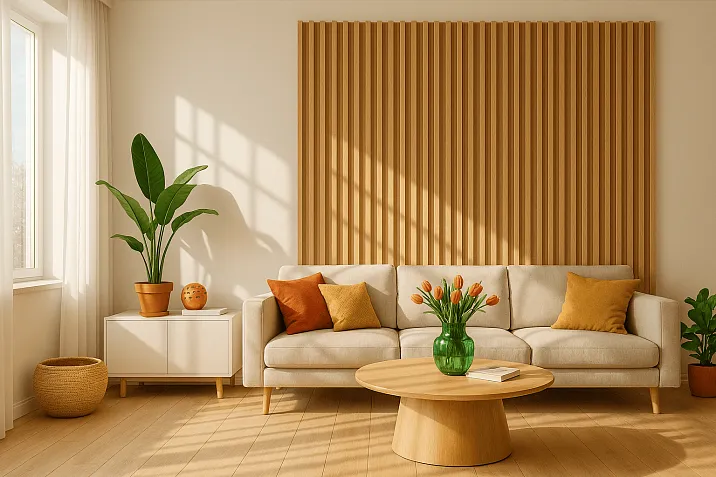
Dreaming of a stylish interior that will delight guests and bring you joy every day? Today mdf slat buy — it's not just a practical solution, but an opportunity to create a unique atmosphere in your home. But how not to get lost among numerous offers and choose exactly what will turn your home into a work of art?
In the world of modern design, slat structures made of MDF have become a real discovery for those who value quality, aesthetics, and reasonable price. They combine the nobility of natural wood with the practicality of modern materials, creating endless opportunities for creativity.


Why MDF slats have become the number one choice
When designers and architects talk about materials of the future, they increasingly mention MDF as an ideal alternative to solid wood. What makes this material so attractive for creating interior masterpieces?




Technological perfection of the material
MDF (Medium Density Fibreboard) is the result of a high-tech process, in which wood fibers are pressed under great pressure at a temperature above 200°C. This process creates a material with unique properties: it is denser than plywood but lighter than natural wood, has a uniform structure without knots or voids.
The density of quality MDF is 600-850 kg/m³, which ensures high strength and dimensional stability of the products. The moisture content of finished slats does not exceed 6-8%, which eliminates deformation during use. At the same time, modern binders provide emission class E1 or even E0, making the material completely safe for living spaces.
Our factory also produces:


Aesthetic advantages
The smooth, uniform surface of MDF creates an ideal base for any type of decorative finish. Unlike natural wood, there are no natural defects that could spoil the appearance of the finished product. Each slat is perfectly flat with precise geometric parameters.
Finishing options are virtually limitless — from simple painting in any color to complex lamination with imitation of valuable wood species. At the same time, the surface quality remains stable throughout the length of the product.
Get Consultation
Variety of shapes and sizes for any task
The modern market offers an impressive range of MDF slats, each designed to solve specific design tasks. Understanding this variety will help make the right choice.
Standard rectangular profiles
Classic rectangular rails remain the foundation of most interior projects. Standard sizes cover a wide range of needs:
Thin rails (10-20 mm thick) are ideal for creating elegant compositions in compact spaces. They add texture without visually overwhelming the space. The height of such rails typically varies from 30 to 80 mm.
Medium sizes (25-40 mm) represent the golden middle and are suitable for most standard applications. Such rails are expressive enough to create an accent but do not dominate other interior elements.
Wide planks (50-80 mm and more) are used to create large-scale architectural compositions. They can dramatically alter the perception of space and become the main decorative element of the room.
Designer and profiled profiles
Modern milling technologies allow creating rails of virtually any geometry. Sloped profiles are especially popular, creating an interesting play of light and shadow. Rounded elements add softness and organic feel to the interior.
Combined profiles combine different geometric shapes within a single rail — straight sections with smooth transitions, decorative grooves and protrusions. Such rails become true works of decorative art.
Decorative finishes: from classic to avant-garde
The appearance of the finished product largely depends on the type of decorative finish. It is here that MDF demonstrates its full flexibility as a creative material. In addition to rails, complex interior decoration often includes complementary elements, for example, MDF Skirting Board to complete the composition at floor level.
Coating finishes
Rails suitable for painting provide maximum freedom in choosing color solutions. Quality primer ensures ideal adhesion for any type of paint:
Water-based acrylic paints are environmentally safe and provide even coverage. They dry quickly and have no strong odor, allowing work to be performed in residential spaces.
Alkyd enamels create a more durable coating with high resistance to mechanical impacts. Glossy variants provide a mirror-like sheen, while matte finishes offer elegant subtlety.
Polyurethane compositions belong to the premium segment and guarantee maximum coating longevity. They are resistant to abrasion, moisture, and ultraviolet light.
Laminated surfaces
Laminating with decorative films allows high-fidelity imitation of various materials. Modern films not only replicate color and pattern but also convey the tactile properties of the imitated surface.
Wood imitation remains the most popular solution. Especially popular are finishes replicating the texture of premium species — oak, ash, walnut, wenge. Quality lamination creates an effect virtually indistinguishable from natural wood.
Solid color finishes offer a wide palette ranging from classic neutral tones to vibrant accent colors. Various gloss levels allow creating surfaces from deep matte to mirror-like sheen.
Special effects include metallic finishes, stone, concrete, and other material imitations. Such solutions open up limitless possibilities for creating unique interiors.
Comprehensive approach to interior decoration
When planning design, it is important to consider rails not as a separate element, but as part of an overall composition. In this context, additional decorative elements are often used, such as MDF molding for framing and creating a finished look, as well as MDF Crown for ceiling structures.
Space zoning
In modern open-plan apartments, rail structures allow gently dividing functional zones without losing the sense of a single space. Semi-transparent partitions preserve light flow and natural ventilation.
By varying the density of plank placement, one can regulate the degree of privacy in each zone. Sparse constructions provide symbolic separation, while dense ones create more isolated areas.
Accent walls
Creating accent walls is one of the most effective applications of rail structures. Vertical plank placement visually increases ceiling height, which is especially important in standard apartments.
Horizontal compositions expand space and make narrow rooms more proportionate. Diagonal placement creates a dynamic, modern look, but requires special skill in design.
Ceiling Structures
Tongue-and-groove ceilings create a cozy atmosphere and effectively conceal engineering utilities. Integration with lighting systems allows for complex lighting scenarios, transforming the ceiling into a source of soft, even light.
Technical aspects of quality selection
When a decision is made mdf slat buyIt is important to pay attention to key technical characteristics that determine the quality and durability of the products.
Geometric accuracy
Quality rails must have perfectly flat geometry with minimal deviations. Tolerances for dimensions should not exceed ±0.3 mm for high-class products. This is especially important when creating extended compositions, where even minor inaccuracies become noticeable.
Ends must be perpendicular to the longitudinal axis and have a smooth surface without chips or scratches. The quality of end-cutting directly affects the appearance of joints in the finished structure.
Surface quality
The surface of the rails should be perfectly smooth, without bubbles, scratches, dents, or other defects. The uniformity of grinding can be checked by running a hand over the surface — there should be no roughness or unevenness.
When selecting laminated products, it is necessary to check the quality of film adhesion. Bubbles, wrinkles, delamination, or color unevenness are not permitted.
Humidity and Stability
The moisture content of quality MDF should not exceed 6-8%. Excessive moisture may lead to deformation after installation, especially with changes in the room's microclimate. Professional suppliers always indicate the actual moisture content in documentation.
Mounting and fastening systems
The quality of installation largely determines the appearance and durability of tongue-and-groove structures. Modern technologies offer various mounting methods for any conditions.
Frame systems
Mounting on a load-bearing frame ensures maximum secure fastening. Galvanized steel profiles are resistant to corrosion and ensure the longevity of the structure. Wooden frames are more traditional but require preliminary treatment with protective coatings.
The distance between frame elements depends on the size of the rails and expected loads. For wall structures, it is usually 400-600 mm, and for ceiling structures — 300-400 mm.
Hidden mounting systems
Clamp systems allow mounting rails without visible fasteners. Special clamps are attached to the base, and rails snap into them through slots on the backside. This ensures a flawless appearance of the finished surface.
Magnetic systems use powerful neodymium magnets for quick installation and removal. However, they are limited in load-bearing capacity and are suitable only for lightweight structures.
Adhesive Joints
Modern structural adhesives provide high adhesion to most construction materials. Polyurethane and MS-polymer compositions retain elasticity after curing, compensating for thermal deformations.
Double-sided mounting tapes based on acrylic foam are suitable for mounting lightweight rails on flat surfaces. They provide instant fixation and can be removed without damaging the base if necessary.
Integration with modern technologies
Modern tongue-and-groove structures go far beyond simple decoration. Integration with lighting and automation systems transforms them into full-fledged elements of a 'smart home'.
Lighting systems
Built-in LED lighting turns ordinary rails into sources of soft, even illumination. LED strips placed in grooves between planks create an effective play of light and shadow, highlighting architectural features of the interior.
RGB lighting allows changing the color of illumination depending on mood or time of day. Smart control systems can automatically adjust brightness and color temperature throughout the day.
Spotlights integrated into rails create directional lighting to highlight individual objects or functional zones. Adjustable spotlights allow setting the direction of the light beam.
Acoustic solutions
Filling the space between rails with sound-absorbing materials creates an effective acoustic correction system. The sound absorption coefficient of such structures can reach 0.85-0.90 in the speech frequency range.
Integrating acoustic drivers turns tongue-and-groove walls into inconspicuous elements of the sound system. Special acoustically transparent materials allow hiding the drivers while preserving sound reproduction quality.
Style directions and design solutions
The versatility of MDF planks allows their use in various design styles. When creating a comprehensive design, additional elements such as Wooden planks are used to create texture contrasts.
Minimalism and modern styles
In minimalist interiors, planks create the necessary texture without violating the core principles of the style. Monochromatic solutions — white or black planks — emphasize the purity of lines and geometry of the space.
It is important to maintain precision in proportions and distances between elements. Contrasting compositions become the main decorative accent in minimalist interiors.
Scandinavian Style
Light planks with a natural wood finish perfectly fit the philosophy of Scandinavian design. They create a connection with nature and highlight the naturalness of materials.
Vertical compositions mimic tree trunks and evoke associations with northern forests. Such solutions make the interior more lively and organic.
Loft and Industrial Style
Dark planks with a rough texture complement industrial interiors beautifully. They create contrast with concrete and brick surfaces, adding warmth to the space.
Combining with metallic elements emphasizes the technological and modern nature of the space.
Classical interiors
Planks with imitation of valuable wood species can successfully replace expensive wooden panels in classic interiors. Properly selected shades and textures create a sense of nobility and respectability.
Using profiled planks with decorative elements allows recreating the atmosphere of aristocratic mansions at significantly lower costs.
Economic advantages of choosing
When deciding where mdf slat buyit is important to consider not only the initial cost but also the long-term economic efficiency.
Material cost
MDF planks provide savings of 40-70% compared to natural wood while offering comparable visual effects. High dimensional accuracy and quality of processing minimize waste during installation.
Standardized dimensions simplify calculations and planning, reducing the risk of errors when ordering. This is especially important when working with large volumes of material.
Installation costs
The ease of processing MDF significantly reduces labor costs. The material is easily cut with standard carpentry tools and does not require special equipment or skills.
The possibility of pre-preparing elements in workshop conditions reduces on-site work time and lowers overall installation costs.
Operating expenses
Resistance to deformation and high-quality decorative coatings ensure a long service life without the need for repairs. With proper use, planks can last for decades.
Ease of maintenance and the possibility of local repair of damaged areas further reduce operating costs.
corner trim
Proper care ensures the preservation of the attractive appearance of plank structures throughout their entire service life.
Regular cleaning
The smooth surface of MDF is easily cleaned of dust and dirt. For regular cleaning, a dry or slightly damp microfiber cloth is sufficient. Special attention should be paid to the grooves between planks, where dust may accumulate.
For heavy soiling, soft cleaning agents without abrasive particles can be used. After wet cleaning, the surface must be thoroughly dried.
Protection from Damage
MDF is sufficiently strong for most applications but requires careful handling. Avoid impacts from sharp objects and excessive moisture exposure.
The indoor microclimate should be maintained within 40-65% relative humidity at a temperature of 18-25°C. Sudden fluctuations in these parameters may lead to deformation.
Trends and Innovations
The industry of decorative materials is constantly developing, offering new technological solutions and design possibilities.
Digital Technologies
3D printing opens opportunities to create planks with complex geometric shapes that cannot be achieved by traditional methods. Parametric design allows creating unique compositions for each specific interior.
High-resolution digital printing enables the application of any images and patterns, opening up limitless possibilities for personalization.
Ecological Innovations
Advancements in recycling technology allow the creation of MDF from secondary raw materials without loss of quality. The use of fast-growing tree species and agricultural waste reduces pressure on forest resources.
Biodegradable binders gradually replace synthetic resins, making products more environmentally friendly.
Smart Materials
Integration of electronic components transforms ordinary rails into interactive surfaces. Built-in sensors can monitor microclimate and lighting parameters.
Thermochromic coatings change color depending on temperature, creating dynamic visual effects.
Conclusion
MDF rails represent the ideal combination of aesthetic, functional, and economic advantages for modern interior design. Their versatility allows creating unique spaces of any style and scale, from cozy home rooms to impressive commercial objects.
Technological sophistication of modern production ensures high quality and stable characteristics, while the variety of decorative finishes allows implementing any design concepts. Environmental safety and compliance with international standards make these materials suitable for use in any type of space.
Ease of installation and maintenance, combined with durability and modifiability, ensures high economic efficiency throughout the entire service life. Integration with modern lighting and automation technologies opens up new functional possibilities.
Continuous technological development and emergence of innovative solutions guarantee that MDF rails will remain relevant and in demand in the foreseeable future. Their ability to adapt to changing design trends makes them a reliable choice for professionals and admirers of beautiful interiors.
In a world where quality of life is determined by the quality of the surrounding environment, such materials play a key role in creating spaces that are not only functional but also emotionally rich. Choosing high-quality MDF rails is an investment in the long-term beauty and comfort of your home.
STAVROS, with its rich experience in producing high-quality wooden products, offers an exceptional range of MDF rails for various applications. Continuous technological refinement and strict quality control at every production stage enable STAVROS to maintain industry leadership, providing clients not just building materials, but comprehensive solutions to realize the boldest design ideas and create interiors that will delight and inspire for many years.


