Article Contents:
- The Petersburg Woodworking Market: Traditions and Innovations
- Historical Heritage of the Northern Capital
- Features of the Petersburg Climate and Their Impact on Wood
- Material Science: Choosing Wood for Petersburg Conditions
- Local Species: Adaptation to the Northern Climate
- Imported Materials: Expanding Possibilities
- Exotic Woods for Exclusive Projects
- Technological processes: from blank to finished product
- Modern Drying Methods
- Precision mechanical processing
- Artistic Treatment
- Design Trends in Petersburg Interiors
- Classic Directions
- Modern Trends
- Author's solutions
- Special Features of Shopping in Saint Petersburg
- Geography of Manufacturers
- Seasonal Market Characteristics
- Logistical specifics
- Pricing Policy of the Petersburg Market
- Segmentation by Price Categories
- Pricing factors
- Comparison with other regions
- Criteria for Choosing Quality Products
- Visual assessment
- Technical specifications
- Documentary Quality Certification
- Installation in Petersburg Conditions
- Preparatory work
- Installation technology
- Working in Historic Buildings
- Maintenance and Care in Petersburg Climate Conditions
- Moisture Protection
- Seasonal maintenance
- Repair and restoration
- Environmental Aspects and Certification
- Ecological safety
- FSC Certification
- Innovations and technologies of the future
- Digital technologies
- New Materials
- Production Automation
- Conclusion

Saint Petersburg – a city where architectural traditions intertwine with modern trends, creating a unique atmosphere. In this metropolis, where every house strives for perfection, the choice of quality elements for stair constructions takes on special importance. When the need arises balusters for stairs buy SPb it offers many options, but how to find exactly what will turn an ordinary staircase into a work of art?
Imagine: you are ascending a staircase in a Petersburg mansion, your hand gliding over an elegant handrail supported by graceful wooden posts. Each element breathes quality, craftsmanship, and history. It is precisely this feeling that properly selected stair components create. But what lies behind this beauty? What secrets does the Petersburg woodworking market hold?
In the city of white nights, where the humidity of the Baltic Sea creates unique climatic conditions, selecting materials for stair constructions requires a special approach. Wood must not only please the eye but also withstand the whims of the northern climate, preserving its original beauty for decades.


The Petersburg Woodworking Market: Traditions and Innovations




Historical Heritage of the Northern Capital
Saint Petersburg has always been renowned for its master carpenters. Even during the time of Peter the Great, masterpieces of wooden architecture were created here, which still amaze with their perfection. These traditions are alive today – in modern workshops, generations of master carvers work, passing down the secrets of the craft from generation to generation.
The climatic features of the Northwest have left their mark on wood processing technologies. High humidity, sharp temperature fluctuations, and short daylight hours in winter – all of this requires a special approach to material selection and processing methods. Petersburg craftsmen have learned to create items capable of withstanding these challenges.
The modern woodworking industry in the city on the Neva combines centuries-old traditions with advanced technologies. Here, both large-scale manufacturing enterprises with modern equipment and small workshops operate, where each item is crafted by hand with love and attention to detail.
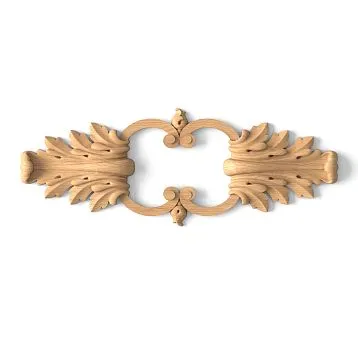
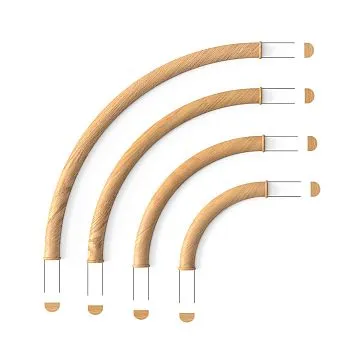
Our factory also produces:


Features of the Petersburg Climate and Their Impact on Wood
The air humidity in Saint Petersburg often exceeds 80%, creating special requirements for wood processing and protection. The material must not only be of high quality and properly dried, but also treated with special compounds that prevent the growth of mold and fungi.
Temperature fluctuations from -30°C in winter to +30°C in summer create additional stresses in wooden structures. That is why Petersburg manufacturers pay special attention to wood stabilization and the use of compensatory technologies.
Short daylight hours in winter and bright sunlight during the white nights also influence the choice of protective coatings. UV filters have become an essential component of finishing compounds for items installed in rooms with large windows.
Get Consultation
Material Science: Choosing Wood for Petersburg Conditions
Local Species: Adaptation to the Northern Climate
Karelian pine, growing in harsh conditions of the North, is distinguished by its exceptional density and strength. Slow growth under short summer conditions forms wood with a fine-grained structure, ensuring high dimensional stability.
Archangel fir is renowned for its whiteness and uniform structure. This species is ideal for creating paintable elements, as it provides a smooth and high-quality finish. Its low resin content simplifies final processing.
Vologda larch is of special interest to St. Petersburg manufacturers. Its natural resistance to moisture makes it ideal for high-humidity conditions. Larch elements practically require no additional protective treatment.
Imported materials: expanding possibilities
Scandinavian spruce, supplied from Finland and Sweden, is distinguished by exceptional quality. Strict European standards for drying and processing guarantee material stability under St. Petersburg's climate.
Russian central region oak is traditionally considered the benchmark of quality. Its hard wood with distinctive grain creates items of exceptional beauty and durability. Oak elements can serve for centuries.
Ash and beech, supplied from European countries, expand the palette of possibilities for designers. The light wood of these species is ideal for modern interiors in Scandinavian style.
Exotic species for exclusive projects
American walnut, with its noble chocolate tone, is becoming increasingly popular among St. Petersburg's elite. This species combines beauty with exceptional technical properties.
Tropical species — teak, mahogany, wenge — are used to create exclusive interiors. Their natural resistance to moisture and biological damage makes them ideal for St. Petersburg conditions.
Canadian maple attracts with its light wood featuring fine, uniform grain. This species is especially popular for creating elements in modern style.
Technological processes: from blank to finished product
Modern Drying Methods
Vacuum drying allows reducing wood moisture to 6-8% without forming internal stresses. This process is especially important for hardwoods prone to cracking during traditional drying.
Conditioning in climate chambers ensures even moisture distribution throughout the entire log volume. Controlled parameters of temperature and humidity eliminate deformations and cracks.
Wood stabilization includes storing material under conditions as close as possible to operational ones. This allows eliminating residual stresses and preparing the material for final processing.
Precision mechanical processing
Four-sided planers ensure ideal geometry of blanks. Modern equipment allows achieving processing accuracy down to 0.1 millimeter, which is critically important for quality assembly.
CNC turning machines create items of the most complex shapes with high repeatability. Programmable centers can operate 24/7, producing identical elements with minimal operator involvement.
Milling complexes allow creating elements with decorative profiles of any complexity. Modern CAD/CAM systems ensure precise reproduction of design concepts.
Artistic finishing
Hand carving remains the pinnacle of craftsmanship in creating exclusive elements. St. Petersburg carvers create true works of art, where every detail bears the mark of the artisan’s individuality.
Laser engraving opens new possibilities for personalizing items. Family crests, monograms, commemorative dates — all of this can be applied with jewel-like precision.
Combined technologies combine machine and hand processing. Blanks are created on machines, while final finishing is done manually, ensuring optimal price-to-quality ratio.
Design trends in St. Petersburg interiors
Classic styles
St. Petersburg classicism requires strict adherence to historical canons. Elements must conform to proportions and stylistics of the 18th-19th centuries. Oak items with noble patina create the atmosphere of aristocratic mansions.
Empire, popular during the reign of Alexander I, is characterized by monumental forms and rich decoration. Massive elements made from valuable wood emphasize the grandeur of the interior.
Modernism of the early 20th century introduced flowing lines and botanical motifs into St. Petersburg interiors. Modernist elements are distinguished by elegance of form and delicacy of execution.
Modern trends
Scandinavian minimalism is gaining popularity among young St. Petersburg residents. Light tones, simple forms, emphasis on material quality — these are the principles of this style.
Loft style implies combining rough industrial elements with noble wood. Contrast of textures creates a dynamic and modern interior.
Eco style emphasizes the natural beauty of wood. Minimal processing, preservation of natural grain, use of eco-friendly finishes — these are the main principles of this direction.
Custom Solutions
Custom projects are becoming increasingly popular among wealthy St. Petersburg residents. Designers create unique elements without analogs. Such items become the hallmark of a home.
Combining materials opens boundless creative possibilities. Wood combines with metal, glass, stone, creating unexpected and striking compositions.
Integrating modern technologies into traditional forms creates elements of the new generation. Built-in lighting, smart home systems, wireless charging — all of this can be seamlessly integrated into wooden structures.
Features of purchasing in St. Petersburg
The industrial zone along the Obvodny Canal concentrates large woodworking enterprises. Here you can find manufacturers of mass-produced items at competitive prices.
The Pushkinsky District is known for workshops specializing in exclusive items. Here, hereditary masters create works of art.
The Kronstadt District develops production of elements for yachts and motorboats. Experience working with marine wood allows creating items exceptionally resistant to moisture.
The spring period is characterized by increased demand for stair elements. The start of the construction season leads to a 10-15% price increase. Advance orders help avoid extra charges.
Seasonal Market Features
Summer months are a time of active construction. Manufacturers operate at full capacity, and production lead times may increase. Planning purchases during this period requires special attention.
The autumn-winter period is favorable for buyers. Reduced demand leads to discounts and special offers. Many manufacturers offer delivery deferrals until spring.
The autumn-winter period is favorable for buyers. Reduced demand leads to discounts and special offers. Many manufacturers offer delivery deferrals until spring.
Logistical Features
Delivery within Saint Petersburg is complicated by the historic center with narrow streets and restrictions for heavy transport. Many suppliers offer nighttime delivery or specialized light-vehicle transport.
Suburbs of Petersburg require special logistics planning. Distances to Pushkin, Peterhof, and Strelna can significantly affect delivery costs.
Crossings over the Neva create additional difficulties. Traffic jams on bridges during peak hours can significantly increase delivery times.
Pricing policy of the Petersburg market
Price segmentation
The economy segment features items made from local pine and spruce. Prices start at 200-300 rubles per standard-sized element. Quality matches the price – simple processing, standard shapes.
The mid-range segment covers items made from larch, beech, and ash. Price range: 500-1500 rubles per element. Quality is noticeably higher – precise geometry, quality sanding, variety of profiles.
The premium segment includes items made from oak, exotic species, and exclusive carved elements. Prices start at 2000 rubles and may reach 15,000 rubles for unique pieces.
Pricing Factors
Raw material cost accounts for 30-40% of the final product price. Fluctuations in wood prices directly affect the cost of finished goods.
Processing complexity determines labor costs. Simple elements are produced using automated equipment, while complex ones require manual work by skilled craftsmen.
Order volume affects unit cost. Large batches allow discounts of up to 20-30% off retail price.
Production lead times also affect price. Rush orders may increase cost by 30-50%.
Comparison with other regions
Moscow prices are traditionally 15-25% higher than Petersburg prices. This is due to higher rental and labor costs in the capital.
Regional manufacturers may offer lower prices, but quality often falls short of Petersburg standards. Savings on materials and technology may result in operational problems.
Imported items are significantly more expensive than domestic equivalents, but they do not always surpass them in quality. Petersburg craftsmen have learned to produce world-class products.
Criteria for selecting quality products
Visual assessment
Surface quality is the first evaluation criterion. Scratches, dents, or tool marks are unacceptable. The surface must be smooth and pleasant to the touch.
Geometric accuracy is checked with measuring tools. Deviations from nominal dimensions must not exceed ±1 millimeter.
Wood quality is assessed by the absence of knots, cracks, or resin pockets. Grain direction must be parallel to the element’s axis.
Technical Specifications
Moisture content of wood must not exceed 12% for internal elements. This can be checked with a specialized moisture meter.
Wood density affects the strength and durability of products. Hardwood species provide maximum longevity.
Dimensional stability depends on drying and processing quality. Quality items do not deform during use.
Quality Documentation
Conformity certificates confirm product quality and safety. Serious manufacturers have all necessary documentation.
Warranty obligations indicate the manufacturer’s confidence in product quality. Standard warranty period is 2-3 years.
Product passports contain information on wood species, moisture content, dimensions, and processing methods.
Installation and mounting under Petersburg conditions
Preparation Work
Acclimatization of items under the conditions of the object should continue for at least one week. This allows the wood to adapt to the microclimate of the room.
Foundation inspection includes checking the geometry of the staircase, strength of fasteners, and compliance with project dimensions.
Preparation of tools and materials should be completed in advance. High-quality tools are essential for successful installation.
Installation technology
Marking installation locations is performed with high precision. Laser levels and precise measuring tools are used.
Fastening elements can be done in various ways — dowel joints, metal fasteners, adhesive compounds.
Quality control of installation includes checking vertical alignment, reliability of fastening, and absence of play.
Special considerations for work in historic buildings
Time restrictions for work in residential buildings require special planning. Noisy operations can only be performed during specified hours.
Preservation of historical elements may require special installation technologies. Sometimes, it is necessary to create elements that exactly replicate historical samples.
Coordination with heritage protection authorities is mandatory for cultural heritage sites. All changes must be documented.
Maintenance and servicing in St. Petersburg climate conditions
Protection from moisture
Regular treatment with protective compounds is especially important in high humidity conditions. Treatment frequency depends on usage intensity.
Controlling humidity in rooms helps prevent wood deformation. Optimal parameters: 40-60% humidity at 18-22°C temperature.
Ventilation of rooms prevents stagnant humid air. Especially important to ensure air circulation in the staircase area.
Seasonal maintenance
Spring inspection allows identifying damage incurred during the winter period. Condition of coverings and reliability of fasteners are checked.
Summer treatment includes renewing protective coatings and eliminating minor defects.
Autumn preparation for the heating season includes checking wood moisture, and if necessary, additional treatment.
Repair and Restoration
Minor repairs include removing scratches, renewing coverings, and tightening fasteners.
Restoration of historical elements requires special skills and materials. It is important to preserve authenticity during restoration.
Replacement of damaged elements should be performed using items made of the same wood species and with similar treatment.
Ecological Aspects and Certification
Ecological safety
Natural wood is an environmentally clean material, not emitting harmful substances. This is especially important for living spaces.
Protective coatings must be safe for health. Water-based compounds are preferable to solvent-based ones, especially in children's rooms.
Disposal of wooden items does not create environmental problems. Wood is fully biodegradable or can be used as biomass fuel.
FSC Certification
FSC certificate guarantees that the wood originates from sustainably managed forests. This is becoming increasingly important for environmentally conscious consumers.
The supply chain must be traceable from the forest to the end consumer. All participants in the process must have appropriate certifications.
Responsible forestry ensures the regeneration of forest resources for future generations.
Innovations and technologies of the future
Digital technologies
Virtual reality allows clients to see the future staircase even before production begins. This helps avoid errors and misunderstandings.
Artificial intelligence optimizes production processes, predicts material needs, and plans equipment loading.
The Internet of Things enables monitoring of product condition during operation. Sensors can monitor humidity, temperature, and loads.
New materials
Modified wood has improved stability and durability characteristics. Thermal treatment alters the material's structure at the molecular level.
Composite materials combine the advantages of various components. Wood-polymer composites are resistant to rot and deformation.
Nanocoatings create invisible protective layers on wood surfaces. They repel water and contaminants and possess antibacterial properties.
Production automation
Robotic lines improve product quality and reduce costs. Robots do not get tired, do not make mistakes, and work around the clock.
Additive technologies open new possibilities for creating complex shapes. 3D printing with wooden composites is already used to create prototypes.
Machine learning analyzes quality data and suggests improvements to technological processes.
Conclusion
The St. Petersburg staircase element market represents a unique blend of tradition and innovation. Purchase balusters for stairs in St. Petersburg opens access to world-class products designed with consideration for the characteristics of the northern climate.
The city on the Neva offers unique opportunities to realize the most daring architectural ideas. Here you can find budget solutions for country house construction as well as exclusive items for elite interiors. The key is to correctly define your needs and find a reliable partner.
Investments in quality staircase elements pay off multiple times. They not only ensure safety and comfort but also become a decoration of the home and a source of pride for owners. In the conditions of the Petersburg climate, this is also a profitable investment.
The future of the industry is linked to further technological advancement in production, development of ecological standards, and growing demands for customization. Companies that can adapt to these trends will gain competitive advantages.
When choosing a supplier of staircase elements in St. Petersburg, it is important to turn to companies with an impeccable reputation and long-standing experience. STAVROS represents a new generation of manufacturers combining traditional Petersburg craftsmanship with innovative technologies. Our experience working in the northern capital, understanding the specifics of the local climate, and highly qualified specialists guarantee product quality at the level of the best global standards. Choosing STAVROS, you are not just purchasing staircase elements, but investing in the beauty, safety, and longevity of your home.