






































Article Contents:
- What is stucco decor
- Which elements belong to stucco decor
- How stucco decor differs from the general concept of stucco
- Where it is used in interior design
- What stucco decor can be bought in Moscow
- Stucco decor for walls
- Stucco decor for ceilings
- Decor for doors, arches, and portals
- Decorative elements for classical and neoclassical interiors
- Comprehensive space design solutions
- How to choose molding decor to match your interior
- For Apartments
- For private house
- For classic interiors
- For neoclassical style
- For modern classic
- What to buy for walls, ceilings, and doors
- For wall decoration
- For ceiling decor
- For accent zones
- For doorways and portals
- For a unified decorative composition
- Which elements are most often purchased together
- Moldings and Cornices
- Cornices and ceiling rosettes
- Wall decor and trims
- Basic and accent decorative elements
- How to determine which molding decor you need
- If you want a neat interior without overload
- If you need more expressive classical decor
- If the room is small
- If you have high ceilings and large walls
- If decor is selected to match a ready-made design project
- How to buy stucco decor in Moscow without mistakes
- What to determine in advance
- What dimensions and rooms to consider
- How to choose style and proportions
- Why you shouldn't buy elements separately without an overall scheme
- Common mistakes when choosing stucco decor
- How not to overload the interior with stucco decor
- Why proportions matter more than quantity
- When moldings are enough
- When more expressive decor is needed
- How to combine stucco decor with lighting, furniture, and doors
- What to buy for different rooms
- living room
- for the bedroom
- For the hallway
- For Office
- For the dining room
- For commercial interiors
- FAQ: answers to popular questions about stucco decor
- STAVROS: where to buy stucco decor in Moscow
There are interiors that simply exist—and there are those that speak. The difference between them isn't always in square footage, expensive furniture, or rare materials. Very often, it's in the details: how the ceiling is designed, what the transition between wall and floor looks like, whether there's something on the wall that gives it rhythm and scale. It's precisely for this 'something' that those searching for stucco decor in Moscow come—and don't find a simple answer to the question 'where to start.'
This market is vast, diverse, and at first glance, not simple. Decorative plasterwork encompasses dozens of categories: from simple molding costing a few hundred rubles to complex portals with pilasters and capitals, which can become the main architectural statement in a room. Buying plasterwork in Moscow today can literally be done with one click—but choosing correctly, not overpaying for unnecessary items, and not missing the important—is a task this article helps solve.
Let's be direct: a wide selection is a blessing. But only when you understand what exactly you need. And for that, you need a system.


What is plasterwork?




Which elements belong to plasterwork?
Plasterwork is a generalized term for the entire family of decorative architectural elements used for interior design. Historically, it was plaster, hand-molded by craftsmen. Today, the same visual language is reproduced in polyurethane, duropolymer, MDF, solid wood—and it retains all the expressiveness of the original while becoming significantly more accessible.
What is included in the concept of 'plasterwork':
-
Moldings—profile strips for dividing planes, creating frames, framing doors and windows.
-
Cornices—ceiling profiles that work at the junction of the wall and ceiling.
-
Baseboards—floor profiles that finish the wall plane from below.
-
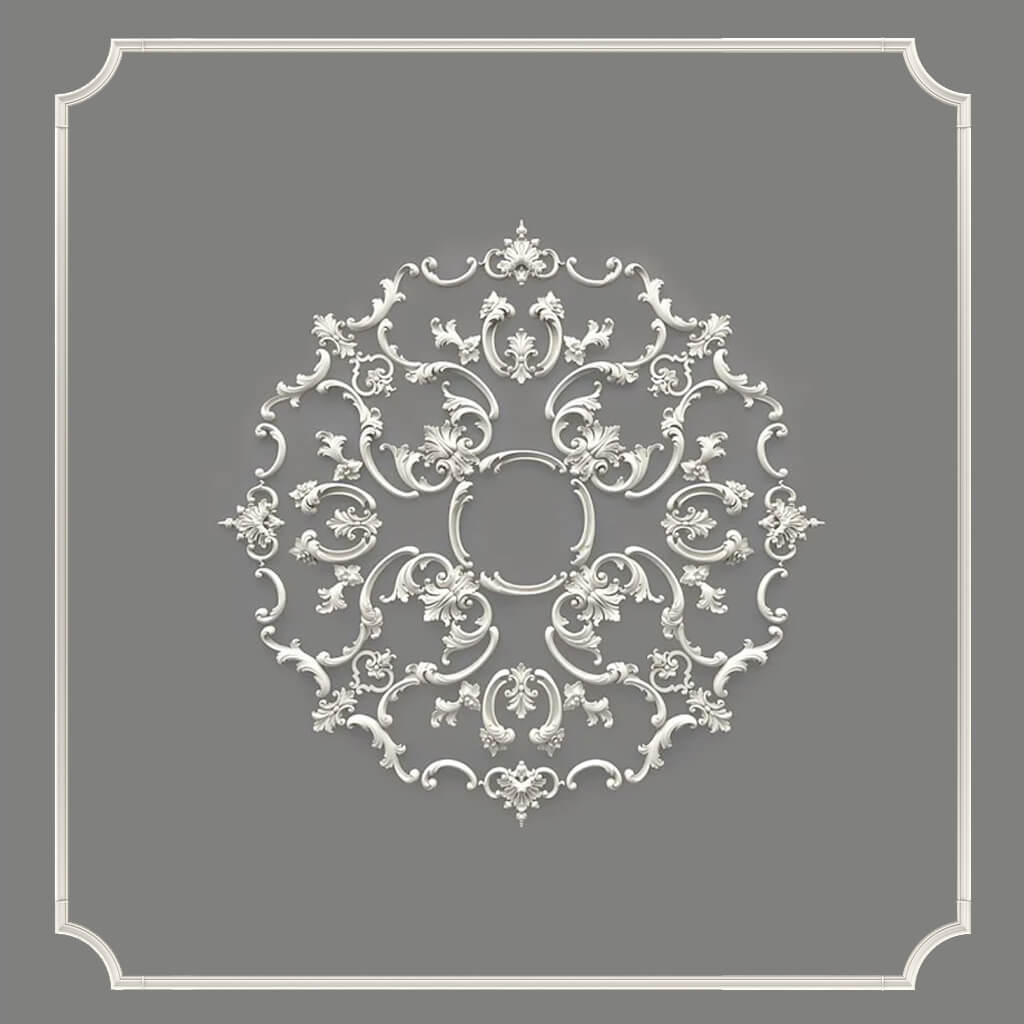
Rosettes—central round or polygonal elements on the ceiling for a chandelier.
-
Friezes are horizontal bands with ornamentation, working in the upper zone of the wall.
-
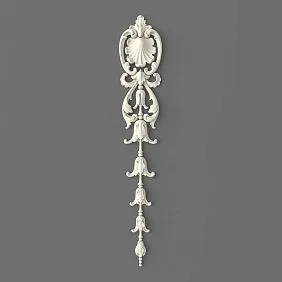
Appliqués and inlays are ornamental elements attached to moldings, walls, or furniture.
-
Brackets and corbels are three-dimensional decorative supports used on walls and in framing.
-
Columns and half-columns are architectural posts for classical and neoclassical interiors.
-
Pilasters are flat imitations of columns, mounted on a wall or in a corner.
-
Decorative panels are relief textured surfaces for accent walls.
This is the basic vocabulary of stucco decoration. Knowing it, you are no longer 'choosing something pretty'—you are choosing consciously.
Our factory also produces:


How stucco decoration differs from the general concept of stucco
The terms are often confused, and that's normal—the boundary is blurred. Formally, 'stucco' is a broader word that includes any decorative relief elements of architecture and interior. 'Stucco decoration' is the same thing, but with an emphasis on the decorative function, not the structural one.
When saying 'stucco,' people usually mean a more traditional, historical context—plaster elements on palace ceilings. When saying 'stucco decoration,' they emphasize precisely the decorative, design purpose of a modern product made of polyurethane or wood. The essence is the same, the emphasis is different.
Get Consultation
Where is it used in interior design
Buy Polyurethane Molded Decorationtoday means getting a versatile tool for working with any surface. In interiors, it is used:
-
on ceilings — cornices, rosettes, friezes;
-
on walls — moldings, frames, panels, pilasters, applied ornaments;
-
on doors — architraves, trims, portals, decorative keystones;
-
on furniture — overlays, inserts, decorative ribs on facades;
-
in openings and arches — trims, consoles, corner elements.
The same manufacturer today offers solutions for all these zones — which is fundamentally important for those building a unified decorative system in the interior.
What molded decor can be bought in Moscow
Molded decor for walls
Wall molding decor is the most diverse and in-demand category. This includes moldings for frame systems, horizontal dividers, vertical posts, applied ornaments, friezes, decorative panels, and pilasters.
Polyurethane wall decor— this is exactly the category that most buyers start with. Correct, because the wall occupies 70–80% of the visual field in a room. Decorating it even with one frame system means completely changing the perception of the space.
What is most often chosen for walls:
-
moldings 30–100 mm wide for frames;
-
decorative overlays with ornaments as inserts in frames;
-
horizontal friezes at dado level (90–110 cm);
-
vertical pilasters for structuring the wall.
Molding decor for ceilings
Ceiling decor includes cornices, rosettes, and friezes. Three elements that, together or separately, can give the ceiling completeness and architectural character.
Rosettes, cornices, and moldings for ceiling decorThe STAVROS assortment covers the full range of styles: from concise neoclassical profiles to rich ornamented cornices for representative classic interiors.
How to choose ceiling decor — by room height:
-
ceiling up to 2.7 m — cornice 50–80 mm, rosette 30–50 cm;
-
2.7–3.2 m — cornice 80–150 mm, rosette 50–80 cm;
-
3.2–4.0 m — cornice 150–250 mm, rosette 80–120 cm;
-
above 4 m — cornice from 250 mm, rosette from 100 cm.
Decor for doors, arches and portals
A doorway is where plaster decor works most expressively. A simple casing turns a door into an architectural element. A full portal with pilasters, frieze and keystone — into the main accent of the room.
For arches and openings, brackets and consoles are also used, which serve as decorative 'supports' and add vertical accents.Plaster decor — brackets and capitalsstart from 1,370 rubles per element and are widely used as standalone wall decor.
Decorative elements for classical and neoclassical interiors
Classic styles require rich profiles with ornamentation, deep relief, and expressive cornices. For neoclassicism, a more restrained register is needed: clean lines, moderate relief, and monochrome execution.
Wooden half-columns for classic interiors— this is a separate strong category. A wooden half-column with a carved capital changes the perception of a wall dramatically: it adds not just decor, but architectural volume and status.
Comprehensive solutions for space design
Comprehensive design is when all elements: baseboard, molding, cornice, rosette, overlays — are selected in a unified style and form a system. This is exactly the approach designers recommend, and it delivers results you won't be ashamed to show guests.
Full catalog of STAVROS polyurethane decorcovers moldings, rosettes, pilasters, cornices, and facade elements — all in one place, with the ability to immediately assess product compatibility.
How to choose molded decor for your interior
For apartments
Molded decor in an apartment works under two conditions: correct scale and a meaningful minimum. You don't need everything at once. You need it precise and sufficient.
For a standard apartment with ceilings 2.7–3.0 m high, the optimal set is:
-
ceiling cornice 80–120 mm along the perimeter;
-
moldings 40–60 mm for a frame system on an accent wall;
-
80–100 mm baseboard;
-
rosette 40–60 cm for the main light fixture.
This already creates a finished look. You can expand the set, but it's better to start with this minimum.
For a private house
In a house, the scale is different, and there are more possibilities. Ceilings 3.5–5 m high suggest a cornice from 180 mm, larger rosettes, possibly wooden moldings in the study, half-columns by the fireplace or in the hall.
Decorative pilasters and straight-form half-columnsfrom the STAVROS catalog are exactly the option suitable for a country house with high ceilings and a developed interior.
For a classic interior
Classicism requires boldness in decor. Here are appropriate: rich cornices with multiple steps and ornamentation, large rosettes with relief patterns, full-wall frame systems, friezes with plant ornamentation, portal door surrounds with columns and entablature.
It is fundamentally important: in classicism, there is no 'excessive decor'—there is only correct and incorrect choice of proportions. An overly ornate cornice with a 3 m ceiling is not classicism; it's a scale error.
For neoclassical style
Neoclassicism is calm and austere. Here, decor works more subtly: 30–50 mm molding with a straight-line profile, cornice without ornament, a small rosette. Everything is in the same color as the wall — or with a barely noticeable contrast.
It is precisely for neoclassicism thatdecorative overlays and polyurethane stucco decorin restrained forms are perfectly suited: simple geometric inserts, corner elements, rosettes with pure geometry.
For modern classic
Modern classicism is the most in-demand style in Moscow today. Here, stucco decor is applied in a targeted manner: an accent wall with frames, perimeter cornice, door trims. No friezes, no bas-reliefs — only structure.
What to buy for walls, ceilings, and doors
For wall decoration
Basic set for wall decor:
-
Horizontal divider molding — divides the wall into upper and lower zones.
-
Frame moldings — create a geometric system on the wall.
-
Vertical posts — rhythmize the wall, visually raise the ceiling.
-
Decorative overlays — ornamental inserts for the corners of frames or the center of a panel.
-
Pilasters — for strong vertical accents.
Proportion rule for wall frames: the distance from the frame to the ceiling and to the floor should be approximately equal. The distance between frames should be the same across the entire row. The width of the molding should be no more than 1/15 of the frame's width.
For ceiling decor
Ceiling decor solves three tasks:
-
Cornice — completes the wall/ceiling transition, conceals gaps, sets the scale.
-
Rosette — centers the ceiling plane, accentuates the light point.
-
Ceiling frieze — an additional horizontal strip above the cornice for complex classical interiors.
All three elements can be purchased in one catalog ofSTAVROS polyurethane moldings.— and ensure they are stylistically compatible.
For accent zones
An accent wall is the first wall you see and the one that draws the eye. Behind the sofa in the living room, behind the headboard in the bedroom, opposite the entrance door in the hallway—anywhere a visual 'focal point' is needed.
For an accent zone, this works well: a frame system + an ornamental insert in the center + a small horizontal frieze on top. This creates a finished panel composition without excess.
For doorways and portals
Molding decor around a door is one of the most effective ways to elevate the status of an interior without major changes. A casing with slight relief dramatically changes the impression of a simple door.
A half-column as part of an architectural ensemble— excellent reading for those considering a more complete portal solution with columns on either side of the opening.
For a unified decorative composition
A unified decorative system implies: one stylistic register for all elements, a single material (or combination, but not chaotic), and coordinated proportions. If the cornice has an arched transition—the moldings and baseboard should support it, not contradict it.
Which elements are most often purchased together
Sales experience of stucco decor shows stable bundled sets. This is not a coincidence — it's interior logic.
Moldings and cornices
Classical pair. Cornice works on the ceiling, moldings — on the walls. Together they create a 'frame' for the entire room — from above and on the sides. Rule: the molding profile should be softer and thinner than the cornice. Cornice is the main one, molding is supportive.
Cornices and ceiling rosettes
Cornice and rosette — a ceiling duo. Cornice around the perimeter, rosette in the center. Together they transform the ceiling from just an 'upper plane' into a complete architectural surface. That's why they are purchased together in 70% of cases when decorating living rooms and halls.
Wall decor and trims
Moldings on walls logically continue into door trims. If there is a frame system on the wall made of molding with an 'ogee' profile, then the door casing should use the same profile. A break in this bundle looks sloppy even in a very expensive interior.
Basic and accent decorative elements
Basic decor (molding, baseboard, cornice) and accent decor (rosette, brackets, ornamental overlays) are two layers of one system. Basic creates structure. Accent creates character. Without basic, accent 'hangs in the air'. Without accent, basic makes no impression. Both are needed.
Brackets and polyurethane stucco decor— examples of accent elements that work perfectly paired with a cornice or as decorative supports on the wall.
How to understand which plaster decor is right for you
If you want a neat interior without overload
Minimal set: cornice + baseboard + moldings on one accent wall. All in one color. Profile — simple, without ornament. The effect will be: structure will appear, chaos will not.
If you need more expressive classical decor
Full system: cornice with ornament, framed panels on all walls, horizontal frieze, rosette with relief pattern, door portals with pilasters. This requires a larger budget and careful planning — but delivers a true classical result.
If the room is small
In a small room, plaster decor works to enhance perception — but only with the correct scale choice. Thin molding 25–35 mm, cornice no wider than 80 mm, rosette up to 40 cm — and the interior looks thoughtful and even slightly larger than it is. A wide cornice in a small room is a disaster.
If high ceilings and large walls
High ceilings — freedom for decor. Here, wide cornices, large rosettes, tall pilasters, developed framing systems work.Half-columns in interiors with high ceilings— a separate topic worthy of attention: they create powerful vertical accents and structure the space.
If decor is selected to match a ready-made design project
The most professional scenario. The designer has already determined the style, scale, and number of elements. The task is to find products that precisely match the specifications. Here, a broad catalog from a single manufacturer is important: this eliminates the risk of stylistic inconsistencies.
How to buy stucco decor in Moscow without mistakes
What to determine in advance
Before viewing the catalog, you need to clearly understand:
-
Interior style — classic, neoclassical, modern classic, eclectic.
-
List of rooms — where exactly decor is needed.
-
Ceiling height in each room.
-
Which areas are prioritized: ceiling, walls, doors.
-
Budget for the entire set.
-
Is there a design project or is the selection done independently?
What dimensions and rooms to consider
Required measurements before ordering:
-
perimeter of each room (for linear footage);
-
ceiling height (for element scale);
-
width and height of door/window openings (for trims);
-
area of accent walls (for frame systems).
How to choose style and proportions
Style comes first. Not 'beautiful or not,' but 'matches or doesn't.' An element with rich baroque ornamentation in a Scandinavian interior is not eclecticism, it's a mistake. An element with a subtle geometric profile in a classic setting is not restraint, it's a mismatch.
Proportions — always. Every element must be proportionate to the space: in height, in profile width, in the scale of the ornament.
Why you shouldn't buy elements individually without an overall scheme
Buying 'one by one' almost always ends the same way: mismatched profiles, different levels of detail, conflicting stylistic accents. It looks exactly like that — like a random assortment, not a system.
The correct approach: first, the entire scheme (what and where), then — selecting each element within that scheme. This is exactly how professional designers work.
Common mistakes when choosing stucco decor
Let's speak plainly. Here's what most often goes wrong.
Choosing decor based only on photos. A photograph lies — not on purpose, but inevitably. A wide-angle lens, studio lighting, an expensive interior as a backdrop — all this creates an impression that may not match reality. Request samples, look at real interior photos.
Buying too many complex elements. Three ornamented cornices, five types of overlays, two friezes — and as a result, the wall looks like a decor store display, not an interior. Complex decor is needed at focal points, not everywhere.
Not accounting for ceiling height. This is the most common technical mistake. A 200 mm cornice with a 2.7 m ceiling will physically and visually take away 15–20 cm of height. The room will become more cramped, not richer.
Choosing decor without linking it to the interior style. 'I just liked this rosette' is not a sufficient basis for purchase. Any element must be justified by the style.
They mix incompatible elements. A Baroque cornice + Scandinavian wall slats + Provençal window trims — this is not an authorial style, it's a design mistake.
They fail to consider the composition of the wall and ceiling. The wall and ceiling are one system. The decor should work coherently on both planes. A rich wall and a bare ceiling create imbalance. The opposite is also true.
They buy beautiful accent pieces without basic elements. Accent pieces without a base are like a bright painting on a wall without a frame. Spectacular on their own, but incomplete as a system.
How to avoid overloading an interior with stucco decor
This is the main concern of buyers — and it's a valid concern. An interior overloaded with decor does exist, and it looks exactly like that: heavy, chaotic, outdated.
Why proportions are more important than quantity
Three moldings, correctly chosen for width and placed in the right rhythm, create a stronger effect than seven moldings of different sizes, chaotically glued on 'for beauty'. Quantity is not decor. Decor is the relationship between elements.
When are moldings enough
If the interior is modern or neoclassical — moldings in a frame system on one or two walls and a cornice along the ceiling fully meet the requirement. There's no need to add anything else. This is exactly as much as needed.
When more expressive decor is needed
When the room is large (from 30–40 m²), ceilings are high (from 3.5 m), and the style is classic or rich neoclassical. In such spaces, minimal decor gets lost. A developed system is needed here: frames, cornices, rosettes, pilasters, door portals.
How to combine stucco decor with lighting, furniture, and doors
Decor always works in context. A few rules:
-
Moldings should not compete with the wallpaper pattern or fabric texture.
-
The cornice should be slightly more restrained than the richest piece of furniture in the room.
-
Doors and wall moldings are one family of profiles.
-
Side lighting enhances the relief of the decor: with bright frontal lighting, stucco 'disappears'; with side lighting, it appears.
What is best to buy for different rooms
For the living room
The living room is the main room. Here, stucco decor can be given maximum expression:
-
a cornice 100–180 mm along the perimeter of the ceiling;
-
socket 60–100 cm under the chandelier;
-
frame system on an accent wall (behind the sofa);
-
possibly — door trims.
For the bedroom
Balance is important in the bedroom: there is decor, but it doesn't overwhelm. Recommended:
-
cornice 80–120 mm;
-
small socket or no socket with hidden lighting;
-
moldings as a frame behind the headboard — a strong and elegant accent.
For the hallway
The hallway is the first impression. This is where decor works 'for the reputation' of the interior:
-
cornice is mandatory;
-
door portal or at least an expressive door frame;
-
possibly — small decorative wall overlays.
Half-columns for the hallway— for those who want to make the hall truly ceremonial. This solution works in hallways with an area of 8–10 m².
For an office
A study requires strictness and dignity. Wooden moldings and solid wood cornices are the perfect choice: they add warmth and weight simultaneously.Solid wood cornices and skirting boards— exactly what is needed in a study with bookshelves and a desk.
For the dining room
The dining room is a place for ceremonial meals. A medium level of decor is appropriate here: a cornice, a frame system on one or two walls, possibly a frieze or horizontal divider. The table and lighting are more important than the walls here, so the decor is supportive, not the main focus.
For commercial interiors
Restaurant, boutique, office in a classic style — here, stucco decor is part of the positioning. It creates an environment that is perceived as expensive and well-thought-out. For commercial spaces, a full system with an emphasis on cornices and door frames is recommended.
FAQ: answers to popular questions about stucco decor
What is included in plaster decor?
Moldings, cornices, baseboards, rosettes, friezes, overlays, brackets, pilasters, half-columns, decorative panels, and door/window surrounds. All of these are elements of a single decorative language.
Where to buy plaster decor in Moscow?
Directly from the manufacturer — in the STAVROS catalog on stavros.ru. These are direct prices, in-house production, and over 4,000 items in stock.
What to choose for walls: moldings or panels?
Moldings — for framing systems and zoning. Panels — for continuous textured or relief decoration of an accent wall. In most interiors, moldings are preferable: they are more flexible and offer more options.
What plaster decor is suitable for the ceiling?
Cornice, rosette, ceiling frieze. Selected based on ceiling height and interior style. Cornice — mandatory, rosette — desirable, frieze — as needed.
Is plaster decor suitable for an apartment?
Yes, absolutely. Polyurethane elements are lightweight, installed without special tools, and look excellent even in small spaces with the right scale selection.
What is best for neoclassicism?
Thin moldings 30–50 mm with a clean geometric profile, cornice without ornament, a small rosette. All in one color or with minimal contrast.
How to avoid overloading the interior with stucco decor?
Choose elements proportionate to the room. Focus on one or two areas rather than distributing decor everywhere. Leave 'air'—clean surfaces without decor.
Which elements are better to buy together?
Cornice + moldings + baseboard—the basic trio. Cornice + rosette—the ceiling duo. Moldings + door trims—the wall system. All three blocks together—the complete set.
Can stucco decor be selected to match a design project?
Yes. A manufacturer with a wide range—like STAVROS—works with project requests: exact dimensions, profiles, materials, compatibility within the system.
How to choose stucco decor for a home or office?
Determine the style, ceiling height, priority areas. Make a list of needed elements. Select everything from one stylistic line by one manufacturer—this guarantees a coordinated result.
STAVROS: where to buy stucco decor in Moscow
If you wantbuy stucco decor in MoscowConsciously, with guaranteed quality and without unnecessary overpayments — STAVROS is exactly the manufacturer to start with.
STAVROS is our own production of decorative elements made from two-component polyurethane and solid valuable wood. Over 4,000 items in the catalog:trim moldings and cornices, rosettes and ceiling decor, brackets and capitals, half-columns and pilasters made of wood, wall decor and accent zones.
Price range — from 840 rubles per item. Shipment from the warehouse — on the day of order. Delivery across all of Russia. Pickup in Moscow and Saint Petersburg. Wholesale terms from 20,000 rubles with confirmed discounts.
Over 246 real reviews with a 5.0 rating — this is not marketing, this is the result of our work.
View the catalog, ask a specialist a question, and place an order:www.stavros.ru