Article Contents:
- What is polyurethane molding and why has it conquered the world
- History of triumph: from plaster to polyurethane
- Advantages of polyurethane: why it won
- Catalog of polyurethane moldings: from cornices to columns
- Ceiling cornices: framing the fifth wall
- Moldings: Universal Decorative Strips
- Ceiling Rosettes: Frames for Chandeliers
- Coffers and moldings for ceilings
- Panels and decorative appliqués
- 3D panels: modern textured surfaces
- Pilasters and Half Columns: Vertical Architecture
- Friezes and sashings: classic above openings
- Casing and trimmings
- Decorative beams
- How to choose molding: questions you need to ask yourself
- Interior Style: Harmony of Decor
- Ceiling Height: Proportions Decide Everything
- Room area
- Budget: how much are you willing to spend
- Prices for polyurethane molding: transparency and accessibility
- Ceiling Cornices
- Moldings
- Recessed Outlets
- Panels and appliqués
- 3D panels
- Pilasters and Columns
- Friezes and beams
- Online store for moldings: how to choose a reliable seller
- Signs of a quality online store
- How to order: step-by-step guide
- Molding in Moscow and St. Petersburg: where to buy offline
- Advantages of buying in a showroom
- What to look for in a showroom
- Installation and painting: DIY or hire professionals
- DIY installation: pros and cons
- When to hire professionals
- Painting: DIY or professionals
- Caring for polyurethane molding: preserving beauty for decades
- Frequently asked questions: answering doubts
- Conclusion: Moldings as the Philosophy of Space
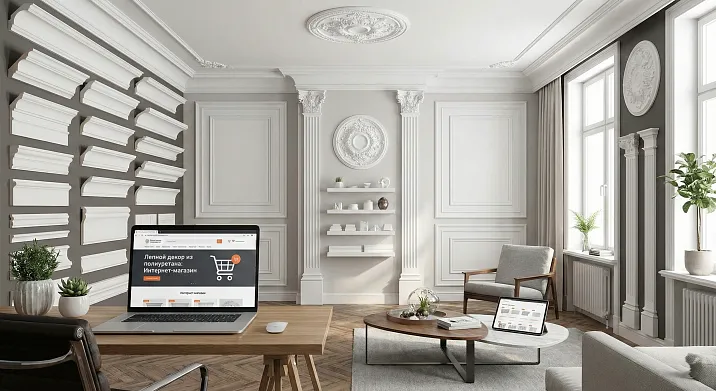
Enter a room where every detail is thought out. Where the ceiling is not just a plain white surface, but an architectural composition with cornices and rosettes. Where walls are structured by moldings, creating rhythm and depth. Where doorways are framed by classical portals, and fireplaces are adorned with pilasters. You are not in a museum. Not in a palace. You are in a modern apartment, where the owner understood a simple truth: details create character.
molded decoration made of polyurethaneThis is a revolution in interior design. A quiet, yet powerful revolution. Two decades ago, moldings were a privilege of the wealthy — plaster items weighed dozens of kilograms, required professional installation, and cost as much as an airplane wing. Today, polyurethane has changed everything. Lightweight (ten times lighter than plaster), durable (won’t crumble or crack), moisture-resistant (can be installed in bathrooms), affordable (five times cheaper than plaster), easy to install (can be glued in a weekend with your own hands).
This article is your guide to the world of polyurethane moldings. We are not just telling you about the product. We will show you photo examples, explain how to choose, how much it costs, where to buy in Moscow and St. Petersburg, how to avoid mistakes when ordering online. This is a conversation between a professional with fifty years of experience, who has seen thousands of interiors, worked with dozens of manufacturers, knows all the pitfalls, and is ready to share knowledge.
Ready to transform your home? Then get comfortable. Let’s dive into the catalog.

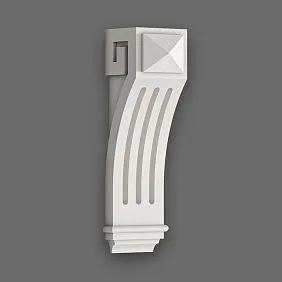
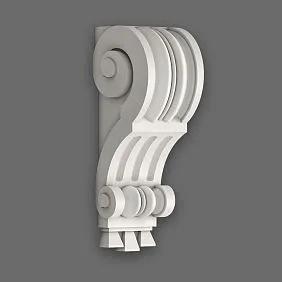


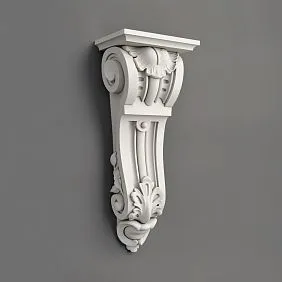
What is polyurethane molding and why has it conquered the world?
Polyurethane is a synthetic polymer obtained by the reaction of polyols and isocyanates. Sounds complicated? In reality, it’s a 21st-century material combining the best qualities of plastic and rubber. Elastic, strong, lightweight, long-lasting, chemically inert.
Polyurethane molding — decorative elements (cornices, moldings, rosettes, panels, pilasters, appliqués) manufactured by injection molding into molds. The technology allows reproducing the finest relief details — ornaments up to 5 millimeters deep are reproduced perfectly clearly, just like on hand-crafted plaster items.




History of Triumph: From Plaster to Polyurethane
Molding has been known since antiquity. Ancient Romans decorated their homes with plaster cornices and rosettes. Renaissance, Baroque, Rococo took molding to its peak — walls and ceilings of palaces were covered with complex compositions of leaves, scrolls, angels, garlands. All of this was created by hand by master molders, cost enormous sums, and was a privilege of the nobility.
The 20th century tried to abandon decoration. Functionalism and Constructivism proclaimed: 'Form follows function.' Smooth white walls, no ornaments. But boring. A few decades later, people realized: empty boxes are oppressive. Decoration returned. But plaster was expensive, heavy, fragile.
Polyurethane elements first appeared in the 1980s. The revolution happened quietly, without fanfare. But today, in 2025, polyurethane molding occupies 80% of the decorative elements market. Plaster has retreated into the niche of elite restoration projects. Polyurethane has become the standard.
Our factory also produces:


Advantages of Polyurethane: Why It Won
Lightweight. A ceiling cornice 2 meters long weighs 1–3 kilograms (a plaster equivalent weighs 15–25 kilograms). It is mounted with adhesive, does not require reinforcement, dowels, or self-tapping screws. One person can install it over the weekend.
Durability. Polyurethane is elastic and impact-resistant. It does not crumble during transportation. It does not crack during building settlement or vibrations. It withstands accidental impacts (ladders, furniture) without chips.
Moisture resistance. It does not absorb water (water absorption less than 1%). Can be installed in bathrooms, kitchens, pools, damp basements. Does not mold, does not swell, does not deform.
Detailing. Modern molding creates relief visually indistinguishable from hand-crafted plaster. Complex ornaments — acanthus leaves, roses, scrolls — are reproduced with millimeter precision.
Ease of processing. Can be cut with a hacksaw, circular saw, or office knife. You can adjust to any size, trim corners, combine elements.
Longevity. Lasts 30–50 years without loss of quality. Does not yellow (unlike polystyrene), does not age, does not lose shape.
Ecological safety. Quality polyurethane does not contain phenols, formaldehyde, or toxins. Safe for living spaces, children’s rooms, bedrooms. Does not emit odors.
Affordability. 3–5 times cheaper than plaster for comparable quality. A cornice costs 500–2000 rubles per 2 meters. A rosette costs 1000–5000 rubles. Full room decoration — 15000–40000 rubles (plaster would have cost 100000–200000).
Get Consultation
Polyurethane Molding Catalog: From Cornices to Columns
Ceiling Cornices: Framing the Fifth Wall
Ceiling cornices (plinths, moldings, picture rails) — the most popular decorative element. Installed at the junction of wall and ceiling, they cover irregularities and create visual completeness.
Simple cornices (height 3–8 cm). Smooth or with minimal relief. For minimalism, Scandinavian style, modern interiors. Price: 200–500 rubles per 2 meters. Ideal for rooms with low ceilings (2.5–2.7 meters), where bulky elements visually lower the ceiling. A simple 5 cm white cornice creates a neat frame and visually lifts the ceiling thanks to clean lines.
Classic cornices (height 8–15 cm). With ornaments — meanders, Ionic motifs, acanthus leaves, beads. For classic, neoclassic, Empire styles. Price: 500–1500 rubles per 2 meters. These cornices are the golden middle ground, suitable for most apartments with standard ceilings (2.8–3 meters). A 12 cm cornice with Ionic ornaments (rows of egg-shaped elements framed by arrows) creates an elegant frame and adds nobility.
Baroque cornices (height 15–30 cm). Ornate decoration — scrolls, shells, garlands. For palace-like, luxurious interiors, high ceilings. Price: 1500–4000 rubles per 2 meters. These cornices make a statement of luxury. A 25 cm cornice with multi-level relief (scrolls, acanthus leaves, shells in three tiers) creates a palace-like impression. Suitable only for high ceilings (from 3.5 meters); in a standard apartment, they would look bulky.
Cornices with lighting (height 10–20 cm). With a special shelf for LED strip. Creates a floating ceiling effect. The hit of 2025. Price: 800–2000 rubles per 2 meters. The cornice is installed 10–15 cm from the ceiling. Behind it (on the shelf) an LED strip is laid, directed upward. Light reflects off the ceiling, creating soft diffused lighting and visually increasing ceiling height by 20–30 cm. Can use warm white light (cozy atmosphere), cool white (modern), RGB strip (color lighting, adjustable mood).
Flexible cornices. For curved ceilings, domes, bay windows. Bendable to a radius of 50 cm. Price: 1000–2500 rubles per 2 meters. Essential in non-standard spaces — old houses with round bay windows, modern apartments with wavy ceilings, cottages with domes. Standard cornices cannot bend without heating; flexible ones bend cold, taking the required shape.
Photo examples: In a classic living room, a 14 cm cornice with Ionic ornaments, painted white with a light gold patina on protruding elements. Cream-colored ceiling, light beige walls. The cornice creates an elegant frame and visual completeness. In a modern bedroom, a simple smooth 5 cm cornice with a lighting shelf. Behind the cornice — warm white LED strip. The ceiling appears to float, making the room feel higher and more spacious.
Moldings: universal decorative strips
Moldings — narrow strips 2–15 cm wide for framing walls, creating frames, dividing zones.
Narrow moldings (width 2–4 cm). For framing mirrors, pictures, small accents. Price: 150–400 rubles per 2 meters. Delicate, slender strips that create a light frame without overwhelming the space. A 3 cm wide molding with one groove is ideal for framing a mirror in a bathroom or hallway — adds completeness without drawing excessive attention.
Medium moldings (width 5–8 cm). Universal, for creating wall frames, framing doors. Price: 300–800 rubles per 2 meters. These are the workhorses of decoration — suitable for most tasks. A 7 cm wide molding with a classic profile (two grooves, a row of small beads) creates elegant wall frames. For a 4×3 meter wall, you can create 6 rectangular frames of 80×120 cm — paint the wall inside the frames a slightly darker shade or apply wallpaper with a subtle pattern. This creates the effect of classic boiserie panels, as in 18th-century mansions.
Wide moldings (width 9–15 cm). For classical interiors, large compositions. Price: 700–1800 rubles per 2 meters. Wide moldings make a statement. A 12 cm wide molding with baroque scrolls suits spacious rooms with high ceilings. You can create large wall frames (120×180 cm), inside which you can place large paintings, mirrors, or panels. In a small room, wide moldings will look bulky.
Flexible moldings. For arches, round columns, curved elements. Price: 600–1500 rubles per 2 meters. Flexible molding is indispensable for framing arched doorways, round columns, and curved niches. It bends without heating, taking the required radius to create smooth, elegant lines.
Polyurethane molding photoDemonstrates the variety of molding applications. In a neoclassical living room with light-gray walls, white 7 cm wide moldings create 4 large rectangular frames (2×2). Inside the frames — the same gray paint, the molding relief creates play of light and shadow. In one frame, a large mirror in a thin frame hangs; in another — a black-and-white photograph. Minimalist, elegant, structured.
Ceiling rosettes: framing for chandeliers
Rosettes (medallions) — round or oval elements for mounting on the ceiling at the point of chandelier attachment.
Small rosettes (diameter 20–40 cm). For small rooms, compact fixtures. Price: 500–1500 rubles. A small rosette with a diameter of 30 cm and a simple geometric pattern (concentric circles with fine grooves) suits a bedroom, study, or small living room with a low ceiling. It conceals chandelier wires, creates decorative framing, but does not overload the space.
Medium rosettes (diameter 50–70 cm). Universal, for most living rooms. Price: 1500–3500 rubles. A medium rosette with a diameter of 60 cm and a classic ornament (acanthus leaves radiating from the center like rays) — the golden center. It suits a standard living room, dining room, spacious bedroom with a ceiling height of 2.8–3 meters. The rosette creates a visual center of the composition, enhances the chandelier effect, adds elegance.
Large rosettes (diameter 80–120 cm). For spacious rooms, large chandeliers, high ceilings. Price: 3500–8000 rubles. A large rosette with a diameter of 100 cm and baroque decoration (multi-level relief: inner circle with roses, middle circle with scrolls, outer circle with garlands) — a work of art. It suits a spacious living room (30+ sq. meters), hall, library with a high ceiling (from 3.5 meters) and a large crystal chandelier. In a standard apartment, a large rosette will look out of place, drawing all attention to itself.
Photo: In a classical dining room, a ceiling rosette with a diameter of 70 cm and botanical ornament (grapevines, ivy leaves), painted white with gold patina. Below the rosette — a classical chandelier with crystal pendants. The ceiling is white, the walls are cream. The rosette creates luxury, completes the composition. In a minimalist bedroom, a simple rosette with a diameter of 35 cm and concentric circles, painted white. Below it — a modern pendant light in the shape of a sphere. The rosette adds an accent but does not overload the minimalist space.
Coffers and ceiling moldings
Coffers — imitation of recesses on the ceiling, created by moldings. They add visual depth, volume, luxury.
Moldings for coffers, width 5–12 cm. Price: 300–1200 rubles per 2 meters. Coffers are created by marking a grid of rectangles or squares on the ceiling, and attaching moldings along the lines. This creates an imitation of recessed cells.
For a standard 4×5 meter living room, 6 coffers (3 rows of 2 coffers) each approximately 130×125 cm are optimal. Moldings 8 cm wide with a classic profile. The ceiling inside the coffers is painted the same color (white), the molding relief creates play of light and shadow. A rosette with a chandelier is installed in the central coffer. The remaining coffers remain empty or each contains a small panel, a rosette without a chandelier.
Coffers visually lower an overly high ceiling (relevant for old houses, Stalinist buildings with ceilings 3.5–4 meters — coffers make proportions more comfortable), add architectural character, create rhythm, conceal ceiling irregularities.
Library in classical style with coffered ceiling. The ceiling is divided into 9 square coffers 100×100 cm, framed by 10 cm wide white moldings with Ionic ornament. The ceiling inside the coffers is painted a slightly darker shade (light beige). In the central coffer — an 80 cm rosette with a classical chandelier. Walls are clad in wooden panels, bookshelves. The coffered ceiling creates the feeling of an old library, coziness, academic atmosphere.
Panels and decorative appliqués
Panels — flat or relief elements sized 30×30, 60×80, 100×150 cm with ornaments, scenes.
Classic panels with botanical motifs (acanthus leaves, grapevines, roses). Price: 1500–5000 rubles. A classic panel 80×100 cm with a relief composition of acanthus leaves and roses is installed above a fireplace, sofa, or commode. It becomes the center of the composition, adds luxury, classic elegance.
Baroque panels with angels, garlands, complex compositions. Price: 4000–12000 rubles. A baroque panel 120×150 cm with a complex multi-level composition (angels holding garlands, framed by scrolls and shells) — a work of art. Such a panel suits spacious rooms in palace style — installed above a fireplace, centered on a wall, creating the effect of a museum hall.
Geometric panels for modern interiors. Price: 1000–3000 rubles. A geometric panel 60×60 cm with an abstract pattern (intersecting circles, squares, lines) suits modern, minimalist interiors. Several such panels on a wall create visual rhythm, add volume to a flat surface.
Appliqués — small elements (rosettes 10–30 cm, corner appliqués 15×15, 20×20 cm, ornaments). Price: 300–2000 rubles. Appliqués are used to decorate corners of molding frames (a rosette-appliqué is installed in each corner of the frame, creating a visual accent), joints of moldings, as standalone accents on walls.
3D panels: modern volumetric texture
3D panels — relief panels 50×50, 60×60 cm with geometric patterns (waves, cubes, honeycombs, pyramids).
Geometric 3D panels (waves, cubes, rhombuses). Price: 800–2000 rubles per panel. 3D panels with wave patterns (horizontal waves 3–5 cm high) create visual dynamics and depth. A accent wall behind a bed or sofa, covered with such panels, becomes the focal point. Especially effective are 3D panels with side lighting — light directed from below or the side creates dramatic play of light and shadow, emphasizing the relief’s volume.
Organic 3D panels (imitation of wood bark, stone, bamboo). Price: 1000–2500 rubles per panel. Panels with wood bark texture create a connection with nature, add tactile quality, coziness. Suitable for eco-style, Scandinavian style, country style. A wall in the living room, covered with such panels, looks wooden but is lightweight, moisture-resistant, and easy to maintain (unlike natural wood).
Photo: Modern bedroom with an accent wall behind the bed headboard. The wall is covered with 3D panels with a cube pattern (protruding and recessed cubes create a three-dimensional grid), painted dark gray. A LED strip is installed below, directed upward — light glides over the relief, creating deep shadows in recesses and bright highlights on protrusions. Other walls are white, minimal furniture. The accent wall becomes an art object.
Pilasters and half-columns: vertical architecture
Pilasters — vertical flat elements imitating columns. Height 1.5–3 meters, width 10–30 cm. Composed of base, shaft, and capital.
Simple pilasters with smooth shafts. Price: 3000–8000 rubles per set (base + shaft + capital). Simple pilasters 2.5 meters high with smooth shafts and minimalist capitals suit neoclassical and modern interiors. A pair of pilasters on either side of a doorway creates a classic portal, adds architectural character without overwhelming the space.
Classic pilasters with fluting (vertical grooves), ornaments. Price: 6000–15000 rubles per set. Classic pilasters 2.8 meters high with fluted shafts (vertical grooves along the entire height, creating visual rhythm) and Ionic capitals (scrolls-volutes) — a characteristic element of classical interiors. A pair of such pilasters on either side of a fireplace with a horizontal shelf above creates a classic fireplace portal, monumental.
Baroque pilasters with carved capitals and rich decoration. Price: 12000–30000 rubles per set. Baroque pilasters 3 meters high with carved shafts (grapevines, acanthus leaves winding around the shaft) and ornate Corinthian capitals (acanthus leaves spreading in a lush bouquet) — this is luxury, palace style. Suitable for spacious rooms with high ceilings (from 3.5 meters). In a standard apartment, they will look bulky and out of place.
Half-columns — volumetric elements protruding from the wall. Diameter 15–40 centimeters. Price: 8000–25000 rubles per set. Half-columns create a stronger architectural effect than pilasters, but require more space. A pair of half-columns with a 25-centimeter diameter placed on both sides of the living room area creates visual zoning and an architectural frame.
Photo: living room in the Empire style. Two pilasters 2.8 meters high with fluted shafts and Doric capitals (simple, strict, without scrolls), painted white with gold patina, are installed on both sides of the fireplace. A horizontal MDF shelf, painted to resemble mahogany, is placed on top. Above the shelf — a mirror in a gold frame. The fireplace becomes the compositional center and architectural accent, as in palace halls.
Pediments and sashings: classical elements above openings
Friezes — triangular or arched elements above door and window openings. Width 50–150 centimeters.
Straight friezes (triangular). Price: 2000–6000 rubles. A straight frieze 100 centimeters wide is installed above a door opening (usually in combination with pilasters on both sides). It imitates the frieze of an ancient temple, creating monumentality, strictness, classical architecture.
Arch friezes (arched). Price: 2500–7000 rubles. An arch frieze 120 centimeters wide with a soft arched shape creates a more elegant, refined effect than a straight frieze. Suitable for Baroque and Rococo interiors.
Broken friezes with decorative inserts. Price: 4000–10000 rubles. A broken frieze is a triangular frieze with a break at the top, where a vase, urn, rosette, or crest is installed. This is a Baroque element creating theatricality and luxury.
Casing and trim
Moldings — decorative frames around doors and windows. Width 5–15 centimeters.
Simple moldings — smooth. Price: 400–1000 rubles per set for one door. Simple moldings 7 centimeters wide with minimal profile replace standard wooden or MDF moldings. They create a more individual look, emphasize the opening, and add completeness.
Classic moldings — with profiles and ornaments. Price: 800–2000 rubles per set. Classic moldings 10 centimeters wide with relief profiles (recesses, beads) create a classic frame for the door opening, adding elegance.
Carved moldings — with rich decoration. Price: 1500–4000 rubles per set. Carved moldings 12 centimeters wide with plant ornaments (grapevines, leaves) create luxurious framing, characteristic of Baroque interiors.
Decorative beams
Beams — imitation of wooden load-bearing beams. Hollow inside, lightweight (2–5 kg). Length 2–4 meters, cross-section 10×10, 15×15, 20×20 centimeters.
Beams with wood texture (oak, walnut, wenge). Price: 2000–6000 rubles per 2 meters. Beams with dark wood texture (walnut, wenge) are installed on the ceiling parallel with a spacing of 80–100 centimeters. They create direction (visually elongate the room in the direction of the beams), coziness, and a connection with nature. Characteristic of Provence, country, chalet, and Mediterranean styles.
Smooth beams — for painting. Price: 1500–4000 rubles per 2 meters. Smooth beams can be painted any color — white (classic), black (contrast, loft), gray (Scandinavian style). Beams painted in the same color as the ceiling create relief and depth without overwhelming with color.
Photo: living room in Provence style with a white ceiling and three parallel beams painted in dark walnut. Walls are cream-colored, furniture made of light wood, textiles in pastel tones. Beams create coziness, rustic simplicity, visually lower the high ceiling (3.5 meters), making proportions more comfortable.
How to choose molding: questions to ask yourself
Interior style: harmony of decor
Classic: cornices and moldings with ornaments, rosettes with plant motifs, pilasters, friezes. Color — white, cream, with gold patina. A classic interior requires symmetry, proportions, harmony of elements. All elements must match in ornament style — if the cornice has Ionic ornaments, then moldings and rosettes should preferably have Ionic or similar in spirit ornaments.
Neoclassicism: simplified classical elements, more laconic. Medium cornices, simple moldings, small rosettes. Color — white, gray, beige. Neoclassicism is classicism purified from excessive decoration. Lines are stricter, ornaments simpler, proportions more modern.
Baroque and Rococo: lavish elements — massive cornices, large rosettes with angels, carved pilasters. Color — white with gold, cream, pastel with gilding. Baroque is theatricality, luxury, abundance of decoration. Each element should be richly adorned.
Minimalism: simple smooth cornices 3–5 cm, without rosettes or small simple ones. Color — white, matching wall color. Minimalism requires restraint. Molding is used minimally — only to create neat framing and completeness. No ornaments, no complex forms.
Scandinavian: simple white cornices, moldings without decoration. Create neatness without overloading. Scandinavian style is close to minimalism, but warmer. White molding on white walls creates relief through shadows, adding coziness.
Loft: minimal molding. Decorative beams with wood or metal texture. Or 3D panels with industrial texture. Loft is about open communication, brick walls, concrete ceilings. Classic molding is inappropriate here. But beams 'under wood' or 3D panels 'under concrete' fit organically.
Provence: medium-sized cornices and moldings with plant ornament, panels with floral motifs. Color — white with patina, lavender, mint. Provence is French rustic romance. Molding is appropriate here, but not lavish Baroque, rather simpler, with floral motifs, with aging effect (patina, wear).
Art Deco: elements with geometric ornaments — zigzags, fans, stepped profiles. Color — contrasting combinations (white-black, white-gold). Art Deco is geometry, symmetry, luxury of the 1920s. Molding here is geometric, graphic, often with contrasting coloring.
Low ceilings (2.5–2.7 meters): use thin cornices 3–6 cm high, simple moldings 2–4 cm wide, small rosettes 20–40 cm in diameter. Large elements visually 'lower' the ceiling, making the room feel cramped.
Low ceilings (2.5–2.7 m): thin cornices 3–6 cm, small rosettes 20–40 cm, no coffered ceilings or pilasters. Massive elements will lower the ceiling even more, creating a feeling of confinement. Best choice — simple white cornice 4–5 cm + small simple rosette 25–30 cm or without rosette at all.
Medium ceilings (2.8–3.2 m): cornices 8–12 cm, rosettes 50–70 cm, coffered ceilings with 80×80 cm cells, pilasters up to 2.5 m. This is the optimal height for most decorative elements. You can use moderate decoration without risking overloading the space.
High ceilings (3.3 m and above): massive cornices 15–30 cm, large rosettes 80–120 cm, coffered ceilings 100×100 cm, pilasters full height. High ceilings require proportionate elements. Small cornices and rosettes will disappear in height and look short.
Room area
Small rooms (up to 15 m²): minimal decoration — thin cornice, small rosette or without it. Excess molding in a small room will create a feeling of overcrowding and confinement.
Medium rooms (15–25 m²): medium-sized elements, coffered ceilings with 4–6 cells, molding frames on 1–2 walls. Universal size, suitable for most medium-sized elements.
Large rooms (25+ m²): large elements, complex compositions, 9–16 coffers, several pilasters. Large space requires large elements and complex compositions; otherwise, the decoration will be lost.
Budget: how much are you willing to spend
Minimum budget (5000–15000 rubles per room): simple cornice around the perimeter + small rosette. Creates completeness and neatness. For a 4×5 meter room (perimeter 18 meters), you will need 9 cornice strips, each 2 meters long (with allowance for trimming). A simple 5 cm high cornice costs 300 rubles per 2 meters — total 2700 rubles. A 30 cm diameter rosette costs 800 rubles. Glue 500 rubles. Sealant 200 rubles. Total material cost around 4200 rubles. Plus installation time (3–4 hours).
Average budget (15000–40000 rubles): cornice + rosette + molding frames on walls or coffers on ceiling. Creates structure and elegance. For the same room: classic 10 cm high cornice (800 rubles per 2 m × 9 strips = 7200 rubles), 60 cm diameter rosette (2500 rubles), molding for 6 wall frames (per frame 80×120 cm = 4 meters, 6 frames = 24 meters, medium molding 500 rubles per 2 m × 12 strips = 6000 rubles), glue and sealant 1000 rubles. Total material cost around 16700 rubles.
Premium budget (40000–100000+ rubles): full decoration — cornices with lighting, coffers, large rosettes, molding frames, pilasters, 3D panels. Creates luxury and individuality. For a spacious 6×7 meter living room: cornice with lighting, 15 cm high (1500 rubles per 2 m × 13 strips = 19500 rubles), 90 cm diameter rosette (5000 rubles), 9-cell coffers (per cell perimeter 4 meters, 9 cells = 36 meters, molding 800 rubles per 2 m × 18 strips = 14400 rubles), molding frames on two walls (8 frames, 32 meters, 12800 rubles), a pair of pilasters (10000 rubles), 3D panels on accent wall (20 panels at 1500 rubles each = 30000 rubles), glue, sealant, paint 3000 rubles. Total material cost around 94700 rubles. Plus installation time (5–7 days of work).
Prices for polyurethane molding: transparency and accessibility
Molding priceDepends on the size of the element, complexity of the relief, manufacturer. We provide average Moscow market prices for 2025:
Ceiling Cornices
-
Simple (3–8 cm): 200–500 rubles/2 m
-
Classic (8–15 cm): 500–1500 rubles/2 m
-
Baroque (15–30 cm): 1500–4000 rubles/2 m
-
With lighting (10–20 cm): 800–2000 rubles/2 m
-
Flexible: 1000–2500 rubles/2 m
Moldings are linear profiles used to create framed compositions, zone walls, and frame openings. They come in various widths (from 20 to 150 mm) and relief complexity — from smooth to richly decorated.
-
Narrow (2–4 cm): 150–400 rubles/2 m
-
Medium (5–8 cm): 300–800 rubles/2 m
-
Wide (9–15 cm): 700–1800 rubles/2 m
-
Flexible: 600–1500 rubles/2 m
Rosettes
-
Small (20–40 cm): 500–1500 rubles
-
Medium (50–70 cm): 1500–3500 rubles
-
Large (80–120 cm): 3500–8000 rubles
Panels and appliqués
-
Classic panels: 1500–5000 rubles
-
Baroque panels: 4000–12000 rubles
-
Small appliqués: 300–2000 rubles
3D Panels
-
Geometric: 800–2000 rubles/piece
-
Organic: 1000–2500 rubles/piece
Pilasters and columns
-
Simple pilasters: 3000–8000 rubles/set
-
Classic pilasters: 6000–15000 rubles/set
-
Baroque pilasters: 12000–30000 rubles/set
-
Half-columns: 8000–25000 rub / set
Friezes and beams
-
Friezes: 2000–10000 rub
-
Beams: 1500–6000 rub / 2 m
Prices are indicated for elements without installation and painting. Installation (if ordering professionals): 30–50% of the element cost. Painting: 20–40% of the element cost. However, most people install and paint themselves — it’s not difficult, saves money, and allows controlling quality.
Online plaster moldings store: how to choose a reliable seller
Online store for polyurethane ornamentation— convenient way to buy. No need to go to the warehouse, browse catalogs in the office. Everything online: photos, descriptions, prices, calculator, cart, payment, delivery. But how to choose a reliable store?
Signs of a quality online store
Own production or direct supplies from manufacturers. This guarantees quality, fair prices (without intermediaries), availability in stock, possibility of manufacturing non-standard elements. Retail stores that act as intermediaries purchase from different manufacturers, quality is inconsistent, prices are higher, availability is unstable.
Wide assortment. A goodMoldings shopoffers hundreds of models of all types of elements (cornices, moldings, rosettes, panels, pilasters, beams) in different styles (minimalism, classic, baroque, modern). Narrow assortment (50–100 models) — sign of a small store that may not have the elements you need.
Detailed photos and descriptions. Each element should have several photos (overall view, close-up of relief, example in interior), technical specifications (dimensions, weight, material, density), description of style and application. Blurry photos, absence of close-ups, minimal information — sign of unprofessionalism.
Calculation calculator. Convenient tool that calculates the number of elements based on your room’s dimensions. Enter wall lengths, ceiling heights — the calculator outputs the number of linear meters of cornices, number of moldings for frames, rosettes. Absence of a calculator — inconvenient, you’ll have to calculate manually or call a consultant.
Customer reviews with photos. Real reviews with photos of installed moldings — the best proof of quality. Reviews are only text-based or there are few — questionable. Dozens of reviews with detailed photos of installed elements in different interiors — sign of a reliable store.
Transparent delivery and return conditions. Clear information on delivery cost (Moscow, region, areas), delivery times (usually 1–3 days in Moscow, 3–7 days in Russia), return conditions (return within 14 days if defects are found). Vague formulations ("delivery is discussed", "return in special cases") — sign of possible problems.
Professional consultations. Opportunity to call or write to a consultant, ask questions, get recommendations on selection. Good stores provide free designer consultations, which will help select elements to match your style, calculate quantities, create visualizations. Absence of consultations or formal responses ("check the catalog") — inconvenient.
Quality guarantee. Official warranty against defects (usually 1–2 years). If defects are found (cracks, chips, warping) — free replacement. Absence of warranty — risk.
How to order: step-by-step guide
-
Selecting elements. Study the catalog, choose the required elements. Add to cart. Use the calculator to determine quantity. If unsure — save several options to favorites, then compare and choose the best one.
-
Ordering. Fill out the form: full name, phone, email, delivery address. Choose delivery method (courier, transport company, self-pickup). Indicate desired delivery date and time (if available).
-
Consultation (if needed). If unsure about selection — call the consultant, describe the room (area, ceiling height, style), what you want to achieve. The consultant will recommend optimal elements, calculate quantity, answer questions.
-
Payment. Pay online (by bank card, e-money) or upon receipt (cash to courier, at transport company). Online payment usually provides a small additional savings (some stores offer a slight price reduction for prepayment).
-
Delivery. In Moscow — courier delivers to your address (usually next day or selected date). In regions — transport company (3–7 days, you pick up at terminal or order door-to-door delivery for additional fee).
-
Inspection upon receipt. Inspect elements in the courier’s presence or upon receipt at the transport company. Check for defects (cracks, chips, warping, uneven relief). If found — compose an act, take photos, refuse acceptance or accept with a defect note. Contact the store immediately for replacement. If you accept without inspection, proving the defect was present at delivery later will be difficult.
Moldings in Moscow and St. Petersburg: where to buy offline
Prefer to see in person, touch, evaluate relief quality?Molding MoscowandStucco SPBare available in showrooms and warehouses.
Advantages of buying in a showroom
Visual assessment. See elements in person, evaluate size (photos may distort — a 15 cm high cornice may appear small in photo, but in person it appears substantial), color (on photo may appear slightly yellow or blue due to lighting, in person — perfectly white), relief quality (clarity, depth of ornament).
Tactile assessment. Take in hand, feel weight (quality polyurethane is dense, heavy, not light like polystyrene), material density (press with finger — quality polyurethane is firm, does not compress), surface smoothness (run hand over — surface should be smooth, without roughness, pits).
Compare models. Attach different cornices to each other, compare widths, profiles, ornaments. This makes it easier to choose — differences are immediately visible. The difference on catalog photos may seem insignificant, but becomes obvious in person.
On-site consultation. A showroom specialist demonstrates elements, explains their application, helps calculate quantities, selects matching elements. You can ask questions and get immediate answers, see examples.
Examples in interior. In good showrooms, there are assembled interior compositions — see how cornices, molding frames, coffered ceilings, pilasters look in real interiors. This helps visualize the result in your apartment.
Take immediately. Buy — and take away on the same day. No need to wait for delivery or pay for it. If your car is large (station wagon, minivan), you can transport a lot (cornices and moldings up to 2 meters long fit in a station wagon with the rear seat down).
What to look for in the showroom
Material density. Quality polyurethane with density 280–320 kg/m³. Pick up the element — it should feel heavy, not light like polystyrene. Press firmly with your finger — there should be no indentation (polystyrene compresses, quality polyurethane does not). Compare two elements of the same size from different manufacturers — the heavier one is usually denser and higher quality.
Relief clarity. Examine the ornament up close. Lines should be sharp, without blurring or large bubbles within the relief (bubbles indicate poor casting). Complex ornaments (acanthus leaves, roses) should have detail — leaf veins, flower petals, stamens are visible. If the ornament is blurred and details merge — this is low quality, cheap production.
Surface quality. The surface should be smooth, without pits (small depressions 1–3 mm in size), without burrs (protrusions left after removal from the mold). Small burrs (up to 1 mm) are acceptable — they can be trimmed with a stationery knife in seconds. But large pits, chips, cracks — are signs of defective product.
Geometry. Place the cornice or molding on a flat surface (table, floor) — it should not wobble (sign of warping). Measure width with a tape measure at several points along the length — deviation should not exceed 1–2 mm over 2 meters. If the width varies by 5–10 mm — this is defective, poor-quality casting shape.
Primer. Quality elements are sold primed with white primer. This simplifies installation (adhesive sticks better to primed surfaces) and painting (paint lays evenly, without spots). If elements are not primed (gray polyurethane without coating) — you’ll need to prime them yourself (additional time, primer cost).
Compare manufacturers. Showrooms usually display products from several manufacturers. Compare elements of the same type (e.g., classic cornice 10 cm high) from different manufacturers. Evaluate density, relief clarity, surface quality, price. Usually, differences are immediately visible — more expensive elements are denser, have clearer relief, smoother surfaces.
Installation and painting: do it yourself or hire professionals
Install yourself: pros and cons
Pros:
-
Savings (professional installation costs 30–50% of element cost — for a 30,000 ruble project, installation will cost 9,000–15,000 rubles).
-
Quality control (you do it yourself — you’re responsible for the result, can redo if unsatisfied).
-
Enjoyment of the process (for those who enjoy hands-on work, installing moldings is an engaging activity — you see the result of your labor).
-
Flexibility in time (you do it at your convenience, at your own pace, without being tied to master’s schedules).
Cons:
-
Requires time (full room finishing — 2–3 days of work if done carefully and without rushing).
-
Requires tools (circular saw or at least a hacksaw with a blade, level, adhesive, sealant — tools cost 3,000–10,000 rubles if bought from scratch).
-
Risk of errors (imprecise cutting of angles, crooked marking — you’ll have to redo, buy damaged elements again).
-
Physical strain (working at height, on a ladder, with raised arms — tiring, especially when finishing large areas).
Verdict: if you’re ready to spend weekends working, have basic tool-handling skills, and are careful — do it yourself. Installing polyurethane moldings is easier than it seems. The key — attention to detail, precise measurements, patience when fitting joints.
When to hire professionals
Complex projects. If you plan a coffered ceiling with 12–16 cells, pilasters, gables, complex compositions — better to trust professionals. They’ll do it faster, better, with warranty.
Lack of time. If you work six days a week, no time for renovation — hire professionals. They’ll finish in 1–2 days what would take you a week of evenings.
Expensive elements. If you bought luxury molding with intricate carving for 50,000–100,000 rubles, risking damage from amateur installation — is unwise. Better pay professionals 15,000–30,000 for installation and be sure of the result.
High ceilings. Working at 4–5 meters height (Stalinist buildings, cottages) is dangerous without professional equipment (scaffolding, lifts). Masters arrive with equipment and work safely.
Painting: do it yourself or hire professionals
Polyurethane molding is easier to install. Elements are sold white and primed. You can leave them white (universal option, suitable for 90% of interiors) or paint them.
Simple painting (one color) — do it yourself. Buy acrylic paint of the desired color (white, gray, beige, black), paint with a brush or roller in 2–3 thin layers. Each layer dries in 2–4 hours. Total time — one evening. Paint cost is 500–1500 rubles per room.
Complex painting (gold, silver patina, two-tone compositions) — better to entrust to professionals or artists. Patina requires artistic sense — gold is applied with a dry brush only to raised parts of the relief, creating play of light and shadow. An amateur often overdoes gold — resulting in vulgar gilding rather than noble patina. Professional patina cost is 20–40% of the element’s price.
Care for polyurethane molding: preserving beauty for decades
Polyurethane is low-maintenance. But minimal care will extend the life of the decor and preserve its original appearance.
Regular dry cleaning. Once a month (more often in dusty areas, less often in clean areas), wipe molding with a dry soft cloth to remove dust. Dust accumulates in relief recesses, making white elements appear gray. You can use a vacuum cleaner with a soft brush attachment — more effective than a cloth and faster.
Wet cleaning. Every 3–6 months, wipe with a damp cloth and mild detergent (liquid soap, dishwashing liquid diluted in water). Squeeze the cloth well — water should not drip. Wipe, then immediately dry with a dry cloth. Do not use abrasives (powders, stiff sponges), aggressive chemicals (solvents, acids, alkalis) — they may scratch or damage the coating.
Care for painted molding. If molding is painted with quality acrylic paint, it is easier to clean — paint creates a protective layer. You can wipe more frequently with a damp cloth without fear of damage. If the paint is matte, avoid strong rubbing — matte surfaces may become shiny from rubbing (spots may appear).
Updating appearance. After 5–10 years (depending on usage conditions, proximity to windows, smoking indoors) paint may fade, yellow, or become dirty. Updating is simple: lightly sand with fine-grit sandpaper (220–320 grit), removing the top dirty layer, prime, repaint. Molding will look new. The polyurethane underneath the paint remains perfect — it does not age over decades.
Repairing damage. Accidentally hit molding, a scratch appeared? Sand lightly with fine-grit sandpaper, touch up with matching color. Dents (heavy impact)? Fill with acrylic putty, sand, paint. Element detached (poor initial adhesion or wall was wet)? Remove old glue residue, apply fresh glue, press firmly, secure with painter’s tape for 12 hours.
Frequently Asked Questions: Answering Doubts
Is polyurethane stronger than plaster?
Yes, significantly. Plaster is brittle, crumbles on impact, cracks under vibrations and building settlement. Polyurethane is elastic, withstands impacts without chips, does not crack under building deformation. If you accidentally hit a plaster cornice with a ladder — it will break off. Polyurethane, in the worst case, will get a dent but remain intact.
Can polyurethane molding be installed in a bathroom?
Polyurethane is absolutely moisture-resistant, does not absorb water (water absorption less than 1%). Ideal for bathrooms, kitchens, saunas, pools, humid basements. Does not mold, does not swell, does not deform even at 100% humidity. Main thing — use moisture-resistant glue (polyurethane or epoxy), not water-soluble.
Does polyurethane yellow over time?
Quality polyurethane does not yellow. Cheap, low-quality, or polystyrene (sometimes sold as polyurethane) yellows after 5–10 years due to UV exposure. Check quality when purchasing: quality polyurethane is dense (density 280–320 kg/m³), heavy, hard (does not compress under finger pressure). Polystyrene is light, soft, compresses under pressure.
How long does polyurethane molding last?
With proper installation (quality glue, prepared and primed surface, correct technique) — decades. Manufacturers provide a 30–50 year warranty. In practice, quality molding lasts as long as the building itself. Main thing — do not economize on glue, carefully prepare the surface.
Can you paint polyurethane?
Yes, any water-based paint (acrylic, latex, water-emulsion). Polyurethane holds paint excellently — it does not peel or crack for decades. You can paint with a brush, roller, spray gun, or aerosol. Avoid solvent-based paints (nitrocellulose, alkyd) — solvents may degrade polyurethane.
How much does it cost to decorate a room with molding?
Depends on area, choice of elements, your budget. Minimum option (simple cornice around perimeter + small rosette) for a 15–20 m² room — 5000–10000 rubles for materials. Mid-range option (classic cornice + medium rosette + molding frames on walls or coffered ceiling) — 15000–30000 rubles. Premium option (full decoration with lit cornices, coffered ceilings, large rosettes, molding frames, pilasters, 3D panels) — 40000–100000+ rubles.
Can molding be installed by oneself?
No, it does not require professional skills. Basic tool handling skills (saw, level), care, and patience are needed. Detailed instructions are available online, on manufacturer websites, and with the elements. The most complex stages — precise marking and cutting angles at 45 degrees. Use a miter saw or circular saw, practice on scrap pieces — and you’ll succeed.
How to calculate the number of elements?
For cornices: measure room perimeter (sum of all wall lengths), add 10% for trimming and reserve. Cornices are sold in 2 or 2.4 meter planks. Divide required length by plank length, round up. Example: 4×5 m room, perimeter 18 m, +10% = 19.8 m. 2-meter planks: 19.8 / 2 = 9.9, round up to 10 planks.
For molding frames: measure perimeter of each frame (2×(height+width)), sum all frames, add 15% for cutting angles and reserve. Example: 6 frames 80×120 cm, perimeter of one (2×(80+120)) = 400 cm = 4 m, 6 frames = 24 m, +15% = 27.6 m. 2-meter planks: 27.6 / 2 = 13.8, round up to 14 planks.
For rosettes: usually one per room (at chandelier location). For large rooms (30+ m²) you can have two rosettes (main large one in center, smaller one above secondary zone).
Use online calculators on store websites — they automatically calculate quantity based on room dimensions.
What glue to use?
Special polyurethane glue or universal mounting polymer (e.g., 'Moment Montazh Express Decor', 'Titan Wild', Orac Decor FDP500). Do not use PVA (weak bond), 'liquid nails' on solvents (may degrade polyurethane). Good glue sets quickly (30–60 seconds), remains elastic after drying, white or transparent. For humid areas — moisture-resistant glue (polyurethane or epoxy).
Conclusion: Molding as a Philosophy of Space
Molding decor is not mere ornamentation, not excess. It is the language of architecture, a means of creating spatial character, a tool for transformation. Polyurethane molding has democratized this language, making it accessible to everyone.
From minimalist thin cornices to luxurious baroque compositions, from Scandinavian simplicity to palace opulence — the choice is limitless. Everyone will find elements matching their taste, lifestyle, and budget.
Investing in moldings is an investment for decades. High-quality polyurethane decor lasts 30–50 years without repair, replacement, or loss of quality. It doesn’t yellow, crack, or flake. Once installed, it delights you and your loved ones every day. When guests arrive, their gaze glides over cornices, pauses at rosettes, notices elegant molding frames — and an unspoken thought arises: 'Here live people with taste.'
Moldings transform a standard apartment into a unique space. A typical two-room apartment in a panel building with moldings looks like a Stalin-era or mansion-style apartment. It’s the magic of details — a few elements, a few hours of work, a few thousand rubles, and the result is revolutionary.
Polyurethane molding decor: online store, photo examples, prices — full catalog for your home | Company STAVROS