Article Contents:
- Philosophy of pairing: why to coordinate floor and ceiling
- Visual effects of coordinated baseboards
- Stylistic consistency
- Laws of proportion: the mathematics of beauty
- Golden ratio rule
- Classical rule of two-thirds
- Influence of ceiling height
- Material harmony: combining textures
- Polyurethane + polyurethane: modern classic
- Wood + polyurethane: noble compromise
- MDF + polyurethane: practicality and economy
- Forbidden combinations
- Profile logic: from minimalism to baroque
- Minimalist profiles
- Classic profiles
- Ornamented profiles
- Asymmetric profiles
- Color strategies: unity or contrast
- Monochromatic scheme: all in white
- Baseboards matching wall color: monolithic space
- Contrast scheme: highlighting architecture
- Gradient scheme: from dark to light
- Installation nuances: synchronization of installation
- Sequence of work
- Precision corners
- Accounting for irregularities
- Stylistic solutions: ready-made combinations
- Classic style
- Neoclassicism
- Scandinavian Style
- Minimalism
- Art Deco
- FAQ: Answers to Practical Questions
- Conclusion: details create the whole

What do the floor and ceiling have in common? At first glance, nothing—they are separated by the room's space, serve different functions, and exist in different planes. But there are details that connect them with an invisible thread, creating harmony in the interior. We're talking about baseboards—floor and ceiling. When these elements are chosen correctly, the room gains completeness, architectural logic, and visual integrity.
Molding baseboard—is not just a technical element masking joints. It is a tool for creating style, a way to manage proportions, and a means of visual space correction. Incorrectly chosen baseboards can ruin even a carefully thought-out design. The right ones turn an ordinary room into an architectural masterpiece.
How to choose floor and ceiling baseboards so they work as a pair? What proportions to follow? Which materials to combine? Which profiles suit different styles? Let's figure it out—without generalities, with specific dimensions, real examples, and honest recommendations.




Philosophy of pairing: why to coordinate floor and ceiling
In classical architecture, there is a principle: everything at the bottom of a building should visually echo what is at the top. The plinth relates to the cornice, the lower band to the upper one. This principle works in interiors too: the floor baseboard is the foundation of the room, the ceiling one is its crown.
When these elements are coordinated in style, profile, and proportions, a sense of wholeness is created. The room is perceived as a unified architectural space, not a random collection of surfaces and objects. The eye detects the connection between top and bottom, creating psychological comfort—the room feels 'right,' harmonious, and well-considered.




Visual effects of coordinated baseboards
Ceiling molding and floor baseboardThey create horizontal lines that frame the walls from above and below. These lines work like a picture frame — they define boundaries, focus attention on the central part (the walls), and create compositional completeness.
If the baseboards are coordinated, the horizontal lines reinforce each other. If one baseboard is massive and the other is thin, one richly ornamented and the other smooth, visual dissonance arises. The room appears unbalanced — either 'falling downward' (if the bottom is heavier than the top) or 'taking off' (if the top is more massive than the bottom).
Coordinated baseboards also affect the perception of ceiling height. A wide ceiling cornice visually lowers the ceiling but makes the space more intimate and cozy. A narrow cornice preserves the sense of height but can create an 'emptiness' above. A properly chosen floor baseboard compensates for the effect of the ceiling one, creating balance.
Our factory also produces:

Stylistic Consistency
Each architectural style has its own rules for baseboard design. Classicism requires symmetrical profiles with clear proportions: if the ceiling cornice has dentils (rectangular teeth), the floor baseboard should have corresponding relief. Modernism prefers conciseness: flat cornices are paired with simple rectangular baseboards.
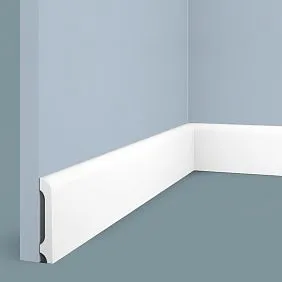
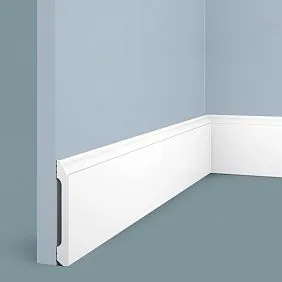
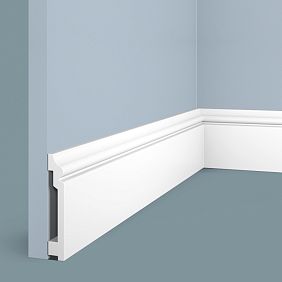
Polystyrene SkirtingUsing the same material for floor and ceiling allows achieving perfect stylistic unity, as both elements are made from the same material using similar technology. Profiles are developed in pairs: a corresponding floor baseboard is offered for each ceiling cornice.
This does not mean the profiles must be identical. On the contrary, direct duplication looks boring. But they should speak the same architectural language: identical rounding radii, similar proportions of projections, a close nature of relief.
Get Consultation
Laws of Proportion: The Mathematics of Beauty
Coordinating baseboards is not a matter of taste, but a matter of mathematics. There are proportional relationships tested over centuries that create harmony.
The Golden Ratio Rule
The Golden Ratio (1:1.618) is a proportion considered most harmonious for human perception. Applied to baseboards, this means: the width of the ceiling cornice should relate to the height of the floor baseboard approximately as 1.6:1.
For example, if the ceiling cornice is 12 cm wide, the optimal floor baseboard height would be 7-8 cm (12 ÷ 1.6 ≈ 7.5). If the cornice is 16 cm, the baseboard is 10 cm. This ratio creates visual balance: the top is slightly more massive than the bottom, which corresponds to natural logic (the sky is heavier than the earth).
The inverse ratio also works: a tall floor baseboard (12-15 cm) requires a massive ceiling cornice (18-24 cm). Such proportions create a sense of monumentality, suitable for high-ceilinged rooms with classic interiors.
The Classic Rule of Two-Thirds
Traditional architectural proportion states: the height of the floor baseboard should be two-thirds of the width of the ceiling cornice. If the cornice is 12 cm, the baseboard is 8 cm (12 × 0.67). If the cornice is 9 cm, the baseboard is 6 cm.
This rule is convenient because it gives a specific number without complex calculations. It has been tested by centuries of classical architecture and works almost always. Exceptions are rooms with extremely low (less than 2.3 m) or high (more than 3.5 m) ceilings, where proportions may be adjusted.
Influence of ceiling height
The absolute sizes of baseboards depend on ceiling height. For standard ceilings of 2.5-2.7 meters, floor baseboards of 6-10 cm and ceiling cornices of 8-12 cm are optimal. This creates a comfortable scale, commensurate with the human figure.
For low ceilings (2.3-2.4 m), narrower elements are used: baseboard 5-7 cm, cornice 7-10 cm. Massive elements will visually weigh down the ceiling, making the room squat. Narrow profiles leave 'air,' preserving the sense of space.
For high ceilings (2.8-3.2 m), wider elements are conversely required: baseboard 10-15 cm, cornice 15-20 cm. Narrow baseboards in a tall room will get lost, failing to create the desired architectural effect. Wide profiles fill the space, making it more intimate and cozy.
For very high ceilings (more than 3.5 m), multi-tiered compositions can be used: a double ceiling cornice (main wide and additional narrow one 20-30 cm below) and a tall floor baseboard with an additional wall molding at a height of 80-100 cm.
Material Harmony: Combining Textures
Baseboards can be made from different materials, but these materials should combine visually and conceptually.
Polyurethane + Polyurethane: Modern Classic
Using polyurethane for both baseboards is the most logical and harmonious option. The material is the same, the texture is the same, the finishing possibilities are identical.Ceiling moldingBoth the ceiling cornice and the floor baseboard made of polyurethane are painted the same color, creating perfect stylistic unity.
Advantages of this combination: ease of installation (both elements are glued with the same adhesive onto a prepared surface), identical texture (no visual difference between materials), durability (polyurethane does not crack, dry out, or deform), affordable price (polyurethane is 2-4 times cheaper than wood).
Polyurethane allows for the realization of complex ornamented profiles, unavailable in wood at a comparable price. A ceiling cornice with a floral ornament and a floor baseboard with corresponding relief create a rich classic interior at reasonable cost.
Wood + Polyurethane: A Noble Compromise
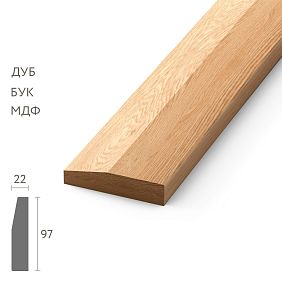
Ceiling molding skirting boardA polyurethane ceiling cornice combined with a wooden floor baseboard is a popular solution that unites practicality and nobility. A polyurethane cornice is lighter than wood, easier to install, and cheaper. A wooden floor baseboard creates a sense of quality, solidity, and tactile comfort.
For a harmonious combination, it is important to correctly select the profiles and finish. The polyurethane cornice is painted white or cream, which corresponds to the tradition of painted ceiling elements. The wooden baseboard is coated with varnish or oil, preserving the wood texture.
The profile of the polyurethane cornice should be relatively simple, without excessive ornamentation — this will create visual balance with the laconic wooden baseboard. If the cornice is complex, richly decorated, the wooden baseboard should have corresponding relief (chamfers, grooves, profiling).
Wood species for the floor baseboard are chosen depending on the flooring. If the floor is oak, the baseboard is also oak. If the parquet is ash or walnut, the baseboard is from the same species. This creates a visual continuation of the floor, a natural transition from horizontal to vertical.
MDF + Polyurethane: Practicality and Savings
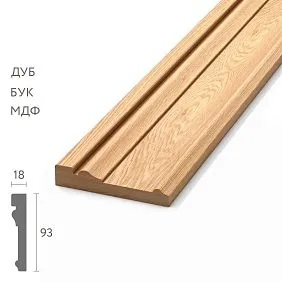
MDF floor skirting boards with wood-grain film coating are a budget-friendly alternative to solid wood. They are durable, moisture-resistant (if made from quality MDF), easy to install, and affordable. Combined with a polyurethane ceiling cornice, they create a practical, modern interior.
For a harmonious combination, the MDF skirting is painted white (to match the ceiling cornice) or a light wood decor is chosen (whitewashed oak, whitewashed ash). Dark MDF decors (wenge, walnut, mahogany) do not pair well with a white polyurethane cornice—the contrast is too strong, disrupting the composition.
The MDF skirting profile should be simple and concise—MDF does not allow for complex reliefs, so it's better not to attempt to imitate classic styles and instead honestly adhere to modern aesthetics. A rectangular or slightly rounded MDF profile pairs well with a simple polyurethane cornice without ornamentation.
Forbidden Combinations
There are combinations that do not work and should be avoided. A polystyrene ceiling skirting with a wooden floor skirting—visually unequal materials that create a sense of 'incompleteness' at the top. If the bottom is noble (wood), the top should be of no lesser quality (polyurethane, but not polystyrene).
Plaster ceiling molding with a plastic floor skirting is also a disharmonious combination. Plaster is a monumental material that requires appropriate framing at the bottom. Plastic is too lightweight and visually cheap for such a pairing.
A bright colored floor skirting (e.g., mahogany) with a white ceiling cornice can work but requires careful development of the entire interior's color scheme. In most cases, it's better to stick to light tones for both skirtings or paint them the same color as the walls (creating a monochrome relief composition).
Profile Logic: From Minimalism to Baroque
The skirting profile is its cross-section, the shape of its relief. It is the profile that determines the style, visual complexity, and play of light and shadow of the element.
Minimalist profiles
The simplest profile is a rectangular plank without relief. For a ceiling cornice, this is a plank 5-10 cm wide, 2-3 cm thick. For a floor skirting—6-10 cm high, 1.5-2 cm thick. Such profiles are suitable for modern interiors in minimalist, Scandinavian, and contemporary styles.
Advantages of simple profiles: visual lightness, versatility (suitable for any setting), ease of maintenance (no relief where dust accumulates), emphasis on material and color rather than form. Disadvantages: lack of play of light and shadow, visual 'flatness,' absence of architectural expressiveness.
A slightly more complex profile is a plank with a single bevel (rounding) along the edge. The bevel creates a subtle shadow line, adding volume without excessive decorativeness. This is a step towards expressiveness while maintaining conciseness.
Classic profiles
A classic ceiling cornice profile is a multi-tiered composition of projections (beads) and recesses (grooves). A typical structure: a lower bead (1.5-2 cm in diameter), a middle plane (2-3 cm), an upper bead (1-2 cm), and a finishing shelf (2-4 cm).
Such a profile creates a deep play of light and shadow: light falling from above highlights the upper parts of the beads and casts shadows into the grooves. The cornice gains volume, spatiality, and architectural conviction.
The corresponding classic floor skirting has a similar but more restrained structure: a lower shelf (straight base 1-2 cm), a bead (1-1.5 cm in diameter), an upper shelf (3-5 cm). The floor skirting profile is simpler than the ceiling one—this is a rule of classical architecture: the top is always richer than the bottom.
Ornamented Profiles
For luxurious classical interiors, ornamented profiles with plant motifs, meanders, and modillions are used.a decorative elementA ceiling cornice includes relief acanthus leaves, grapevines, rosettes. The floor skirting in such a composition has a simplified version of the ornament or a simple relief that echoes the spirit of the ceiling one.
It's important not to overdo it: if both the ceiling cornice and the floor skirting are richly ornamented, the room turns into a space overloaded with decor, where the eye has nowhere to rest. The rule: one element (usually the ceiling one) can be complex, the other should be simpler.
Ornamented profiles require a corresponding interior: classical furniture, quality fabrics, a well-thought-out color palette. In a modern setting with minimalist furniture, such profiles look out of place.
Asymmetrical Profiles
Most skirtings are symmetrical—their profile is mirrored relative to the central axis. But there are asymmetrical profiles where the emphasis is shifted to one edge. For example, a ceiling cornice with the main mass of relief in the upper part and a thin lower edge.
Asymmetrical profiles create dynamism, visual tension, and a contemporary feel. They are suitable for eclectic interiors where classical and modern elements coexist. But they must be used carefully: an incorrect choice can create a sense of a 'falling' cornice or an unstable skirting.
Color Strategies: Unity or Contrast
The color of skirtings is a powerful tool for managing the visual perception of space.
Monochrome Scheme: All in White
Classic approach: both the ceiling cornice and the floor skirting are painted white. This creates visual unity, cleanliness, and a sense of spaciousness. White skirtings work as a frame for colored walls, focusing attention on the central part of the room.
Advantages of white: versatility (suits any colors of walls, floor, furniture), visual expansion of space (light borders push back the visual limits of the room), classicism (white is the traditional color for architectural decor), practicality (white paint is easy to refresh).
Disadvantages: shows dirt (white reveals any stains, requiring regular cleaning), potential sterility (in some interiors, an excess of white creates a cold, hospital-like feeling).
Baseboards matching wall color: monolithic space
Modern approach: baseboards are painted the same color as the walls. This creates a monolithic space where boundaries between surfaces are blurred. Baseboards stand out only through relief, play of light and shadow, but not by color.
This approach visually increases ceiling height (ceiling cornice merges with the wall, ceiling boundary recedes) and expands the floor (floor baseboard doesn't create a visible boundary). The room appears larger, airier, more cohesive.
For implementing this scheme, use high-quality paint with matte or satin finish—gloss on baseboards will highlight them, destroying the monolithic effect. The color must match perfectly; even minimal shade deviation will be noticeable and create a sense of error.
Contrast scheme: highlighting architecture
Alternative approach: baseboards are painted in a color contrasting with the walls. Dark baseboards on light walls, light on dark. This accentuates the architectural structure, creates graphic quality, clarity of composition.
Contrast baseboards visually reduce space (clear boundaries emphasize the room's actual dimensions) but add expressiveness, character, individuality. This is a choice for those who value architectural clarity and aren't afraid of visual activity.
Important rule for contrast scheme: both ceiling and floor baseboards must be the same color. If made different, visual chaos will arise. A unified baseboard color creates a frame in which the interior unfolds.
Gradient scheme: from dark to light
Rare but interesting technique: floor baseboard darker than walls, ceiling cornice lighter. This creates a visual gradient from dark bottom to light top, corresponding to natural light distribution (ground darker than sky).
Such a scheme visually stabilizes space, creates a sense of stability, groundedness of the interior. Suitable for high rooms where excessive height perception needs to be reduced.
Installation nuances: synchronization
Technically, floor and ceiling baseboards are installed differently, but synchronization is important for visual harmony.
Work sequence
Correct sequence: first wall finishing (painting, wallpapering), then ceiling cornice, then floor baseboard. Why exactly this order?
Ceiling cornice is installed on finished walls, but before laying floor covering and installing floor baseboard. This allows precise height adjustment without risking floor damage. During cornice installation, glue drops inevitably fall, tool scratches are possible—better if the floor isn't ready yet.
Floor baseboard is installed last, after laying floor covering. It hides the expansion gap between floor covering and wall, masks possible edge irregularities.
Corner precision
Corners are the most complex and noticeable area in baseboard installation. Inaccurate cutting creates gaps that ruin the entire appearance. For perfect corners, use a miter box (guiding device for cutting at precise angles) or a miter saw.
Internal corners (in room corners) are cut at 45° each element, joined end-to-end. For ceiling cornice, the cut is made so the bottom edge is longer than the top. For floor baseboard—so the top edge is longer than the bottom. This ensures tight fit in the corner.
External corners (on wall protrusions) are cut opposite: for ceiling cornice top edge longer than bottom, for floor baseboard bottom longer than top.
Accounting for irregularities
Walls are rarely perfectly even. Variations of 2-5 mm per meter length are common even in new buildings. Baseboards must compensate for these irregularities.
Polyurethane and MDF baseboards are flexible enough to follow small wall curvatures. When gluing, press them firmly against the wall along the entire length, excess glue will squeeze out and be removed with a damp sponge. After glue dries, the baseboard retains the wall's shape.
Wooden baseboards are stiffer, don't bend. To compensate for irregularities, additional mechanical fastening with screws or nails at 40-60 cm intervals is used. Fasteners pull the baseboard to the wall at separation points. Heads are countersunk, filled with wood-tone putty.
Stylistic solutions: ready combinations
Let's examine specific baseboard combinations for different interior styles.
Classic style
Ceiling cornice: width 10-15 cm, multi-step profile with two-three beads, possibly with floral ornament. Color white or ivory.
Floor baseboard: height 10-12 cm, simple profile with one bead and chamfers. Material—wood (oak, ash) with varnish or oil coating preserving texture. Color natural, matching floor covering tone.
Proportions: cornice width to baseboard height approximately 1.3:1 (golden ratio). Visual effect: solidity, nobility, classic elegance.
Neoclassicism
Ceiling cornice: width 8-12 cm, restrained profile with one-two beads, without excessive ornamentation. Color white.
Floor skirting board: height 8-10 cm, simple profile with slight relief. Material — polyurethane or MDF, painted white (to match the cornice).
Proportions: ratio 1:0.75. Visual effect: restrained elegance, lightness, modern interpretation of classic style.
Scandinavian style
Ceiling cornice: width 6-8 cm, simple concise profile (rectangular strip with one bevel). Color: matte white.
Floor skirting board: height 6-8 cm, simple profile. Material — light wood (pine, birch) with white or light gray coating, or white MDF.
Proportions: ratio approximately 1:1 (balance). Visual effect: lightness, airiness, purity of lines, Scandinavian simplicity.
Minimalism
Ceiling cornice: width 5-7 cm, maximally simple profile (flat strip without relief) or no cornice at all (ceiling mounted flush to the wall). Color to match the ceiling or walls.
Floor skirting board: height 5-7 cm, rectangular profile without decoration. Material — MDF or polyurethane, painted to match the wall color (creating a monolithic look).
Proportions: minimal dimensions, ratio 1:1. Visual effect: maximum conciseness, absence of visual noise, focus on space rather than details.
Art Deco
Ceiling cornice: width 10-14 cm, geometric profile with clear steps and angles (not smooth curves). Possibly with metallic inserts. Color white, cream, or gilded.
Floor skirting board: height 10-12 cm, geometric profile echoing the cornice. Material — polyurethane or wood with glossy finish. Color dark (wenge, black) or contrasting with the walls.
Proportions: ratio 1:0.8. Visual effect: geometricity, rhythm, luxury, characteristic graphic quality of Art Deco.
FAQ: answers to practical questions
Can the same profile be used for floor and ceiling?
Technically yes, but visually it usually looks boring and incorrect. Ceiling cornices and floor skirting boards serve different functions and are in different conditions (cornices aren't subjected to mechanical loads, skirting boards are). Use related but not identical profiles.
What's cheaper: polyurethane or wood?
Polyurethane is 2-4 times cheaper. A linear meter of simple wooden skirting board costs 300-800 rubles, polyurethane — 100-250 rubles. Wooden ceiling cornice (cove) — 400-1200 rubles per meter, polyurethane — 150-400 rubles. Savings for a 20 square meter room (perimeter 18 meters) amount to 5000-12000 rubles.
How to calculate material quantity?
Measure the room perimeter (sum of all wall lengths). Add 10% for cutting and reserve. Divide by the length of one strip (usually 2 meters for polyurethane, 2.2-2.5 meters for wood/MDF). Round up to the nearest whole number. For example, for a room with 18-meter perimeter: 18 × 1.1 = 19.8 meters, divide by 2 = 9.9, round up to 10 strips.
Is it necessary to buy skirting boards from the same series?
Preferably, if the manufacturer offers coordinated series. Many manufacturers create collections where each ceiling cornice has a corresponding floor skirting board. This guarantees stylistic unity. But you can also select independently, the main thing is to maintain proportions and style.
Can skirting boards be installed independently?
Yes, installing polyurethane and MDF skirting boards doesn't require professional skills. Basic tools (handsaw, miter box, spatula, brush) and care are needed. Wooden skirting boards are more difficult — requires a miter saw for precise cutting, experience working with wood. Ceiling cornices are easier to install than floor ones — there's no furniture or equipment on the ceiling interfering with work.
What to do if room corners aren't 90 degrees?
In old houses, corners are often 85-95 degrees. Standard miter box (cutting at 45°) won't give precise joints. Solutions: use adjustable miter box or miter saw with adjustable angle; make test cuts on short scraps, adjust angle experimentally; use flexible corner elements (for polyurethane) that mask inaccuracy.
Is it necessary to prime skirting boards before painting?
Polyurethane skirting boards come pre-primed, additional priming isn't needed (unless they got dirty during installation). MDF skirting boards for painting require priming for better paint adhesion. Wooden skirting boards are primed with special wood compounds before applying varnish or oil.
After how many years will skirting boards need replacement?
Polyurethane skirting boards last 30-50 years without replacement, only requiring periodic repainting (every 8-12 years). MDF skirting boards — 15-25 years. Wooden with proper care — over 50 years. Polystyrene — 5-10 years, then crumble and require replacement.
Conclusion: details create the whole
Interior is not a set of elements, but a system of interrelationships.Skirting boards and moldingscreate the architectural framework of a room, frame the space, connect floor with ceiling into a single whole. When these elements are selected correctly — by proportions, style, material, color — the space gains completeness, harmony, visual persuasiveness.
Crown molding and baseboards are not a luxury or excessive decor. They are an architectural necessity that transforms a room into a thoughtfully designed space. Making the right choice requires an understanding of proportions, knowledge of styles, and a feel for materials. But the result is worth the effort: instead of a bland box, you get a room with character, individuality, and architectural logic.
Bringing your design ideas to life requires quality materials from reliable manufacturers. For over two decades, STAVROS has specialized in the production and supply of architectural interior decor, offering solutions for any style and budget.
STAVROS Moldings, Cornices, and Baseboards— offer European quality adapted to Russian operating conditions. The polyurethane products are made from high-density material (density 680-1100 kg/m³) using modern injection molding technologies that ensure the clarity of the finest relief details.
The catalog features over 200 profiles of ceiling cornices and over 150 profiles of floor baseboards—from minimalist modern to richly ornamented classic. Many profiles are developed in pairs: each ceiling cornice is matched with a corresponding floor baseboard, guaranteeing stylistic unity.
STAVROS Decorative Millworkalso includes solid wood baseboards made from kiln-dried oak, ash, and beech (moisture content 8-12%) with precise geometry (tolerance ±0.3 mm) and perfect sanding. The baseboards are supplied ready for installation and finishing, and can be coated with varnish, oil, or paint according to the customer's choice.
STAVROS professional consultants will help you select a combination of baseboards, taking into account the interior style, ceiling height, and architectural features of the room. Free calculation of required materials, recommendations for installation and finishing, and assistance in choosing related materials (adhesives, paints, fasteners).
In-house production ensures consistent quality and the ability to manufacture elements based on custom sketches. Warehouses in Moscow and St. Petersburg guarantee the availability of popular items and fast shipping. Delivery across all of Russia with professional packaging that prevents damage during transportation.
Visit the STAVROS showrooms in Moscow and St. Petersburg to see all profiles in person, compare sizes and reliefs, and assess material quality. Professional designers will help visualize the chosen elements in the context of your interior and suggest optimal color and stylistic solutions.
Create interiors where every detail is in its place. Choose baseboards that work in pairs, creating architectural harmony. Trust in quality proven by thousands of completed projects and decades of impeccable service. With STAVROS millwork, your home will gain that very sense of completeness that distinguishes a thoughtfully designed interior from a random collection of elements.
Your perfect space begins with the right details. Start the transformation today.