Article Contents:
- Why Polyurethane Wins in Facade Applications
- Structure of Facade Polyurethane
- Resistance to external influences
- Comparison with alternative materials
- Types of Facade Decor: An Architectural Dictionary
- Cornices: Crowning and Interfloor
- Window Framing: Architraves and Pediments
- Pilasters and columns: vertical structure
- Corner Elements: Rustication and Keystones
- Choosing Elements: From Concept to Implementation
- Analysis of Building Style and Proportions
- Climatic Conditions of the Region
- Budget and priorities
- Surface Preparation: The Foundation of Durability
- Methodology of measurement works
- Cleaning and Degreasing
- Priming
- Marking and Planning
- Installation: Reliable Fastening Technology
- Adhesive Compounds
- Mechanical fasteners
- Element joints
- Painting and Protection
- Care and Maintenance: Preserving for Decades
- Regular Inspection
- Facade Washing
- Recoating
- Repair of damage
- Where to Buy: How to Choose a Reliable Supplier
- Supplier selection criteria
- FAQ: answers to important questions
- Conclusion: Architecture Begins with Details

Imagine: you've built a house. Sturdy, reliable, functional. But something is missing. It stands like a box among other boxes, without character, without soul, without that architectural expressiveness that turns a building into a work of art. And then comes the realization: the facade is not just walls, it's the face of the house, its business card, its way of communicating with the world.
polyurethane stucco for facades— is a tool that can transform the most ordinary structure into an architectural object. Cornices and moldings, pilasters and columns, window and door surrounds, pediments and keystones — all this creates depth, rhythm, and structure for the facade. But here lies the catch: facade decor operates in extreme conditions. Rain, snow, frost, heat, wind, ultraviolet light — all of this tests the materials for strength day after day, year after year.
So how do you choose facade decor that will not only decorate but also withstand all climatic challenges? How to properly prepare the surface for installation? What mistakes are most often made during installation and how to avoid them? Let's figure it out — without advertising clichés, with real technical data and practical experience.
Why Polyurethane Wins in Facade Applications
Traditionally, facade molding was made from natural stone, plaster, concrete. These are noble materials with centuries of history. But they have critical drawbacks for modern construction: enormous weight, requiring reinforced fastenings and foundations; high cost of material and labor; susceptibility to cracking due to temperature fluctuations; moisture absorption with subsequent destruction upon freezing.
Polyurethane solved these problems while preserving the aesthetics of classical materials. But not any polyurethane is suitable for facades — a special formulation with increased density, UV stabilizers, and frost resistance modifiers is required.




Structure of Facade Polyurethane
polyurethane facade moldinghas a special two-layer structure. The outer layer, 3-5 mm thick, is high-density polyurethane (density 900-1100 kg/m³) with added UV absorbers and antioxidants. It ensures the clarity of the finest relief details, resistance to mechanical damage, and protection from ultraviolet light.
The inner layer is more porous (density 400-600 kg/m³), which reduces the overall weight of the product and improves thermal insulation properties. This structure creates an optimal balance: the element is light enough for easy installation, yet strong enough for decades of service in an aggressive external environment.
The compressive strength of facade polyurethane reaches 85-95 MPa. For comparison: plaster has an indicator of 8-12 MPa, expanded polystyrene 0.2-0.4 MPa. Polyurethane is 8-10 times stronger than plaster while weighing 5-6 times less.
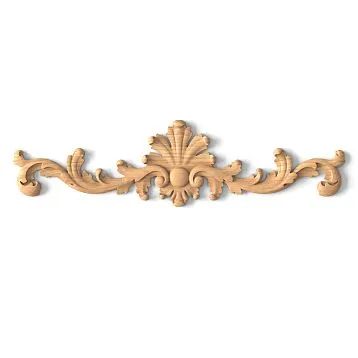
Our factory also produces:


Resistance to external influences
Water absorption — a critical parameter for facade materials. For high-quality facade polyurethane, it is less than 0.8% by volume over 24 hours. This means that after a day in water, the element will absorb less than 1% of its volume. For comparison: plaster absorbs 20-35%, wood 15-25%, foam plastic 2-4%.
Low water absorption is critically important for frost resistance. Water, freezing in the pores of the material, expands and destroys it from within. Polyurethane simply does not absorb enough moisture for such destruction. The number of freeze-thaw cycles without loss of properties exceeds 200 — this is equivalent to 50-70 years of operation in the conditions of central Russia.
Resistance to ultraviolet light is ensured by special stabilizers embedded in the polymer matrix. They absorb the energy of UV radiation, preventing the destruction of polymer chains. Without protection, polyurethane yellows and becomes brittle within 2-3 years. With quality UV stabilization, it retains its properties for over 25 years even under direct sunlight.
Temperature resistance: from -60°C to +80°C without loss of mechanical characteristics. The coefficient of linear expansion is 6-7×10⁻⁵ per degree Celsius. This means that an element 2 meters long, when heated from -30°C to +30°C (a 60-degree difference), will lengthen by only 7-8 mm. Such deformation is compensated by the elasticity of the adhesive seams.
Get Consultation
Comparison with alternative materials
Glass fiber reinforced concrete (GRC) is a durable material that withstands any climatic conditions. However, it is heavy (density 1800-2200 kg/m³), expensive to produce, and requires professional installation with metal fasteners. A 2-meter long cornice element made of GRC weighs 40-60 kg compared to 4-6 kg for a polyurethane one.
Expanded polystyrene is lighter than polyurethane (density 15-35 kg/m³), inexpensive, and easy to work with. However, it is brittle (easily breaks upon impact), has low UV resistance (yellows within 1-2 years without a protective coating), and poorly holds fine relief details (ornament appears blurred).
Wood carving is a traditional material with a special charm. However, wood requires thorough protective treatment (antiseptics, fire retardants, water repellents), regular maintenance (repainting every 3-5 years), and is prone to cracking and warping. The cost of high-quality carved finishing is 3-5 times higher than polyurethane.
Polyurethane is at the optimal point of the strength/weight/price/durability/ease of installation ratio for most modern facade finishing projects.
Types of facade decor: architectural dictionary
Before choosing specific elements, you need to understand the architectural logic of the facade.Facade decoration for exterior finishingIt is not a random collection of beautiful details, but a system of elements, each of which has its own place and function.
Cornices: crowning and interfloor
facade decoration corniceThis is a horizontal protruding element framing the building along the perimeter. The crowning cornice is installed under the roof, separating the walls from the roof. It performs a critical practical function: it diverts rainwater away from the walls, protecting them from moisture and premature deterioration.
The projection width of the crowning cornice should be at least 1/10 of the floor height. For a two-story house with a wall height of 6 meters, the cornice should project at least 60 cm. A smaller projection will not provide effective wall protection. A larger one will require reinforced fastening — a 2-meter long polyurethane element with an 80 cm projection creates significant leverage.
Interfloor cornices are installed between floors, visually dividing the facade into horizontal zones. They do not carry a critical practical load, so their size is determined by aesthetic considerations. Usually, an interfloor cornice is 1.5-2 times narrower than the crowning one.
The cornice profile can be simple (rectangular ledges) or ornamented (with modillions, dentils, beads). The choice depends on the architectural style: classicism requires ornamentation, modernism — concise geometry.
Window framing: architraves and pediments
Window openings are one of the main elements of the facade, requiring architectural design. An architrave is a frame around a window, visually highlighting the opening and connecting it with the overall facade composition. The width of the architrave is usually 8-15 cm, the projection thickness is 3-5 cm.
A pediment is a small cornice above a window, protecting the opening from direct rain. It can be simple straight, triangular (gable) or arched (segmental). The choice of shape is determined by the style: classic prefers gables, baroque — arches, modern — straight lines.
The window sill cornice (belt) runs under the window at the level of the window sill, visually supporting the opening from below. This is an optional but expressive element that enhances the structuredness of the facade.
A keystone is a decorative element in the center of the upper part of a window or door opening. Traditionally, it imitates the central wedge-shaped stone of arched masonry. It gives the opening completeness and significance.
Pilasters and columns: vertical structure
pilasters on the facadeThese are vertical protruding elements imitating columns but not bearing a real load. They divide the facade into vertical zones, creating a rhythmic structure and giving the building monumentality.
A pilaster consists of three parts: base (lower expanded part), shaft (main vertical part), and capital (upper decoration). Proportions are determined by the architectural order: Doric — massive and simple, Ionic — elegant with volutes, Corinthian — richly ornamented.
The height of the pilaster should correspond to the floor height. For a two-story house, pilasters are usually made for the full height of both floors (4.5-5.5 meters), creating powerful verticals. For a one-story house — for the wall height (2.5-3 meters).
Columns are free-standing round vertical elements. They are rarely used on the facades of private houses, mainly for decorating entrance portals, terraces, and porches. They require more complex installation as they do not have support along their entire length.
Corner elements: rustication and keystones
Building corners are places that require an architectural accent. Rustication is the finishing of corners with rectangular protruding stones (rusts), imitating hewn stone masonry. Rusts create a sense of strength, monumentality, and weightiness of the structure.
Rusts can be even (same width along the entire height) or alternating (wide and narrow). The classic scheme: larger rusts in the lower part of the building (visual weight of the base), smaller ones — at the top. The projection of the rust from the wall plane is usually 3-5 cm, width 15-30 cm, height 30-60 cm.
Corner keystones are decorative elements on the corners of window and door openings, imitating the key stones of arched masonry. They enhance the visual strength of the structure and create accent points.
Choosing elements: from concept to implementation
How to choose specific elements for your house? Start not by browsing catalogs, but by analyzing the architecture.
Analysis of the building's style and proportions
What style is your house? Classical (symmetry, strict proportions, order system)? Baroque (abundance of decor, curvilinear forms, dynamism)? Modernist (concise forms, minimal ornamentation, functionality)? Eclectic (mixing elements from different eras)?
The decor should match the style. A classical house will suit strict cornices with dentils, pilasters of Ionic or Corinthian order, pediments above windows. A modernist one — concise profiles without ornamentation, geometric window framing, flat cornices.
Proportions are critically important. A massive cornice on a small house will overwhelm it, making it squat. A thin cornice on a large cottage will get lost and fail to create the desired effect. There is an empirical rule: the width of the cornice should be 1/20 to 1/15 of the facade height. For a house with wall height of 6 meters, the optimal cornice is 30-40 cm wide.
Climatic conditions of the region
The choice of decor depends on the climate. In regions with harsh winters (Urals, Siberia, Far North), elements with increased frost resistance and minimal horizontal surfaces where snow and ice can accumulate are required. Wide window lintels, horizontal cornices with a slight slope — all these are places for snow accumulation, creating additional load.
In regions with hot sunny climates (Southern Russia, Caucasus), UV resistance of the material is critical. Without quality stabilizers and protective coating, polyurethane will yellow in 2-3 years. Facade paint with a high UV filter is required, with periodic coating renewal every 8-10 years.
In coastal regions with humid salty air, corrosion resistance of fasteners is important. Use only stainless steel fasteners (dowels, screws, anchors). Ordinary galvanized steel will rust in salty fog within 3-5 years, leaving unsightly streaks on the facade.
Budget and priorities
Complete facade finishing can be expensive. For a standard two-story house 10×12 meters, the cost of a full set of decor (cornices, window surrounds, pilasters, corner elements) ranges from 180,000 to 350,000 rubles depending on complexity and number of elements.
If the budget is limited, prioritize. The minimum set that creates architectural expressiveness: a crown cornice (mandatory for wall protection) and window surrounds on the main facade. This provides a visual effect at a cost of 80,000-120,000 rubles.
Medium level: cornice, surrounds for all windows, corner rustication. This creates a finished appearance, cost 150,000-220,000 rubles.
Full level: all of the above plus pilasters, inter-floor cornices, pediments, balustrades. Maximum architectural expressiveness, cost 250,000-400,000 rubles.
Surface preparation: the foundation of durability
The highest quality decor will not last long on a poorly prepared surface. Facade preparation is 70% of installation success.
Requirements for the base
The base must be strong, stable, load-bearing. Weak crumbling plaster, peeling paint, loose wall material — all this is unacceptable. Polyurethane decor is glued to the surface, and the strength of the connection is determined by the strength of the surface itself.
Strength test: scratch the wall with a sharp object. If the material crumbles, flakes off, or is easily removed — the base is unsuitable. Reinforcement with deep penetration primers or complete removal of the weak layer down to a solid base is required.
Surface evenness is also important. Variations of more than 5-10 mm per meter of length will prevent the element from fitting tightly — voids will form underneath where condensation accumulates, mold develops, and the adhesive bond weakens. Significant unevenness must be corrected with plaster before installing the decor.
Cleaning and degreasing
The surface must be clean — free of dust, dirt, efflorescence, mold, biological contaminants. Dust is washed off with water under pressure or removed with a brush. Biological contaminants (moss, algae, mold) are treated with fungicidal compounds, allowed to act according to instructions, and then washed off.
Grease stains (from oil, grease, bitumen) are dissolved with white spirit or special cleaners. The adhesive will not bond with a greasy surface — the connection will be weak.
Efflorescence (white salt deposits) are removed mechanically with a brush, then the surface is treated with acid-based cleaners (based on orthophosphoric acid), neutralized, and rinsed with water.
Priming
After cleaning and drying, the surface is primed. The primer performs several functions: strengthens the base (penetrating pores, binds particles), reduces absorbency (creates a film preventing rapid moisture loss from the adhesive), improves adhesion (creates a rough surface for mechanical bonding).
For facades, use special facade primers with frost-resistant and moisture-resistant properties. Ordinary interior primers will deteriorate on the facade within one winter season.
Primer is applied with a brush, roller, or sprayer in 1-2 coats depending on the base's absorbency. Porous surfaces (aerated concrete, foam concrete) require 2-3 coats. Dense surfaces (concrete, brick) — 1-2 coats. Drying time for primer is 4-12 hours depending on air temperature and humidity.
Marking and Planning
Before installation, carefully mark the location of all elements. Use a laser level or water level to determine strictly horizontal lines. All cornices, belts, window surrounds must be strictly parallel to the horizon — even a deviation of 1-2 degrees is immediately noticeable to the eye.
Vertical elements (pilasters, rustication) are marked with a plumb line or laser level in vertical mode. Deviation from vertical of more than 5 mm per meter of height is unacceptable.
Marking is done with chalk or pencil; do not use oil-based markers — they may bleed through the adhesive and paint. Check symmetry: distances from building corners to outermost elements should be the same on both sides.
Installation: Technology of Reliable Fastening
Installationdecorative elements made of polyurethaneApplying to the facade requires thoroughness and adherence to technology. Mistakes at this stage can lead to decorative layer peeling within 1-2 years.
Adhesive compounds
For facade installation, specialized adhesives are used. Ordinary construction adhesive like 'liquid nails' is not suitable — it lacks the necessary frost and moisture resistance and will deteriorate in 2-3 years.
The optimal choice is polyurethane adhesives for facades. They form an elastic, frost-resistant bond capable of compensating for thermal expansion. Bonding strength reaches 2-3 MPa, ensuring reliability for decades.
An alternative is cement-based adhesive mixtures for attaching expanded polystyrene (used in facade insulation systems). They are cheaper than polyurethane ones but require more thorough application (continuous, without gaps) and create a rigid bond that does not compensate for deformation.
Adhesive consumption: for elements up to 200 mm wide, adhesive is applied with a notched trowel (6-8 mm teeth) over the entire back surface. For elements wider than 200 mm, adhesive is applied in a 30-50 mm strip around the perimeter and with dots in the center. For large elements (cornices with large overhang, column capitals), mechanical fasteners are additionally used.
Mechanical fastening
Elements with a large overhang from the wall (cornices wider than 400 mm, pilasters) require additional mechanical fastening. The adhesive holds the element from pulling away, while mechanical fasteners provide a safety against falling in case of possible adhesive bond weakening.
Facade dowels 120-200 mm long are used (depending on insulation and plaster thickness). The dowel must penetrate the load-bearing wall by at least 60 mm. For aerated concrete and porous materials, special expansion dowels with increased diameter are used.
The fastener is installed through the element into the wall. The hole is drilled in place after gluing the element (when the adhesive has set but not fully cured — after 2-4 hours). The hole diameter is 1 mm smaller than the dowel diameter for a tight fit.
The screw head is countersunk into the material by 3-5 mm, then filled with acrylic putty and painted over. After painting, the fastening point is invisible.
Number of fastening points: for elements up to 1 meter long — 2 points at the edges. For 1-2 meters long — 3 points (at the edges and in the center). For over 2 meters long — every 80-100 cm.
Element Joints
Facade elements are supplied in 1.5-2 meter lengths (this is the maximum length convenient for transportation and installation). On the facade, they need to be joined to create a continuous line.
Straight joints (lengthwise) are made end-to-end. Ends are cut with a sharp knife strictly at 90°, the joint should be tight, without gaps. When gluing the second element, an additional portion of adhesive is applied to its end, and the element is pressed tightly against the first. Excess adhesive protruding from the joint is immediately removed with a damp sponge.
Corner joints (at building corners) are made at 45°. Use a miter box or miter saw for precise cutting. The angle must be perfectly accurate — a 1-2 degree error results in a noticeable gap or overlap in the joint.
After installation and adhesive curing (24-48 hours), joints are filled with acrylic sealant or facade putty. Sealant is applied in a thin strip, smoothed with a damp spatula, and excess is removed. After drying, the joint is sanded with fine sandpaper and painted along with the entire element.
Painting and protection
Polyurethane decor is supplied in white, primed. No additional priming is needed before painting (unless the element became soiled during installation).
For painting, use facade paints — acrylic, silicone, silicate. They form a vapor-permeable, elastic coating resistant to UV radiation and precipitation. Do not use interior paints on the facade — they will not withstand external conditions, will crack, and peel within one season.
Paint is applied in 2-3 coats with a brush or sprayer. The first coat — diluted with 10% water for better penetration. The second and third — undiluted. Drying time between coats — 4-8 hours depending on temperature and humidity.
The color of the decor is usually chosen to contrast with the wall color (white decor on dark walls, dark on light) or to match the wall color (monochrome composition, where the decor stands out only by relief). Bright colors (blue, green, red) are rarely used and only in specific stylistic concepts.
After painting, it is recommended to treat the decor with a water repellent — a composition that creates a water-repellent film on the surface. Water beads up and rolls off without being absorbed, reducing soiling and extending the coating's service life. The water repellent is applied with a sprayer 7-10 days after painting.
Care and Maintenance: Preserving for Decades
Sculptural decorationson the facade require minimal but regular care. This will extend their life and maintain a fresh appearance.
Regular Inspection
Twice a year (in spring after snowmelt and in autumn before frost), inspect the decor. Check for cracks in joints, detachment from the wall, coating damage. Minor defects detected in time are easily fixed. Neglected problems may lead to the need to replace entire elements.
Pay attention to horizontal surfaces of elements — the top planes of cornices, pediments, window sills. Dirt, leaves, and plant seeds may accumulate there. Regularly clean these areas with a soft brush.
Facade Washing
Every 2-3 years, wash the facade decor with water at moderate pressure (up to 80-100 bar). This removes accumulated dirt, dust, and biological contaminants. Do not use high pressure (over 150 bar) — it may damage the paint or the material itself.
For stubborn stains, use mild detergents (for facades or regular household soap). Do not use abrasive cleaners, solvents, or acids — they may damage the coating.
Biological contaminants (green algae, moss in shaded areas) are treated with fungicidal compounds, left for 2-4 hours, then rinsed with water.
Recoating
After 8-12 years of use, facade paint may fade or lose color intensity (especially on south-facing facades). Coating renewal is required.
The process is simple: light cleaning of the decor with water, drying, applying one or two coats of facade paint over the old coating. Complete removal of old paint is not necessary if it adheres firmly. Renewal takes 1-2 days and restores the decor's original appearance.
Repair of damage
If mechanical damage occurs (chip, crack, broken part of an element), repair depends on the extent.
Minor chips and scratches are filled with acrylic facade putty, sanded after drying, and touched up to match the color. The repair spot is practically invisible.
Deep cracks are widened (expanded) to their full depth, filled with polyurethane sealant, smoothed, and after polymerization, sanded and painted.
Broken fragments are glued back with polyurethane adhesive. If the fragment is lost, a replica can be made: take an impression from an undamaged similar area (with silicone compound), cast a copy (from plaster or epoxy resin), glue it in place, and touch up.
For significant damage (over 30% of the element's area), it is easier to replace the entire element. Thanks to profile standardization, you can always buy an exact match, cut out the damaged section, and glue in a new one.
Where to Buy: How to Choose a Reliable Supplier
The quality of facade decor critically depends on the manufacturer. Cheap elements made from low-density polyurethane without UV stabilizers will yellow and crumble in 3-5 years. High-quality ones will last 30-50 years without losing properties.
Supplier selection criteria
Specialization in architectural decor.Stucco storeshould be specialized, not selling everything from fasteners to tiles. Specialization means deep product knowledge, professional consultations, and an assortment for different styles and tasks.
Availability of certificates. High-quality facade polyurethane has certificates confirming frost resistance, fire safety, and absence of harmful emissions. Ask to see the documents — a serious supplier will provide them without any issues.
Technical support. A good supplier doesn't just sell elements but helps with selection, provides installation recommendations, offers instructions, and consults on any questions that arise. This is especially important for those doing the installation themselves.
Warranties. High-quality decor has a warranty of at least 3-5 years. This indicates the manufacturer's confidence in their product. Lack of warranties is a warning sign.
Logistics. Facade elements are bulky and require careful transportation. The supplier must ensure reliable packaging and delivery without damage. Inquire about delivery terms, cost, and timelines.
FAQ: answers to important questions
Can facade decor be installed in winter?
Yes, but with limitations. The air temperature must be no lower than -5°C. Special frost-resistant adhesives are used. The adhesive and elements must be kept in a warm room for at least 12 hours before installation. The adhesive polymerization time increases by 2-3 times. Painting is only done at temperatures above +5°C; it's better to postpone until spring.
Does the wall under the decor need to be insulated?
If facade insulation is planned, it is done before installing the decor. The insulation is attached to the wall, reinforced with mesh, and plastered. After the plaster has completely dried (7-14 days), the decor is installed. Do not glue decor directly onto insulation — the bond will be weak.
How thick should the wall be for attaching decor?
Minimum load-bearing capacity: 4-5 MPa in compression. This corresponds to brick, concrete, solid blocks. For porous materials (aerated concrete, foam concrete) with a density of less than 400 kg/m³, reinforcement of attachment points or the use of special long fasteners reaching denser layers is required.
What to do if the house has settled after installing the decor?
Polyurethane is elastic enough to compensate for minor deformations (up to 3-5 mm). More significant settlement may cause joint cracking. In this case, joints are widened and filled with elastic sealant. In new houses (first 2-3 years after construction), it is recommended to use elastic adhesive compounds and leave 2-3 mm expansion gaps in joints, filled with sealant.
Can decor be painted in dark colors?
Yes, but consider heating. Dark surfaces heat up to +60-70°C in the sun. Polyurethane withstands these temperatures, but thermal deformations increase. For dark colors, it is especially important to use elastic adhesives and sealants. Also, dark paint fades faster in the sun than light paint — coating renewal will be needed more often (every 6-8 years instead of 10-12).
Is ventilation needed behind the decor?
No, polyurethane decor is glued with a continuous layer; a ventilated gap is not required. The material is vapor-permeable, allowing moisture from the wall to pass through. The main thing is to use vapor-permeable adhesives, plasters, and paints. Do not use vapor barrier materials — they will create condensation between the wall and the decor.
How to protect decor from birds?
Birds sometimes build nests behind protruding cornices. For protection, anti-bird spikes are installed on the upper surfaces of cornices, or thin wire is stretched 3-5 cm from the surface. These measures do not spoil the appearance but make the cornice unsuitable for nesting.
How long does facade polyurethane last?
High-quality material with proper installation and periodic coating renewal lasts 40-50 years. Without coating renewal — 15-20 years. Cheap, low-quality material — 5-8 years. Saving on material results in the need for complete decor replacement after a few years.
Conclusion: architecture begins with details
The facade is not just an enclosing structure. It is the first impression, the business card, the architectural statement of your home. And it is the details — cornices and moldings, window surrounds and pilasters — that turn a box into architecture, giving the building character and individuality.
Polyurethane facade stucco is a modern technology that preserves the aesthetics of classic materials but eliminates their drawbacks. Ease of installation, durability, and affordable pricing make architectural decor accessible not only for mansions but also for ordinary country houses and dachas.
But the result depends not only on material quality. Proper surface preparation, competent installation, and high-quality protective coating — all determine whether the decor will last for decades or fall off in a couple of years. Saving on preparation and technology results in multiple costs for redoing the work.
To realize your architectural ideas, choose trusted suppliers of quality materials. STAVROS has specialized in architectural decor for over two decades, offering European-level products for Russian climatic conditions.
STAVROS Facade Stuccois high-density polyurethane (density 800-1100 kg/m³) with enhanced UV stabilization, frost resistance of over 200 cycles, and water absorption of less than 0.8%. Each element undergoes multi-stage quality control, is supplied primed, and ready for installation and painting.
The catalog features over 300 profiles of cornices, surrounds, pilasters, columns, and rustications — from strict classics to modern minimalism. Standard solutions and custom element production based on individual sketches. STAVROS professional consultants will help select decor considering your home's architecture, regional climatic conditions, and project budget.
In-house production ensures consistent quality and short manufacturing times. Warehouses in Moscow and St. Petersburg guarantee availability of popular items and fast shipping. Delivery across Russia with professional packaging that prevents damage during transportation.
Technical support at all stages: from element selection to installation and maintenance consultations. Detailed instructions, material recommendations, assistance in quantity calculation. 5-year warranty on all products — confirmation of quality confidence.
Visit STAVROS showrooms in Moscow and St. Petersburg to see elements in person, assess material quality and relief detailing, receive professional consultation. Or explore the catalog on the website — detailed photos, precise dimensions, application descriptions will help make the right choice.
Create facades that amaze. Transform houses into architectural masterpieces. Trust quality tested by time and thousands of completed projects. With STAVROS facade decor, your home will acquire that unique appearance that distinguishes architecture from mere construction.
Your architectural project begins here. Take the first step toward your dream home today.